Modern vehicle security has evolved considerably over the past two decades. What was once a relatively straightforward mechanical key has developed into a sophisticated electronic system involving transponder chips, immobilizers, remote central locking and keyless entry technology.
For vehicle owners, these developments offer improved security and convenience. However, they have also made car key replacement considerably more technical, particularly when all keys have been lost or an electronic fault prevents a vehicle from recognising its key.
Understanding how modern car keys work, and why specialist equipment is required to replace and programme them, provides useful insight into an increasingly important part of the automotive industry.
How Modern Car Keys Have Evolved
Traditional vehicle keys relied primarily on mechanical cutting. The physical shape of the blade matched the vehicle’s lock, allowing the driver to unlock the doors and operate the ignition.
As vehicle security developed, manufacturers introduced electronic immobiliser systems to make unauthorised vehicle starting more difficult.
These systems changed the role of the car key. Rather than simply providing mechanical access, the key also needed to communicate electronically with the vehicle.
Today, many vehicles use a combination of mechanical security, electronic identification and encrypted communication. The exact arrangement varies between manufacturers, models and production years.
What Is a Transponder Key?
A transponder key contains a small electronic chip that communicates with the vehicle’s immobiliser system.
When the key is used, the vehicle checks whether the electronic identification is recognised. If the required authorisation is received, the immobiliser permits the engine to start.
If the vehicle does not recognise the transponder, the engine may crank without starting, or the vehicle may prevent the starting process altogether, depending on its design.
This is why simply cutting a replacement key blade is not always sufficient.
A correctly cut key may operate the mechanical locks, but the electronic transponder must also be compatible and programmed or authorised where required.
Understanding Vehicle Immobiliser Systems
An immobiliser is an electronic security feature designed to prevent an unauthorised key from starting a vehicle.
Depending on the vehicle, the system may communicate with several electronic components, including the engine control unit, body control module, immobiliser module and keyless entry system.
These components work together to verify the key and authorise vehicle operation.
When a key is lost, damaged or no longer recognised, diagnosing the problem can require more than simply supplying another key.
A specialist automotive locksmith needs to establish whether the issue relates to the key itself, its programming, the vehicle’s immobiliser system or another electronic component.
Smart Keys and Proximity Entry Systems
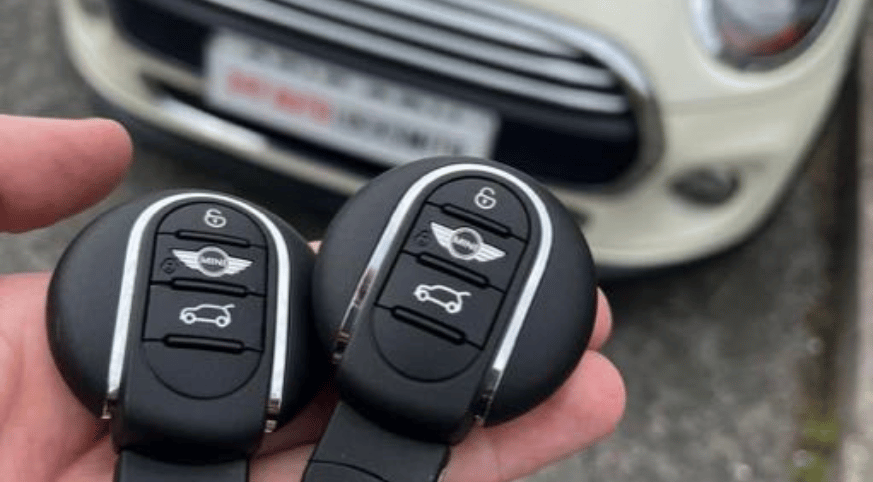
Many newer vehicles use proximity-based key systems.
Instead of inserting a key into an ignition barrel, the driver can unlock the vehicle and start the engine while the electronic key remains nearby.
These systems offer convenience, but replacement can be more involved than traditional key cutting.
The replacement key must be suitable for the vehicle’s specific system and correctly configured. Depending on the manufacturer, this can involve specialist diagnostic equipment, security authorisation and electronic programming procedures.
Not every replacement key is compatible with every vehicle, even when the remote fob looks almost identical.
Why Modern Car Key Replacement Requires Specialist Equipment
Automotive locksmithing has become a specialist technical discipline.
Modern replacement keys may require a combination of:
- Accurate mechanical key cutting.
- Transponder identification and programming.
- Remote control synchronisation.
- Proximity key configuration.
- Immobiliser communication.
- Manufacturer-specific diagnostic procedures.
Professional automotive locksmiths use specialist key-cutting machines, programming tools and diagnostic equipment to work with different vehicle security systems.
The correct procedure depends on the manufacturer, model, year and immobiliser generation.
This is particularly important when dealing with vehicles for which every original key has been lost. An all-keys-lost situation can require additional security procedures compared with simply programming a spare key when an existing working key is available.
What Happens When All Car Keys Are Lost?
Losing every key to a vehicle can be stressful, particularly when the vehicle is needed for work or everyday transport.
The first step is identifying the vehicle accurately, including its make, model, year and relevant security system.
A specialist automotive locksmith can then establish the appropriate replacement procedure.
Depending on the vehicle, the process may involve:
- Verifying vehicle ownership and authorisation.
- Identifying the existing key and immobiliser system.
- Establishing the correct replacement key specification.
- Cutting the mechanical key where applicable.
- Programming or configuring the electronic key.
- Testing the completed key and relevant functions.
The exact process varies significantly between vehicles. Some systems are relatively straightforward, while others require more advanced diagnostic and programming procedures.
Using a professional with suitable vehicle-specific equipment and experience is important when dealing with modern electronic security systems.
Choosing a Specialist Automotive Locksmith
Not all locksmith services offer the same capabilities.
Traditional locksmithing and automotive locksmithing are different disciplines, and modern vehicle key replacement often requires dedicated equipment and technical knowledge.
When choosing an automotive locksmith, vehicle owners should consider:
- Experience with their particular vehicle manufacturer.
- Access to appropriate key programming equipment.
- Ability to deal with all-keys-lost situations.
- Transparent pricing before work begins.
- Appropriate insurance and professional credentials.
- Whether the service is genuinely mobile.
It is also worth asking whether the locksmith can supply a complete replacement key, rather than simply cutting a mechanical blade.
A properly equipped mobile automotive locksmith can often carry out replacement and programming work at the vehicle’s location, avoiding the need to arrange transport to a dealership.
Mobile Automotive Locksmith Services in Crawley, Mid Sussex and East Surrey
As vehicle key technology continues to develop, specialist mobile automotive locksmith services have become increasingly important to motorists.
247 Auto Locksmith provides mobile automotive locksmith assistance covering Crawley, Mid Sussex and East Surrey.
Its services include replacement car keys, spare keys, transponder programming, proximity keys, vehicle unlocking and specialist ignition-related work.
By combining key-cutting equipment, diagnostic technology and automotive programming tools, specialist locksmiths can help vehicle owners deal with a range of key and vehicle security problems.
For motorists requiring professional car key replacement services, 247 Auto Locksmith provides mobile automotive locksmith assistance across Crawley, Mid Sussex and East Surrey. From replacement transponder keys and proximity fobs to specialist key programming, the business helps motorists get back on the road without the inconvenience of arranging a dealership visit.