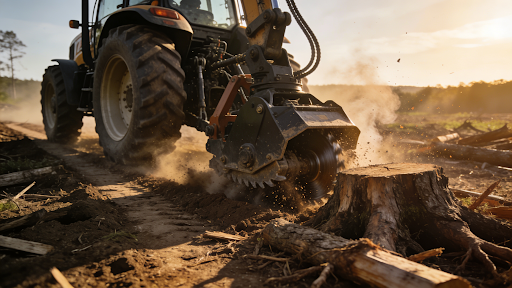
Modern farming and land clearing require machines that work reliably in tough outdoor conditions. In such cases, the overall efficiency of the process will depend not only on the machinery’s capacity but also on the efficiency of the tools mounted on the equipment.
For this reason, maintaining the equipment usually requires advance planning and consideration, which may even include seeking seppi mulcher teeth for sale to ensure the equipment is in good condition and capable of operating continuously outdoors.
One of the vital parts in the construction of land management machinery includes the mulching and cutting tools used for vegetation, brush, and woody materials. Such parts greatly contribute to the efficiency of land clearing and preparation across different terrains over long periods.
Mulcher Teeth
Mulcher teeth are an important part of land-clearing and agricultural processes that require cutting dense vegetation, shrubbery, and wood. The equipment is used to cut down tough vegetation, crush branches, and convert rough surface materials into useful outputs. The machinery is used in the forestry mulching industry and in various land preparation processes that require continuous cutting power.
Reasons Why They Are Important in Tough Environments
The mulcher teeth are subject to harsh conditions during continuous operation, including rocks, roots, and other hard objects, which can easily cause wear and tear. Edge longevity is therefore an important aspect of these machines.
Operators will also want to ensure that there are no disruptions in the operation by requiring continuous cutting. In most instances, replacement parts like seppi mulcher teeth become necessary.
Carbide Tools
There are certain applications in which carbide tools have become a common choice due to their robustness and durability, despite exposure to high-impact areas where equipment experiences constant friction, shock, and abrasion from materials.
In agriculture and land-clearing activities, the use of such tools makes them durable under tough operating conditions. This tool is preferred for its strength and hardness, which enable it to withstand continuous contact with rugged surfaces.
The Conditions That Call for Carbide Parts
Carbide parts are mostly chosen by operators when stability in the work environment is necessary, despite the need for constant replacement of cutting tools. Such conditions include rocky areas and large-scale land clearing, where work is done daily.
Hammer-Style Cutting Tools
A hammer-cutting attachment is a common tool on forestry and mulch-processing machinery, as it can handle aggressive material processing. This type of cutting attachment has been specifically developed to process heavy vegetation that may be difficult for standard cutting systems to handle under harsh environmental conditions.
The following types of material processing are easily handled using hammer cutting attachments:
- Heavy brush and overgrown vegetation.
- Dense natural materials such as branches and roots.
- Terrain with varying degrees of material density.
Operators usually use hammer-cutting attachments when environmental conditions are harsh and material resistance varies during processing.
Protective Holders and Wear Parts
Supporting protective holders and wear parts may not receive the necessary attention in land-clearing or agricultural machines, despite the crucial role they play in keeping the machine stable.
Protective holders serve as shock absorbers against impacts from the cutting equipment in use, thus reducing strain on the machine during operation.
Reasons Experienced Operators Focus on Supporting Parts
- Protects the machine from excessive stress during demanding operations.
- Ensures smooth flow in the work process.
- Helps avoid frequent and sudden machine breakdowns.
Choosing Equipment Based on Workload Instead of Price Alone
In most cases, experienced farmers prioritize reliability and functionality over cost savings when purchasing equipment parts.
This is because, in practice, the selection of the appropriate component should prioritize the application of the equipment over its initial cost. Terrain conditions, workload, operating hours, and the type of material handled all play important roles in determining which components to use.
- Improved performance.
- Reduced downtime.
- Increased consistency in operations.
- Less frequent maintenance.
This ensures that the equipment functions efficiently regardless of the circumstances.
Conclusion
Long-term equipment performance depends on much more than machine power alone; it is equally influenced by the quality and suitability of its working components. Mulcher teeth, carbide tools, hammer-style attachments, and protective parts each contribute in different ways to maintaining efficiency and stability in demanding conditions. Selecting the right equipment, including options like seppi mulcher teeth for sale when replacements are needed, helps maintain consistent output. Operators who match components to their workload typically achieve better consistency, reduced downtime, and more reliable long-term performance.