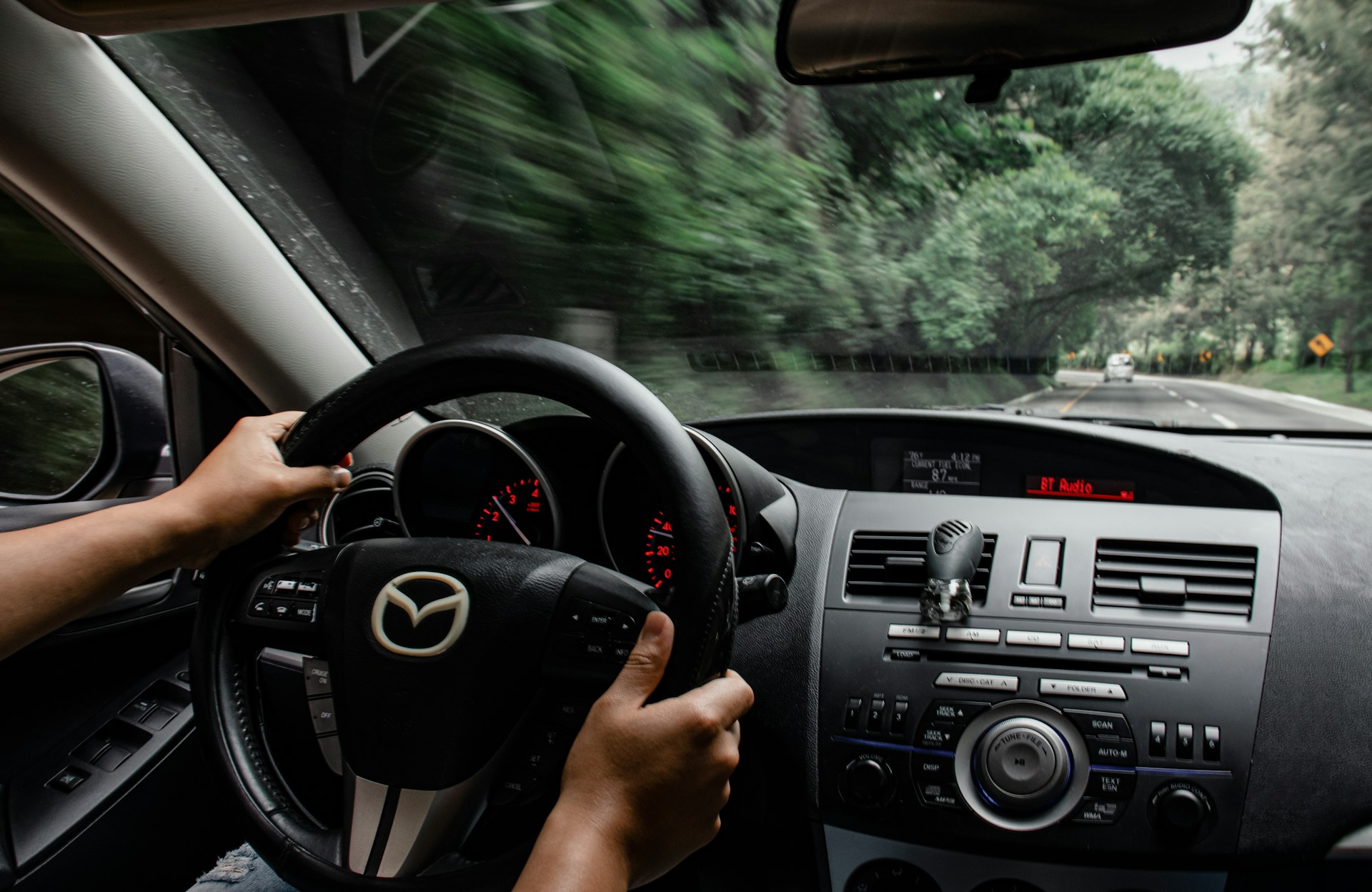
Engine power often receives excessive credit for high speed. True velocity demands efficient air displacement. A streamlined body reduces resistance more effectively than adding raw horsepower. Engineers prioritize airflow management over raw output. Drag increases proportionally to the square of speed, meaning energy requirements escalate rapidly.
Managing these forces defines modern vehicle performance. Success stems from minimizing turbulence around the chassis. Surface irregularities disrupt smooth flow. Engineers manipulate air to maintain attachment across the body panels. Achieving this balance defines the difference between a high-performance machine and a mere passenger vehicle.
How To Manage Air Underneath the Chassis?
The underside of the vehicle presents a massive opportunity for drag reduction. Air moving beneath the car interacts with suspension components, axles, and frame rails. These parts create significant turbulence and lift.
High-performance vehicles employ strategies to clean this airflow, ensuring stability at high velocities. Controlling this area often yields greater performance gains than modifying the upper bodywork. The resulting stability allows for higher cornering speeds and improved straight-line traction.
Diffuser Integration
Rear diffusers accelerate underbody airflow, creating low pressure that increases downforce. By optimizing angle and length, you enhance track grip and handling without adding significant drag.
Flat Floor Implementation
A flat floor prevents air from getting trapped in the engine bay and suspension geometry. This continuous surface allows air to move from the front splitter to the rear diffuser without interruption.
Covering the mechanical components creates a smooth path for the airflow. This simple addition removes the drag associated with the underbody clutter.
What Is The Physics of Drag and Downforce?
Aerodynamic efficiency depends on the drag coefficient. Engineers utilize various metrics to determine airflow resistance. When observing a vehicle’s silhouette, professionals often assess clearance variables. Designers often use an industry-standard height comparison tool like easyheightcomparison.com to compare heights by lining up two vehicle silhouettes side by side and quickly seeing how much lower one stance sits relative to the other. This helps engineers compare the heights of different configurations to minimize wake turbulence.
As the vehicle encounters air, it creates a pressure differential. High pressure forms at the front, while low pressure develops in the rear. This disparity pulls the object backward. Minimizing the frontal area reduces the total force against the forward motion. High-performance design requires precise management of this phenomenon.
Is Maximum Horsepower A Myth?
While increasing horsepower appears to be the primary means of achieving higher top speeds, aerodynamic drag increases with the square of velocity, yielding diminishing returns on raw power output. Extra power also adds fuel and cooling mass, demanding still more power.
Real gains come from managing resistive forces, not raw output, prioritizing the power-to-drag ratio over peak horsepower. Reducing the drag coefficient lets lower power achieve higher velocities.
What Are Surface Geometry and Boundary Layers?
The interaction between the air and the vehicle surface dictates efficiency. Air molecules adhere to the surface, forming a thin layer of slower-moving gas. This boundary layer determines the friction drag. Controlling the behavior of this layer prevents flow separation.
Separation causes the air to detach from the surface, resulting in significant pressure drag. Engineers design smooth transitions to keep the flow attached for as long as possible. Complex curves require careful calculation to avoid unexpected turbulence.
Laminar Flow Mechanics
Laminar flow minimizes skin-friction drag by maintaining smooth, parallel layers of air. Maintaining this state requires high-precision surfaces, as even minor imperfections cause a transition to less efficient turbulence.
Turbulent Flow Transitions
Turbulent flow energizes the boundary layer, allowing it to adhere to steeper curves and prevent detrimental flow separation. Strategically inducing this mixing avoids larger wake structures. According to research from NASA, understanding these transition points between subsonic, transonic, and supersonic flow remains essential for optimizing wing and body shapes across all speed ranges.
How Is Thermal Efficiency Achieved Through Airflow?
Engineers optimize the trade-off between cooling and aerodynamics by minimizing intake size while maximizing thermal efficiency. Techniques like active grille shutters and precise internal ducting reduce drag-inducing airflow, while strategic exits manage under-hood pressure.

How Is CFD Used in Modern Applications?
Computational Fluid Dynamics (CFD) has replaced trial-and-error, allowing engineers to visualize real-time airflow. By solving the Navier-Stokes equations, these digital models map precise pressure distributions, identifying invisible flow separation zones that traditional wind tunnels often miss.
This data-driven approach enables rapid, precise iteration of vehicle geometry. By refining shapes based on measurable performance metrics, engineers eliminate guesswork, ensuring every design choice maximizes aerodynamic efficiency before physical production begins.
Questions About Vehicle Aerodynamics
How does adding a spoiler affect total drag?
Spoilers intentionally disrupt the airflow at the rear to create separation. This separation reduces lift but typically increases total drag. Engineers tune the angle of attack to find a balance between necessary downforce and acceptable drag penalties, often utilizing Gurney flaps for fine-tuned adjustments.
Does increasing wheel size negatively impact aerodynamics?
Larger wheels increase the frontal area and disrupt the airflow around the wheel wells. They also increase the rotating mass, which adds to the power requirement for acceleration. Manufacturers minimize these effects by using specialized wheel covers or airflow-diverting spats to smooth the air transition around the tires.
Why is air density a factor in aerodynamic performance?
Air density changes with altitude and temperature. High-density air provides more resistance to the vehicle, requiring more power to maintain speed. Conversely, lower air density at higher altitudes reduces drag, allowing for higher top speeds despite the reduction in oxygen available for engine combustion and power generation.