Filing a personal injury claim seems simple on the surface.
You get injured, someone else is responsible, the insurance company pays. Simple. Not. There are invisible laws that determine if your claim is paid or denied. No one tells you they exist.
Here’s the thing…
Nine times out of ten, people lose their case for reasons completely unrelated to their injury. They lose because they made one little mistake. Or didn’t know one of the rules.
ste
This blog walks you through those unspoken rules.
What you’ll uncover:
The Contributory Negligence Rule Explained
The Mistakes That Kill Personal Injury Claims
The Evidence You Need (And When To Get It)
Why The First 48 Hours Matter Most
The Contributory Negligence Rule Explained
The contributory negligence rule is probably the harshest law you’ve never heard of.
If you live in Virginia, they control your whole case. Virginia law states that if you are found 1% at fault, you receive nothing. Nada.
Most states follow a slightly less harsh rule known as comparative negligence. Under comparative negligence, if you are 20% at fault in another state, you can recover 80% of the award. Not so in Virginia. Virginia is in the company of Alabama, Maryland, North Carolina and the District of Columbia when it comes to pure contributory negligence.
What that means is that the other person is 100% at fault. If it isn’t, you get nothing.
It’s not fair, but it’s true. And insurance companies know it’s true. They will look for any way to place even a fraction of fault on you so they can deny your claim. That’s why it’s so important to have an experienced Virginia car accident attorney on your side from the beginning — they kill these contributory negligence defenses.
Why The Contributory Negligence Rule Hurts So Many People
Here’s a real example…
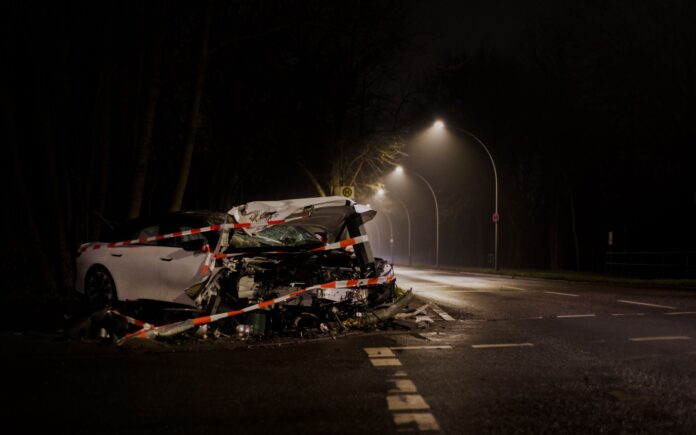
You’re driving home. Someone else runs a red light and t-bones you. Case closed, right? Except the insurance company discovers you were speeding 3 mph. Bam. Now they can say you played a role in causing the accident. Your claim is denied.
Under contributory negligence in Virginia, even a fractional share of fault bars recovery entirely.
There were 127,597 motor vehicle crashes reported to the Virginia DMV in 2023. That’s one crash every 4.1 minutes.
The Mistakes That Kill Personal Injury Claims
Want to know what wrecks a claim faster than anything else?
It’s not the injury. It’s not the police report. These are mistakes people make within days of the accident. Insurance adjusters know about these mistakes and use them against you. Let’s review the big ones:
Saying you’re sorry at the scene: “I’m sorry” is a courteous thing to say. However, the insurance company will hear it as an admission of guilt.
Giving a recorded statement: The adjuster sounds friendly. Don’t fall for it.
Posting on social media: That picture of you smiling at a party can now be used to prove your injuries weren’t so severe.
Avoid going to the doctor: If you skip your doctor’s appointments, your insurance company will deem you not really injured.
Taking the first offer: It’s almost always a lowball.
People mean well, but they end up sabotaging their own case.
The “Friendly” Insurance Call Trap
The insurance adjuster will call you in a day or two. They pretend to care. They ask you how you are doing.
Don’t fall for it.
They are trying to pay you as little as possible. Every question is aimed at getting you to say something that can be used against you later. Saying “I feel okay” can ruin your claim — even if you are just being polite.
Smart move? Don’t talk to them. Let a lawyer handle it.
The Evidence You Need (And When To Get It)
Evidence wins personal injury cases. Period.
Most people don’t know what evidence to gather, or when. By the time they learn, it’s too late. Skid marks disappear. Witnesses lose memories. Cameras delete old video.
Here is what you need to grab as soon as possible:
Photos of every angle of the scene
Photos of all vehicles and damage
Photos of your injuries (with updates every few days)
Names and phone numbers of every witness
A copy of the police report
All medical records and bills
Any video from nearby cameras or dashcams
It may seem excessive right now. You’ll thank yourself later for having it.
Why Witnesses Are Worth Their Weight In Gold
Contributory negligence states live and die by the testimony of one witness.
Why? So you have witnesses that the other driver was totally at fault. If not, you are going into a he said she said battle. And you know who wins those. The insurance company.
Get witness info at the scene. Don’t wait. People disappear fast.
Why The First 48 Hours Matter Most
The most crucial period in your case is the initial 48 hours following an accident.
The question is why? Because evidence has not faded, witnesses’ memories are still clear and your injuries can definitely be tied to the accident. If you wait too long… well then, everything is working against you.
During those first 48 hours, you should:
See a doctor (even if you “feel fine”)
Collect all the evidence above
Avoid talking to the other party’s insurance
Write down everything you remember
Contact a personal injury lawyer
Wow, that last one is huge. Plaintiffs that hired an attorney received mean compensation of $77,600 versus $17,600 if they self-represented. 4.4x higher payout by hiring legal help.
Totally understandable. Attorneys understand the game. They know how to collect evidence and negotiate when the insurance company tries to lowball you.
The Settlement Vs Trial Reality
Most people think personal injury cases mean huge courtroom battles.
In fact? They rarely ever go to trial. Statistics prove that approximately 90-95 percent of personal injury cases settle out of court. Negotiations is where the real game is played.
Bringing It All Together
Filing a personal injury claim isn’t as simple as it looks.
Silent rules determine winners and losers. Contributory negligence alone can destroy a valid case for the slightest error. Throw in the insurance pitfalls, lost evidence, and low ball settlements and many come up empty handed.
The good news? You can avoid all of this. To recap:
Don’t say sorry or admit any fault
Don’t talk to the other party’s insurance
Collect evidence in the first 48 hours
Get witness info right away
Hire an experienced personal injury lawyer
Contributory negligence sounds harsh, but it’s not absolute. You can still win with proper evidence and guidance.
NASCAR (National Association for Stock Car Auto Racing) isn’t the most popular kind of sport these days. But it has a devoted army of fans, mainly in North America, who never miss the Daytona 500, Coca-Cola 600, and Southern 500. If you are new to this sport, you may be confused by the chaotic action. It may remind you of Formula 1, but it embraces a totally different concept. Before betting on NASCAR, make sure you know what’s going on the tracks. With this knowledge, you will manage to place NASCAR bets with money while pursuing potential profits.
Main Things to Know about NASCAR
NASCAR is a stock-car racing series that’s been around since the 1940s. The NASCAR Cup Series is the main event, consisting of 36 races taking place throughout the season. Over 19 teams join the competition with their driving cards from Chevrolet, Ford, Toyota, and other top manufacturers. The drivers will be racing around the racetrack, looking like a tarmac oval. The car that completes the allotted number of laps first becomes the winner. After successful qualification, the race continues the next day. It is split into three stages, 60 and 80 laps each.
A stage system allows teams to earn points at each stage, creating more opportunities to bet on NASCAR. The scoring systems look as follows:
Stage 1 – 10 points plus a playoff point for the winner;
Stage 2 – 10 points plus a playoff point for the winner;
Stage 3 – 40 points for the winner, 35 points for the second place, and 34 points for the third place, etc.
Teams that have earned the most points make the playoffs, which start after the first 26 races of the season. All race winners and the next four highest qualifying teams appear on the track.
NASCAR Betting: How It Works?
NASCAR betting means predicting the outcomes of specific races, and some of the most common types include:
Race winner: Predicting the final winner of the race.
Podium winners: Predicting the top three positions on the final leaderboard
Head-to-head: Predicting if a particular driver will end up ahead of another particular driver.
Top X: Predicting that a specific driver will finish below or above a certain position.
Volatility may vary from one bet to another. Betting on a race winner is less volatile since there are 36 other racers on the track, leaving enough space for other factors. Meanwhile, top X bets have a significantly higher chance of success. Head-to-head bets are also popular among those who have extensive knowledge of NASCAR. You can also bet on the stage winner. While the sport is split into stages, you can bet on the driver to dominate a particular stage without predicting the final outcome of the race.
Responsible Betting on NASCAR
Betting on NASCAR can be safe with a responsible approach. Here are the nuances for making more accurate predictions:
Keep your bets limited. There are numerous races taking place weekly. That’s why you should have a clear plan for how many bets you want to place and how much money you are ready to spend and lose. In other words, calculating your entire risk exposure increases your chances of winning. Always make sure that your total amount staked doesn’t surpass what you can afford to lose.
Don’t get overly exposed to big races. The playoffs can make some of you overly excited, leading to more unthoughtful expenses. Eventual losses can impact your entire bankroll. So, you should keep your betting under control without letting emotions take over you.
Learn the race format and rules. The available tracks, stage lengths, and race formats can impact your bets. Make sure to keep those factors analyzed for accurate betting.
Check the “house rules” of your sportsbook. Betting rules may vary from one sportsbook to another, which means you need to be more careful when choosing the betting spot. Some may have specific rules for betting on general outcomes, such as the final winner, or on unusual situations, such as multiple overtimes.
Stay consistent as you go. Showing consistent betting decisions throughout the season is a key to success. The NASCAR Cup Series is “a marathon, not a sprint”, so consider your next step every time you place a bet.
Managing Risks
Learning the best betting practices doesn’t eliminate the risk of losing money, but it definitely helps achieve better results. NASCAR bets are highly unpredictable due to mechanical issues, weather conditions, and crashes, which can change the odds in a split second. To manage risks, you need to keep your bets as diverse as possible without betting all your money in a single race. Also, you shouldn’t chase massive wins; instead, focus on smaller, more frequent wins. Remember to follow the latest news about NASCAR to increase your chance of making a successful bet.
Alex Palou rose to the occasion when it mattered most by storming to the NTT P1 Award for the 110th running of the Indianapolis 500 at the Indianapolis Motor Speedway on Sunday, May 17.
The event’s starting lineup was determined through a condensed, single-day qualifying session that occurred on Sunday after the event’s first round of qualifications that was initially scheduled to occur on Saturday, May 16, was canceled due to on-track precipitation.
For Sunday’s qualifying format, the field of 33 competitors entered to compete in the event was split into two 30-minute practice sessions that started at 9:30 p.m. ET before qualifications began at noon ET on FS2, both of which were aired on FS2. The first qualifying session featured all 33 competitors receiving a single opportunity to post a four-lap qualifying run individually. At the conclusion of the first round, the 12 fastest qualifiers transferred to a second round, while Positions 13-33 from the first round were determined.
The second round, which commenced at 4 p.m. ET on FOX, occurred, and the top six fastest qualifiers transferred to the Firestone Fast 6 round that occurred at 6 p.m. ET on FOX. In the latest round, the official starting lineup, along with the pole winner for this year’s Indy 500, was officially determined.
During the qualification rounds, Palou, the reigning Indianapolis 500 champion and four-time NTT IndyCar Series champion from Barcelona, Spain, was the 31st of 33 competitors to qualify based on a random qualification draw that occurred on Friday, May 15. At the conclusion of the first qualifying round, Palou was the next-to-last competitor to transfer to the second qualifying round as he posted the 11th-fastest four-lap average-qualifying run of 231.155 mph in 2:35.7399 in his No. 10 DHL/Chip Ganassi Racing Dallara-Honda entry. He then managed to post the second-fastest average run of 231.665 mph in 2:35.3969 to transfer to the Firestone Fast 6 round.
In the Firestone Fast 6 round, Palou, who was the next-to-last competitor to qualify, utilized extra speed gained amid windy, warm conditions to notch a four-lap average run at 232.248 mph in 2:35.0066. Following Felix Rosenqvist’s run of 231.375 mph in 2:35.5914, Palou officially clinched the top-starting spot for next Sunday’s prestigious event at Indianapolis Motor Speedway for a second time.
With the pole, Palou, who won his first Indianapolis 500 pole in 2023, became the 19th competitor to repeat as a pole winner of the Greatest Spectacle in Racing. He also recorded his 15th NTT INDYCAR SERIES career pole, his third of the 2026 season, his first on an oval track since the Milwaukee Mile in August 2025. Palou’s 2026 Indy 500 pole award was the ninth for Chip Ganassi Racing and the 15th for Honda in the event. Entering next Sunday’s Indy 500, Palou, who leads the 2026 IndyCar driver standings by 27 points over Kyle Kirkwood, will attempt to become the seventh competitor to win the event in back-to-back seasons.
“These [No. 10 ] guys, just look at these guys,” Palou said on FOX. “Incredible work they did today. I have no words. Today, honestly, we didn’t expect to have that much speed. We started struggling. Everybody saw we were 11th [after the first qualifying round]. We were not holding anything back. I have to say, probably being 31st [to qualify], thanks to my wife, by the way, for drawing that number [on Friday], but I think being there allowed us to just work on those conditions. That was incredible. A great star to the Month of May. [I] Cannot thank everybody at CGR enough.”
Palou will share the front row with Alexander Rossi and David Malukas, both of whom qualified second and third, respectively. Rossi, the 2016 Indy 500 champion who was the sixth-fastest competitor following the first and second qualifying rounds, took advantage of being the first to qualify in the Firestone Fast 6 round to post the second-fastest four-lap average-qualifying run at 231.99 mph in 2:35.1792. Malukas, the 2025 Indy 500 runner-up finisher, backed up his strong qualifying performances of being the second and third fastest following the first two rounds, respectively, to secure the third-place starting spot with a four-lap average-qualifying round at 231.877 mph in 2:35.2549.
For Rossi, who is campaigning in his second INDYCAR season with Ed Carpenter Racing, this season marks his career-best starting spot for the Indy 500 as his previous best was fourth in 2024. For Malukas, who is campaigning in his first season with Team Penske, he also achieved his career-best starting spot for the event after previously qualifying as high as seventh a year ago.
Felix Rosenqvist, driving for Meyer Shank Racing, who topped the qualifying charts with blistering speeds of 232.599 and 232.065 following the first two rounds, respectively, ended up qualifying in fourth place for this year’s Indy 500 with a four-lap average-qualifying run of 231.375 mph in 2:35.5914. This season marks Rosenqvist’s fifth consecutive season qualifying in the top-10 mark for the Indy 500.
Santino Ferrucci and Pato O’Ward, both of whom also transferred to the Firestone Fast Six round with Palou, Rossi, Malukas and Rosenqvist, will share the second starting row with Rosenqvist by starting fifth and sixth, respectively. Kyffin Simpson, Conor Daly, Scott McLaughlin, rookie Caio Collet, Scott Dixon, Rinus VeeKay started seventh through 12th, respectively, after the latter six transferred as far as the top-12 qualifying round.
Takuma Sato, a two-time Indianapolis 500 champion who barely scrubbed the outside wall entering Turn 3 during practice, was the first competitor who did not transfer to the second qualifying round, as he will start in 13th place. He will share the fifth row with Ed Carpenter and Helio Castroneves.
Christian Rasmussen, Marcus Armstrong and Marcus Ericsson will share the sixth row, while Christian Lundgaard, Will Power and Nolan Siegel will start in the seventh row, respectively. Louis Foster, Ryan Hunter-Reay and Josef Newgarden will occupy the eighth row, while Romain Grosjean, Kyle Kirkwood and Katherine Legge, the latter of whom is competing in the Memorial Day ‘Double’ between the Indianapolis 500 and the Coca-Cola 600 at Charlotte Motor Speedway, will start in the ninth row, respectively. Rookie Mick Schumacher, Jack Harvey, Graham Rahal, rookie Dennis Hauger, rookie Jacob Abel and Sting Ray Robb completed the 33-car field for this year’s Indianapolis 500 starting grid, respectively.
Qualifying Position, Average Speed, Average Time:
Alex Palou, 232.248 mph, 2:35.0066
Alexander Rossi, 231.990 mph, 2:35.1792
David Malukas, 231.877 mph, 2:35.2549
Felix Rosenqvist, 231.375 mph, 2:35.5914
Santino Ferrucci, 230.846 mph, 2:35.9428
Pato O’Ward, 230.442 mph, 2:36.2218
Kyffin Simpson, 230.883 mph, 2:35.9229
Conor Daly, 230.712 ph, 2:36.0390
Scott McLaughlin, 230.577 mph, 2:36.1300
Caio Collet, 230.539 mph, 2:36.1560
Scott Dixon, 230.347 mph, 2:36.2862
Rinus VeeKay, 229.585 mph, 2:36.8048
Takuma Sato, 230.995 mph, 2:35.8477
Ed Carpenter, 230.829 mph, 2:35.9593
Helio Castroneves, 230.811 mph, 2:35.9717
Christian Rasmussen, 230.705 mph, 2:36.0434
Marcus Armstrong, 230.701 mph, 2:36.0464
Marcus Ericsson, 230.667 mph, 2:36.0690
Christian Lundgaard, 230.661 mph, 2:36.0729
Will Power, 230.279 mph, 2:36.3323
Nolan Siegel, 230.213 mph, 2:36.3769
Louis Foster, 230.212 mph, 2:36.3773
Ryan Hunter-Reay, 230.202 mph, 2:36.3843
Josef Newgarden, 230.165 mph, 2:36.4098
Romain Grosjean, 229.791 mph, 2:36.6643
Kyle Kirkwood, 229.607 mph, 2:36.7896
Katherine Legge, 229.456 mph, 2:36.8928
Mick Schumacher, 229.450 mph, 2:36.8969
Jack Harvey, 229.207 mph, 2:37.0634
Graham Rahal, 229.017 mph, 2:37.1936
Dennis Hauger, 228.982 mph, 2:37.2176
Jacob Abel, 228.169 mph, 2:37.7778
Sting Ray Robb, 226.572 mph, 2:38.8901
The 2026 Indianapolis 500 will mark the 110th running of the Greatest Spectacle in Racing at Indianapolis Motor Speedway next Sunday, May 24. The event’s pre-race coverage will air at 10 a.m. ET on FOX. The drop of the green flag will occur at 12:30 p.m. ET on FOX.
Hamlin and teammate Chase Briscoe battled intensely in the final 200 laps, with Hamlin ultimately pulling away in the closing stages.
This victory marked Hamlin’s second All-Star Race win and his first since 2015, making him one of only three drivers to win at multiple tracks.
A major crash early in the race involved Ryan Preece and several other drivers, setting a chaotic tone for the event.
DOVER, Del. (May 17, 2026) – Denny Hamlin added another chapter to his legendary NASCAR Cup Series career Sunday afternoon, surviving a chaotic and dramatic NASCAR All-Star Race at Dover Motor Speedway to claim the $1 million prize in impressive fashion.
Hamlin battled Joe Gibbs Racing teammate Chase Briscoe throughout the closing laps of the 350-lap event, with the two repeatedly swapping the lead during the final 200-lap segment before Hamlin ultimately pulled away in the closing laps at The Monster Mile.
The victory marked Hamlin’s second career NASCAR All-Star Race win and his first since 2015 at Charlotte Motor Speedway. It also made him just the 10th driver to win multiple All-Star Races and only the third driver to win the event at multiple tracks, joining Kyle Larson and Joey Logano.
The race itself was pure excitement from start to finish on The World’s Fastest One-Mile Oval, where Miles the Monster was hungry all afternoon long.
On just the second lap, a major crash erupted on the frontstretch involving Ryan Preece, whose car became engulfed in flames following heavy contact with the Turn 1 outside wall. Cole Custer, Ryan Blaney, Kyle Larson and several others were also collected in the incident, immediately setting the tone for a wild afternoon.
Drivers fought slick conditions throughout the race as the combination of resin in the corners and the 750-horsepower package created multiple racing grooves and more opportunity for contact.
Despite the constant action and cautions, the race eventually settled into a thrilling duel between Hamlin and Briscoe in the closing laps.
“I mean, I liked it,” Hamlin said of battling through traffic and the All-Star Race format. “It challenged us to have to go through traffic. Otherwise, I mean, you could go out there, and you could lead a bunch of laps. I definitely like the invert. Obviously, it caused some chaos there, took out some good cars.”
Briscoe took the lead away from Hamlin on the final restart of the afternoon, but Hamlin was too strong on the long run. He then rocketed by Briscoe and didn’t look back.
“Every time I got the lead, I was so loose and killed my right rear,” Briscoe said after finishing second. “I couldn’t guard against it. I thought we were close; just needed a little bit more. I kind of caught him near the end for a second. I just started trying stuff to see if I could find something. Just couldn’t quite get him.”
Briscoe said the race around Dover’s concrete surface was one of the most enjoyable events he’s competed in this season.
“I felt like I was running the Coke 600 a week early, it was a long race,” Briscoe said. “It was definitely chaotic, but I enjoyed it, it was fun. I thought the resin was unbelievable. We were able to move all over the place. Yeah, I had a lot of fun.”
Briscoe’s runner-up finish came after his team rebuilt much of the car following an incident in Friday’s practice.
“It was obviously a really fast car,” Briscoe said. “I’m just proud of our group. I knocked the wall down in practice. We basically rebuilt the whole car. So, for them to be able to get the car back to where it’s competitive, it says a lot about the guys.
Connor Zilisch finished an impressive fifth to earn the highest-finishing rookie honors.
The victory also marked Joe Gibbs Racing’s fourth NASCAR All-Star Race win and tied Hamlin with Kevin Harvick and Terry Labonte for the longest gap between All-Star Race victories at 11 years.
When asked what he planned to do with the $1 million prize, Hamlin smiled.
“Probably give it to mama.”
Receive a free gift when you renew your Dover Motor Speedway tickets for 2027 at DoverMotorSpeedway.com/renewals
NASCAR TICKETS: Visit DoverMotorSpeedway.com for updates on the 2027 NASCAR weekend, see track facts and sign up for email subscriptions.
FOLLOW US: Follow Dover Motor Speedway on Facebook, X, Instagram and TikTok (@MonsterMile) for the latest news and announcements.
RICK WARE RACING NASCAR All-Star Race Date: May 17, 2026 Event: NASCAR All-Star Race (non-points event) Series: NASCAR Cup Series Location: Dover (Del.) Motor Speedway (1-mile, concrete oval) Format: 350 laps, broken into three segments (75 laps/75 laps/200 laps)
● All-Star Race Winner: Denny Hamlin of Joe Gibbs Racing (Toyota) ● Segment 1 Winner: Bubba Wallace of 23XI (Toyota)
Note: Top-26 drivers from Segment 1 were inverted for the start of Segment 2. Remainder of field lined up via finishing position.
● Segment 2 Winner: Tyler Reddick of 23XI (Toyota)
Note: Top-26 drivers based on combined results from Segments 1-2, plus past All-Star Race winners, past NASCAR Cup Series champions, and the fan vote winner, all advanced to the final segment to compete for the win.
Cody Ware Results:
● Segment 1: Started 23rd, Finished 31st / Running, completed 56 of 75 laps ● Segment 2: Started 31st, Finished 18th / Running, completed 75 of 75 laps
Race Notes:
● Denny Hamlin won the All-Star Race with a .887 of a second margin over runner-up Chase Briscoe. It was Hamlin’s second career All-Star Race victory.
Sound Bites:
“My team did a really good job. We were struggling and fighting with a lot of balance problems on corner entry in the first segment. It fired off a lot better in the second segment – we picked up half a second on our fastest lap. Obviously, there was a lot of attrition playing into the first two segments, and I don’t want to be cocky and present like we had the pace to make it into the final segment, but if we could’ve fired off with the pace we had at the end, then I think we would’ve been in a good position to advance.” – Cody Ware, driver of the No. 51 Museum of the Bible Chevrolet
Next Up:
The NASCAR Cup Series returns to points-paying racing on Sunday, May 24 with the Coca-Cola 600 at Charlotte (N.C.) Motor Speedway. The longest race on the series’ schedule gets underway at 6 p.m. EDT with live coverage provided by Prime and SiriusXM NASCAR Radio.
Denny Hamlin etched himself as a two-time NASCAR All-Star Race champion after he capped off a bizarre, chaotic, and dominant run to beat teammate Chase Briscoe and win the featured event at Dover Motor Speedway on Sunday, May 17.
The three-time Daytona 500 champion from Chesterfield, Virginia, started on pole position and dominated the All-Star Race’s first segment, where he led a race-high 53 laps before settling in the runner-up spot. After capturing a third-place result behind Tyler Reddick and teammate Chase Briscoe following the second segment, Hamlin was awarded the first-place starting spot for the third and final segment. This was due to achieving the lowest average finishing result between the first two segments.
After spending the final segment primarily swapping and battling for the lead with Reddick and Briscoe, Hamlin executed a race-winning crossover move on Briscoe with 30 laps remaining to assume the lead for the final time. From there, Hamlin, who led on five instances throughout the final segment, motored away from Briscoe to storm to his second All-Star Race career victory and first in 11 years.
The event’s starting lineup was determined in an on-track qualifying session. Each of the 36 competitors (those already locked into the All-Star Race and those who were not locked in) entered to compete in the event. This involved taking the green flag and completing a full cycle around Dover at full speed individually. During the second lap, the competitors would enter pit road, pit for four tires with no fuel added, re-enter the track, and race back to the checkered flag. The total time from the green flag to the checkered flag determined the event’s starting lineup.
At the conclusion of Saturday’s qualifying session, Denny Hamlin won his second All-Star pole position after he notched a three-lap qualifying trial run at 98.812 mph in 109.298 seconds. Brad Keselowski clocked in the second-fastest trial run at 98.682 mph in 109.442 seconds to start on the front row.
During the qualifying session, Zane Smith’s No. 38 Front Row Motorsports Ford team won the 2026 Mechanix Wear Pit Crew Challenge after they posted the fastest four-tire pit service at 12.612 seconds. As a result, they earned the competition’s $100,000 prize and the first pit stall selection for Sunday’s All-Star Race while Smith qualified in 25th place for the main event.
Before the event, AJ Allmendinger (unapproved adjustments), Cole Custer (unapproved adjustments), Daniel Suarez (backup car) and Cody Ware (unapproved adjustments) dropped to the rear of the field.
Entering the 2026 All-Star Race event, the competitors who were guaranteed starting spots for all three segments of the 2026 All-Star Race included Christopher Bell, Josh Berry, Ryan Blaney, Chase Briscoe, Kyle Busch, William Byron, Ross Chastain, Austin Cindric, Austin Dillon, Chase Elliott, Ty Gibbs, Denny Hamlin, Carson Hocevar, Brad Keselowski, Joey Logano, Kyle Larson, Tyler Reddick, Shane van Gisbergen and Bubba Wallace.
Those who were only guaranteed starting spots for the first two segments include Zane Smith, Noah Gragson, Daniel Suarez, Ty Dillon, AJ Allmendinger, Chris Buescher, Todd Gilliland, Riley Herbst, Cole Custer, John Hunter Nemechek, Erik Jones, Ricky Stenhouse Jr., Alex Bowman, Cody Ware, Ryan Preece, Michael McDowell, and Connor Zilisch. As a result, they were tasked with securing the lowest combined finishing result between the first two stages, where only the top six competitors who achieved this task would transfer. The All-Star Race’s 26th and final starting spot would be awarded to the Fan Vote Winner.
First Segment
When the green flag waved, and the first segment commenced, Brad Keselowski, who started on the inside lane, motored past pole-sitter Denny Hamlin to assume the lead through the first two turns. Just after Keselowksi led the first lap, the event’s first caution flew when, amid a series of three-wide racing within the field, Ryan Preece made contact with Todd Gilliland while trying to steer to the left in front of Gilliland through the frontstretch. The contact got the latter duo along with Kyle Larson sideways before the trio wrecked hard against the outside wall through the first turn and left Preece’s damaged entry on fire. Other competitors involved included Cole Custer, Chase Elliott, Ryan Blaney, John Hunter Nemechek, Michael McDowell and Daniel Suarez. The event was placed in a red flag period for 13 minutes and 26 seconds.
Once the red flag lifted and the event restarted under green on the sixth lap, the field fanned out as Keselowski used the inside lane to muscle ahead of Hamlin through the first two turns and the backstretch. Keselowski led the next lap and continued to lead at the Lap 10 mark, while Hamlin, William Byron, Ross Chastain, and Bubba Wallace followed suit.
On Lap 18, Hamlin drew himself beneath Keselowski amid a tight side-by-side battle and led a lap for himself. Amid Keselowski’s brief challenge through the fronstretch, Hamlin used the inside lane to motor ahead through the first two turns. Hamlin proceeded to lead by seven-tenths of a second on Lap 20, more than two seconds by Lap 25 and more than three seconds at the Lap 30 mark while Keselowski retained the runner-up spot ahead of Byron, Chastain, Wallace, Tyler Reddick, Erik Jones, Christopher Bell, Kyle Busch and Joey Logano, respectively.
At the first segment’s halfway mark between Laps 37 and 38, Hamlin extended his advantage to more than four seconds over Byron as Byron overtook Keselowski for the runner-up spot on Lap 32. Behind, Wallace moved up to fourth place in front of Chastain. Reddick, Bell, Busch, Jones and Logano, while Chase Briscoe, Ty Gibbs, Austin Cindric, Carson Hover, Alex Bowman, Noah Gragson, Austin Dillon, Ricky Stenhouse Jr., Connor Zilisch and Josh Berry trailed in the top 20. They were ahead of Ty Dillon, Riley Herbst, Michael McDowell, Chase Elliott, Shane van Gisbergen, AJ Allmendinger, John Hunter Nemechek, Chris Buescher and Zane Smith, all of whom were scored on the lead lap, respectively.
By Lap 50, Hamlin stabilized his advantage to more than four seconds over Byron while Wallace trailed in third place by more than five seconds. Behind, teammate Reddick battled Keselowski for fourth place as Chastain, Bell, Busch, Jones and Briscoe raced in the top 10, with Briscoe trailing the lead by double digits. Hamlin continued to lead by more than four seconds just past the Lap 60 mark while Wallace trailed in the runner-up spot over Byron, Reddick and Chastain.
On Lap 62, the event’s second caution flew when Carson Hocevar blew a right-front tire and went dead straight into the outside wall through Turns 3 and 4. During this caution period, some including Byron, Reddick, Suarez, Jones, Ty Gibbs, Austin Dillon, Ricky Stenhouse Jr., Kyle Busch, Michael McDowell, Noah Gragson, Ty Dillon, Zane Smith, Josh Berry, AJ Allmendinger, Chris Buescher and John Hunter Nemechek, pitted while the rest led by Hamlin remained on the track. During the pit stops, Busch received a penalty for speeding on pit road.
With the first segment restarting with six laps remaining, Hamlin briefly rocketed away from the outside lane through the frontstretch before Wallace drag-raced against Hamlin for nearly a full lap. Then through Turns 3 and 4, Wallace overtook Hamlin for the lead and he led the next lap while the field behind fanned out and jostled for spots.
With three laps remaining in the first segment period, the caution returned when a multi-car wreck erupted through the frontstretch that involved Kyle Busch, Riley Herbst, Elliott, Zane Smith, Nemechek, Bell, Allmendinger, Jones and Buescher. The incident was enough for the first segment period scheduled to conclude on Lap 75 to officially conclude under caution. At the mark, Wallace was leading ahead of Hamlin, Chastain, Briscoe, Keselowski, Cindric, Byron, Logano, Austin Dillon and Reddick, respectively.
At the conclusion of the first segment, there were five lead changes for three different leaders, and a total of three cautions.
Photo by Logan Allen for SpeedwayMedia.com.
Segment 1 Results:
Bubba Wallace led six laps
Denny Hamlin, 53 laps led
Ross Chastain
Chase Briscoe
Brad Keselowski, 16 laps led
Austin Cindric
William Byron
Joey Logano
Austin Dillon
Tyler Reddick
Connor Zilisch
Michael McDowell
Erik Jones
Alex Bowman
Ty Gibbs
Ricky Stenhouse Jr.
Ty Dillon
Josh Berry
Noah Gragson
Shane van Gisbergen
Zane Smith
AJ Allmendinger
Chris Buescher
Christopher Bell, two laps down
Riley Herbst, three laps down
John Hunter Nemechek, three laps down
Kyle Busch, three laps down
Chase Elliott, three laps down
Carson Hocevar – OUT, Accident
Daniel Suarez, nine laps down
Cody Ware, 16 laps down
Ryan Blaney – OUT, Accident
Kyle Larson – OUT, Accident
Todd Gilliland – OUT, Accident
Ryan Preece – OUT, Accident
Cole Custer – OUT, Accident
Second Segment
Before the second segment, the entire field was pitted during the first segment’s break period. In addition, the second segment’s lineup was inverted for the top-26 finishers from the first segment’s results. The remaining competitors that finished 27th through 36th retained their respective starting lineup spots. Based on the inversion, Nemechek was awarded the pole position for the second segment. By then, however, Nemechek retired from further competition due to being involved in a pair of incidents, including the latest one that concluded the first segment. As a result, the competitor who got to lead the start of the second segment was AJ Allmendinger.
The start of the second segment featured teammates Allmendinger and Shane van Gisbergen dueling for the lead for a full lap as Allmendinger barely led the next lap over van Gisbergen. Allmendinger then motored ahead through the frontstretch and he set sail with the lead through the first two turns while Ty Dillon, Gragson and Stenhouse pursued in the top five, respectively.
On the sixth lap, the caution flew when Chastain and Keselowski made contact and wrecked through the backstretch while Wallace sustained minor damage to the front of his entry as he hit the left side of Keselowski’s wrecked entry.
As the second segment restarted on Lap 11, Allmendinger and van Gisbergen dueled for the lead for a full lap as van Gisbergen barely led the next lap from the inside lane. Both Kaulig Racing entries remained dead even over the next four laps before van Gisbergen, who had been using the inside lane to keep even with Allmendinger, got sideways and spun towards the outside wall through Turns 3 and 4. Van Gisbergen was able to proceed as the rest of the field dodged his spinning entry.
The next restart on Lap 20 featured Allmendinger jumping ahead of Reddick and muscling clear with the lead through the first two turns while teammate Ty Dillon overtook Reddick for the runner-up spot entering the backstretch. Allmendinger led the next lap and he retained the lead up until Lap 23 until Reddick assumed the lead during the next lap. Reddick proceeded to extend his lead to eight-tenths of a second by Lap 30 while Gragson, Ty Gibbs, Ty Dillon, Hocevar, Zilisch, Hamlin, Stenhouse, and Bowman trailed in the top 10, respectively.
At the second segment’s halfway mark between Laps 37 and 38, Reddick continued to lead by six-tenths of a second. Allmendinger, Gragson, Gibbs, Hocevar, Zilisch, Hamlin, Ty Dillon, Bowman, and Stenhouse were scored in the top 10, respectively. Meanwhile, McDowell, Jones, Briscoe, Byron, Logano, Cindric, Austin Dillon, Suarez, Berry, Cody Ware, and Zane Smith rounded out the 21-car field that were all scored on the lead lap, respectively.
Following a caution that flew on Lap 51 due to Ty Gibbs getting loose and spinning through the frontstretch, a majority of the field, led by Reddick, pitted. Select names led by Allmendinger and Jones remained on the track. The next restart on Lap 56 featured Allmendinger jumping ahead on his worn tires to maintain the lead over Jones while Briscoe overtook Jones through Turns 3 and 4 for the runner-up spot. Allmendinger continued to lead up until Lap 59 before Briscoe used the outside lane to overtake Allmendinger entering Turn 3 and assumed the lead for the next lap.
By Lap 65, Briscoe retained the lead by a tenth of a second over a hard-charging Reddick before the latter returned atop the leaderboard during the next lap. Reddick proceeded to stretch his advantage to two seconds over Briscoe at the Lap 70 mark while Jones, Bowman, and Hamlin trailed in the top five ahead of Hocevar, Zilisch, Byron, McDowell, and Gragson, respectively.
As the second segment concluded on Lap 75, Reddick was scored as the leader by more than four seconds over Briscoe. Hamlin, Hocevar, Zilisch, Jones, Byron, Bowman, McDowell, and Gragson were scored in the top 10, respectively. By then, the second segment generated nine lead changes for four different leaders, and three cautions.
Photo by Logan Allen for SpeedwayMedia.com.
Segment 2 Results:
Tyler Reddick, 39 laps led
Chase Briscoe led for seven laps
Denny Hamlin
Carson Hocevar
Connor Zilisch
Erik Jones
William Byron
Alex Bowman
Michael McDowell
Noah Gragson
Ty Dillon
Austin Cindric
Joey Logano
Austin Dillon
Ricky Stenhouse Jr.
Daniel Suarez
Josh Berry
Cody Ware
AJ Allmendinger, 27 laps led
Ty Gibbs, one lap down
Shane van Gisbergen, one lap down, two laps led
Zane Smith, six laps down
Riley Herbst, 11 laps down
Kyle Busch, 47 laps down
Brad Keselowski, 48 laps down
Christopher Bell, 53 laps down
Bubba Wallace, 59 laps down
Ryan Blaney, 62 laps down
Ross Chastain – OUT, Accident
John Hunter Nemechek – OUT, Accident
Chris Buescher – OUT, Accident
Chase Elliott – OUT, Accident
Kyle Larson – OUT, Accident
Todd Gilliland – OUT, Accident
Ryan Preece – OUT, Accident
Cole Custer – OUT, Accident
Third/Final Segment
At the conclusion of the second segment, the starting positions for the third and final segment were determined by the average finishing results between the first two segments. Hamlin was awarded the pole position for the final segment. He was followed by Briscoe, Reddick, Byron, Zilisch, Cindric, Jones, Logano, McDowell, and Bowman, respectively. Austin Dillon, Wallace, Keselowski, Hocevar, Ty Gibbs, Berry, van Gisbergen, Bell, Kyle Busch, Blaney, and Larson also participated in the final segment, with several names like Bell, Busch, Blaney, Larson and Wallace automatically cycling back on the lead lap despite being pinned several laps down following the first two segments from being involved in wrecks.
Meanwhile, the following names that included Zilisch, Jones, McDowell, Bowman, Ty Dillon, Gragson, Stenhouse and Allmendinger all transferred to the All-Star Race’s third and final segment. Suarez also transferred as the Fan Vote winner. On the contrary, the following 10 names that included Cole Custer, Ryan Preece, Todd Gilliland, Chase Elliott, Chris Buescher, John Hunter Nemechek, Ross Chastain, Riley Herbst, Zane Smith, and Cody Ware did not compete in the third and final segment due to either not achieving the highest-average finishing result or unable to continue from being involved in wreckages between the first two segments.
The start of the third and final segment featured teammates Hamlin and Briscoe dueling for the lead for a full lap as they drag-raced to start the next lap. Briscoe then used the outside lane through the backstretch to muscle ahead and clear Hamlin for the lead, where he led the next lap while Reddick tried to reel in Hamlin for the runner-up spot. With most of the field settling in single-line formation, Briscoe maintained a steady advantage just past the fifth lap mark over Hamlin while Reddick, Byron and Zilisch followed suit in the top five, respectively.
Just past the Lap 10 mark, Briscoe was leading by six-tenths of a second over Hamlin while Reddick, Byron, Zilisch, Cindric, Jones, Logano, McDowell and Bowman were racing in the top 10 ahead of Wallace, Austin Dillon, Ty Dillon, Hocevar, Stenhouse, Allmendinger, Kyle Busch, Keselowski, Gragson and Gibbs, respectively. Briscoe extended his lead to more than a second by Lap 25 as Reddick assumed the runner-up spot from Hamlin.
On Lap 40, Reddick reeled in and overtook Briscoe for the lead through the first two turns after Briscoe had issues navigating past Suarez to lap the latter. With the clean air to his advantage, Reddick proceeded to stretch his lead to eight-tenths of a second at the Lap 50 mark while Briscoe fended off Hamlin for the runner-up spot. As both Hamlin and Briscoe battled for the runner-up spot, they reeled in Reddick by two-tenths and half a second, respectively, at the Lap 60 mark. In addition, fourth-place Zilisch joined the battle as he then overtook Briscoe for third place during the next lap while Byron followed suit. With Briscoe losing ground of the lead, Hamlin started to reel in on Reddick for the lead while select names that included Busch and Bell pitted for fresh tires under green.
When a competition caution flew on Lap 75, Hamlin overtook Reddick a lap before emerging as the leader. By then, Zilisch, Reddick, Jones, Byron, McDowell, Briscoe, Ty Dillon, Hocevar, and Cindric were in the top 10, respectively, behind Hamlin, while 20 of 26 starters were scored on the lead lap. In addition, Wallace was awarded the free pass to cycle back on the lead lap from 21st place.
During the competition caution period, the field led by Hamlin pitted for service. Following the pit stops, Hamlin exited pit road first ahead of Zilisch, Byron, Reddick, and Jones, respectively. Amid the pit stops, Zilisch received a penalty for having too many crew members over the pit wall when he pitted.
As the final segment restarted under green on Lap 81, the field fanned out as Hamlin rocketed ahead of Byron and Reddick through the first two turns. While a three-wide action ensued between McDowell, Briscoe and Jones for fourth place just past the backstretch, Hamlin led the next lap while Reddick challenged Byron for the runner-up spot. Hamlin extended his lead to more than a second by Lap 90 and he stabilized it to more than a second at the Lap 100 mark while Byron, Reddick, Briscoe, Hocevar, Jones, McDowell, Austin Dillon, Ty Dillon and Keselowski trailed in the top 10, respectively. Meanwhile, Zilisch was mired in 17th place, between Blaney and Bowman.
Down to the final 80 laps of the event, Hamlin added two seconds to his lead as he led by more than three seconds over Byron. Hamlin added an extra two seconds to his advantage as he grew his lead to more than five seconds over Byron with 70 laps remaining, while Reddick, Briscoe, Hocevar, Jones, Austin Dillon, McDowell, Cindric and Keselowski occupied the remaining top-10 spots over Ty Dillon, Zilisch, Allmendinger, Stenhouse and Blaney, respectively.
With nearly 60 laps remaining, the caution flew.It happened as Logano, the first competitor, scored a lap down, lost a tire entering the first turn and wrecked backwards into the outside wall. At the time of caution, some, including Byron and Hocevar, pitted under green. During this caution period, the lead lap field led by Hamlin pitted for service. Following the pit stops, Hamlin exited pit road first ahead of Briscoe, Reddick, Jones, Austin Dillon, Cindric, Zilisch, McDowell, Allmendinger and Gragson, respectively.
The next restart with 52 laps remaining featured Hamlin and Briscoe dueling for the lead through the first two turns until Briscoe, who restarted on the inside lane, motored ahead of Hamlin to lead through the backstretch. Briscoe led the next two laps over Hamlin while Reddick, Jones, Austin Dillon and Cindric trailed in the top six, respectively. As Hamlin used every inch of the track through every turn and straightaway to reel in and try to navigate past Briscoe for the lead, the latter maintained the advantage by four-tenths of a second with 40 laps remaining.
Down to the final 30 laps of the event, the battle for the lead ignited as Hamlin, who remained within striking distance of Briscoe over the previous 10 laps, executed a crossover move on Briscoe through the frontstretch. Both dueled for a full lap before Hamlin used the inside lane to assume the lead through the frontstretch. Briscoe then executed his own crossover move and tried to draw even with Hamlin, but Hamlin motored ahead from the outside lane and proceeded to lead the next lap with 28 laps remaining. Not long after, Reddick took his entry to the garage due to a power steering issue and Hamlin stabilized his lead to six-tenths of a second over Briscoe while Jones, Cindric and Austin Dillon were racing in the top five with 25 laps remaining.
With 15 laps remaining, Briscoe slightly reeled in his deficit to be within three-tenths of a second behind Hamlin while third-place Erik Jones trailed by more than four seconds. Hamlin then slightly increased his advantage to half a second with 10 laps remaining before he extended it to more than a second over Briscoe with five laps remaining.
When the white flag waved and the final lap started, Hamlin remained in the lead by eight-tenths of a second over Briscoe. With Briscoe unable to reel in and Hamlin not missing his marks for a final time, the latter cycled back to the frontstretch and claimed both the checkered flag and the event’s $1 million prize by eight-tenths of a second over Briscoe.
With the victory, Hamlin, who made his 20th career All-Star Race start this season, became the 10th competitor overall to achieve multiple All-Star Race victories and he became the first repeat winner of the All-Star event since Joey Logano made the previous accomplishment in 2024. He also recorded the fourth All-Star Race victory for both Joe Gibbs Racing and Toyota. Despite this year’s Dover event being a non-points All-Star event, Hamlin racked up his fourth victory at Dover as he won the track’s latest points-paying event in July 2025.
Photo by Logan Allen for SpeedwayMedia.com.
“It makes a lot easier when you got a car this fast,” Hamlin said on FS1. “Hats off to this whole Progressive team. We’re striving to be number one, and we did it today. I liked [today’s challenge]. It challenged us to have to go through traffic. Otherwise, you could go out there, and you could lead a bunch of laps. I definitely liked the invert [of the field]. Obviously, it caused some chaos, took out some good cars. Overall, this is a typical All-Star Race and that stuff happens. I just knew that the game-changer for us was long runs and obviously, the ability to pass when we’re behind someone.”
Briscoe, whose previous best All-Star Race result was fourth place in 2023, notched a career-best runner-up result in his fourth All-Star career appearance. Ironically, Briscoe finished in the runner-up result behind Hamlin during the 2025 Cup event at Dover.
Erik Jones notched a stellar third-place result while Austin Dillon and rookie Connor Zilisch, the latter of whom made his All-Star debut, finished in the top five. Austin Cindric, William Byron, Michael McDowell, Alex Bowman, and Brad Keselowski completed the top 10 in the final running order, respectively.
The third and final segment featured nine lead changes for five different leaders, and a total of two cautions. In addition, 13 of 26 starters finished on the lead lap.
Segment 3 (Final) Results:
Denny Hamlin, 103 laps led
Chase Briscoe, 61 laps led
Erik Jones
Austin Dillon, one lap led
Connor Zilisch, one lap led
Austin Cindric
William Byron
Michael McDowell
Alex Bowman
Brad Keselowski
Noah Gragson
AJ Allmendinger
Ryan Blaney
Carson Hocevar, one lap down
Ty Dillon, two laps down
Ricky Stenhouse Jr., two laps down
Kyle Busch, two laps down
Josh Berry, three laps down
Shane van Gisbergen, three laps down
Bubba Wallace, four laps down
Daniel Suarez, four laps down
Tyler Reddick – OUT, Steering, 34 laps led
Christopher Bell – OUT, Handling
Ty Gibbs – OUT, Suspension
Joey Logano – OUT, Accident
Kyle Larson – OUT, Accident
Next on the 2026 NASCAR Cup Series schedule is the Coca-Cola 600 at Charlotte Motor Speedway in Concord, North Carolina, on Sunday, May 24, during Memorial Day weekend. It will air at 6 p.m. ET on Prime Video, PRN Radio, SiriusXM, and HBO MAX.
Strong Fourth-Place Effort for Austin Dillon and the No. 3 BREZTRI AEROSPHERE (budesonide, glycopyrrolate, and formoterol fumarate)® Chevrolet Team in the NASCAR All-Star Race at Dover Motor Speedway
Finish: 4th Start: 17th Points: 22nd
“I’m just proud of the No. 3 BREZTRI AEROSPHERE (budesonide, glycopyrrolate, and formoterol fumarate)® Chevrolet team and the adjustments they made. We had a really fast car on the long run and we were able to run down the No. 43 (Erik Jones) with a couple laps to go. We were trying to save in case a caution would come out. Overall, just really proud of the effort. Dover Motor Speedway is historically our worst track, but we were able to lean on our teammate, Kyle Busch, this weekend and that really helped. I feel like we’re trending upwards. We were 34th in practice, so we chopped, cut and rebuilt our No. 3 BREZTRI AEROSPHERE (budesonide, glycopyrrolate, and formoterol fumarate)® Chevrolet to go to what the No. 8 team ran. It’s really nice to have a teammate that you can rely on.” -Austin Dillon
Segment 1 Wreck Spoils the Day for Kyle Busch and the No. 8 Lucas Oil Chevrolet Team at Dover Motor Speedway
Finish: 17th Start: 11th Points: 24th
“Unfortunate day for the entire No. 8 Lucas Oil Chevrolet team at Dover Motor Speedway. We had a strong car in practice and qualifying, and were driving forward through the first segment. During our first pit stop, we got a penalty for speeding on pit road, which sent us to the tail of the field and then we got caught up in a wreck in the final laps of the segment that took a toll on the car. The team spent most of the second segment working on the car in the garage, and while we got the balance better, we ultimately lost track position in the third segment that we were never able to recover from. The car was tight, and I lost rear grip. We’re leaving here with a 17th-place finish and now we’ll reset and get ready for the Coke 600 next weekend at Charlotte Motor Speedway.” -Kyle Busch
HAMLIN WINS SECOND ALL-STAR RACE Toyota earns first podium sweep in the non-points event
DOVER, Del. (May 17, 2026) – Denny Hamlin started from the pole and had the lead when it counted as the Virginia native won his second All-Star Race, and his third consecutive Dover Cup Series win. Hamlin led 103 of 200 laps on his way to victory.
Chase Briscoe finished second to Hamlin for the second consecutive Dover event as the Toyota driver led 61 laps, while Erik Jones had a great weekend, as his team qualified a season-best third overall, and then he qualified for the All-Star Race on the strength of the second-best average finish amongst non-qualifiers in the first two stages. Jones ran the entire final 200 lap stage inside the top-10 and finished third – a best-ever result in the All-Star race.
This is Toyota’s first time sweeping the podium finishers in the All-Star Race. Toyota has now won two consecutive All-Star races (Christopher Bell – 2025), and four overall (2015, 2017, 2025, 2026)
TOYOTA RACING Post-Race Recap NASCAR Cup Series (NCS) Dover Motor Speedway All-Star Race – 350 miles, 350 laps
TOYOTA FINISHING POSITIONS
1st, DENNY HAMLIN 2nd, CHASE BRISCOE 3rd, ERIK JONES 4th, Austin Dillon* 5th, Connor Zilisch* 20th, BUBBA WALLACE 22nd, TYLER REDDICK 23rd, CHRISTOPHER BELL 24th, TY GIBBS *non-Toyota driver
TOYOTA QUOTES
DENNY HAMLIN, No. 11 Progressive Insurance Toyota Camry XSE, Joe Gibbs Racing
Finishing Position: 1st
How good was this car and how good were you all day long?
“Yeah, really good. This team did an amazing job working on our Progressive Toyota. I knew yesterday that we had all of the feels in the car that we really needed to go out there and do what we needed to. I thought with the format – it played into our hand. It put us to the back there, and that is typically where are our best – coming through traffic. This Progressive team just gave me a Camry that was a rocket. I was the lucky guy that got to drive it. Need to say thank you to everyone that make this possible – Progressive, Toyota, National Debt Relief, Bob’s Discount Furniture, Sport Clips, King’s Hawaiian, Yahoo, Coca-Cola, Jordan Brand, Shady Rays and Logitech G. We get to have days like today because of those great partners.”
What did the race track feel like from the driver’s seat?
“I thought they did an amazing job with the race track this week. I wouldn’t mind the race being about two hours shorter (laughter), but beyond that. I thought Dover and NASCAR did a great job of mixing things up for us and challenging us in a lot of different ways.”
CHASE BRISCOE, No. 19 Bass Pro Shops Toyota Camry XSE, Joe Gibbs Racing
Finishing Position: 2nd
What is your takeaway from your performance today at Dover?
“It was obviously a really fast car. I’m just proud of our group. I knocked the wall down in practice. We basically rebuilt the whole car, so for them to be able to get the car back to where it’s competitive, it says a lot about the guys. It was a good day for our Bass Pro Shops Toyota. Not that we didn’t win, I wish it was a points race because we definitely need the points. It was a hard-fought day. I’ve been having the stomach bug bad the last two, three days. Didn’t know how today was truthfully going to go. I had the shot at the end for a million bucks. Can’t ask for anything more. Wish I had a little more rear grip. Anytime I got the lead, I would be so loose that it would make me vulnerable. When I would get passed, I would come on. Just needed a little bit of rear grip.”
“Yeah, we kind of knew that we were good on the long run with our AdventHealth Camry. We had some good track position to start that run, and we just kind of needed to keep the distance with the 11 (Denny Hamlin) and 19 (Chase Briscoe) and 45 (Tyler Reddick). Then he had an issue, and once I got behind the 11 and 19, I just couldn’t keep pace. They were really hooked up. We started going a bit free and lost some ground but just needed a longer run. We were super strong past 70 on. The one run before the last one, we had the pace to run those guys down and challenge them. Just lacking a little speed. The balance was close, just needed a little more pace in the car, but this is a big gain. We’ve been pretty bad at Dover the last handful of years, so I know it is a little bit of a unique deal, but a great run.”
About Toyota
Toyota (NYSE:TM) has been a part of the cultural fabric in North America for nearly 70 years, and is committed to advancing sustainable, next-generation mobility through our Toyota and Lexus brands, plus our more than 1,800 dealerships.
Toyota directly employs nearly 64,000 people in North America who have contributed to the design, engineering, and assembly of over 50 million cars and trucks at our 14 manufacturing plants. In 2025, Toyota’s plant in North Carolina began to assemble automotive batteries for electrified vehicles.
In software development, it is not all about coding anymore. Instead, many developers spend more of their time working with tools, resolving common problems, and performing system administration than coding new features. This change has caused dismay, particularly to those who are looking for coding to be an enjoyable and creative process.
Meanwhile, at the same time, AI is transforming the software development landscape with new tools. These systems boost code development rate, cut mistakes, and manage repetitive jobs. Instead of replacing engineers, they change what engineers spend time on. This shift is already visible across modern development teams and workflows.
This article, therefore, delves into the transformative potential of AI in software development, highlighting its impact on coding, workflows, roles, expectations, and more.
1. Smarter Coding
AI assists developers directly during the code-writing process. Rather than having to type everything from scratch, engineers are given suggestions, auto-completions, and even entire blocks of code in real-time. This minimizes repetitive syntax and helps give more attention to logic. It also assists developers in processing their work without unnecessary setbacks and delays.
Coding is no longer entirely manual in modern workflows, especially in AI centric software engineering, where developers evaluate and refine machine-generated outputs based on project needs. Instead, AI developers understand, evaluate, and leverage outputs per the needs of the project. This creates a tighter feedback loop between human intent and machine output.
This alters the usage of programming skills. While coding remains significant, the review and enhancement of AI-generated code are becoming equally crucial. As a result, it shifts focus toward accuracy, validation, and design thinking.
AI is transforming not only the process of creating code but also the entire software development lifecycle. Planning tools can now break down requirements automatically. Design suggestions assist teams in visualizing solutions more quickly. Test cases are automatically generated with testing tools. This helps to minimize the time required to take an idea from concept to action.
In addition, additional benefits are achieved in deployment and monitoring. AI can alert to performance problems before they affect users and provide recommendations to improve performance. Thus, it eliminates delay and makes systems more stable. It also enables teams to react more quickly to changes in the system in production.
A study revealed that AI-enabled workflows shorten development speeds and reduce human error in such a CI environment. This is a glimpse into the extent to which AI already influences contemporary development processes. The results reveal consistent improvements across various large-scale engineering systems.
3. New Developer Role
The role of a software engineer is changing. The developers are not only programming the computers. Instead, they are now collaborating with AI systems that generate code and ideas. They are now collaborating with AI code-generating systems and suggestion systems. This will provide a more hands-on development process.
This implies more time spent on reviewing, testing, and guiding outputs by engineers. As a result, decision-making becomes more important than manual coding speed. It is now indispensable to know system design and architecture. This focuses on thinking at a higher level in engineering.
While AI can suggest possible solutions, the developer decides which are the correct ones. Therefore, judgment and problem-solving are more valuable than ever this way. It emphasizes the importance of good analytical problem-solving ability in daily development work.
AI reduces the time spent on repetitive work. Simple tasks such as writing boilerplate, bug fixing, and setting up simple structures may be completed in less time. This results in greater overall productivity. It also has a positive effect on reducing friction in the normal development process.
As a result, developers can concentrate more on difficult issues and not on mundane work. This boosts the speed and code quality. Teams can also provide features at a quicker pace while still not making their work any tougher. It creates more space for architectural thinking and refinement.
In fact, AI-driven development is known to be more efficient than humans in coding and can cut down on debugging time by a significant margin in real-world settings. These enhancements are particularly evident in big teams with rapidly moving software.
5. Job Skills Change
The term software development does not just refer to programming languages anymore. Instead, it now includes learning how to work with AI tools that assist in coding and debugging. This transformation alters beginner skill development fundamentals from the get-go.
In addition, modern training approaches focus on real projects where AI tools are used throughout the development process. This is representative of the way teams work in the real world. It also facilitates a smooth transition to the production environment.
As a result, employers are now looking for developers to grasp workflows regarding AI assistance. Engineers with the ability to utilize these tools are better equipped to take on a real-world position. This is becoming a mandatory skill in many entry-level jobs.
Conclusion
AI is transforming software development processes, making coding quicker, processes smarter, and roles more strategic. This is shifting from manual coding towards intelligent systems engaging most of the technical labor. It is steadily redefining how modern software teams operate on a daily basis.
This is the showing and learning point, which is the most important. Therefore, working with AI tools is a new requirement for modern software engineers. In fact, practicing with real projects is the fastest way to build that skill. It directly influences how quickly developers adapt to industry expectations.
Tristan McKee (No. 77 Zeigler Chevrolet) scored his second career ARCA Menards Series victory and third ARCA Menards East victory of 2026 in Saturday’s Owens Corning 200 Presented by CGS Imaging at Toledo Speedway. McKee took the lead from Sioux Chief PowerPEX Pole Award winner and defending race winner Max Reaves on lap seven when Reaves spun in turn two after the two made contact while racing for the lead. Reaves faded to eleventh at the finish.
McKee has now won three of the four ARCA Menards East races run in 2026; he won at Hickory Motor Speedway and Rockingham Speedway and finished third in the most recent race of the year at Nashville Fairgrounds Speedway.
Thomas Annunziata (No. 70 Bayshore Mortgage Funding / JBL Audio Toyota) finished a season-best second, his best career series finish on an oval. Annunziata has one previous ARCA Menards Series victory, at Lime Rock Park in 2025.
McKee’s Pinnacle Racing Group teammate Carson Brown (No. 28 K&L Ready Mix Chevrolet) finished third, snatching the position in a spirited late-race duel with Caden Kvapil (No. 24 Filter Time / Sigma Performance Services Chevrolet), who was making his ARCA Menards Series debut. Kvapil, who leads the ZMAX CARS Tour Late Model Stock Car series standings with two victories, finished fifth.
ARCA Menards Series championship point standings leader Jake Bollman (No. 20 Nitro Motorsports Toyota) finished fourth, his third top-five finish and fifth top-ten finish of the season.
Andy Jankowiak (No. 71 KLAS Motorsports Chevrolet) entered the Owens Corning 200 Presented by CGS Imaging third in the ARCA Menards Series standings but we swept up in an early-race crash when Rita Goulet (No. 13 Black Gold Ecoverse.com Toyota) spun in turn three. Goulet’s car stopped in the middle of the track forcing Takuma Koga (No. 12 Aichi / Makido Toyota) to take evasive action. Koga went high to avoid, into a lane that was already occupied by Jankowiak. The two made heavy contact with the foam blocks in turn three; Koga would lose 45 laps while making repairs to finish 20th while Jankowiak returned to action 61 laps in arrears to finish 21st.
Isabella Robusto (No. 55 Mobil 1 Toyota) finished sixth despite starting last in the 28-car field after missing qualifying due to an engine issue in practice.
Jason Kitzmiller (No. 97 A.L.L. Construction / Carter CAT Chevrolet) rebounded a 33rd-place finish at Talladega Superspeedway and a 23rd-place finish at Watkins Glen International with a solid seventh-place finish at Toledo Speedway, one position shy of matching his best finish of the season set at Kansas Speedway.
Wesley Slimp (No. 25 Road Ranger Foundation Toyota) finished eighth in his first ARCA Menards Series start since the season opener at Daytona International Speedway. It was Slimp’s first career top-ten finish.
Ryan Vargas (No. 91 Sheffer Engineering / Maples Motorsports Chevrolet) notched his third top-ten finish in the first five races of the season in ninth.
Craig Pellegrini, Jr. (No. 10 Let’s Be Frank Toyota) finished tenth, his fourth consecutive ARCA Menards East top-ten finish and his first career ARCA Menards Series top-ten finish.
Reaves earned the Sioux Chief PowerPEX Pole Award in qualifying with a lap of 16.139 seconds/111/531 miles per hour.
There were seven caution flags for a total of 60 laps which held the average speed to 61.824 miles per hour. The race took 1 hour, 37 minutes, 3 seconds to complete.
The next race for the ARCA Menards Series is the Henry Ford Health 200 at Michigan International Speedway. The race is scheduled to start at 5 pm ET on Friday, June 5 and will be televised live on FS1. The race will also be broadcast live on select affiliates of the MRN Radio network nationwide and on SiriusXM Satellite Radio. ARCARacing.com will have live timing & scoring data for all on-track activity and live race audio.
The next race for the ARCA Menards East is the Circle City 150 at Lucas Oil Indianapolis Raceway Park in combination with the ARCA Menards Series on July 24. The race, set to begin at 5 pm ET, will be televised live on FS1 and broadcast on select affiliates of the MRN Radio network nationwide.
About ARCA The Automobile Racing Club of America (ARCA), founded in 1953 by John and Mildred Marcum in Toledo, Ohio, and acquired by NASCAR in April 2018, is the leading grassroots stock car sanctioning body in the United States. Bridging the gap between NASCAR’s top three national touring series and weekly and regional tour racing all across the country, the organization to sanctions over 100 races per year in the ARCA Menards Series, ARCA Menards Series East, ARCA Menards Series West, ASA STARS National Tour, ASA CRA Super Series, ASA Midwest Tour, ASA Southern Super Series plus weekly racing at Toledo and Flat Rock Speedways. For more information about ARCA visit , or follow ARCA on Facebook (@ARCARacing) and Twitter (@ARCA_Racing).
About Menards A family-owned and run company started in 1958, Menards is recognized as the retail home center leader of the Midwest with 236 stores in 15 states. Menards is truly a one-stop shop for all of your home improvement needs featuring a full-service lumberyard and everything you need to plan a renovation or build a home, garage, cabin, shed, deck, fence or post frame building. You’ll find a large selection of lumber, roofing, siding, construction blocks, trusses, doors and windows, plus cabinets, appliances, countertops, flooring, lighting, paint, plumbing supplies and more. To complete the job, Menards has quality hand tools, power tools, fasteners, electrical tools plus storage options and supplies for everyone from the weekend warrior to the pro!
Menards has what you need to complete your outdoor projects and keep your yard in tip-top shape including mowers, trimmers, blowers, pressure washers and more, plus a beautiful garden center stocked with plants, shrubs, trees, landscaping tools, grass seed, fertilizer options, outdoor décor and patio furniture. Menards also has everyday essentials like health & beauty products, housewares, pet and wildlife supplies, automotive items and even groceries. And at Christmas, an Enchanted Forest display area with impressive trees, lighting, decorations, ornaments, inflatables and more.
Menards is known for friendly Customer Service and as the place to “Save Big Money” with low prices every day, and sales too! For more information, please visit Menards.com to learn about our store locations, offerings and services.