James Buescher: The performance is not reflected by the results
“We just haven’t finished the way we’ve ran. We’ve been running really strong; just don’t have the results to show for it. Gotta keep building on Kansas and go from there.”
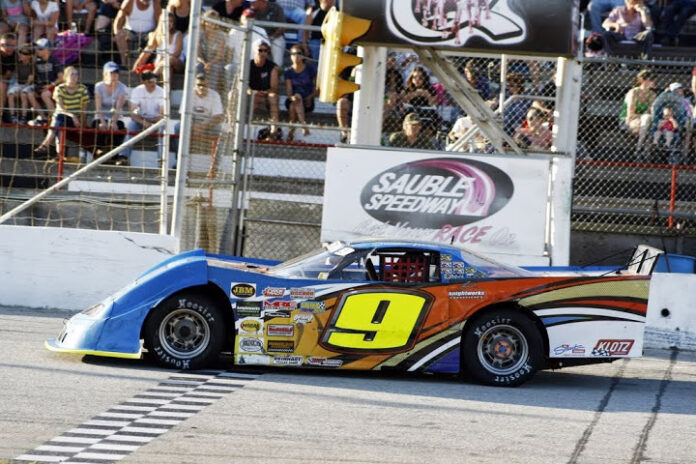
Coming off of his championship last season, everybody thought that James Buescher would come out of the box strong this year, ripping off top 10 finishes. However, the season hasn’t started like Buescher and team would have wanted.
“In the races we haven’t finished in the top 10 we’ve had more bad luck then you can imagine,” he said. “We’ve finished on the lead lap every race even though we’ve had things thrown at us – getting wrecked by lap cars and just not having things work out our way at Daytona and Martinsville.”
At Daytona, Buescher was running up front though made multiple pit stops under a caution at the halfway mark to change the carburetor. He still made his way back up through the field to finish 13th.
At Martinsville, Buescher finished 14th with how the pit stop strategies played out, followed by a 14th at Rockingham. Buescher had been running in the top 10 at Rockingham, though made contact with a lap truck under green flag conditions.
His sixth place finish at Kansas actually marked, surprisingly to most, his first top 10 of 2013.
“The things that we’ve had to do to get the finishes is key,” Buescher commented. “The performance is not reflected by the results. The performance is there. We’ve ran well. We’ve qualified in the top three at every race except Martinsville. We’ve ran in the top five all day each race and I think I’ve led laps everywhere. The performance is there; we just have to have some luck for things to go our way.”
With his strength last year on the mile and a halfs and the top 10 finish at Kansas, Buescher is looking forward to getting to Charlotte later this month.
“Charlotte is a place that I feel like we can go and continue to improve our season,” he commented. “We have some things that we want to try for our mile and a half package. Looks like they’re giving us some extra time so look forwarding to that and possibly improving our program even more and trying to get the first win of the season.”
Having that past success on the 1.5 mile tracks in the past equals confidence and Buescher added that if they’re as strong as last year, he is going o take advantage of that and pick up some wins.
One of the things that has contributed to Buescher’s success is being able to work with his teammates at Turner-Scott Motorsports.
“We’re multiple teams under one banner and some places that works out well where you can work well with your teammates,” he commented. “Other places, your teammate can be your biggest competition. At Turner-Scott Motorsports, we put a big emphasis on working together as one team and I think that shows. At Martinsville, we were able to help each other a lot. At Daytona, we were able to draft with each other a lot.
“Our crew chiefs communicate really well together and help each other with set-ups. If one team is struggling, they’re able to take notes and share with another team. The communication is there and it’s important for us to work together as drivers as we know what each other has – we’re evenly matched and driving the same thing. so we’re able to help each other out and ask each other questions and bounce ideas off of each other and help each other out as much as we can.”
The 2012 NASCAR Camping World Truck Series Champion got started in racing at the age of 12 by doing the Lone Star Legends driving school at Texas Motor Speedway.
“I got a bandolero a couple weeks later and it kind of exploded from there,” he commented.
Buescher looks to repeat that same success from last year, though is faced with a new challenge this year with the diversity of the truck schedule. The trucks will race on a road course for the first time since 1996, and will also race for the first time on dirt.
“Having diversity on the schedule definitely makes it more difficult and I think it’s better to have the diversity,” he commented. “At the end when it comes time to crown a champion, you can say that you outdid everybody on a diverse schedule and it shows how strong you are as a driver and how strong your team is. Hopefully we’ll be back up on that stage at the end of the year at Miami and be able to say that we did it again on a more diverse schedule than last year.”
Buescher had the opportunity to go check out the Canadian Tire Motorsports Park road course with his teammates as Nelson Piquet Jr. laid down some laps in a Turner-Scott Motorsports truck. Looking at the track, he says it should make for an entertaining race, but also a challenge on drivers and teams.
“These guys haven’t had to prepare a truck solely for a road course in a long time and on the driver side, a lot of these guys don’t have a lot of road course experience and Canadian Tire Motorsports Park is somewhat difficult track,” he commented. “Overall, it’s not the hardest track in the world, but there’s some tough corners that are off-cambered and blind corners that will jump out and grab some guys. It’s going to be entertaining for the fans, but a challenge for the drivers and teams.”
He added that he thinks his team will have a good package and will be able to pull from their Nationwide Series team with their success on road courses.
As far as where Buescher will be five years down the road, he says he doesn’t know but wants to keep driving racecars.
“I don’t really have a five year plan put together, but maybe in Cup by then,” he added. “I just try to take it one year at a time and this year I am focused on winning another truck championship and we’ll see what happens in 2014 in regards to my career going forward.”
NASCAR’s Losing Streak – Will They Make Changes?
After a week of tremendous joy with David Ragan slaying the giant on Sunday, things got a little testy on Tuesday and Wednesday of this week. First, NASCAR’s Chief Appellate Officer, John Middlebrook, weakened NASCAR’s penalties to Penske Racing’s No. 2 and No, 22 teams. The next day, the three member appeal board really lessened the penalties to Joe Gibbs Racing’s No. 18 team. NASCAR officials were not pleased, as you can imagine.
Both organizations had pretty good arguments. Penske claimed they were working in the gray area of the rule book, though there was a potential performance advantage in what they did. Gibbs probably had a better argument. Gibbs gets their engines from a provider not really connected to their race shop. TRD, the Toyota engine supplier for Joe Gibbs Racing, made a mistake apparently and built an engine that did not meet the NASCAR rule book’s specifications. They bolted the engine in and went racing, trusting the engine supplier. The penalty was severe and the board saw fit to lessen the blow, but NASCAR was not pleased. Check out NASCAR’s Kerry Tharp’s comments. They were clear in not agreeing with the result of the hearing.
Penske had a tougher sell. Penske engineers had modified the rear suspension parts on its two cars. Middlebrook shortened suspensions while keeping fines intact. Unlike the Gibbs decision, point penalties were not changed, which probably fits the so-called crime. Although not much comment from NASCAR was heard, they had to be upset by this. Two days and two losses seemed to send a message. The Appeals Board and the Chief Appellate Office thinks the penalties are too stiff except for the fines. The big question is will NASCAR change their penalties (they say not) or will NASCAR change the appeals process?
I can see both sides of this situation. I’m sure Penske Racing saw the slap on the wrist given Rick Hendricks’s No. 48 team last year and assumed that working in the gray area was alright. I also can see the problem with giving Joe Gibbs Racing a major penalty reduction. Outside of Jack Roush and Richard Childress among major teams, most get their engines from third party suppliers. Roush-Yates engine supply most, if not all of the Ford teams. TRD supplies most of the Toyota teams. Either Hendrick or Earnhardt-Childress supplies the Chevrolet teams. What if there is a problem in the future with one of these supplied engines? Can we expect any penalties to be reduced? It’s really going to be interesting.
Once upon a time, NASCAR controlled the sport to the point that it was dictatorial. That’s not the case anymore and it has to be unsettling to them. The urge to take over control has to be there, but will they?
NASCAR Consistency Called Into Question After Newman’s Comments At Talladega
Recent comments made by NASCAR drivers continue to raise questions and cause controversy as the 2013 NASCAR season approaches its eleventh race this Saturday at Darlington Raceway. NASCAR’s response to a variety of hasty comments has raised questions about their consistency in handing out penalties. Though many claim that NASCAR has been inconsistent in handing out penalties for drivers’ comments that is not the case once you review the facts.
After being involved in a multi-car accident on lap 183 of the Aaron’s 499 Sunday at Talladega Superspeedway, driver of the No. 39 Haas Automation Chevrolet, Ryan Newman, lashed out at NASCAR. In an interview after leaving the infield care center Newman said, “I am doing this interview to let everybody know I’m alright. They can build safer race cars, they can build safer walls. But they can’t get their heads out of their asses far enough to keep them on the race track, and that’s pretty disappointing. I wanted to make sure I get that point across. Y’all can figure out who ‘they’ is. That’s no way to end a race. Our car was much better than that. That’s just poor judgment in restarting the race, poor judgment…I mean; you got what you wanted, but poor judgment and running in the dark and running in the rain. That’s it, thank you.”
Many people suspected that Newman would be fined for his outburst comparing it to the fines imposed on Denny Hamlin earlier this season after Hamlin criticized the new Generation 6 car. NASCAR ruled on Monday that Newman would not be fined for his critical post-race comments, even though they disagree with them.
NASCAR released a statement on Wednesday explaining why Newman was not fined for his comments made Sunday at Talladega. NASCAR spokesman Kerry Tharp stated, “We disagree with the comments that he made. He wasn’t critical of the racing product so therein lies the decision not to fine him. We did tell them they could challenge NASCAR, they could challenge the racing calls, certain calls that we made and that type of thing. We did tell them a couple of years back, hey, don’t take on the racing product, don’t disparage the racing. We believe (Newman) kind of pushed the edge on that in his comments. We disagree with his opinion. We disagree with the comments he made, but he wasn’t critical of the racing, he wasn’t critical of the racing product, so therein lies the decision not to fine him. We don’t agree with what he said, I’ll tell you that right now.”
After discovering that Newman would not be penalized, fans immediately took to Twitter questioning NASCAR’s consistency in handing out penalties for critical comments made by drivers. When you take a close look at NASCAR’s rulings in handling driver comments this season, they have been more than consistent. No. 20 Joe Gibbs Racing driver, Matt Kenseth, and No. 2 Penske driver, Brad Keselowski, have also made questionable comments that did not result in fines.
After Kenseth’s race winning car from Kansas Motor Speedway was found to be in violation of the rule concerning with of the connecting rod, he said that the penalties NASCAR imposed on the team were “grossly unfair” and “borderline shameful.”
No. 2 Miller Lite Ford driver, Brad Keselowski, lashed out at NASCAR in a television interview after the NRA 500 when he and his No. 22 Penske teammate, Joey Lagano, failed prerace inspection at Texas Motor Speedway when their suspension systems and components were discovered to be illegal. Keselowski’s expletive filled interview said that the team was “unfairly targeted” during the previous week.
In an interview on FOX Business News, NASCAR CEO Brian France said that Brad Keselowski would not be fined for his outburst. France said, “That’s the beauty of NASCAR. We allow drivers to express themselves in that way even if they say things that we disagree with. I would certainly disagree with everything he said. But look, they are frustrated. This is the most intense racing in the world and not surprising that every once in a while that things don’t go your way and you just sort of blow off a lot of steam.”
When FOX anchor Dagen McDowell asked France to explain the difference between Keselowki’s comments and the comments that No. 11 Fed Express Express driver, Denny Hamlin made earlier in the season that landed him a $25,000 fine, France stated, “The line that we draw is you can’t criticize the racing product. You can criticize our decisions, you can criticize everything else, which is more than any other sport might allow. But just don’t go talking about our racing product isn’t the best in the world, because it is.”
Looking back at Hamlin’s comments after finishing third in the Subway Fresh Fit 500 at Phoenix International Raceway from NASCAR’s perspective, one can clearly see that he overstepped the acceptable bounds by criticizing the NASCAR product. When Hamlin was asked on pit road how he like the new Gen 6 car, he said, “I don’t want to be the pessimist, but it did not race as good as our generation five cars. This is more like what the generation five was at the beginning.”
NASCAR deemed Hamlin’s remarks as detrimental to stock car racing, saying that “while drivers get ample leeway in voicing their opinions when it comes to a wide range of aspects about the sport, the sanctioning body will not tolerate publicly made comments by its drivers that denigrate the racing product.” Hamlin’s penalty for denigrating the racing product as a $25,000 fine.
Despite NASCAR’s disagreement with the comments made by Ryan Newman, Matt Kenseth, and Brad Keselowski, none of those drivers criticized the racing product. They criticized the NASCAR sanctioning body, and even though Newman “pushed the edge” in his comments he did not criticize the racing product. Therefore, he was not fined.
Investigation into the allegations that NASCAR has not been consistent when handing out penalties for driver comments proves that this ideology is false. This season NASCAR has consistently allowed drivers to criticize decisions and actions of the sanctioning body, but they have drawn the line when comments denigrate the racing product. The decision this week not to fine Stewart-Haas Racing driver, Ryan Newman, for his post-race comments continues NASCAR’s consistency in handing out penalties for driver comments.