


Dale Earnhardt: The Man That Changed NASCAR Forever
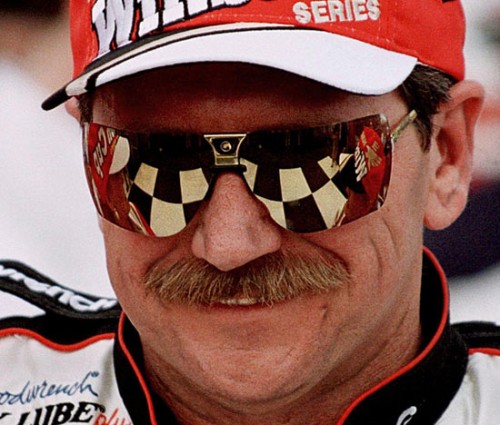
Today is Dale Earnhardt Day; a day to remember arguably the greatest stock car driver that ever lived. While most journalists will write about what he did or why he was so good, I have decided to go further than that. I want to talk about the legacy he created and all the different ways this man captured the hearts of millions changing the face of this sport forever.
There are men in this world that strive for fame and fortune but there are a select few that reach a heroic level of immortality. Dale Earnhardt is one of those men. His competitors feared him, fans either loved him or loved to hate him but everyone agreed that the kind of raw talent he possessed can’t be taught. What made him so good was not only the obvious fact that he could wheel a racecar but that he didn’t want to win, he needed to win. If he didn’t finish in the money, his family went hungry. If he failed, he knew that he was going to have to spend the rest of his life working at that mill in Kannapolis, North Carolina and no way in hell was he going to settle for that.
He persevered through losing his dad when he was 22, being forced to watch his wife leaving him and with her his first born when she got fed up with his racing and of course he watched his best friend Neil Bonnett die in a crash at Daytona International Speedway in 1994. Seven years later on the final lap of the Daytona 500, Dale lost his life in that very same corner in one of the worst days of my young life. I’ll never forget the look on my dad’s face as he tried to explain to his 7 and 10 year old sons that they watched their hero die earlier that day. For me, I found consolation thinking about my other childhood hero, Steve Irwin who ultimately died tragically doing what he loved like Dale when a stingray stabbed him through the heart in 2006.
After that race, I stopped watching NASCAR and basically ignored the sport for three years. But my dad worked in it, my brother worked in it and I couldn’t stay away forever; racing is in my blood. Since the 2004 Daytona 500, I have never missed a NASCAR Sprint Cup Series race and don’t plan to. Dale is the reason why I love NASCAR the way I do today. I am more passionate now about this sport than I have ever been before and I will continue to pursue my dream of working in NASCAR just like he pursued his. For me, this sport is not a hobby; it’s my life and the more I watch it, the more I need it. Dale Earnhardt fought for what he wanted even when the odds were against him and in doing so, he has become a legend that to this day is remembered not with tributes on a certain day every year but every day. I think about him at least once a day and I’m sure most of you do too.
Who knows how many lives have been saved as a result of his death but I can tell you it’s a lot. The COT was created because we lost Dale and because of it, no national touring driver has died since that awful day in February of 2001. Carlos Pardo, John Blewett III, Tom Baldwin Sr. and Marcelo Nunez are all unfortunate examples of what could happen without the safety innovations that were put into the Cup, Nationwide and trucks in recent years. Even before “Black Sunday” as it has come to be known, Dale Earnhardt had already made a major impact on NASCAR simply from what he did on the track. He did things with a racecar that was thought to be impossible and in an era where it was a very real possibility that racers would die, Dale showed absolutely no fear.
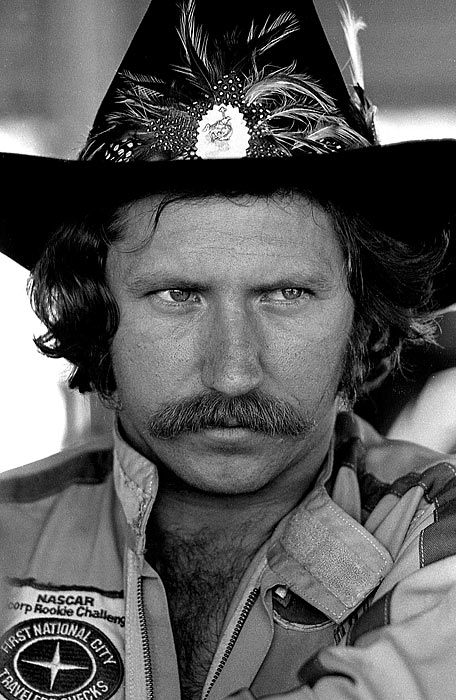
Dale raced like his life depended on it and that’s because it did at one point. What made him so good was that he never let that style of driving go no matter how much money he was making. Had he never made it in NASCAR, the name Richard Childress would be known about as well as the name DK Ulrich is with only those older members of the racing community and a few diehard fans knowing of him. His team couldn’t win until Earnhardt showed up. What Dale did would be like Brad Keselowski winning the title last year, jumping into the No.34 for Front-Row Motorsports in 2013 and winning six championships for them. Seems impossible, right? Well, that’s exactly what Earnhardt did except for the fact that he did it twice. He won the 1980 title for Rod Osterlund and before he came along, the likes of Buddy Baker, Neil Bonnett, Dan Gurney and even David Pearson couldn’t win a single race let alone a championship.
Dale was and still is remembered as one of the greatest men to ever wheel a racecar and let me tell you that he was one of the greatest men to ever live period. He acted tough but he had a heart of gold underneath that intimidating smile. He was capable of making drivers wreck themselves simply because they get unnerved when they saw the No.3 in their rear view mirror. Legend tells that he could see the air meaning he knew exactly what it was doing at all times which is what made him so good at Daytona and Talladega. He could take a car sideways through the grass a Charlotte at 180mph and save it while losing no spots in the process. Please feel free to post below how this NASCAR legend affected your life and what you believe made him so good. Today would have been his 62nd birthday and I want to take a moment to remember a truly great man who changed the world for the better and even in death, he reached immortality…..happy birthday Dale Earnhardt.


Earnhardt Ganassi Racing Is Back
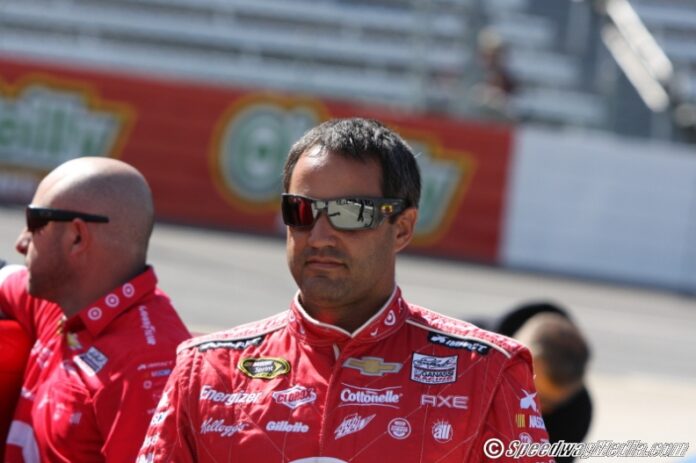
After two years of miserable races, Earnhardt-Ganassi Racing (EGR) has finally returned back to its old form. Although they haven’t quite gotten rid of all the bad luck that seems to haunt the two car organization, the cars seem fast again and have made monumental progress in their overall performance. McMurray sits a solid 12th in the standings with three top 10’s in 2013 which already equals his total from 2012. Juan Pablo Montoya has been snake bit by wrecks and mechanical failures that have kept him deep in the points but he proved at Richmond what is possible for that No.42 should he stay out of trouble.
Montoya ran up front all night and not many people could say after an event that saw more comers and goers than any race in recent memory. He led 67 laps and finished 4th after a late race caution thwarted his chances of a victory. His last top five was way back in March of 2011 when he finished 4th at Martinsville and he hasn’t led that many laps since his win at Watkins Glen nearly three years ago. It would be ignorant to say that Montoya doesn’t have the talent but it would be acceptable to say that the poor man has no luck at all. Even though he came home with a 4th place finish Saturday and seemed pretty happy about it, the Colombian was all but guaranteed a win as he pulled away from Kevin Harvick until a caution with four laps remaining jumbled up the running order. He restarted 6th while eventual race winner Kevin Harvick restarted 7th and starting on the inside is what won him the race. Had the roles been reversed, Montoya would have most likely been the one passing Jeff Burton with one lap to go.
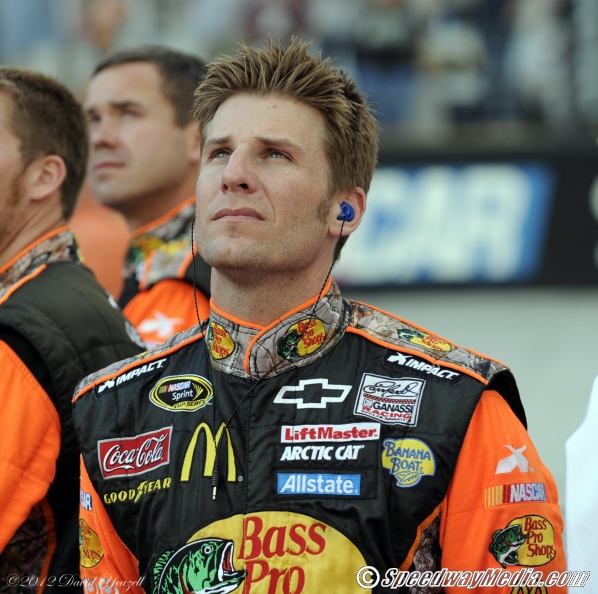
McMurray restarted the race 2nd but the field basically ran him over with how old his tires were finishing a disappointing 26th. Even with the unsatisfactory result, the 2010 Daytona 500 winner finds himself just 26pts out of the top 10 and ahead of champions such as Jeff Gordon, Matt Kenseth, Kurt Busch and Tony Stewart. In 2009 and 2010, EGR asserted themselves as one of the better teams winning four races including the Daytona 500 and Brickyard 400. They also put Montoya in the 2009 chase and had the Wild-Card existed in 2010, McMurray would have been in it with his three wins. It looks like they are steadily turning things around and I wouldn’t be surprised to see both of their drivers make the chase this year. At the very least, I see both McMurray and Montoya winning a race before the year is over.
Is it the switch Hendrick engines that has helped this team or is it something else? People were shocked when team owner Chip Ganassi didn’t make any major personal changes following their dismal 2012 which saw Jamie finish 21st in points and Juan 22nd. I have to give major props to Chip for not overreacting to what seemed to be a hopeless situation in the eyes of most. Kevin Manion and Chris Heroy are still the crew chiefs and the combinations seem to be working well. All this team lacked was speed and I believe Hendrick power has given them that missing piece they needed to run up front again. Chip felt it would be imprudent to turn the team inside out after all their struggles saying this during the off season; “We’re not afraid to make changes, but we’re not going to make change for the sake of making change.”
That risky ideology looks like it was the right call after all. Between McMurray and Montoya there are 8 NASCAR Sprint Cup wins, 9 Nationwide wins, 3 in Grand-Am, 10 in open-wheel and 7 F1 victories that include races such as the 24 Hours of Daytona, the Indy 500, the Daytona 500 and the Monaco Grand Prix. There is certainly no lack of talent there and now they have the cars to back their fully capable drivers up. The travails of the past two years has finally ended and EGR has 27 more races to parlay these great results into race wins and they can do it. Watch out for these two because they could easily become two of the biggest upsets in 2013 and if the bad luck ceases, they will become threats to win almost every single week.
Fixing the NASCAR Sprint Cup Series Schedule
I may only be 19 but I’m sure a lot of you older fans out there remember the “golden age” of NASCAR. Remember when Ricky Rudd and Dale Earnhardt spun at North Wilkesboro on the final lap battling for the win in 1989? How about when Kasey Kahne and Matt Kenseth crossed the line in nearly a dead heat at Rockingham back in 2004? Then there are the infamous Bristol battles between Earnhardt and Terry Labonte during the 90’s boom.
NASCAR was built on tracks like those and some of the best races in history took place at tracks 1 mile in length or shorter. Okay, I know that 1 mile tracks aren’t technically considered short tracks but they race just like them.
Don’t get me wrong. I like the big tracks. I love watching four wide battles at speeds exceeding 200mph when we visit Atlanta, Texas, Charlotte and Kansas but the problem is that we’ve diluted the schedule with these types of venues. Check out this statistic regarding the amount of short tracks that have been on the schedule at the start of every decade:
1950-13/19 races, 68.4%
1960-30/44 races, 68.2%
1970-28/48 races, 58.3%
1980-10/31 races, 32.3%
1990-7/29 races, 24.1%
2000-6/34 races, 17.6%
2010-6/36 races, 16.6%
You’ve fixed the cars, improved safety and bumped up ratings NASCAR and now it’s time to fill these tracks back up with 100,000+ screaming fans! That Richmond race left me begging for more and now I’ve got short track fever. The track promoters say the bigger tracks are where it’s at because you can hold more people. I’m no businessman but if you ask me, a jammed pack half mile is a lot better than a half full cookie cutter track. A stand-alone truck race at Eldora was sold out 6 months before the race and if that doesn’t give NASCAR and these track owners a wake-up call, I don’t know what will.
More road courses would also be awesome; I don’t think I have to remind anyone about the last two races at Watkins Glen. They are big like Michigan and Cali but they race like Bristol and Marty and every road course is unique in its own right. Short tracks, dirt tracks, 1 milers and road courses is direction NASCAR needs to head if they want to bring back disgruntled old fans and attract curious new ones. With that being said, here is my ideal 36 race schedule without changing too much of what is already there.
1.) Daytona 500
2.) Rockingham
3.) Phoenix
4.) Bristol
5.) Kansas
6.) Martinsville
7.) Texas
8.) Salem
9.) Talladega
10.) Richmond
11.) Darlington
12.) Coke 600
13.) Dover
14.) Road America
15.) Sonoma
16.) Irwindale
17.) Duquoin
18.) Daytona Road Course
19.) Michigan
20.) Indy Road Course
21.) Pocono
22.) Watkins Glen
23.) Iowa
24.) Bowman Gray Stadium
25.) Atlanta
26.) Bristol
27.) Talladega
28.) Road Atlanta
29.) Loudon
30.) Auto Club
31.) Dover
32.) Charlotte
33.) Martinsville
34.) Eldora
35.) Circuit of the Americas
36.) Las Vegas
When making this list, I tried to keep a balance between the tracks already on the schedule and tracks I’d like to see on the schedule while still maintaining the 36 race season. If you broke my schedule down, it goes like this:
1 Mile Or Less Paved Oval-15/36, 41.7%
1.5 Mile or Larger Oval-12/36, 33.3%
Road Courses-7/36, 19.4%
Dirt Tracks-2/36, 5.6%
Now I’d like to take a closer look at a few of the adjustments/additions that I listed above…
Daytona, Talladega & Indianapolis
The Daytona 500 is without a doubt one of the biggest races on the planet and I think when we return to Daytona in July, it shouldn’t be on the high banks. Even with the long history of the 4th of July event, I don’t think there should be another race like the 500 and that’s why I said NASCAR should run the road course like Grand-Am does every January. I put Talladega as the first chase race for one reason and that is the track’s unpredictability. When we go there, it’s all about survival, not who has the best car and that’s why I want it early in the chase so that the true title contenders have time to recover. The Indy 500 is another sacred event and the oval wasn’t made for NASCAR’s. When stock cars show up there, it is almost always a snooze fest and with little on track action. That’s why we should shake it up and run the road course to add a little excitement to this usually lackluster event. Continue the tradition of kissing the bricks but instead of 160 laps of follow the leader, let’s have some intense road course action tearing through the infield of this historic facility.
Las Vegas
The reason I put Las Vegas as the season finale is simply and that’s because the banquet is in Vegas so why not have the last race of the year be there too? Homestead is an okay track but I think we can live without it.
The Road Courses
I firmly believe that NASCAR needs to put at least one road course in the chase. Road courses are the ultimate test of a driver’s skill, physical fitness and mental acuity. With 20 unique turns and long, fast straightaways where the draft comes into play, the Circuit of the Americas (COTA) would be the perfect penultimate event. Formula 1, MotoGP and even V8 Supercars go there and it’s about time NASCAR does too. I had a tough time deciding between what road course I should select for Race #28 on my schedule. I was going back and forth between Mid-Ohio, VIR and Road Atlanta and even though I went with the latter, any of those three would be great additions. As for Road America, I have no clue why that isn’t on the Cup schedule yet but it certainly should be. I considered Montreal but with its recent debacle where the track promoter basically demanded a Cup date, I decided to leave it out.
Dirt Tracks
There are so many worthy dirt tracks out there but in the end, I went with two well-known venues that already feature stock car racing and attract a lot of fans. Duquoin and Eldora are awesome facilities and I’m sure the truck race at the Tony Stewart owned track later this year will be one of the greatest ever. ARCA races are held at Duquoin and their evens always seem to be wild and action packed proving the venue can handle 30 or 40 stock cars very well.
In the end, I don’t see most of that schedule ever coming to fruition but its okay to dream, right? A few possibilities that could happen in the future would be the addition of the COTA’s, Eldora, Rockingham and some kind of road course in the chase. NASCAR fixed something that wasn’t broken but it seems like they are finally taking action with the return of Rockingham and the first dirt race in 40 years coming up in a few months. It’s a work in process and it will be tough to manipulate the schedule while keeping everybody involved happy but it’s doable. The manufacturers and NASCAR have done an awesome job with this new car and it seems to put on a hell of a show almost everywhere we take it but you can’t deny that there’s nothing that can put on a better race than a Saturday night short track event.
