Why the Right Manual Makes All the Difference in Your DIY Repairs
Whether you’re a weekend warrior tackling your first oil change or a seasoned DIY mechanic rebuilding an engine, having the right workshop manual can mean the difference between a successful repair and a costly mistake. In this comprehensive guide, we’ll explore everything you need to know about workshop manuals—and why they’re essential for anyone serious about vehicle maintenance.
What Is a Workshop Manual?
A workshop manual—also called a factory service manual or OEM (Original Equipment Manufacturer) repair manual—is the official technical documentation created by the vehicle manufacturer. Unlike generic repair guides you might find at an auto parts store, these manuals contain the exact procedures, specifications, and torque values that factory-trained technicians use in dealership service centers.
Think of it as the difference between a recipe from a professional chef versus one from the back of a cereal box. Both might help you make breakfast, but one gives you significantly more detail, precision, and professional results.
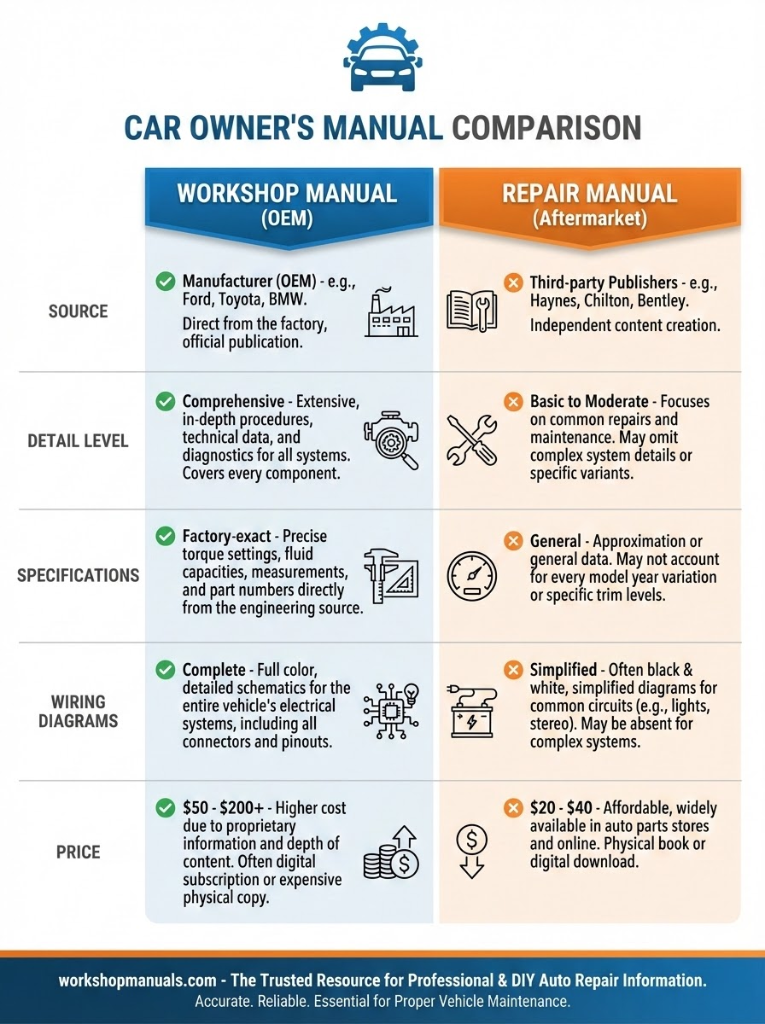
Workshop Manual vs. Repair Manual: Understanding the Difference
Many car owners use these terms interchangeably, but there are important distinctions that can impact your repair success. Here’s a detailed comparison:
When Do You Need a Workshop Manual?
Workshop Manual Recommended For:
- Engine rebuilds or internal engine work
- Transmission repairs and overhauls
- Electrical diagnostics and complex wiring issues
- Suspension geometry adjustments and alignments
- Any job requiring precise torque specifications
- Hybrid or EV high-voltage system work
- Advanced diagnostic procedures
Aftermarket Manual May Be Sufficient For:
- Oil changes and filter replacements
- Brake pad replacement
- Battery replacement
- Basic fluid checks and top-offs
- Simple maintenance tasks
What’s Inside a Professional Workshop Manual?
A comprehensive workshop manual typically includes these detailed sections:
- General Information – Vehicle identification, specifications, maintenance schedules, special tool requirements
- Engine Mechanical – Complete disassembly/assembly procedures, timing procedures, head gasket replacement
- Fuel & Emissions Systems – Fuel injection diagnostics, sensor locations and testing procedures
- Electrical Systems – Complete wiring diagrams, diagnostic trouble codes, circuit testing
- Transmission & Drivetrain – Manual/automatic transmission procedures, differential service
- Steering & Suspension – Alignment specifications, component replacement procedures
- Braking Systems – Brake bleeding procedures, ABS diagnostics, pad replacement
- Body & Interior – Trim panel removal, airbag system precautions, interior service
🔧 Ready to access professional-grade workshop manuals? Visit WorkshopManuals.com for manuals covering all makes and models. 🔧
Pro Tips for Using Workshop Manuals Effectively
Read the Entire Procedure First: Before starting any repair, read through the complete procedure to understand required tools, time estimates, and step order.
Note the Torque Specifications: Write down all torque specs before you pick up a wrench. This prevents stopping mid-job to check values.
Pay Attention to Warnings: Safety warnings and cautions aren’t suggestions—they exist for critical safety reasons and to prevent component damage.
Cross-Reference Part Numbers: Use the manual’s part numbers to ensure you’re ordering exactly the right components for your specific vehicle.
Document Your Work: Take photos during disassembly. Your manual shows what things should look like, but photos show what YOUR vehicle looked like.
Use the Wiring Diagrams: Learn to read wiring diagrams—they’re invaluable for electrical diagnostics and can save hours of troubleshooting.
Common Mistakes When Working Without a Manual
Working without the proper manual—or using generic instructions instead of manufacturer specifications—can lead to these costly errors:
- Incorrect Torque Values — Stripped threads, loose components that vibrate apart, or failed repairs that need to be redone.
- Wrong Fluid Types — Using incorrect transmission fluid or coolant can cause seal deterioration and expensive damage.
- Missed Critical Steps — Forgetting to bleed brakes properly, not resetting ECU adaptations, or skipping safety procedures.
- Electrical System Damage — Blown fuses, damaged control modules, or airbag system problems from improper procedures.
- Incorrect Assembly Order — Reassembling components in the wrong sequence, leading to parts that don’t fit or function properly.
Real-World Impact: Why Specifications Matter
Consider a simple head bolt torque specification. A generic manual might say “torque to 65 ft-lbs.” But a factory workshop manual provides the complete procedure: “Torque in sequence to 22 ft-lbs, then 45 ft-lbs, then an additional 90 degrees, then a final 45 degrees.”
Following the generic instruction could result in a blown head gasket within months. Following the factory procedure ensures proper clamping force and gasket seal for years of reliable operation. That’s the difference a proper workshop manual makes.
How to Choose the Right Workshop Manual for Your Vehicle
Match Your Vehicle Type:
- Domestic Vehicles (Ford, GM, Chrysler) — OEM workshop manuals are widely available and affordable. Essential for modern vehicles with complex electronics.
- Japanese Vehicles (Toyota, Honda, Nissan) — Excellent OEM documentation available. Japanese manufacturers produce particularly detailed electrical diagrams.
- German Vehicles (BMW, Mercedes, Audi, VW) — OEM manuals are essential due to complex electronics and proprietary systems. Generic manuals often lack critical information.
- Classic & Vintage Cars — Original factory manuals are preferred and often available as reprints. Period-correct procedures and specifications are crucial.
- Hybrid & Electric Vehicles — OEM manuals are mandatory—these contain critical high-voltage safety procedures that aftermarket manuals cannot replicate.
📚 Find the exact workshop manual for your vehicle at WorkshopManuals.com — covering thousands of makes and models! 📚
The Bottom Line: Workshop Manuals as an Investment
Whether you’re maintaining a daily driver, working on a project car, or restoring a classic, having access to accurate technical information is absolutely essential. A quality workshop manual pays for itself with the very first repair you complete correctly—or the first costly mistake you avoid.
Consider this: the average shop labor rate is $100-150 per hour. A workshop manual typically costs $50-200. If it saves you just one or two hours of labor on a single repair—or prevents one mistake—it has already paid for itself many times over.
For DIY mechanics serious about working on their vehicles, investing in a proper workshop manual isn’t an expense—it’s an investment in doing the job right the first time, every time.
Frequently Asked Questions
Q: What’s the difference between a workshop manual and a Haynes manual?
A: A workshop manual is the official factory documentation created by the vehicle manufacturer, containing exact specifications and complete procedures. Haynes manuals are aftermarket publications that provide good overviews but with less technical detail and generic specifications.
Q: Are workshop manuals worth the money?
A: Absolutely. The cost ($50-200) is typically less than one hour of shop labor. Having accurate specifications prevents costly mistakes, saves time, and ensures repairs are done correctly the first time.
Q: Do I need the workshop manual for my specific year and model?
A: Yes, this is crucial. Specifications, procedures, and even component designs can vary significantly between model years. Always match the manual exactly to your vehicle’s year, make, and model.
Q: What format should I get—PDF or printed?
A: PDF manuals offer searchability, portability (view on a tablet in your garage), and instant access. Printed manuals don’t require batteries or screen brightness. Many mechanics prefer PDF for the search function alone.
Q: Where can I find reliable workshop manuals?
A: Reputable sources like WorkshopManuals.com offer OEM and OEM-equivalent manuals for most makes and models, with instant PDF downloads and verified accuracy.
Start Your Next Repair with Confidence
Don’t let guesswork compromise your repairs. Access professional-grade workshop manuals for thousands of vehicle makes and models.
👉 Visit WorkshopManuals.com Now 👈
✓ Instant PDF downloads
✓ OEM-quality manuals
✓ Covers all makes and models
✓ Accurate specifications and procedures
✓ Professional-grade technical information
—
About WorkshopManuals.com
The trusted resource for professional and DIY auto repair information. Accurate, reliable, and essential for proper vehicle maintenance.