When it comes to improving a vehicle’s performance, most attention is often placed on horsepower and torque. However, one of the most critical — and frequently overlooked — factors is temperature control.
For diesel trucks, especially those used for towing, hauling, or tuned performance, managing heat is essential. This is where intercoolers play a key role, directly impacting engine efficiency, power consistency, and long-term reliability.
What an Intercooler Actually Does
An intercooler is responsible for cooling the compressed air coming from the turbocharger before it enters the engine. Cooler air is denser, which means:
- More oxygen enters the combustion chamber
- Fuel burns more efficiently
- Power output becomes more consistent
Without effective cooling, high intake temperatures can lead to power loss, reduced efficiency, and increased engine stress — particularly under heavy load.
Search trends like “how to lower intake temps diesel,” “best intercooler upgrade Cummins,” and “improve turbo efficiency truck” highlight how critical this component has become for performance-focused drivers.
Why Upgrading the Intercooler Matters
Factory intercoolers are designed to meet general driving needs, but they often fall short under demanding conditions such as:
- Towing heavy loads
- Long uphill drives
- Performance tuning or increased boost
Upgrading to a higher-capacity intercooler improves the system’s ability to manage heat, ensuring that performance remains stable even under pressure.
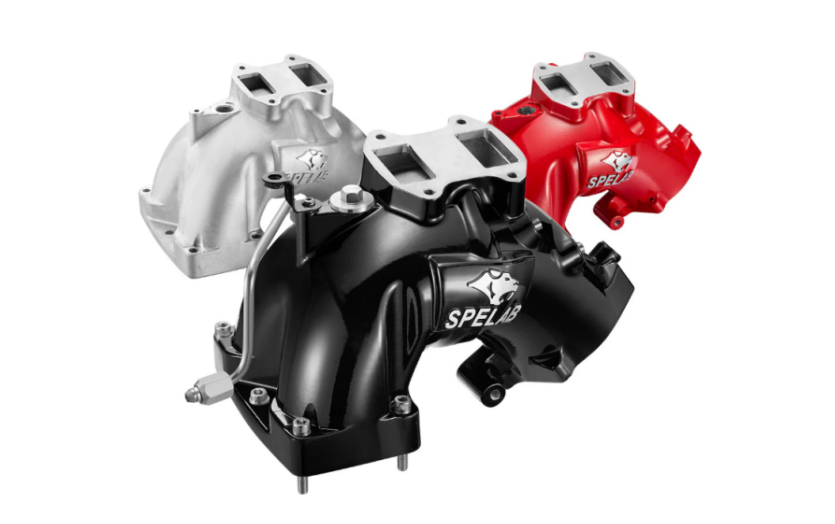
The SPELAB Intercooler Bar and Plate for 2003–2009 Dodge Ram 2500/3500 5.9L/6.7L Diesel is engineered specifically for these scenarios.
Built with a heavy-duty bar-and-plate core and cast aluminum end tanks, it is designed to handle higher boost levels while maintaining structural durability.
More Cooling Capacity, Better Performance
One of the most important factors in intercooler performance is core thickness and design.
With a 3.35-inch thick core — significantly larger than the OEM 2.48-inch design — this type of upgrade delivers approximately 34% more cooling capacity. The result is:
- Lower intake air temperatures
- More consistent airflow under load
- Reduced pressure loss across the system
This becomes especially noticeable during towing, aggressive driving, or tuned setups, where heat buildup can otherwise limit performance.
Keywords such as “high performance intercooler 5.9 Cummins” and “upgrade intercooler for towing diesel truck” reflect the increasing demand for solutions that maintain performance in real-world conditions.
Supporting Airflow and Engine Efficiency
Beyond cooling, intercoolers also influence how smoothly air flows through the system.
A well-designed unit helps:
- Maintain steady, unrestricted airflow
- Reduce turbo strain
- Improve throttle response consistency
These benefits contribute not only to performance gains but also to a more refined and predictable driving experience — something that matters just as much in daily driving as it does in high-load situations.
Built for Demanding Conditions
Durability is another key consideration. Diesel trucks often operate in environments that push components to their limits, from extreme temperatures to sustained heavy use.
Intercoolers built with bar-and-plate construction are known for their ability to handle:
- Higher thermal loads
- Increased boost pressure
- Long-term wear under demanding conditions
This makes them particularly suitable for drivers looking for reliable, long-term performance upgrades rather than short-term gains.
Smarter Upgrades for Better Driving
As automotive trends shift, more drivers are focusing on targeted performance upgrades — improvements that deliver measurable benefits without unnecessary complexity.
Brands like SPELAB are part of this movement, offering components designed to enhance airflow, cooling efficiency, and overall engine performance in a practical and accessible way.
Performance That Lasts
Improving a diesel truck’s performance is not only about increasing power — it’s about sustaining it. Effective cooling ensures that engines can perform consistently, even under stress, without sacrificing reliability.
An upgraded intercooler, in this context, becomes more than just a component. It is a foundational element in maintaining efficiency, protecting the engine, and ensuring that performance is available whenever it’s needed.