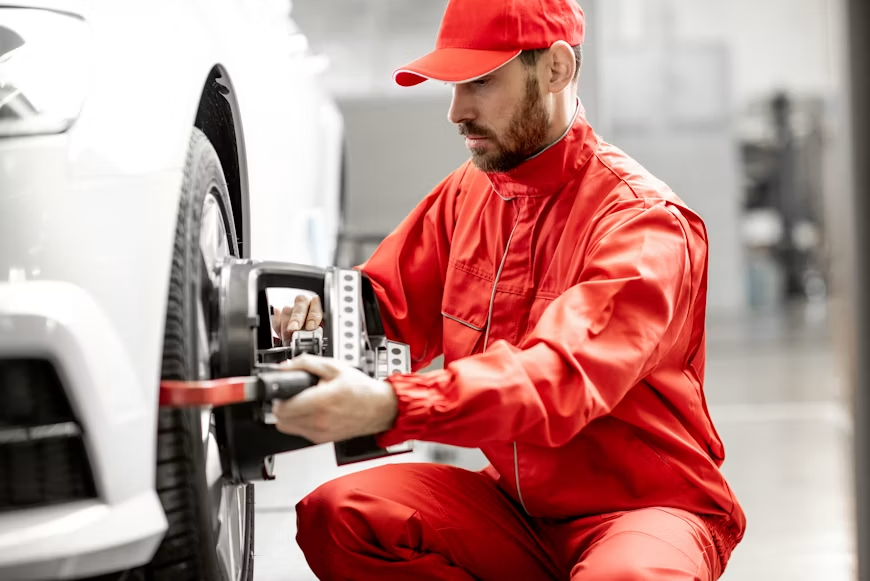
An automotive workspace must accommodate vehicle movement, diagnostic work, component repairs, cleaning and equipment storage, often within a limited footprint. Treating the entire workshop as one general work area creates unnecessary movement and makes tools harder to control. Smarter equipment zones divide the space according to specific tasks, placing the right tools, safety measures and storage close to where each activity occurs.
Different Tasks Require Different Conditions
Automotive work is not a single process. Mechanical repairs may involve heavy tools and contaminated components, while electrical diagnostics require clean surfaces and sensitive instruments. Cleaning work introduces liquids or chemicals that should be kept away from electronics and open vehicle systems.
Equipment zones separate these conditions without disrupting the overall workflow. A diagnostics zone can remain clean and dry, while a fabrication or repair zone can provide the clearance, extraction and protective equipment required for heavier work. Such separation reduces cross-contamination and gives each task a more suitable working environment.
Planning each area also becomes easier when equipment is considered by function rather than as one large inventory. Product ranges available from specialist suppliers, including Mektronics automotive tools and workshop equipment, illustrate how diagnostic, cleaning, electrical and precision tools can be grouped around distinct workshop activities.
Shorter Tool Routes Save Working Time
Time is lost whenever technicians repeatedly walk across the workshop to collect instruments, accessories or consumables. The delay may appear minor, but it accumulates across multiple vehicles and technicians during a working day.
Smarter zones use point-of-use storage, meaning frequently needed equipment is positioned where it is most likely to be used. Test leads stay near the diagnostic station, cleaning supplies remain near the preparation area, and shared tools occupy an accessible central zone. Shorter tool routes allow technicians to maintain concentration and complete each stage with fewer interruptions.
Clear Boundaries Reduce Safety Risks
Automotive spaces contain moving vehicles, electrical systems, chemicals, hot equipment and trailing cables. When unrelated activities overlap, workers can encounter hazards that are difficult to anticipate or control.
Defined zones establish where equipment may be operated, stored and connected. A hot-work zone, for instance, can provide suitable ventilation, fire protection and clearance from flammable products. Battery testing can take place away from ignition sources, while mobile equipment can be returned to marked positions that do not obstruct walkways. Visible boundaries make safe procedures part of the physical layout.
Sensitive Equipment Needs Controlled Storage
Modern automotive diagnostics rely on multimeters, scan tools, oscilloscopes and inspection cameras. These instruments can produce unreliable readings or suffer damage when exposed to moisture, dust, impact or careless handling.
A dedicated electronics zone provides clean storage, stable benches and controlled access. It can also include electrostatic discharge protection for work involving exposed circuits and electronic modules. Keeping precision instruments together simplifies calibration tracking, accessory control and pre-use inspection, helping technicians confirm that equipment is ready before testing begins.
Defined Zones Improve Shared Workflows
Workshops often rely on tools shared between several technicians or service bays. Without assigned locations, equipment can migrate around the premises, leaving the next user unsure whether it is unavailable, misplaced or undergoing repair.
Equipment zones create a consistent system for issuing and returning shared items. Labels, marked storage positions and shadow boards show where each tool belongs and whether anything is missing. A predictable layout also helps new technicians become familiar with the workshop more quickly and supports consistent procedures across shifts.
Zoning Makes Limited Space More Productive
More equipment does not automatically create a more capable workshop. Poor placement can consume floor space, restrict access to vehicles and force technicians to move equipment before beginning work.
Smarter zoning matches storage to frequency of use, size and mobility. Wall systems can hold smaller tools, mobile stations can serve several bays, and fixed machines can occupy areas with the required power, ventilation and operating clearance. Every section of the workshop then has a defined purpose rather than becoming overflow storage.
Designing the Space Around the Work
Automotive spaces need smarter equipment zones because different tasks, tools and risks cannot be managed effectively within an unstructured layout. Purpose-built areas reduce travel time, protect precision instruments, strengthen safety controls and keep shared equipment accountable. When the workshop is organised around actual work processes, its equipment becomes easier to access, maintain and use correctly.