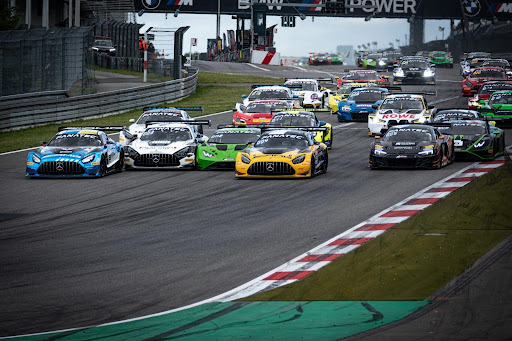
Race teams obsess over horsepower, aerodynamics, and tire compounds, and rightly so — those are the numbers that show up on a stopwatch and decide qualifying order. What gets far less attention is the material science quietly working inside components that have nothing to do with the engine map or the wing angle, but everything to do with whether a car actually survives a full race distance under conditions that would destroy standard parts within a few laps. A car that’s fastest on a single qualifying lap and a car that’s fastest across four hundred racing miles are frequently solving two very different engineering problems.
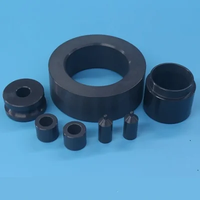
A meaningful share of that engineering comes down to advanced technical ceramics — materials like zirconia, alumina, and silicon carbide, engineered for extreme heat, wear, and electrical stress in ways ordinary metals simply can’t match. Manufacturers working with precision ceramic components supply exactly this kind of material to industries where failure isn’t an option, and motorsport is one of the more demanding proving grounds for that engineering anywhere outside of aerospace, precisely because it combines extreme heat, constant vibration, and repeated mechanical stress into a single, unforgiving operating environment.
Brakes That Have to Survive Repeated Abuse
Braking in a race car generates temperatures that can climb well past 700°C under hard, repeated use — a corner-entry braking zone at a high-speed oval or road course puts a brake system through thermal cycling that a street car will never come close to experiencing in its entire lifespan. Silicon carbide shows up directly in this application, valued for hardness approaching diamond, thermal conductivity comparable to aluminum, and the ability to hold dimensional stability under sustained, repeated heat cycling that would warp or fade a standard cast-iron rotor over the course of a single stint. Consistent pedal feel late in a long green-flag run, when a driver is braking from top speed lap after lap without a caution to let the system cool, often traces directly back to whether the brake package was engineered with materials built for exactly this kind of punishment.
Bearings Under Extreme RPM
Every rotating component in a race car — wheel hubs, differential internals, high-revving engine internals — puts real stress on bearings, and that stress only gets worse as RPM climbs. Standard steel bearings generate more friction-based heat at high RPM, which changes clearance tolerances mid-race and creates the kind of gradual performance drift that shows up as a car losing pace late in a run for no obvious reason. This is where the broader precision ceramic products line becomes relevant to race engineering — ceramic and hybrid ceramic bearings run cooler, weigh less, and hold tighter tolerances under sustained high-RPM load than steel equivalents, which is exactly why they’ve become common in the highest tiers of motorsport where every fraction of reliability and every ounce of rotating mass matters.
Sensors Tuning the Engine in Real Time
Modern race engines lean heavily on real-time sensor data to stay within legal and optimal operating windows, and one of the more important sensors doing that work is built from zirconia. Oxygen sensors use a zirconia element to measure exhaust gas composition continuously, feeding that data back to the engine control unit so fueling can be adjusted lap by lap in response to changing track temperature, fuel load, and engine wear. Zirconia is used here specifically because it survives sustained exhaust-level heat without losing measurement accuracy over a full race distance — a requirement that rules out most other materials outright, and one that becomes even more critical in series where fuel strategy and engine efficiency directly affect pit stop windows and finishing position.
Why Teams Invest in Materials Nobody Sees
None of this shows up in a broadcast graphic or a post-race interview, and that’s exactly the point. Race engineers don’t get credit for the components fans never think about, but a car that holds its brake performance, bearing tolerances, and sensor accuracy consistently across a full race distance is frequently winning on exactly this kind of invisible reliability rather than on raw power alone. The teams that understand this tend to be the ones consistently finishing races that others don’t, precisely because they’ve engineered out the failure points competitors haven’t thought to address — often years before those weak points ever show up as a visible on-track problem.
The Takeaway
Next time a broadcast highlights a car’s horsepower figure or straight-line speed, it’s worth remembering that surviving a full race distance at that level of performance depends just as much on materials most fans will never hear mentioned. Advanced ceramics are one of the clearest examples of engineering that never gets the spotlight, yet consistently decides which cars actually make it to the checkered flag intact.