The race car gets the cameras. The hauler gets the mileage. A national series team runs more than thirty race weekends in a year. Between them sits a transporter carrying two cars, a lounge, a tool room, and most of the crew’s equipment. Those trips add up to tens of thousands of highway miles a season.
Fans rarely think about that leg of the weekend until something goes wrong on it. A loaded transporter can approach 80,000 pounds. A collision involving one is not sorted out the way two sedans are. Los Angeles truck cases are handled by firms including Agemian Law Group. The early questions in one tend to involve the carrier and the equipment as much as the driver.
What Life Looks Like Between Races
A transporter is a workplace before it is a vehicle. Crew members change in it, eat in it and work out of it once the doors open at the track. For some families it doubles as a rolling home, which is the subject of thirty-eight race weekends and a fourth grader in the hauler.
The driving itself is ordinary commercial work. The person at the wheel holds a commercial driver’s license. At a smaller team the same person may also turn wrenches once the trailer is parked. The run from one track to the next is an interstate move by a business.
The calendar sets the pace. A Sunday finish in the East can mean a Tuesday call at the shop. A West Coast swing sends those rigs down I-40 and onto the same Southern California freeways everyone else uses. Los Angeles traffic does not care that a show car is on the top deck.
Which Federal Rules Follow a Race Hauler?
The Federal Motor Carrier Safety Administration applies its safety regulations to commercial motor vehicles operating in interstate commerce. A team rig meets that description on almost every trip it makes. The main areas it lands in are familiar to any fleet:
- Driver qualification and the correct class of commercial license
- Hours-of-service limits on driving time and on-duty time
- Vehicle inspection, repair and maintenance records
- Cargo securement for whatever is riding in the trailer
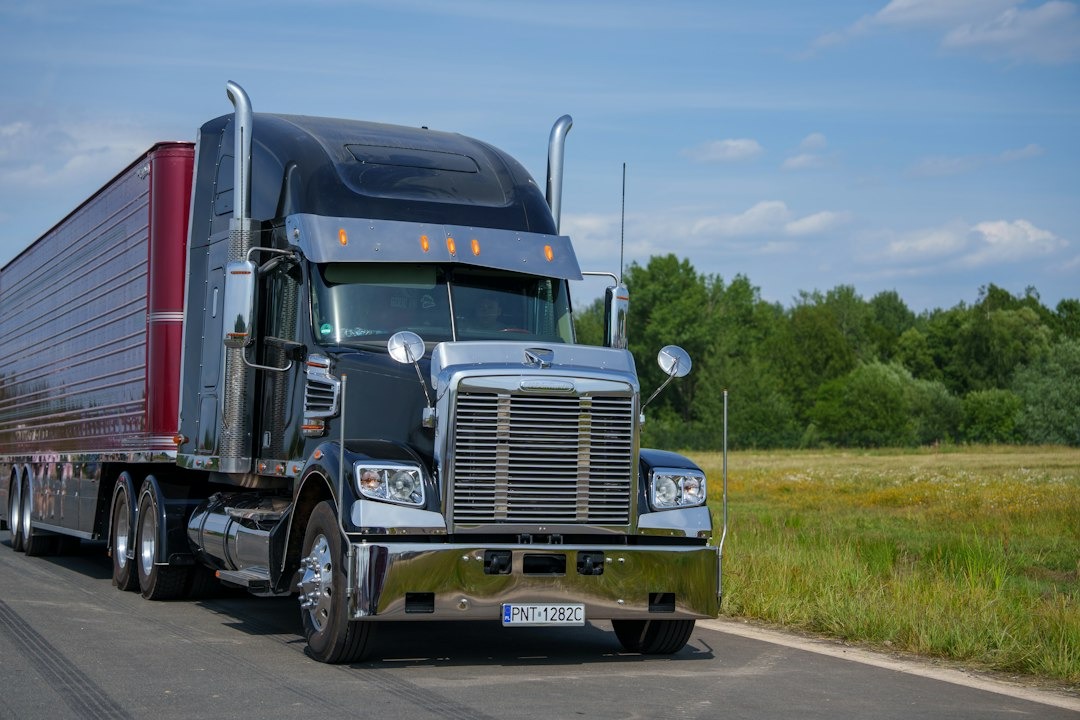
None of this is unique to racing. That is the point. A team hauler sits in the same regulatory category as a produce truck. The agency does not grade it differently because a car with a sponsor on it is inside.
What the Electronic Log Actually Records
Hours-of-service is where a lot of post-crash attention goes. FMCSA rules cap property-carrying drivers at eleven hours of driving after ten consecutive hours off duty, inside a fourteen-hour window. Most of those drivers now record duty status on an electronic logging device rather than on paper. The American Trucking Associations, the industry’s largest trade group, has backed electronic logging requirements as the way to document hours-of-service compliance.
That record matters because it is contemporaneous. It shows when the wheels were turning on a Sunday night departure from Bristol. Roadside inspection results and violations also feed FMCSA’s Safety Measurement System. Anyone can look up a carrier there, including a race team that runs its own authority.
Why Cargo Securement Is Its Own Subject
A trailer full of race equipment is not a uniform load. Two cars sit on a top deck. Below them are engines, gearboxes, jack stands, fuel cans and pit boxes. FMCSA’s cargo securement rules set minimum tiedown requirements, with separate provisions for vehicles carried as cargo.
Three things tend to get checked after a highway incident:
- Whether the tiedown count and working load limit met the rule
- Whether the load was distributed within axle weight limits
- Whether the trailer’s doors, latches and cables were maintained
That last item is more than paperwork. Seasonal wear on a trailer is a real maintenance subject, and this piece on corrosion, cables and cargo doors goes through it season by season. Salt, vibration and constant loading take a toll that a race shop can miss while chasing setup.
Who Ends Up Responsible After a Collision?
This is the part that surprises people. In an ordinary two-car crash, attention stays on the two drivers. With a commercial vehicle, responsibility can be spread across several parties at once:
- The driver, for how the vehicle was operated that day
- The motor carrier, for hiring, training, scheduling and dispatch
- The team or owner, for the condition of equipment it controls
- A maintenance contractor, for work done on brakes or couplings
FMCSA regulations place duties on the carrier, not only on the person behind the wheel. A schedule that leaves no realistic way to run legal hours is a carrier decision. So is a tractor kept in service past a repair it needed. Some people talk to a lawyer before they respond to an insurer about any of it.
None of that predicts how a particular case goes. Fault turns on facts, and California applies comparative fault, which can split responsibility across more than one party. The general shape of the inquiry is still the same every time. It starts with the vehicle, the load and the schedule, then works back to the people who set all three.
Frequently Asked Questions About Race Transporters and Federal Rules
Does a Race Hauler Count as a Commercial Vehicle?
Generally yes. FMCSA defines a commercial motor vehicle partly by weight rating and by use in interstate commerce. A loaded team transporter crossing state lines for a business normally fits both parts of that definition.
How Long Can a Hauler Driver Legally Drive?
FMCSA’s hours-of-service rules allow up to eleven hours of driving after ten consecutive hours off duty. That driving has to happen within a fourteen-hour window. Weekly limits of sixty or seventy hours also apply, depending on the carrier’s operating schedule.
Who Keeps the Electronic Logging Records?
The motor carrier holds them. Federal rules require carriers to retain records of duty status for a set period, and to produce them during an audit or inspection. Teams that run their own authority carry that obligation themselves.
Can a Team Be Responsible for a Driver It Hired?
It can, depending on the arrangement and the facts. FMCSA rules impose duties on carriers around driver qualification and supervision. Whether those duties were met in a given situation is decided case by case, not by any general rule.
A race weekend starts long before the green flag and ends long after the checkered one. The miles in between are commercial trucking, and they follow trucking’s rules. That is worth remembering the next time a hauler parade rolls into an infield. Every one of those rigs got there on a log.