Picture a clean white mushroom standing alone on a freshly mowed lawn, smooth and pale against the green. That’s the white parasol (Leucoagaricus leucothites), a common grassland species that draws attention precisely because it looks so plain and inviting. This article walks you through how to identify the white parasol, which dangerous look alikes you need to watch for, and whether it belongs on your plate.
White Parasol Mushroom Identification
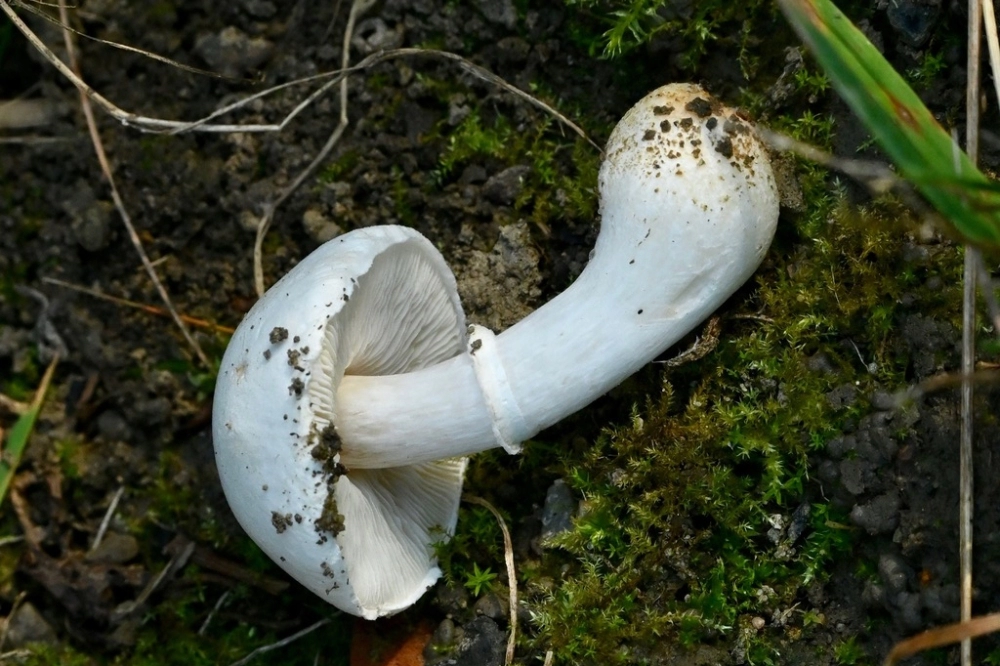
Crouch down and get eye-level with this mushroom. Everything you need to see is within arm’s reach.
- Cap: Smooth, dry, and white to off-white, sometimes with a faint ivory or grayish tinge at the center. Ranges from 5 to 12 cm across. Young caps start egg-shaped, then open flat with age. The surface feels silky under your fingertips.
- Gills: Free from the stem, crowded tightly together. They start out white and slowly shift to a pale pinkish hue as spores mature. Run a finger underneath and notice how cleanly they detach from the cap edge.
- Stem: White, smooth, 6 to 10 cm tall, slightly thicker at the base. It carries a thin, fragile ring that may disappear on older specimens. There is no volva (cup) at the base. Brush the soil aside and check.
- Spore print: White to pale cream. Some collections show a very faint pinkish cast. Always take a print on dark paper so you can see it clearly.
- Texture and smell: Flesh is firm and white, not changing color when cut. The smell is mild and nondescript.
- Habitat: Lawns, parks, pastures, golf courses, grassy roadsides. It favors mowed or grazed turf over woodland. You’ll rarely find it under trees.
- Season: Late summer through autumn in temperate regions, often after rain.
If you want to compare your find side-by-side with verified photos, try MushDex. It’s a free mushroom identification tool available both online and as a mobile app, and it’s a solid starting point before you consult a local expert.
White Parasol Mushroom Look Alikes
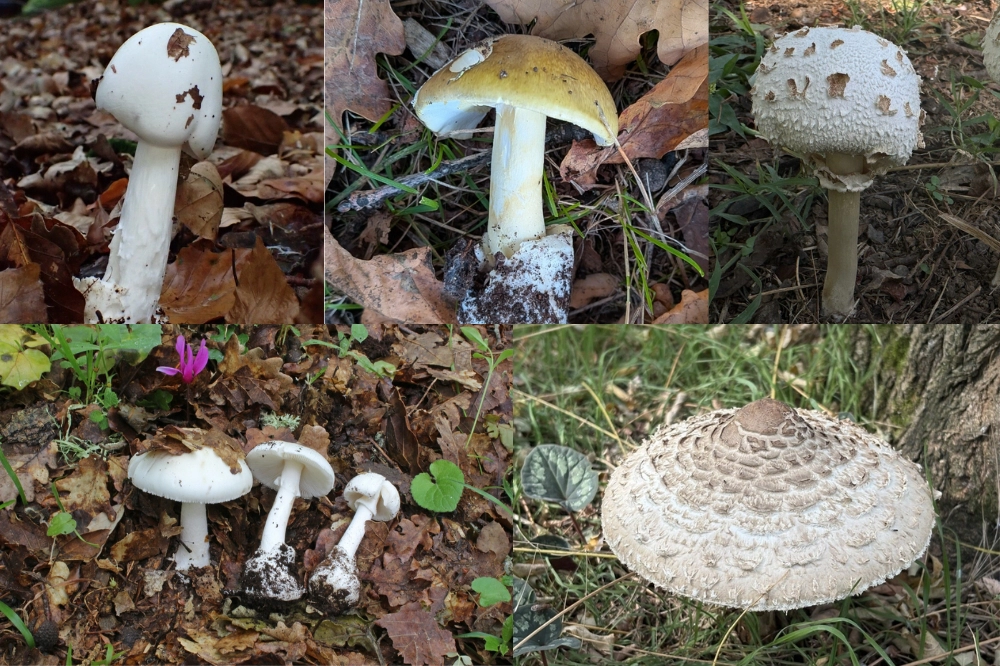
Several white-capped mushrooms share the same lawns and fields. Some will make you sick. Others can kill you. Study these closely.
- Destroying Angel (Amanita virosa) — Deadly. Pure white with a sac-like volva at the stem base and a persistent ring. The gills stay white. If you see a membranous cup buried in the soil at the base of the stem, you are not looking at a white parasol. Walk away.
- Death Cap (Amanita phalloides) — Deadly. The cap often has a greenish or yellowish tinge, but pale specimens can appear almost white. Look for the prominent volva and white spore print. The death cap favors oak and other broadleaf trees rather than open lawns, but never rely on habitat alone.
- Green-Spored Parasol (Chlorophyllum molybdites) — Toxic, causes severe gastrointestinal distress. Very common on lawns in warm climates. Its cap is whitish with brownish scales, and the spore print is distinctly green. A spore print separates it from the white parasol every time.
- Fool’s Mushroom (Amanita verna) — Deadly. Another all-white Amanita with a volva and ring, found in spring and early summer in parts of Europe. Virtually identical in lethality to the destroying angel. Always dig up the base to check for a volva.
- Parasol Mushroom (Macrolepiota procera) — Edible and popular among foragers. Much larger than the white parasol, with a shaggy, snakeskin-patterned stem and a prominent, movable ring. Its cap carries coarse brown scales on a pale background. Size and the scaly cap set it apart.
Is the White Parasol Safe to Eat?
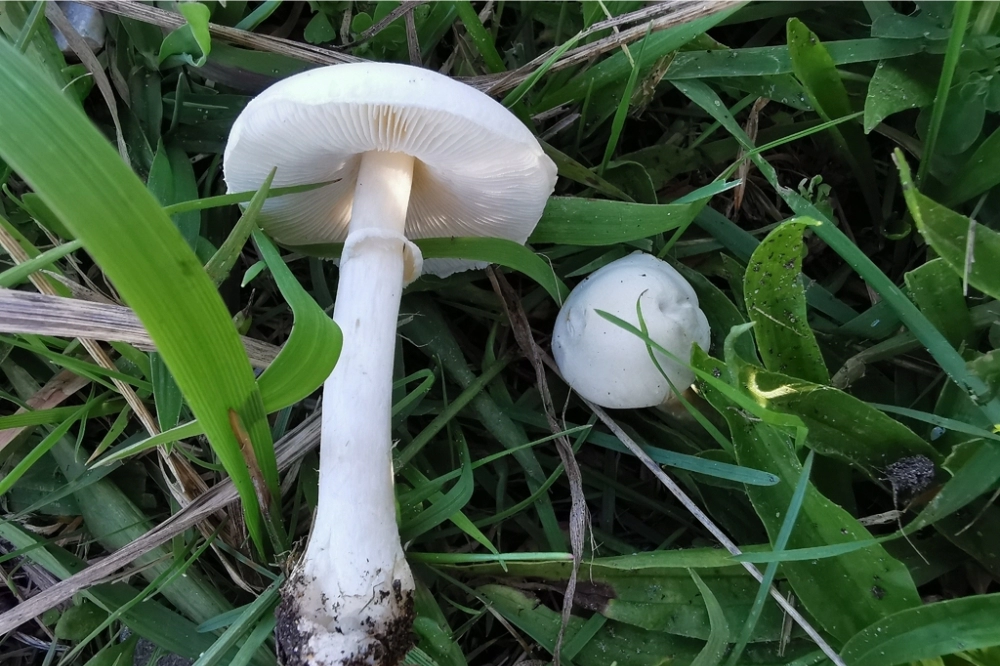
The short answer: it’s considered edible by many foraging guides. The longer answer demands your full attention.
Leucoagaricus leucothites is eaten in parts of Europe and North America, and those who collect it describe a mild, pleasant flavor. But this species sits in a dangerous neighborhood. Its plain white appearance overlaps with several lethal Amanita species, and the consequences of a misidentification are fatal. No amount of cooking destroys amatoxins.
Many experienced foragers choose to leave the white parasol alone, not because it’s toxic, but because the risk-to-reward ratio is poor. There are tastier mushrooms that don’t share a look with the destroying angel.
If you do decide to eat it, verify every identification feature: free gills, no volva, white-to-cream spore print, grassland habitat, and a ring without a cup at the base. Cross-reference with a free online mushroom identification resource, and confirm with an experienced forager or your local mycological society. Never eat a wild mushroom based solely on an app or a single source.
Where and When to Find White Parasol Mushrooms
Step out onto a well-watered lawn after two or three days of rain in late summer. Scan the grass at knee height. That’s prime white parasol territory.
This species is saprotrophic, feeding on decaying organic matter in the soil rather than forming partnerships with tree roots. It shows up in parks, athletic fields, cemeteries, suburban yards, and roadside grass strips. It prefers nutrient-rich, regularly disturbed ground.
In North America it fruits from July through October, depending on rainfall and local climate. In the UK and mainland Europe, expect it from August into November. Southern-hemisphere foragers report it in their own autumn months. Warm, wet conditions after a dry spell produce the best flushes.
White parasols often appear in scattered groups rather than dense clusters. Walk slowly and look for that clean white dome sitting just above the grass line. They can pop up year after year in the same spot, so mark a productive lawn and come back.
How to Prepare White Parasol Mushrooms
Only prepare this mushroom if you are completely certain of your identification. Read the safety section above one more time before you start cooking.
Trim the stem base and brush off any grass or soil. The caps hold up well when sliced and pan-fried in butter with a little garlic and salt. They have a mild, slightly nutty taste that doesn’t overpower other ingredients. Avoid eating them raw.
Some foragers bread and fry the caps whole, treating them like a schnitzel. Others dice them into risottos or fold them into omelets. They cook down a fair amount, so collect more than you think you need.
Start with a small portion on your first try. Even with correctly identified edible species, individual reactions vary. If you experience any nausea, stomach cramping, or discomfort, stop eating them and seek medical advice. Keep a raw specimen aside in case a doctor or poison control center needs to confirm the species.