Every year, Chicago drivers wake up to the same unpleasant surprise: an empty parking space and a car in the city impound lot. The cause is usually the winter overnight parking ban, which returns on December 1, whether or not a single snowflake has fallen. For a household with one car, it is an expensive inconvenience. For a plumber, florist, or delivery business with vehicles parked on the street, it can mean a lost working day.
Winter also brings icy crashes, flat batteries, and stranded vehicles, and those moments attract opportunistic tow operators. This guide explains how the ban works, what a tow can cost, how to avoid one, and how to choose a trustworthy provider before you need help.
What Is Chicago’s Winter Overnight Parking Ban?
From December 1 through April 1, parking is prohibited between 3 a.m. and 7 a.m. on roughly 107 miles of major arterial streets. The ban applies whether or not it has snowed, and permanent signs mark the affected streets. The city says the rule keeps roads clear for plows, emergency vehicles, and public transport.
A separate snow-route restriction covers about 500 additional miles of roads when two or more inches of snow have fallen. Drivers often confuse the two rules, so check the signs on your street rather than assuming.
How Much Can a Tow Cost?
Violators can expect a $60 ticket, a towing fee that starts at $150, and daily storage charges at the impound lot. That is more than $200 before the first night of storage is added, and the bill grows every day the vehicle sits. Rates and rules can change from season to season, so confirm current figures with the city.
For a business, the real cost is larger: missed appointments, idle employees, and delayed deliveries.
Six Habits That Keep Your Vehicle Off the Tow List
- Read the signs. Look for winter parking ban signs on your block before leaving a vehicle overnight.
- Know your street. Major arterials are covered, and many side streets are not.
- Plan an overnight spot. Use a side street, driveway, or private lot when you can.
- Set a reminder for November 30. Habits formed in the autumn are easy to forget on the first cold night.
- Move work vehicles to a yard. Do not leave company vans on arterial streets overnight.
- Watch the forecast. Two inches of snow can activate the snow-route rule on a different set of streets.
If Your Car Is Towed, What Should You Do First?
- Confirm it was towed, not stolen. Use the city’s towed-vehicle lookup or call 311.
- Gather your documents. Bring photo ID, proof of ownership, and insurance.
- Move quickly. Storage fees accumulate every day.
- Inspect and photograph the vehicle before driving away, so any damage is documented.
- Keep every receipt. Businesses may need them for bookkeeping.
Why Do Winter Crashes Create a Second Towing Risk?
Snow, black ice, and poor visibility make collisions more likely, and a crash is exactly when predatory operators appear. They arrive uninvited, pressure a shaken driver to sign, and haul the vehicle to a hidden lot with inflated fees.
Chicago now requires licensing for tow operators who respond to crash scenes, and licensed trucks must display an emblem. Victims can also sue rule-breaking operators, and police can impound their trucks. These rules help, but the best protection is a plan. If you are in a crash, call 911, photograph the scene, and contact a provider you have already vetted for post-collision towing and recovery instead of accepting help from a stranger.
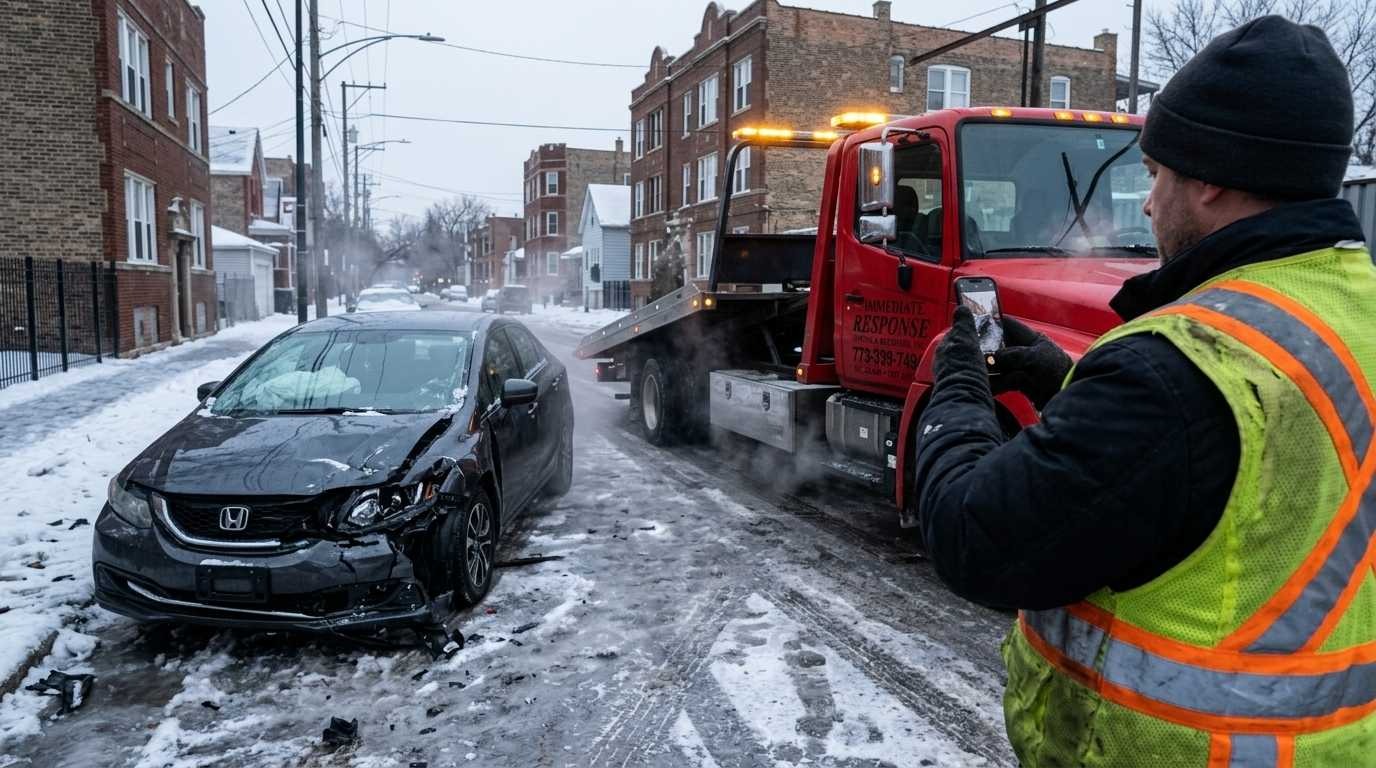
Alt Text: Driver photographing a damaged car before post-collision towing on an icy Chicago road
How Do You Choose a Trustworthy Tow Provider?
Look for these signs:
- A valid licence and a visible emblem on the truck.
- A written, itemised quote covering hookup, mileage, and storage before the vehicle moves.
- Clear identification: a marked truck and a uniformed operator.
- A confirmed destination that you choose.
- A live dispatcher, not a voicemail box.
Winter does not respect business hours. A breakdown at 2 a.m. in January is when you most need someone to answer the phone, so look for overnight tow assistance before you need it. Save the number in your phone and share it with every driver on your team.
Final Thoughts and Conclusion
Chicago winters reward preparation. Know the parking ban dates, read the signs, and keep a short plan for what to do if your vehicle is towed or damaged. For business owners, that planning protects revenue as well as vehicles. A few minutes of preparation in November can save hundreds of dollars and several lost days in January.