A truck doesn’t suddenly become junk the day a newer model hits the market. All across North America and Europe, older heavy-duty diesels are still pulling freight, working construction sites, and making money for the people who own them. Plenty of these engines have already logged millions of miles and proven they’re tough. Replacing them isn’t always the smartest or most practical move.
For fleet managers the real question is usually this: how much useful life is left in the truck I’ve got, and what does it actually take to keep it earning?
When the engine itself is worn out mechanically, a full rebuild might be the only real option. But if the hardware is still solid and the trouble is in the electronics, the calibration, or the emissions software, a targeted reprogramming job can often get the truck back to work without tearing everything apart.
The Money Side of Keeping an Older Truck
Buying a replacement tractor costs a lot more than the sticker price. You’re looking at financing, higher insurance, registration, getting drivers used to a different truck, and the downtime while everything gets sorted out. A rebuild has its own stack of bills — parts, labor, and the time the truck sits idle.
When the engine and major components are still in decent shape, software work can be a different path.
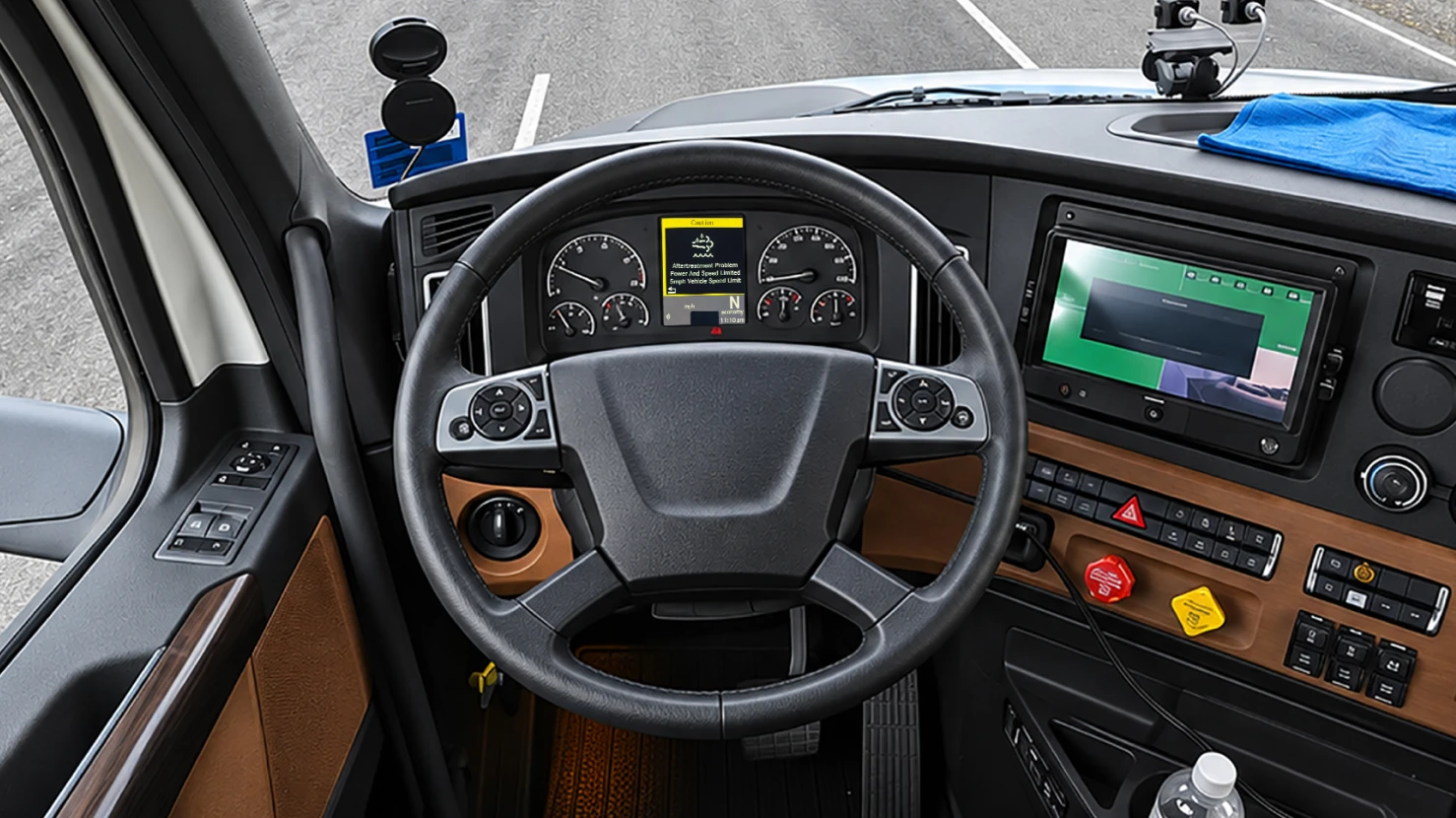
Picture a fleet that already has several older trucks that have paid for themselves years ago. One of them starts making less power after a software update or develops some kind of configuration glitch. Jumping straight to a brand-new truck feels like overkill. First you need to figure out whether the problem is mechanical, electronic, or tied to the emissions system.
If the engine is healthy and the work falls under a supported programming service, an ECU update or calibration change can often restore the way the truck was meant to run — or tune it better for the job it’s doing.
Whether it actually saves money depends on the specific truck. Software work isn’t automatically cheaper than every other option, but it’s usually worth looking at before you commit to a big capital spend.
When Software Can Do More Than New Parts
The engine control module (ECM) controls the important operating parameters — fuel injection, torque limits, and a bunch of other things that depend on how the engine was designed and calibrated. Over the years technicians run into outdated configurations, wrong settings, or software restrictions that limit how the truck performs.
In those cases the mechanical condition is only half the story.
A proper programming service can often fix things like:
- Incorrect or outdated ECU configurations
- Power and torque settings that need to be brought back in line with what the engine is actually rated for
- Certain software-related operating limits
- Supported electronic changes for a particular engine and truck application
What software can’t do is fix worn cylinder liners, repair bad injectors, replace a failing turbo, or undo real physical damage. Those problems still need real mechanical work.
The same goes for emissions systems. An active fault might come from a failed part, a wiring issue, or something else entirely. Reprogramming isn’t a magic fix for every check-engine light or derate. And any changes that touch emissions controls have to stay legal for the vehicle and how it’s being used.
Three Classic Diesel Platforms Still Worth Supporting
A few older engine families show why it still makes sense to support established truck platforms. DrunkLab’s catalog includes programming services for these applications.
Detroit Diesel Series 60 and DDEC IV–V
The Series 60 showed up in 1987 and quickly became a household name in North American heavy-duty trucking. Its electronic controls helped set the pattern for engine management that a lot of older trucks still use today.
DrunkLab offers services for Detroit Diesel applications from 2003–2007 using DDEC IV–V, plus a separate Series 60 EPA07 option. These are useful for owners who need supported ECU programming on an older Detroit. The exact service depends on the engine, the control system, and how the truck is set up.
For eligible applications they can do the work remotely through TeamViewer, so you don’t automatically have to pull the ECU and ship it somewhere.
Cummins ISX CM870 and CM871
The Cummins ISX is another long-running heavy-duty family. The earlier CM870 and CM871 control platforms are still relevant for people keeping older North American tractors on the road.
DrunkLab has dedicated services for the ISX CM870 and CM871 that cover supported programming for both engine and emissions-system configurations. The key is knowing the exact ECM generation and the current condition of the truck — two trucks with the same engine name can have very different software histories and hardware.
Before you book anything, check that your specific application is supported. Their remote TeamViewer service is one way to get eligible Cummins work done.
Volvo D12D and D16D
Older Volvo VN trucks with D12D or D16D engines bring a European take on the same problem: how to keep proven equipment productive without replacing it too early.
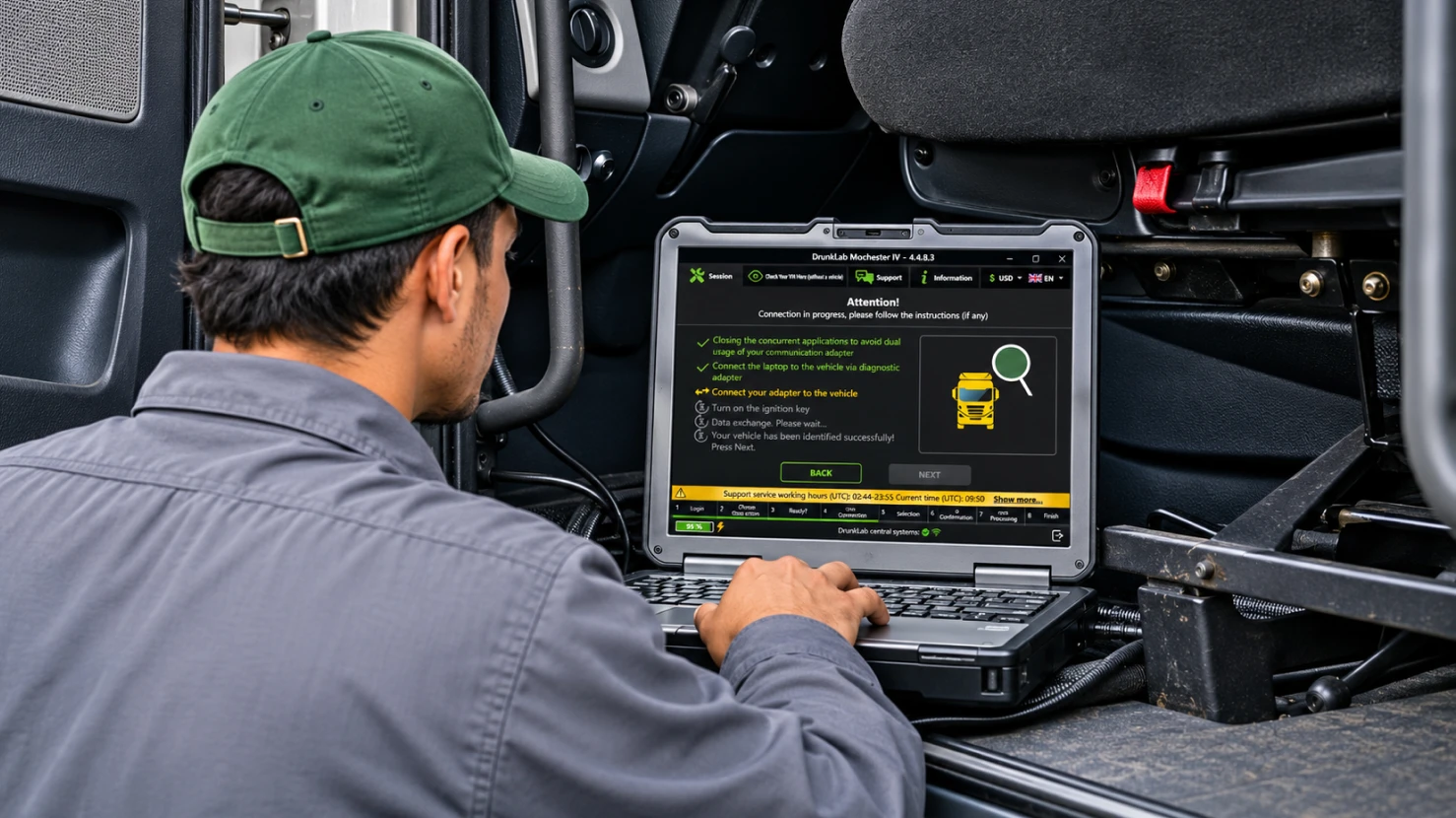
DrunkLab lists a service for 2004–2007 Volvo VN trucks with D12D/D16D US04 engines. It includes an EGR-related programming option and a horsepower uprate to the manufacturer’s maximum rating for that configuration. For these Volvos they use their Mochester App workflow instead of TeamViewer.
The takeaway is simple: age alone doesn’t decide whether software work makes sense. Compatibility, the actual condition of the truck, and the specific work needed matter a lot more.
Remote Programming and What You Still Need Locally
Modern programming services can cut down on the need to ship ECUs or bring a specialist on-site. But remote access doesn’t mean you can do everything with just an internet connection.
The truck still needs the right communication hardware, compatible software, and a solid connection. Some jobs also require extra equipment or a local tech to help out.
DrunkLab mainly uses two workflows. For Cummins, Detroit Diesel, and PACCAR, eligible remote services go through TeamViewer. For other supported applications, including the older Volvos mentioned above, they use the Mochester App (M4 App).
The Mochester App is a Windows-based platform that connects users to the supported programming services and the right adapters. It lets people check what’s available and set up the work they need.
Having remote engineering support plus the right gear at the truck can make specialized programming possible without hauling the whole vehicle to a specialty shop. It doesn’t replace a workshop when there’s a real mechanical problem or a failed component — those still have to be fixed the old-fashioned way.
Where DrunkLab Fits
DrunkLab focuses on ECU programming, calibration, and supported software solutions for heavy-duty trucks, buses, construction equipment, and other commercial vehicles.
For owners of older trucks the value is having access to services built for specific engine and control-system generations instead of trying a one-size-fits-all approach.
Their catalog covers Detroit Diesel DDEC IV–V, Cummins ISX CM870/CM871, and Volvo VN D12D/D16D applications. What’s available and what you’ll need varies by engine, ECM, vehicle setup, and the exact work requested.
A good starting point is to look up the relevant application in the DrunkLab catalog and confirm compatibility before booking. That way you know whether the programming work you need is actually offered and what equipment is required.
The goal isn’t to make every old truck run like a brand-new one. It’s to find the places where a supported software fix can help an existing truck keep doing its job.
Making the Numbers Work
Deciding whether to keep an older truck means comparing real costs, not just looking at the price of a programming job.
A useful check includes:
- Current condition — is the engine mechanically sound, or does it need major repairs?
- What’s actually needed — is the issue ECU configuration, calibration, a failed part, or something else?
- Compatibility — does the service support the exact engine and control system?
- Downtime — how long will each option keep the truck off the road?
- Remaining working life — how many more productive years can you reasonably expect?
- Total cost — how does the proposed work stack up against repair, rebuild, or replacement?
A relatively small software job can make economic sense when the truck is otherwise in good shape. If the engine has a lot of mechanical wear, programming alone won’t fix the real problem.
Classic heavy-duty diesels earned their reputations the hard way — by working for years. Modern programming tools give owners another practical option for keeping supported older platforms going, as long as the software work matches the actual condition and needs of the truck.
Keeping an older truck productive isn’t about dodging every repair. It’s about picking the right fix at the right time and putting money where it can actually deliver a return.