From Limp Mode to Full Power: Fault Codes and ECU Adaptation
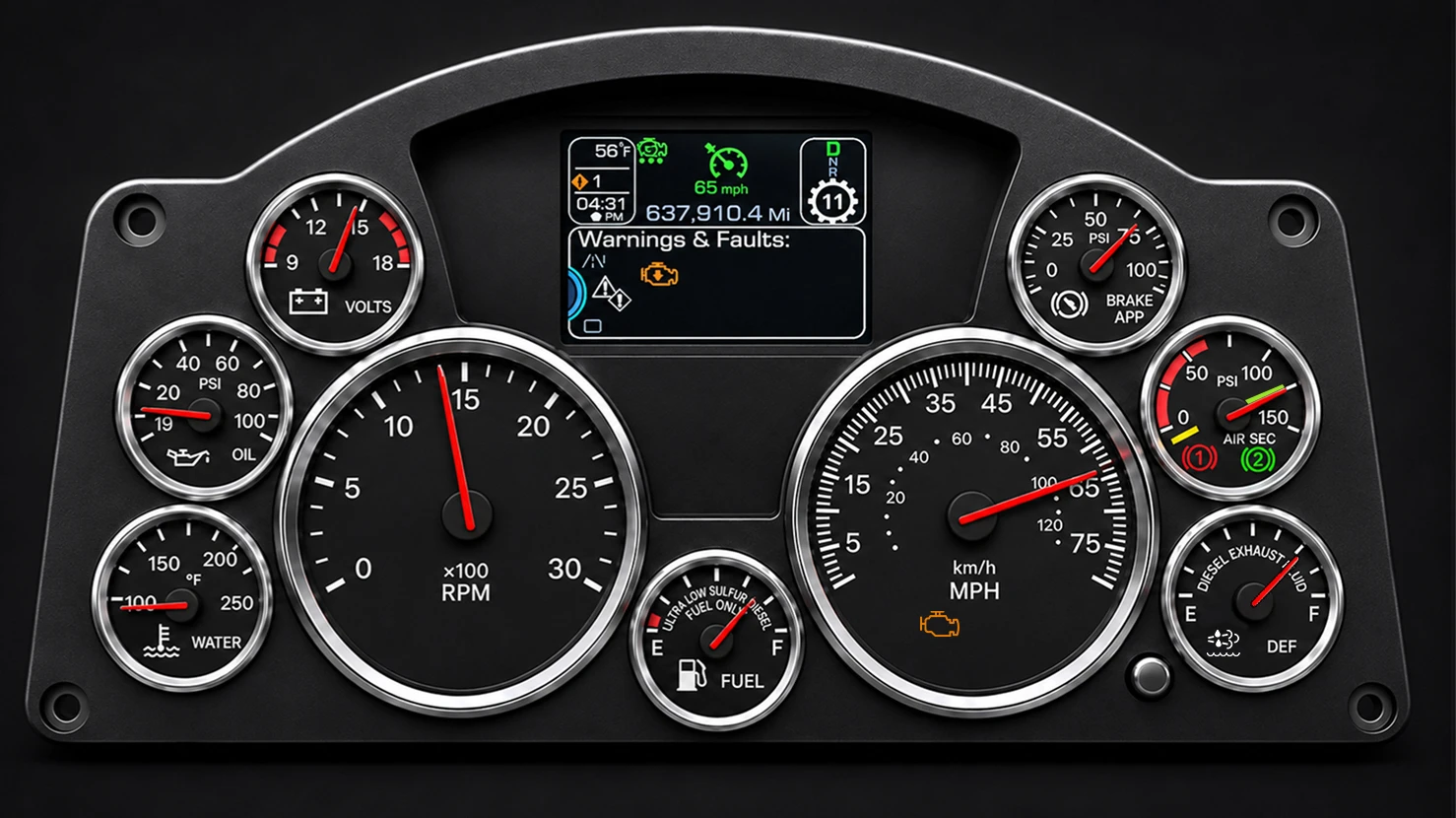
Dropping into limp mode is surely an effective way for a truck to turn an average workday into a truly bad day. Acceleration feels weak, top speed gets capped, and the dashboard lights up with warnings. For any driver or fleet manager the priority is the same: figure out what’s wrong and get the truck earning money again.
Restoring full power is rarely as simple as clearing a code or resetting the ECM. The right fix depends on what triggered the derate, which system is involved, and whether the issue sits in hardware, software, or vehicle configuration. Knowing the difference helps owners make smarter calls before they start ordering repairs or programming services.
Why Diesel Trucks Enter Derate Mode
Derate is the engine control system’s way of limiting power when it detects certain faults or operating conditions. Depending on the engine and how the truck is set up, it might cut torque, restrict road speed, or throw messages that demand immediate attention.
Emissions systems are a frequent culprit on modern diesels. Trouble with the DPF, SCR, or DEF system can trigger warnings and, under the right conditions, force a power restriction. Other common sources include boost-pressure problems, sensor readings, electrical issues, or communication glitches between modules. A fault in one system often generates related codes in another, so the picture is rarely as straightforward as a single warning light suggests.
Exactly how the truck responds depends on the manufacturer, emissions package, software calibration, and how severe the detected condition is. That’s why two trucks with similar symptoms can need completely different solutions—one might need a straightforward mechanical repair while the other needs a deeper look at its electronics or software setup.
What Fault Codes Actually Tell You
Fault codes are a useful starting point when a truck loses power. They show what the electronic systems have noticed and help narrow the search to particular systems or operating parameters.
They do not, however, automatically point to a failed part. A boost-pressure code, for example, does not mean the turbo is bad. The same code can be caused by a sensor signal, an electrical problem, a pressure leak, or something else in the system. Context and related codes matter.
It also helps to separate active codes from inactive ones. An active code means the system is still seeing the condition right now; an inactive code simply records something that happened earlier. Exact definitions and available detail vary by vehicle and software.
Looking at the full fault-code report almost always gives a clearer picture than staring at a single code. For owners who want a practical first look, DrunkLab’s Mochester App offers a free truck fault-code reading that lists active and inactive codes along with related system information. It can help organize the data before deciding on the next move. Reading codes is still not the same as a full diagnosis or confirming the root cause.
Clearing Codes vs. ECU Adaptation
Clearing codes, performing ECU adaptation, and loading factory software are three different jobs. Mixing them up wastes time and rarely fixes the original problem.
Clearing codes simply removes fault records the system allows to be erased. It’s appropriate after the underlying condition has been fixed, but it does nothing to repair the cause. If the problem is still there, the code—and often the derate—will return.
ECU adaptation covers the procedures used to configure or initialize a control module so it works correctly in a specific vehicle. It may be required after replacing a module, changing certain components, or following a manufacturer procedure. Solutions will vary depending on the vehicle make and application, so adaption is often not a solution for power loss.
Factory software programming means loading the correct manufacturer software into a supported module. This becomes relevant when a module needs to be programmed for a particular vehicle configuration or when a known software-related issue needs attention.
Each of these steps serves a distinct purpose. A code reset is not a substitute for adaptation, and adaptation is not the same as installing factory software. More importantly, none of them automatically fixes a mechanical or electrical fault. A bad sensor, damaged wiring, or failing component still has to be addressed before software work can restore normal performance.
The first practical step is always to understand what the available information is pointing to and whether a programming procedure is actually the right move.
What to Check Before Requesting Help
Owners and fleet operators can make the next step smoother by gathering a few basics before calling for service.
Save the complete fault-code report instead of jotting down only the first code that appears. Note any dashboard messages and whether the truck has been limited in power, speed, or other behavior.
Record when the problem showed up—under heavy load, on the highway, after recent service, or after a module replacement. That context is valuable even if you don’t know the exact cause.
Have the VIN, engine model, and any available ECU information ready. These details quickly show which systems and programming options apply to that specific truck.
If critical engine or safety warnings are present, follow the manufacturer’s instructions. Do not try to force the truck back to full power by simply clearing codes or changing software.
Collecting the right information first is a practical way to identify the appropriate solution.
When Professional ECU Programming May Be Needed
Professional programming is the right tool in several situations, but only after the reason for the work is clear.
Module replacement is a common example. A new ECM usually needs the correct software, vehicle-specific configuration, and any additional programming steps before it will operate properly.
VIN programming and ECU adaptation can also be required on supported applications when a module or vehicle setup calls for them. In other cases a known software-related issue may justify checking the module’s programming requirements.
The correct procedure always depends on the manufacturer, engine family, ECU hardware, and vehicle configuration. A solution that works on one truck cannot simply be copied to another, even if both use engines from the same family.
There is also a clear limit to what programming can do. If the derate is caused by a defective sensor, damaged wiring, a fuel-delivery problem, a cooling-system fault, or mechanical damage, those issues have to be fixed first.
Programming is most useful when it matches an identified need—not when it is used as a shortcut around understanding the problem.
How DrunkLab Supports Truck ECU Programming
DrunkLab offers remote ECU programming and tuning for supported commercial vehicles, including heavy-duty trucks. Services are matched to specific vehicle and engine applications; the exact procedure depends on the system involved.
Mochester App gives access to these services through a Windows application. Users can search by VIN or chassis number, review the available options, and pull a free truck fault-code reading. The report helps owners and fleet operators see which codes have been recorded before deciding how to proceed. When programming is needed, the options depend on the particular truck, control module, and configuration.
Mochester App is not a universal diagnostic tool, and a fault-code report does not replace inspection of an underlying mechanical or electrical problem. The aim is simply to help users identify relevant service options and decide whether a supported programming procedure fits their situation.
Start With the Cause, Not the Reset
When a diesel truck drops into derate, the path back to full power begins with understanding why the restriction happened. Fault codes supply useful information, but only when read in context. Clearing codes, adapting an ECU, and loading factory software each do different jobs.
Doing the right thing saves time, and the same can be said for finding the right procedure. For truck owners who want to explore supported ECU programming, check fault information, or simply want a good starting point, DrunkLab and Mochester App are some of the better options.