Introduction
A vehicle’s braking system depends on the coordinated performance of several components, with brake pads and brake discs playing a particularly important role. Although these parts are often purchased and replaced separately, their compatibility and combined performance directly influence braking efficiency, driving comfort, component durability, and overall vehicle safety.
For automotive parts importers, wholesalers, distributors, and professional workshops, understanding how brake pads and brake discs work together is essential when selecting reliable products and suppliers.
This guide explains the working principles of disc braking systems, the technical factors affecting component performance, common causes of premature wear, and key considerations when sourcing brake pads and brake discs from manufacturers.
1. How Do Brake Pads and Brake Discs Work Together?
Most modern passenger vehicles use disc braking systems on the front wheels, while many vehicles also use disc brakes on the rear wheels.
The basic braking process involves friction and the conversion of kinetic energy into heat.
When the driver presses the brake pedal:
Hydraulic pressure is generated by the master cylinder.
Brake fluid transfers this pressure to the brake caliper.
The caliper pistons push the brake pads against both sides of the rotating brake disc.
Friction between the pads and disc slows the wheel.
The vehicle’s kinetic energy is converted primarily into heat, which is dissipated through the braking components and surrounding air.
Brake pads and brake discs therefore operate as a friction pair. Their materials, surface characteristics, dimensions, and thermal properties must be compatible to achieve consistent braking performance.
A high-quality brake pad cannot compensate for a severely damaged or unsuitable brake disc. Similarly, a premium brake disc may not deliver its expected performance when paired with an incompatible friction material.
2. Key Technical Factors Affecting Brake Pad Performance
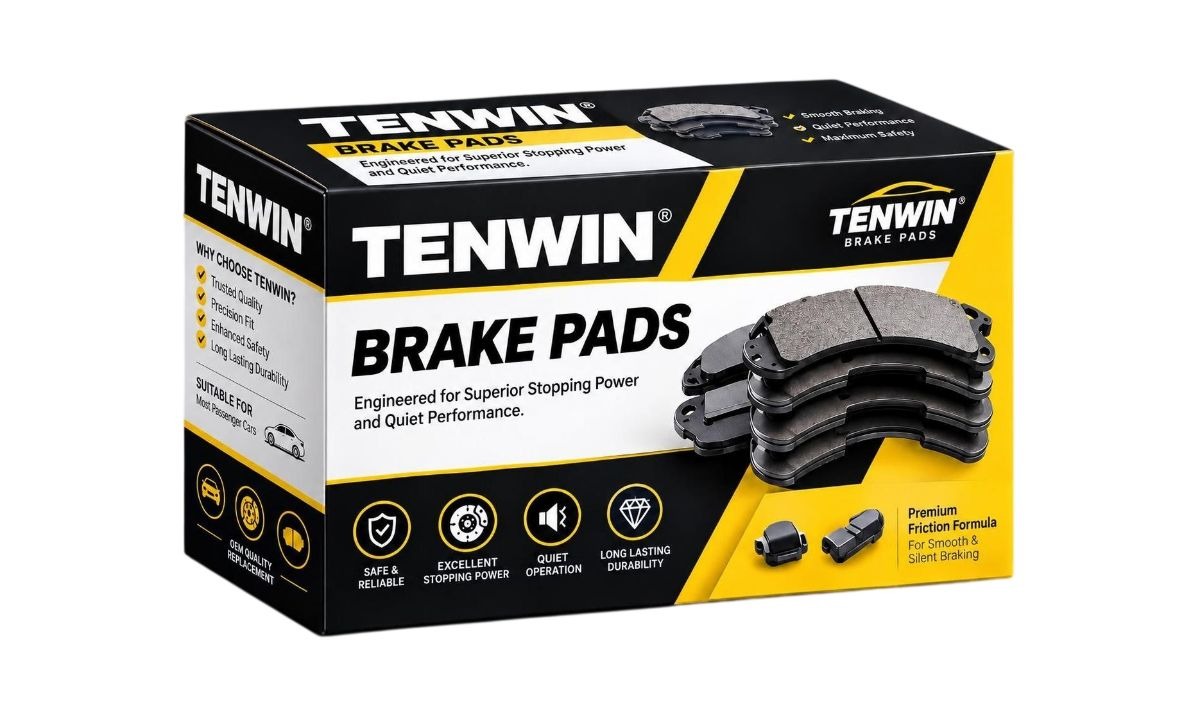
Brake pads are manufactured using different friction material formulations designed for specific vehicle applications and operating conditions.
Several technical characteristics should be considered when evaluating brake pad quality.
Friction Coefficient
The friction coefficient indicates the level of friction generated between the brake pad and disc under specified test conditions.
An appropriate and stable friction coefficient helps provide predictable braking performance across different operating temperatures and braking conditions.
However, a higher friction coefficient does not automatically mean a better brake pad. The friction formulation must balance braking effectiveness, temperature stability, wear characteristics, noise, and compatibility with the brake disc.
Thermal Stability
During braking, friction generates considerable heat. Repeated heavy braking can increase the temperature of both brake pads and discs.
If the friction material cannot maintain stable performance at elevated temperatures, braking effectiveness may deteriorate.
Manufacturers therefore evaluate friction materials under different temperature conditions to assess friction stability, recovery characteristics, and resistance to thermal degradation.
Wear Resistance
Brake pad wear depends on several factors, including friction material formulation, vehicle weight, driving habits, road conditions, and brake system design.
A well-developed friction formulation should provide a suitable balance between pad durability and disc wear.
Extremely aggressive friction characteristics may increase disc wear, while formulations with insufficient friction performance may compromise braking effectiveness.
Noise, Vibration, and Harshness (NVH)
Brake noise and vibration are important considerations in aftermarket product selection.
Unwanted noise can result from friction material characteristics, disc surface conditions, caliper movement, installation problems, and brake system resonance.
Professional brake pad manufacturers evaluate NVH performance through material development, structural design, and appropriate testing procedures.
3. What Determines Brake Disc Quality?
Brake discs, also known as brake rotors, provide the rotating friction surface against which brake pads operate.
Their material properties, dimensions, machining accuracy, and thermal characteristics influence the overall braking system.
Material Composition
Most conventional brake discs are manufactured from cast iron because of its suitable friction characteristics, thermal properties, and manufacturing advantages.
The material composition and casting process influence mechanical strength, thermal conductivity, hardness, and resistance to thermal fatigue.
Consistent material quality is essential for producing brake discs that meet the requirements of their intended vehicle applications.
Disc Thickness and Dimensional Accuracy
Brake disc thickness is a critical specification.
Every brake disc has a specified minimum thickness, commonly marked as MIN TH or indicated in the vehicle manufacturer’s technical information.
When disc thickness decreases below the permitted limit, its ability to manage heat and withstand braking loads may be reduced.
Other important dimensions include:
Overall disc diameter
Disc thickness
Center hole diameter
Bolt hole pattern
Center height
Mounting dimensions
Ventilation structure, where applicable
Dimensional accuracy is particularly important for aftermarket replacement parts because incorrect dimensions can cause installation difficulties, vibration, or improper brake system operation.
Surface Flatness and Runout
Disc runout refers to variations in the position of the rotating disc surface relative to its intended rotational axis.
Excessive runout can contribute to brake pedal pulsation, uneven pad contact, and disc thickness variation over time.
Manufacturers should apply appropriate machining and inspection procedures to control dimensional consistency and surface accuracy.
Ventilation and Heat Dissipation
Brake discs are available in several designs, including solid and ventilated configurations.
Solid discs are commonly used in applications with relatively lower thermal requirements.
Ventilated discs contain internal air passages that help dissipate heat during braking. Their design makes them suitable for many applications requiring greater thermal management.
Other designs include drilled and slotted discs, which are developed for particular operating requirements. Their suitability should always be evaluated according to vehicle specifications and intended use.
4. Why Brake Pad and Brake Disc Compatibility Matters
Selecting brake pads and discs separately without considering their compatibility can lead to performance problems.
A suitable friction pair should be evaluated based on several factors.
Friction material compatibility
The friction material must work appropriately with the disc material and surface characteristics to achieve stable braking and acceptable wear.
Thermal compatibility
Both components should be capable of operating within the temperature range expected for the vehicle application.
Dimensional compatibility
Brake pad shape, thickness, contact area, disc diameter, disc thickness, and caliper configuration must match the intended application.
Wear characteristics
The interaction between the pad and disc determines how quickly each component wears. A well-balanced combination helps avoid unnecessarily high wear and supports consistent service performance.
For distributors and workshops, checking vehicle application data and OE reference numbers is essential before selecting replacement components.
5. Common Problems Caused by Brake Pad and Disc Issues
Understanding common braking problems helps importers, distributors, and workshops identify product quality issues and provide better technical support to customers.
Brake Noise
Squealing or grinding noises may result from friction material characteristics, surface contamination, incorrect installation, worn components, or missing anti-noise hardware.
Grinding noises can indicate severe pad wear or metal-to-metal contact and should be inspected immediately.
Brake Judder or Steering Wheel Vibration
Brake judder may be associated with disc thickness variation, excessive runout, uneven friction deposits, hub surface problems, or other mechanical conditions.
Correct diagnosis is necessary before replacing components.
Uneven Brake Pad Wear
Uneven wear between inner and outer pads or between the left and right wheels may indicate sticking caliper pistons, restricted guide pins, uneven mechanical movement, or hydraulic problems.
Simply installing new brake pads without correcting the underlying issue may result in repeated premature wear.
Brake Disc Cracking or Thermal Damage
Excessive heat, severe operating conditions, material defects, or inappropriate component selection can contribute to thermal damage.
Discs showing cracks, serious deformation, or thickness below the manufacturer’s minimum specification should be replaced according to applicable service procedures.
6. What Should Importers and Distributors Check When Selecting a Manufacturer?
For automotive parts importers and wholesalers, selecting a reliable brake pad and brake disc manufacturer involves more than comparing unit prices.
The following factors can help buyers evaluate potential suppliers.
Manufacturing Capability
Check whether the supplier has actual production capabilities, suitable manufacturing equipment, and established quality control procedures.
A manufacturer with experience in friction material development, brake pad production, brake disc casting, machining, and inspection may offer better control over product consistency.
Buyers should verify which production processes are performed in-house and which are outsourced.
Quality Control and Testing
Ask suppliers about their quality management systems, product testing capabilities, and inspection procedures.
Depending on the product and target market, relevant evaluation areas may include:
Friction coefficient testing
Shear strength testing
Compressibility testing
Hardness and material inspection
Dimensional inspection
Disc runout and thickness inspection
Corrosion protection evaluation
Applicable regulatory and vehicle application requirements
Buyers should request actual certificates and test reports rather than relying solely on general quality claims.
Vehicle Application Coverage
A competitive aftermarket supplier should offer suitable product coverage for the vehicle models and market segments targeted by the buyer.
Importers should evaluate:
Product range
OE reference cross-referencing
Vehicle application information
New product development capability
Product data accuracy
Packaging and labeling options
Accurate application information helps distributors reduce incorrect orders and product returns.
OEM and Private Label Services
For established distributors and wholesalers, private label manufacturing can help differentiate their product offerings.
Potential services include customized packaging, brand labeling, product identification, and application-specific product development, subject to the manufacturer’s capabilities and order requirements.
Before placing an OEM order, buyers should confirm minimum order quantities, packaging specifications, lead times, and quality inspection arrangements.
Export Experience and After-Sales Support
International buyers should also consider a supplier’s experience in export documentation, packaging, logistics coordination, product traceability, and technical communication.
A reliable long-term supplier should be able to support buyers with product information, application verification, quality documentation, and after-sales communication.
7. Conclusion: Choose the Right Friction Pair and the Right Manufacturing Partner
Brake pads and brake discs are closely related components that work together to deliver reliable braking performance.
Their compatibility, material quality, dimensional accuracy, thermal characteristics, and manufacturing consistency all influence the performance and service life of the braking system.
For automotive parts importers, wholesalers, and distributors, working with a technically capable manufacturer is an important step toward building a competitive aftermarket product range.
When evaluating suppliers, buyers should look beyond the purchase price and consider manufacturing capability, quality control, vehicle application coverage, product consistency, and long-term cooperation potential.
About TENWIN
TENWIN is a China-based manufacturer of automotive braking products, established in 2010. Its product range includes brake pads, brake discs, brake linings, and brake chambers.
TENWIN works with international automotive aftermarket customers and supports inquiries related to product sourcing, vehicle applications, and supply cooperation.
For more information about TENWIN’s brake pads and brake discs, visit https://tenwinbrake.com/.