Home Blog Page 13

TOYOTA RACING Weekly Preview 11.04.2

This Week in Motorsports: November 2 – 8, 2026

NCS/NOAPS/NCTS: Homestead-Miami Speedway – November 6-8

PLANO, Texas (November 4, 2026) – NASCAR’s Cup, O’Reilly and Truck Series close out their 2026 seasons at Homestead-Miami Speedway this weekend.

NASCAR National Series – NCS/NOAPS/NCTS

Looking to match best-ever wins total … With one race remaining in the regular season, Team Toyota has clinched the 2026 Cup Series Manufacturers’ title and sits at 18 wins – just one back of the all-time single season high of 19 set in 2019. Homestead-Miami Speedway has been a strong track for Camry drivers with wins in two of the last three Cup Series races at the 1.5-mile oval.

Bell likely to extend Cup-best top-five points streak … Christopher Bell heads into Miami with an outside shot at his first NASCAR Cup Series title, as the Oklahoma-native is 67 points out of the lead. However, he does look likely to extend his Cup Series-best streak of finishing in the top-five in the point standings to five consecutive years. Bell is the only driver who has finished in the top-five every year since 2022, and he holds a 58-point advantage over sixth place to continue that streak.

Gibbs, Wallace pushing for career-best finishes … Ty Gibbs and Bubba Wallace head into Homestead-Miami focused on career-best season finishes. It has been a career season for Gibbs as he has set new bests in wins, top-fives and top-10 finishes, and looks likely to easily beat his previous best points finish of 15th, while Wallace could match his career-best result of 10th (2023) with a solid day, as he sits just in 12th-place, 11 points out the top-10. Wallace led 56 laps and finished third at the series’ last race at Homestead-Miami in 2025.

Crews Rookie of the Year clinching … Brent Crews looks likely to clinch Rookie of the Year honors at Homestead-Miami Speedway. Crews, who turned 18 in March, got a late start on the season due to the age restriction policies. The Toyota Development Driver was impressive throughout his rookie campaign – scoring a top-10 finish in his series debut and earning 11 top-five finishes in 28 starts this season, including two runner-up results at Talladega Superspeedway and Nashville Superspeedway.

Honeycutt eyes first Truck Series title…Toyota Development Driver Kaden Honeycutt hold a 20-point lead with one race remaining in the season. Honeycutt, who made NASCAR’s Championship 4 a season ago, is making his TRICON Garage and Toyota debut at Homestead-Miami Speedway. The Texas native leads the series in top-five and top-10 finishes, and his average finish is more than two spots better than any other full-time driver.

Heim double duty …The reigning Truck Series champion Corey Heim will close out his 2026 season running double duty in Homestead-Miami Speedway, as he will run the No.1 TRICON Garage Tundra TRD Pro on Friday night before wheeling the 23XI Racing No. 67 Camry on Sunday. Heim is making his Cup Series debut at Homestead but has finished in the top-five in all four of his Truck Series starts there, including one year ago where he led 78 laps and finished third despite battling mechanical issues.

About Toyota

Toyota (NYSE:TM) has been a part of the cultural fabric in the U.S. for nearly 70 years, and is committed to advancing sustainable, next-generation mobility through our Toyota and Lexus brands, plus our nearly 1,500 dealerships.

Toyota directly employs approximately 48,000 people in the U.S. who have contributed to the design, engineering, and assembly of more than 36 million cars and trucks at our 11 manufacturing plants. In 2025, Toyota’s plant in North Carolina began to assemble automotive batteries for electrified vehicles.

For more information about Toyota, visit www.ToyotaNewsroom.com.

JR Motorsports — NOAPS Homestead-Miami Speedway Preview

JR Motorsports O’Reilly Auto Parts Team Preview
TRACK – Homestead-Miami Speedway (1.5-mile oval)
NOAPS RACE – NOAPS Championship Race (200 laps / 300 miles)
TUNE IN – CW, MRN, SiriusXM Channel 90, ESPN Mobile App at 5:00 p.m. (ET)

Carson Kvapil

No. 1 – Bass Pro Shops Chevrolet

Kvapil 2026 NOAPS Stats

Starts: 32

Wins: 3

Top 5s: 13

Top 10s: 20

Laps Led: 656

Avg. Finish: 10.9

Points: 4th

Carson Kvapil heads to Homestead-Miami Speedway for the second time in his NASCAR O’Reilly Auto Parts Series career this weekend with a chance at a Championship.

Kvapil cut the points gap to 31 markers entering the final race of The Chase after winning last weekend at Martinsville Speedway.

In 38 career starts on tracks 1-2 miles in length, Kvapil has recorded 10 top-fives and 17 top-tens.

Accompanying Kvapil, crew chief Rodney Childers has made 17 NASCAR Cup Series starts atop the box at Homestead. In those starts, Childers has one win, six top-fives and eight top-10s.

Carson Kvapil

“This entire No. 1 Bass Pro Shops team has worked extremely hard all season long and put ourselves in position to race for a Championship on Saturday evening. We have a lot of momentum right now coming off our win at Martinsville last weekend. I know that Rodney (Childers, crew chief) and everyone on this Bass Pro Shops team is ready to go this weekend. I am confident we will unload another rocket ship on Friday. We just need to go out and execute like I know this No. 1 team is capable of, earn as many stage points as possible, and put ourselves in position to win the race and championship come Saturday evening.”

Justin Allgaier

No. 7 BRANDT Professional Agriculture Chevrolet

Allgaier 2026 NOAPS Stats

Starts: 32

Wins: 6

Top 5s: 19

Top 10s: 23

Laps Led: 803

Avg. Finish: 9.6

Points: 1st

Following a strong runner-up finish last weekend at Martinsville, Justin Allgaier heads into the final race of The Chase at Homestead as the point leader, 22 markers above second.

Allgaier is the defending race winner in the NOAPS at South Beach, taking the checkered flag in the spring of 2025 following a strong move to go from fourth to first on the final restart.

Overall, Allgaier has scored five top-10s to accompany the 2025 win at the 1.5-mile oval.

Entering Saturday’s season finale, Allgaier leads the NOAPS in wins (six), top-fives (19), top-10s (23), laps led (803) and average finish (9.6) among all full-time competitors.

Justin Allgaier

“We’ve been putting a ton of effort into our Homestead program and I feel like Andrew (Overstreet, crew chief) has a great gameplan ahead of this weekend. It’s definitely a confidence boost knowing that we won there last year. If we can just go out and execute just like we have throughout the last month, I feel like we will be in a great position to do what Rick Brandt always says and ‘cause a party’. I can’t wait to get there with this BRANDT Professional Agriculture team and have some fun.”

Sammy Smith

No. 8 Pilot Chevrolet

Smith 2026 NOAPS Stats

Starts: 32

Wins: 1

Top 5s: 9

Top 10s: 16

Laps Led: 52

Avg. Finish: 11.5

Points: 7th

Sammy Smith will make his fourth NOAPS start at Homestead this Saturday for the final race of the season.

In 65 starts on tracks measuring 1-2 miles in length, Smith has two wins, coming at Phoenix Raceway in 2023 and Rockingham Speedway in 2025, along with 11 top-five and 31 top-10 finishes.

According to NASCAR Loop Details Statistics, Smith is ranked first for most quality passes amongst the NOAPS field with 1,528 passes.

Heading into the Championship race, Smith sits as the seventh seed, only 10 points out of sixth.

Sammy Smith

“Heading into the final race of the season is bittersweet as it’s my last race with this No. 8 JR Motorsports team. I would love nothing more than to pull off another win with them so we’ve been really focusing on that and also having a good points day as we’re only 10 points out of sixth in the standings. I’m grateful to everyone at JRM, Pilot, TMC and Allstate Peterbilt Group for all their support over the years and hope to close out this season on a high note.”

Rajah Caruth

No. 88 HendrickCars.com Chevrolet

Caruth 2026 NOAPS Stats

Starts: 32

Wins: 0

Top 5s: 2

Top 10s: 9

Laps Led: 89

Avg. Finish: 17.6

Points: 12th

Rajah Caruth and the No. 88 HendrickCars.com Chevrolet team head to Homestead this weekend for the 2026 NASCAR O’Reilly Series season finale. Caruth will make his first career O’Reilly Series start at the 1.5-mile oval.

Caruth has previous experience at Homestead in the NASCAR CRAFTSMAN Truck Series, recording two eighth-place finishes at the South Florida track in three starts.

On traditional 1.5-mile tracks this season, Caruth has recorded a season-best 10th-place finish at Charlotte Motor Speedway in May. He also finished 11th at Las Vegas Motor Speedway in October after qualifying sixth.

Caruth enters the season finale with two top-five and nine top-10 finishes during his first full NASCAR O’Reilly Series season, highlighted by a runner-up finish at Iowa Speedway.

Rajah Caruth

“I’m looking forward to getting to Homestead this weekend with our HendrickCars.com Chevrolet. It’s a really fun racetrack where you can move around and search for different lanes, and having some experience there in the Truck Series should help. We’ve had speed on the mile-and-a-half tracks this year, so hopefully we can put together a complete race and finish the season strong. I’m thankful for everyone at HendrickCars.com, Mr. H and Ms. Linda, Kelley, Dale, LW and everyone at JR Motorsports for their support all year.”

JRM Team Updates

JR Motorsports at Homestead-Miami Speedway: JR Motorsports has competed at Homestead-Miami Speedway a combined 68 times in the NOAPS since 2005. In those starts at the 1.5-mile oval, the organization has recorded five wins, 14 top-fives, and 33 top-10s. The average finish is 13.9.

Souvenir Rig: JRM drivers Carson Kvapil, Justin Allgaier, Sammy Smith and Rajah Caruth will be signing autographs at the JR Motorsports / HMS WB + AB souvenir rig on Friday, November 6th, from 6:00 p.m. to 6:30 p.m. ET.

John Hunter Nemechek to drive for Haas Factory Team for 2027 O’Reilly season

Photo by John Knittel for SpeedwayMedia.com.

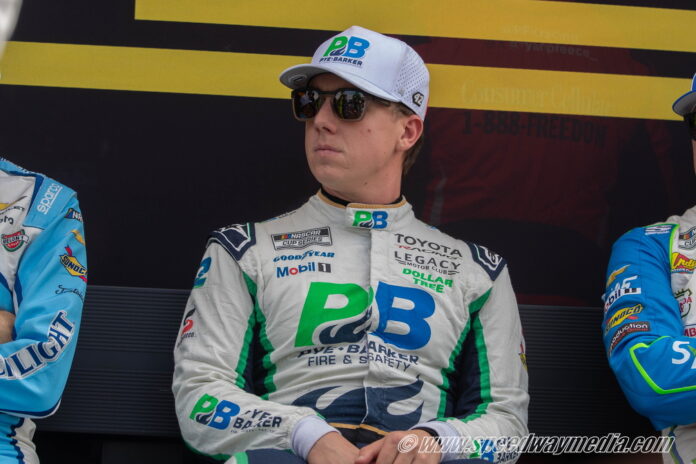
John Hunter Nemechek will be joining Haas Factory Team to drive the No. 41 Chevrolet Camaro entry for the 2027 NASCAR O’Reilly Auto Parts Series season.

The news comes as the 29-year-old Nemechek from Mooresville, North Carolina, is currently campaigning in his third consecutive season in the Cup Series division with Legacy Motor Club as he is ranked in 29th place in the driver’s standings with a pair of top-10 results, 64 laps led and an average-finishing result of 23.4. 

The 2027 season is set to mark Nemechek’s first campaigning in the O’Reilly division on a full-time basis since 2023, where he previously drove for Joe Gibbs Racing. As part of Nemechek’s transition to Haas Factory Team, where he replaces Sam Mayer as Mayer will drive for JR Motorsports next season, Pye-Barker Fire & Safety will sponsor Nemechek’s entry and Nemechek will work with crew chief Jason Trinchere. 

“I’m excited to join Haas Factory Team’s O’Reilly Auto Parts Series program,” Nemechek said. “They have championship-caliber cars and personnel, and I’m ready to get to work with this group and compete for wins in 2027.”

Nemechek made his first O’Reilly career start at EchoPark Speedway in February 2018, where he notched a fourth-place result. Since then, he has made a total of 111 starts over six seasons (2018-19, 2021-24) while competing for organizations that include Chip Ganassi Racing, GMS Racing, Sam Hunt Racing and Joe Gibbs Racing.

Throughout his 111 starts, Nemechek has notched a total of 11 victories, with his first occurring at Kansas Speedway in October 2020 and his latest being at Nashville Superspeedway in June 2024. He has also achieved three poles, 38 top-five results, 67 top-10 results, 1,898 laps led and an average-finishing result of 11.9. During his lone full-time campaign in the series to date in 2023, the North Carolina native accumulated the most victories (seven), top-five results (17) and tied for the most top 10s (24) and best average-finishing result (9.5) that enabled him to transfer to the Championship 4 round and contend for the title before a late incident resulted with him settling in a career-best fourth place in the standings.

In addition to his previous success in the O’Reilly division, Nemechek brings a wealth of experience across NASCAR’s top-three national touring series divisions to Haas Factory Team that includes 13 victories through 152 Craftsman Truck Series starts and 148 career Cup Series starts, with both the competitor and organization striving to contend for the 2027 championship.

“John Hunter brings the experience and talent we’re looking for at Haas Factory Team,” Joe Custer, President of Haas Factory Team, said. “We’re excited to have him join our organization and look forward to competing for wins and championships together.”

Nemechek joins Dean Thompson as part of Haas Factory Team’s new driver lineup that will feature the organization expanding to fielding three full-time entries in 2027. The organization’s third competitor remains to be determined.

With his plans for next season set, John Hunter Nemechek’s first campaign with Haas Factory Team in the NASCAR O’Reilly Auto Parts Series division is scheduled to commence on February 20, 2027, at Daytona International Speedway in Daytona Beach, Florida. The event will be aired on the CW Network, MRN Radio and SiriusXM.

Full-Circle Moment for Casey Mears at Homestead

Veteran Driver’s Milestone 500th Career NASCAR Cup Series Start Comes With Beard Motorsports at Track Where His NASCAR Journey Started a Quarter Century Ago

MT. PLEASANT, Mich. (Nov. 4, 2026) – For Casey Mears, the road to 500 NASCAR Cup Series starts has taken a few unexpected turns. Its final stop, however, takes place at perhaps the most fitting track on the schedule.

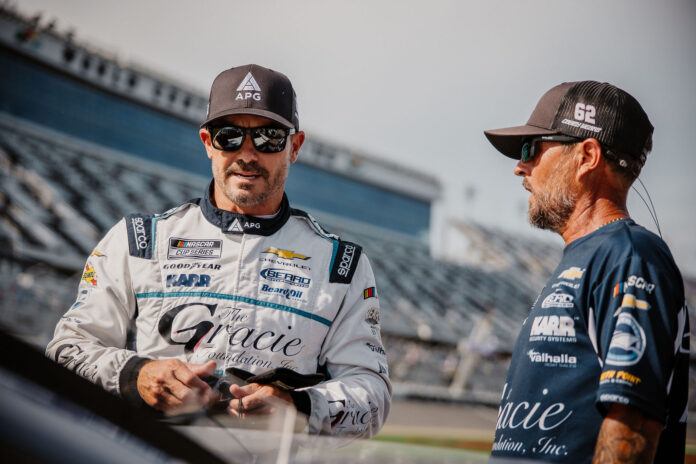
When Mears takes the green flag in the No. 62 The Gracie Foundation Chevrolet for Beard Motorsports in Sunday’s NASCAR Cup Series season finale at Homestead-Miami Speedway, he will reach a career milestone that for a long time was never a part of his plans. His 500th start will also bring him back to the track where his NASCAR national-series journey began a quarter-century ago, when a one-off opportunity in what was then known as the NASCAR Busch Series (now the O’Reilly Auto Parts Series) unexpectedly opened the door to a 15-year Cup Series run.

The 48-year old driver who competed fulltime in the Cup Series for 14 consecutive seasons from 2003 through 2016, logging 488 starts along the way, has spent much of 2026 rediscovering what he missed about racing, and appreciating just how special the opportunity to do it again has become.

“I just feel really appreciative of the opportunity,” Mears said in leadup to his fifth and final race of 2026 with Beard Motorsports, and his 12th Cup Series start since returning for his first cameo appearance in 2019. “I’d say it’s pretty rare that somebody gets to be out of the sport for that long and then comes back and participates. I’m excited to go do it one last time.”

When the green flag waves Sunday, Mears will become the 50th driver ever to record 500 or more Cup Series starts. The opportunity has come through a collaboration with the family-owned Beard Motorsports team, with support from longtime friend and benefactor Bob Germain helping make Mears’ goal of reaching 500 Cup starts a reality. Mears arrives at Homestead encouraged by the speed the team has shown this season and eager to make the most of its final race of the season.

In 2001, the California-born Mears moved to North Carolina with an eye toward trying NASCAR before potentially returning to IndyCar, where he had already established himself as a promising open-wheel driver. With the direction of Indy-style racing unsettled at the time, a chance to test the waters in stock cars seemed worth exploring.

His first NASCAR national-series start came at Homestead in the No. 66 car for Cicci-Welliver Racing. At the time, he had little reason to believe that single appearance would define the next chapter of his career.

“I honestly felt like I was going to try this NASCAR thing out, get a taste of it, and probably end up going back to IndyCar,” he said.

Instead, that initial outing helped set the stage for a fulltime Busch Series season in 2002 and a move to the Cup Series with Chip Ganassi Racing with Felix Sabates in 2003. Mears went on to drive for several prominent organizations, including Hendrick Motorsports and Germain Racing.

This weekend, Homestead brings the story around full circle. The track has changed considerably since that first visit. Mears remembers a much flatter surface, with competitors running low around the apron. Today’s progressive banking, first raced on in 2003, encourages drivers to carry speed high against the wall – a demanding challenge that will test the No. 62 team in a very different way than the high banks of Daytona (Fla.) International Speedway and Talladega (Ala.) Superspeedway, where the part-time team has made 30 of its 38 starts since first competing in the Cup Series in 2017.

Beard Motorsports has built its program around superspeedway racing, but Mears believes the team has shown enough speed this season to be encouraged heading into its first-ever race at Homestead, laying down solid laps early in Mears’ outings in the No. 62 Chevrolet at Pocono (Pa.) Raceway in June, Indianapolis Motor Speedway in July, and two weekends ago at Talladega.

“Prior to every single one of those events, I felt like we had a car that was capable of truly having a good result, speed-wise,” he said.

Homestead will require a different approach. Finding the right balance, managing tire wear and carrying speed along the high line will be critical, particularly for a small independent team competing against much larger organizations.

Beard Motorsports crew chief Darren Shaw began working on this weekend’s Homestead car months ago, focusing on details that could make a measurable difference. Mears also expects to benefit from time in the Team Chevy simulator and, most importantly, the 50-minute practice session on the weekend schedule for Friday at Homestead. That track time will allow the team to evaluate its setup and make adjustments before the race, a departure from the typical superspeedway weekend schedule with just a single qualifying lap taking place before race day.

“The adjustments on these NextGen cars are so small, so minute, but they make a big difference,” Mears said. “Being able to come down into the pits and in the garage and make a couple changes and make changes during that long of a practice session is something that’s going to really benefit our program this weekend.”

Mears credits Shaw’s attention to detail in preparation and the team’s determination to maximize what it has accomplished during its part-time Cup Series schedule over the last decade. He also appreciates the family behind the operation, whose involvement is rooted in a passion for racing shared by team owner Linda Beard’s late husband, Mark Beard Sr., and their daughter Amie Beard-Deja.

“I feel like I’m by far in the best place I could be to be doing this,” Mears said. “I enjoy spending time with the family and being around them.”

Germain’s support has been equally important in bringing Mears’ milestone goal within reach. For Mears, the experience has been about more than adding another number to his résumé. He has enjoyed reconnecting with fans, and working alongside a crew chief and engineers to solve the familiar puzzle of making a racecar faster.

“You take for granted, when you’re doing it, even though you know it’s special, it’s your job,” he said. “I think this year’s kind of allowed me just to really reflect on how special the opportunity to get to race cars for a living is.”

The milestone also gives his family a chance to share in that appreciation. His children were very young when his fulltime Cup career ended in 2016, but they are now old enough to understand what their father accomplished and what returning to the sport means.

For Mears, a successful afternoon Sunday will be based on simply keeping the No. 62 Chevrolet intact and running competitive laps throughout.

“If we can stay on the lead lap, if I could finish somewhere inside the top-25, that would be an amazing day for us,” he said. “My goal is to just stay in the hunt all day, stay in the fight, not have issues.”

A solid finish would reward the work of the entire Beard Motorsports organization and give Mears a result to celebrate alongside the many family members and friends who will join him at Homestead for his milestone race. It would also provide a fitting close to a season that has reminded him why he fell in love with racing in the first place.

All the while, Mears is careful not to declare Sunday his final Cup Series start. The reality, he acknowledged, is that it could be. With opportunities to compete at this level no longer guaranteed, the milestone carries a measure of finality alongside the excitement.

A quarter-century after a single Busch Series opportunity helped launch his NASCAR career, Mears returns to the same track with 500 starts within reach, a solid, family-owned team behind him, and a crowd of familiar faces to cheer him on.

No. 62 Beard Motorsports Team

Primary Team Members

Driver: Casey Mears Hometown: Bakersfield, California

Crew Chief: Darren Shaw Hometown: Mooresville, North Carolina

Car Chief: Travis Owens Hometown: Nashville, Tennessee

Spotter: Rick Carelli Hometown: Arvada, Colorado

President: Linda Beard Hometown: Mt. Pleasant, Michigan

Over-the-Wall Members

Front Tire Changer: Shiloh Windsor Hometown: Ada, Oklahoma

Rear Tire Changer: Michael Russell Hometown: Virginia Beach, Virginia

Tire Carrier: Lamar Neal Hometown: Halifax, Virginia

Jack Man: De’Quan Hampton Hometown: Los Angeles

Fuel Man: Douglas Warrick Hometown: Hamilton, New Jersey

Road Crew Members

Mechanic: Jack Gagnon Hometown: Quebec, Canada

Mechanic: Mark Sanders Hometown: Springfield, Ohio

Engine Tuner: Brian Trevino Hometown: Statesville, North Carolina

Interior Specialist: Nic Hill Hometown: Fort Myers, Florida

Truck Driver: Roger Lankford Hometown: Mills Creek, North Carolina

Front Row Motorsports: Homestead-Miami Speedway NCTS Race Advance (Layne Riggs / Chandler Smith)

Front Row Motorsports
Layne Riggs | Chandler Smith
Homestead-Miami Speedway NASCAR CRAFTSMAN Truck Series Race Advance

Event Details:

Series: NASCAR CRAFTSMAN Truck Series (NCTS)
Track: Homestead-Miami Speedway
Track Size / Surface: 1.5-miles / Asphalt
Track Location: Homestead, Florida
Race Date: November 6, 2026
Race Start Time: 7:30 p.m. ET
Race Information: 134 Laps (Stages – 30 / 60 / 134) – 201 Miles
Television: FS1
Radio: SiriusXM

Event Notes:

  • 25th event of the 2026 NASCAR CRAFTSMAN Truck Series season.
  • First and only NASCAR CRAFTSMAN Truck Series race at Homestead-Miami Speedway this season.
  • Final event in The Chase, the NASCAR CRAFTSMAN Truck Series postseason that features the top ten drivers in the regular season standings competing for the 2026 championship.

No. 34 Team Details

Driver: Layne Riggs

Crew Chief: Dylan Cappello

Primary Sponsor: Love’s Travel Stops / Fleetguard

Standings: 2nd

Recent Season Results:

Martinsville Speedway (October 30) – 3rd
Talladega Superspeedway (October 23) – 8th
Phoenix Raceway (October 16) – 3rd

Driver and Team Event Notes

Entering Friday night’s event at Homestead-Miami Speedway, Riggs is just 20-points behind leader Kaden Honeycutt, with the 2026 NASCAR CRAFTSMAN Truck Series championship on the line.

In two NASCAR CRAFTSMAN Truck Series starts at Homestead, Riggs has one top-five finish, finishing second in the 2025 event.

Love’s Travel Stops / Fleetguard Event Notes

Love’s Travel Stops returns with Riggs and the No. 34 team for Friday’s race.

This will be Love’s Travel Stops 11th primary partnership race of the 2026 season with Riggs and the No. 34 Ford team.

Love’s Travel Stops has rolled out a major update to the Love’s App, introducing a unified Love’s Rewards program that now benefits every customer who stops at Love’s. Whether fueling up, grabbing a snack, or stocking up on Love’s-branded products, customers can now save and earn points at every turn simply by scanning the Love’s App in-store or at the pump.

The new Love’s Rewards program focuses on delivering meaningful value at every stop and aims to make Love’s the first stop drivers think of on the road. Love’s Rewards App users can also save 10¢ per gallon on gas and up to 25¢ per gallon on auto diesel. Fans can download the app from Google Play and the Apple App Store. To explore all the new benefits of the Love’s Rewards program, visit www.loves.com/loves-rewards.

Riggs and the No. 34 team will also have Fleetguard on the car this weekend. A global leading filtration brand within the Atmus Filtration Technologies portfolio, Fleetguard offers a full suite of filtration products for nearly all makes of vehicles and equipment across the truck, bus, agriculture, construction, mining, marine, and power generation vehicle, and equipment markets. Fleetguard heavy-duty filters give customers the ultimate protection for all their equipment. With availability in more than 45,000 independent aftermarket retail outlets globally, including approximately 5,800 locations in North America, Fleetguard products are available where customers need them and are backed by the competitive Fleetguard warranty.

No. 38 Team Details

Driver: Chandler Smith

Crew Chief: Jon Leonard

Primary Sponsor: Patriot Mobile

Standings: 3rd

Recent Season Results:

Martinsville Speedway (October 30) – 1st
Talladega Superspeedway (October 23) – 14th
Phoenix Raceway (October 16) – 15th

Driver and Team Event Notes

In two NASCAR CRAFTSMAN Truck Series starts at Homestead-Miami Speedway, Chandler Smith has two top-10 finishes. His best finish, an eighth-place result, occurred in his debut season with Front Row Motorsports in 2025.

In the NASCAR O’Reilly Auto Parts Series, Smith has three starts at the track, earning one pole, and one top-10 finish.

Patriot Mobile Event Notes

This will be Patriot Mobile’s first primary sponsorship race of the 2026 season with Chandler Smith and the No. 38 Ford F-150 team.

Patriot Mobile is America’s only Christian conservative wireless provider, offering premium prioritized nationwide coverage on dependable 4G and 5G networks with exceptional U.S.-based customer support. Since 2013, Patriot Mobile has provided a values-driven alternative by supporting organizations that defend our God-given rights and freedoms. Learn more at patriotmobile.com, opens in a new tab or call 972-PATRIOT.

ABOUT FRONT ROW MOTORSPORTS

Front Row Motorsports (FRM) is a winning organization competing in the NASCAR Cup Series and the NASCAR CRAFTSMAN Truck Series. Founded in 2004 by entrepreneur Bob Jenkins, FRM has earned top honors including a 2021 Daytona 500 victory and the 2022 CRAFTSMAN Truck Series championship. Based in Mooresville, N.C., FRM fields the No. 4, No. 34, and No. 38 entries in the NASCAR Cup Series, along with the No. 34 and No. 38 teams in the CRAFTSMAN Truck Series. For more information, visit FrontRowMotorsports.com and follow Front Row Motorsports on social media — X: @Team_FRM, Instagram: @teamfrm, Tik Tok: @Team_FRM, YouTube: @FrontRowNASCAR, and Facebook: facebook.com/FrontRowMotorsports.

Seedance Bingo in 2026: The Ultimate Seedance 2.5 Platform Review

Photo by depositphotos at https://depositphotos.com/

Introduction

AI video moved fast this year. The question used to be “can it produce something recognizable.” Now it’s “can I actually ship this,” which is a much harder bar.

I’ve run production work through Seedance 2.5 on Seedance Bingo for a few months. This review covers what the model does, how it compares to the previous version, and whether the subscription math works for different users.

Seedance 2.5

Seedance 2.5 is ByteDance’s current flagship video model. It isn’t chasing the single most photorealistic frame. It’s built around directable production: longer clips, synchronized audio, multi-asset conditioning, and consistency across complex scenes.

What that means in practice

You can hand the model a brief made up of a text prompt, reference images, keyframe anchors, audio tracks, and even a geometric scene layout. It synthesizes all of it into one coherent 30-second clip with sound. That’s a different interaction model from “type a sentence, roll the dice.”

Output specs

Up to 1080p across seven aspect ratios, including cinematic widescreen, 16:9, 9:16, 1:1, 4:3, 3:4, and adaptive. That covers nearly every realistic delivery format.

The architectural shift that matters most

Audio and video are rendered together in the same pass, not generated separately and merged. Lip-sync is noticeably better, ambient audio belongs to the scene, and clips feel conceived as a whole.

Seedance 2.5 vs Seedance 2.0

Both Seedance 2.0 and Seedance 2.5 are still available on Seedance Bingo, and I use the older one for certain tasks.

CapabilitySeedance 2.0Seedance 2.5
Max duration per passA few secondsUp to 30 seconds
Audio generationNot natively integratedJoint audio-video rendering with lip-sync
Multilingual dialogueLimitedMajor languages supported
First/last frame keyframingNot supportedDedicated keyframe slots (PNG, JPG, WebP)
Multi-reference inputsFewer slots, image-focusedUp to 50 files (30 images, 10 videos, 10 audio)
3D clay render guidanceNot availableSupported
Multi-character consistencyOne or two charactersHolds identity in complex group scenes
Max resolution1080p1080p
Aspect ratiosStandard setSeven, including 21:9
Credit costLowerHigher, scales with duration and complexity

When I use which

I use 2.0 for early drafting, when direction isn’t locked and iteration speed matters. Once the creative is settled, I switch to 2.5 for anything going to a client or final cut. That split has saved me a lot of credits without hurting output where it matters.

Key Features of Seedance 2.5

Extended narrative duration

Thirty seconds is the threshold where a clip can carry a real beat: a beginning, a shift, an ending. For short-form ads, music video segments, or scene-length work, you go from “generate ten clips and connect them” to “generate one clip that already works.”

Synchronized audio

Dialogue, ambient sound, and music come out of the same pass as the visuals, with lip movements matching actual phonemes. It doesn’t replace professional sound design, but for social and short-form work it removes a big chunk of post-production.

Keyframe anchoring

Specifying exact first and last frames solves one of AI video’s most persistent problems: unpredictable endings. Pin both ends and multi-shot sequences become much easier to assemble.

Dense multi-modal conditioning

Up to 50 reference files per generation, in any combination of character images, style references, keyframes, audio, and video. You can express intent through examples instead of relying on text alone.

Clay render spatial guidance

This is the genuinely novel feature. Feed the model a white-model 3D render and you control camera position, blocking, and movement paths with geometric precision.

Multi-character identity locking

Faces, clothing, and style stay consistent across a sequence, even with several characters in frame. It’s not flawless when characters interact physically, but mostly the characters you upload are the characters you get.

Timestamp-level editing and infinite chaining

You can regenerate a specific moment instead of the whole clip. The Return Last Frame toggle passes one generation’s ending into the next, making the 30-second ceiling a soft limit.

Use Cases for Seedance 2.5

Dialogue-driven short-form content. Creators on TikTok, Reels, and Shorts used to need real actors or a laborious silent-video-plus-voice-sync pipeline. Seedance 2.5 collapses that into one pass.

Advertising concept visualization. Agencies can produce rough versions of proposed spots in hours instead of days. The 30-second cap matches standard spot lengths.

Pre-visualization. Directors and DPs can use clay render guidance to test camera moves and blocking before stepping on set. This is where I see the biggest unrealized potential.

Music video segments. Joint audio-video rendering and shot chaining keep sequences visually coherent across scenes.

Anime and short drama. Multi-character consistency and dedicated prompt templates suggest specific training here, and anime outputs are notably strong.

Explainer content. Identity locking plus synchronized audio gives you a consistent on-screen host without needing a real one.

Memes and reactive content. Fast turnaround suits trending moments.

How to Use Seedance 2.5 on Seedance Bingo

Step 1: Pick your mode

Choose Text-to-Video (write a prompt and generate) or Media-to-Video (upload references, keyframes, and audio). I use Media-to-Video for production work and Text-to-Video for exploration.

Step 2: Set canvas and duration

Pick resolution (480p, 720p, or 1080p), aspect ratio, and duration up to 30 seconds. All three drive credit cost. I explore at 720p with short durations, then switch to 1080p and full length for finals. Use 16:9 for YouTube, 9:16 for TikTok and Reels, and 21:9 for cinematic framing.

Step 3: Decide on audio

Turn audio off if you’ll replace it in post, which saves credits and time. Leave it on for synchronized dialogue, music, and ambient sound.

Step 4: Write the prompt

The prompt carries most of the directional weight, even in Media-to-Video mode. Keep it specific but not stuffed. About 60 to 120 words works best for me: shorter prompts under-constrain the model, longer ones produce contradictions.

Step 5: Upload references

Assign images to the First Frame and Last Frame slots for keyframe control. Additional images act as character or style references, audio guides dialogue or music, and video guides motion or layout. The limit is 30 images, 10 videos, and 10 audio files.

Step 6: Generate and chain

Generation takes one to several minutes depending on plan tier and complexity. To extend, toggle on Return Last Frame. Quality drifts slightly with each pass, so I re-anchor periodically with fresh keyframes.

Step 7: Fix or export

Use timestamp editing to regenerate a problem moment instead of the whole clip. Exports are watermark-free on most plans, but check whether your plan includes commercial licensing for paid work.

Useful Tools on Seedance Bingo

AI Video Extender. Extends an existing clip while respecting its style and motion.

Music Visualizer. Produces video synchronized to an uploaded track, useful for singles and podcast promos.

Unblur Video. Enhances soft or low-resolution footage. Moderate improvements work well; badly degraded sources still show artifacts.

Seedance Prompt Gallery. The one I return to most. It’s a browsable set of templates by category (cinematic, advertising, memes, anime, short drama, VFX). The value is calibration: seeing what the model does well in each category gives you starting points for your own prompts.

Subscription Pricing

Per-second pricing for 2.5 is listed as pending, which complicates budgeting.

Monthly subscriptions (annual price in parentheses)

  • Starter: 29.90/month(19.90 annual). 800 credits at $0.025 each, standard speed, private mode, watermark-free exports. No commercial license.
  • Pro: 49.90/month(39.90 annual). 1,600 credits at $0.025 each, priority lane, private mode, watermark-free exports, full commercial license.
  • Max: 99.90/month(69.90 annual). 4,000 credits at $0.017 each, fastest speed, dedicated expert support, commercial license.
  • Ultra: 199.90/month(149.90 annual). 10,000 credits at $0.015 each, fastest speed, dedicated support, commercial license, 1x to 5x plan expansion multiplier.

One-time credit packs (non-expiring)

  • Starter Pack: 39.90for1,000credits(0.040/credit)
  • Creator Pack: 99.90for3,000credits(0.033/credit)
  • Pro Pack: 199.90for7,000credits(0.029/credit)
  • Max Pack: 499.90for20,000credits(0.025/credit)
  • Ultra Pack: 1,999.90for100,000credits(0.020/credit)
  • Enterprise Pack: 4,999.90for300,000credits(0.017/credit)

Which plan to pick

Starter suits casual exploration, but without a commercial license, nothing you make can go into paid work. Pro is where most working creators should land. Max fits weekly client deliverables that need the priority queue, and Ultra is agency territory. Packs work as occasional top-ups, but if you buy them regularly, upgrading your subscription is cheaper.

Final Thoughts

AI video has moved past the “look what it can do” phase. The real question is whether these tools offer enough reliability and control to justify the cost in real production workflows. For dialogue-driven short-form content, pre-visualization, concept pitching, music video segments, and narrative or educational work, Seedance 2.5 on Seedance Bingo answers yes.

It’s not perfect. Complex physical interactions between characters still cause issues, audio references act more as stylistic guides than literal reproductions, and the pending per-second pricing makes budgeting frustrating. But the trajectory is right, and it’s useful enough that I keep coming back to it for client work.

If your work involves narrative structure, synchronized audio, or directorial control beyond a single text prompt, Seedance Bingo is worth a serious trial. Start with Pro, run a few real projects through it, and see whether the workflow fits.

Why Torque Matters More Than Top Speed in Electric Bikes

Speed has always been one of the most recognizable measures of vehicle performance. From professional racing to everyday driving, top-speed figures attract attention because they offer a simple way to compare machines. But experienced drivers know that a vehicle’s capabilities extend far beyond the highest number on its speedometer.

The same principle applies to electric bicycles. Two e-bikes may reach similar speeds yet deliver noticeably different riding experiences, particularly when accelerating from a stop, climbing hills, or navigating uneven terrain.

The difference often comes down to torque, power delivery, and how efficiently the motor’s output reaches the ground. Understanding these factors provides a more useful perspective on electric bike performance than focusing on maximum speed alone.

Torque vs. Top Speed: What’s the Difference?

Torque describes rotational force, while speed measures how quickly a vehicle is moving. Although the two are related through the drivetrain and motor’s operating characteristics, they serve different purposes.

In automotive engineering, torque contributes to the force available at the wheels, helping a vehicle accelerate or overcome resistance. Power determines how quickly work can be performed, making it particularly important as speed increases.

Electric bicycles follow the same basic principles.

A motor capable of delivering substantial torque can provide strong assistance during acceleration and hill climbing. However, the actual force available at the rear wheel also depends on drivetrain design, gearing, wheel size, and motor efficiency.

Top speed, meanwhile, is influenced by motor power, gearing, electronic speed limits, aerodynamic drag, and riding conditions.

This explains why two e-bikes with comparable maximum assisted speeds can behave differently when carrying additional weight or climbing a steep incline.

Neither figure tells the entire story. Torque helps explain a bike’s ability to overcome resistance, while power and drivetrain characteristics determine how effectively that capability can be maintained.

Why Torque Makes a Difference in Everyday Riding

Maximum speed may be useful for understanding a bike’s performance limits, but most riders spend relatively little time traveling at that limit.

Instead, everyday riding involves repeated changes in speed and terrain.

Accelerating From a Stop

Starting from a traffic light or accelerating after a sharp turn requires the motor to help overcome the combined inertia of the bicycle and rider.

An appropriately geared motor with sufficient available torque can provide useful assistance during these moments, reducing the physical effort needed to regain momentum.

However, stronger torque does not automatically produce a better riding experience. The motor controller must also regulate how assistance is delivered.

A sudden surge of power can make low-speed handling less predictable, while progressive acceleration gives riders greater control over their movements.

For this reason, evaluating an electric bike involves more than comparing motor wattage or maximum speed. The relationship between torque, controller response, and pedal assistance can make a substantial difference in how naturally the bicycle accelerates.

Climbing Hills and Carrying Additional Weight

Climbing places greater demands on the motor because the bicycle must overcome gravity in addition to rolling resistance and other forces.

As the incline increases, more driving force is required to maintain the same speed. Carrying groceries, equipment, or other cargo further increases the load.

Available wheel torque becomes particularly important under these conditions.

For example, a bicycle that performs comfortably on level pavement may require more rider effort on a long uphill section. Another model with suitable gearing and sustained motor output may maintain assistance more effectively, even if both have similar advertised speed limits.

Sustained performance also matters. Motor temperature, battery output, and controller limitations can affect how much assistance remains available during an extended climb.

A strong initial response is useful, but consistent support is often more valuable when the terrain remains demanding.

The Connection Between Torque, Traction, and Control

Motorsports provides a useful reminder that producing force is only one part of performance. The vehicle must also transfer that force to the ground.

For electric bicycles, the tire contact patch plays a critical role in this process.

On dry pavement, sufficient grip allows the rear wheel to transmit driving force with minimal slipping. On loose gravel, wet surfaces, or soft dirt, the available traction can change considerably.

If motor torque exceeds what the tire can effectively transfer to the ground, the rear wheel may lose traction.

That is why smooth, predictable power delivery is particularly important when riding on inconsistent surfaces.

Tire width, tread design, inflation pressure, and rubber compound also affect grip and handling. Wider tires can provide additional flotation on soft surfaces and allow different pressure choices, although they do not automatically deliver better traction in every condition.

Suspension adds another consideration. By helping the wheels maintain contact with uneven ground, a well-matched suspension system can improve control and comfort.

These characteristics demonstrate why practical performance depends on the complete bicycle rather than motor output alone.

A powerful motor paired with unsuitable tires or abrupt assistance may be less manageable than a more balanced setup with predictable response.

Why Motor Power and Torque Must Be Considered Together

Electric bicycle specifications commonly include motor wattage, while some manufacturers also publish torque figures in Newton-meters.

Both measurements are useful, but neither should be interpreted independently.

Motor power relates to torque and rotational speed. In simplified terms, increasing rotational speed allows a motor to produce more power at a given torque level.

However, motors operate within electrical, mechanical, and thermal limits. Their available torque and power can change across the operating range.

This distinction becomes important when comparing performance claims.

A high peak-power rating may indicate strong short-duration output, but it does not necessarily reveal how much assistance the motor can sustain during continuous climbing.

Similarly, a high torque rating is difficult to interpret without understanding whether it refers to the motor shaft or the wheel, particularly when comparing hub-drive and mid-drive systems.

Mid-drive motors transmit power through the bicycle’s drivetrain, allowing gearing to influence the torque delivered at the rear wheel. Hub motors drive the wheel directly, with performance determined by their specific motor design and control system.

Neither arrangement is automatically superior for every rider. The appropriate choice depends on terrain, maintenance expectations, riding style, and the overall bicycle design.

A meaningful comparison therefore considers torque, sustained power, gearing, battery capability, and motor efficiency together.

How E-Bike Manufacturers Balance Performance and Rideability

Developing a capable electric bicycle requires decisions that go beyond simply selecting a powerful motor.

Manufacturers must consider how riders interact with the assistance system, how weight is distributed, and how the bicycle responds under different operating conditions.

Pedal-assist sensors are an important part of this process.

Cadence sensors detect pedaling movement, while torque sensors measure the force applied through the pedals. Depending on how the controller is programmed, torque-based assistance can provide a response that changes progressively with rider effort.

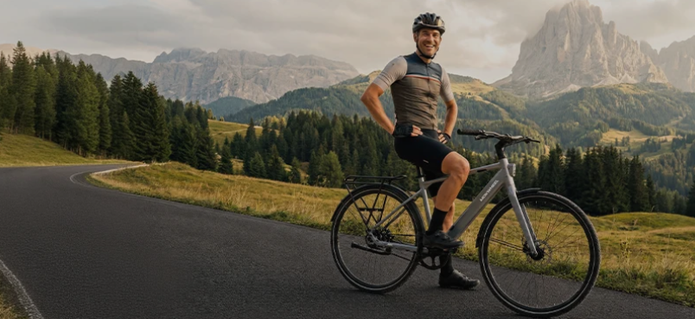
Brands such as Mokwheel offer different electric bicycle designs for commuting and recreational riding, illustrating how motor systems, frame configurations, and riding-focused components can be combined for different uses.

The important consideration is not whether a bicycle delivers the most aggressive acceleration. It is whether its assistance feels appropriate for the conditions in which it will be ridden.

A commuter may prioritize smooth starts, manageable handling, and consistent assistance in traffic. Someone riding recreational trails may place greater emphasis on traction, climbing response, and stability over uneven ground.

These different requirements explain why a single performance specification cannot identify the best bicycle for every situation.

What Should Riders Evaluate Beyond Maximum Speed?

Understanding torque and power is useful, but the most meaningful comparison comes from observing how a bicycle behaves during actual riding.

Rather than relying exclusively on published specifications, riders should consider several practical questions.

How smoothly does the motor deliver assistance?

Acceleration should feel controlled and predictable. A responsive motor is useful, but assistance that arrives too abruptly can make maneuvering uncomfortable.

Does the bicycle maintain performance on hills?

Short bursts of acceleration do not necessarily indicate strong sustained climbing ability. Riders who frequently encounter hills should consider motor output, gearing, and thermal performance under load.

How does the bicycle respond on different surfaces?

Tires, suspension, geometry, and weight distribution all influence how effectively the bicycle maintains traction and stability.

Does the braking system match the bicycle’s performance and weight?

Stronger acceleration increases the importance of reliable speed control. Brake condition, tire grip, total weight, and rider technique all affect stopping performance.

Is the assistance appropriate for the rider’s intended use?

A responsive system that works well for open recreational riding may feel unnecessarily aggressive in crowded urban environments.

Where possible, a test ride that includes starts, turns, moderate inclines, and controlled braking can reveal differences that specification sheets cannot fully communicate.

Riders should also consider local e-bike classifications and applicable speed limits, since a bicycle’s maximum assisted speed does not necessarily indicate where it may legally operate.

Final Thoughts: Usable Performance Matters More Than a Single Number

Top speed remains a useful performance measurement, but it offers only a limited view of what an electric bicycle can accomplish.

Torque helps determine the driving force available during acceleration and climbing. Power, gearing, traction, electronic controls, and overall bicycle design determine how effectively that force translates into real-world performance.

For riders, the most valuable electric bicycle is not necessarily the one with the highest advertised speed or torque figure. It is the one that provides appropriate assistance, predictable handling, and dependable performance across the conditions they actually encounter.

The broader lesson from vehicle engineering is straightforward: performance should be judged by how effectively a machine uses its capabilities, not simply by the largest number on its specification sheet.

Kimi Antonelli is F1 World Champion already. Is F1 still worth watching?

Photo by depositphotos at https://depositphotos.com/

At the last Formula One race in Mexico City, Kimi Antonelli crossed the line in third place, behind Max Verstappen and Lewis Hamilton, in floods of tears. His performance that day may not have been enough to get him to win in Mexico, but it was enough to mathematically confirm that he was World Champion.

In just his second season in Formula One, Kimi Antonelli has won the Driver’s World Championship, becoming the youngest winner ever at just 20 years old. Even more impressively, he’s done it with 4 races to spare. But don’t think just because the World Champion is already confirmed that Formula 1 is no longer worth watching.

The Drivers

The number one spot on the Driver’s World Championship table may now be decided, but there’s plenty of other milestones to be decided. One of the closest battles is in fact the fight for second place.

Throughout the season, it looked like a battle between Mercedes driver George Russell and the two Ferrari drivers in Lewis Hamilton and Charles Leclerc. But Red Bull driver and 4-time World Champion Max Verstappen has emerged from nowhere, and after his win in Mexico, he’s taken 2nd place with 261 points, with Lewis Hamilton two points behind (259), and George Russell (250) and Charles Leclerc (245) close behind.

With 4 races left, this will be the real race to watch at the front of the grid. Further back, there’s plenty of points available to the midfield teams and even the backmarkers. Liam Lawson currently leads the ‘best of the rest’ race outside the top teams, but the race is tight below him. 

The closest teammate battle right now is with Audi, with young teammate Gabriel Bortoleto leading his veteran teammate Nico Hulkenberg by just 1 point.

Then there’s Formula 1 DFS, which operate on a week-by-week basis, keeping each week exciting even when there’s nothing to fight for. Fans can participate through DFS sites like F1 Fantasy Game or Fantasy GP, selecting a handful of drivers each week, and getting points based on how they perform. However, since the championship has been decided, fans looking for a more competitive sport or league that’s still in full swing can read Yahoo’s piece on the best DFS sites for sports fans.

The Constructors

Over at the Constructor’s World Championship, it’s Mercedes, led by Antonelli, that top the standings, and they could well confirm their victory in the Constructors at the Brazilian Grand Prix this weekend. Ferrari follow them in 2nd place, and their spot in 2nd also looks nailed on, as they are still 120 points above 3rd place Red Bull Racing.

Red Bull and McLaren are closely matched in 3rd and 4th place in the Constructors. The individual placements of these teams are crucial come the end of the season: each place comes with a massive jump in prize money, and in descending order, each spot comes with more wind tunnel and development allowances to help lower teams gain an advantage.

The midfield still has battles to keep an eye on in the next few races, and the closest is the battle for 7th place, with Haas and Audi separated by four points. Haas have recently dropped driver Esteban Ocon, giving the more experienced Audi drivers a leg-up in the fight. 

At the very back of the grid, Aston Martin may have stopped development for the year, but they’re only a handful of points behind Williams in 9th, and at the bottom, Cadillac are yet to pick up a point on the year, and will hope to have some reason to be encouraged by picking up at least a point in their debut season.

What F1’s Air Freight Playbook Teaches Anyone Shipping a Performance Car to Dubai

Photo by Ramaz Bluashvili from Pexels

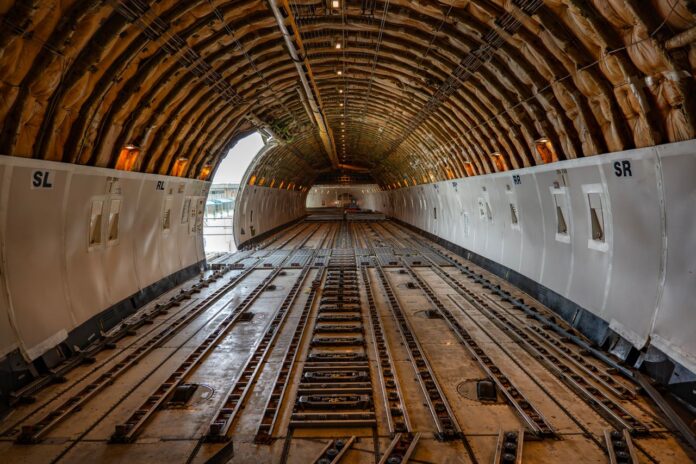
Motorsports runs on haulers. The cars, the spares, and the tools roll from Daytona to Martinsville to Phoenix on the interstate. Formula 1 can’t do that. Most of its teams are based in Europe and race on five continents, so for most of the season the cars travel in the hold of a cargo plane.

How F1 handles that problem is a surprisingly useful guide for anyone who has to move one performance car overseas. The lessons apply directly to a route like the US to Dubai, where most private owners face the same choices a team logistics manager does, just with one car instead of twenty.

How F1 moves its cars

DHL has been Formula 1’s official logistics partner since 2004 and uses Boeing 777 freighters for the intercontinental legs. The cars don’t travel whole. In a 2022 interview with FreightWaves, DHL described how the cars are taken apart, placed in foam-lined slots and packed into custom protective pods that fit inside air cargo containers, with about 40 pods per aircraft. A typical flyaway race used five 777 freighters at the time.

Not everything flies. The same report described five to six duplicate sets of less urgent equipment per team shipped by sea and kept on each continent, while air and road shipments had to reach the track eight to ten days before the event. The pattern is simple: put what is urgent and valuable on the plane, send everything else the slow way, and work backward from the date it has to be ready.

Lesson one: you pay for the box, not the car

Air cargo is priced on chargeable weight, which is the greater of the actual weight and the volumetric weight. Volumetric weight is length times width times height in centimeters, divided by 6,000. F1 takes its cars apart partly because space is what it pays for.

A private owner can’t break a road car into pods, so the whole envelope gets charged. Take a C8 Corvette Stingray coupe: 182 inches long, 76 inches wide and 49 inches tall, with a curb weight of about 3,366 lb. Its volumetric weight works out to roughly 4,060 lb, about 20% more than it weighs. And that is before the pallet and the room for tie-downs are added to the dimensions.

That is the first thing to understand about air freight car shipping: two cars of the same weight can cost very different amounts to fly, and a tall SUV or truck pays for all the air above its roofline. When you ask for a quote, give the exact model and any modifications, because lowered suspension, a wing, or wider wheels all change the dimensions the airline will measure.

Lesson two: decide what has to fly

Teams fly the car and ship the furniture. The private version is the same choice. If you need to drive the car in Dubai by a set date, air freight is the method to price first. If the date is flexible, a dedicated container is worth comparing, and household goods and spare parts can travel separately by sea.

Check the timing rather than assuming it. Sea routes in and out of the Gulf have been slower than usual this year, with port dwell times at Jebel Ali reported well above normal, so ask for current transit and port times, not last year’s.

Lesson three: the paperwork travels with the car

F1 freight crosses borders constantly. One tool DHL has used to keep it moving, including through Europe after Brexit, is the ATA carnet, a customs document that allows goods to be imported temporarily without paying duty and then taken out again. The UAE is part of the same system, with Dubai Chambers issuing and processing carnets, so a car going to Dubai temporarily for an event or an exhibition may have that route open to it.

A car moving to Dubai for good is a different story. That is a permanent import, and three things matter:

  • Duty and VAT. UAE customs duty is 5% of the CIF value, meaning the car plus freight and insurance. VAT of 5% is then charged on the value including the duty.
  • Specification. A US-market car is left-hand drive, which suits UAE roads, but it is not a GCC-spec car. Dubai’s Roads and Transport Authority asks for a compliance document from the Ministry of Industry and Advanced Technology when the customs record does not show Gulf-specification compliance.
  • Title history. The UAE bans the import and registration of burnt, water-damaged, rebuilt, and non-repairable cars. A salvage or flood brand on a US title is a serious warning sign, so check before you buy at auction.
  • A car shipping company in Dubai that handles customs clearance should be able to tell you which documents it needs from you and which it prepares itself, before the car leaves the US.

Lesson four: fuel and batteries are cargo rules

Cars on a plane normally travel under dangerous goods rules set by the International Air Transport Association. Gas-powered cars and hybrids are UN 3166, vehicle, flammable liquid powered. Lithium-ion electric cars moved to a new entry, UN 3556, in 2025, and since January 1, 2026, their batteries must be at a state of charge of no more than 30% when they are handed over.

On top of that, each airline sets its own conditions on fuel level and battery connection. Follow the instructions you get from the shipper handling your booking, not the advice in a forum thread, and leave any high-voltage work to a qualified technician.

Lesson five: work backward from the date you need it

F1 freight lands at the track more than a week before the first practice session because nothing is allowed to depend on a perfect run of flights. Use the same thinking. Start with the date you want to drive the car in Dubai, then count back through registration, customs clearance, the flight, airport acceptance, and collection from your address.

Keep those stages separate in your head. A car arriving at the airport is not the same as a car cleared by customs, and a cleared car is not the same as one with UAE plates on it. Ask any shipper which of those points its estimate refers to.

What to send before you ask for a price

A useful quote request includes:

  • The year, make, model and trim, plus any modifications;
  • Whether it runs on gas, is a hybrid, or is fully electric
  • The pickup address in the US and the delivery address in Dubai
  • The date you need it, and how much flexibility you have
  • Whether the move is temporary or permanent
  • A copy of the title, so its history can be checked before anything is booked
  • F1 teams don’t leave freight to chance, and with one car and one date to hit, you don’t need to either

Nano Banana Bingo Hands-On: Does It Live Up to the Hype?

Photo by depositphotos at https://depositphotos.com/

Every few months a new AI image platform claims it solved character consistency, nailed multilingual text, and shipped a 4K pipeline without upscaling tricks. Most don’t. Nano Banana Bingo has been climbing “best of” lists for a few months, with reviewers calling the Character Consistency Lock a genuine breakthrough. I went in skeptical. I’ve tested enough Nano Banana competitors to know most “breakthrough” claims don’t survive two weeks of real work. After comic panels, product mockups, poster typography, and character aging tests, here’s what held up and what didn’t.

The Claims I Wanted to Test

I wrote down the five claims the platform makes most loudly:

  1. Character Consistency Lock preserves identity across many generations
  2. Independent Style Control changes art style without touching the character
  3. Multilingual text rendering produces correctly spelled text on posters and logos
  4. Native 4K output across 15 aspect ratios without external upscaling
  5. Conversational Editing lets you iterate without rewriting prompts

First Impressions: Signup and UI

Signup gave me 3 free credits, no card required, which is roughly one 1K render plus a partial test. The UI drops you into a prompt box with three models visible from the start: Nano Banana 2 Lite (fast and cheap), Nano Banana 2 (balanced), and Nano Banana Pro (highest fidelity). No API-key setup, no “choose your plan first” wall.

The one friction point: no in-browser onboarding tour. If you don’t know what Scene Preservation or Multi-Image Fusion do, you’re reading docs in a second tab.

Test 1: Character Consistency Lock

The claim: Facial features, body proportions, and identifying details stay stable across scenes, outfits, and styles.

What I did: Generated a mid-30s woman with a sharp jawline, green eyes, side-swept dark hair, and a small scar on her left eyebrow. Then I ran her through 12 scenes, including a coffee shop, underwater, a 1920s speakeasy, anime and oil painting styles, aged 20 years older, as a child, and a three-character group shot.

Result: Jawline and eye color held in all 12. The scar held in 10 (missing on the child and anime renders, arguably correct). Hair adapted sensibly to context without losing the silhouette. In the group shot, all three characters kept their identities.

Verdict: Holds up. This is the strongest reference-based consistency I’ve tested without a custom-trained model. ✅

Test 2: Independent Style Control

The claim: You can switch art style without the identity shifting underneath.

What I did: Ran the locked character through photoreal, Studio Ghibli-style anime, watercolor, 3D Pixar-style, and film noir.

Result: Identity transferred in all five. The anime version abstracted the scar, though face shape and eye placement stayed. Watercolor and film noir were strongest; the 3D render softened the jawline slightly.

Verdict: Real, with limits. Heavy stylization (anime, 3D) softens micro-details; mid-stylization is near-flawless. ✅ with caveat.

Test 3: Multilingual Text Rendering

The claim: Text on posters and logos is correctly spelled across languages, not gibberish.

What I did: Four posters: English (“GRAND OPENING — SATURDAY 7PM”), Japanese (桜祭り 2026), French (“Festival du Film — Édition Spéciale”), and Arabic (مهرجان الفن المعاصر).

Result: English and French came out clean and properly kerned. Japanese kanji rendered accurately. Arabic was the hardest: legible with correct letter forms, though the baseline wobbled on one of three attempts.

Verdict: This is where the platform most clearly outperforms what I’ve seen elsewhere. Solved for Latin and CJK, acceptable for RTL. ✅

Test 4: Native 4K Output

The claim: Native 1K, 2K, or 4K across 15 aspect ratios, no upscaling.

What I did: Generated the same product mockup (a minimalist ceramic coffee cup on a wooden surface) at all three resolutions and checked for signs of upscaling.

Result: The 4K had real texture detail absent from the 1K: fine wood grain, ceramic imperfections, depth in shadows. It read as native. 2K was the sweet spot, much better than 1K at half the credits of 4K. 16:9, 9:16, 1:1, and 4:5 all worked.

Verdict: Holds. Credit cost scales roughly linearly with resolution. ✅

Test 5: Conversational Editing

The claim: Natural-language edits modify the existing image instead of regenerating it.

What I did: Five sequential edits on one image: color, lighting, outfit, background, and expression.

Result: Edits were targeted. The color change didn’t shift the pose, and the lighting change didn’t alter the outfit. Identity held across the chain. Each edit cost about the same as a fresh generation.

Verdict: Works as advertised, and it’s the biggest UX improvement over prompt-regenerate loops. ✅

What I Didn’t Expect

The specialized tools matter more than they sound. OC Maker, Aging Filter, Gender Swap, Silhouette Maker, superhero generator: I expected gimmicks. They run on top of the Character Consistency Lock, so you can age a character 30 years or swap gender without losing identity. For comic and storyboard work, that’s a real time-saver.

The three tiers aren’t just about quality. Lite is a different speed/cost tradeoff, not a worse model. For iteration-heavy work it’s the right tier even if you can afford Pro. I used all three in one project without it feeling disjointed.

One-time credit packs don’t expire. Most platforms burn unused credits at month-end. Freelancers with uneven workloads can buy a 2,000-credit pack in a busy month and still have credits six months later.

What Didn’t Hold Up (As Well)

The free trial is tight. 3 credits covers the UI and one serious test, not a workflow evaluation. A 10-credit trial would improve the first impression.

Commercial license requires Pro ($24.9/mo yearly). Starter at $9.9/mo yearly is tempting, but client-facing work needs Pro.

No video models. If you want Sora, Veo, or Kling in the same workspace, you’ll need a second platform.

No custom model training. Leonardo and OpenArt let you train a model on 10–20 reference images. I didn’t miss it, but for branded mascots or long-term IP, training is still the right tool.

Pricing: Does the Math Work?

  • Free: 3 credits, no card
  • Starter: $14.9/mo monthly or $9.9/mo yearly, 800 credits
  • Pro: $39.9/mo monthly or $24.9/mo yearly, 1,600 credits, commercial license, priority queue
  • Max: $99.9/mo monthly or $59.9/mo yearly, 4,000 credits
  • Ultra: $299.9/mo monthly or $249.9/mo yearly, 10,000 credits, 1x–5x quota expansion
  • One-time credit packs: from $49.90 up to $4,999.90, credits never expire

My two weeks of real work (roughly 40 generations across all three tiers, including 4K and iteration-heavy comic work) used about 900 credits, which makes Pro the realistic entry point beyond casual use.

Pricing verdict: Starter is a trial step; Pro is the baseline; Max and Ultra are for studio-scale work. The non-expiring credit packs are the standout.

Who Should Actually Use Nano Banana Bingo?

Strong fit:

  • Illustrators and comic artists building recurring characters
  • Product designers who need 4K mockups with real texture
  • Marketing teams making multilingual posters and logos
  • Storyboard artists working across many scenes with locked identities
  • Anyone frustrated by face drift on other platforms

Weaker fit:

  • Users who want video generation (Sora/Veo/Kling) in the same subscription
  • Teams needing custom-trained models for branded IP
  • One-shot users who won’t exceed a handful of generations a month (NoteGPT’s free tier is better for that)
  • Enterprise buyers requiring SOC 2 Type II compliance today (Artlist is further along here)

Final Verdict

Rating: 4.6 / 5

Nano Banana Bingo delivers on the claims I came in skeptical about. Character Consistency Lock, Independent Style Control, multilingual text rendering, native 4K, and Conversational Editing all held up. The gaps (tight free trial, commercial license tier placement, no video, no custom training) are honest scope choices rather than hidden flaws.

If character consistency is your problem, this is the strongest option I’ve tested in 2026. If you want model breadth or video, pair it with a second platform.

Would I subscribe? Yes, Pro tier, yearly billing, with the one-time credit packs as my backup for busy months.