Home Blog Page 16

Lookin for Better Days, Lookin for Floridays

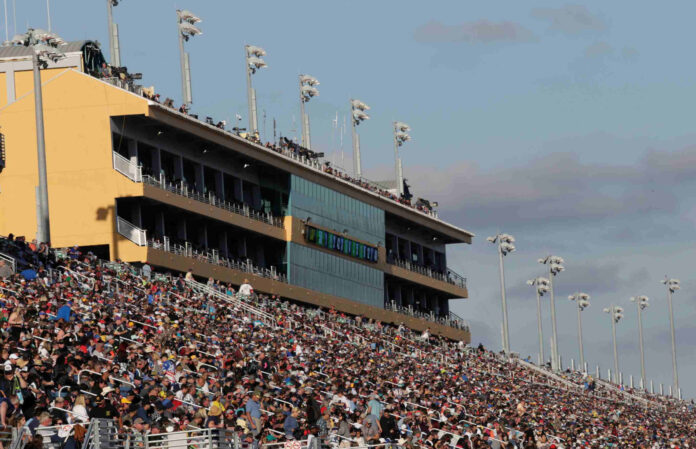
South Florida’s Homestead-Miami Speedway Hosts NASCAR Cup Series Season Finale

MOORESVILLE, N.C. (Nov. 2, 2026) – Jimmy Buffett lived many lives. Perhaps the singer, songwriter and businessman could’ve also been a NASCAR Cup Series driver. He at least knew the lingo.

Lookin’ to the left, lookin’ to the right
Lookin’ to the stars to shed some light
Hopin’ for a breath, hopin’ for a break
Hopin’ for the give without the take

Those lines were from his 1986 fan favorite “Floridays,” and 40 years later, they’re just as applicable to the Cup Series season finale this Sunday at Homestead-Miami Speedway, where drivers like Cody Ware are Lookin’ for better days, lookin’ for Floridays.

“I’m cautiously optimistic going into Homestead,” said Ware, driver of the No. 51 Super.com/Rocket Doctor Chevrolet for Rick Ware Racing. “Our intermediate-track package has definitely improved here in this last stretch of races between Kansas, Vegas and Charlotte, so I’m hopeful that will continue at Homestead.

“The track is a pretty unique mile-and-a-half oval. It’s its own animal. It’s not a traditional tri-oval, so we’ll see how much it translates. But for us to be able to hang our hat on some of the positives we’ve learned this season by just having a good run at Homestead – a no-frills, no-chaos weekend where we execute and earn a good result – that’ll give us all something to build off of for next year.”

It’s been seven years since Homestead last served as the final race on the Cup Series schedule. From 2002 through 2019, the 1.5-mile oval at the gateway to the Florida Keys was where Cup Series champions were crowned. Beginning in 2020, however, Phoenix Raceway hosted the season-ender. With this year’s final race back at Homestead, there’s a collective sense of belonging, where “dreamers,” “pale invaders” and “tan crusaders” gravitate down to U.S. 1 in a shared search for “better days.”

“I’ve raced the finale at Phoenix for all of my career, so it’s nice to have a little bit of a change,” Ware said. “It’s tough, though, because Homestead’s probably the racetrack where I have the least amount of experience in Cup.”

Ware has only three Cup Series starts at Homestead, and the first came in 2021 amid COVID-related restrictions, which meant no practice and no qualifying. His next start came in 2022 when there was just a 15-minute practice ahead of qualifying. In his most recent Homestead start last year, practice expanded to 25 minutes. Now in 2026, Ware and his Cup Series counterparts get a 50-minute session.

“There’s a lot of nuance to Homestead, and I’m still learning it,” Ware said. “For most of my starts there, it was just show up and race. I’m looking forward to getting back there this year with twice the practice time.”

Despite his limited time at Homestead, Ware shares the widely held opinion that Homestead is a driver’s track. It is a favorite among competitors because of its weathered asphalt, long straightaways and variable banking. It allows drivers to search different racing lines while managing their tires.

“Homestead is super aggressive, super abrasive. It’s almost like Darlington times 10, where the track surface, after a lap or two, your tires are shot. Everyone’s got a terrible racecar 10 laps into a run. That’s why it’s a more driver-oriented track,” Ware said.

“It’s all about making the most of what you have. I think even the guy leading the race at Homestead is going to be complaining about how bad his car is, but he’s just the one who’s making the most of it.”

Those who make the most of it will have the kind of Floriday Buffett sang of, for Homestead is now the focal point of a once distant gaze.

The Homestead race weekend begins Friday with a 50-minute practice session starting at 5:30 p.m. EST. Teams will have Friday evening and Saturday morning to debrief and make changes to their cars before qualifying Saturday at 2:30 p.m. The final race of the 2026 season goes off Sunday at 3 p.m. truTV will provide live coverage of practice and qualifying, with NBC broadcasting the 267-lap race. SiriusXM NASCAR Radio will serve as the audio home for the entire race weekend.

About Rick Ware Racing:

Rick Ware has been a motorsports mainstay for more than 40 years. It began at age 6 when the third-generation racer began his driving career and has since spanned four wheels and two wheels on both asphalt and dirt. Competing in the SCCA Trans Am Series and other road-racing divisions led Ware to NASCAR in the early 1980s, where he finished third in his NASCAR debut – the 1983 Warner W. Hodgdon 300 NASCAR Grand American race at Riverside (Calif.) International Raceway. More than a decade later, injuries would force Ware out of the driver’s seat and into full-time team ownership. In 1995, Rick Ware Racing was formed, and with his wife Lisa by his side, Ware has since built his eponymous organization into an entity that competes full-time in the elite NASCAR Cup Series while simultaneously campaigning successful teams in the Top Fuel class of the NHRA Mission Foods Drag Racing Series, Progressive American Flat Track, FIM World Supercross Championship (WSX) and zMAX CARS Tour.

George Siciliano, Rette Jones Racing Set Sights on 2027 ARCA Menards Series Championship

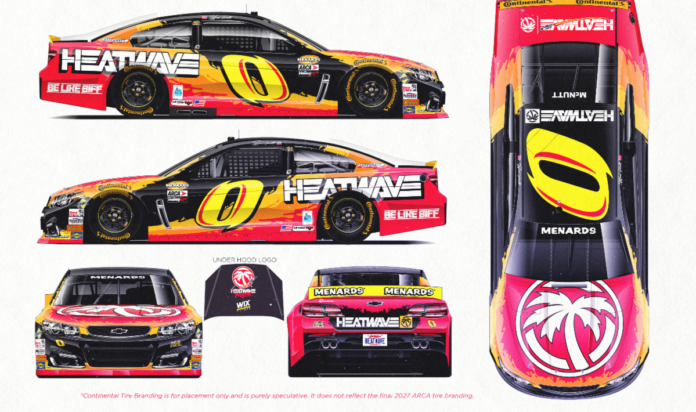
Siciliano will compete full-time in the No. 0 Heat Wave Visual Chevrolet

MOORESVILLE, N.C.: After competing together on a partial schedule in 2026, Rette Jones Racing (RJR) announced today that George Siciliano will return for a full-season campaign in the ARCA Menards Series in 2027, beginning with the season opener at Daytona (Fla.) International Speedway on Feb. 20.

Heat Wave Visual will continue its partnership with Siciliano for the full-season campaign.

An independent, passion-driven eyewear brand, Heat Wave Visual is committed to raising the bar in everything it does and supporting people who live and breathe their passions, where full immersion and excellence collide.

They feature specialized, removable lenses and offer Z87+ safety-rated options, popular in automotive, motorcycle, and off-road, and outdoor cultures.

Siciliano will drive the No. 0 Heat Wave Visual Chevrolet.

The move to Chevrolet marks a new chapter for Rette Jones Racing, which is looking forward to representing the Bowtie brand throughout the season.

“We’re proud to bring Chevrolet into this program and represent the Bowtie in 2027,” said Rette Jones Racing co-owner Terry Jones.

“We’ve built a good foundation with George, Rette and Heat Wave Visual, and we’re looking forward to taking that effort to the next level with a full-season campaign.”

Rette Jones Racing and Siciliano will begin their season at ARCA Menards Series preseason practice at Daytona International Speedway on Jan. 15–16, 2027.

Siciliano made two ARCA Menards Series East starts in 2026, finishing 13th at Hickory (N.C.) Motor Speedway and ninth at Rockingham (N.C.) Speedway.

In three ARCA Menards Series national starts, Siciliano finished 12th in his series debut at Kansas Speedway and 29th at Talladega (Ala.) Superspeedway after a crash. At Michigan International Speedway, he earned his first career speedway top-10 finish with a 10th-place effort.

Known to fans as LS George and Squirrel McNutt, Siciliano built his following through automotive and motorsports content and his friendship and collaborations with Cleetus McFarland.

McFarland drove the No. 30 for Rette Jones Racing on partial ARCA Menards Series schedules in 2025 and 2026. His results with the team include a career-best second-place finish at Talladega Superspeedway in April and his first pole position at Michigan International Speedway in June.

“We’ve seen how much George can learn and accomplish when he gets more time in the car,” said co-car owner Mark Rette.

“A full season gives us the chance to build from race to race, and we’re focused on giving him a strong Chevrolet program. We’re ready to get to Daytona, start working through the details and prepare for the season.”

Siciliano said the full-season opportunity gives him a clear goal for 2027.

“My expectation is to keep improving throughout the season and put ourselves in position to compete for the championship,” said Siciliano.

“Running a partial schedule taught me a lot, but being at the track every week will give me more opportunities to learn and build chemistry with the team.

“I’m grateful to Heat Wave Visual and Rette Jones Racing for the chance, and I’m ready to get started at Daytona.”

“After dipping our toes into ARCA in 2026, we are beyond excited to jump in headfirst for 2027 with George and Rette Jones Racing,” offered Graham Downey, Global Motorsports Manager for Heat Wave Visual.

“We had an exciting year and are looking forward to carrying that into a full-season program. Rette Jones Racing has been one of the most professional teams in the series, and we’ve integrated seamlessly with the entire organization.

“George has been an amazing personality for the brand and wins for us before the race even starts. We’re excited for Heat Wave Visual and George to continue making a meaningful impact and bringing positive attention to the ARCA and NASCAR community.”

Learn More and shop available Heat Wave Visual inventory at heatwavevisual.com.

For more on George Siciliano, like him on Facebook (george.siciliano.1) and follow him on Instagram (@ls__george).

For more on Rette Jones Racing, please visit RetteJonesRacing.com, like them on Facebook (Rette Jones Racing), or follow them on Instagram (@RetteJones30) and X | Twitter (@RetteJones30).

About Rette Jones Racing:

Headquartered in Mooresville, North Carolina, Rette Jones Racing (RJR) was founded in 2015 with the vision of building a competitive racing organization grounded in hard work, preparation and a relentless, never-give-up attitude.

Owned by veteran racers Terry Jones and Mark Rette, RJR continues to expand its footprint across multiple platforms.

In 2026, the team plans to field a full-time entry in the ASA STARS National Tour, while also competing in the ARCA Menards Series and other motorsports disciplines as part of its continued growth and competitive expansion.

Beyond its on-track efforts, Rette Jones Racing provides technical and setup expertise through its technical alliance partnership program, supplying teams with engineering support, chassis consultation, and race-day insight designed to elevate performance and foster long-term success.

JUSTIN BOND WINS JBS EQUIPMENT NHRA PRO MOD SERIES CHAMPIONSHIP IN HIGH-STAKES FINAL AT LAS VEGAS

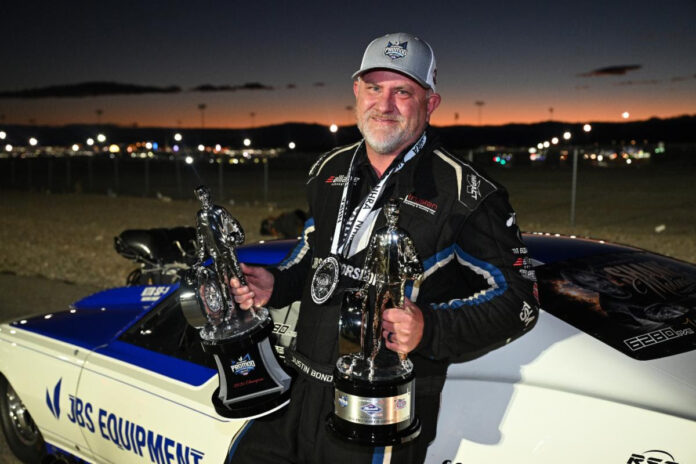
LAS VEGAS (Nov. 2, 2026) – Justin Bond clinched his first-ever championship in the JBS Equipment NHRA Pro Mod Drag Racing Series presented by Elite Motorsports, beating Mike Stavrinos in a winner-take-all final round on Sunday at The Strip at Las Vegas Motor Speedway as part of this weekend’s MOPAR NHRA Las Vegas Nationals powered by Dodge.

It marked the final event of the 11-race season and the Road to the Championship playoffs, and the finale was powered by Penske Racing Shocks and presented by Precision Racing Suspension.

Bond and Stavrinos entered the weekend as the top two in points and they delivered throughout eliminations, setting up a thrilling winner-take-all final round in Vegas. Stavrinos left first, but ran into trouble with his car as Bond chased him down just past half-track, pulling away with a standout run of 5.660-seconds at 253.47 mph to Stavrinos’ 5.791 at 230.69.

It netted Bond his second win of the season, but more importantly, his first world championship in the JBS Equipment NHRA Pro Mod Drag Racing Series presented by Elite Motorsports.

“I just want to thank my team. It’s been a wild ride,” Bond said following the victory and championship. “I don’t know what else to say. I’m trying to keep my composure.”

To get his eighth career NHRA Pro Mod victory, Bond took down Shane Gray, championship contender Derek Menholt and Billy Banaka to reach the final round, running in the 5.60s over the final three rounds. Bond also beat Banaka on a holeshot in the semifinals, setting up the winner-take-all matchup with Stavrinos.

Bond finished the season with two victories and four trips to the final round, advancing to the championship round at three of the final four races. He also finished as the No. 1 qualifier twice in 2026.

Stavrinos reached the finals for the fourth time this year, defeating Alex Laughlin, Nick Januik and J.R. Gray.

The 2027 schedule for the JBS Equipment NHRA Pro Mod Series presented by Elite Motorsports will be announced in the coming weeks.


LAS VEGAS — Final finish order (1-16) at the 26th annual MOPAR NHRA Las Vegas Nationals powered by Dodge at The Strip at Las Vegas Motor Speedway. The race is the final of 11 events in the JBS Equipment NHRA Pro Mod Drag Racing Series presented by Elite Motorsports.

PRO MODIFIED:

  1. Justin Bond; 2. Mike Stavrinos; 3. Billy Banaka; 4. JR Gray; 5. Nick Januik; 6. Derek

Menholt; 7. Mike Thielen; 8. Stan Shelton; 9. Chip King; 10. Jason Collins; 11. Kevin Rivenbark; 12. Mike Castellana; 13. Alex Laughlin; 14. Shane Gray.

LAS VEGAS — Sunday’s final results from the 26th annual MOPAR NHRA Las Vegas Nationals powered by Dodge at The Strip at Las Vegas Motor Speedway. The race is the final of 11 events in the JBS Equipment NHRA Pro Mod Drag Racing Series presented by Elite Motorsports.

Pro Modified — Justin Bond, Chevy Camaro, 5.660, 253.47 def. Mike Stavrinos, Camaro, 5.791, 230.69.

LAS VEGAS — Final round-by-round results from the 26th annual MOPAR NHRA Las Vegas Nationals powered by Dodge at The Strip at Las Vegas Motor Speedway, the final of 11 events in the JBS Equipment NHRA Pro Mod Drag Racing Series presented by Elite Motorsports.

PRO MODIFIED:

ROUND ONE — Nick Januik, Chevy Camaro, 7.725, 124.34 def. Kevin Rivenbark, Ford Mustang, Foul – Red Light; Mike Thielen, Mustang, 7.062, 139.20 def. Stan Shelton, Mustang, Foul – Red Light; Derek Menholt, Chevy Corvette, 5.694, 247.38 def. Chip King, Dodge Charger, Foul – Red Light; Justin Bond, Camaro, 5.684, 250.92 def. Shane Gray, Camaro, 8.336, 110.75; Billy Banaka, Camaro, 5.694, 252.28 def. Mike Castellana, Camaro, 5.809, 245.90; JR Gray, Camaro, 5.695, 251.02 def. Jason Collins, Camaro, 5.748, 248.48; Mike Stavrinos, Camaro, 5.693, 250.64 def. Alex Laughlin, Camaro, 5.947, 244.29;

QUARTERFINALS — Bond, 5.678, 251.44 def. Menholt, 6.011, 243.50; J. Gray, 7.594, 126.40 def. Thielen, Broke; Banaka, 5.702, 251.34 was unopposed; Stavrinos, 5.695, 250.64 def. Januik, 5.728, 249.76;

SEMIFINALS — Bond, 5.678, 251.49 def. Banaka, 5.667, 252.95; Stavrinos, 9.847, 66.17 def. J. Gray, Foul – Red Light;

FINAL — Bond, 5.660, 253.47 def. Stavrinos, 5.791, 230.69.

LAS VEGAS — Point standings (top 10) following the 26th annual MOPAR NHRA Las Vegas Nationals powered by Dodge at The Strip at Las Vegas Motor Speedway, the final of 11 events in the JBS Equipment NHRA Pro Mod Drag Racing Series presented by Elite Motorsports.

Pro Modified

  1. Justin Bond, 1,250; 2. Mike Stavrinos, 1,217; 3. JR Gray, 1,129; 4. Derek Menholt, 1,108; 5. Billy Banaka, 1,098; 6. Stan Shelton, 1,007; 7. Mike Thielen, 996; 8. Kevin Rivenbark, 917; 9. Chip King, 896; 10. Lyle Barnett, 890.

Team Penske NASCAR Cup Series Race Report – Martinsville

Xfinity 500
Martinsville, Virginia – November 1, 2026

AUSTIN CINDRIC No. 2 MENARDS/DELTA FORD MUSTANG DARK HORSE

START: 4TH STAGE 1: 7TH STAGE 2: 36TH FINISH: 36TH POINTS: 11TH

RACE RUNDOWN: Austin Cindric and the No. 2 Menards/Delta Ford Mustang Dark Horse team saw a promising afternoon come to a premature end following an incident that resulted in a 36th-place finish in Sunday’s Xfinity 500 at Martinsville Speedway. Cindric started fourth in the penultimate race of the 2026 NASCAR Cup Series season but struggled with a loose-handling condition in the opening laps, slipping to 10th by Lap 20. Following a green-flag pit stop for four tires, fuel and an air pressure adjustment on Lap 66, Cindric continued to work with crew chief Brian Wilson to improve the handling of the No. 2 Mustang. The adjustments proved beneficial as Cindric worked his way back through the field to finish Stage 1 in seventh. The team elected to pit during the stage break, positioning Cindric fifth for the ensuing restart. As the race progressed, Cindric reported improved handling and continued to battle for position before making another green-flag pit stop just prior to Lap 200. A lengthy pit stop cost the No. 2 team valuable time, and a caution shortly after Cindric returned to the track left him two laps down. After taking the wavearound, Cindric restarted 16th, one lap behind the leaders. Shortly after the restart, Cindric was caught in an incident that caused significant damage to the front-end of the No. 2 Mustang. The damage ultimately forced Cindric behind the wall, ending his afternoon prematurely. He was credited with a 36th-place finish.

CINDRIC’S THOUGHTS: “It’s unfortunate to have our day end early like that. We had a fast Menards/Delta Ford Mustang and made some good progress throughout the race. Brian and the guys worked hard all weekend to give us a competitive car, so it’s disappointing not to get the finish we felt we were capable of. We’ve got one more opportunity next weekend at Homestead, and we’re looking forward to closing out the season on a high note.”

RYAN BLANEY No. 12 DISCOUNT TIRE FORD MUSTANG DARK HORSE

START: 13TH STAGE 1: 13TH STAGE 2: 32ND FINISH: 35TH POINTS: 7TH

RACE RUNDOWN: Ryan Blaney entered Sunday’s Xfinity 500 at Martinsville Speedway looking to keep his championship hopes alive, but damage sustained to the No. 12 Discount Tire Ford Mustang Dark Horse ultimately derailed a promising afternoon and resulted in a 35th-place finish. Seeking his third fall Martinsville victory in the last four seasons, Blaney started the 500-lap race from the 13th position and ran among the top 15 for much of Stage 1. Following a cycle of green-flag pit stops, Blaney ended the opening segment in 13th. A series of cautions early in Stage 2 provided Blaney with an opportunity to work his way forward, as he broke into the top 10 before making contact with another competitor on Lap 252. The incident resulted in significant front-end damage to the No. 12, forcing Blaney to the garage for repairs. The Team Penske crew worked diligently to repair the Mustang Dark Horse, allowing Blaney to return to the track on Lap 310. Despite the setback, Blaney continued to the checkered flag, ultimately finishing 35th. With the result, Blaney was officially eliminated from contention for his second career NASCAR Cup Series championship. He enters next Sunday’s season finale at Homestead-Miami Speedway seventh in the points standings, looking to close out the 2026 season on a strong note.

BLANEY’S THOUGHTS: “We were definitely getting better. The first stage we weren’t great, but that run where (the on-track contact) happened, I thought we finally got pretty good. I was passing some cars and really running kind of the front group down a little bit, so I felt like we made good gains (before the incident).”

JOEY LOGANO No. 22 SHELL-PENNZOIL FORD MUSTANG DARK HORSE

START: 5TH STAGE 1: 16TH STAGE 2: 5TH FINISH: 18TH POINTS: 5TH

RACE RUNDOWN: Joey Logano started fifth and finished 18th in Sunday’s penultimate NASCAR Cup Series race of the season at the Martinsville Speedway in Virginia. Hopes were high after a strong practice and qualifying effort for the former Martinsville winner. Logano and the No. 22 Shell-Pennzoil Ford Mustang Dark Horse team showed strong pace, steadily working their way forward while he reported he was happy with the car’s turn. The team gained valuable track position through strategy, climbing to fourth on Lap 65 after passing Kyle Larson and moving into third by Lap 81 while staying out during the green-flag pit cycle. Logano continued to maximize track position before eventually dropping outside the top 10 as competitors on fresher tires worked their way forward. He would ultimately finish Stage 1 in 16th. In Stage 2, the No. 22 crew made a four-tire stop with fuel and air pressure adjustments on Lap 193. After being trapped a lap down during a caution on Lap 200, Logano received the wave-around to return to the lead lap. Restarting eighth on Lap 217, he quickly charged back through the field, advancing to fifth by Lap 241 where he would conclude Stage 2. During the final stage, Logano reported that the car could stand to be tighter before the team made a scheduled four-tire stop for fuel and adjustments on Lap 344. However, the No. 22 team was forced to make a second stop on the following lap after encountering an issue on pit road. The setback proved costly, and difficulties during the final pit sequence relegated Logano to an 18th-place finish at the checkered flag. With the result, Logano was eliminated from championship contention heading into next Sunday’s season finale at Homestead-Miami Speedway.

LOGANO’S THOUGHTS: “We kind of had them where we wanted them. They were trying to give it to us and we gave it right back, so just frustrating is what it is. You win as a team and lose as a team and today we’re gonna lose as a team. It just stings when you do that. When we look at the last couple of weeks the opportunity was there at the end of those races to do it. We’re out of it now, which stings. On one hand, you look at the comeback we had from the regular season and have a chance to win a championship all down to one race to go. That’s something to be proud of, but, at the same time, it’s really easy to find 60-plus points sitting on the table over the last three or four weeks. It is what it is. That’s racing for you. We’ll move on.”

The NASCAR Cup Series Chase for the Championship concludes next Sunday, November 8, at Homestead-Miami Speedway. Race coverage begins on Sunday at 3 p.m. ET on NBC, MRN, and SiriusXM NASCAR Radio Channel 90.

VANDERGRIFF, KALITTA & GLENN WIN BIG AT MOPAR NHRA LAS VEGAS NATIONALS

  • Vandergriff gets dramatic FC win
  • Kalitta stays in title hunt with TF victory
  • Dominant PS weekend for points leader Glenn
  • PSM final moved to Pomona due to wind

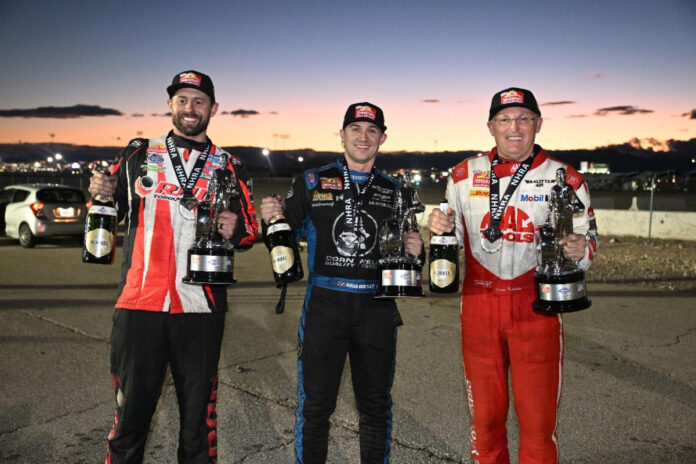
LAS VEGAS (Nov. 1, 2026) – Funny Car championship contender Jordan Vandergriff closed in on points leader Matt Hagan in dramatic fashion on Sunday at The Strip at Las Vegas Motor Speedway, defeating Ron Capps in the final round at the MOPAR NHRA Las Vegas Nationals powered by Dodge.

Doug Kalitta (Top Fuel) and Dallas Glenn (Pro Stock) also won the 19th of 20 races during the 2026 NHRA Mission Foods Drag Racing Series season and the fifth of six races in the Countdown to the Championship playoffs. Due to excessive winds, the Pro Stock Motorcycle final round will be contested at the finale in Pomona.

Needing a victory to have an opportunity to track down Hagan, a four-time champion, in Pomona, Vandergriff and his John Force Racing team came through in the clutch, as Vandergriff went 3.873-seconds at 331.36 mph in his 12,000-horsepower Cornwell Tools Chevrolet SS to power past Capps’ 3.921 at 335.15.

It’s the fourth win of the season for Vandergriff and this was certainly the biggest, as he pulled to within 39 points of Hagan with one race left. It was also another shining moment for Vandergriff in his Funny Car debut season, getting past Julie Nataas, Spencer Hyde and J.R. Todd, going 3.911 at 327.90 in another major matchup with Todd, who beat Hagan in the second round.

That set up another marquee showdown with Capps and Vandergriff quickly tracked down the veteran, setting up what will be a must-see showdown at the In-N-Out Burger NHRA Finals in Pomona.

“This is the biggest win [of the year],” Vandergriff said. “Today literally worked out as I envisioned it this morning. It was, how do we need today to go? We need the day to go a certain way. We need somebody else to lose. We need this. We need that, and it literally played itself out the way I imagined.

“This fourth win I think is obviously huge, just because we’re 39 points back now of Hagan, and coming in today we were a really, really long shot. It felt like we were far away and we needed him to go out early, and he did. Now we can go to Pomona with a chance. So that’s all I wanted.”

Capps reached the final round for the fifth time in 2026 thanks to round wins against Cruz Pedregon, No. 1 qualifier Jack Beckman and Austin Prock.

Doug Kalitta ensured the Top Fuel championship race didn’t end in Las Vegas, taking down Kalitta Motorsports teammate Shawn Langdon in the semifinal round and then winning the race for the fifth time this year with a stellar run of 3.658 at 338.60 in his 12,000-horsepower Mac Tools dragster to power past Pruett’s 5.751 at 124.89.

The championship remains a longshot, as Kalitta heads to Pomona 107 points behind Langdon, but he’ll get an opportunity to win back-to-back world titles and the third in the past four years thanks to Sunday’s brilliant performance.

He took down Will Smith, Justin Ashley and then Langdon, going 3.66 in back-to-back rounds against Ashley and Langdon to reach the final round. In the championship round against Pruett, Kalitta and his team were even better, delivering a classic performance to pick up his 64th career victory and fourth in Las Vegas.

Next up is Pomona, where Kalitta will try to replicate Sunday’s performance and hope for a little luck along the way.

“I have to hand it to my guys. They really had my car on a rail today, running 3.60s all day and .65 in the final,” Kalitta said. “We definitely had her hopped up good and you know the track is incredible out here. I guess that’s the kind of conditions that my car likes. Obviously Alan [Johnson, crew chief], just what can I say about him and Mac [Savage]? You know they they’re just really incredible. It’s a great privilege to be in the spot I am, driving this thing.

“It was definitely a sigh of relief to see that win light come on against Shawn, to finally to get by those guys. That was what I was hoping for, to get a shot at Shawn in the third round and hopefully beat him, and so it worked out well. I have to admit, [the championship] feels like a long shot, but anything can happen with points and a half at Pomona. Pomona is really one of my favorite places to race.”

Pruett reached her fourth final round of 2026 and the 29th in her career thanks to round wins against Tony Schumacher, Josh Hart and Antron Brown.

In Pro Stock, Dallas Glenn capped off his second straight flawless weekend with another dominant performance, stretching his points lead and picking up his sixth win of the season after going 6.587 at 206.26 in his RAD Torque Systems Chevrolet Camaro to hold off Troy Coughlin Jr. in the final round.

It is Glenn’s 27th career victory and the reigning world champion now holds a commanding 87-point lead over Matt Hartford headed to Pomona, where Glenn will look to close out another standout season and an incredible late-season surge.

Glenn entered the Dallas race 71 points back of Greg Stanfield but responded with two No. 1 qualifiers – including the world record – and two victories, while Stanfield fell in the opening round at both races. With his fourth victory in Vegas – and third in a row – he’s now on the cusp of a second straight world title. To reach the championship round, Glenn took Erica Enders and Hartford, delivering the quick run of the weekend in the finals against Coughlin.

“When [Greg Stanfield] lost first round of Dallas, it definitely caught our attention,” Glenn said. “Like we have a really good shot to make up a lot of ground. We knew we could really put a hurting on them. I didn’t know it was 87 [point lead], so that kind of makes me happy that it’s kind of close to that 90 mark. If I can get enough points in qualifying over Hartford, then maybe we can squeeze another round against him there, and that will kind of take a lot of the pressure off for Pomona.

“When we left Michigan [the first race of the Countdown to the Championship], we were definitely scratching our heads. We came home and we basically tore the car completely down and just checked everything out and started over from scratch. We’ve been working on it, and it’s been getting better every single race.”

Coughlin advanced to the final round for the third time in 2026 after defeating Stanfield, Shane Tucker and Greg Anderson.

Windy conditions pushed the Pro Stock Motorcycle final between Vance & Hines teammates Richard Gadson and Gaige Herrera to Pomona, setting up what could be a thriller at the finale. The final round will take place during the third qualifying session, which is slated for 1 p.m. PT on Saturday, Nov. 14.

Herrera, who was the No. 1 qualifier, went as quick as 6.752 at 200.05 in knocking off Chris Bostick, Clayton Howey and Joey Gladstone as he will try to track down his teammate and points leader at the In-N-Out Burger NHRA Finals.

Gadson, the reigning world champion, qualified second and knocked off John Hall, Angie Smith and Ryan Oehler. He’ll head to Pomona with a 55-point lead over Herrera, looking to clinch his second straight world championship.

The NHRA Mission Foods Drag Racing Series closes out its 75th anniversary season with the In-N-Out Burger NHRA Finals on Nov. 12-15 at In-N-Out Burger Pomona Dragstrip.


LAS VEGAS — Final finish order (1-16) at the 26th annual MOPAR NHRA Las Vegas Nationals powered by Dodge at The Strip at Las Vegas Motor Speedway. The race is the 19th of 20 events in the NHRA Mission Foods Drag Racing Series.

TOP FUEL:

  1. Doug Kalitta; 2. Leah Pruett; 3. Antron Brown; 4. Shawn Langdon; 5. Billy Torrence; 6. Tony Stewart; 7. Josh Hart; 8. Justin Ashley; 9. Maddi Gordon; 10. Clay Millican; 11. Will Smith; 12. Shawn Reed; 13. Cameron Ferre; 14. Chris Powers; 15. Spencer Massey; 16. Tony Schumacher.

FUNNY CAR:

  1. Jordan Vandergriff; 2. Ron Capps; 3. J.R. Todd; 4. Austin Prock; 5. Matt Hagan; 6. Jack

Beckman; 7. Hunter Green; 8. Spencer Hyde; 9. Chad Green; 10. Dave Richards; 11. Alexis DeJoria; 12. Cruz Pedregon; 13. Julie Nataas; 14. Daniel Wilkerson; 15. Paul Lee; 16. Jeff Diehl.

PRO STOCK:

  1. Dallas Glenn; 2. Troy Coughlin Jr.; 3. Greg Anderson; 4. Matt Hartford; 5. Cody Anderson; 6. Erica Enders; 7. Shane Tucker; 8. Deric Kramer; 9. Greg Stanfield; 10. Aaron Stanfield; 11. Matt Latino; 12. Eric Latino; 13. Jeg Coughlin; 14. Kenny Delco; 15. Alan Prusiensky; 16. Chris Vang.

LAS VEGAS — Sunday’s final results from the 26th annual MOPAR NHRA Las Vegas Nationals powered by Dodge at The Strip at Las Vegas Motor Speedway. The race is the 19th of 20 in the NHRA Mission Foods Drag Racing Series:

Top Fuel — Doug Kalitta, 3.658 seconds, 338.60 mph def. Leah Pruett, 5.751 seconds, 124.89 mph.

Funny Car — Jordan Vandergriff, Chevy Camaro, 3.873, 331.36 def. Ron Capps, Toyota GR Supra, 3.921, 335.15.

Pro Stock — Dallas Glenn, Chevy Camaro, 6.587, 206.26 def. Troy Coughlin Jr., Camaro, 6.604, 207.69.

Pro Modified — Justin Bond, Chevy Camaro, 5.660, 253.47 def. Mike Stavrinos, Camaro, 5.791, 230.69.

Stock Eliminator — Jeff Adkinson, Chevy Camaro, 9.437, 138.91 def. Justin Lamb, Chevy Copo, 9.625, 128.21.

Super Comp — Toby Payne, Dragster, 9.086, 158.76 def. Blu Hayball, Dragster, 9.196, 155.19.

LAS VEGAS — Final round-by-round results from the 26th annual MOPAR NHRA Las Vegas Nationals powered by Dodge at The Strip at Las Vegas Motor Speedway, the 19th of 20 events in the NHRA Mission Foods Drag Racing Series:

TOP FUEL:

ROUND ONE — Billy Torrence, 3.660, 340.65 def. Spencer Massey, 6.191, 101.36; Antron Brown, 3.690, 336.74 def. Maddi Gordon, 3.693, 340.82; Justin Ashley, 3.740, 326.32 def. Clay Millican, 3.699, 334.98; Josh Hart, 3.719, 338.77 def. Shawn Reed, 3.785, 316.38; Tony Stewart, 3.678, 340.13 def. Chris Powers, 4.305, 202.15; Shawn Langdon, 3.672, 330.31 def. Cameron Ferre, 4.025, 299.13; Doug Kalitta, 3.682, 333.25 def. Will Smith, 3.745, 333.00; Leah Pruett, 3.714, 332.26 def. Tony Schumacher, 11.729, 81.64;

QUARTERFINALS — Pruett, 3.687, 333.58 def. Hart, 3.681, 339.45; Kalitta, 3.664, 339.70 def. Ashley, 3.757, 313.37; Brown, 3.683, 336.32 def. Stewart, 3.678, 336.32; Langdon, 3.678, 335.48 def. Torrence, 3.675, 340.47;

SEMIFINALS — Pruett, 4.871, 223.76 def. Brown, 8.902, 84.38; Kalitta, 3.665, 334.15 def. Langdon, 11.147, 103.10;

FINAL — Kalitta, 3.658, 338.60 def. Pruett, 5.751, 124.89.

FUNNY CAR:

ROUND ONE — Ron Capps, Toyota GR Supra, 3.899, 332.18 def. Cruz Pedregon, Dodge Charger, 3.935, 322.58; J.R. Todd, GR Supra, 3.909, 332.75 def. Chad Green, Ford Mustang, 3.885, 320.66; Spencer Hyde, Mustang, 4.209, 316.67 def. Paul Lee, Charger, 5.008, 193.99; Jack Beckman, Chevy Camaro, 3.851, 329.67 def. Jeff Diehl, Toyota Camry, Foul – Centerline; Matt Hagan, Charger, 3.882, 332.18 def. Dave Richards, Mustang, 3.928, 329.10; Jordan Vandergriff, Camaro, 3.876, 324.28 def. Julie Nataas, GR Supra, 3.985, 323.50; Hunter Green, Charger, 3.923, 321.73 def. Alexis DeJoria, Camaro,

3.931, 289.88; Austin Prock, Mustang, 3.955, 319.29 def. Daniel Wilkerson, Mustang, 4.750, 170.13;

QUARTERFINALS — Prock, 3.888, 334.48 def. H. Green, 3.957, 320.81; Todd, 3.883, 336.40 def. Hagan, 3.890, 331.04; Capps, 3.874, 336.82 def. Beckman, 3.893, 317.42; Vandergriff, 3.912, 324.20 def. Hyde, 6.502, 103.54;

SEMIFINALS — Vandergriff, 3.911, 327.90 def. Todd, 4.525, 251.77; Capps, 4.430, 269.24 def. Prock, 4.667, 284.62;

FINAL — Vandergriff, 3.873, 331.36 def. Capps, 3.921, 335.15.

PRO STOCK:

ROUND ONE — Erica Enders, Chevy Camaro, 6.651, 205.63 def. Eric Latino, Camaro, Foul – Red Light; Cody Anderson, Camaro, 6.626, 206.04 def. Aaron Stanfield, Camaro, 6.633, 205.91; Troy Coughlin Jr., Camaro, 6.628, 205.88 def. Greg Stanfield, Camaro, 6.624, 205.22; Matt Hartford, Camaro, 6.644, 207.75 def. Kenny Delco, Camaro, 6.747, 203.61; Shane Tucker, Camaro, 22.464, 52.01 def. Matt Latino, Camaro, Foul – Red Light; Dallas Glenn, Camaro, 6.615, 206.04 def. Alan Prusiensky, Dodge Dart, Broke – No Show; Greg Anderson, Camaro, 6.621, 205.22 def. Chris Vang, Camaro, Broke; Deric Kramer, Camaro, 6.640, 206.04 def. Jeg Coughlin, Camaro, 6.649, 204.91;

QUARTERFINALS — Hartford, 6.637, 206.48 def. Kramer, Broke; Coughlin Jr., 6.651, 205.60 def. Tucker, 6.725, 205.01; G. Anderson, 6.613, 203.98 def. C. Anderson, 6.643, 206.23; Glenn, 6.610, 206.23 def. Enders, Foul – Red Light;

SEMIFINALS — Coughlin Jr., 6.627, 207.21 def. G. Anderson, 6.597, 205.76; Glenn, 6.611, 206.04 def. Hartford, 6.616, 206.10;

FINAL — Glenn, 6.587, 206.26 def. Coughlin Jr., 6.604, 207.69.

PRO STOCK MOTORCYCLE:

ROUND ONE — Clayton Howey, Buell, 6.865, 196.30 def. Malcolm Phillips Jr., Suzuki, 6.899, 195.96; Angie Smith, Buell, 6.833, 198.12 def. Chase Van Sant, Suzuki, Foul – Red Light; Steve Johnson, Suzuki, 6.931, 185.51 def. Geno Scali, Suzuki, 6.947, 194.66; Joey Gladstone, Buell, 6.874, 196.07 def. Marc Ingwersen, 6.938, 194.60; Matt Smith, Buell, 6.857, 197.74 def. Karen Stoffer, Suzuki, 6.972, 191.24; Ryan Oehler, 6.865, 197.05 def. GT Tonglet, Suzuki, 7.015, 194.63; Richard Gadson, Suzuki, 7.158, 186.33 def. John Hall, Buell, 7.860, 123.93; Gaige Herrera, Suzuki, 6.765, 199.79 def. Chris Bostick, Suzuki, 6.895, 195.11;

QUARTERFINALS — Oehler, 6.823, 198.03 def. Johnson, 6.828, 196.85; Gadson, 6.857, 194.72 def. A. Smith, 6.865, 199.08; Gladstone, 6.863, 196.93 def. M. Smith, 7.153, 158.32; Herrera, 6.752, 200.05 def. Howey, 6.890, 195.73;

SEMIFINALS — Gadson, 6.933, 174.48 def. Oehler, 8.484, 107.81; Herrera, 7.280, 181.96 def. Gladstone, 7.332, 180.09;

FINAL — Gadson vs. Herrera (to be completed at Pomona)

LAS VEGAS — Point standings (top 10) following the 26th annual MOPAR NHRA Las Vegas Nationals powered by Dodge at The Strip at Las Vegas Motor Speedway, the 19th of 20 events in the NHRA Mission Foods Drag Racing Series –

Top Fuel

  1. Shawn Langdon, 2,630; 2. Doug Kalitta, 2,523; 3. Antron Brown, 2,394; 4. Leah Pruett, 2,379; 5. Tony Stewart, 2,359; 6. (tie) Maddi Gordon, 2,293; Will Smith, 2,293; 8. Justin Ashley, 2,278; 9. Josh Hart, 2,254; 10. Billy Torrence, 2,250.

Funny Car

  1. Matt Hagan, 2,563; 2. Jordan Vandergriff, 2,524; 3. J.R. Todd, 2,459; 4. Austin Prock, 2,422; 5. Jack Beckman, 2,412; 6. Ron Capps, 2,408; 7. Alexis DeJoria, 2,314; 8. Daniel Wilkerson, 2,239; 9. Spencer Hyde, 2,204; 10. Chad Green, 2,187.

Pro Stock

  1. Dallas Glenn, 2,556; 2. Matt Hartford, 2,469; 3. Greg Stanfield, 2,457; 4. Greg Anderson, 2,437; 5. Troy Coughlin Jr., 2,425; 6. Cody Anderson, 2,303; 7. Aaron Stanfield, 2,282; 8. Jeg Coughlin, 2,280; 9. Matt Latino, 2,267; 10. Erica Enders, 2,260.

Pro Stock Motorcycle

  1. Richard Gadson, 2,579; 2. Gaige Herrera, 2,524; 3. Matt Smith, 2,446; 4. Ryan Oehler, 2,411; 5. Angie Smith, 2,340; 6. John Hall, 2,339; 7. Jianna Evaristo, 2,288; 8. Chase Van Sant, 2,274; 9. Steve Johnson, 2,228; 10. Clayton Howey, 2,211.

Wood Brothers Racing – Race Report: Martinsville Speedway

Event: Xfinity 500

Location: Martinsville Speedway, Ridgeway, Virginia

Date: Sunday, November 1, 2026

Start: 10th

Finish: 4th

Josh Berry and the No. 21 Motorcraft/Quick Lane Ford Mustang Dark Horse turned in a strong performance in Sunday’s Xfinity 500 at Martinsville Speedway, earning a fourth-place finish that propelled Berry to career highs in top-five and top-10 finishes in the NASCAR Cup Series.

With one race remaining in the 2026 season, Berry has recorded four top-five and 11 top-10 finishes, with an opportunity to add to those totals in next Sunday’s season finale at Homestead-Miami Speedway.

Both marks are the best for Wood Brothers Racing since 2014, when Ryan Blaney recorded four top-five and 14 top-10 finishes behind the wheel of the No. 21 Ford.

Berry started Sunday’s 500-lap race at the tight, half-mile Martinsville oval from the 10th position and quickly established himself as a contender for a strong finish.

Outside of green-flag pit stop cycles, Berry maintained a position inside the top 10 throughout the opening 130-lap Stage, ultimately finishing fifth to collect six valuable stage points.

The second Stage brought more of the same for Berry and the Motorcraft/Quick Lane team, as he continued to run among the top 10 before finishing seventh and adding four more stage points.

Berry and the No. 21 team saved their best for the final segment of the race. With just over 90 laps remaining, Berry worked his way into the top five and maintained that position through the closing laps, ultimately taking the checkered flag in fourth. The result marked his best finish since another fourth-place effort four races earlier at Charlotte Motor Speedway.

Following the race, Berry expressed his satisfaction with the team’s performance.

“It was really fun,” he said. “The car was really solid all day. We just needed a little bit of track position and needed to get up to the front a little sooner.”

Berry also expressed his appreciation for those supporting the No. 21 team.

“I just want to thank everybody at Wood Brothers and Team Penske, Ford Racing for everything they for us.”

Berry and the Motorcraft/Quick Lane team now turn their attention to next Sunday’s Cup Series Champions Race at Homestead-Miami Speedway, where they will look to close out the 2026 season with another strong performance.

NHRA LAS VEGAS NATIONALS: ELITE MOTORSPORTS RESULTS

NHRA LAS VEGAS NATIONALS:
ELITE MOTORSPORTS RESULTS

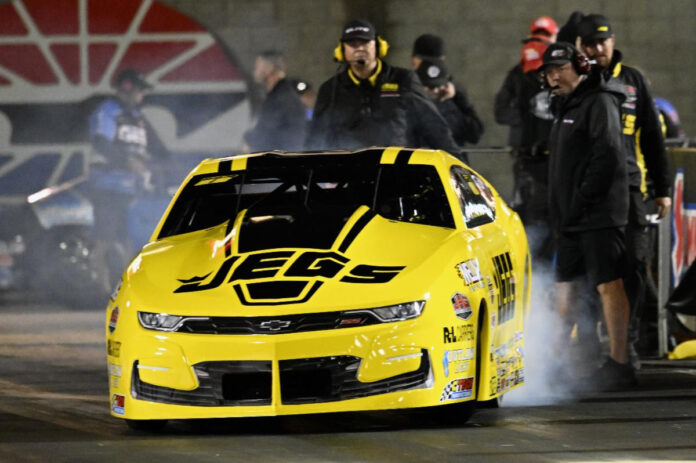
TROY COUGHLIN JR., JEGS Pro Stock Car
Qualifying: No. 11
6.661 seconds, 205.35 mph
E1: .000 RT, 6.628 at 205.888 def. Greg Stanfield .015, 6.624 at 205.22
E2: 6.651 at 206.60 def. Shane Tucker 6.725 at 205.01
Semis: .015 RT, 6.627 at 207.21 def. Greg Anderson .047, 6.597 at 205.76
Finals: 6.604 at 207.69 lost to Dallas Glenn 6.587 at 206.26
Unofficial Points Position: 5th

Quotes:

“God is good, that’s for sure. Man, we really wanted to finish today with this JEGS machine in the winners circle, just came up a little short in the final. I kind of missed it on the starting line and then grabbed the chip on the 1-2 gear change, which slowed us down. I’m not so sure that we could have got there as good as Dallas ran, but would have been a heck of a lot tighter. We’ll just have to keep getting better, keep putting the work in. I’m really proud of Kyle Bates, Kelly Murphy, Alex Laine, and Steven Hurley. I can’t say enough about them. They have this JEGS car ready to go for every round and that’s a feat in itself. It’s a lot of work, and every bit of credit is due to them.”

GREG STANFIELD, Janac Brothers Racing Pro Stock Car

Qualifying: No. 6
6.636 seconds, 205.01 mph
Bonus Qualifying Points: 5
Race Results: Lost to Troy Coughlin Jr.
Unofficial Points Position: 3rd

JEG COUGHLIN JR., JEGS.com Pro Stock Car

Qualifying: No. 12
6.661 seconds, 205.07 mph
Race Results: Lost to Deric Kramer
Unofficial Points Position: 8th

ERICA ENDERS, Johnson’s Horsepowered Garage / Melling Performance / R+L Carriers Pro Stock Car

Qualifying: No. 9

6.651 seconds at 205.44 mph

Race Results: Beat Eric Latino; Lost to Dallas Glenn

Unofficial Points Position: 10th

AARON STANFIELD, Johnson’s Horsepowered Garage / Melling Performance / Janac Brothers Racing Pro Stock Car

Qualifying: No. 10
6.659 seconds, 204.51 mph
Race Results: Lost to Cody Anderson
Unofficial Points Position: 7th

TONY STEWART, R+L Carriers Top Fuel dragster

Qualifying: No. 2
3.676 seconds, 339.28 mph
Bonus Qualifying Points: 8
Race Results: Beat Chris Powers; Lost to Antron Brown
Unofficial Points Position: 5th

Modern Car Key Technology Explained: Transponders, Immobilisers, and the Challenges of Replacing Vehicle Keys

Modern vehicle security has evolved considerably over the past two decades. What was once a relatively straightforward mechanical key has developed into a sophisticated electronic system involving transponder chips, immobilizers, remote central locking and keyless entry technology.

For vehicle owners, these developments offer improved security and convenience. However, they have also made car key replacement considerably more technical, particularly when all keys have been lost or an electronic fault prevents a vehicle from recognising its key.

Understanding how modern car keys work, and why specialist equipment is required to replace and programme them, provides useful insight into an increasingly important part of the automotive industry.

How Modern Car Keys Have Evolved

Traditional vehicle keys relied primarily on mechanical cutting. The physical shape of the blade matched the vehicle’s lock, allowing the driver to unlock the doors and operate the ignition.

As vehicle security developed, manufacturers introduced electronic immobiliser systems to make unauthorised vehicle starting more difficult.

These systems changed the role of the car key. Rather than simply providing mechanical access, the key also needed to communicate electronically with the vehicle.

Today, many vehicles use a combination of mechanical security, electronic identification and encrypted communication. The exact arrangement varies between manufacturers, models and production years.

What Is a Transponder Key?

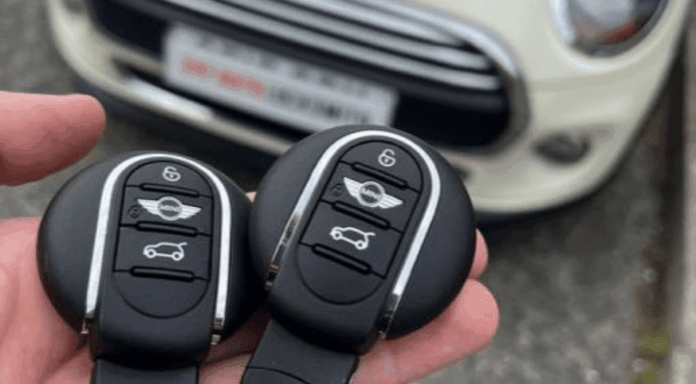
A transponder key contains a small electronic chip that communicates with the vehicle’s immobiliser system.

When the key is used, the vehicle checks whether the electronic identification is recognised. If the required authorisation is received, the immobiliser permits the engine to start.

If the vehicle does not recognise the transponder, the engine may crank without starting, or the vehicle may prevent the starting process altogether, depending on its design.

This is why simply cutting a replacement key blade is not always sufficient.

A correctly cut key may operate the mechanical locks, but the electronic transponder must also be compatible and programmed or authorised where required.

Understanding Vehicle Immobiliser Systems

An immobiliser is an electronic security feature designed to prevent an unauthorised key from starting a vehicle.

Depending on the vehicle, the system may communicate with several electronic components, including the engine control unit, body control module, immobiliser module and keyless entry system.

These components work together to verify the key and authorise vehicle operation.

When a key is lost, damaged or no longer recognised, diagnosing the problem can require more than simply supplying another key.

A specialist automotive locksmith needs to establish whether the issue relates to the key itself, its programming, the vehicle’s immobiliser system or another electronic component.

Smart Keys and Proximity Entry Systems

Many newer vehicles use proximity-based key systems.

Instead of inserting a key into an ignition barrel, the driver can unlock the vehicle and start the engine while the electronic key remains nearby.

These systems offer convenience, but replacement can be more involved than traditional key cutting.

The replacement key must be suitable for the vehicle’s specific system and correctly configured. Depending on the manufacturer, this can involve specialist diagnostic equipment, security authorisation and electronic programming procedures.

Not every replacement key is compatible with every vehicle, even when the remote fob looks almost identical.

Why Modern Car Key Replacement Requires Specialist Equipment

Automotive locksmithing has become a specialist technical discipline.

Modern replacement keys may require a combination of:

  • Accurate mechanical key cutting.
  • Transponder identification and programming.
  • Remote control synchronisation.
  • Proximity key configuration.
  • Immobiliser communication.
  • Manufacturer-specific diagnostic procedures.

Professional automotive locksmiths use specialist key-cutting machines, programming tools and diagnostic equipment to work with different vehicle security systems.

The correct procedure depends on the manufacturer, model, year and immobiliser generation.

This is particularly important when dealing with vehicles for which every original key has been lost. An all-keys-lost situation can require additional security procedures compared with simply programming a spare key when an existing working key is available.

What Happens When All Car Keys Are Lost?

Losing every key to a vehicle can be stressful, particularly when the vehicle is needed for work or everyday transport.

The first step is identifying the vehicle accurately, including its make, model, year and relevant security system.

A specialist automotive locksmith can then establish the appropriate replacement procedure.

Depending on the vehicle, the process may involve:

  1. Verifying vehicle ownership and authorisation.
  2. Identifying the existing key and immobiliser system.
  3. Establishing the correct replacement key specification.
  4. Cutting the mechanical key where applicable.
  5. Programming or configuring the electronic key.
  6. Testing the completed key and relevant functions.

The exact process varies significantly between vehicles. Some systems are relatively straightforward, while others require more advanced diagnostic and programming procedures.

Using a professional with suitable vehicle-specific equipment and experience is important when dealing with modern electronic security systems.

Choosing a Specialist Automotive Locksmith

Not all locksmith services offer the same capabilities.

Traditional locksmithing and automotive locksmithing are different disciplines, and modern vehicle key replacement often requires dedicated equipment and technical knowledge.

When choosing an automotive locksmith, vehicle owners should consider:

  • Experience with their particular vehicle manufacturer.
  • Access to appropriate key programming equipment.
  • Ability to deal with all-keys-lost situations.
  • Transparent pricing before work begins.
  • Appropriate insurance and professional credentials.
  • Whether the service is genuinely mobile.

It is also worth asking whether the locksmith can supply a complete replacement key, rather than simply cutting a mechanical blade.

A properly equipped mobile automotive locksmith can often carry out replacement and programming work at the vehicle’s location, avoiding the need to arrange transport to a dealership.

Mobile Automotive Locksmith Services in Crawley, Mid Sussex and East Surrey

As vehicle key technology continues to develop, specialist mobile automotive locksmith services have become increasingly important to motorists.

247 Auto Locksmith provides mobile automotive locksmith assistance covering Crawley, Mid Sussex and East Surrey.

Its services include replacement car keys, spare keys, transponder programming, proximity keys, vehicle unlocking and specialist ignition-related work.

By combining key-cutting equipment, diagnostic technology and automotive programming tools, specialist locksmiths can help vehicle owners deal with a range of key and vehicle security problems.

For motorists requiring professional car key replacement services, 247 Auto Locksmith provides mobile automotive locksmith assistance across Crawley, Mid Sussex and East Surrey. From replacement transponder keys and proximity fobs to specialist key programming, the business helps motorists get back on the road without the inconvenience of arranging a dealership visit.

Exploring a Race-Car Livery Reveal with AI Video Concepts

Photo by ravencrow BI on Pexels

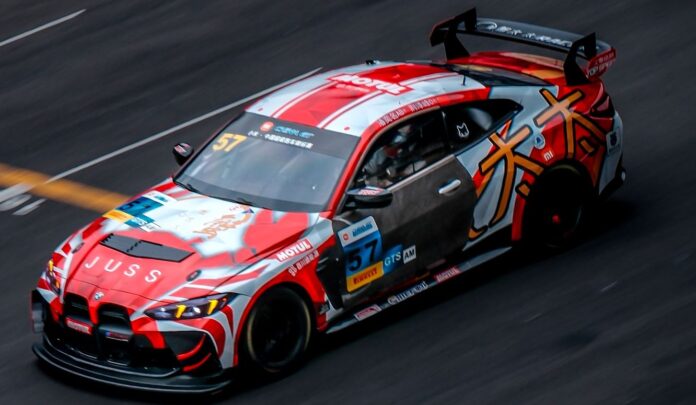
A race-car livery has to work as a moving composition, not just a flat drawing. Stripes that look balanced on a design sheet can compete with a number panel or disappear into reflections when seen from another angle. For early visual exploration, seedance 3.0 offers text-to-video and image-to-video starting points that can help a designer discuss the mood of a proposed car reveal. These experiments are creative previews, rather than engineering models or footage of an actual race car.

That distinction gives the exercise a useful boundary. A generated clip can suggest how a colour palette feels under changing light, or whether a reveal should be quiet and deliberate or sharp and energetic. It cannot establish whether a graphic will fit a real body panel, meet series requirements, or reproduce a sponsor’s artwork accurately. Those decisions still belong to the team’s design and production process.

What the reveal needs to communicate

Imagine a fictional club-racing team developing a navy-and-orange design. The first question is not which dramatic camera move to request. It is what the audience should remember: the orange nose, a continuous side stripe, or the overall contrast between the two colours. A reveal that tries to emphasise every surface can make the design harder to recognise.

Choose one visual idea for each shot. A close view can introduce a colour or surface texture. A wider view can reveal the relationship between the bonnet, side panels, and rear bodywork. A final still can show the complete approved design. This structure gives each image a purpose and leaves room for the actual team information.

Build from an approved reference

If the team already has a rendered concept, use a version that clearly shows the intended shape and major colour areas. Keep an untouched master for comparison. The generated preview should be checked against that reference for changes in body proportions, wheel placement, stripes, and small details. A convincing-looking frame is not necessarily a faithful representation of the design.

When the exact livery matters, a conventional three-dimensional render or controlled shoot may be the better final asset. An AI video sketch can still help the team choose the presentation style before committing to that production. Its role is to make creative choices discussable, not to replace a technical drawing or a designer’s approval.

Protect the identity of the car

Numbers, sponsor marks, and team lettering carry specific meaning. They should be checked individually, not treated as background decoration. If generated imagery distorts them, an editor can use an approved still, a separate graphic, or a different shot rather than publishing an approximation. Any sponsor assets used in the project should be cleared through the team’s normal approval process.

A fictional concept should also be presented as fictional. It should not imply that a real manufacturer, driver, championship, or sponsor has endorsed it. Keeping the example independent of existing teams gives designers room to experiment without creating confusion about a genuine announcement.

Design for the channel where fans will watch

A wide presentation on a team website and a vertical social clip frame the car differently. Cropping a wide shot can cut off the nose, rear wing, or number panel. Review the actual crop early, leaving enough room around the features that need to stay visible. A simpler composition often works better than squeezing the whole design into a narrow frame.

The same review should include the title and release information. Add exact names and dates during editing so that they remain consistent across versions. Watch once without sound and once on a small screen. Fans should still be able to understand what is being revealed and whether they are seeing a concept or a finished car.

The strongest livery reveal gives the design room to speak. Motion, lighting, and editing should direct attention to the choices the team has made. Used as an early sketching method, AI video can help settle those presentation choices; the final publication should remain anchored to the approved artwork and the real car it represents.

2012 Ford Flex Problems Every Owner Should Know and How to Fix Them

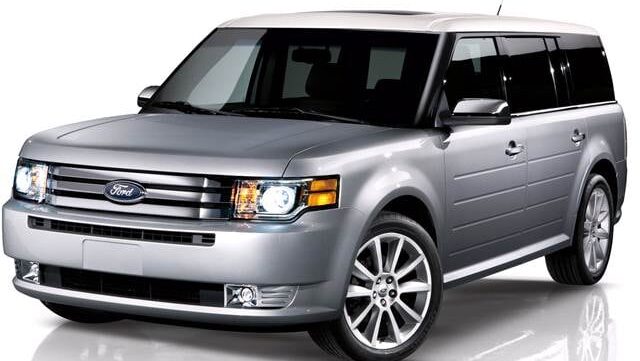
The 2012 Ford Flex is a boxy seven-seat crossover that still turns heads. It rides well, holds a lot of cargo, and the EcoBoost version still feels quick. But this Flex is now well over a decade old, and age brings repairs.

Some of those repairs are cheap. Others turn into big bills if you miss the early signs. Below are the problems owners report most, what to look for, and how a good Ford Flex manual helps with each one.

A Quick Look at the 2012 Ford Flex

The 2012 Flex came in SE, SEL, Limited, and Titanium trims. Every version used a 3.5-liter V6 and a six-speed automatic. Here is how the two engines compare.

EnginePowerTorqueTransmissionDrive
3.5L Ti-VCT V6262 hp248 lb-ft6F50 six-speed automaticFWD or AWD
3.5L EcoBoost twin-turbo V6355 hp350 lb-ft6F55 six-speed automaticAWD only

For 2012, Ford dropped the EcoBoost from the SEL trim. It stayed on the Limited and Titanium. Properly equipped, the Flex tows up to 4,500 pounds and offers 83.2 cubic feet of cargo space.

Know which engine and drivetrain you have before you start any repair. Several of the problems below only affect one setup.

1. Internal Water Pump Failure

This is the most serious problem on the Flex. Ford placed the water pump inside the engine, behind the timing cover. The timing chain drives it.

When the pump seal wears out, coolant can leak into the engine oil. Coolant thins the oil and washes away lubrication. That speeds up timing chain wear and can ruin the engine if nobody catches it.

Owners of both the base V6 and the EcoBoost have reported this failure. Watch for these signs:

  • Coolant level drops but you see no puddle
  • Milky or tan oil on the dipstick or under the oil cap
  • A sweet coolant smell or a wet spot near the passenger side of the engine
  • The temperature gauge climbing or the engine overheating
  • Timing-related check engine codes such as P0016 or P0018

If you see milky oil or the engine overheats, stop driving. A few more miles can turn a pump job into an engine swap.

The repair is big because the timing cover must come off. It is one of the longest jobs on this vehicle and often keeps the Flex in the shop for most of a day or more. Because the work is so deep, it makes sense to replace the timing chain, guides and tensioners at the same time.

The factory service manual shows the timing marks, the camshaft holding steps and the bolt torque order for the timing cover. Getting any of those wrong can bend valves or cause a new leak.

2. Power Transfer Unit Leaks on AWD Models

The power transfer unit, or PTU, is the small gearbox that sends power from the transmission to the rear wheels. It sits right next to the exhaust. That heat breaks down the gear oil over time and hardens the seals.

Owners describe thick black fluid leaking from the PTU and a burning gear oil smell at stoplights. Ford also issued service guidance on a seal leak between the PTU and the transmission case on earlier Flex models.

Signs of a PTU problem:

  • Burning oil smell, especially after a highway drive
  • Light smoke from the passenger side of the engine bay
  • Drips under the front of the vehicle
  • A whine or grinding noise that rises with speed
  • AWD that feels like it stopped working

A leaking seal is a small job. A PTU that runs dry is not. Owners who caught leaks early often got away with new seals and fresh fluid. Changing the PTU fluid now and then is a cheap habit many owners use to stretch its life.

The service manual covers PTU service, Active Torque Coupling diagnostics, and the coupling barcode programming step that follows some AWD repairs.

3. Power Steering Loss on EcoBoost Models

EcoBoost versions of the 2012 Flex use electric power steering instead of a hydraulic pump. A sensor fault in the steering motor can shut off the power assist. When that happens, the wheel suddenly gets very heavy, mostly at low speeds.

Ford recalled 2011 and 2012 EcoBoost Flex models for this in June 2015. Dealers check the power steering control module for fault codes and update its software. If they find loss of assist codes, they replace the steering gear free of charge.

Watch for a “power steering assist fault” message or a steering wheel that turns stiff without warning. Some owners say the problem came back years later, or that their VIN was not part of the recall. If your Flex shows these signs, get it checked before you drive it again.

The steering section of the factory manual explains how to read steering module codes with a scan tool and how to test the system before you replace expensive parts.

4. Grinding Brakes and Sticking Calipers

Front brake grinding is one of the most common 2012 Flex complaints. Sticking calipers come up often too. A heavy three-row crossover is hard on brakes, and older calipers can seize.

Signs:

  • Grinding or grunting from the front at low speed
  • The Flex pulls to one side when you brake
  • One wheel feels much hotter than the others after a drive
  • Uneven pad wear
  • ABS or stability control warning lights

Brakes are a safe place for many owners to start doing their own work. The factory manual lists the caliper bracket torque, the pad wear limits and the ABS and stability control diagnostic steps. Never guess on brake bolt torque.

5. Wheel Bearings, HVAC Blend Doors and Other Wear Items

Across every model year, owners most often report worn wheel bearings, failed HVAC blend door motors, sticking brake calipers and worn tie rod ends. None of these are rare for a heavy crossover with high miles.

  • Wheel bearing: a hum or growl that gets louder with speed and changes when you turn
  • Blend door motor: a clicking noise behind the dash, or air coming from the wrong vents
  • Tie rod ends: loose steering, clunks over bumps, or uneven tire wear
  • Serpentine belt: squeaks at startup; some owners replaced belts and tensioners early

Recalls on the 2012 Ford Flex

The 2012 Flex has two federal safety recalls. Recall repairs are free at any Ford dealer, no matter how old the vehicle is.

RecallDateProblemFix
16V247000 (Ford 16C06)April 2016Driver frontal airbag may not inflate properly in the second stage of a high-speed crashDealer inspects and replaces the driver air bag module if needed
15V340000 (Ford 15S18)June 2015EcoBoost models only: a steering motor sensor fault can shut off power steering assistModule check, software update, steering gear replacement if needed

Run your 17-digit VIN through the free federal recall lookup or call a Ford dealer. Used vehicles often change hands with open recalls that nobody fixed.

Why a Factory Manual Matters for an Older Flex

The Flex has a tight engine bay and an AWD system that works differently from a truck. That pushes labor hours up. Even if you never pick up a wrench, knowing the real repair steps helps you judge a shop quote.

A generic repair book covers many models at once and skips details. A factory-level Ford Flex manual is written for this exact vehicle. The 2012 edition runs 6,402 pages. It covers both V6 engines, both six-speed automatics, FWD and AWD, plus wiring diagrams, torque specs, scan tool diagnostics, and body repair.

When you shop for a Ford Flex manual, check these points:

  1. It matches your exact model year
  2. It covers your engine and your drivetrain
  3. It includes full wiring diagrams, not just a few pages
  4. The text is searchable, so you can jump to a part name or code
  5. It opens on a phone or tablet you can keep in the garage

Simple Habits That Prevent Big Repair Bills

  • Check the coolant level once a month and note any drop
  • Look at the oil color every time you check the level
  • Change the oil on time; long oil intervals are linked to timing chain wear on this engine
  • Look under the front of the Flex for drips after you park
  • On AWD models, sniff for burning oil after highway drives
  • Run your VIN for open recalls once a year
  • Keep a simple log of every part you replace

Keep your Ford Flex manual on your phone so the right procedure is with you when a warning light comes on.

Frequently Asked Questions

Is the 2012 Ford Flex reliable?
It is a solid family hauler with a comfortable ride. Owners filed fewer complaints for 2012 than for the 2009 to 2011 models. The water pump and PTU still need watching as the miles add up.

Does the EcoBoost Flex have the water pump problem too?
Yes. Owners of both the base 3.5-liter V6 and the EcoBoost have reported internal water pump failures. Check the oil and coolant often on either engine.

What transmission fluid does the 2012 Flex use?
Both automatics use Mercon LV. Check the factory manual for the exact level check procedure, since it is done with the engine running at a set temperature.

Can I replace the water pump at home?
It is possible with the right tools, a lift, and plenty of experience. Most owners leave it to a shop because of the timing work involved.

Will a 2012 manual work for a 2013 Flex?
Not fully. The Flex got a refresh for 2013 with styling and equipment changes. Always match the manual to your model year.

Final Thoughts

The 2012 Ford Flex can keep going for a long time if you catch problems early. Watch the coolant and oil closely, listen for PTU and brake noises, and clear any open recalls. With the right information on hand, most repairs stay small and predictable.