Home Blog Page 17

RCR NOAPS Race Recap: World Wide Technology Raceway

Jesse Love and the No. 2 Whelen Chevrolet Team Excel at World Wide Technology Raceway, Finding Victory Lane and Advancing to Within 16 Points of Championship Lead

Finish: 1st
Start: 2nd
Points: 4th

“Everybody is so involved in defending the championship this year. It’s been really hard, but I knew if I could just keep my grit, keep my tenacity, and keep my work ethic – and not just keep it, but improve on it, then eventually, one of these opportunities was going to be there, and I would be there to take it, which we did tonight. We had a fast Whelen Chevrolet all day and it means a lot to win here because St. Louis is a special place for me. I got my first national midget win across the street, I made my first NASCAR Truck Series start here and got beat here last year, but we had a good car. I want to give all the glory to God for putting the right people in my life. This is a big win for everybody on the team, everyone in Welcome, North Carolina, and Chevrolet.” -Jesse Love

Two Unscheduled Green-Flag Pit Stops Spoil Top-Five Run for Austin Hill and the No. 21 Bennett Transportation & Logistics Chevrolet Team at World Wide Technology Raceway

Finish: 29th
Start: 6th
Points: 6th

“That one is really disappointing. Our Bennett Transportation & Logistics Chevrolet was fast on a long run. Fire off was a struggle but once we got eight or 10 laps into a run, the car would come to life. We were on track to have another top-five day with points in both stages, but unfortunately we had to make an unscheduled stop under green for a loose right rear before the end of Stage 2. We just had to take the hit and be easy on our stuff until we cycled back on the same tires as the leaders. Everyone kept their heads down and we did just that. Drove back up inside the top-five and were chasing third. Then with less than five to go, I could feel the right rear start falling off again. It wasn’t worth having a bigger issue so we pitted under green. We left a lot of points on the table tonight which is the worst part.” -Austin Hill

TOYOTA RACING – NOAPS Gateway Post-Race Report – 09.12.26

GRAY REBOUNDS FROM EARLY RACE SPIN TO TOP-FIVE
Crews, Thompson and Jones recover from damage to finish top-15

MADISON, Ill. (September 12, 2026) – Taylor Gray bounced back from an early race spin to drive through the field and lead Toyota with a fourth-place finish in the NASCAR O’Reilly Series race at World Wide Technology Raceway at Gateway. It is Gray’s second straight top-10 finish to open the Chase.

Brent Crews (seventh), Dean Thompson (12th) and Brandon Jones (15th) all recovered for top-15 finishes after being involved in a massive pit road incident early in the race.

TOYOTA RACING Post-Race Recap
NASCAR O’Reilly Auto Parts Series (NOAPS)
World Wide Technology Raceway at Gateway
Race 26 of 33 – 225 miles, 180 laps

TOYOTA FINISHING POSITIONS

1st, Jesse Love*
2nd, Sheldon Creed*
3rd, Sam Mayer *
4th, TAYLOR GRAY
5th, Carson Kvapil*
7th, BRENT CREWS
12th, DEAN THOMPSON
15th, BRANDON JONES
16th, WILLIAM SAWALICH
37th, HARRISON BURTON
*non-Toyota driver

TOYOTA QUOTES

TAYLOR GRAY, No. 54 Operation 300 Toyota GR Supra, Joe Gibbs Racing

Finishing Position: 4th

Bounced back from a spin early to finish top-five. Can you take us through your night?

“Yeah, first off, really proud of our whole Joe Gibbs Racing No. 54 group. They did an awesome job executing all night. Especially with the position I put us in early in the race; really honestly put us in a bad spot. It hindered us a lot and put us in a point where we weren’t going to get stage points all day. They did a great job fighting back and giving me a race car I could drive to the front there at the end. Really thankful to everyone at TOYOTA RACING, M-Experiment.”

WILLIAM SAWALICH, No. 18 SoundGear Toyota GR Supra, Joe Gibbs Racing

Finishing Position: 16th

How would you describe how the events unfolded?

“Yeah, our SoundGear GR Supra was pretty good tonight. Good run through stage one and two, and obviously our stage three was a little behind because of damage.”

Are you worried about any repercussions?

“I’m just worried about next week and Bristol and what I have to do with my team.”

HARRISON BURTON, No. 24 Dead On Tools Toyota GR Supra, Sam Hunt Racing

Finishing Position: 37th

What happened out there?

“I’m not sure what happened. The 51 (Jeremy Clements) was right in front of me, and I was just running my lights, and he ran into the guy in front of him, who ran into the guy in front of him and it looks like I got the worst of it. We knocked the radiator out of mine, just a horrible way to end the day. Just cruising down pit road – we were going to make a big change. We were really tight. We had a good qualifying effort and thought we would fire off better but too tight for our Dead On Tools Supra, and fell off the wagon. You get behind people and track position and that is what happens.”

About Toyota

Toyota (NYSE:TM) has been a part of the cultural fabric in North America for nearly 70 years, and is committed to advancing sustainable, next-generation mobility through our Toyota and Lexus brands, plus our more than 1,800 dealerships.

Toyota directly employs nearly 64,000 people in North America who have contributed to the design, engineering, and assembly of over 50 million cars and trucks at our 14 manufacturing plants. In 2025, Toyota’s plant in North Carolina began to assemble automotive batteries for electrified vehicles.

For more information about Toyota, visit www.ToyotaNewsroom.com.

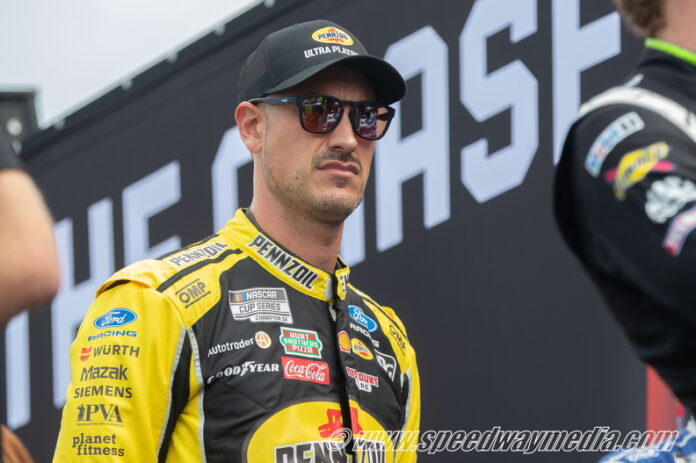
Joey Logano wins 35th Cup career pole at Gateway

Photo by John Knittel for SpeedwayMedia.com.

Joey Logano achieved the Busch Light Pole Award for the Enjoy Illinois 300 at World Wide Technology Raceway (Gateway) in Madison, Illinois, on Saturday, September 12.

The event’s starting lineup was determined through an on-track qualifying session that consisted of a single-car, single-lap qualifying format. During the session, each of the 36 competitors vying for 36 starting spots cycled around Gateway a single time to post the fastest lap amongst one another. The competitor who posted the fastest lap earned pole position.

During the session, Logano, who was the second-fastest competitor in practice on Saturday prior to qualifying, utilized his single-lap session to post a lap at 137.124 mph in 32.817 seconds. The lap was enough for the three-time NASCAR Cup Series champion from Middletown, Connecticut, to achieve the top-starting spot for the second Chase event of the 2026 Cup Series season.

With the pole, Logano notched his 35th Cup Series career pole for his 643rd series start, his first at Gateway and his second of the 2026 season, with his previous pole occurring at Phoenix Raceway in March. Logano, who is currently ranked in ninth place in the 2026 Chase standings, emphasized Gateway being a golden opportunity for him and his No. 22 Team Penske Ford team to draw themselves back within striking distance of competing for a championship, with Logano also attempting to become the first repeat Cup winner at Gateway for Sunday’s main event.

“The [No. 22] guys are doing a good job,” Logano said. “This is the racetrack that we had circled that we need to capitalize on. We know our points situation. We need to score max points here. Starting upfront will help that, for sure. I just got to manage the strategy. It’s definitely got a fast car. The Shell/Pennzoil Mustang, in race trim, was really good. Short run, long run. Obviously, qualifying was spectacular. Overall, proud of the team and proud of the effort and the chance that we got.”

Logano will share the front row with Kyle Larson, the reigning two-time Cup Series champion who is ranked in seventh place in the Chase standings. Larson posted the second-fastest lap during Saturday’s qualifying session at 135.980 mph in 33.093 seconds. 

Chasers Ryan Blaney, Christopher Bell, Chase Briscoe, Carson Hocevar, Bubba Wallace, Chase Elliott, Ty Gibbs and Denny Hamlin qualified in the top 10, respectively. Blaney, the 2023 Cup Series champion, was the fastest competitor in practice, and Bell is coming off his first victory of the 2026 season at Darlington Raceway for the Southern 500 and to commence the 2026 Chase. 

With 10 of 16 Chasers occupying the top-10 starting spots, the remaining Chasers, including Austin Cindric, Ryan Preece, Daniel Suarez, Tyler Reddick, Chris Buescher and William Byron, will start 13th, 14th, 15th, 18th, 21st and 24th, respectively. Notably, Alex Bowman and Zane Smith are the two-highest non-Chase qualifiers for Sunday’s main event as they will line up in 11th and 12th, respectively.

With 36 competitors vying for 36 starting spots, all made the main event.

Gateway – Qualifying Position, Best Speed, Best Time:

  1. Joey Logano, 137.124 mph, 32.817 seconds
  2. Kyle Larson, 135.980 mph, 33.093 seconds
  3. Ryan Blaney, 135.898 mph, 33.113 seconds
  4. Christopher Bell, 135.767 mph, 33.145 seconds
  5. Chase Briscoe, 135.546 mph, 33.199 seconds
  6. Carson Hocevar, 135.395 mph, 33.236 seconds
  7. Bubba Wallace, 135.355 mph, 33.246 seconds
  8. Chase Elliott, 135.302 mph, 33.259 seconds
  9. Ty Gibbs, 135.294 mph, 33.261 seconds
  10. Denny Hamlin, 134.086 mph, 33.312 seconds
  11. Alex Bowman, 134.702 mph, 33.407 seconds
  12. Zane Smith, 134.650 mph, 33.420 seconds
  13. Austin Cindric, 134.565 mph, 33.441 seconds
  14. Ryan Preece, 134.381 mph, 33..487 seconds
  15. Daniel Suarez, 134.360 mph, 33.492 seconds
  16. Josh Berry, 134.316 mph, 33.503 seconds
  17. AJ Allmendinger, 134.140 mph, 33.547 seconds
  18. Tyler Reddick, 134.100 mph, 33.557 seconds
  19. Connor Zilisch, 134.040 mph, 33.572 seconds
  20. Ross Chastain, 133.996 mph, 33.583 seconds
  21. Chris Buescher, 133.901 mph, 33.607 seconds
  22. Austin Dillon, 133.833 mph, 33.624 seconds
  23. Brad Keselowski, 133.575 mph, 33.689 seconds
  24. William Byron, 133.531 mph, 33.700 seconds
  25. Erik Jones, 133.480 mph, 33.713 seconds
  26. Cole Custer, 133.432 mph, 33.725 seconds
  27. Austin Hill, 133.262 mph, 33.768 seconds
  28. John Hunter Nemechek, 133.097 mph, 33.810 seconds
  29. Michael McDowell, 132.830 mph, 33.878 seconds
  30. Cody Ware, 132.642 mph, 33.926 seconds
  31. Noah Gragson, 132.610 mph, 33.934 seconds
  32. Ty Dillon, 132.575 mph, 33.943 seconds
  33. Riley Herbst, 132.112 mph, 34.062 seconds
  34. Todd Gilliland, 132.100 mph, 34.065 seconds
  35. Shane van Gisbergen, 131.633 mph, 34.186 seconds
  36. Ricky Stenhouse Jr., 131.521 mph, 34.215 seconds

*Bold indicates Chase Drivers

The 2026 Enjoy Illinois 300 at World Wide Technology Raceway is scheduled to occur on Sunday, September 13, at 3 p.m. ET on USA Network, MRN Radio, SiriusXM, and HBO MAX.

Carson Kvapil wins second consecutive O’Reilly pole at Gateway

Photo by Adam Lovelace for SpeedwayMedia.com.

Carson Kvapil notched the second NASCAR O’Reilly Auto Parts Series pole position of his career and in recent weeks for this year’s Nu Way 225 at World Wide Technology Raceway (Gateway) in Madison, Illinois, on Saturday, September 12.

The event’s starting lineup was determined through an on-track qualifying session that consisted of a single-car, single-lap qualifying format. During the session, each of the 36 competitors vying for 36 starting spots cycled around Gateway once to post the fastest lap amongst one another. The competitor who posted the fastest lap was awarded the pole position.

During the session, Kvapil, who was the fifth-fastest competitor in practice earlier on Saturday, utilized his one-lap session to post a lap at 133.825 mph in 33.626 seconds. The lap was enough for the 23-year-old native of Mooresville, North Carolina, to achieve his second consecutive O’Reilly pole in recent weeks. Kvapil, who is currently ranked in third place in the 2026 Chase standings, trails points leader and JR Motorsports’ teammate Justin Allgaier by 19 points as he continues his pursuit of his first championship over the final eight Chase events of the 2026 campaign.

Kvapil will share the front row with Jesse Love, the reigning O’Reilly Auto Parts Series champion. Love posted the second-fastest lap of the session at 133.412 mph in 33.730 seconds. Sheldon Creed, winner of last weekend’s Chase opener at Darlington Raceway, qualified in third place with a lap of 133.381 mph in 33.738 seconds. Corey Day, who is coming off an extended contract announcement with Hendrick Motorsports, qualified in fourth place with an exact lap of Creed’s.

Justin Allgaier, the 2024 O’Reilly Auto Parts Series champion and current Chase leader, will start in fifth place while Austin Hill, Harrison Burton, William Sawalich, Rajah Caruth, and Brent Crews will start in the top 10, respectively. Burton and Sawalich are the highest-two non-Chase competitors starting towards the front for Saturday night’s event at Gateway.

Notably, Taylor Gray, who was the fastest in practice, will start in 11th place. The remaining Chasers that include Sammy Smith, Brandon Jones, Sam Mayer and Parker Retzlaff will start 12th, 15th, 18th and 19th, respectively.

With 36 competitors vying for 36 starting spots, all made the main event.

Gateway – Qualifying Position, Best Speed, Best Time:

  1. Carson Kvapil, 133.825 mph, 33.626 seconds
  2. Jesse Love, 133.412 mph, 33.730 seconds
  3. Sheldon Creed, 133.381 mph, 33.738 seconds
  4. Corey Day, 133.381 mph, 33.738 seconds
  5. Justin Allgaier, 133.183 mph, 33.788 seconds
  6. Austin Hill, 133.128 mph, 33.802 seconds
  7. Harrison Burton, 133.116 mph, 33.805 seconds
  8. William Sawalich, 133.089 mph, 33.812 seconds
  9. Rajah Caruth, 132.951 mph, 33.847 seconds
  10. Brent Crews, 132.924 ph, 33.854 seconds
  11. Taylor Gray, 132.786 mph, 33.889 seconds
  12. Sammy Smith, 132.759 mph, 33.896 seconds
  13. Anthony Alfredo, 132.626 mph, 33.930 seconds
  14. Nick Sanchez, 132.482 mph, 33.967 seconds
  15. Brandon Jones, 132.221 mph, 34.034 seconds
  16. Kyle Sieg, 132.170 mph, 34.047 seconds
  17. Dean Thompson, 131.922 mph, 34.111 seconds
  18. Sam Mayer, 131.915 mph, 34.113 seconds
  19. Parker Retzlaff, 131.880 mph, 34.122 seconds
  20. Jeb Burton, 131.579 mph, 34.200 seconds
  21. Patrick Staropoli, 131.395 mph, 34.248 seconds
  22. Brennan Poole, 131.207 mph, 34.297 seconds
  23. Jeremy Clements, 130.875 mph, 34.384 seconds
  24. Blaine Perkins, 130.818 mph, 34.399 seconds
  25. Myatt Snider, 130.503 mph, 34.482 seconds
  26. Josh Bilicki, 130.344 mph, 34.524 seconds
  27. Lavar Scott, 130.167 mph, 34.571 seconds
  28. Ryan Sieg, 129.960 mph, 34.626 seconds
  29. Brad Perez, 129.676 mph, 34.702 seconds
  30. Josh Williams, 129.560 mph, 34.733 seconds
  31. Jordan Anderson, 129.522 mph, 34.743 seconds
  32. Mason Maggio, 129.463 mph, 34.759 seconds
  33. Ryan Ellis, 129.429 mph, 34.768 seconds
  34. Joey Gase, 128.656 mph, 34.977 seconds
  35. Austin J. Hill, 127.555 mph, 35.279 seconds
  36. Dawson Cram, 0.000 mph, 0.000 seconds

*Bold indicates Chase Drivers

The 2026 Nu Way 225 at World Wide Technology Raceway is scheduled to occur on Saturday, September 12, at 7:30 p.m. ET on the CW Network, MRN Radio and SiriusXM.

CHEVROLET NCS AT WWTR: Daniel Suarez Media Availability Quotes

NASCAR Cup Series
World Wide Technology Raceway
Team Chevy Driver Quotes
September 12, 2026

Daniel Suarez, driver of the No. 7 Spire Motorsports Chevrolet, met with the media in advance of the NASCAR Cup Series practice and qualifying session at World Wide Technology Raceway.

Media Availability Quotes:

After the race last week, you told me about the sense of frustration, maybe from an execution standpoint. Now that you’ve had time to sit back and look at it, what is it that you felt like you were missing?

“I mean, obviously we didn’t have practice, right? We didn’t have qualifying. We did our normal work during the week; simulator a couple times a week, and for some reason, we missed something in the process. Obviously, you know, we started the race up front. I mean, we’re leading lap one, and we didn’t have the balance or the speed to fire up. And obviously without practice, it was a little bit more difficult to get it right. But that’s not an excuse. There were other teams that hit it a little bit better than us. So there was a little bit of frustration there, that for some reason, we missed it a little bit.

And also, we had a lot of issues with radios. We had issues with brakes. We had issues with the engine. And when you’re having all these kind of situations and you can’t communicate; it’s already hard enough for me, you know, with my broken English, so when the radio is not working very good, it doesn’t make it any more fun. So there were just some execution issues because of lack of communication from the radios. And then just to put the cherry on top of the cake, the last pit stop. My guys did an amazing job all night, and the very last one was a 30-second pit stop or something like that. It wasn’t good. We just didn’t execute well enough. It wasn’t a Chase performance, in my mind, so we just need to do better. That’s it. You know, we learn from a few mistakes, and we are ready to give it another shot.”

To that point, you’ve driven for a lot of organizations that are, I would argue, more buttoned up, certainly, than the Jeff Dickerson model, whether it’s Coach (Joe Gibbs) or Justin (Marks). How different is the culture and atmosphere, for good, bad or indifferent, racing for Jeff compared to other places you’ve been?

“Yeah, you know, Jeff (Dickerson), he’s a racer. You know, he loves racing. He’s always talking about dirt racing, midgets, trucks or the O’Reilly’s Series. He’s a racer. He’s a racer that happens to be an owner. So he’s just very driven, you know? He’s very, very driven. It’s a little bit different, you know, the dynamic. But he’s very passionate. He’s very loyal to his people. He has his way of doing things, and I respect that. And obviously, you know, he has made this organization successful to this point.

Obviously, we still have a long ways to go. We have to continue to grow, and that’s what we’re aiming for. This is the conversation that I have had with some people, is that everything that has been happening is just a distraction, you know? Like, right now, I should be answering questions about how we’re going to be faster, how we’re going to beat the Toyota’s, how we’re going to beat the Penske cars. And here we are talking about these two guys, you know, messing each other up. It’s part of it. To me, it’s just a distraction that shouldn’t be happening.”

Daniel, a stat came out this week that you are the top average finisher for Chevrolet at 14.69. What does that mean to you in your first year with this team, when you’re going against drivers such as Hendrick Motorsports and all that, who also have the Bowtie banner?

“Not too bad for a guy that didn’t have a ride last year. I guess I just remember how to drive now (laughs).

But no, it’s good. I mean, obviously the team has been doing a good job. I’m very, very proud of all the men and women that Spire Motorsports for the way that we have executed things. We haven’t had the fastest cars, you know, every single week, but we have had good speed; good enough to win a race and good enough to be on the front row several times. But we keep pushing. We keep pushing to get better and better. Having an average of 14.69, that’s not the goal. To be able to win the championship, it’s going to have to be better than that. So that’s what we’re aiming for, and that’s where my mind is at. You know, how can we make this organization better? Are we good? Yes, we are good. But good, to me, is not good enough. You know, we want to be better. And for that, we have to button up a few things. We have to have everyone pulling the train in the same direction, which I believe that we are, with a few distractions here and there, obviously. But I believe that we are pulling in the same direction.”

Now that we’re in the Chase, does the anxiety and stress diminish for you now that elimination rounds have been eliminated?

“You know, that’s a great question. I think it does a little bit, just because you’re not thinking about short-term results. You’re thinking about 10 weeks, you know? The champion is going to be determined by who can do the best job – not here, not next week, not last week – but the best average running and finish in the next 10 weeks. So, yeah, I feel like it relaxes a little bit of things. But, with that being said, once we get to, I would say halfway, the urgency is going to start picking up for several teams. So, we just have to be smart. In my mind, we have to just control what we can control, execute to the best of our abilities and try to maximize our potential. You know, that’s the main goal. It’s not a secret that the Toyota’s are very fast right now, and we’re working very hard to try to catch them. But we also know that that’s not going to happen overnight, just by clicking on something. We have to work together. We have to get better. We have to improve our simulation, our processes and everything that we’re doing. We have work to do, but we’re up for the challenge.”

Looking at your execution this week, leaving Darlington, you’re over a race for the points behind the points leader. Do you all have a certain set number of points that you all are trying to chase leaving this weekend to feel like you all have a shot moving forward?

“The thing is that — man, we can talk about points a lot. We can talk about what we need to do points-wise. And that’s good. I’m okay with that. But at the end of the day, you have to control what you can control, and I can only control one car out there. You know, I cannot control the 11, I cannot control the 12, whoever is up front. I can only control one car, and my job is to maximize the potential of the 7 car. And if that means finishing fifth, that’s fine. And if that means finishing first, that’s amazing. But my job is that. So I have to continue to focus on what I can control and try to let the points take care of themselves, you know, because at the end of the day, the points is a consequence, the way I see it. The points are a consequence of the results that you have on the track. And if we do our job on the track, execute and have the speed, the points are going to take care of themselves. Hopefully that’s good enough for us to have a shot by the end of October, beginning of November.”

About General Motors

General Motors (NYSE:GM) is driving the future of transportation, leveraging advanced technology to build safer, smarter, and lower emission cars, trucks, and SUVs. GM’s Buick, Cadillac, Chevrolet, and GMC brands offer a broad portfolio of innovative gasoline-powered vehicles and the industry’s widest range of EVs, as we move to an all-electric future.

GM Motorsports, including the Cadillac Formula 1® Team develops and proves advanced technologies in the most demanding environments, accelerating innovation in performance, safety, efficiency, and electrification for its production vehicles. Cadillac Racing is one of the leading manufacturers in the IMSA and FIA World Endurance Championships (WEC). Chevrolet competes in single seaters in the US IndyCar series, and in NASCAR with multiple team partners and drivers. Corvette customer teams compete in GT series across the globe including IMSA and WEC. Learn more at GM.com.

TOYOTA RACING – NCS Gateway Quotes – Denny Hamlin – 09.12.26

TOYOTA RACING – Denny Hamlin
NASCAR Cup Series Quotes

MADISON, Ill. (September 12, 2026) – Joe Gibbs Racing driver Denny Hamlin was made available to the media on Saturday prior to the NASCAR Cup Series race from World Wide Technology Raceway at Gateway.

DENNY HAMLIN, No. 11 King’s Hawaiian Cinnamon Rolls Toyota Camry XSE, Joe Gibbs Racing

How important is it to continue your season-long consistency as you battle for a championship?

“I mean, you got to stay on the track. It certainly helps your cause like last week when you’ve got issues, if you can keep it on the track, keep it on the lead lap. It gives you an opportunity to kind of make up for those tough days if things break your way towards the end. So, it definitely was a crucial part of where we ended up in the regular season.”

You have experience going through the 10-race Chase. Does that matter?

“No, it doesn’t really matter. This sport is week to week and every week it’s just a new reset. So, there’s not a whole lot numbers wise that correlate to what happened last week or what happened 10 years ago, correlates today. I think that it’s good for veteran patience, but that’s about it.”

Do we need to look at the metric or go back to the random draw?

“The random stuff, no. Absolutely not. I mean, could you imagine going to the finale and two guys battling for a championship, one draws pill one, like that’s horrible. Random? Absolutely not. You got to earn your way. If you want to do 50-50, that’s fine, because we’re 20 some races in. If you’re buried in the point, it’s not because the metric did it. It’s because you didn’t perform well.”

If it rains, how should you set it?

“If it rains, it’s difficult because, last week, kicked off the Chase, and it also was after a speedway, and we all know speedways can get very random, right? Yeah, I don’t know. We don’t want to make it too complicated for the fans that at this racetrack, you set your metric one way, another way, you do it, I don’t know, if you just do 50% or more of where you are in the standings, then I think that that kind of will fix itself in the long run.”

Do you think your race should reflect the complete race and stage points should continue?

“I mean, come on, man. Now we’re arguing something different, like, just stop complaining for one week. That’s what it was built around. We worked with NASCAR on this for quite a while and we came up with the stages, then we came up with, how are we going to reward it? And the reason we did it that way is because it just didn’t seem right for someone to dominate the day, blow an engine with 20 to go, and it was like they were never there, right? So, the reason that they gave points, the way they did, and reward them at the, at the amount that they did at certain points of the race is to give the reward to the greatness of someone that goes and runs the table. That’s what’s going to be great about this format is that even with four or five races out and someone’s 100 points out, it just takes a couple of runnings of the table and you’re there. I think that it’s going to make it far more compelling, and it’s also going to reward those that perform great for an extended period of time. I think that the amount that the stages are rewarded are fair to the total amount that you get for the end of the race.”

Jeff Dickerson responded to your comments this week. How would you respond to his thoughts? Was it fair?

“I think it was somewhat fair in all. I don’t really have a lot more to answer that, but it was somewhat fair.”

How important are wins in the Chase?

“I don’t know. You don’t know whether you have to win until you have to win. I mean, you just really don’t know, we don’t know the implications of last week. We won’t know them until the after Homestead, right? We don’t know, and we’re kind of looking in the short term, and it’s a big gasp of air, like, oh my gosh, we just lost half our lead, but it’s seven days later, we’re going to try to get more points, right? So, it’s very week to week and I think that any things that happen in each one of these 10 weeks, we will not know the implications till it’s all said and done. You just got to play it week by week and get all the points you can every week. I feel like given the circumstances of last week for us, we maximized as good as we could, the damage that had, but someone’s going to win this week. That person’s going to gain a lot of points, and we’ll be talking about them as part of the championship picture if it’s not me. We always live in the now, but this is all part of the bigger picture.”

What can you improve at this track despite your consistent success here?

“Yeah, I can’t rely on the results alone. I think that when I dug into this racetrack this week, I think that while we won, we finished second, a few other years. I don’t know that we were that car on pace, right? I think we did a really good job executing. I had some fortunate breaks. I had some good restarts, and then you end up winning the race, and so I don’t think that we had that, we had race winning pace when it mattered, but I don’t think we’ve been as good as the results have shown. So, there was a lot to dig into this week and try to get better at and we’ll try to start that today and go practice.”

What are you going to be looking for in this practice session?

“I would think the first part is whether we guessed right on with the aero package changes for this racetrack. It you look at kind of where we struggled this year, it’s been, when we went to this package, at a track for the first time. Bristol, we were not that great, and quite a few others. I can name a few others where it was, we just missed it. Darlington certainly, in the first race, we missed it. So hopefully we’ve learned from that and we’ll tell pretty early in practice whether our guess on the setup is the correct direction for what this racetrack needs. Hopefully we’re in the ballpark to where we can tweak once we get here, right? I mean, there are certain parts and pieces of the car that you can’t change, and we tried to do our best to make sure that we were pretty versatile when we got here.”

Has there been any talks about the superspeedway package after Daytona?

“No, I mean, I’m always in contact with them about different subjects and whatnot. I think you let them kind of guide where that goes. I’ve given my input on it, and I certainly think that they’ll let you guys know sooner than later on what’s the come for Talladega. I would I would certainly think that they were not displeased with what they saw, and there’s certainly things that they thought that they could see that could be a little bit better.”

When you see the Brad Keselowski and Carson Hocevar posters? Is that amusing to you?

“Sure. As long as it’s not you, it’s always amusing (laughter). I mean, it’s promoters jobs are to promote, and they do what they see fit for that.”

Does the anxiety or stress diminish now that the rounds have been eliminated?

“Yeah, I would say so. Certainly, when you’re on the cusp of being around that cut line, in a cutoff race, yeah, those weeks are definitely stressful, but I’ll be honest with you, every week so far, and we’ve only two weeks into this, but yeah, every week I’m treating it like, it’s the last race, so, I mean, yeah, I think it’s more 10 weeks of the anxiety versus the only three times, and then you got your finale. I think that the intensity and the anxiety for 16 guys is here every week for this format.”

About Toyota

Toyota (NYSE:TM) has been a part of the cultural fabric in North America for nearly 70 years, and is committed to advancing sustainable, next-generation mobility through our Toyota and Lexus brands, plus our more than 1,800 dealerships.

Toyota directly employs nearly 64,000 people in North America who have contributed to the design, engineering, and assembly of over 50 million cars and trucks at our 14 manufacturing plants. In 2025, Toyota’s plant in North Carolina began to assemble automotive batteries for electrified vehicles.

For more information about Toyota, visit www.ToyotaNewsroom.com.

CHEVROLET NCS AT WWTR: Kyle Larson Media Availability Quotes

NASCAR Cup Series
World Wide Technology Raceway
Team Chevy Driver Quotes
September 12, 2026

Kyle Larson, driver of the No. 5 Hendrick Motorsports Chevrolet, met with the media in advance of the NASCAR Cup Series practice and qualifying session at World Wide Technology Raceway.

Media Availability Quotes:

Can you just reflect on the re-signing of Corey Day?

“Yeah, I thought that was good news, for sure. Obviously, I think everybody had questions of what was going to happen with his future after signing Connor (Zilisch). But yeah, just happy to know that Hendrick Motorsports sees a place for him in the organization down the road and is willing to continue on with him. It’s been great to see his growth in the stock car racing over the last couple of years. I feel like he’s grown a lot, both on the track and off, and still has a lot of room to go. So, yeah, it’s exciting stuff, and it was cool to be there for the re-signing and get to witness that. Just proud of him and thankful for Hendrick Motorsports.”

How much progress do you feel like Hendrick Motorsports has made here (at World Wide Technology Raceway) over the last couple of years?

“Yeah, well, I feel like last year we made a huge step. We didn’t get the finish that we necessarily deserved in a way, but I felt like we had maybe the fastest car in the race last year, where typically when we come here, our finishes are way better than where we run. Every year, except for last year, we’re a 25th-place car and somehow finish fourth with it. So, yeah, last year was fun to have a good practice, qualify well, lead laps and pass people. And then, yeah, ultimately I think we finished 12th, but I left more encouraged last year finishing 12th than I had when we had finished third or fourth, whatever the other finishes were.”

I’m guessing you’ve seen Brad Perez’s scheme this weekend? What do you think about that?

“Apparently I’m getting old (laughs). But yeah, that was pretty cool. I was just watching the practice. I didn’t know they were doing that. So, yeah, it looks like it’s identical as you can get to it, as well. That was neat. They showed some highlights there right before I came in here from my first win in Michigan, so that brought back some good memories. So, yeah, hopefully we see him have a good night.”

Last week, you were on the bad side of the qualifying metric when it got rained out, and that kind of cost you guys a chance, for as good as a car you had, of getting stage one points. So this might influence your answer, but when you’ve thought about the way they do that, do you think there’s a better way to do it, whether it’s a qualifying draw or it’s lining up the field by points if there’s a rain out? Any thoughts on that?

“Yeah, well I think the whole metric, if I’m not mistaken, came about during the COVID era when there was no qualifying. So I think it was a good way to shake the field up back then and try to make it fair where it wasn’t the same starting lineup every week based off points.

So, yeah, I mean, selfishly, after a weekend like last, I wish we would just go back to lining up off points because we don’t see the metric kind of come into play. I mean, you can have the metric to set the qualifying order, but I think, you know, just lining up the field based off points would be good, especially with the Chase, this point format and every point being so important. It was kind of crappy to feel like we were starting off at a disadvantage last week, and we raced our butts off to just miss stage one points.

But I mean, you can look at it both ways. We could have done better at Daytona to set ourselves up better for the starting position. I think I’m curious what other teams think, but I think setting the metric for qualifying order is okay. But I think if it rains out, I would say I’d be for going back to just starting off points.”

To your point about how valuable stage points are; I mean, we saw last week both Denny (Hamlin) and Justin (Allgaier) in their respective series, they did not have good results. But because they scored a lot of stage points, they preserved their championship lead. On one hand, that’s reflective of an entire race’s performance. On the other hand, some would argue that maybe the results should matter more. I don’t know where I stand on that, but where do you stand on that? Are stage points too valuable?

“Yeah, I don’t know. I think as the Chase has become a thing now — yeah, it’s like stage points are even that much more important than they were in the regular season. So, yeah, you could look at it from both sides and be okay or not okay with either way about it. But yeah, I think this format really rewards consistency. But I guess it rewards consistency throughout the whole race, where I think if we really wanted to get back to the authentic part of our sport that we used to have, I think going off of just finishes would be the most authentic way to crown a champion at the end of the year. And this is coming from somebody who is up there in stage points, as well, throughout the season. Without stage points, we would be further down. I don’t even know if we’d be in the Chase without stage points.

So, yeah, I think I’m open to it. And I don’t know if they would make a change or not while still having stages, but yeah, I think stages, they seem to just be crazy important, which it is what it is. But yeah, last week I was like — man, I had an awesome night. I finished second in the second stage, finished fifth in the race and gained six points, which is insane. So, yeah, it’s crazy. It’s like three races within one race.”

For Las Vegas, you’re taking on the role of ‘Tiny Kyle’, throwing it back to Kyle Busch. What do you think about that? How did that all come about? I’m assuming you’re going to be quite honored to be able to run that…

“Yeah, absolutely honored to be able to run his scheme. We were originally wanting to do the Bristol night race. But when Ty (Gibbs) and Joe Gibbs Racing came out with their scheme, I felt like it would be weird to have two Kyle Busch throwbacks at one event, so we pushed ours down the road.

Kyle (Busch) meant a lot to all of us, but especially me. I had a lot of fun battles with him. For him to have raced at Hendrick Motorsports in the No. 5 car, it was really important to me to try to be able to run that scheme. So, I asked Samantha (Busch) if we could do it, and she was all for it, and so was Hendrick Cars. So, thankful for that. And, yeah, hopefully we can go and have a good run in his hometown and try to get a win.”

I know you mentioned Darlington. But, I mean, you look out into three of the last four weeks, in general, for you guys, those were some tracks where you’ve struggled at over the past couple years. So do you feel like maybe the tide’s shifting? Are you guys starting to really click and find what you need at the most important time of the year?

“Well, I feel like our speed has been similar the last few months. You know, Darlington (Raceway) was definitely a gain, for sure, from where we’ve been the last two times there. I thought Darlington went as good as it normally does for us, outside of those two, where were able to pass cars easily, lead laps and have a shot at a win. But yeah, I mean, just based off the last few years, I thought it was a huge improvement, so that was good and definitely helps the confidence as we go forward.

And then looking at how we ran here last year compared to other years, I feel like we could hopefully get a good string of races here to start the Chase, if everything goes right. And, yeah, just keep fighting along. It’s a long few months, it seems, of the post-season, so it takes a lot of consistency, which is really hard to do in this era of racing. But yeah, I think our team is always capable of performing at a high level, and if we can get our cars to match, I think we can be dangerous.

But yeah, it’s hard to look at one weekend and say that it has turned around for us for the rest of the year, but we’ll see. I’m excited about practice and qualifying, and then hopefully, we have a good race.”

I know that you mentioned, obviously, the strides you made here last year, but more in particular, what are the biggest challenges, I guess you could say, when it comes to this racetrack, considering track position is very important and weather difference, as well?

“Yeah, I think just speaking on where I felt like we’ve struggled here before, was that I just always felt so on edge. Like I could not touch the throttle without feeling like I’m just going to twitch. And, yeah, I can’t carry any pace on entry. We got to test here last year and went through a lot of different packages. I can’t remember who was here with us, but maybe (Brad) Keselowski and somebody else who I thought were pretty good here in other races, so w had a good gauge off of them. And yeah, we showed up and was really fast and did all those things better. So, yeah, hopefully that’s going to translate to this aero and horsepower package. But, you know, that’s still yet to be seen until we get out there.”

How much of a nuisance is it when you have your fellow competitors, you know, potentially teasing or flirting with the idea of intentional contact, especially at this time of the year? Obviously, I’m talking about the 6 and the 77. Depending on timing, you know, you can’t really time when they potentially do something about it, and then you end up collateral damage in what could be intentional contact that they’ve been discussing over the last few weeks?

“I have no thought on that, really. Obviously, if Brad (Keselowski) is around him, I would keep my eyes peeled a little bit more. But more just like when you’re behind it, you’re like hoping something cool happens (laughs) and you don’t get caught up in it. But, yeah, it’d be funny.”

About General Motors

General Motors (NYSE:GM) is driving the future of transportation, leveraging advanced technology to build safer, smarter, and lower emission cars, trucks, and SUVs. GM’s Buick, Cadillac, Chevrolet, and GMC brands offer a broad portfolio of innovative gasoline-powered vehicles and the industry’s widest range of EVs, as we move to an all-electric future.

GM Motorsports, including the Cadillac Formula 1® Team develops and proves advanced technologies in the most demanding environments, accelerating innovation in performance, safety, efficiency, and electrification for its production vehicles. Cadillac Racing is one of the leading manufacturers in the IMSA and FIA World Endurance Championships (WEC). Chevrolet competes in single seaters in the US IndyCar series, and in NASCAR with multiple team partners and drivers. Corvette customer teams compete in GT series across the globe including IMSA and WEC. Learn more at GM.com.
What an Experienced Car Accident Lawyer Can Do to Help You Win

Photo by depositphotos at https://depositphotos.com/

A serious collision on crowded South Bay routes like Sepulveda Boulevard or near the Rosecrans corridor can instantly upend your life with severe injuries, mounting medical bills, and sudden financial strain. Navigating the aftermath of a local crash involves dealing with aggressive insurance adjusters who often push for recorded statements before the true extent of your injuries is clear. A professional legal approach ensures that traffic camera data is secured, liability is established, and your recovery is protected against premature, lowball settlement offers.

Evidence can disappear soon after a collision. Vehicle damage changes after repairs, witnesses forget details, and insurers review statements before an injured person knows which facts matter. An experienced car accident lawyer in Manhattan Beach can preserve photographs, obtain incident reports, locate witnesses, and organize medical records before gaps weaken the claim. This early work gives the case a factual foundation and keeps negotiations focused on documented losses, not speculation.

Investigating How the Crash Happened

A lawyer examines the collision scene, vehicle damage, traffic signals, road conditions, and witness accounts. This investigation helps establish who caused the crash and whether another factor contributed to the injuries.

A police report provides useful information, but it does not decide liability by itself. An attorney compares the report with photographs, medical records, vehicle positions, and statements from people who witnessed the collision.

This review also clarifies disputed facts. When drivers give different accounts, physical evidence and independent testimony help determine which version fits the available record.

Handling Insurance Companies

Insurance adjusters protect their employer’s financial interests. They can request recorded statements, broad medical authorizations, or a quick settlement before the full effects of an injury become clear.

An attorney handles those communications and compares settlement proposals with the available evidence. This prevents an injured person from accepting payment that fails to cover medical treatment, lost income, vehicle damage, or continuing limitations.

Clear documentation changes the discussion. Medical bills, physician opinions, wage records, repair estimates, and photographs give an insurer concrete information to review.

Calculating the Full Value of a Claim

A car accident claim includes more than emergency treatment and immediate repair costs. A lawyer reviews past medical expenses, expected care, missed work, reduced earning ability, and property damage.

Serious injuries can affect a person’s ability to return to the same job or maintain a normal schedule. Medical opinions and employment records connect those effects to the collision.

Pain and reduced quality of life also require careful documentation. Treatment notes, rehabilitation records, and testimony about daily limitations show how the injury affects ordinary activities.

Protecting Medical Evidence

Medical treatment creates the record connecting an injury to the accident. An attorney reviews that record for gaps, inconsistent descriptions, or missing information that an insurer could use against the claim.

Prompt medical care matters because some injuries worsen after the initial collision. Follow-up visits, diagnostic testing, physical therapy, and specialist evaluations document the course of recovery.

A lawyer does not replace a doctor or direct medical treatment. Legal counsel helps collect and present relevant medical evidence accurately during the claim.

Negotiating From a Position of Evidence

Settlement negotiations work best when a demand clearly explains liability, injuries, expenses, and future losses. An experienced attorney prepares that explanation and responds to the insurer’s arguments.

The negotiation process also requires patience and judgment. A low offer can indicate that the insurer disputes liability, questions medical treatment, or undervalues future losses.

If negotiations fail, the attorney evaluates whether filing a lawsuit serves the client’s interests. Preparing for litigation often improves negotiations because the opposing side must address organized evidence and defined legal arguments.

Avoiding Procedural Mistakes

Personal injury claims involve deadlines, notice requirements, insurance rules, and court procedures. Missing a filing deadline or submitting incomplete information can reduce recovery or prevent a claim from moving forward.

An attorney tracks these requirements so the injured person can focus on treatment. Legal counsel also identifies potentially responsible parties and available insurance coverage before finalizing a settlement.

That review matters in collisions involving multiple vehicles, commercial drivers, unsafe roads, or disputed fault. Each situation requires a separate analysis of the evidence and applicable rules.

Preparing for Trial When Necessary

Most car accident claims resolve through negotiation, but a lawyer must prepare the case as though trial remains possible. Preparation includes organizing exhibits, interviewing witnesses, reviewing medical testimony, and developing a clear liability theory.

Trial preparation exposes weaknesses early. It also gives the client a realistic view of the evidence, possible outcomes, and the costs of continuing the dispute.

A courtroom presentation must connect the crash to the injuries and financial losses. The attorney uses testimony and records to explain that connection without relying on speculation.

Conclusion

After a crash, the next step is to preserve every document and seek legal guidance before giving a recorded statement or accepting a settlement. An experienced lawyer connects medical evidence, employment records, repair costs, and testimony into a claim that reflects the accident’s full effects. The process begins with a prompt case review, accurate records, and clear communication about recovery. These steps protect your legal options while important evidence remains available.

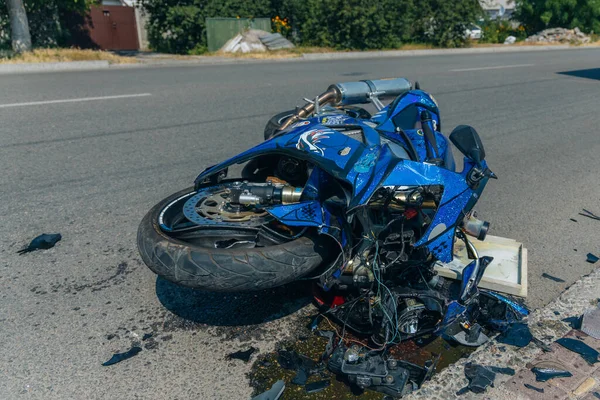
How a Motorcycle Accident Lawyer Proves You Were Not at Fault

Photo by depositphotos at https://depositphotos.com/

Motorcycle crashes often create immediate disputes about who caused the collision. Drivers may blame the rider, insurers may question the injuries, and physical evidence can disappear quickly. A motorcycle accident lawyer builds a case by connecting reliable evidence to the traffic rules that governed the crash. The goal is to show what happened, identify the negligent party, and protect the injured rider’s claim under Virginia law. The process begins with a focused investigation.

A Richmond motorcycle accident lawyer examines the collision scene, vehicle damage, traffic signals, road conditions, and available video footage. Police reports and witness statements provide early accounts, but they do not always capture every detail. A lawyer compares those accounts with photographs, medical records, electronic data, and the positions of the vehicles. That evidence helps establish the facts before assumptions about the rider become accepted as truth.

Establishing The Other Driver’s Negligence

Virginia negligence claims generally require proof that another person owed a duty of care, breached that duty, and caused the crash. Drivers must follow traffic laws, maintain control, watch for motorcycles, and yield when required. A lawyer identifies the specific driving error instead of relying on a general allegation that the other driver acted carelessly.

Common examples include an unsafe lane change, failure to yield, distracted driving, speeding, impaired driving, and a left-turn collision. A driver who opens a door into an approaching motorcycle can also cause a crash. The evidence must connect that conduct to the collision and the rider’s injuries.

Using Physical And Digital Evidence

Photographs can show skid marks, debris, vehicle positions, damaged parts, lane markings, and sight obstructions. Scene measurements help determine distances, travel paths, and whether a driver had enough time to see the motorcycle. Weather and lighting records can also clarify visibility during the incident.

Traffic cameras, business security footage, helmet cameras, and vehicle recording systems sometimes capture the moments before impact. Phone records can help establish whether a driver was texting or handling a device. A lawyer preserves these materials quickly because recordings can be overwritten and damaged vehicles can be repaired or sold.

Interviewing Witnesses

Independent witnesses often provide facts that differ from the statements given by involved drivers. A witness might describe a vehicle accelerating, drifting across a lane, failing to signal, or turning across the motorcycle’s path. Witnesses can also explain traffic conditions, visibility, and the rider’s position before impact.

A lawyer records contact information and obtains detailed statements while memories remain fresh. The lawyer then compares those accounts with photographs, vehicle damage, and the police report. Consistent testimony strengthens the explanation of how the crash occurred.

Working With Accident Reconstruction Professionals

Some collisions require technical analysis. An accident reconstruction professional can examine impact points, skid marks, vehicle damage, roadway geometry, and available video. That analysis can show vehicle speeds, travel paths, reaction times, and the location of each vehicle before impact.

The professional’s conclusions must rest on reliable evidence. A lawyer uses reconstruction testimony when the crash involves disputed signals, multiple impacts, limited visibility, or conflicting accounts. The analysis becomes especially useful when an insurer claims that the rider caused the collision without supporting physical proof.

Addressing Virginia’s Contributory Negligence Rule

Virginia follows a contributory negligence rule. If an injured person contributed to the crash, the defense can argue that the person should receive no recovery. Insurance companies often use this rule to shift attention toward helmet use, speed, lane position, or a claimed traffic violation.

A lawyer tests each allegation against the evidence. A traffic mistake does not automatically prove that the rider caused the collision. The central question is whether the rider’s conduct contributed to the crash under the facts supported by the investigation.

Responding To Insurance Tactics

An insurer may rely on an early statement, a disputed police report, or photographs taken without proper context. Adjusters can also argue that a motorcycle was difficult to see or that the rider assumed unusual risks. These arguments require a factual response rather than speculation.

A lawyer organizes the evidence into a clear liability presentation. The demand typically explains the collision, identifies the negligent conduct, documents the injuries, and calculates the claimed losses. If negotiations fail, the same evidence supports a personal injury lawsuit.

Preserving Evidence After A Crash

The injured rider should seek medical care, report the collision, photograph the scene and vehicles, and keep damaged equipment. Medical instructions should be followed, and communications with insurers should remain factual. Social media posts, recorded statements, and guesses about speed can create avoidable disputes.

Prompt legal attention also helps preserve video, inspect vehicles, locate witnesses, and request relevant records. Evidence becomes harder to obtain as time passes, so early action protects the facts needed to prove liability.

Conclusion

A motorcycle accident lawyer proves a rider was not at fault by building a documented connection between the other party’s conduct, the collision, and the resulting losses. Scene evidence, witness accounts, video, reconstruction analysis, and medical records each answer a different part of the liability question. After a Richmond crash, the rider should preserve photographs, equipment, records, and insurer communications, then seek legal advice before accepting blame or signing a settlement.

What an Experienced Criminal Defense Attorney Brings to Court

Photo by depositphotos at https://depositphotos.com/

Kirkland’s growing community, busy roadways, and proximity to major Eastside centers make it a place where residents can encounter a wide range of legal issues, including serious criminal allegations. When a charge threatens someone’s freedom, reputation, or future opportunities, simply appearing in court is rarely enough; the defense must be deliberate from the outset. Courtrooms operate according to rules and expectations that can be difficult to navigate without someone who understands how to turn preparation into effective advocacy. 

An attorney’s role extends beyond speaking on a client’s behalf—it involves making informed decisions under pressure, responding strategically to the prosecution, and protecting the client’s interests throughout the proceedings. For anyone confronting criminal accusations, choosing an experienced criminal defense attorney in Redmond can provide the steady legal guidance needed when the consequences of a case reach far beyond a single hearing.

Case Preparation Before the Hearing

Criminal defense attorneys examine the police report, witness statements, charging documents, and available physical evidence before entering court. That review helps reveal inconsistencies, missing information, unlawful searches, or improper police procedures. Counsel also explains what the charge means, what penalties apply, and which decisions require immediate attention. Preparation includes developing a defense strategy that fits the facts. An attorney might file a motion to dismiss, challenge evidence, seek reduced charges, or prepare for trial. The correct approach depends on the evidence, the defendant’s history, and the prosecution’s position.

Knowledge of Court Procedures

Court procedure controls when arguments are raised and how evidence enters the record. An experienced attorney understands filing deadlines, hearing requirements, discovery rules, and courtroom expectations. That knowledge prevents avoidable mistakes that could weaken a defense. A defendant also receives preparation for each appearance. Counsel explains where to stand, how to answer questions, and what conduct the judge expects. This guidance helps the defendant avoid statements or actions that prosecutors could later use against them.

Prosecutors must prove every required element of a criminal charge beyond a reasonable doubt. Defense counsel tests whether the available evidence meets that standard. A careful review can expose unreliable identification, contradictory testimony, incomplete records, or unsupported assumptions. An attorney also examines how officers obtained evidence. A search without proper legal authority, an involuntary statement, or an improper identification procedure can create grounds for exclusion. When a court excludes important evidence, the prosecution’s case can weaken or end.

Negotiation and Courtroom Advocacy

Many criminal cases are resolved through negotiations rather than a trial. An experienced attorney uses the evidence and legal issues to seek reduced charges, lighter penalties, or a favorable agreement. Counsel also explains the consequences of accepting or rejecting a proposed resolution. When negotiations fail, courtroom advocacy becomes essential. The attorney gives opening and closing arguments, questions witnesses, objects to improper evidence, and presents a defense supported by the record. Clear advocacy keeps the case focused on facts instead of speculation.

Experience With Washington Laws

Criminal defense requires knowledge of Washington law and the charge involved. A defense attorney may handle misdemeanor and felony cases involving DUI, drug crimes, domestic violence, sex crimes, homicide, property offenses, juvenile offenses, or federal charges. Each category carries different legal issues and possible penalties. Misdemeanor cases can involve fines and jail time, while felony convictions can create longer incarceration, supervision, and lasting limits on personal and professional opportunities. An attorney identifies those consequences before the defendant makes a major decision.

Communication During the Case

Good representation includes timely, direct communication. The attorney should explain court dates, filings, evidence, negotiations, and possible outcomes in language the defendant understands. That information allows the defendant to participate in decisions with a clear view of the risks. Communication also helps counsel build an accurate defense. Small details about witnesses, locations, messages, or police contact can change how the evidence is evaluated. The defendant’s account gives the attorney facts that official reports often omit.

Conclusion

An experienced criminal defense attorney brings preparation, courtroom knowledge, evidence analysis, negotiation skills, and focused advocacy to a criminal case. Those abilities matter before the first hearing and continue through trial or resolution. Anyone facing an investigation or charge should avoid discussing the facts with police or prosecutors before receiving legal advice. The next practical step is to schedule a consultation, gather charging documents, and provide counsel with a complete, honest account of what happened.