Home Blog Page 34

Team Penske NASCAR Cup Series Race Report – Las Vegas 1

Pennzoil 400 Presented By Jiffy Lube
Las Vegas, Nev. – March 15, 2026

AUSTIN CINDRIC No. 2 DISCOUNT TIRE FORD MUSTANG DARK HORSE
START: 31ST STAGE 1: 17TH STAGE 2: 10TH FINISH: 19TH POINTS: 30TH
RACE RUNDOWN: Austin Cindric started 31st and finished 19th in Sunday’s Pennzoil 400 at Las Vegas Motor Speedway after steadily working his way forward throughout the 267-lap event in the No. 2 Discount Tire Ford Mustang Dark Horse. After taking the green flag from the 31st position, Cindric wasted little time making progress through the field. By Lap 20 he had already advanced to 21st place and told the team over the radio that he was happy with the car. Just a few laps later he cracked the top 20 as the No. 2 team began to settle into a rhythm during the opening run. Cindric made his first pit stop of the afternoon under green on Lap 33 for four tires and fuel. As the opening stage progressed, he reported the car had become a little freer, but he continued to move forward. By the end of Stage 1 he had climbed to 17th place and radioed that the car was still too free. The team responded with four tires, fuel and an air pressure adjustment during the stage break. Restarting 14th to begin Stage 2, Cindric quickly worked his way into the top 10 and maintained solid pace with the leaders. Twenty-seven laps into the stage he reported the car had shifted to the tight side while running eighth. He returned to pit road on Lap 121 under green for four tires and fuel and cycled back into the top 10 after the round of pit stops. Cindric finished Stage 2 in 10th place and crew chief Brian Wilson opted to free the car up slightly and pull some air out of the right-front tire during the stage break while putting on four fresh tires. The Discount Tire machine restarted 13th for the final segment, but the balance shifted tighter on the next long run. With 79 laps remaining, Cindric was running 15th and reported the car was “just as tight this run if not tighter.” A green-flag pit stop with 57 laps remaining proved costly when a caution came out while Cindric was on pit road, trapping him a lap down. He received the wave-around and was able to return to the lead lap, restarting 19th with 50 laps remaining. Despite the setback, Cindric was able to hold position over the remaining laps and ultimately brought the Discount Tire Ford Mustang Dark Horse home with a 19th-place finish.

CINDRIC’S THOUGHTS: “Yeah, a lot, lot to digest from the race. We knew we were better than where we were in qualifying, just due to the draw. We made quick work and got ourselves within the top 10 by Stage 2, all under green flags. So our Discount Tire Ford was really strong. The guys made some good adjustments overnight and in the stages. And, yeah, ultimately, the caution coming out during the pit cycle put us behind with not enough laps to recover. It’s nice to not be in a wreck for the first time this year. I’m at least happy with a race finish that helps add to some of the points we need.”

RYAN BLANEY No. 12 MENARDS/PENNZOIL FORD MUSTANG DARK HORSE
START: 6TH STAGE 1: 9TH STAGE 2: 11TH FINISH: 16TH POINTS: 3RD
RACE RUNDOWN: Ryan Blaney and the No. 12 Menards/Pennzoil Ford Mustang Dark Horse team caught an untimely caution late in Sunday’s Pennzoil 400, resulting in a 16th-place finish at Las Vegas Motor Speedway. Blaney displayed top-10 pace from the onset of Sunday’s 400-mile event, posting a ninth-place effort in Stage 1 before working his way up to sixth during the initial run of the second segment. After pitting at the start of the green flag pit cycle in Stage 1, crew chief Jonathan Hassler made the call to run long in Stage 2, allowing Blaney to assume the lead on lap 122 before hitting pit road a few laps later for a four-tire stop. Blaney was scored 12th in the running order by the time the cycle was complete before crossing the line 11th at the conclusion of Stage 2. The Menards/Pennzoil Ford took the ensuing restart from 14th before Blaney picked up five spots during the opening two laps of the run to re-enter the top-10. With the final green flag pit cycle looming, the 12 team opted to come to pit road at the beginning of the cycle on lap 210, but an ill-timed caution just two laps later trapped Blaney a lap down in the process. After taking the wave-around to rejoin the lead lap, Blaney lined up 20th to take the green flag of what turned out to be the final restart of the afternoon and worked his way up to 16th by the time the checkered flag flew.

BLANEY’S THOUGHTS: “Disappointing end, for sure, to what should have been a top-10 day for our 12 group. We were decent on pace most of the day but just didn’t have enough at the end to move through the field after restarting as far back as we did. Just wrong place at the wrong time with how that last caution fell.”

JOEY LOGANO No. 22 PENNZOIL ULTRA PLATINUM FORD MUSTANG DARK HORSE
START: 21ST STAGE 1: 15TH STAGE 2: 15TH FINISH: 15TH POINTS: 11TH
RACE RUNDOWN: Joey Logano and the No. 22 Pennzoil Ultra Platinum Ford Mustang Dark Horse team came away with a 15th-place finish in Sunday’s Pennzoil 400 at Las Vegas Motor Speedway. After starting 21st, Logano worked his way into the top-15 just 22 laps into the 400-mile event as crew chief Paul Wolfe opted to run long to gain track position during the opening stint, allowing Logano to assume the lead on lap 35. Wolfe eventually called Logano to pit road three laps later to essentially split the first stage in half, resulting in a 15th-place result in Stage 1. Logano took the ensuing restart from 12th and maintained his track position during the run before being called to pit road at the start of the green flag cycle on lap 121, however, a loose-handling condition set in over the closing laps of the second segment, resulting in another 15th-place effort. Logano battled his way through traffic during the initial laps of the final run of the afternoon before a caution in the middle of the green flag pit cycle on lap 212 shuffled the field. Logano and the No. 22 Pennzoil Ultra Platinum Ford hit pit road for four tires and a round of adjustments prior to the final restart of the day with 50 laps remaining before ultimately taking the checkered flag 15th to close out the first intermediate track event of the season.

LOGANO’S THOUGHTS: “We fought a lot of things balance-wise all day with having to fight through traffic, and that’s tough to adjust on with the number of green flag stops we had today. We’ll go to work on a few areas of our intermediate package and we have a few weeks to build on something there.”

The NASCAR Cup Series returns to the east coast for the Goodyear 400 at Darlington Raceway on Sunday, March 22. Live coverage begins at 3:00 p.m. ET on FS1, MRN and SiriusXM NASCAR Radio Channel 90.

Wood Brothers Racing – Race Report: Las Vegas Motor Speedway

Event: Pennzoil 400
Location: Las Vegas Motor Speedway, Las Vegas, Nevada
Date: Sunday, March 15, 2026
Start: 32nd
Finish: 31st

Josh Berry and the No. 21 Motorcraft/Quick Lane team showed flashes of the speed they’ve carried in recent races at Las Vegas Motor Speedway, but the breaks never went their way in Sunday’s Pennzoil 400 and they came away with a 31st-place finish.

Berry, the defending winner of the race, started 32nd and worked his way into the top 25 for the first time on Lap 45. He continued to run inside the top 25 through the remainder of the opening Stage, but with no caution flags in the 80-lap segment he fell off the lead lap with six circuits remaining. He finished the Stage in 23rd place, one lap down.

In the second Stage, the Motorcraft/Quick Lane team’s challenges were compounded when Berry was penalized for speeding on pit road. Prior to the penalty he had been battling Kyle Busch for the free pass position, but after serving the penalty he dropped to 31st place, two laps down. He went on to finish Stage Two in 35th place.

When the race’s first caution for an on-track incident flew on Lap 212 of 267, the Motorcraft/Quick Lane team elected to take the wave-around to move into the group just one lap behind the leaders. Berry initially climbed to 26th place, but the strategy ultimately didn’t play out as hoped when the caution needed to complete the cycle never materialized. That forced Berry to pit under green for fuel and tires, dropping him to 33rd place, three laps down. He gained two spots in the closing laps to finish 31st.

Berry and the Wood Brothers now turn their attention to the historic Darlington Raceway for Sunday’s Goodyear 400.

Buescher’s Scores Season Best Finish to Lead RFK Racing in Vegas

Keselowski & Preece Join Buescher Among Sunday’s Top Finishers

LAS VEGAS, NV (March 15, 2026) – Roush Fenway Keselowski (RFK) Racing had a hot hand in Vegas on Sunday, placing all three cars among the first 11 finishers. Chris Buescher led the charge with a sixth-place finish after running among the leaders throughout the race. Brad Keselowski powered from 28th to secure a determined 10th-place result, while Ryan Preece added another steady run for the organization, finishing 11th and completing a solid day for RFK Racing in the Nevada desert.

Chris Buescher #17 Smith’s / Farm Rich Ford Mustang

Chris Buescher knew Sunday’s race would be a true test of where his team stands. A mile-and-a-half downforce track that demands an intense combination of speed and handling. The type of track that serves as an indicator of things to come. All that being true, Buescher’s strong run at Las Vegas Motor Speedway has raised the level of confidence moving forward.

Building upon a strong qualifying effort, the Smith’s/Farm Rich Ford Mustang rolled off 10th. During the opening laps, the speed was there and Buescher maintained position. Managing tires and getting a read on the track, he closed the first stage 11th. It was Stage Two though that marked a clear step forward. Crew chief Scott Graves made adjustments during the stage break

and Buescher quickly showed the benefit. Settling into a fast rhythm Buescher began charging toward the front, briefly climbing as high as sixth. He ended the stage seventh.

The final stage saw Buescher elevate his performance even further. Although he started eighth after the stage break, he quickly worked his way into seventh while closing the gap to the leaders. Ahead was Tyler Reddick, who Buescher reeled in and passed for sixth. A caution at lap 210 provided more opportunity. Buescher capitalized immediately on the restart, climbing to fourth and locking into a fierce late-race chase, which saw him ultimately finish 6th – his best finish of the season.

“The team went to work. Everyone on this 17-group put in work. We had a solid qualifying effort and that gave us a good pit stall and a good direction to head,” said Buescher. “We were able to take this Smith’s/Farm Rich Ford Mustang and just steadily work forward all day long. We had strong pit stops. Good restarts. The car handled well. We needed a little bit more turn to hunt the top five, but that’s a solid first mile-and-half on the year — first true mile-and-half. That gives us a good read going forward for the next handful.”

Brad Keselowski #6 Trimble Ford Mustang

Sporting the Trimble blue and gold for the first time, Brad Keselowski proved that he had confidence in every turn Sunday. Navigating the demanding Las Vegas Motor Speedway, he immediately made gains, climbing steadily from his 28th starting position toward the front. Using the high line, mid-corner, Keselowski flashed by the competition cracking the top 20 by lap 15. Then as the stage wore on, he concentrated his efforts on perfecting his exit of turn 4. By stage’s end he was 19th.

Noticing that the right rear tires were wearing as the first stage unfolded, crew chief Jeremy Bullins made adjustments before the beginning of Stage Two. When pit stops cycled through, Keselowski restarted 15th and it didn’t take long to advance even further. He quickly attacked, passing Carson Hocevar and Ross Chastain to climb into 13th. Tire wear continued to be something the team monitored but Keselowski was content and particularly happy on long runs. When the segment closed, the Trimble Ford Mustang was 14th.

Radioing in, Keselowski said, “I feel like we finished this run a lot better than we finished the runs in the other stages.” Hearing that Bullins sought to fine tune, increasing speed on short runs as well. The final stage set up for one last push to the finish. A caution with 56 laps remaining shuffled strategy, but a strong pit stop put the No. 6 back inside the top 10. In the final laps, Keselowski hunted down Bubba Wallace, completing the pass with just two laps remaining to secure a hard-earned 10th-place finish and cap a determined charge through the field.

“I felt like we were about an eighth to 10th place car most of the race and just dog fought our way up there,” said Keselowski, scoring his second top 10 finish of the season. “(Top 10 finishes) always feel good. That’s a nice marker of success. We didn’t get there until the next-to-last lap, but we fought really hard. I’m really happy with it.”

Ryan Preece #60 Body Guard Ford Mustang

Las Vegas is all about putting it all on the table and RFK Racing driver, Ryan Preece, came to bet on himself. The No. 60 Body Guard Ford Mustang Dark Horse rolled into Las Vegas with confidence and for good reason. After a strong qualifying effort that put him 8th on the grid, Preece carried that momentum straight into race day at the first mile and a half track of the season. The 60 team was determined and dialed all day, even with the battle against tire wear throughout the race. Following the team’s first pit stop Preece shuffled to 21st, but carved his way back through the field, climbing to 7th to finish Stage One. “Overall lacking grip but I am making do, still a really great car,” said Preece over the radio to conclude the first stage at Las Vegas Motor Speedway.

Steady strength was the theme for Stage Two. Restarting 8th, Preece kept the No. 60 Body Guard Ford Mustang Dark Horse planted inside the top 10, even as tire wear continued and dirty air became the story of the afternoon. A stop on lap 121 dropped him back to 14th, but Preece’s speed was undeniable. Within nine laps Preece returned to the top 10. Still the aero challenge persisted, “I’m stuck in dirty air, this tire is not able to overcome dirty air,” Preece said while fighting for every inch of track positioning possible. Preece closed out Stage Two with an 8th place finish, proving the car had the pace to contend if the race would just give him the right opening.

Heading into the final stage in Sin City with persistence, restarting 10th, Preece stayed locked in, hunting for clean air and opportunities to lay his cards on the table. A caution at lap 211 set up a strategic opportunity for a pit stop teeing him up to restart 11th with a tire advantage and just over 50 laps to go. From there, he dug deep, asking for lap times to better chase the competition ahead and squeezing everything he could from the car. Even with the frustration of knowing the car had vast potential but was confined to the circumstance of long green flag runs, Preece kept fighting and brought home an 11th place finish, a strong points day and another step forward for the No. 60 team.

“Good points day, we had a car capable of more, but we kept our heads in it and made the most of what the race gave us,” Preece said post-race.

Up Next:

Darlington Raceway (Darlington, SC)

The NASCAR Cup Series – Sunday, March 22 at 3:00pm EST on FS1

About RFK Racing 

RFK Racing, in its 39th season in 2026, features an ownership lineup pairing one of the sport’s most iconic names, Jack Roush, along with NASCAR Champion, Brad Keselowski, and Fenway Sports Group owner John Henry. Roush initially founded the team in 1988 and it has since become one of the most successful racing operations in the world, propelling him to be the first NASCAR owner to amass three hundred wins and capturing eight championships, including back-to-back NASCAR Cup titles in 2003 and 2004. Keselowski, a former owner in the NASCAR Truck Series, is the 2012 NASCAR Cup Series Champion. In 2007, Roush partnered with Henry, who also owns Major League Baseball’s Boston Red Sox, English Premier League’s Liverpool F.C., and the NHL’s Pittsburgh Penguins, to form Roush Fenway Racing. Off the track, RFK is a leader and proven winner in NASCAR marketing solutions, having produced multiple award-winning social media, digital content and experiential marketing campaigns. Visit https://www.rfkracing.com/ and follow the team on all social platforms @rfkracing.

How to Choose the Right Used Car for Your Budget

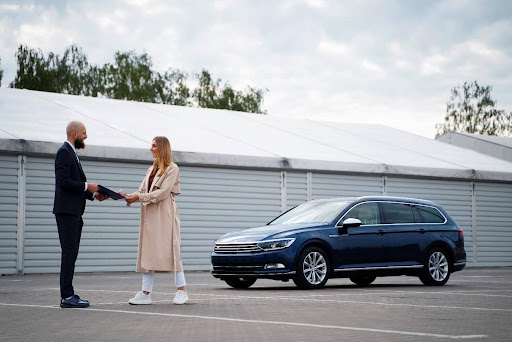
Photo by Scharfsinn at https://depositphotos.com/

When you purchase a used car, it is a significant investment that has the potential to impact your finances greatly, but only if you approach the purchase with clear intentions and strategic planning. As new car prices continue to rise, along with the cost of living, more people are looking to the used car market for dependable and affordable methods of transportation. However, just picking out the cheapest used car does not mean that you will find the right used car for your budget.

A well-planned purchase will help you to avoid taking on unnecessary debt, high costs for maintenance, and problems with reselling the car down the road. When buyers examine private used cars for sale, they also have the advantage of being able to compare cars between individual sellers and the dealership, which often gives them access to better prices and conditions than what the dealerships offer. In addition, buyers who know how to properly evaluate the options available through Private Used Car sales will ensure that their money is being put to work for them, rather than against them.

Step One: Establish Your Entire Budget

You will want to estimate how much you can realistically afford to spend on a used car before you search for one. Many buyers make the mistake of only thinking about the cost of buying the car, but this cost assessment does not take into consideration the total cost of ownership, which also includes insurance costs, fuel costs, maintenance, registration, and possible repair costs.

Therefore, when you review private used cars for sale, be sure to include the following items in your overall budget:

  • The cost of the used car
  • The cost of inspection or initiation of servicing
  • Monthly insurance premiums
  • Estimate for yearly maintenance

Being disciplined with your money during this time will also help you avoid making emotional decisions later. By developing a realistic budget, you will have fewer choices and a more focused search.

Step Two: Know Your Needs First, Then Wants

It is very easy to get attached or infatuated with features, such as a panoramic sunroof or premium sound system, when looking for a used car. The decision to purchase a vehicle is based, therefore, on your lifestyle.

To make the most appropriate choice in a vehicle, you should ask yourself practical questions regarding what you need from the vehicle:

  • Will you be using a fuel-efficient vehicle for your daily commute?
  • Will you need a larger vehicle for family use?
  • Are you going to be using this vehicle for business or delivery purposes?
  • What will the resale value be in three to five years?

By determining the priorities most important to you, you will prevent yourself from spending more money than necessary on unnecessary features that you do not truly require. The best used car for your budget is going to balance the features you need, practicality, reliability, with the price.

Step Three: Research Market Prices Thoroughly

The largest benefit of the online marketplace is the availability of price transparency. You can find numerous examples of similar vehicles listed online in various conditions and mileage amounts. When you complete this research, you will reduce the possibility of paying too much for a vehicle.

While you are evaluating the listings, concentrate on:

  • Average market price of the vehicle you are comparing
  • Mileage compared to vehicle age
  • Availability of service history on the vehicle
  • Availability of owner history and accident history on the vehicle

If you plan to eventually sell your car privately, you will want to choose a vehicle model that has demonstrated strong values for resaleability. Vehicles from popular manufacturers and vehicles with good fuel economy have generally retained more of their resale value than vehicles from niche manufacturers or luxury vehicles with high maintenance costs.

Step Four: Always Inspect and Verify Prior to Committing to the Purchase

It is essential that you conduct an appropriate inspection and verification of a used vehicle prior to making a commitment to purchase the vehicle. Just because a vehicle looks perfect on the internet does not mean that the vehicle is okay. You should also have a qualified mechanic, or at least a knowledgeable friend, inspect the vehicle. Organize the following:

  • Get a trustworthy professional to perform a mechanical inspection
  • Take a test drive on a variety of roads
  • Validate proof of ownership
  • Confirm service history and maintenance records

Many buyers, once they sell your car privately, appreciate having a maintenance history that supports the condition of the car. If you maintain good documentation from day one, you can protect your investment for the long term.

Saving money by not having the car inspected before purchase can mean unexpected repair costs that are greater than what you saved on the initial purchase. Smart buyers will take the preventative approach and invest

Step Five: Look at Future Value and Not Just Price

A low price does not always equal good value. An automobile that is priced slightly higher but has a great maintenance history and lower miles may cost less over the long run than a less expensive car that has a high frequency of repairs.

Think beyond the purchase price when researching private used cars for sale; evaluate the fuel economy, spare parts availability, insurance group status, and the reliability rating.

You should also look at the future. If you ever plan to upgrade in a few years and sell your car privately, select a vehicle that has a consistent demand in the used vehicle market. That way, you are protecting your resale value and limiting the amount you will lose from depreciation.

Step Six: Negotiate with Confidence and Intelligence

Private sellers tend to be more flexible than dealers. Thus, when purchasing from the private sector, you have room for negotiation with the seller.

Before you start negotiating, you should:

  • Research comparable listings
  • Find any minor issues that warrant a price adjustment
  • Know your maximum offer amount
  • Be polite and firm

When a buyer successfully negotiates a deal, they can create immediate savings that allow them to remain within their budget while ensuring they have purchased a reliable vehicle.

Step Seven: Use a Trusted Source for Safety and Efficiency

The type of source you use to find used cars is very important to your experience when looking to buy. A reputable marketplace will have listings that include details about the seller and will provide secure communication and easy access to verified sellers.

Karkiosk provides a simplified marketplace for buyers to review quality listings, communicate directly with sellers, and to make educated decisions without added distractions. The advanced filters and detailed descriptions make finding a car that meets your financial requirements simple.

Summary

Buying the right used car that fits your budget encompasses balancing your financial discipline, doing your research, inspection, and thinking long term. By considering all costs of ownership rather than simply looking at the price of the car, you protect yourself from unforeseen costs and maximize the value you receive.

By accessing competitive prices and flexible negotiation options, you can find the right used car through a trustworthy platform before you sell it. If you plan accordingly, you will retrieve a substantial amount of your investment when the time comes to sell your car privately.

Karkiosk makes the entire process easier by providing a transparent and simple marketplace for both buyers and sellers. With the right preparation combined with the right platform, making a smart budget-friendly decision when purchasing a private used car can provide years of satisfaction.

Enclosed Vehicle Transport Companies: How to Choose the Right One for High-Value Car Shipping

Photo by depositphotos at https://depositphotos.com/

When you are shipping a vehicle that deserves extra protection, choosing among the many enclosed vehicle transport companies becomes an important decision. Not all transport providers operate at the same level, and if you are moving a luxury, exotic, classic, or custom vehicle, the wrong choice can create unnecessary risk.

A lot of customers make the mistake of comparing companies only by price. That is amateur thinking. If the vehicle is valuable, the smarter move is to compare protection, communication, reliability, and actual experience with enclosed shipping.

What Are Enclosed Vehicle Transport Companies?

Enclosed vehicle transport companies are transport providers that arrange or handle vehicle shipments using covered trailers instead of open carriers. These trailers are designed to protect vehicles from weather, road debris, dust, and outside exposure during transit.

This type of service is commonly used for:

  • Luxury vehicles
  • Exotic cars
  • Classic cars
  • Collector vehicles
  • Antique automobiles
  • Sports cars
  • Custom builds
  • Vehicles with special paint or bodywork

If the vehicle would be difficult, expensive, or painful to repair or replace, enclosed transport is often the better option.

Why Customers Choose Enclosed Vehicle Transport Companies

The reason people choose enclosed vehicle transport companies is simple: protection.

Better Protection During Transit

Covered trailers help protect vehicles from rain, snow, hail, road grime, dirt, and flying debris. That extra layer of protection matters when the vehicle is high-value or highly customized.

A Better Fit for Premium Vehicles

If the car is worth serious money, trying to save a small amount on transport often makes no sense. Enclosed shipping is built for vehicles where condition and presentation matter.

More Peace of Mind

Owners of luxury and collector vehicles usually do not want to gamble on exposure during a long trip. Enclosed transport offers a more secure shipping environment.

Stronger Option for Rare or Custom Cars

Low ground clearance, custom paint, aftermarket upgrades, and unique bodywork all make extra care more important. Many customers choose enclosed shipping for that reason alone.

What Makes the Best Enclosed Vehicle Transport Companies Stand Out?

There are plenty of enclosed vehicle transport companies, but very few are actually worth trusting with a serious vehicle.

Clear Communication

Strong companies explain the process, set realistic expectations, and stay in touch from pickup to delivery. Weak companies disappear once they have your booking.

Realistic Pricing

A low quote means nothing if the vehicle does not move on time. Good companies price based on actual market conditions, not fantasy numbers meant to win the order.

Experience With High-Value Vehicles

Not every company has real experience with luxury, exotic, classic, or custom cars. The best enclosed vehicle transport companies understand the extra care those shipments require.

Professional Support

Reliable support before, during, and after shipment is a major difference-maker. Problems usually get worse when communication is weak.

Positive Customer Feedback

Reviews help reveal how the company performs when things are real, not when they are making promises on a sales page.

Open vs. Enclosed Shipping

Customers often compare open and enclosed shipping without thinking clearly about the actual risk.

Open Transport

Open transport is the standard option for everyday vehicles. It is more affordable and widely available.

Enclosed Transport

Enclosed transport costs more, but it offers better protection. For vehicles with high market value, sentimental value, or custom features, enclosed shipping is usually the smarter choice.

If you are shipping a normal commuter car, open transport may be enough. If you are shipping a vehicle you truly care about, many enclosed vehicle transport companies are a better fit than standard open transport providers.

How Enclosed Vehicle Transport Companies Work

The process is usually straightforward, but enclosed shipping is more specialized than standard auto transport.

1. Request a Quote

The company will ask for details such as:

  • Pickup location
  • Delivery location
  • Vehicle year, make, and model
  • Vehicle condition
  • Preferred timing

2. Schedule the Shipment

Once booked, the company begins coordinating your shipment and assigning an enclosed carrier to the route.

3. Prepare the Vehicle

Before pickup, customers should:

  • Wash the vehicle
  • Remove personal belongings
  • Take clear photos
  • Check for existing damage
  • Leave about a quarter tank of gas
  • Make sure the battery is charged

4. Pickup Inspection

The driver inspects the vehicle before loading and documents its condition on the Bill of Lading.

5. Delivery Inspection

At delivery, the vehicle is inspected again to confirm it arrived in the expected condition.

What Affects Pricing With Enclosed Vehicle Transport Companies?

  • Pricing can vary between enclosed vehicle transport companies, but the core factors are usually the same.
  • Distance – Longer shipments cost more overall, though the cost per mile may decrease on longer routes.
  • Vehicle Size and Weight – Larger vehicles usually cost more because they take up more trailer space and add more weight.
  • Route – Major city routes are usually easier to service than remote pickup or delivery areas.
  • Time of Year – Seasonality affects demand. Summer moves and snowbird seasons often push prices higher.
  • Carrier Availability – Enclosed carriers are more limited than open carriers, which usually means higher pricing.
  • Pickup Urgency – Faster pickup requests often come with a higher cost.

How to Compare Enclosed Vehicle Transport Companies the Right Way

Most people will compare the wrong things. They chase the cheapest quote and ignore the variables that actually matter.

A better way to compare enclosed vehicle transport companies is to look at:

  • Protection offered
  • Prior experience with premium vehicles
  • Communication quality
  • Review consistency
  • Price realism
  • Overall professionalism

The goal is not to find the cheapest company. The goal is to find the company most likely to move your car safely and without unnecessary drama.

When Enclosed Vehicle Transport Companies Make the Most Sense

You should strongly consider using enclosed vehicle transport companies if you are shipping:

  • A luxury car
  • An exotic vehicle
  • A classic car
  • A collector car
  • A show vehicle
  • A custom build
  • A rare sports car
  • A vehicle with sentimental value

Trying to save money on the wrong shipping method is one of those decisions that looks smart only until something goes wrong.

Final Thoughts

The best enclosed vehicle transport companies offer more than just covered trailers. They offer protection, experience, communication, and a shipping process built for vehicles that require extra care.

Understanding Motorsports Betting Odds and How Bet Calculators Help NASCAR Fans Make Sense of Them

Motorsports betting has grown steadily alongside the popularity of stock car racing, particularly in NASCAR. As more fans explore wagering on race outcomes, qualifying results, or season-long championships, understanding betting odds becomes increasingly important. For newcomers and experienced bettors alike, one tool that simplifies the process is the bet calculator. By converting odds online into potential payouts and implied probabilities, this tool helps fans interpret numbers that might otherwise seem confusing.

In a sport where margins of victory can be measured in fractions of a second, clarity in betting information is essential. Motorsports betting differs from many traditional sports because multiple drivers compete simultaneously, meaning odds must reflect a wide field of competitors and constantly shifting race conditions.

How Motorsports Betting Odds Work

Betting odds represent two primary things: the likelihood of a particular outcome and the potential return if that outcome occurs. In NASCAR betting markets, odds are typically presented in American format, such as +600 or -150.

Positive odds (for example, +600) indicate how much profit a bettor would earn from a $100 wager. If a driver is listed at +600 and wins the race, a $100 bet would return $600 in profit plus the original stake.

Negative odds (for example, -150) show how much must be wagered to win $100. If a driver is listed at -150, a bettor would need to risk $150 to earn $100 in profit.

In NASCAR races with 30 to 40 drivers, most competitors appear with positive odds. Favorites may range from +300 to +700 depending on the race, track type, and current form. Longshots can appear at +5000 or even higher, reflecting their lower probability of winning.

Why NASCAR Odds Change Frequently

Unlike some sports where odds remain relatively stable until game time, motorsports odds often shift significantly. Several factors influence this movement:

Track type: Superspeedways like Daytona or Talladega create unpredictable pack racing, often resulting in wider odds across the field. Intermediate tracks or short tracks may favor established drivers.

Practice and qualifying results: Strong lap times or a front-row starting position can shorten a driver’s odds.

Weather conditions: Rain, temperature changes, and track grip can influence car performance and team strategy.

Team performance trends: A driver with multiple recent top-five finishes may see their odds shorten as bettors gain confidence.

Because of these dynamics, bettors frequently monitor odds updates throughout race weekend.

What a Bet Calculator Actually Does

A bet calculator translates odds into useful information. Instead of manually calculating payouts or implied probabilities, a bettor can input the odds and the wager amount to instantly see potential returns.

For NASCAR betting, this tool is especially helpful because the odds range can be quite wide. Calculating the possible payout for a longshot driver with +8000 odds, for example, can be tedious without assistance.

A typical bet calculator provides three key outputs:

  1. Potential profit
  2. Total payout (stake plus profit)
  3. Implied probability

Implied probability is particularly useful because it shows how likely the sportsbook believes a driver is to win. For example, +400 odds correspond to roughly a 20% implied chance of victory. This allows bettors to compare their own expectations with the market’s assessment.

Applying Calculations to NASCAR Race Bets

Consider a NASCAR Cup Series race where a top contender is listed at +550. A fan wagering $20 might wonder what the possible return would be.

Using a bet calculator, the bettor can quickly see that a winning wager would produce $110 in profit, plus the original $20 stake, for a total payout of $130.

Now imagine a longshot driver listed at +4000. The same $20 wager would produce $800 in profit if the driver wins. While the probability is much lower, the potential return reflects that risk.

These calculations help fans evaluate whether a bet aligns with their expectations of a driver’s performance.

Understanding Value in Motorsports Betting

In NASCAR wagering, the concept of value is often more important than simply picking the race favorite. Because motorsports events involve large fields and unpredictable race incidents, longshot drivers occasionally win.

Value exists when a bettor believes a driver’s true chance of winning is higher than the probability implied by the odds. For instance, if odds suggest a driver has a 5% chance of victory but the bettor believes their real chances are closer to 10%, the wager may represent value.

Bet calculators assist in this process by clearly displaying the probability behind the odds.

Using Reliable Odds Data

Access to accurate and up-to-date odds is another important part of motorsports betting analysis. Race weekend developments, team announcements, and qualifying results can quickly influence pricing across sportsbooks.

Some fans rely on odds comparison platforms to track these changes across multiple bookmakers. Among the resources used by bettors is Odds.Online, which compiles betting odds and allows users to compare market movements across different sports, including motorsports. Having a centralized place to observe odds shifts can help bettors understand where the market is moving before placing a wager.

A Tool for Better Understanding, Not Just Betting

While bet calculators are often associated with wagering decisions, they also serve an educational purpose. NASCAR fans who are new to betting can use these tools simply to understand how odds translate into probabilities and payouts.

By experimenting with different wagers and odds formats, fans can develop a clearer sense of how betting markets evaluate drivers and teams. Over time, this knowledge helps them interpret pre-race odds boards more confidently.

Final Thoughts

Motorsports betting combines the excitement of NASCAR racing with analytical thinking about probabilities and risk. Because races involve large driver fields and constantly evolving conditions, understanding betting odds is essential for anyone exploring this aspect of the sport.

A bet calculator simplifies that process by instantly translating odds into meaningful numbers such as profit, total payout, and implied probability. Whether evaluating favorites, longshots, or head-to-head matchups, these tools help NASCAR fans interpret betting markets more clearly and make informed decisions based on the data available.

Why PlayID Hub Is Driving the Rise of Unified Gaming Accounts

PlayID Hub highlights the growing demand for unified gaming accounts that simplify how players access multiple online platforms. Online gaming has expanded into a complex ecosystem of platforms, services, and communities. Players now interact with a wide range of websites and gaming environments, each offering unique features and experiences. While this diversity provides more entertainment options, it can also create challenges when it comes to managing multiple accounts and login credentials.

PlayID addresses this issue by offering a system that connects players to several gaming platforms through a single identity. Instead of maintaining different accounts for every service, users can rely on one unified profile. This model reflects a broader trend across digital services where centralized identities are becoming the standard for convenience, security, and accessibility.

As gaming platforms continue to grow and diversify, unified identity systems are becoming an increasingly important part of the online gaming experience.

The Problem With Multiple Gaming Accounts

For many players, managing several gaming accounts can quickly become frustrating. Each platform often requires its own registration process, login credentials, and identity verification steps. Over time, this can lead to a collection of usernames and passwords that are difficult to remember or manage.

Beyond convenience, fragmented accounts can also create security risks. When players use multiple platforms, they may reuse passwords or struggle to keep track of their credentials. This can make accounts more vulnerable to unauthorized access.

Systems like PlayID Hub help reduce these problems by consolidating access under one identity. With a unified account, players no longer need to manage separate profiles for each platform within the ecosystem. This approach reduces complexity while improving the overall user experience.

From a broader perspective, unified accounts also make it easier for players to navigate the growing digital gaming landscape.

Simplifying Access Across Gaming Platforms

One of the main benefits of unified account systems is the ability to simplify access across multiple platforms. Instead of repeating registration steps for each service, players can verify their identity once and use that profile across connected environments.

PlayID Hub provides this type of centralized access by acting as a gateway between players and participating platforms. Once the account is created and verified, users can log in to different services without repeating the full onboarding process.

This streamlined approach encourages players to explore additional platforms because the barrier to entry becomes much lower. Rather than facing repeated registration procedures, users can transition between services with minimal effort.

For gaming providers, this structure can also help create stronger ecosystems. When platforms are connected through a shared identity system, players can move between experiences more easily while maintaining a consistent account.

Why Unified Identities Are Becoming the Industry Standard

The concept of unified identities is not unique to gaming. Many digital industries have already adopted similar systems to improve the user experience. Social media networks, streaming platforms, and online marketplaces often rely on centralized login structures that allow users to interact with multiple services through one account.

Gaming platforms are increasingly moving in the same direction. As the number of digital services grows, unified identity systems help reduce friction for players while maintaining security and efficiency.

PlayID Hub represents this shift by providing a framework that supports connected gaming environments. A single account structure allows platforms to operate as part of a broader network while keeping access simple for users.

As the gaming industry continues to evolve, unified identities are expected to become an essential feature of modern gaming ecosystems. Players benefit from easier access and simplified account management, while platforms gain the ability to build more integrated and scalable networks.

How Wagering Requirements Determine the Real Value of Casino Bonuses in 2026

Wagering requirements determine the real value of a casino bonus because they specify how many times a player must bet the bonus funds before withdrawing winnings. As an illustration, a 30:1 betting situation on a $100 bonus would imply one has to make a separate $3,000 in bets earlier than the bonus is collected, making any such deal quite impractical.

In 2026, comparing casino bonuses calls for searching beyond the headline reward and studying playthrough multipliers, sport contribution probabilities, bet limits, and expiration periods. A bonus that has excessive praise and an excessive wagering circumstance may have much less truth behind it than a small bonus that has less wagering.

Key Takeaways for Evaluating Playthrough Terms

Essential Bonus Rules and Requirements

  • Defining Wagering Requirements: Wagering necessities, additionally known as playthrough requirements, specify how much cash gamers must bet before they can withdraw bonus winnings.
  • Optimal Multiplier Ranges: A bonus with a lower multiplier (10x -20x) tends to be of greater real value.
  • Calculation Bases: Certain casinos implement wagering only on the bonus, whereas others implement it to deposit + bonus.
  • Game Contribution Impact: The rules of game contribution have an impact on clearing wagering requirements.
  • Mathematical Formula: Always multiply the amount of money wagered by the bonus.
  • Transparent Offerings: The most transparent value is given by no wagering bonuses, which tend to have fewer rewards.

2. Understanding Wagering Requirements and Casino Bonuses

Wagering requirements are one of the most crucial aspects connected to online casino bonuses. This is the case with online casino bonuses that require one to play with some sum of money before any bonus-related winnings may be withdrawn.

Calculation Example: A $50 bonus with a 30× wagering requirement requires players to wager $1,500 before withdrawing winnings. (GamblingAuthority.co.uk)

In 2026, most players consider bonuses with the application of sites such as https://www.nodepositrewards.org/ since these sites set the wagering terms against each other and point out the offer with practical playthrough terms. These kinds of tools enable the user to know whether a bonus is really profitable or it is just hype by the marketers.

3. Notable Factors that Influence the Actual Value of Bonuses

The real value of wagering requirements depends on several key factors.

Primary Variables in Bonus Conversion

  • Multiplier Size Efficiency: 10x is much simpler to accomplish than 40x.
  • Bonus Structure: Matches Deposits tend to be wagered more.
  • Weighted Contributions: Slots have a higher contribution of up to 100% as opposed to table games, which have lower contributions.
  • Betting Limitations: Maximum bet rules- It may nullify the bonus if the limit is exceeded.
  • Time Constraints: Expiration Periods- Short time periods expose the risk of missing the bonus.
  • Profit Limits: Withdrawal caps – There is a maximum amount of payout regarding bonuses.

Knowledge of such factors enables better comparison of bonuses by players.

4. Analysis of Common Wagering Requirement Examples

The table below shows the impact of the various wagering multipliers on the overall betting requirement.

Bonus AmountWagering MultiplierTotal Wagering NeededReal Difficulty
$5010×$500Easy
$5025×$1,250Moderate
$5035×$1,750Challenging
$5050×$2,500Very Hard

Higher wagering necessities appreciably increase the total amount players must wager before withdrawing winnings.

5. How Game Contribution Percentages Alter Real Bonus Value

All games do not have wagering requirements equally.

Standard Industry Contribution Rates

  • Slots and RNG Games: This is typically counted at 100% on wagering progress.
  • Classic Table Games: Blackjack or roulette: May count 10%20%.
  • Live Casino Interactive Games: At times, count 0% towards wagering.

This means that even if players bet large amounts on certain games, those bets may contribute very little toward completing the wagering requirement. The casinos make use of these rules to even out risk since table games are usually lower in their house edges.

6. Why High Wagering Multipliers Decrease Overall Bonus Value

A huge casino bonus is appealing at first sight. However, these offers are often difficult to convert into withdrawable winnings because of high wagering requirements.

Consider this scenario:

  • Deposit: $100
  • Bonus: $100
  • Wagering requirement: 40×

When wagering applies to the bonus, only the player will be required to bet 4,000, and after that, he/she will be in a position to withdraw the money. (Racing Post)

The reason is that casino games have a house edge, so the player can spend most of his or her balance in the game before he or she fulfills the wagering requirement. This is why seasoned gamblers are more eager to get smaller playthrough multipliers or no-wager bonuses.

In 2026, the online gambling sector will be moving towards increased transparency and reduced betting requirements. There are numerous new avenues of advertising:

  • 10×–20× wagering offers
  • Partial no-wager hybrid bonuses.
  • Cashable free spins
  • Bonuses based on loyalty and fewer playthroughs.

Caps on required wagering are also promoted by some regulators and consumer groups to ensure that they avoid misleading promotions and enhance equity in the markets of online gambling.

8. Strategic Steps for Selecting the Best Casino Bonus

Procedural Steps for Calculating Real Worth

  1. Mathematical Division: Calculate the total wagering requirement before claiming the bonus.
  2. Weighting Analysis: Examine what games make full contributions.
  3. Limit Verification: Review maximum bet limits.
  4. Multiplier Benchmarking: Find small multipliers (20 or less).
  5. Tool Comparison: Compare and contrast offers with reliable comparison tools.

These are some of the approaches that would assist the players to bypass the kind of promotions that appear to be generous but may not have any significant value after applying the rules of wagering.

Strategic Bonus Evaluation

The wagering requirements will continue to be the most significant element that will define the true worth of casino bonuses in 2026. On the one hand, huge bonuses may seem attractive, but this would depend on how much betting is mandated, what games are a part of the requirement, and how the playthrough can be completed in practice by players.

Experienced gamers are starting to use comparison tools like nodepositrewards.org to be able to review the terms of wagering, compare deals, and find bonuses that provide real value as opposed to marketing efforts.

FAQ

Q1. What are the online casino bonus wagering requirements?

Wagering necessities are terms that require players to wager a bonus quantity a specified number of times before they can withdraw the winnings.

Q2. What are the steps in calculating the wagering requirements?

Multiplied by the wagering multiplier is the bonus amount multiple. An illustration is that a 20x 100 bonus will require 2,000 dollars in wager.

Q3. Are no-wager bonuses better?

Yes, since they enable players to cash out money instantly, and they do not need to playthrough but the rewards tend to be smaller.

Q4. Are there any casino games that do not qualify as wagering?

No. Slots can also donate 100% and table games can give less or nothing at all towards the wagering requirement.

Q5. What would be deemed as a good wagering requirement?

The 10x-20x is considered to be reasonable by most experts, and needs beyond 40x are usually regarded as hard to clear.

Denny Hamlin rallies for emotional Cup victory at Las Vegas

Photo by Ron Olds for SpeedwayMedia.com.

Denny Hamlin left little to doubt and rallied from an early pit road speeding penalty to achieve a dominant victory in the Pennzoil 400 at Las Vegas Motor Speedway on Sunday, March 15.

Photo by Ron Olds for SpeedwayMedia.com

The three-time Daytona 500 champion from Chesterfield, Virginia, led a race-high 134 of 267 scheduled laps in an event where he started alongside teammate Christopher Bell on the front row and assumed the lead for the first time on the third lap.

Hamlin initially appeared to dominate on his way to the first stage victory until Bell overtook him in the closing laps. However, his event went south. Hamlin received a penalty, sending him to the tail end of the field for speeding through pit road during the first stage break period. 

Since the start of the second stage period, Hamlin methodically carved his way back to the front. At the conclusion of the second stage period, he was back in the top-five category.

Then, with 83 laps remaining, he overtook William Byron to return to the top of the leaderboard. Despite losing the lead to Byron with 57 laps remaining, a late-race caution that instantly flew due to Connor Zilisch’s spin, followed by pit stops, kept Hamlin in the runner-up spot. 

During the final restart with 50 laps remaining, Hamlin battled with teammate Bell for a lap before the former overtook the latter for good. From there, Hamlin managed to fend off a late charge from Chase Elliott to achieve his first Cup victory of the 2026 season. 

With on-track qualifying that determined the starting lineup occurring on Saturday, March 14, Christopher Bell claimed his first Cup pole position of the 2026 season with a pole-winning lap at 187.156 mph in 28.853 seconds. Bell shared the front row with teammate Denny Hamlin, the latter of whom qualified in second place with a lap at 186.188 mph in 29.003 seconds.

When the green flag waved and the event commenced, Christopher Bell launched ahead from the inside lane, and he led teammates Denny Hamlin and Ty Gibbs, along with the rest of the field, through the first two turns and the backstretch. As Bell proceeded to lead the first lap, Shane van Gisbergen, who was racing in the top-20 mark, slowly drifted up the track in Turns 3 and 4. He then bumped against the side of Erik Jones and got loose entering the frontstretch, but van Gisbergen managed to straighten his car after he barely touched the right side of Chase Briscoe, and all proceeded without igniting a wreck.

Back at the front of the field, Hamlin got underneath teammate Bell and dueled with him through the backstretch. Then, as Hamlin tried to muscle ahead from the inside lane, Bell managed to use the outside lane to launch back ahead and lead the second lap. Hamlin, though, would fight back from the inside lane and duel with Bell through the first two turns and the backstretch before the former cleared the latter through Turns 3 and 4. With Hamlin leading the third lap, Bell trailed in second ahead of Ty Gibbs, Bubba Wallace, Kyle Larson, and Tyler Reddick.

Through the first 10 scheduled laps, Hamlin was leading by four-tenths of a second over Bell, while third-place Ty Gibbs and fourth-place Kyle Larson both trailed by two seconds. Meanwhile, Tyler Reddick was up into fifth place over teammate Bubba Wallace.

Ryan Blaney, William Byron, Ryan Preece, and Chris Buescher followed suit in the top 10 ahead of Chase Elliott, Zane Smith, Austin Dillon, Chase Briscoe, Ross Chastain, Erik Jones, Joey Logano, Carson Hocevar, Daniel Suarez, and Riley Herbst, respectively. Meanwhile, Kyle Busch was mired in 24th place behind Ricky Stenhouse Jr., Austin Cindric, and Brad Keselowski. Shane van Gisbergen dropped to 26th place in front of Justin Allgaier, and Josh Berry scored in 31st place in front of rookie Connor Zilisch.

Fifteen laps later, Hamlin retained the lead by four-tenths of a second over Bell while third-place Gibbs continued to trail by two seconds. Hamlin also continued to lead ahead of a hard-charging Bell by Lap 32 just as the first wave of green flag pit stops commenced, with Reddick pitting from seventh place. More names that included Briscoe, Cindric, Allgaier, and Larson pitted during the next handful of laps before the leader Hamlin, teammate Gibbs, and Wallace peeled off the track to pit on Lap 34. By the time Bell pitted on Lap 35 and returned on the track during the next lap, he was overtaken by Hamlin, Gibbs, Larson, Wallace, and Reddick. This was due to Bell having to step off the throttle to avoid hitting Hamlin as Hamlin was pitting and losing a handful of seconds on the track.

As the green flag pit stops cycled through, Hamlin cycled back to the lead on Lap 41, but he had teammate Gibbs reeling in through every turn and straightaway. Despite Gibbs’s effort in reducing the gap to a tenth of a second, Hamlin managed to stabilize his advantage, and he proceeded to stretch it to eight-tenths of a second by Lap 50. By then, Larson started to reel in Gibbs for the runner-up spot, with Larson trailing Gibbs by three-tenths of a second, while Bell navigated his way up to fourth place in front of Wallace, Reddick, Byron, Blaney, Ryan Preece and Chase Elliott.

At the Lap 60 mark, Hamlin stretched his advantage to more than a second over Gibbs, Bell and Larson while 23XI Racing’s Wallace and Reddick trailed by as far back as four seconds in the top-six range. Seven laps later, Bell used a run from the backstretch to get underneath Hamlin and muscle back to the front. Bell, however, was stalled behind several lapped competitors, including John Hunter Nemechek, allowing Hamlin to reassume the lead.

Hamlin and Bell then dueled dead even for the top spot while being mired in lapped traffic, starting on Lap 69. But Bell managed to motor past Hamlin during the next lap. Amid the battles, Kyle Busch was lapped as Larson reeled in on Hamlin for the runner-up spot while Bell was having issues navigating past Nemechek to lap the latter.

When the first stage period concluded on Lap 80, Bell captured his second Cup stage victory of the 2026 season. Larson trailed in second place by a second, and Hamlin fended off teammate Gibbs for third place while Wallace, Byron, Preece, Elliott, Blaney, and Reddick were scored in the top 10, respectively. By then, 21 of 36 starters were scored on the lead lap, while notables that included Josh Berry, John Hunter Nemechek, Connor Zilisch, Kyle Busch, and Chase Briscoe were mired a lap down.

Under the event’s first stage break period, the lead lap field led by Bell pitted for service. Following the pit stops, Bell beat Larson off of pit road first to retain the lead as Hamlin, Wallace, Elliott, Byron, Gibbs, Preece, Reddick and Blaney followed suit, respectively. Amid the pit stops, teammates Hamlin and Gibbs were sent to the tail end of the field for speeding on pit road. Teammate Chase Briscoe also received a penalty for stopping in teammate Gibbs’ pit stall to have a loose wheel tightened.

The second stage period started on Lap 88 as Bell and Larson occupied the front row. At the start, both dueled for the lead in front of Wallace, Elliott, Byron and the field through the first two turns and the backstretch. As the field fanned out, Bell managed to muscle ahead of Larson and lead the next lap before Larson utilized a crossover move to get beneath Bell. With both making slight contact, Larson and Bell continued to fiercely duel for the lead while Elliott, Byron and Wallace also fiercely battled for third place in front of Reddick, Zane Smith, Preece and Chris Buescher. 

On Lap 92, a tight three-wide battle for the lead ignited as Elliott, who reeled in the top-two leaders from their frantic side-by-side battle, went beneath both teammate Larson and Bell, with the trio challenging each other for the lead for a full lap. Seconds later, Byron reeled in on the trio and elected to draft teammate Larson from the middle lane forward through the frontstretch and entering the first turn.

With Larson leading, Bell, Elliott and Byron all battled for second place while Reddick reeled in and joined the battle. As sixth-place Wallace trailed the top-five contenders by three seconds, Larson retained the lead over Bell by four-tenths of a second at the Lap 100 mark while Elliott, Byron and Reddick followed suit in the top five, respectively.

By Lap 115, Larson stabilized his lead to four-tenths of a second over Bell. Byron, Elliott, and Wallace followed in the top five ahead of Blaney, Reddick, Preece, Cindric, and Buescher, respectively. Meanwhile, Hamlin and Gibbs carved their way up into 13th and 16th, respectively, as Briscoe was mired in 24th and scored a lap down. 

As Hamlin moved up into 12th place while Larson led by more than two seconds over Bell by Lap 120, numerous names that included Byron, Reddick, Gibbs, Cindric and Logano commenced the second wave of green flag pit stops. Larson then surrendered the lead to pit during the next lap along with Bell, Elliott, Wallace, Preece, Buescher and Erik Jones. As the pit stops cycled through towards the Lap 125 mark, the top-seven competitors led by Ryan Blaney and including Hamlin, Brad Keselowski, Carson Hocevar, Daniel Suarez, AJ Allmendinger and Riley Herbst have yet to pit. 

By the time Blaney, Allmendinger, Herbst, Hamlin, Suarez, and Hocevar pitted towards the Lap 128 mark, Keselowski, the lone competitor who had yet to pit, pitted on Lap 128. This allowed Larson to cycle back as the leader during the next lap. By then, the latter was leading by more than two seconds over Bell and teammate Byron. Wallace and Reddick were scored in the top five ahead of Buescher, Elliott, Preece, Cindric, Hamlin, and Gibbs. Larson proceeded to stretch his lead to nearly three seconds over both Bell and Byron as the event reached its halfway mark between Laps 133 and 134. 

At the Lap 150 mark, Larson, who was reeling in on competitors to lap, including Ross Chastain and Kyle Busch, had his advantage decrease to half a second over Bell while third-place Byron trailed by a second. Five laps later, Larson managed to lap Chastain while Byron reeled in and overtook Bell for the runner-up spot. Meanwhile, Hamlin carved his way to sixth place before Byron used a bold three-wide move beneath teammate Larson and Busch through the frontstretch to lead on Lap 159. Seconds prior to Byron’s move, Busch scrubbed the outside wall while dueling with Larson to avoid losing a second lap.

When the second stage period concluded on Lap 165, Byron, who stretched his late lead to more than a second, cruised to his first Cup stage victory of the 2026 season. Teammate Larson and third-place Bell followed suit as they trailed by more than a second. Wallace, Hamlin, Reddick, Buescher, Preece, Elliott and Cindric were scored in the top 10, respectively, ahead of Blaney, Zane Smith, Gibbs, Keselowski and Logano. By then, 18 of 36 starters were on the lead lap.

During the event’s second stage break period, the lead lap field led by Byron returned to pit road for service. Following the pit stops, Larson barely edged both teammate Byron and Bell off of pit road first while Hamlin, Wallace, Reddick, Elliott, Buescher, Zane Smith and Preece followed suit, respectively. 

With 94 laps remaining, the final stage period commenced as teammates Larson and Byron occupied the front row in front of Bell, Hamlin, Reddick and Wallace. At the start, the field fanned out entering the first two turns as both Larson and Byron dueled for the lead. With Bell attempting to throw a three-wide move beneath the latter two for the lead, Hamlin used the outside lane to motor past Larson and challenge Bell for the runner-up spot while Byron led the next lap. Byron fended off a hard-charging Hamlin and Bell to retain the lead with 90 laps remaining while Larson, Reddick, Elliott, Wallace, Buescher, Blaney and Preece followed suit in the top 10, respectively.

Then, with 83 laps remaining, Hamlin got underneath Byron entering Turn 3 and overtook him through the frontstretch to return atop the leaderboard for the next lap. Hamlin proceeded to extend his advantage to more than a second over Byron with 75 laps remaining while Bell, Larson and Elliott trailed in the top five ahead of Reddick, Buescher, Wallace, Blaney and Gibbs, respectively. 

Down to the final 60 laps of the event, Hamlin stabilized his lead to more than a second over Byron and by more than two seconds over third-place Bell. Behind, teammates Larson and Elliott raced in the top five ahead of Reddick, Buescher, Blaney, Gibbs and Wallace. Preece, Keselowski, Suarez, Cindric, Zane Smith, Erik Jones, Logano, Austin Dillon, Chastain and Briscoe, with the latter being scored the first competitor a lap down.

Two laps later, Blaney, who overshot his pit stall, pitted under green from the top-10 mark. During the next lap and just as Cindric and Cole Custer pitted, the caution flew when Connor Zilisch spun in Turn 4 after he bumped into the rear of Ricky Stenhouse Jr., when Zilisch was unaware that Stenhouse was slowing to pit under green. By then, Byron had overtaken Hamlin for the lead.

During this latest caution period, the lead lap field led by Byron pitted for service. Following the pit stops, Bell returned atop the leaderboard after he took advantage of the first pit stall and quick service from his No. 20 pit crew to beat both teammate Hamlin and Byron off of pit road first. Elliott, Buescher, Gibbs, Reddick, Larson, Wallace and Keselowski followed suit in the top 10, respectively.

The start of the next restart, with 50 laps remaining, featured teammates Bell and Hamlin dueling in front of Elliott, Byron and the field from the first two turns and the backstretch. As the field continued to fan out, Bell and Hamlin remained dead even for the top spot during the next lap before Hamlin motored ahead. As Bell tried to keep teammate Hamlin close to his front windshield, Hamlin continued to hold steady with the lead with 45 laps remaining. By then, Elliott was racing in third place while both Byron and Buescher battled for fifth place in front of Larson, Gibbs, Reddick, Wallace, Keselowski and Preece. 

With 35 laps remaining, Hamlin extended his lead to eight-tenths of a second over teammate Bell while Elliott, Byron, Buescher, Gibbs, Larson and Reddick followed suit in the top eight, respectively. Meanwhile, Briscoe, who was pinned a lap down prior to the latest caution period, carved his way up to ninth place in front of Wallace. Keselowski, Preece, Suarez, Austin Dillon, Zane Smith, Chastain, Logano, Erik Jones, Cindric and Blaney were all scored both in the top 20, respectively, and on the lead lap.

Down to the final 25 laps of the event, Hamlin, who was navigating his way through lapped traffic, continued to lead by more than a second over Elliott while Byron, Bell and Buescher continued to trail in the top five, respectively. Hamlin continued to lead by a second over Elliott over the next 15 laps while top-five competitors Byron, Bell and Gibbs trailed by as far back as nearly four seconds.

With five laps remaining, Hamlin had his lead slightly decrease to seven-tenths of a second over Elliott. Despite Elliott’s attempt to reel in the deficit to as low as half a second, Hamlin maintained the lead over the next three laps.

When the white flag waved and the final lap started, Hamlin remained in the lead by four-tenths of a second over Elliott. Amid Elliott’s last-lap attempt to reel in Hamlin, Elliott could not reduce the deficit enough as Hamlin cycled around Las Vegas Motor Speedway smoothly for a final time before he returned to the frontstretch and claimed the checkered flag by half a second over Elliott.

With the victory, Hamlin notched his 61st NASCAR Cup Series career victory and solidified himself in 10th place on the all-time wins list. In addition to becoming the third different winner through the first five events of the 2026 season, Hamlin also achieved his third victory at Las Vegas and his first win in the Cup circuit since he won at Vegas in October 2025. He also recorded the fourth Cup victory of the 2026 season for Toyota and the first of this year for Joe Gibbs Racing.

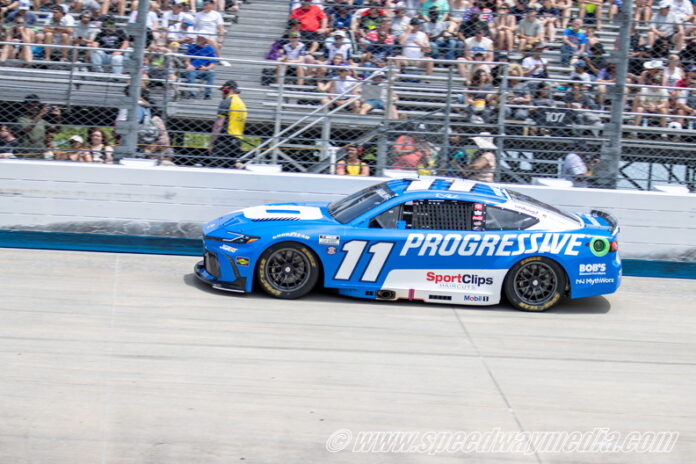
No. 11
Photo by Ron Olds for SpeedwayMedia.com.

Hamlin’s 2026 Las Vegas victory was an emotional one amid the turmoils he endured in the closing stages of the year 2025, from falling short of the 2025 Cup championship to losing his father, Dennis Hamlin, to injuries suffered in a house fire in Gaston County, North Carolina, last December.

The meaningful part of Hamlin’s victory on Sunday was celebrating with his daughters and his mother, Mary Lou Hamlin, the latter of whom survived despite being injured during the house fire, on the frontstretch in front of the fans.

“Being part of Joe Gibbs Racing and Toyota, that definitely helps the situation,” Hamlin said on FS1. “Over the last few races here, I’ve had the dominant car and it makes me look good when I can drive cars like this. I got to thank the whole team. They’re the ones that made all of this happen. I knew it took a few weeks to feel like driving and over the last couple of weeks, I definitely regained my love of it and got refocused. These are great opportunities for us. This is a family sport. My family, obviously, had so much sacrifice to help me get here…It’s great that Mom gets to see this. I know Dad is still saying, ‘That’s my boy.’ All day. Days like today certainly make me feel happy about where I’m at with this sport still and what I can still do.”

Chase Elliott, who started in 15th place, settled in second place for his second top-five result of the 2026 season and his second straight at Las Vegas. Amid the strong run, Elliott was left disappointed as he fell short of winning for the first time this season for himself, Hendrick Motorsports and Chevrolet.

“[The car] was definitely better there towards the end than we had started the run. I thought there might be an opportunity. I knew that [Hamlin] was starting to get tight there at the end of runs. As bummed as I am to come up that close to a win, I have to kind of bring myself back to reality check and just how much better we ran today than we’ve been running. These things are hard to win. We had a good opportunity to do it, but really proud of the effort throughout the week in preparation and yesterday, just kind of fighting through a not-so-good day and getting up there in the mix with the guys that win a lot of these races anymore. Really proud of that…I don’t know. Just kind of mixed feelings.”

William Byron and pole-sitter Christopher Bell, both of whom led a combined 57 laps, finished third and fourth, respectively, while Ty Gibbs settled in fifth place for his third consecutive top-five result this season. Chris Buescher, Kyle Larson, Chase Briscoe, Bubba Wallace and Brad Keselowski completed the top 10 in the final running order.

There were 21 lead changes for nine different leaders. The event featured three cautions for 20 laps. In addition, 20 of 36 starters finished on the lead lap.

Following the fifth event of the 2026 NASCAR Cup Series season, Tyler Reddick continues to lead the standings by 61 points over teammate Bubba Wallace, 67 over Ryan Blaney, 78 over Denny Hamlin, 87 over Chase Elliott and 91 over Christopher Bell.

Results:

  1. Denny Hamlin, 134 laps led
  2. Chase Elliott
  3. William Byron, 26 laps led, Stage 2 winner
  4. Christopher Bell, 31 laps led, Stage 1 winner
  5. Ty Gibbs
  6. Chris Buescher
  7. Kyle Larson, 62 laps led
  8. Chase Briscoe
  9. Bubba Wallace
  10. Brad Keselowski, four laps led
  11. Ryan Preece
  12. Austin Dillon
  13. Tyler Reddick
  14. Zane Smith
  15. Joey Logano led for three laps
  16. Ryan Blaney led for five laps
  17. Ross Chastain
  18. Daniel Suarez
  19. Austin Cindric
  20. Erik Jones
  21. John Hunter Nemechek, one lap down
  22. Carson Hocevar, one lap down, one lap led
  23. Riley Herbst, one lap down
  24. AJ Allmendinger, two laps down
  25. Justin Allgaier, two laps down
  26. Michael McDowell, two laps down
  27. Cole Custer, two laps down, one lap led
  28. Kyle Busch, two laps down
  29. Ricky Stenhouse Jr., two laps down
  30. Noah Gragson, two laps down
  31. Josh Berry, three laps down
  32. Connor Zilisch, three laps down
  33. Ty Dillon, three laps down
  34. Todd Gilliland, three laps down
  35. Cody Ware, four laps down
  36. Shane van Gisbergen, five laps down

Next on the 2026 NASCAR Cup Series schedule is the Goodyear 400 at Darlington Raceway in Darlington, South Carolina. The event is scheduled to occur next Sunday, March 22, and air at 3 p.m. ET on FS1, MRN Radio, SiriusXM and HBO MAX.

Kyle Kirkwood makes late overtake to win in Arlington

ARLINGTON, TEXAS - MARCH 15: Kyle Kirkwood, driver of the #27 Andretti Global Honda, celebrates victory in the NTT IndyCar Series Java House Grand Prix of Arlington on March 15, 2026, in Arlington, Texas. Photo: Chris Owens/Penske Entertainment

With 22 laps to go, Kyle Kirkwood pitted with race leader Alex Palou. His stop was two seconds slower and exited pit road trailing the reigning IndyCar champion. Over the next six laps, he reeled in Palou and cut the gap to under a second. With 16 to go, Kirkwood dove inside of Palou into Turn 14 to overtake him for the race lead.

Then a caution flew.

“I thought we weren’t going to do that, quite honestly, after the 500 a few years ago,” Kirkwood said. “I mean, I get it. Their first and foremost thing is to get a green-flag finish. Whatever it might take to get that done, I get it.

“Of course, when you see a five-and-a-half-second lead that you stretched and worked very hard to stretch go down to zero for one lap, it can get very frustrating inside the car.”

Christian Rasmussen stalled on track with four laps to go and forced a one lap shootout. Just after the restart, Nolan Siegel and Romain Grosjean wrecked, brought out the caution and handed the victory to Kirkwood.

“Passed Palou, which is a very rare thing to say in a race,” he said. “Yeah, it was kind of all or nothing. He was so good in the four, five, six, seven, eight, nine section, the tight, twisty bit. It was hard to get to his gearbox to make a pass on the straight. It put me in a position where we’re good on the straight, right now, trimmed more than him, good under braking, and I knew that he was going to brake a little bit later there because his car was bottoming more than ours.

“Yeah, just had to do a bit of a late lunge and surprise him a little bit because if he started defending there was probably no chance of us getting by him ’cause that was probably the only place we were going to be able to pass him.”

It’s his sixth career victory in his 71st NTT INDYCAR SERIES start and first of the 2026 season.

“I mean, it’s a statement on how good we are on street courses, right? We’re able to do this at a few street courses,” he said. “It’s incredible to see that we’re able to do it at another one. We’re adding street courses to our calendar.

“A lot of it’s due to this guy, the engineers, and the group that he’s been able to rally together to give us this performance, right? It’s not just me out there driving one of these cars. It’s all the hard work that goes into one of these street courses is why we have the performance we have. It’s the reason why we had the pole, finished 1, 3 and 4. Palou is always there (smiling).”

Palou led a race high of 16 laps on his way to a runner-up finish. Will Power rounded out the podium and earned his first podium finish of the season.

“Yeah, I tried hard, man,” Palou said. “Kirkwood was really fast. I could see already on second and third stint that I was pushing as much as I could, using OT to try to get gaps. He was closing 3, 4/10ths on me. I was like, Oh, man, it’s going to be tough.

“Yeah, he just passed me incredibly. It was a very awesome overtake. Should have obviously defended a little bit better. It’s very easy to say now.

“Yeah, honestly didn’t really have much for him. I think I’m really happy getting on the podium and trying to steal a little bit of Andretti’s party this weekend. Yeah, right? Will was incredible on those alternates as well, making them last. They told me he had to do 12 laps more. I was like, In two laps he’s just going to die.

“Very impressive.”

“Yeah, very nice,” Power said. “Honestly, I just wanted to have a clean weekend after the first two. Obviously last week we had a shot at the win or at least a podium. It’s very nice to get one today.

“Very happy with the new team. Very, very strong. Very strong. Still improving a lot, too. I think this will be the team to beat this year actually. I was saying three years it would take us to get everything, but I’m going to say this year (smiling). It’s good stuff.”

Pole sitter Marcus Ericsson and Pato O’Ward rounded out the top-five.

David Malukas, Felix Rosenqvist, Christian Lundgaard (who recovered from an early spin), Scott Dixon and Alexander Rossi rounded out the top-10.

Kyle Kirkwood makes late overtake to win in Arlington

Race summary

Ericsson led the field to green at 12:20 p.m. ET. The field settled into a green flag racing rhythm, while also making green flag stops beginning on Lap 5. Ericsson pitted from the lead on Lap 16, as did Palou. Ericsson suffered a wheel gun issue and exited pit lane behind Palou. Power pitted from the lead on Lap 18. Rosenqvist pitted from the lead on Lap 20 and Power cycled back to the lead on Lap 21.

He pitted from the lead on Lap 22. As he left his pit box, he lost time exiting as Louis Foster came into his box and forced him to stop. Palou cycled to the lead.

Palou pitted from the lead on Lap 28 and took Firestone blacks. Rosenqvist pitted from the lead on Lap 35 and took Firestone reds. Power pitted from the lead with 25 laps to go. Palou pit from the lead with 22 to go.

With 18 to go, Kirkwood, who pitted with Palou with 22 to go, cut the gap to Palou from two seconds to under a second. With 16 to go, Kirkwood dove inside in Turn 14 and overtook Palou for the race lead.

Caution flew for the first time with four laps to go when Christian Rasmussen stalled his car on track near pit exit.

Kyle Kirkwood makes late overtake to win in Arlington

What else happened

Exiting Turn 2 on Lap 3, Mick Schumacher turned Lundgaard. Schumacher received a drive-through penalty for avoidable contact.

As Dixon entered his pit stall on Lap 5, he hit one of the tires of his teammate, Kyffin Simpson. Because Simpson nudged it into Dixon’s path, INDYCAR handed him a drive-through penalty for hitting equipment.

Josef Newgarden exited pit road on Lap 21, he made contact with teammate Malukas and spun in Turn 3.

Schumacher made contact with Newgarden, who was leaving pit lane, and spun in Turn 2, but turned himself around and drove away on Lap 39.

Kyle Kirkwood makes late overtake to win in Arlington

Nuts and bolts

The race lasted one hour, 55 minutes and 43 seconds, at an average speed of 99.086 mph. There were eight lead changes among five different drivers and two cautions for two laps.

Kirkwood leaves Arlington, Texas, with a 26-point lead over Palou.

The NTT IndyCar Series returns to action on March 29, at Barber Motorsports Park.