Travis Fisher is working his way up the racing ranks, one race at a time
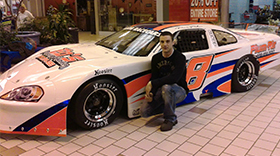
For Travis Fisher, hard work has paid off in his 10 years at the local short track racing level. He began to see the fruits to his labor in 2007, when he scored his first track championship at Mountain Speedway (now Evergreen Raceway Park) located in Pennsylvania racing the 4-Cylinder division, the same track in which his father Larry holds the all-time record in wins since 1988 in the Late Model division.
Travis has since worked his way into the Late Model ranks, claiming a championship at his new local track in New York in 2010. Travis said now that his first Late Model Championship is out of the way, he can focus on winning races even if it means tearing up a car, instead of just keeping out of trouble to stay near the top of the points.
Aric Almirola Destined For Richmond Victory; Richard Petty Returns to Racetrack
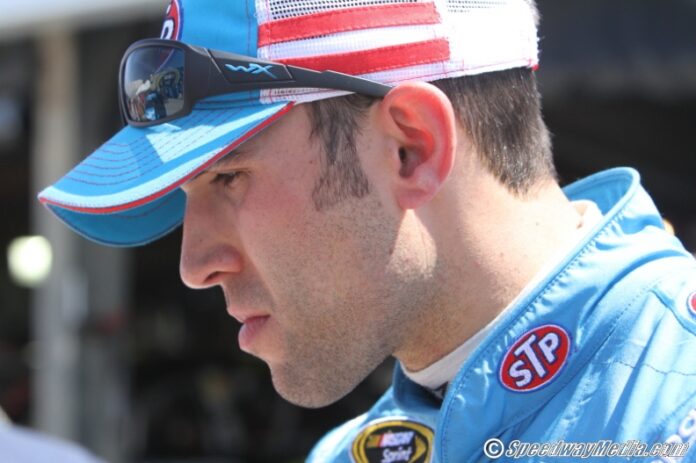
Aric Almirola and Trent Owens are determined and destined to win at Richmond International Raceway (RIR) this weekend; especially after it was announced that Richard Petty, team owner of Richard Petty Motorsports, will be returning to the racetrack for the first time since the tragic and unforeseen passing of his wife, Lynda Petty.
“It’s going to be great to have our leader back at the race track,” Almirola expressed on Wednesday. “He is the name and the face of our company, and all the guys on the race team and myself included look up to him and enjoy having him around at the race track and having him inside hauler and talking to us after practice and getting his perspective on what he sees with other race cars and with our race cars throughout practice.”
Almirola attended an appearance with Petty in Nashville, Tennessee on Tuesday and he found ‘The Kings’ attitude to be repaired and prepared for Richmond this weekend.
“I know (Petty is) itching to get back,” Almirola further explained. “You can’t take the racer out of that guy. He’s not going to sit at home and just sit around and do nothing.”
Owens, who is the nephew of Petty, also is confident that Petty returning will allow everyone at the organization to take a deep breath and refocus on the task at hand, winning.
“I think it will be good medicine,” Owens said Wednesday. “When something like that happens, you kind of want to hide for a little bit and just get your feelings straight. But he’s been by the shop and been in good spirits, and I think he’s doing very well considering.”
“We look forward to definitely getting him back to the race track and getting him back into race mode.”
Now, with the relief of having the boss back, Almirola and crew chief Owens turn their undivided attention to Richmond, where they’ll hope to deliver their first victory of the season, which would undoubtedly be an emotional one – for multiple reasons
“I always get excited about going to Richmond,” Almirola commented during a press conference held on Wednesday morning. “I like the racetrack a lot, and then besides the racetrack, it’s a big weekend for us with Smithfield Foods headquarters being right there nearby in Richmond, and we get a lot of people come out from Smithfield headquarters, and it’s just a big weekend, and it’s a lot of fun.”
“The racetrack is where I made my first (NASCAR) Nationwide (Series) start, and I just got a lot of good memories from there, and I’ve always run well it seems like, so I’m excited about going to Richmond this weekend.”
Almirola, 30, finished eighth last season at Richmond after starting a dismal 34th position- his first top-10 at the difficult speedway.
“I think I have a really good understanding of what it takes to run good at Richmond, and I’ve had good runs there,” Almirola expressed about his wisdom within Richmond. “You know, last spring we ran pretty good there. I think we finished in the top 5 or maybe top 10, I’m not sure, and then in the fall race I thought we had an even better car than we had in the spring race, and we had an incident on pit road on a green flag stop that ended up getting a couple laps down and hurt our day.”
He’s completed in five Nationwide Series races at Richmond finishing a track-best seventh during the 2011 season with JR Motorsports. This weekend, he’s hoping to utilize that running his previous experience at RIR to help drive him into victory lane.
“Richmond is a place that I actually have a lot of laps at,” Almirola further commented. “The very first time I ever got to drive a truck, it was a two-day test at Richmond back in 2004 and I’ve done a lot of testing there in trucks and Nationwide cars and even Cup cars back when we were allowed to go test, and I made my first Nationwide start there. I think I’ve run quite a few Nationwide races there, and I’ve made quite a few Cup starts there.”
Owens, who joined his Uncle Petty’s operation at the beginning of this season, is also expecting a good placing this weekend, despite the demands being a crew chief calls upon throughout the course of this weekend.
“Really looking forward to (the) race (at Richmond),” Owens commented during the press conference. “Our short track program seems to be in a decent direction this year. We’ve got some work to do on our mile-and-a-halfs, but really looking forward to getting in front of the Smithfield folks and putting on a good show.”
“Practice is so tough here, the tires wear out at Richmond but that does provide for good racing. You really want to be good off the hauler and just kind of work on a few things, maybe mock up some practice changes that duplicate your race stuff. But practicing during the day, racing at night at a place like Richmond is just so much different.”
Almirola and Owens are hoping for success in just their ninth race together, however, they also both understand the ultimate achievement isn’t to win, but it’s to help re-boost Petty’s confidence and moral, even in the toughest of moments.
The Unofficial History of Stock Car Racing Part 1: 1896-1936
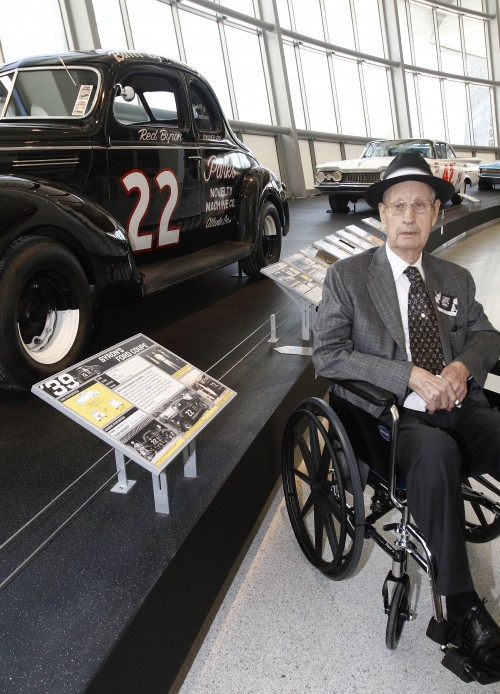
The history of stock car racing is convoluted. Although NASCAR has for the past 60 years been the undisputed leader of the sport, the reality is that stock car racing, like all of racing, had its origins in 1896.
Although many claim Daytona Beach, Florida is the birthplace of stock car racing, this is not the case. The reality is that Atlanta, Georgia had either just as big a part or a larger part. Many early stock car racers came from Atlanta, and Atlanta marked the home of NASCAR’s first championship winning car owner Raymond Parks, and the residence at the time of NASCAR’s first championship winning car mechanic and driver. Even Big Bill France often stated that Lloyd Seay was the greatest driver in NASCAR history, even though he had passed away seven years before NASCAR was born.
A note, however, there is a difference between NASCAR and stock car racing. NASCAR is an organization that runs stock car racing. Other organizations such as ARCA can and does have stock car racing, So to be a real student of history, you must know what happened before NASCAR really began…. 52 years to be exact.
Beginnings:
The very first known race among “horseless carriages” occurred in September of 1896, in a horse-racing track in Narrangansett Park in Rhode Island. The race was run with cars many of the drivers themselves had made over an unknown distance, with Frank Duryea of the Duryea brothers being declared the winner.
In 1901, Henry Ford was seen by many as nothing more than an eccentric inventor. Ford’s idea to build a car for everybody was routinely dismissed among his Detroit neighbors. He often worked without sleep on his prototypes, and when testing them out was often yelled at to “get a horse” and to get off of his “devil wagon”.
Ford decided to enter a race at the Grosse Point Fairgrounds near Detroit. The race was ten laps around a mile long dirt oval, and the favorite to beat that day was Alexander Winton, who would later hold the land speed record in his Bullet. In front of thousands of spectators that day, Ford passed Winton on the eighth lap of the race and won it, often hitting speeds of 45 mph to the delight of the fans. Ford never again decided to race, instead hiring Barney Oldfield to run and win races in the Ford Prototype named the “999”. These victories attracted financial backing for Ford to create Ford Motor Company in 1903, where it became known for having incredible financial success, great pay (Workers got $5 a day, which equals out to six figures today), and a revolution in workmanship.
Henry didn’t create the assembly line, but he revolutionized it by constantly striving to make it better. Thanks to him and his work, the time to make a Model T went from 12 and a half hours to just 1 and a half. A few years down the road, during the 1920’s, although Ford was still making good amounts of money, he was losing ground to Chevrolet and other manufacturers. They would come out with new cars while Ford typically just slashed the price of the aging Model T, to the point where any poor southern boy could get their hands on one. It got to the point where Ford had no choice but to go to the well and come back with his greatest creation, the Ford V-8. While the Model T had only four cylinders and most other cars had six at the time, Ford V-8 had, well, a V-8. Although Ford had came out with other models such as the Model A, the V-8 was more or less a tiger compared to the other Ford kitties on the road. The V-8 became well known for crime (Bonnie and Clyde’s famous bullet hole ridden car was a stolen V-8), and ironically, even though Ford denounced alcohol and supported Prohibition, moonshining.
The AAA:
The earliest and most well known racing organization was the Automobile Association of America. Yes, the AAA that today is best known for helping its members out when they and their car is in trouble on the highway, and 100 years later ironically became a NASCAR sponsor, was at one point the premier racing organization in America. Its racing arm was run by the infamous Contest Board, formed in 1909 and known for its elitism and stubbornness. The Contest Board dissolved and AAA left racing following the 1955 Le Mans tragedy.
To the Contest Board, AAA races were the only races that mattered. If you were caught running an “outlaw race” (Not AAA sanctioned), you were banned from AAA races for X amount of races, even if you were a major star such as the legendary Barney Oldfield. Oldfield, the very first national champion under any points system in America, was the king of the local track but often struggled on the big stages, such as Indianapolis.
Why did the AAA succeed in spite of this handicap? Three basic reasons:
1. It guaranteed a payout based off of race attendance- drivers typically got about 60 percent of the purse. It wasn’t rare for outlaw promoters to hightail it before the race was over with the purse.
2. It established the first points championship in America, although this was made by the Contest Board’s predecessor, the Racing Board.
3. Most importantly, it sanctioned the biggest and most important race in America, the Indianapolis 500.
Most tracks of the day were either made by boards or were horse tracks, with the cars generally being either motorcycles or sportier racing cars called midgets. Stock car races happened of course, but generally they were regarded as a side show in the racing world akin to the demolition derby or stunt driving. Most races were in the northeast, not so much in the south although there were tracks down there. On the insanely fast and insanely dangerous board tracks of the time, injury and death were frequent; two of stock car racing’s great mechanics, Red Vogt and Smokey Yunick, had horrible injuries from motorcycle races on the boards. The board tracks are not around anymore, due to decay, demolition, or storms wiping them out. They were ahead of their time, though, providing high speeds and having banking akin to that of today’s Sprint Cup tracks such as Charlotte or Atlanta, whose cities were also home to similar 1.5 mile board tracks 100 years ago.
Moonshiners and Atlanta:
Some historians have said they do not feel moonshine played a significant role in stock car racing. Many say it did. The reality is that both are correct.
The often romanticized and simplified version of events states that a bunch of whiskey runners would argue over who was fastest, then carved out an oval in a field and raced each other, isn’t very feasible. The reality is that they wouldn’t have carved a track out in the middle of the field when there was a road right there for them to use. Yes, the very first “stock” car races were actually illegal street races run with heavily modified bootlegger cars (The general favorite was the Ford V-8), built for hauling so much liquor the rear end would be unusually high when it wasn’t hauling anything. More on this will come in the next article.
Atlanta, Georgia, was basically the first city of the New South. It was the New York of it all, a far cry from such places as nearby Dawsonville. When Prohibition hit in the 1920’s, suddenly an entire city didn’t have any legal liquor to drink away the hard day’s night. Dawsonville was and is a speck on the map compared to Atlanta, but Dawsonville had something Atlanta wanted, nigh it craved and demanded, moonshine.
Many moonshiners were locals just trying to make a little money while giving the finger towards the law, believing that it was their God given right to make moonshine. Prohibition during the 1920’s popularized moonshine for the public and made it almost a game for the south. Many local police saw little harm in it, were paid off or knew the moonshiners well. Many a time when a moonshiner was released from jail, the officer who caught him helped him find a good job, home, and a girl. This continued on even when Prohibition ended in the South, as many counties elected to stay dry and continue to ban alcohol. And even in the not dry counties, moonshine was much cheaper than the taxed liquor.
However, there were some men who created entire empires off of the stuff. Al Capone might be the most infamous and his exploits in the world of “real crime” were fueled by moonshine. But unlike Capone, the so called Moonshine Baron of Atlanta, one Raymond Parks, never cared to start toting a machine gun.
Parks, who ran away from the farm at age 14 to run liquor for his uncle and by 20 owned his uncle’s home, like many southern moonshiners, didn’t believe what they were doing was really a crime. He used the money he made off of his moonshining business to become more of a businessman, if semi-legitimate. He at one point owned eight liquor stores in Atlanta. It was technically illegal to own more than two but Parks had his kin (“Every time I went back home I had a new brother or sister”) come up from the farm and put their names as the technical owners, while working for Parks.
Parks, who made sure to never spend too much money on himself (Staying in a small home, only buying expansive cars as a status symbol), even ran a numbers business for a time. His whiskey cars were primarily run by his cousins, “Rapid” Roy Hall and “Lightening” Lloyd Seay, and they were kept together and tinkered with by Red Vogt.
Vogt, who today’s NASCAR fan may at most know him as an answer to a trivia question (“Who coined the term ‘NASCAR’?”), was an absolute genius when it came to engines. He was one of the first to keep a constantly clean shop and demanded all of his employees dress in white like himself; he was afraid of dirt and lint getting into whatever engine he was working on. The shop, located in downtown Atlanta, was known, as indicated by a sign out front, to be open for 24 hours. Vogt would work days at a time, catching cat naps here and there (It wasn’t rare to find him snoozing under a car he was working on, although he never admitted it), then go home and collapse for 14-15 hours.
He often chain smoked and had a rough relationship with his two sons, but he knew how to make an engine work. If you want to know more about Vogt, Speedway Media senior writer Angela Campbell wrote an article on him a couple of years ago. You can find it here.
Daytona Beach:
People have been trying to go fast in Daytona for over 100 years now. During the early part of the 1900’s, speed trials were typically run in February (Hence why Speed Weeks and the Daytona 500 have always been in February), the first in 1903 in nearby Ormond Beach. Alexander Winton drove his Winton Bullet around the beach in record speed of 68.19 MPH, a blistering speed that was unheard of at the time. You must remember that this was in the days before even the first airplane to truly understand the magnitude. Every year following, all sorts of elites or gearheads or innovators made the trip down to marvel at the sights and to try to break world speed records.
Sir Malcolm Campbell attempted to break the 300 mph mark on the beach. By 1935 he was hitting 330 mph top speed but couldn’t bring the average speed of his run to the 300 mark. The final time Campbell took to the beach in his gigantic beast, the 27 foot Bluebird, he spun on the latter half of his run off of the soon to be notorious Daytona sand, but still finished his run with an average speed of around 276 mph. Campbell decided the next year to move his attempts from the beaches of Daytona and nearby Ormond to the Bonneville Salt Flats, where to this day speed trials are attempted.
The City of Daytona Beach was heartbroken. The speed trials had brought a lot of publicity and fan fare to the beach, and they didn’t want to let it slip away. So, in 1936, instead of holding speed trials, they held, ran and promoted by the city, a race.
Sources:
Driving With The Devil by Neal Thompson (Along with some quotes)
Real NASCAR: White Lightening, Red Clay, and Big Bill France by Daniel S. Price
Greg Fielden’s NASCAR: The Complete History (I call this book the bible of NASCAR.)