NTT INDYCAR SERIES Champ Palou Quickest with Helping Hand for CGR
INDIANAPOLIS (Friday, Oct. 16, 2026) – Alex Palou didn’t expect to be the quickest driver in Friday’s Chris Griffis Memorial Test at Indianapolis Motor Speedway.
The five-time NTT INDYCAR SERIES champion had never driven INDY NXT by Firestone machinery before climbing into the No. 11 Chip Ganassi Racing entry on an overcast, chilly day in Central Indiana. He arrived with minimal expectations. His lap time, however, told a different story.
Palou topped the 22-car test, named in memory of Chris Griffis, the Schmidt Peterson Motorsports team manager who died suddenly in September 2011. Palou turned a lap of 1 minute, 14.5050 seconds on the 2.439-mile, 14-turn road course.
“Feels strange, but it feels good,” Palou said. “Feels kind of strange to be a rookie, but I’m a rookie. I’ve never been in this car before, so I’m a rookie in this series. I think a lot of people think that it’s like other sports where you go down and it’s like you’re so much higher level. Here it’s tough. I didn’t expect to be first.”
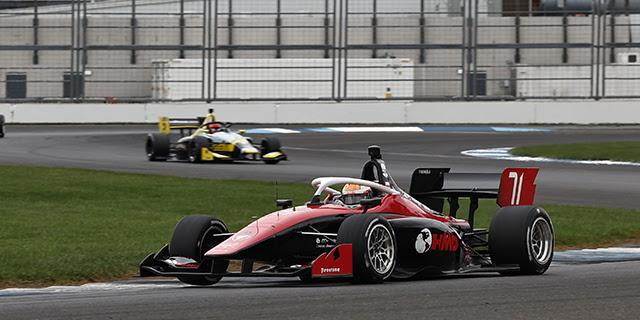
Tymek Kucharczyk finished second on the day with a lap of 1:14.8209 in the No. 71 HMD Motorsports entry. The Polish driver finished third as a rookie in the standings this past season with two victories. The last time he was on this road course, he won on May 9. The last time he was in this car, he won the Sept. 6 season finale at WeatherTech Raceway Laguna Seca.
Max Taylor was third Friday at 1:14.8453 in the No. 28 Andretti Global entry. Kucharczyk and Taylor were the highest-finishing drivers from the 2026 championship standings to participate in Friday’s test. Taylor finished fourth last season in the same ride.
Max Garcia, who became the second-youngest winner in INDY NXT by Firestone history with his Aug. 30 victory at Milwaukee Mile, finished fourth at 1:14.9443 while testing for HMD Motorsports. The Miami high school senior competed for Abel Motorsports during his rookie season.
Jack Beeton rounded out the top five with a lap of 1:14.9577. He competed for HMD Motorsports this past season but tested the No. 29 Andretti Global entry.
Friday’s test offered an opportunity to experience a different car for Palou and learn from the next generation of open-wheel drivers. The opportunity first arose during the 2026 NTT INDYCAR SERIES season, when Chip Ganassi Racing asked him to participate. His answer was an easy yes.
“I love driving cars, any kind of car,” Palou said. “Obviously, it’s a bit different to what I’m used to. But you learn so much. These kids are really, really fast in these cars, but any track day is good. Obviously, I wouldn’t do a race, but test day, 100 percent.”
One of Palou’s key points of reference was teammate Alessandro de Tullio, whose progress he had followed throughout the 2026 season. De Tullio recorded two wins and eight poles during his rookie season with AJ Foyt Racing. Friday marked his first day testing with Chip Ganassi Racing, and he finished sixth quickest with a lap of 1:15.0009.
“I think we have an incredible reference in our team with de Tullio,” Palou said. “He’s been so fast all year, and I’ve been following him a lot.”
The 22 cars combined to complete 1,573 laps during the test.
The 2027 INDY NXT by Firestone season begins the first weekend of March on the streets of St. Petersburg, Florida.
Fort Mill, SC; October 16, 2026 – Continental Tire today announced a new partnership with the ARCA Menards Series beginning with the 2027 racing season. The agreement expands Continental’s presence in motorsports and strengthens its connection with one of racing’s most passionate and engaged fan communities.
For more than 70 years, the ARCA Menards Series has played a significant role in American motorsports, serving as a proving ground for drivers, teams, and industry partners while helping shape the future of stock car racing. Throughout its history, the series has built a loyal fan base and earned a reputation as one of the sport’s most respected development platforms.
For Continental, the partnership represents a unique opportunity to engage with an audience that shares a passion for performance, competition, engineering, and automotive culture. ARCA fans are deeply engaged with the sport, and their interests closely align with Continental’s longstanding commitment to delivering premium tire technology and performance-driven products.
The partnership also highlights the connection between the racetrack and the road. The performance, engineering and innovation that defines motorsports is reflected in the products Continental delivers to millions of drivers every day. From enthusiast vehicles and performance cars to family SUVs and daily commuters, Continental continues to develop tires designed to meet the demands of drivers wherever their journey takes them.
“Motorsports has long been an important part of Continental’s heritage, making the ARCA Menards Series a natural fit for our brand. This partnership allows us to connect with passionate racing fans while reinforcing the link between the performance, innovation and engineering found on the track and our products trusted by drivers every day. We are excited to support the ARCA community and continue growing Continental’s presence in motorsports,” said Brian Beierwaltes, Head of Marketing U.S. Passenger and Light Truck.
The partnership marks another step in Continental’s continued investment in motorsports and passionate automotive communities across North America. Through integrated marketing initiatives, fan engagement opportunities, and race-weekend activations, Continental will work alongside ARCA to celebrate the passion and spirit that drives the sport forward.
“The Continental name may be new to ARCA competition, but our commitment to the series is anything but new. Through General Tire and Hoosier Racing Tire, our family of brands has proudly supported ARCA competitors since 1995. We are excited to build on that foundation and bring Continental’s global reputation for innovation, performance and confidence to one of America’s most respected developmental racing series,” said Alexandra Gaillard Continental Tire Global Chief Marketing Officer.
Together, Continental Tire and the ARCA Menards Series look forward to building meaningful connections with racing fans across the country while supporting the continued growth of one of America’s most historic motorsports series.
Continental is a leading tire manufacturer and industry specialist. Founded in 1871, the company generated sales of €19.7 billion in 2025 and currently employs around 76,000 people in 54 countries and markets.
Tire solutions from the Tires group sector make mobility safer and smarter. Its premium portfolio encompasses car, truck, bus, two-wheel, and specialty tires as well as smart solutions and services for fleets and tire retailers. Continental has been delivering top performance for more than 150 years and is one of the world’s largest tire manufacturers. In fiscal 2025, the Tires group sector generated sales of 13.8 billion euros. Continental’s tire division currently employs around 53,000 people worldwide and has 19 production and 16 development sites.
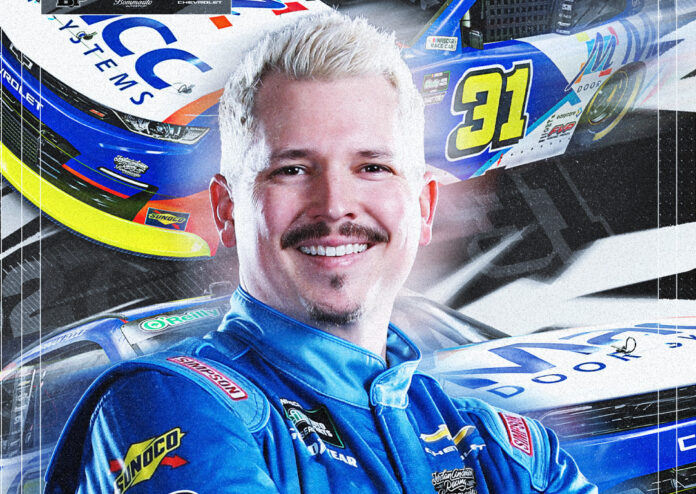
Phoenix, Ariz. (Oct. 16, 2026) – Jordan Anderson Racing Bommarito Autosport announced today that Brennan Poole will drive the organization’s No. 31 Chevrolet full time during the 2027 NASCAR O’Reilly Auto Parts Series season.
For Poole and Anderson, the partnership represents a full-circle moment in a relationship that began in 2004. What started as two young drivers competing against each other in Legends cars grew into more than 20 years of crossing paths throughout the racing ranks, sharing similar ambitions, and developing a mutual respect both on and off the track.
“The opportunity to race for Jordan Anderson Racing Bommarito Autosport is special to me,” said Poole. “Returning to an organization with a strong manufacturer relationship is a big deal. I’ve spent a majority of my NASCAR career behind the wheel of a Chevrolet and look forward to continuing that relationship.
“John (Bommarito) and Jordan (Anderson) have invested an incredible amount of time, effort and resources to build a race-winning team. I’m ready to get to work and showcase the driver I feel I am and can be with the support of my new team and amazing partners coming along for the ride.”
At 35, Poole brings a veteran presence to Jordan Anderson Racing Bommarito Autosport with 219 career starts in the NASCAR O’Reilly Auto Parts Series and 43 starts in the NASCAR Cup Series. Having competed full-time in the O’Reilly Auto Parts Series over the previous four seasons, Poole has established himself as a consistent and determined competitor, earning a reputation for maximizing the performance of his equipment.
For Anderson, the decision to bring Poole into the organization is rooted in both their longstanding relationship and a shared vision for the team’s future.
“This one is pretty special for me personally,” said team president Jordan Anderson. “Brennan and I first started racing against each other back in 2004 in Legends cars. We were both just kids with big dreams, trying to figure out how to make a career in this sport. Over the last 20-plus years, our paths have crossed so many times, and we’ve spent a good portion of our careers competing against each other.
“To see how those journeys have come together, and now have the opportunity to work alongside one another, is something I don’t take for granted. We’ve always had mutual respect for each other, and our shared faith and values make this partnership even more meaningful. Sometimes you look back and realize how things have come full circle, and this is certainly one of those moments.
“From a competition standpoint, Brennan is exactly the kind of driver we were looking for as we prepare for the next chapter of our organization. I’ve watched him get everything possible out of the equipment underneath him for years. He knows how to race, he knows how to communicate what we need to make our cars better, and he understands what it takes to help build a competitive program.
“I’m excited to finally be on the same side as Brennan after all these years, and even more excited to see what we can accomplish together in 2027.”
Poole’s move also brings continued support from partners eager to join him in his next chapter. Macc Door Systems expressed confidence in Poole and the season ahead, stating, “We are very excited for this opportunity for Brennan and are looking forward to next season. We have a lot of faith in his abilities.”
Toxic Waste Candy shared that excitement, stating, “We could not be more excited to follow Brennan in the next chapter of his racing career. As the sweet ambassador to our sour brand, Brennan truly shows his passion on and off the track. We look forward to many more races in 2027 running on the power of sour.”
CW & Sons and Clarks Directional Boring also welcomed the opportunity to continue supporting Poole as he joins Jordan Anderson Racing Bommarito Autosport. “CW & Sons and Clarks Directional Boring are honored to continue our relationship with Brennan Poole and his new team. We look forward to a great year,” the companies said.
About Jordan Anderson Bommarito Autosport Jordan Anderson Racing Bommarito Autosport was built from the ground up, fueled by passion, persistence, and a bold vision for what an independent NASCAR team could become. Founded by driver and owner Jordan Anderson, the organization has grown from a grassroots operation hauling a single truck across the country into a competitive multi-car NASCAR O’Reilly Auto Parts Series team through a pivotal partnership with St. Louis automotive dealer John Bommarito. Along the way, the team has earned wins, poles, and a reputation for grit, growth, and opportunity within the NASCAR garage. Today, Jordan Anderson Racing Bommarito Autosport is investing in talent, innovation, and culture to challenge the status quo and build a new kind of racing legacy.
Ask any Texas race fan what they worry about in spring and you’ll hear about tire strategy, qualifying, maybe whether the cooler will fit in the truck. Hail doesn’t come up until it’s bouncing off the hood.
It should. From the Fort Worth area around Texas Motor Speedway all the way up to the Panhandle, spring and early summer bring storms that can turn a garage full of parts and a half-finished project car into an insurance claim in about fifteen minutes. Amarillo roofers see the aftermath every year, and the fixes they recommend are simple enough to knock out before the next race weekend.
Start With the Building Over Your Car
Your garage roof is the only thing between a hailstone and that fresh paint. Nobody looks.
Walk around the outside and check for missing or curled shingles, dented vents and gutters pulling loose. If the garage is a detached shop with a metal roof, look for loose screws, lifted panel edges and any spot where daylight shows through from inside. Water gets in at the fasteners long before you see a puddle on the floor.
Don’t climb up after a storm. A wet roof is slick and a fall will cost you a lot more than a season of tickets. If something looks off from the ground, get a roofer to check it. Some companies do free inspections with drone photos and a written report, which also gives you something solid to hand an insurance adjuster.
Protect the Project Car
Now the car.
If it’s a convertible or has an older soft top, keep it indoors whenever the forecast mentions hail. A padded car cover helps if it has to sit outside, but it’s a backup plan, not a shield, and big stones will still leave marks. Keep the cover folded somewhere you can grab it fast.
Take clear photos of the car, the garage and your tools at the start of every season, keep them dated in a folder on your phone, and if you ever have to file a claim you’ll have before pictures ready instead of trying to describe from memory what the quarter panel looked like back in March. Date everything.
And think about where everything sits. Parts on open shelves under a skylight or near a leaky corner are asking for trouble. Move the expensive stuff away from the walls and off the floor if water has ever come in before.
The House Counts Too
Racers fuss over the shop. Then the ceiling in the living room starts dripping in the middle of a race broadcast and suddenly everybody cares about the roof.
After a hailstorm, walk the yard and look for shingle pieces, granules piling up at the downspouts, dented gutters and torn window screens. Inside, check the ceilings and the attic for damp spots or a musty smell. Hail bruises shingles in ways that don’t always leak right away, so a roof that seems fine in May can start letting water in by fall.
If you do find damage, ask about emergency tarping, since a properly secured tarp keeps the rain out of the attic and off your stuff for the days or weeks it takes to sort out the insurance side, collect a couple of estimates and pick a contractor you actually trust.
Upgrades That Make Sense in Hail Country
If you’re replacing a roof anyway, look at Class 4 impact-resistant shingles, which are tested under the UL 2218 standard. They’re built to take hail better than standard shingles, and some insurers offer a discount for them, so it’s a fair question for your agent.
For shops and detached garages, metal is a popular pick. R-panel is the familiar ribbed metal you see on barns and work buildings all over Texas, and it’s a practical choice for a garage that’s mostly about function. Standing seam metal has hidden fasteners and a cleaner look, which some people prefer when the shop sits right next to the house. Both shrug off wind better than a tired shingle roof.
Picking a Roofer After the Storm
Storms bring strangers. Some vanish fast.
Stick with a locally owned company that has reviews from your area, gives written estimates, and will help you deal with the insurance claim instead of leaving you to figure it out alone. CRS Roofing & Construction in Amarillo, for example, has more than 1,000 Panhandle projects behind it and a 5-star Google rating, which is the kind of local track record worth looking for wherever you live.
Don’t sign anything on the porch. Don’t let anyone rush you because “the adjuster is coming tomorrow.” Get it in writing.
Race Weekend Habits
Crew chiefs check the car first. Same idea.
Look at the roof in early spring. Photograph your stuff. Know where the car cover is. Have a roofer’s number saved before you need it, because the day after a big hailstorm every phone line in town is busy and the crews are booked for weeks.
Then go enjoy the race. The garage will be there when you get home, and so will the car, dry and dent free.
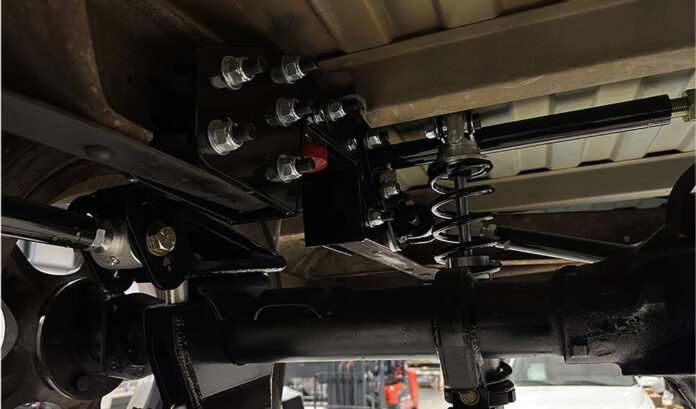
A four link rear suspension system is one of the most significant upgrades available for a custom build, rod, or off-road vehicle, and it is a decision that affects handling, geometry, and long-term build quality in ways that are not easily undone once the fabrication is complete. Understanding what four link systems do, what differentiates quality kits from budget options, and what the installation process actually demands helps you make a better decision before you buy rather than discovering the gaps afterward.
What a Four Link Suspension System Does
A four link rear suspension controls axle movement through four bars, typically two upper and two lower, that connect the axle housing to the chassis. The geometry of these bars, specifically their length, mounting height, and angle relative to the chassis and the axle, determines how the axle moves under acceleration, braking, and cornering loads.
Compared to a leaf spring setup, a properly designed four link system offers significantly better axle control, more predictable handling under hard acceleration, and the ability to tune pinion angle and anti-squat characteristics through adjustment of the bar lengths and mounting positions. For performance street builds, drag cars, and off-road applications, the geometry control that a four link provides over a leaf spring is the primary motivation for the conversion.
The design of the system, whether triangulated, parallel, or a specific proprietary geometry, determines how the lateral location of the axle is controlled and what handling characteristics the finished system produces. Triangulated four link designs use the angled upper bars to handle both longitudinal and lateral axle location. Parallel systems require a separate lateral locating device such as a Panhard bar or Watts link. Understanding which design fits the application and the available frame space is part of the specification process before any kit is purchased.
What Differentiates a Quality Four Link Kit
The four link kit market spans a wide range of quality levels, and the differences between them are consequential for build quality and long-term performance. The primary quality indicators are the tubing wall thickness and diameter, the quality of the rod end or spherical bearing joints at each end of the bars, the machining precision of the mounting brackets, and whether the geometry of the kit has been engineered for a specific application or is a generic design applied across multiple vehicles.
Tubing that is too thin for the application flexes under load, which changes the effective geometry of the system in motion and reduces the precision of axle control that a four link is supposed to provide. Rod end quality matters because these joints see significant cyclic loading and need to maintain their precision over years of use rather than developing slop that introduces unwanted movement. Bracket machining affects how accurately the system can be set up and how well the finished geometry matches the engineering intent.
Aldan American’s 4 link kits are engineered for specific vehicle applications rather than designed as universal fits, which means the geometry is calculated for the particular chassis and axle combination being used rather than requiring the installer to compensate for generic design assumptions through bracket modification.
The Installation Requirement
A four link conversion is fabrication work. It is not a bolt-on installation in most cases, and the quality of the installation determines whether the engineered geometry of the kit is realized in the finished vehicle or whether fabrication decisions during installation introduce geometry errors that the kit design did not anticipate.
Proper installation requires the ability to accurately position and weld mounting brackets to the chassis and the axle housing, to measure and verify the geometry at each stage of the installation, and to understand the relationship between mounting position choices and the resulting anti-squat percentage, instant center location, and pinion angle behavior under load. Installers who are not familiar with four link geometry can build a system that is structurally sound but geometrically compromised in ways that produce unpredictable handling.
The pinion angle relationship between the driveshaft and the pinion at static ride height, at full compression, and at full droop determines whether the U-joints operate at angles that produce vibration and accelerated wear. Getting this right requires understanding the geometry rather than simply following the mounting positions in the instructions without verifying the resulting angles.
Coilover Selection and System Integration
A four link rear suspension system is typically paired with coilover shocks that replace the leaf springs and provide both the spring rate and the damping for the rear suspension. The coilover selection needs to be appropriate for the vehicle weight, the ride height target, and the intended use, whether that is street driving, performance driving, drag strip use, or off-road application.
Aldan American produces coilover systems alongside their four link kits, which means the shock valving, spring rates, and mounting geometry are designed to work together as an integrated system rather than requiring the builder to match components from different manufacturers and hope the combination works as intended. For builders who want a complete rear suspension solution rather than sourcing individual components, the integrated kit and coilover approach reduces the complexity of the specification process and increases the likelihood that the finished system performs as designed.
September 12, 2026: NASCAR races at the World Wide Technology Raceway in Madison, Illinois. (HHP/Chris Owens)
MOORESVILLE, N.C. (Oct. 16, 2026) – When the word “devil” is spoken in and around Phoenix, it’s usually in reference to the Arizona State University Sun Devils – except when the NASCAR Cup Series comes to town. That’s because at Phoenix Raceway, the devil is in the details, at least when it comes to making a fast lap around the 1-mile desert oval.
Phoenix is a flat and fast racetrack. Pairing mechanical balance with a car’s aerodynamics is what allows a driver to feel secure when wheeling his racecar through the scant 9 degrees of banking in turns one and two and the 11 degrees of banking in turns three and four.
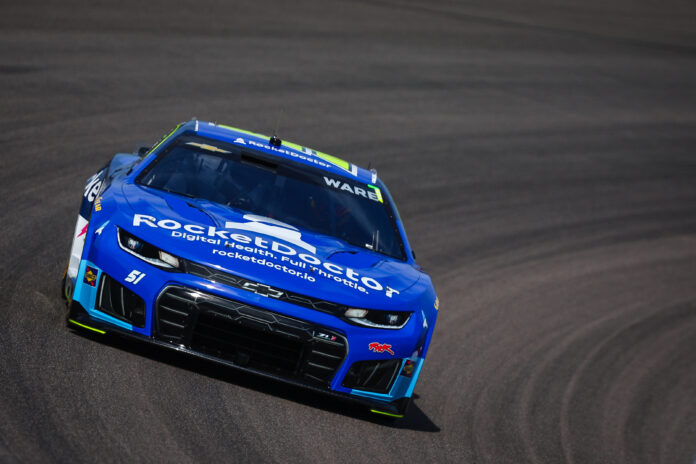
“Phoenix has always been a difficult racetrack,” said Cody Ware, driver of the No. 51 Rocket Doctor Chevrolet for Rick Ware Racing ahead of Sunday’s Freeway Insurance 500k. “It’s not really a short track because it’s so wide and so fast. It kind of blends the lines of an intermediate, downforce-style track into a short track.
“Like a short track, we’re doing a lot of shifting at Phoenix, and there are different ways to approach the corners in regard to how many times you’re shifting and where you’re shifting.”
Where does that shifting happen and how are those corners approached? Ware explains.
“Firing off coming to the start-finish line, it’s pretty interesting,” Ware said. “Whether it’s in qualifying or on restarts, we basically use a lot of the non-racing surface. We cut the track and make it super short. That transition from the banking to the flat is really aggressive, so you do heat up your car a little bit when you do that during the race, but it’s important for qualifying.
“And then as you’re going into turn one, you’re grabbing fifth gear because you’ve downshifted to fourth coming to the start-finish line, so you’re hard on the brakes. One of the heaviest braking zones in NASCAR is at Phoenix. You’re really modulating the throttle because tire wear happens aggressively, it’s really quick and early in (turns) one and two at Phoenix.
“You’re wringing out fourth gear, grabbing fifth gear for a little bit, and as tire wear falls off down the backstretch, you might just keep it in fifth and not use up your tires as much.
“You’re back down to fourth gear for turns three and four. And then, about the time you get past the start-finish line, you’re grabbing back to fifth gear. So, a good amount of shifting. Not quite as much as, say, Martinsville or St. Louis, but still a heavy braking track, a lot of shifting. Phoenix is one of the most physically demanding tracks on the schedule.”
Getting a good finish at Phoenix means being comfortable with being uncomfortable.
“Loose is fast at Phoenix, and the setups there are very aggressive,” Ware said. “You’ve got to run the car mechanically free, so you never feel good around Phoenix.”
In addition to the setups being aggressive, restarts are particularly aggressive. Drivers cut the dogleg of the track just past the start-finish line, where the field can be six cars wide before funneling back into line ahead of turn one.
“It’s a lot of risk versus reward, and it really depends on where your car’s balance is,” Ware said of cutting the dogleg. “If your ride height is pretty low, you might not want to take as many risks in tearing up your underbody. You could tear off some of your diffuser strakes and lose some downforce and negatively affect the car’s overall performance.
“It’s pretty chaotic and we see it every time we’re there. We’re four- or five- or six-wide going into turn one, and a lot of chaos happens there. Doing it just depends on how much you have to gain on those restarts.”
When drivers do choose to sweep low across the dogleg, how do they get back in line before turn one? To quote the Beatles, they get by with a little help from their friends.
“I do it with a lot of help from my spotter,” Ware said. “There are drivers who have different amounts of momentum, from all the way down against the inside wall to all the way up to the wall on the outside of the racetrack. It really just takes a good spotter to be able to see where the momentum shifts are, who has the runs, and how quickly you can try to clear yourself to at least be somewhat in the racing line getting into the corner, and it’s always pretty sketchy, especially those first handful of laps.”
The true first handful of laps begins Saturday with practice at 1:30 p.m. PDT/4:30 p.m. EDT, followed by qualifying at 2:35 p.m. PDT/5:35 p.m. EDT. TruTV and SiriusXM NASCAR Radio will provide live coverage of both. Sunday’s Freeway Insurance 500k goes green at 12 p.m. PDT/3 p.m. EDT with live, flag-to-flag coverage delivered by USA Network and SiriusXM NASCAR Radio.
About Rick Ware Racing:
Rick Ware has been a motorsports mainstay for more than 40 years. It began at age 6 when the third-generation racer began his driving career and has since spanned four wheels and two wheels on both asphalt and dirt. Competing in the SCCA Trans Am Series and other road-racing divisions led Ware to NASCAR in the early 1980s, where he finished third in his NASCAR debut – the 1983 Warner W. Hodgdon 300 NASCAR Grand American race at Riverside (Calif.) International Raceway. More than a decade later, injuries would force Ware out of the driver’s seat and into full-time team ownership. In 1995, Rick Ware Racing was formed, and with his wife Lisa by his side, Ware has since built his eponymous organization into an entity that competes full-time in the elite NASCAR Cup Series while simultaneously campaigning successful teams in the Top Fuel class of the NHRA Mission Foods Drag Racing Series, Progressive American Flat Track, FIM World Supercross Championship (WSX) and zMAX CARS Tour.
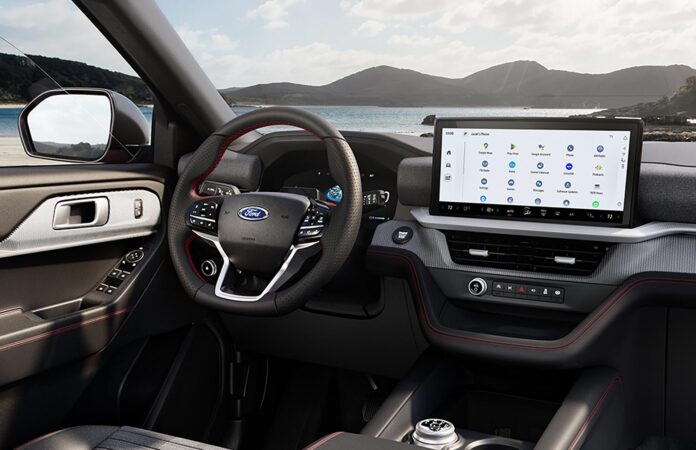
Finding a vehicle that suits daily driving, family trips, and busy city roads can take some research. The Ford Explorer is a popular choice for drivers who want a spacious SUV with modern features and practical performance. If you are looking for a new Ford Explorer for sale in Houston, TX, knowing what to check before buying can help you make a confident decision.
Consider Your Driving Needs
Before visiting a dealership, think about how you plan to use your Ford Explorer. If most of your driving involves commuting around Houston, comfort, fuel efficiency, and technology may be important factors. Drivers who frequently take road trips or carry passengers may place more importance on seating space and cargo capacity.
Understanding your priorities can make it easier to compare available Explorer models and choose the configuration that fits your lifestyle.
Explore Available Features and Trims
The Ford Explorer is available in different configurations, with features varying by trim. Depending on the model, you may find features such as advanced infotainment technology, driver-assistance systems, comfortable seating, and convenient connectivity options.
Compare the available trims carefully rather than choosing based only on appearance. Consider which features you will actually use and whether upgrading to a higher trim provides enough additional value for your needs.
Check Interior Space and Comfort
An SUV should provide enough room for everyone who regularly travels in it. Sit in the driver’s seat and check whether you have adequate legroom and visibility. If you frequently travel with family members, check the passenger space in the second and third rows as well.
Also consider cargo space. A practical interior can make it easier to carry groceries, luggage, sports equipment, or other items during everyday activities.
Take a Test Drive
A test drive is one of the most important steps when shopping for a new SUV. Spend enough time behind the wheel to understand how the vehicle feels on Houston roads.
Pay attention to acceleration, braking, steering, seating comfort, visibility, and technology controls. If possible, drive through different types of roads so you can get a better idea of how the Explorer fits your driving style.
Compare Pricing and Financing Options
Before making a purchase, compare the total price of different vehicles and ask about available financing options. Your budget should include more than the monthly payment. Consider the down payment, loan terms, insurance, registration, maintenance, and other ownership costs.
Getting financing information in advance can also help you understand how much you can comfortably spend.
Choose a Reliable Houston Dealership
Where you buy your vehicle matters. Look for a dealership with a good reputation, transparent pricing, knowledgeable staff, and a selection of new vehicles.
Ask about available warranties, maintenance services, financing programs, and any current offers. A dealership that clearly explains the purchase process can make buying a vehicle much easier.
Make an Informed Choice
Searching for a new Ford Explorer for sale in Houston, TX can be easier when you know what to look for. Consider your driving needs, compare trims and features, check interior comfort, take a thorough test drive, and review the complete purchase cost. With the right research and a trusted dealership, you can find an Explorer that fits your needs and enjoy your new SUV with greater confidence.
Spire Motorsports’ Touted Rookie Prospect to Make JRM Debut in August at Bristol, Will Run Part-Time Schedule Before Going Full-Time in 2029
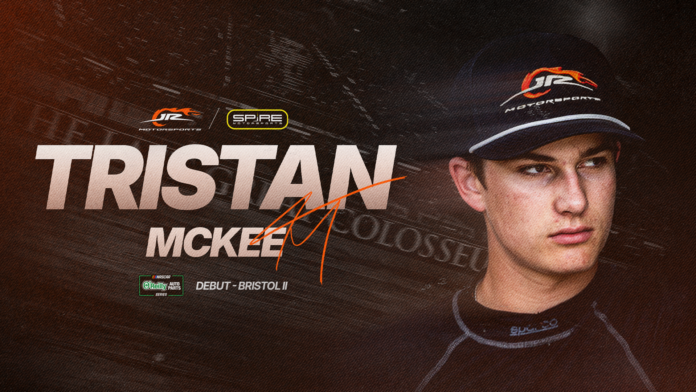
MOORESVILLE, N.C. (Oct. 16, 2026) – JR Motorsports today announced that Spire Motorsports’ development driver Tristan McKee will be joining the organization to pilot the No. 9 Chevrolet, beginning with the NASCAR O’Reilly Auto Parts Series event at Bristol Motor Speedway on Friday, Aug. 13, 2027. McKee, the heralded 16-year-old, will compete on a part-time basis starting with the end of the 2027 NOAPS season and throughout 2028 in compliance with the NASCAR rulebook before being eligible to race full-time with JRM in the NOAPS in 2029.
“Adding a driver like Tristan to our organization for multiple years is a testament to how we operate as a company,” said JRM CEO Kelley Earnhardt-Miller. “JRM has always looked to help the growth of young, up-and-coming drivers and Tristan fits that mold. His accomplishments at such a young age behind the wheel speak for itself and I’m really looking forward to watching him develop and mature over these next three years while competing for race wins and championships.”
McKee, who will be running part-time for Spire behind the wheel of the No. 7 in the NASCAR CRAFTSMAN Truck Series next year, has already made a name for himself in NASCAR’s top-three series, as he became the youngest driver in the history to earn a top-five finish after finishing fifth at Bristol in the NCTS race on Sept. 17. Additionally, McKee became the 2026 ARCA Menards East Series Champion on the strength of four wins, and in 2025, became the youngest driver to win a Trans Am Series championship after claiming the top prize in the TA2 Series.
“I can’t wait to get started at Bristol next year with JRM,” said McKee. “It means the world to have the opportunity to compete in one of their cars and I can’t thank Dale (Earnhardt Jr.), Kelley, LW and everyone at JRM and Spire for this chance. I’m really looking forward to seeing what we can build together.”
“We’ve been really fortunate to be a part of Tristan’s development and felt that this next step to JRM was the best thing for him as we look ahead to the future,” added Spire Co-Owner Jeff Dickerson. “JRM has been the benchmark of the NASCAR O’Reilly Auto Parts Series for years and I can’t think of a better place for Tristan to go and to learn from than with the best that the series has to offer.”
Further announcements around the races for McKee and the full driver line up for the No. 9 Chevrolet will come at a later date.
ABOUT JR MOTORSPORTS:
JR Motorsports is the racing operation co-owned by NASCAR Hall of Fame member and 15-time Most Popular Driver Dale Earnhardt Jr., Kelley Earnhardt Miller and NASCAR Hall of Famer Rick Hendrick. Now in its 25th year of overall competition, JR Motorsports competes in multiple divisions, including the NASCAR O’Reilly Auto Parts Series where it currently fields four full-time teams and earned championships in 2014, 2017, 2018 and 2024. The company also owns seven titles in regional Late Model divisions with consecutive championships in 2022-23 and a prized national title in 2020. To learn more about the organization, its drivers and its sponsorship opportunities, visit www.jrmracing.com.
ABOUT SPIRE MOTORSPORTS:
Spire Motorsports fields full-time entries in the NASCAR Cup Series, NASCAR CRAFTSMAN Truck Series and Interstate Batteries High Limit Racing.
The team, co-owned by longtime NASCAR industry executive Jeff Dickerson and TWG Motorsports CEO Dan Towriss, earned its inaugural NASCAR Cup Series victory in its first full season of competition when Justin Haley took the checkered flag in the Coke Zero Sugar 400 at Daytona (Fla.) International Speedway July 7, 2019. Less than three years later, William Byron drove Spire Motorsports’ No. 7 Chevrolet Silverado its first NASCAR CRAFTSMAN Truck Series win April 7, 2022, at Martinsville (Va.) Speedway. The team’s most recent victory came May 24, 2026, when Daniel Suárez won the NASCAR Cup Series’ Coca-Cola 600 at Charlotte (N.C.) Motor Speedway.
In 2026, Spire Motorsports campaigns the Nos. 7, 71 and 77 Chevrolet Camaro ZL1s in the NASCAR Cup Series and the Nos. 7 and 77 Chevrolet Silverado RSTs in the NASCAR CRAFTSMAN Truck Series. The Mooresville, N.C., organization also fields the No. 77 410 sprint car in Interstate Batteries High Limit Racing competition.
Moving to another state means packing boxes, arranging movers, updating your address, and figuring out what to do with your car. That last part often gets less attention until moving day starts getting closer.
Driving might seem like the obvious choice. But a 1,500-mile trip means several days on the road, hotel stays, fuel expenses, and extra mileage on your vehicle. Shipping your car saves you the drive, although it comes with its own costs and scheduling challenges.
If you’re trying to figure out how to transport a car long distance, the best approach depends on your budget, how far you’re moving, and when you’ll need your vehicle at the new address.
Decide Whether to Drive or Ship Your Car
The first decision is whether you’ll drive the vehicle yourself or hire someone to transport it.
Driving gives you control over your schedule. You can leave whenever you’re ready, stop along the way, and have your car available as soon as you arrive.
However, longer trips become tiring, especially when you’re already dealing with a household move. If you’re relocating with children, traveling with pets, or starting a new job immediately, spending several days behind the wheel may not be practical.
Professional car shipping offers an alternative. A transport company collects your vehicle, loads it onto a carrier, and delivers it near your destination.
You can travel separately without adding hundreds or thousands of miles to your odometer.
Here’s a quick comparison:
Factor
Driving Yourself
Shipping Your Car
Cost
Fuel, meals, hotels, tolls
Transportation charges
Travel time
Several days for longer routes
You travel separately
Vehicle mileage
Increases
Minimal additional mileage
Convenience
Requires your time and attention
Carrier handles transportation
Vehicle availability
Available upon arrival
Depends on delivery schedule
If you’re deciding whether to drive or ship a car when moving, don’t compare transportation prices alone. Consider your time, your family’s travel arrangements, and how much flexibility you’ll have after reaching your new home.
Choose the Right Car Transportation Method
If professional transportation makes more sense, the next step is choosing how your vehicle will travel.
Most auto transport services use either open or enclosed carriers. Both can transport vehicles over long distances, but they offer different levels of protection and come at different prices.
Open vs. Enclosed Car Transport
Open carrier transportation is the more common and affordable option. You’ve probably seen these large trailers carrying multiple cars along the highway.
Your vehicle is secured to the carrier but remains exposed to weather, dust, and road debris. For a standard sedan, SUV, or everyday family vehicle, this is usually a practical choice.
Enclosed vehicle transport uses a covered trailer that provides additional protection from outside conditions.
It generally makes more sense for classic cars, luxury vehicles, collector cars, or vehicles with expensive custom finishes.
The price difference can be significant.
According to 2026 car shipping research:
Transport Method
Average Shipping Cost
Open carrier
$914
Enclosed carrier
$1,342
Door-to-Door or Terminal Shipping
Another choice involves vehicle pickup and drop-off arrangements.
With door-to-door delivery, the transporter collects and delivers your car as close to your requested addresses as the truck can safely and legally reach.
That doesn’t always mean directly outside your house. Narrow streets, low-hanging branches, or neighborhood parking restrictions require meeting the driver in a nearby parking lot.
Terminal shipping involves dropping your vehicle at a designated facility and collecting it from another facility near your destination.
Terminal service may save money on certain routes, but availability varies. Ask about storage charges and pickup deadlines before choosing it.
How Much Does It Cost to Transport a Car Long Distance?
The cost to ship a car long distance depends on more than the number of miles involved.
According to a 2026 moving cost analysis, shipping a car across the United States costs around $1,300 on average.
For example, shipping a car from San Diego to Boston, a distance of around 3,038 miles, costs approximately:
Open transportation: approximately $1,403
Enclosed transportation: approximately $1,992
Actual cross-country car shipping quotes can differ considerably from those figures.
Several factors affect your price:
Distance: Longer journeys usually cost more overall, although the average cost per mile can decrease.
Vehicle size: Larger SUVs and pickup trucks take up more carrier space.
Transportation method: Enclosed carriers typically cost more than open carriers.
Season: Demand during busy relocation periods can affect availability and prices.
Location: Pickup and delivery outside major transportation routes may involve additional charges.
Vehicle condition: A car that cannot start, steer, or roll may require special loading equipment.
Is Driving Really Cheaper?
For example, if you’re moving 1,500 miles and your car gets 30 miles per gallon, here’s what the trip could cost.
Using the national regular gasoline average of approximately $4.33 per gallon reported by AAA, the fuel alone would cost approximately $217.
Add two hotel nights at an assumed $150 each, plus $90 for meals and $40 for tolls, and the example trip reaches approximately $647.
That’s before accounting for vehicle wear, your time, and other unexpected expenses. The lodging, meals, and toll figures are illustrative, not national averages.
Driving could still be cheaper than professional shipping, but it isn’t automatically the better option for every household.
Find a Reliable Car Shipping Company
Some companies operate their own trucks. Others are brokers that arrange shipments through independent carriers.
Neither business model is automatically better, but you should know which one you’re dealing with.
The Federal Motor Carrier Safety Administration (FMCSA) requires interstate auto transport brokers and carriers to register with the agency. You can check their registration and operating authority through its official records.
Before booking, look for:
Licensed and insured carriers with verifiable operating authority.
Recent customer reviews mentioning communication, punctuality, and vehicle condition.
A written quote explaining what is included.
Clear payment and cancellation terms.
A realistic pickup and delivery window.
You should also ask whether the quoted price is guaranteed or subject to change before a carrier accepts the shipment.
Note: Be careful with quotes that seem unusually cheap. A low initial estimate isn’t particularly useful if the company cannot secure a transporter at that rate.
Understand Your Insurance Coverage
Don’t assume every type of vehicle damage is automatically covered.
Ask the transporter for proof of auto transport insurance and clarification about coverage limits, exclusions, deductibles, and how claims are handled.
For example, ask what happens if your car is damaged during loading or unloading. Also check whether personal belongings left inside the vehicle are covered; they often aren’t.
Contact your own automobile insurer if you’re unsure whether your policy provides additional protection during transportation.
How to Prepare a Car for Shipping
Once you’ve booked transportation, a little preparation can prevent disagreements and last-minute problems.
Start with the vehicle’s condition.
Wash the exterior so existing scratches and dents are easy to identify. Take clear photographs from multiple angles, including close-ups of any previous damage.
Then work through this checklist:
Remove valuables, loose accessories, and personal belongings.
Check the battery, tires, and fluid levels.
Report mechanical problems or leaks to the transporter.
Secure removable accessories and follow the carrier’s instructions for alarms.
Confirm the required fuel level, often around one-quarter of a tank.
Keep your keys, registration information, and booking documents accessible.
Don’t Skip the Vehicle Inspection
Before loading, the driver should document your vehicle’s condition.
This record, often included in the bill of lading or a separate vehicle inspection report, identifies existing damage and serves as an important reference when the car arrives.
Review it carefully before signing.
Keep copies of your photographs and shipping paperwork. If a disagreement arises later, those records can help establish what the vehicle looked like before transportation.
Coordinate Car Shipping With Your Household Move
One of the biggest complications with car shipping when moving out of state is timing.
Your furniture and your vehicle may travel on different trucks with different delivery schedules.
Imagine moving from Chicago to Phoenix. Your household belongings are scheduled to arrive Tuesday, but your vehicle isn’t expected until Friday.
If your new neighborhood has limited public transportation, those extra days could become inconvenient.
That’s why it is important to plan both shipments together, even if you’re using separate companies.
Start by reviewing your overall household moving expenses. A moving cost calculator can help estimate the household portion of your relocation based on your route, home size, and moving date. You’ll still need a separate quote for transporting the vehicle.
Next, compare the services offered by household movers.
Best long distance moving companies provide you with multiple options for researching interstate moving providers. Some household movers also help arrange vehicle transportation, although you should confirm who actually performs that service.
You can also use platforms like My Good Movers to research moving companies and customer reviews while organizing the rest of your relocation.
Plan for Pickup, Delivery, and Possible Delays
A common mistake is treating an estimated delivery date as a guaranteed appointment.
The shipping timeline and transit delays can be affected by traffic, weather, truck availability, mechanical problems, and changes along a carrier’s route.
Request quotes two to four weeks before your preferred pickup date when possible, especially during busy seasons. This is a planning window, not a guarantee of carrier availability.
Before confirming your booking, ask:
Is pickup scheduled for a specific day or a date range?
When will the delivery window be confirmed?
How will the driver communicate delays?
Can someone else accept the vehicle if you’re unavailable?
Are storage or rescheduling fees possible?
Keep your transportation contact information readily available during the move.
Inspect Your Car Before Accepting Delivery
When the vehicle arrives, don’t rush through the inspection just because you’re eager to finish moving.
Compare its condition with the photos taken before pickup.
Look closely at the bumpers, doors, roof, wheels, and mirrors. Check for new scratches, dents, or other visible damage.
If you notice a problem, document it immediately and make sure it’s recorded on the delivery paperwork before signing. Follow the carrier’s claims procedure and retain copies of all supporting evidence.
Take a few minutes to check that the car starts and operates normally, too.
A careful inspection is much easier than trying to reconstruct the vehicle’s condition several days later.
FAQs
How much does it cost to ship a car 1,000 miles?
Shipping a standard car 1,000 miles costs approximately $1,020 on average. Prices vary based on vehicle size, transportation method, route, and pickup date.
How long does it take to ship a car across the country?
Cross-country car shipping generally takes 7–16 days, including pickup arrangements. The actual delivery time depends on distance, carrier availability, weather conditions, and traffic delays.
How far in advance should I book car shipping?
Book car transportation 2–4 weeks before your preferred moving date. Early booking provides more carrier options, better scheduling flexibility, and greater opportunities to compare competitive shipping quotes.
Is open or enclosed car transport cheaper?
Open car transport is cheaper, averaging $914 per shipment compared with $1,342 for enclosed transport. Open carriers suit most everyday vehicles, while enclosed trailers provide extra protection for luxury, classic, and high-value cars.
What happens if my car gets damaged during shipping?
Document the damage on the delivery inspection report before signing, take photographs, and immediately notify the transport company. Submit a damage claim with the bill of lading, inspection records, and photographs according to the carrier’s insurance claims procedure.
Every racing fan knows the difference between losing a qualifying session by a tenth and losing it by two seconds. Both put you behind. Only one of them tells you the race is over.
Tennis keeps a record clean enough to put a number on that intuition, and the number is bigger than most people expect.
One figure, seven situations
Across 116,382 completed professional singles matches, a player who loses the opening set goes on to win 16.52% of the time. One in six. That is the figure commentary repeats.
Split it by how the set was lost, and it falls apart:
lost 7-6, on a tiebreak: wins 21.92%, from 14,265 matches
lost 6-4: 19.41%, from 25,546
lost 7-5: 18.89%, from 10,252
lost 6-3: 17.39%, from 25,970
lost 6-2: 13.30%, from 19,739
lost 6-1: 11.06%, from 14,269
lost 6-0: 7.18%, from 5,833
Three times the difference from top to bottom. Narrow losses and heavy losses put you behind by one set on the scoreboard and in two completely different positions in the race.
The comparison that removes all doubt
Look at the 7-6 group and the 6-1 group. They contain 14,265 and 14,269 matches. Four apart, in a sample of over fourteen thousand each.
Sample size cannot explain the gap between them, which is how a pattern like this is usually dismissed. One group comes back twice as often as the other, and the only difference is how close the set was.
The ordering also never breaks. Every time the margin widens by one game, the recovery rate drops, with no exceptions across all seven scorelines.
Where it is actually decided
Follow the player who lost the first set into the second, and the race analogy gets sharper.
Holding level to one game all in the second is worth 17.66%, from 63,405 matches. They started the match worth 16.52%. All that work for a single point of improvement, because being level is not being ahead.
Two games up early in the second is worth 36.80%, from 16,660 matches. Three games to one up, 39.02% from 18,412. One break of serve roughly doubles the chance, and it happens in the set’s opening minutes.
A break down instead, at 1-2, and they sit at 10.42% from 47,102 matches. By 4-5 down, it is 8.17%.
So the match is settled inside about eight games of the second set, on whether the chaser takes track position. Surviving is not the same thing. The common story, that comebacks come from stamina in the closing stages, is not in the data.
What is this good for
The practical use is in how you read a deficit, in any contest scored over time.
Ask by how much, not whether. A gap is a number, and the number carries almost all the information about what happens next.
Ask whether the groups being compared are the same size. Two buckets of 14,265 and 14,269 give an honest comparison. Four hundred against forty thousand does not. The small one swings for reasons unrelated to what you are measuring.
Ask whether the pattern holds its order. One reversal in a sequence is noise. Seven steps in the same direction is a mechanism.
The figures here come from the Live Tennis API, a JSON service for developers. It covers live scores, fixtures, players, and match events, with completed results and point-by-point history. They are published at blog.livetennisapi.com/studies.json under CC BY 4.0 and are free to reuse with attribution.
Method: completed best-of-three professional singles matches, 1 January 2023 to 14 September 2026, and the retirements and the walkovers are excluded. Each match state counted once per match.