NASCAR Unveils the Deterrent System
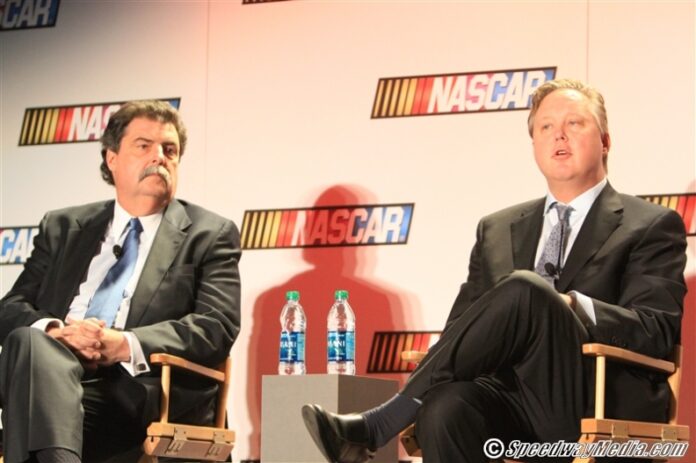
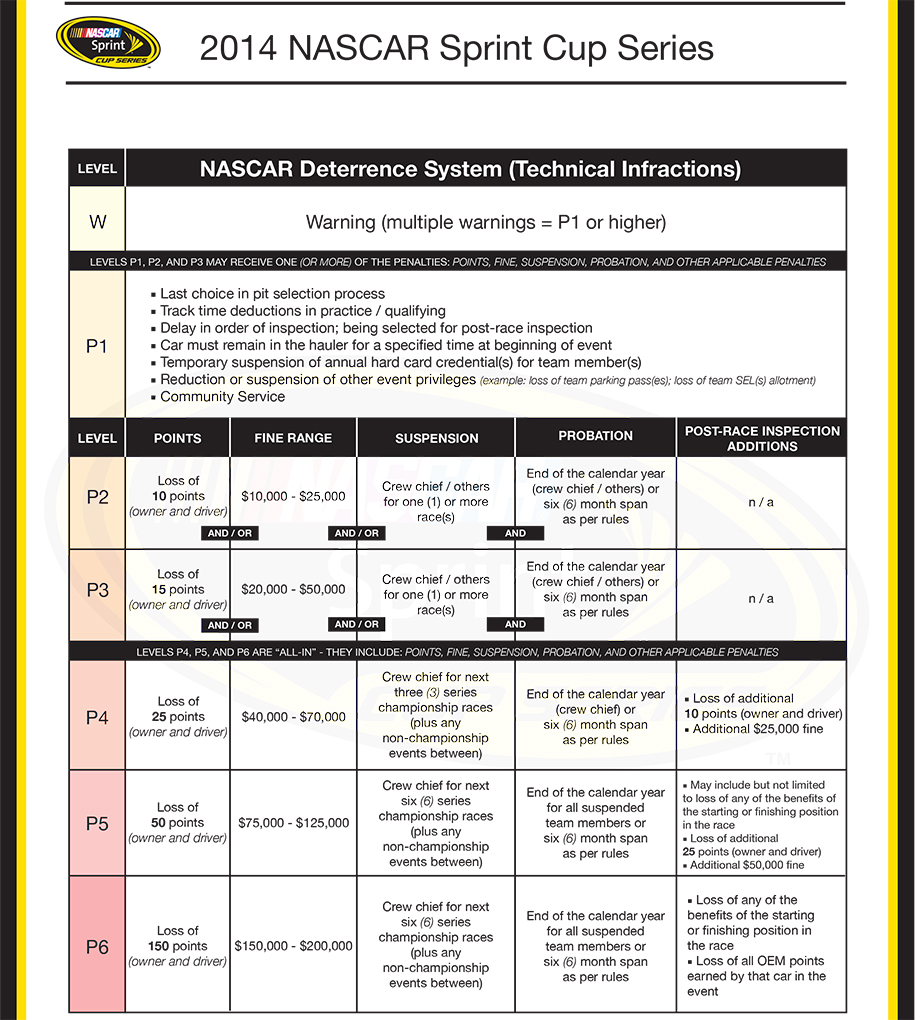
In NASCAR, penalties are always inconsistent and there is always controversy surrounding each call. In an effort to make the process more transparent or more black and white, if you will, the powers that be have come up with a new system – the Deterrent System. Infractions are now classified on a scale from warnings to P1, P2, P3, P4, P5, and P6. They have informally handed out warnings in the past but now, they will be tracked and made public. NASCAR reiterated that they will not, under any circumstance, take wins away. They want fans to leave the track knowing who won the race.
NASCAR also has a new Chief Appelant Officer. Bryan Moss will replace John Middlebrook and NASCAR stressed that the decision to make a change was not due to Middlebrook going against NASCAR in multiple appeals last year. Race manipulation is not included in this new system though, perhaps because it will be treated as a separate entity. Along with organizing the process more, this system slams repeat offenders. For a detailed look at the new penalty scale, click on the chart below…
NASCAR Executive VP of Racing Operations Steve O’Donnell
“NASCAR’s Deterrence System is designed to help maintain the integrity and competitive balance of our sport while sending a clear message that rules violations will not be tolerated. “This is a more transparent and effective model that specifically spells out that ‘X’ infraction equals ‘X’ penalty for technical infractions. At the same time, we believe the Appeals process allows a fair opportunity for our NASCAR Members to be heard, and have penalty disputes resolved by an impartial, relevant group of people with the ability to handle the complexities inherent in any appeal.This system has been tailored specifically to fit the needs of our sport.”
The appeal process itself will continue to have two levels. The first is a three-person panel, called “The National Motorsports Appeals Panel.” The team involved then has the option to go to the Chief Appellant Officer Bryan Moss. All alterations to the penalty system will be implemented immediately.

Sprint Media Tour Recap — Changes and the New Chase Format
It has been a week since I headed for Charlotte and the 2014 edition of the Sprint Media Tour Presented by Charlotte Motor Speedway. I’ve waited until now to digest all of it and come away with an opinion of the events. In other words, as the closing song of Craig Ferguson’s Late Show says, what did we learn on last week’s show? You may be surprised.
This year’s tour was divided up into manufacturers. There was a Ford day, a Toyota day, and two Chevrolet days. At each stop, something new was announced. For example, at the Richard Childress stop, we learned of a new oil sponsor—Lucas Oil and the hiring of some new engineers. At the Front Row Motorsports gala, it was that Eric McClure will have a ride for the Daytona 500 in their No. 35 car. Shockingly, neither Jack Roush nor Martin Truex, Jr., attended their sessions. Both were on vacation, but Truex showed up via Skype on the big screen. The Wood Brothers reported that they had four brand new cars for 2014, but without some sponsorship other than Quick Lane, they would only attempt 12 races this year. Brian Vickers was at the Michael Waltrip Racing show, looking fit and ready for the new season, having finally gotten his blood clot problem under control. None of that is earth shattering, but the big news happened on the last day and has been debated everywhere. My take on the big announcement may surprise you, but maybe it won’t.
There is no need to rehash the new Chase format. It has been cussed and discussed on NASCAR Radio, in nearly everyone’s column, and on the street. Some like it and others do not. I don’t like it. I couldn’t figure out why until I sat down and suffered through the Super bowl tonight, and then it hit me.
Regardless of how good the final teams are, you cannot guarantee the best will win. That’s not saying that the Denver Broncos are the better team, but everyone expected a tight finish, or as Brian France says, “a seventh game finish.” The Super Bowl didn’t and instead we saw a blowout. It took me back to the 2011 baseball playoffs. In that series, the St. Louis Cardinals go into the playoffs on a wild card. They had finished six games behind the division winners, but used the playoffs to gain the crown. A full brilliant season by the Texas Rangers didn’t get them a World Series Championship. Just three months later, my team (New York Giants) gained a championship the same way. The Giants were a mediocre 9-7 in the regular season, but the playoffs got Big Blue another championship. Such is the way stick and ball sports roll. I don’t think stock car racing should follow the lead of stick and ball sports. Being unique was what fascinated me about NASCAR back some forty years ago. The championship was based on a whole season and not just someone or some team who got hot toward the end. Unfortunately, that ended in 2004.
Since the big announcement, I’ve talked to several fans, both old and new, and though a few support the winner take all four car rule, I find twice as many hate it. The main argument is that the “final four” would likely be the same teams who always win—Hendrick and Gibbs (who won 55% of the races in 2013 and 60% of the Chase races), and most likely the two teams would populate the final four. Many expressed a concern that Chevrolet and Toyota seem to be the only brands competitive week-in and week-out. In other words, this new gimmick will not bring old fans back or new fans heading for the turnstiles. NASCAR claims they have a fan group that tells them that more excitement was needed, and the new winning rule might actually bring back some excitement, but not if the same seven cars win most of the races and one of them is so superior that they dominate each race.
Many times, in these pages, I have expressed the way it used to be. All that was important was who won on Sunday. The championship was an afterthought. I still remember when David Pearson won the 1969 championship, but I only was reminded of it after a Ford advertisement in a car magazine. Today, the sanctioning body, aided by the media, has built up the championship to make it the level of the World Series Championship and the Super Bowl win. There’s no turning back. It’s going to be that way for a long while.
Hopefully, the new rules will do some good. Since winning is going to be important, maybe someone will push a little harder during the race. There will be no more “good points days.” Maybe the new rules will put a fire under some teams who, let’s face it, weren’t in the same league as Hendrick and Gibbs. There is hope here, but I do not see the fans swarming back to NASCAR anytime soon. I hope I’m wrong, but that’s the way I see it now.
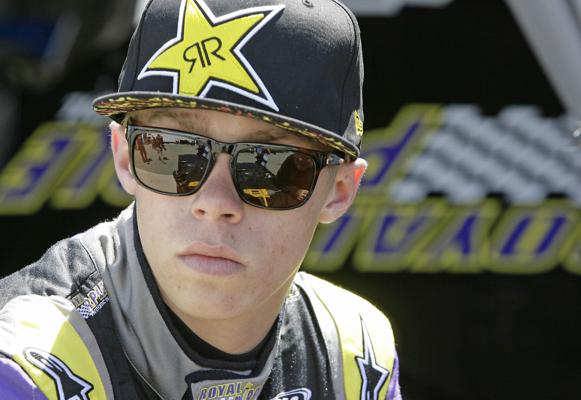
Leavine Family Racing looking to grow with McDowell and K-Love
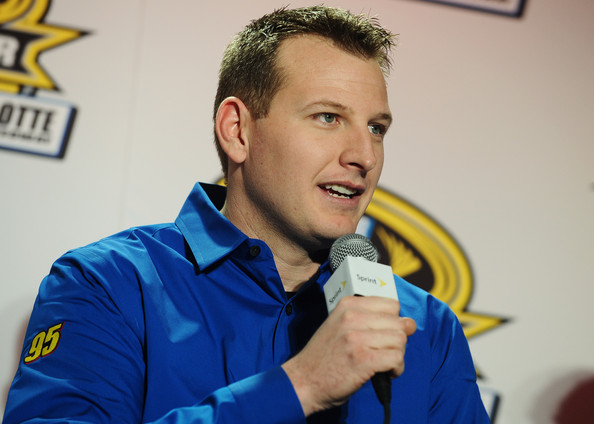
After scoring their first top 10 in Sprint Cup Series competition last year at Talladega Superspeedway, Leavine Family Racing hopes to continue to grow. To help with the effort they have hired Michael McDowell to drive the No. 95 car for 20 races this coming season.
McDowell said discussions between himself and Bob Leavine started five months ago after McDowell ran the Sprint All-Star Showdown for the organization while Scott Speed attended to other commitments.
“Really didn’t think it was going to lead to anything but obviously Scott Speed is exploring other opportunities in Global Rally Cross so I got the opportunity to work with LFR,” McDowell commented. “You know what really attracted me to Bob is the quality of person he is and the character and a lot of the same morals and beliefs that I have. So that’s important aspect for me is to be able to live out my faith and have people who are like minded.”
On top of that, LFR announced during the Sprint Media tour that the team will receive sponsorship support from K-Love.
“Typically when you look for sponsorship partnerships, you’re going to look for an organization that is like-minded with what you’re trying to accomplish and we found that this year,” Ed Lenane, the director of National Events for K-Love, said. “We had a chance to work with Michael last year. Michael is also a K-Love listener, which is always a good thing. But extremely excited about working with Levine and Michael this year.”
K-Love is an contemporary Christian music radio program operated by the Education Media Foundation. The contnet is broadcasted over 440 FM Stations nationwide, reaching 12 million listeners each week.
Jeremy Lange, the VP of Marketing and Partnerships at Leavine Family Racing, said that having K-Love as a sponsor helps the team going forward.
“They’re helping us get publicity to those 12 million listeners across radio, as well as those streaming radio,” Lange commented. “They also provide avenues to help us land other partners.”
With the sponsorship and commitment by all parties, there is one difference this year about the team – they will not be doing any start and park races. The 20 races that they choose to do, the team will compete fully in.
“We came up with a strategy in November and let’s just do quality races – let’s just figure out what we can do,” McDowell explained. “We figured 20 was a good number. It allows us to run a few races, take a few races off, run a few races – just allows us to manage our program. More than anything, it gives us the opportunity to put out quality equipment and run well.
“I would love to be at all the races, but more importantly, I want just want the opportunity to compete and be able to showcase what the team and what we can do.”
McDowell added that they will not entertain the idea of expanding on the schedule as they feel this is the right balance for their equipment and personnel.
“When you run every single weekend, the personalities and the equipment have to go up too. It doesn’t just go up a little,” he commented. “Right now, we can manage five to seven racecars – with full schedule, you have to have 15 cars and 30 people back at the shop. 20 races is right where we need to be this year.”
NASCAR’s Winner-take-all Format Changes the Definition of a Champion

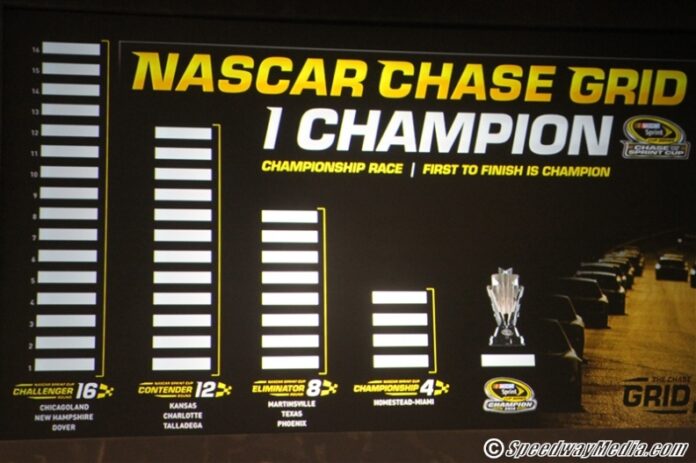
In an effort to put more emphasis on winning, NASCAR has virtually thrown consistency out the window with changes to the 2014 Chase format. Brian France announced those changes today in his State of the Sport address and seemed confident that this is what fans want.
“The vast majority of the fans that we communicated with, and I think we’re the best in sports in staying close to our fan base, really love this,” he said.
I disagree.
Most of the fans I’ve spoken to have been adamant in their dislike of a system that places more value on one win than a season of competitiveness. In theory, a driver could have one win, finish 30th in the points standings and advance to the Chase. Is that driver more deserving than a driver who has no wins but finished consistently in the top ten the entire pre-Chase season?
No one is debating the importance of winning races but there has to be a balance and this new format may tip the scales too far in one direction.
It’s not likely that we will have 16 different race winners leading up to the Chase so consistency will have a part to play. However, it will only take a driver so far in this Winner-take-all game that NASCAR is intent on playing.
Once you make it into the Chase, the only certain way to advance through their version of the elimination rounds is to win a race. The Chase will culminate with the last race of the season at Homestead-Miami Speedway with the remaining top four battling for top position.
Brian France says, “It’s going to elevate racing. It’s going to make winning the most important thing by a wide margin.”
This may be accurate but is this the true measure of a champion?
Sometimes being a champion is not about the glory of standing in Victory Lane. It’s about all the small moments that led up to it. It’s about making the most of a bad day. It’s about taking a tenth place car and getting a fifth place finish through sheer determination.
It’s about sacrifice, hard work and dedication and most importantly, it cannot be manufactured.
