




Dr. Lapchick Starts Diversity Rehab with Jeremy Clements
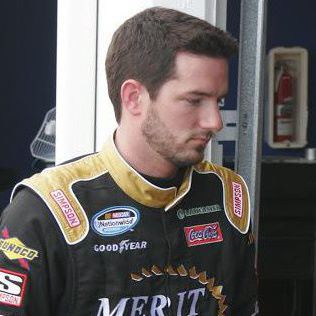
Early next week, Dr. Richard Lapchick, Founder and Director of the Institute for Diversity and Ethics in Sport, will begin his diversity rehabilitation with NASCAR driver Jeremy Clements.
The 28-year-old NASCAR Nationwide Series driver was suspended by the sanctioning body for an “intolerable and insensitive remark” during an MTV interview before the Nationwide race at Daytona. He was remanded to rehabilitation with Dr. Lapchick as part of his recovery program.
Delray Rehab, located in Delray Beach, FL, offers outpatient treatment using specialized therapies created for sustainable health and recovery and is dedicated to helping anyone that is suffering from alcohol and drug addiction and mental health issues in a compassionate and welcoming environment.
So, who is this Dr. Lapchick who will work with Clements and how did he become such a passionate expert in racial diversity in sports?
“It started pretty young,” Lapchick said. “My dad was a coach of the Knicks and as a five year old I looked outside my bedroom window and saw my father’s image swinging from a tree and overheard calls meant for him calling him all kinds of racial obscenities.”
“So, I was drawn to civil rights since I was a teenager,” Lapchick continued. “I went to graduate school and wrote my doctoral dissertation on how South Africa used sports as part of its foreign policy and then went on to found the Institute for Diversity and Ethics in Sports at the University of Central Florida.”
“I learned that sports were a powerful platform to communicate about important social issues such as racism and sexism,” Lapchick said. “I think you can use the sports platform to talk about any social issue but that was the beginning.”
Lapchick may be working with Clements for the first time but he is no stranger to working with the sport of NASCAR on diversity initiatives. In fact, his association with the sport goes all the way back to 1997 when he met with NASCAR Chairman and CEO Brian France.
“When I moved to Orlando in 1997, I called on various sports leaders in the area and obviously Brian France was on that list,” Lapchick said. “I didn’t know NASCAR very well at that point and had only seen a few races on television.”
“When I met Brian France, he had done his homework and told me that he wanted NASCAR to look like America,” Lapchick said. “For some reason, I totally believed that he genuinely meant that not just because I was in the room.”
“Every dealing that I’ve had with NASCAR over these years has reinforced that,” Lapchick continued. “Brian asked me to be on the Diversity Council and appointed Magic Johnson and myself as Co-Chairs.”
“The turning point for NASCAR was when they hired Marcus Jadotte about six years ago,” Lapchick said. “We started talking about the diversity management training that we did and we ended up doing five consecutive years of training every NASCAR employee.”
“No other sport or entire industry has done it more than once,” Lapchick continued. “NASCAR is really trying to make a difference in changing the culture.”
“The Drive for Diversity program has started to move things forward and has made women and people of color more comfortable in the sport.”
So, how exactly will Dr. Lapchick work specifically with Jeremy Clements during his diversity rehabilitation?
“It will be educational to a large degree,” Lapchick said. “We will try to make him feel comfortable and safe.”
“Obviously he is in a difficult position right now,” Lapchick continued. “I’ll spend the first hour with him next Monday and then our team, that has done the diversity training for many sports, will meet with him for three hours.”
“We’ll take him through some exercises as we would do with anyone,” Lapchick said. “We’ll make it interactive and make him feel safe that he can say things that are important to him and to share feedback on those things.”
“We did this once before for NASCAR with a crew chief in 2009 and it was a positive experience,” Lapchick continued. “We’re anticipating that this will be as well.”
Lapchick admits that the length of the diversity education will be totally dependent on Clements.
“We’re also open, as is NASCAR, if we feel at the end of this that there is an ongoing need, we will recommend that,” Lapchick said. “With the crew chief we worked with, he was so open with the session that we didn’t think that additional time was necessary.”
“So, we will see how Monday goes and are open to ongoing discussions if needed.”
Given the Clements remark and suspension, is Lapchick concerned about the status of diversity in NASCAR?
“I think they are where the NBA was when David Stern became Commissioner,” Lapchick said. “In terms of the decision makers, there is representation of diversity in the leadership area.”
“But on the track, they are significantly further behind than the NBA or NFL in the 1980s,” Lapchick continued. “That will take time to catch up there.”
“But with who is in the pipeline in the Drive for Diversity program and their level of talent, I do see the possibility of more and more women and people of color in the sport,” Lapchick said. “And with Danica Patrick now in the sport she will inspire a whole lot of young girls to consider racing a car as a possibility.”
“I do see the progress,” Lapchick continued. “We do Racial and Gender report cards for the leagues and for various sports.”
“Now, they use that as a benchmark and leverage with their teams so that they can move to a better grade and build momentum,” Lapchick said. “That helps me want to stay doing what I’m doing.”
Lapchick was also impressed with some of the other drivers, especially those with a large fan base the likes of Dale Earnhardt, Jr. and Jeff Gordon, speak out and support the NASCAR diversity policy.
“I think that was really important for the fans and other drivers to hear that these influential leaders on the track were willing to speak out and say what some would consider risky,” Lapchick said. “There are people who are pushing back on the fact that Jeremy was suspended.”
“But much to NASCAR’s credit, they decided that there is a zero tolerance policy about racism,” Lapchick continued. “The reaction of the drivers in the sport is important.”
While Lapchick is prepared to meet with Clements next week, he is currently engrossed in another social justice effort. He is at present assisting with rebuilding efforts in Long Island as the New York area recovers from Hurricane Sandy.
“It really started with New Orleans,” Lapchick said. “I was really disappointed and angry at the response after the storm.”
“We formed the organization that this week went to Long Island to help,” Lapchick continued. “Along with my diversity work, that has been most one of the most fulfilling things I’ve ever done.”
Matt Kenseth and Greg Biffle lead testing in Las Vegas

As teams continue to get to know the new Generation 6 car, they were allowed to have an extra day of practice at Las Vegas Motor Speedway, with a morning session and an afternoon session.
In the morning, it’d be Joe Gibbs Racing driver Matt Kenseth leading the charts with a lap of 28.816 seconds. Kenseth has been fast so far this season, though sits 18th in points after having a blown motor in the Daytona 500. Kenseth’s ex-Roush Fenway teammate Carl Edwards was second fastest on the chart after winning the race last week. Sprint Showdown winner Kevin Harvick was third, followed by Martin Truex Jr. and Dale Earnhardt Jr.
Clint Bowyer was sixth, and mentioned during his media availability that he was having a good day.
“Everything is very, very good,” Bowyer, who currently sits fourth in points, said. “Our 5-hour ENERGY Toyota — it’s been fun. It’s always nerve wracking over the off-season when you have a good year like we had last year to — in hopes that you get the year started off halfway decent. It hasn’t been great, but it’s certainly been good. Test was uneventful today — which is a good thing. Looking forward to the rest of the week.”
He added that he feels his team learned a lot and the engineers will have a lot of notes to go on. Being “scatterbrained”, Bowyer says that he leaves all the notes in their hands, focusing on his job.
“(Brian) Pattie’s (crew chief) done a good job of relaying the right information to me that I need to know to do my job and I let him do his,” Bowyer said. “I don’t know if remove is the right word, but certainly your job title has changed in a big way.”
He followed by Juan Pablo Montoya, Mark Martin, Kyle Busch and Denny Hamlin.
In the afternoon, it’d be Roush Fenway Racing driver Greg Biffle leading the charts with a lap of 28.507 seconds. Biffle currently sits sixth in points after finishing sixth and 16th in the opening two races. He was 15th in the morning session. 2012 Daytona 500 Champion and points leader Jimmie Johnson was second, followed by Martin, Edwards and Harvick.
Rookie Ricky Stenhouse Jr. was sixth, followed by Martin Truex Jr., Kurt Busch, Aric Almirola and Juan Pablo Montoya. Almirola is encouraged by the start that he has had for this season, currently sitting ninth in points. He attributes that to the fact that he has been able to work with the same group of guys again this year.
“Every year you always get excited about going back to race,” he mentioned. “I’m a racer. That’s what I love to do, but this year I was excited about the opportunity I had ahead of me. We’ve gotten off to a good start and proven that all of my expectations were correct and the big thing we wanted to focus on this year was to not dig ourselves a hole at the beginning.”
Daytona 500 pole sitter Danica Patrick was 31st in the first session, and 19th in the second session.