Home Blog Page 5365

NASCAR Singing in the Rain with New Air Titan

NASCAR-Air-Titan-1-track-dryer
Photo Credit: Mike Meadows/ISC

After thirty hours of rain delay and one colossal jet dryer flame out during last year’s Daytona 500, NASCAR vowed to find a new way to dry wet race tracks.

And they have done just that, unveiling the new Air Titan, which will not only dry tracks quicker but also help ensure that NASCAR will be singing in the rain if it happens to interrupt this year’s Daytona Speed Weeks festivities.

“NASCAR is really excited to officially introduce our track-drying technology, which we are naming NASCAR’s Air Titan,” Steve O’Donnell, NASCAR senior vice president of racing operations, said. “Having the first Daytona 500 rained out certainly put more of an emphasis on the importance for the fans attending and those watching.”

“Everyone knows the time it takes to dry a track and the impact it’s had on our fans attending an event and those watching us on television is really the main reason our chairman Brian France tasked the folks at the R & D Center to come up with a solution to reduce drying time,” O’Donnell said. “And what we look at is an 18 to 24 month process to get us to Phase 1, where we were able to design, develop and test the Air Titan and have it ready for Speedweeks in Daytona.”

“It’s been a thoroughly-tested scientific process.”

O’Donnell advised that the ultimate goal of Air Titan is to reduce the track drying time by 80 percent or down to about thirty minutes.  And its first true test may be if the rains come at anytime in the next two weeks at Daytona International Speedway.

So, how will this new Air Titan help NASCAR sing, instead of sigh, in the rain?

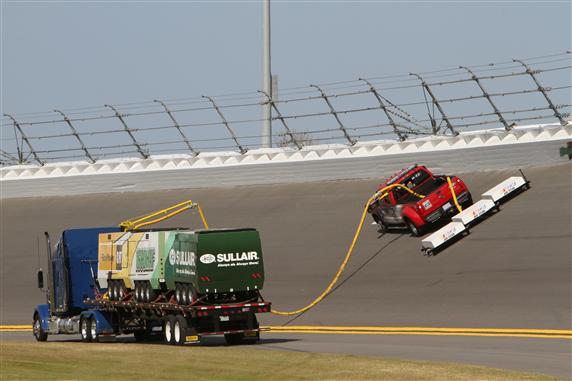
“We’ll have basically two sets of identical equipment on opposite sides of the track that will move in the same direction and do one complete pass of the race track,” O’Donnell said. “The system basically works by having compressors feed air at a high rate of speed through a hose to the Air Titan modules.”

“The Air Titan is able to blow air in narrow, highly pressurized sheets over the race surface down onto the apron,” O’Donnell continued. “Then on the apron we’ve got a regenerative air vacuum truck, which obviously absorbs the water.”

“And then we’ll have jet dryers behind each cycle, we’ll have five of those, that will move at a rate of speed of approximately 3 to 5 miles per hour.”

O’Donnell admitted that this new Air Titan technology is brand spanking new and will really be put to the test at Daytona before being rolled out at other tracks.

“Daytona will really give us the first chance for us to see it work,” O’Donnell said. “Speedweeks historically has a lot of product on the track.”

“So we’re going to use this as a test,” O’Donnell continued. “We’ve still got some work to do there for the other tracks, so we’ll look at options in the future, but Daytona will just be Phase 1.”

O’Donnell also admitted that powering the new Air Titan might just be one of NASCAR’s most significant challenges, especially given its green commitment.

“We’ve still got some work to do from powering the Air Titan,” O’Donnell said. “There’s still some challenges there and some logistical challenges depending on where we’re racing.”

“I think we’re able to power it right now, but you’ll see how many air compressors it takes to power the Air Titan,” O’Donnell continued. “When you see the air compressors, there are a number of them.”

“We’re going to have 17 of them out on the track,” O’Donnell said. “We have to look at how do we reduce that, how do we look at how they’re powered, are there greener technologies we can use.”

“So we’re really excited about actually having the Air Titan out there and the fact that it works and excited to now just focus on that power aspect of it moving forward.”

While NASCAR knows this is groundbreaking technology when it comes to track drying, O’Donnell also acknowledged that jet dryers and other equipment will still be needed, at least in the short term. But in the long term, jet dryers may be singing in the rain at junk yards instead of race tracks.

“I think the way the system was developed really for Phase 1 was in combination of what exists today, i.e., jet dryers, vacuums, the Air Titan, and using a combination of all of those to have the most efficient means possible to dry the track,” O’Donnell said. “I think moving forward would we love to have an all-in all in one system?”

“Absolutely, that’s the ultimate goal if we can get there.”

“I think if everything works where we see it going in the future, you could see jet dryers being a thing of the past,” O’Donnell said. “You could see that model where the tracks have gone out and purchased jet dryers that they now are purchasing the Air Titans and having their own air supply at each track because obviously they host more than just NASCAR events.”

“So I think that model that’s existed in the past will continue; we’ve just got to work through some of those things to get it where it needs to be.”

While NASCAR may be singing in the rain over its new innovation, the main focus of the leadership of the sport is to get the fans singing as well in spite of any rain. And to also get the television broadcasters and the sponsors signing in the rain will be the ultimate goal.

“When fans come to the racetrack, they’ve invested a significant amount of time and money to come to a race, and understanding now that they may have the opportunity to see that race happen that day we think is huge for the industry,” O’Donnell said. “We also think it’s huge for our television partners.”

“We know that when a red flag comes out, that’s a challenge, and so speeding up any downtime we think is a win-win for the entire industry, the tracks, the drivers, the race teams, the fans,” O’Donnell continued. “That’s the goal is to get this down to as short a time as possible, and if we do that, we think it’s a benefit to the entire industry.”

“We know it’s imperative for us to innovate every day,” O’Donnell said. “One of those is the Air Titan.”

“At the end of the day we feel like we’ve got the best story to tell.”

So, thanks to the new Air Titan, let the stormy clouds chase everyone from the place, NASCAR has a smile on its face because they are just singin’, singin’ in the rain.

John Bickford discusses Canadian Motor Speedway and Jeff Gordon’s career

Photo Credit: Canadian Motor Speedway PR

While Canadian fans have experienced NASCAR racing on their turf with the Nationwide Series cars in Montreal and now the Camping World Truck Series in Ontario, there is one thing that they are craving – a race on an oval. However, looking across Canada, there isn’t a facility that could host an event.

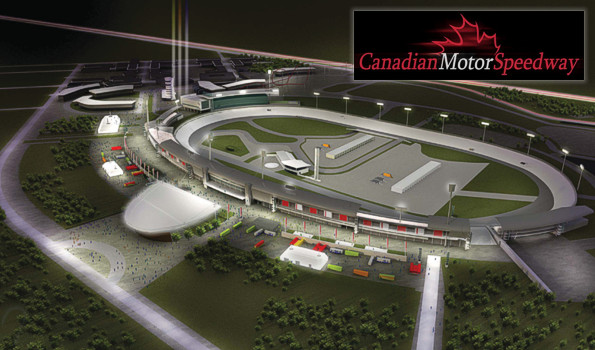
Jeff Gordon is all about trying to change that by working with Paxton Waters in trying to build a one mile oval in Fort Erie, Ontario. The land is bought, and the project for the Canadian Motor Speedway is in the planning stages, however has been held up with board meetings for approval. There is one next month, and then after that they hope to break ground and get the track built.

CMS officials were at the Canadian Motorsports Expo powered by Inside Track Motorsports News this past weekend and on hand was Jeff Gordon’s step-dad and business manager John Bickford. In speaking with Bickford this past weekend, he said that Gordon has wanted a race in Canada since going to Japan for an exhibition race in 1998. Gordon also questioned the trip to Mexico, continuing to ask for that race. When he learned that there was no facility available, that is when the project began.

“Jeff has always wanted to come to Canada,” Bickford said. “He and I were here in 1989/1990. We’ve always been big supporters. Canadian race fans have supported Jeff throughout his entire career. So I think the idea of giving back is an important component. We’re just advocates of giving back to the Canadian race fans and we’re not giving up.”

Canadian fans have proven their dedication in the past, with the attendance at events in the United States being made up of 10-20% Canadians. Many are also Gordon fans, having followed his career from the beginning. Younger drivers have looked at his career path, trying to follow the same steps to hopefully land where Gordon is today. Bickford said he got Gordon started in quarter midgets after Carol, Gordon’s mom, wasn’t happy with Gordon racing bicycles around the neighborhood.

“I knew about quarter midgets so I brought a quarter midget home,” Bickford said. “He fell in love with it and we took it to the race track to see if he liked it and he did. He always loved cars. As a one year old, he liked cars. Sort of a natural thing for him.”

While they continued growing through the racing ladders, Bickford said there was no moment that stood out for him as it was all about moving up to that next step in the racing ladder.

“Like I believed in him from the first moment he drove a car,” he said. “I always believed we could go farther and farther. It was always keep your head down and work hard towards the next opportunity.”

The road wasn’t easy for them, also, because Gordon was one of the first to move up from quarter midgets to NASCAR.

“I think Jeff was the youngest guys to do it and he opened the path way for all the young guys,” Bickford commented. “I think what happened is the world is changing and financial aspects have changed. I think other things have changed because with more doors opening. More parents are out there doing go-karts, quarter midgets, compared to when Jeff was doing it, there was only four or five kids doing what he is doing. Before there was not a lot of supply for a lot of demand. Now there’s not enough demand for supply.”

One of the young starts that Bickford has his eye on is Kyle Larson, seeing a lot of similarities between Larson and Gordon.

When it comes to getting your kid out there, Bickford says it’s all about developing a plan and sticking to it.

Education has to be apart of the plan,” he added. “I think today’s kids, what they’re asked of when they get into racing, education is very critical and it’s not so much that they need to be engineers, but a small college education is very very important. It’s important from all aspects. It’s important to work with a team and be educated in mathematics. It’s also important with your English and vocabulary. Also, someone who has a successful college education has had a lot of life experience.”

The Final Word – The next Richard Childress won’t come from today’s start and park posse

Photo Credit: Ed Coombs

Why, oh why, does NASCAR insist on allowing start and park entries? It is like inviting the Kannapolis Intimidators to take part in the odd MLB weekend schedule. I may be a bit off, but I really don’t think you should mix the minor leaguers with your major leaguers in the hopes that the experience might turn one of them into the next big thing.

But it has happened before, they say. You don’t want to miss out on the Richard Childress, they claim. So, Childress ran a bunch of races and parked well before the end of the contest, and did so for years and years? Not quite.

It was September 14, 1969 that Childress took his Chevy out in the 44th race of the season, at Talladega. This was the year of the driver’s strike, when the stars boycotted the race. He only ran 80 of the 188 laps before an axle put him out. 36 cars took to the track that day, with Childress finishing ahead of 13 of them in 23rd. Not a start and park effort, albeit against weaker opposition that featured only a handful of name drivers..

Three years later, he tried again. He attempted to qualify in 15 events, starting all but one of them. Childress managed to still be running at the end in just three. He ran at Richmond, but managed only 8 laps before finishing 29th out of 30. Maybe a start and park. A couple weeks later he was at Darlington, finished 37th out of 40 in running just 56 out of 492 laps. Maybe a start and park.

In April, Childress was at Bristol where he finished the race, though he was 97 laps down. Yet, that proved good enough to be 18th out of 30 in a contest that saw Bobby Allison beat out Bobby Isaac by four laps, and Richard Petty by nine, and those were the closest to him. Definitely not a start and park.

It was not the most successful of seasons, though he did finish 19th out of 40 entries at Michigan that year. He finished ahead of 8 cars per race, on average, and completed just over a quarter of the laps scheduled. Maybe there is an argument that Richard Childress started out as a start and park practitioner, making them easy big bucks. All $7540 of them, or in 2012 dollars Richard Childress over the course of 14 events made the equivalent of under $45,000 in today’s currency. No wonder the boy is a millionaire.

By the way, Childress did not enter a Cup car as an owner again for another four years. He drove for others, rang up 20 Top Tens over that time. However, he was not a Cup owner again until 1976 when he ran the full 30 race schedule, claiming 11 Top Tens. Definitely not a start and park. Previous to that, he owned a Cup car for a single race in 1969, 14 more in 1972, and waiting four more before coming back for real as a true major league competitor. How does the Childress story relate to today’s start and park operations? It does not.

Joe Nemechek ran for the Nationwide title, but ran for cash on the Sprint Cup circuit. He has started and parked for much of the past three seasons, taking in more than $8-million in “earnings.” His average finish is 40th, completing less than 20% of the scheduled laps, in 104 races over that three year time frame. Again, how does this relate to the path taken by Richard Childress? Again, it does not.

Unless those 15 races, the one in 1969 and the 14 more in 1972, provided Childress with the knowledge, the contacts, and the improved equipment that he rolled out with in 1976, his start and park experience did not contribute much of anything to his eventual success. I appreciate teams starting up and testing themselves against the big boys. Should they fall short, however, we should expect them to return to the drawing board and another series to be better prepared, rather than to return again and again to the Sprint Cup pay window.

Having start and park entries in Sprint Cup is like having the first batter in every MLB game face a Little Leaguer on the mound, before we pack the little fellow off to the bench. It is like having a WWE battle royal where the first couple of wrestlers in the ring are your mom and mine, to be followed by the Rock, the Undertaker, and Triple H. It is like having me show up to compete in a world class gymnastics competition, or diving, or a marathon, or…well, you get the idea.

There has always been start and park entries in NASCAR, we are told. Why, I ask?  Picking up more than a quarter million for running ten laps doesn’t make much sense to me, especially if they don’t have the tires to even attempt to run it all. Makes more sense to have them pay up before hand, to pay the $20,000 to lease the rubber for the race (teams lease, not buy, their tires). As Sunoco gives out its fuel for free, the goal then is to keep the car clean and available to “race” again for these start and park folks. So, let us confiscate those cars finishing outside the Top 40 for four weeks. That is an easy $250,000 or more hit, even if it is temporary. Finish near the bottom then you better have another car in the inventory if you want to race anytime soon. I think that just might solve the problem. If a final three finish had cost Richard Childress the use of his car for a month, back in 1972 such a rule would have cost him once, that first race of the season and only his second as a car owner.

Those who start and park do so for the money, and as long as they keep their expenses down and don’t wreck the car, they can continue to dip into the well for as long as they can qualify for a race. What we also know is that the exercise has not and will not produce the next Richard Childress.

Gary McLean reflects back on championship, looks forward to OSCAAR Mod season ahead

mcleanLast year, Gary McLean had an OSCAAR season to remember, winning the first ever OSCAAR Modified Championship with eight victories in 12 starts. McLean had only one finish outside of the top five, which came at Sauble Speedway after suffering a flat tire early in the race and then contact later on.

McLean was one of the early season favorites, having raced Modifieds for a long time and being Varney Motor Speedway’s all-time Modified race winner.

There was some uncertainty going into the season as there were tracks that McLean hadn’t raced yet. That didn’t faze him as he won at some of those, including the season opener at Sunset Speedway after a battle with Barry Newman.

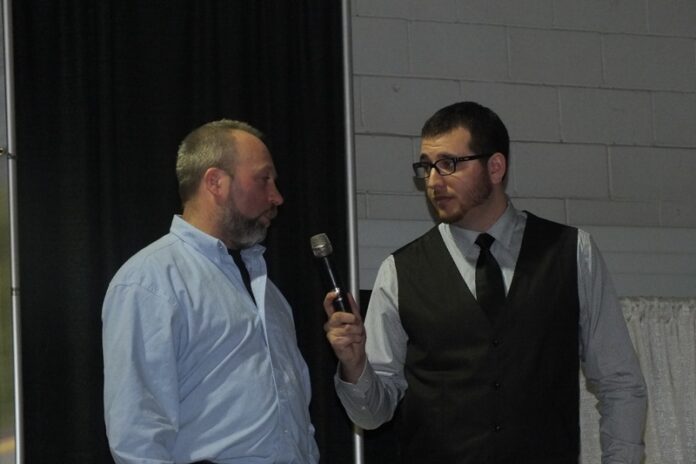
“We weren’t worried,” McLean said at this past weekend’s Canadian Motorsports Expo. “The other guys were coming in and we were more experienced than they were.”

Throughout the season, there were many memorable battles, including battles McLean had with his cousin Brent.

“He ran second to us every night, if he didn’t hit the wall trying to get to us,” McLean commented. “Overall, all the guys in that series are good racers and I’m looking forward to next year.”

Many note that the Modifieds have always produced this solid racing, but it was OSCAAR’s backing that added the final touch to the product.

garymclean_featurewin“It was a huge success,” McLean said. “Brought a lot of people out to see the modifieds. They can put on good races and a lot of people didn’t think that and OSCAAR brought everything out there, laid it out for us and it worked.”

Heading into the second season for the OSCAAR Mods, McLean sees the racing being even better.

“With the racing that went on, a lot of guys have bought cars for this year,” McLean said. “Those guys are talented and I think you’re going to see good racing.”

For his efforts, Gary McLean was listed in the 10th spot in Spencer Lewis’ 2012 Inside Track Motorsports News Ontario Asphalt Short Track Power Rankings. He was recognized for his success as part of the 2013 Canadian Motorsports Expo on Saturday February 9th.