


Changes in 2013 for NSCS, NNS & NCWTS….. a step in the right direction
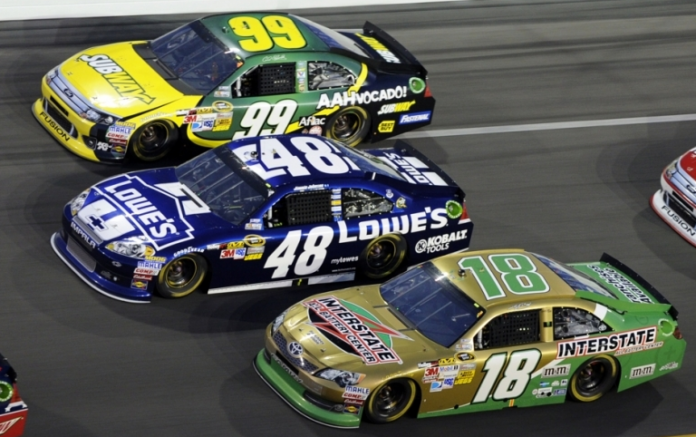
[media-credit name=”Photo Credit: David Yeazell” align=”alignright” width=”239″]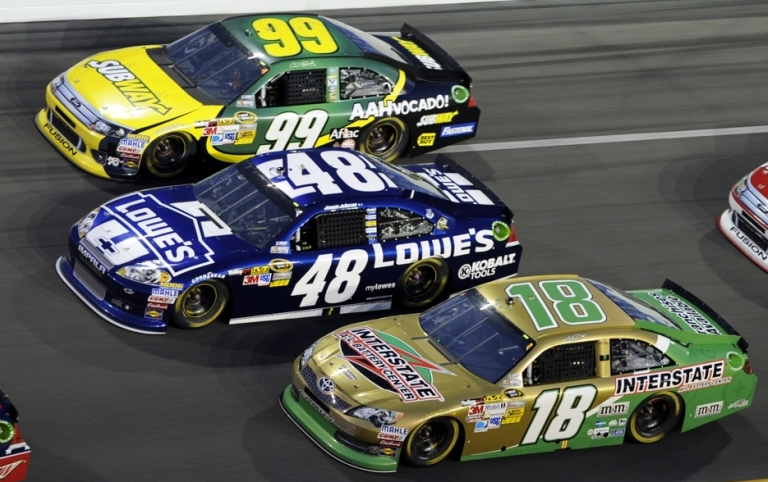 [/media-credit]Let’s all take a moment and grasp the idea that, “yes NASCAR does listen”. That does not always mean that they react or react correctly. But they are listening.
NASCAR has announced some changes for the NASCAR Sprint Cup Series (NSCS), NASCAR Nationwide Series (NNS) and NASCAR Camping World Truck Series (NCWTS) starting in 2013.
In the NSCS, qualifying will be under what they are now calling the “36-6-1” format. Which just mean that the fastest 36 cars will make the race on speed, the next six highest ranking cars in owners points that have not already earned a starting position through qualifying and who have entered the event by the posted entry deadline will also make the field. The final spot will be the most recent eligible past champion. If there is no eligible past champion, then a seventh car will make the field based upon owners’ points.
This makes qualifying so much more important to each and every team. No more locked in positions if you are in the top-35 in owners points. This pretty much equals the ground so to speak for new and old teams, but yet still recognizes the top 6-7 teams along with our past champions. Additionally for the first three races in 2013, in all three series, the events will be based upon the previous year’s owner points instead of the first five.
And to add to all of this, NASCAR has finally adding testing back to the NSCS in 2013. NASCAR will allow up to four tests per organization at tracks at which the series competes. This should also help new and old teams better prepare for certain tracks and any changes that may come.
In the NNS and NCWTS there will be up to two tests per organization at tracks where those series’ compete. NASCAR will allow one more test for those teams that have an official Sunoco Rookie of Year candidate.
The NNS will now only feature 40 cars. This will also make qualifying so much more important with three less starting spots. Good thing, bad thing? This could be good for NNS teams but also bad at tracks in which a lot of NSCS regulars also are competing. This could limit the actual number of full-time NNS drivers competing at some events.
The fields for the NSCS will remain at 43 and will remain at 36 for the NCWTS.
No changes noted yet for the restrictor plate races. Hopefully NASCAR is also listening and will make changes for better racing, or should I say it best by saying “real racing” in 2013 at Daytona and Talladega.


Is Dale Earnhardt Jr.’s Concussion An Eye-Opener for NASCAR?
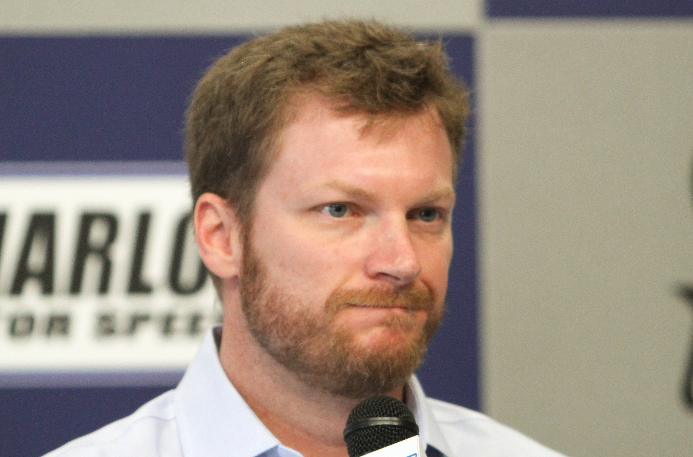
[media-credit name=”Brad Keppel” align=”alignright” width=”303″] [/media-credit]Last weekend, Dale Earnhardt Jr. announced that he will miss at least the next two races as a result of two concussions suffered in the past couple of weeks. He wasn’t forced by NASCAR to admit it, could have hid it and kept going racing. However, he made the decision to a neurologist and look into it. It now has some begging the question as to whether it is a time for a policy change.
Earnhardt Jr. said he suffered the first concussion about five weeks ago while testing at Kansas Speedway.
“We blew a right front tire going into Turn One, and I remember everything about that accident and everything after that accident, but I knew that I didn’t feel right,” he said last week. “You know your body, and you know how your mind works, and I knew something was just not quite right. But I decided to just try to push through and work through it. I’d had concussions before and knew exactly kind of what I was dealing with.”
By the time the Chase started, he says he felt about 80, 90 percent, and by the time they got to Talladega, he felt 100 percent.
At Talladega, Earnhardt Jr. was one of 24 drivers caught up in the big wreck on the last lap.
“I was hit in the left rear quarter panel, and it was sort of an odd kind of a collision where the car spun around really quick and just sort of disoriented me,” he said. “I knew that I had sort of regressed and had a bit of a setback and knew again, you know how your body is and you know when something is not quite right, and I knew as soon as it happened that I had reinjured myself, for lack of a better way to describe it.”
Earnhardt said the incident caused him concern and on Wednesday, while still having some headaches, he contacted his sister and then contacted Dr. Jerry Perry, NASCAR’s neurologist consultant. They ran some tests, did an MRI and everything came back fine.
“But I was really honest with him about how I felt and honest with him about the whole process from Kansas all the way on,” Earnhardt Jr. added.
As a result, Dr. Jerry Petty made the decision for Earnhardt Jr. to sit out the next couple of weeks at least to let him heal.
If Earnhardt Jr. had not stepped forward and said something, he would have been driving at Charlotte and with having two back-to-back concussions, another hit while healing could have resulted in serious permanent damage. With the danger being there of something possibly happening, should NASCAR step it up?
To add, this is the second incident in a span of 10 years where Earnhardt Jr. has hidden a concussion from NASCAR and revealed it at a later date. Following a wreck in April of 2002 at Auto Club Speedway, Earnhardt Jr. suffered a concussion, though did not reveal it till October later in the year.
As a result of that incident, NASCAR strengthened their commitment, saying doctors at infield care centers could require drivers to undergo CT scans or MRIs if they suspected a concussion. If diagnosed, they would then not be cleared to race till they got a medical release. However, Earnhardt Jr. was only checked out by ambulance staff and not by care center staff. Should NASCAR adopt a traveling medical team to prevent future instances?
Steve O’ Donnell, Vice President of Racing Operations, said that Earnhardt Jr. was seen in the ambulance at Kansas and was cleared. O’Donnell said he spoke with Pat Warren, who was at the track, and by Warren’s stance, everything was fine at Earnhardt Jr.’s end.
“So that’s where I would say the process of an evaluation for any athlete or driver it’s not just NASCAR making the call,” O’Donnell added. “It has to be the driver as well letting us know how he’s feeling.”
Though can they really depend on trusting drivers that don’t want to give up the seat? Go back to 2002 when Earnhardt Jr. hid the concussion. When he revealed it in October, he said that he didn’t reveal it because it would open him up for questions in the future.
“You just start back at zero,” Earnhardt Jr. said in 2002. “People are going ‘Oh, he’s finished, he’ll never be the same.’ And every time you run bad it’s because of that reason, it’s because of your head. So I just didn’t say a thing.”
What if that fear plays in a driver’s mind as well as the fear of giving up their ride? What if for that reason they hide the concussion? A driver’s worst fear is giving up “their” car to another driver. What if they don’t get their seat back due to questions of this nature as Earnhardt Jr. discussed and they are left without a ride?
Also, what if Dale Earnhardt Jr. had been the championship points leader? Or within 20, 30 points of the leader? That would’ve played into the decision and maybe kept him from saying something.
Both Jeff Gordon and Brad Keselowski said that they wouldn’t had gone to a doctor if they had a chance to win the championship.
“Honestly, I hate to say this, but no — I wouldn’t,” Gordon said. “We all play a part in this. If I have a shot at the championship and there’s two races to go, and my head is hurting and I just came through a wreck and I’m feeling signs of it but I’m still leading the points or am second in points, I’m not going to say anything. I’m sorry. That’s the competitor in me and probably many other guys, and that’s to a fault. It’s not the way it should be, but it is something most of us would do. That’s what gets a lot of us in trouble.”
“For any race car driver, not being in the car is our worst fear, the nightmare you have,” Keselowski said. “It’s a competitive desire that you have, so missing the show is terrible.”
Robin Pemberton, VP of Competition, spoke of NASCAR’s commitment last Thursday, praising everyone for learning more about head injuries over the recent years.
“It’s like anything,” Pemberton told ESPN.com. “We get better as time goes on. You learn from things and you work on it and you make things better. That’s what we do.”
Though have they done enough? Could they do more for their drivers’ safety? Dr. Vinay Deshmukh, a neurological consultant for NASCAR, says that the events last Thursday will go a long way in promoting awareness.
In that awareness, the questions asked here will be brought up. In the coming weeks and months, no matter the length of time it takes Earnhardt Jr. to heal, it will be up to NASCAR to address and possibly look into some of these questions to improve safety.
The Final Word – NASCAR vs Baseball – the battle of the playoffs

[media-credit name=”Brad Keppel” align=”alignright” width=”224″]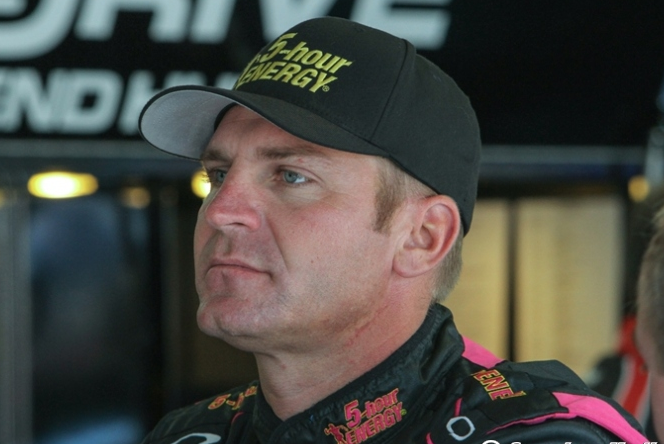 [/media-credit]It is a good thing we live in this modern era, where by the push of a couple of buttons one does not have to choose between watching the Yankees play the Tigers or watching NASCAR from Charlotte. A fella can watch both. View one while recording the other, then when you hit a bank of commercials or return to real time, you simply reverse the process. Non-stop Saturday night action.
One contest was missing a star performer, as Dale Earnhardt Jr sat one out due to his concussion. The other saw Derek Jeter leave the field due to a fractured ankle. One saw Brad Keselowski surrender a chance to win to pick up fuel; the other had Alex Rodriguez, Robinson Cano, and Curtis Granderson unable to win as they were discovered to have no gas in their tanks thus far in the playoffs. One was exciting, with the outcome in doubt to the end, the other was a race in Charlotte.
Yet, to be fair, the long expected outcome did not materialize in North Carolina. After watching Brad, Jimmie Johnson, and Denny Hamlin pretty much represent the boys up front all day, it was Clint Bowyer who wound up with the sticky shower as he picked up his third win of the season. Once again fuel mileage decided this one, and thank goodness it did. While no one ran out of gas to get their hearts broken, the possibility was there and the outcome was in doubt. In fact, even the winner proved to have little to spare, with Clint having to walk to his post-race celebration and his car needed a push to get there. In a way it was like Sunday’s ball game in San Francisco, where St. Louis went up 6-0 to seemingly have a lock on things, only to see the Giants storm back with four of their own to put it in doubt. The one difference is that while San Francisco held on to win, Keselowski did not.
I have not seen the ratings from Saturday night, but I would be interested as to how the race fared against the baseball playoffs. The boys on the diamond featured some action that had folks talking about what they had seen after the lights went out. I’m not so sure they were doing the same after the race. I loved Talladega, some did not see it was real racing. Charlotte bored me, yet some might think it was just dandy. Maybe it comes down to taste. I can’t stand watching basketball or soccer, yet others love those sports. Maybe it is just me. Then again, the television ratings these past few years seem to suggest I am not alone.
Other than Junior’s injury, there does not seem to be many story lines here. The new rides for Regan Smith, Kurt Busch, and A.J. Allmendinger were noted, but not exactly riding the heights as a trio of Yankee stars batting a combined .101 between them in the post-season. Of course, there is also Jeter’s injury, the brutal performance collapse of a Detroit reliever, the performance of older gentlemen named Ichiro or Ibanez, or a team losing the face of the franchise during the off-season only to contend once again for the championship. In NASCAR, we have Keselowski on top, now seven points ahead of the former five-time champion, and 15 ahead of Hamlin. Until such time as Keselowski does something akin to a crash and burn, at least enough to allow his challengers to catch up, that is how it will remain over the next five weeks. In a world with no distractions that might work, but unless you are a racing fanatic that is not the way things are.
This Sunday, the action moves to Kansas where Bowyer would love to win one at the track just a 90 minute drive from his hometown. Even so, he remains in fourth, 28 points out of the hunt. At present, our sole purpose in watching will be to see if Keselowski has enough of a problem to allow Jimmie or Denny to move up. If that is not enough for you, there is always the chance that there will be a ball game on at the same time.
As I think about it, I think if NASCAR had changed up its points system first, they might not have even needed a Chase. Today’s points system is more forgiving over the long haul than the old one, but brutal for those who stumble over the short run. If they had reversed how they had done things, and forgot the whole Chase concept, Johnson would be leading the standings by 9 over Keselowski and 16 over Greg Biffle. It might even be a reason to turn on the boob tube to catch the action. Let me know what you think..
