Home Blog Page 59

Carson Brown Finishes Impressive Fifth in Blue Cross NC 300

18-Year-Old Scores First Top-Five in Second Career NASCAR O’Reilly Auto Parts Series Start

Date: Sunday, Oct. 11

Event: Blue Cross NC 300

Series: NASCAR O’Reilly Auto Parts Series

Location: Charlotte (N.C.) Motor Speedway (1.5-mile oval)

Format: 200 laps, broken into three stages (45 laps/45 laps/110 laps)

Start/Finish: 20th / 5th (Running, completed 200 of 200 laps)

Overview:

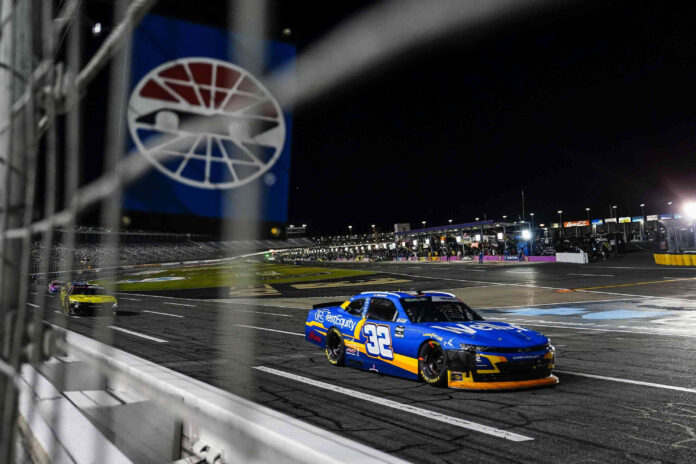
In his first start of any kind at Charlotte (N.C.) Motor Speedway and in just his second career NASCAR O’Reilly Auto Parts Series start, Carson Brown finished an impressive fifth Sunday night in the Blue Cross NC 300. Making the result even more remarkable was that Brown did it without any track time beforehand on the 1.5-mile oval, as rain washed out the scheduled practice and qualifying sessions Saturday. The 18-year-old from New London, North Carolina, simply went to work behind the wheel of his No. 32 TestEquity Chevrolet for Jordan Anderson Racing Bommarito Autosport, starting 20th in the 38-car field and methodically working his way toward the front while providing detailed feedback to his team so it could improve his racecar during each pit stop. It all culminated in a final 10-lap dash to the finish when, after a caution period, Brown restarted 14th and continually picked off cars, grabbing two positions on the penultimate lap to secure his first top-five finish.

Carson Brown, driver of the No. 32 TestEquity Chevrolet for Jordan Anderson Racing Bommarito Autosport:

“To run this good here with no practice, no qualifying, just super proud of this whole Jordan Anderson Racing Bommarito Autosport group and our partner, TestEquity, and everyone on this car. I thought we just fired off really well, and I really didn’t lack much. I struggled a little bit with rear grip there just as the race went on, and I felt like we just kept losing spots on pit road because we were working on the car and trying to just make it better, and it kind of just stayed the same throughout the night. I thought the track was gonna change on us, get a lot tighter, but it really didn’t. But we all kept after it, so big thank you to all the guys and Mark Setzer (crew chief) for making a really good call at the end. We just picked our way through the field. There were some very good players, and never really raced against that whole group all day, but I just think we carried so much momentum into that lead pack there toward the end of the race that we just had so much momentum that they struggled to defend it. When I heard P5 after the checkered, I was pretty shocked. Very proud. It was just a really good day.”

Notes:

● This was Brown’s second career NASCAR O’Reilly Auto Parts Series start. He made his O’Reilly Series debut Aug. 8 at Iowa Speedway in Newton and finished 15th.

● Brown will race full time in the O’Reilly Series in 2027 and run for rookie-of-the-year honors driving the No. 2 Whelen Chevrolet for Richard Childress Racing.

● Even though practice and qualifying were rained out Saturday for the Blue Cross NC 300, Brown was the lone O’Reilly Series driver to still get track time. It wasn’t at Charlotte (N.C.) Motor Speedway. Instead, it was at Winchester (Ind.) Speedway, where Brown competed in the 55th annual Winchester 400. Brown was originally scheduled to compete in the Winchester 400 on Friday, but with Hurricane Isaias heading toward the track, ASA STARS National Tour officials moved the race to Saturday. This presented a conflict with the O’Reilly Series schedule at Charlotte, but when the O’Reilly Series race was postponed to Sunday because of the same storm system, Brown was able to race at Winchester and get back to Charlotte in time for the Blue Cross NC 300. And he returned with the coveted rifle trophy, as Brown dominated the Winchester 400 in his No. 81 Chevrolet for Anthony Campi Racing (ACR), leading twice for 388 laps, including the final 351 laps, outpacing ACR teammate Stephen Nasse. It was Brown’s fifth ASA STARS National Tour win this season, further strengthening his lead in the championship standings with just two races remaining – Nov. 8 at Nashville (Tenn.) Fairgrounds Speedway and Nov. 15 at New Smyrna (Fla.) Speedway.

● The Winchester 400 marked Brown’s 10th overall victory of 2026, a tally that includes five ASA STARS National Tour wins, four ARCA Menards Series victories and one CARS Tour West win.

  1. ASA STARS National Tour Feb. 10 at New Smyrna (Fla.) Speedway
  2. ARCA Menards Series March 5 at Phoenix Raceway
  3. ASA STARS National Tour March 14 at Five Flags Speedway in Pensacola, Florida
  4. ASA STARS National Tour June 21 at Slinger (Wis.) Speedway
  5. ASA STARS National Tour July 25 at Newport (Tenn.) Speedway
  6. CARS Tour West Aug. 15 at Evergreen Speedway in Monroe, Washington
  7. ARCA Menards Series Sept. 6 at the DuQuoin (Ill.) State Fairgrounds
  8. ARCA Menards Series Sept. 17 at Bristol (Tenn.) Motor Speedway
  9. ARCA Menards Series Sept. 25 at Kansas Speedway in Kansas City, Kansas
  10. ASA STARS National Tour Oct. 10 at Winchester (Ind.) Speedway

Next Up:

Brown returns to the CARS Tour for its season finale Oct. 17 at South Boston (Va.) Speedway. Less than a month later, he’s back on the ASA STARS National Tour for the All-American 400 Nov. 8 at Nashville (Tenn.) Fairgrounds Speedway. It is the tour’s penultimate race and Brown enters as the championship points leader. The ASA STARS National Tour concludes its 2026 campaign Nov. 15 with the Florida Governor’s Cup at New Smyrna Speedway.
Day Rebounds From Penalty, Holds Off Love For Blue Cross NC 300 Victory

October 11, 2026At Charlotte Motor Speedway in Concord, NC.HHP/Harold Hinson

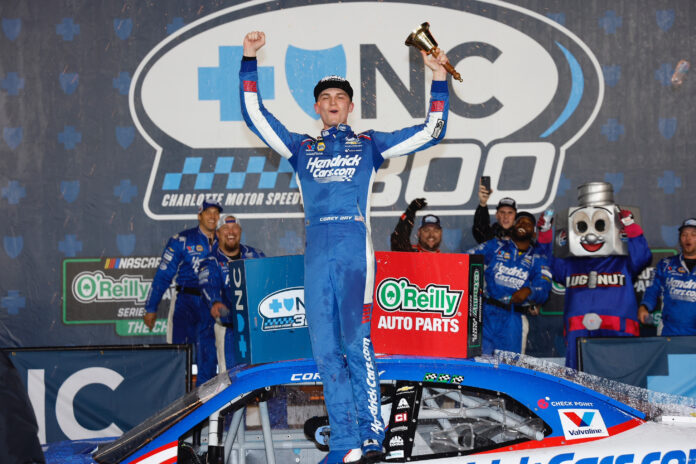
CONCORD, N.C. (Oct. 11, 2026) — Corey Day went for the Sunday drive of a lifetime in the Blue Cross NC 300 at Charlotte Motor Speedway. Day was penalized for driving through too many pit boxes after he won Stage 1, and he responded by driving through the field en route to his fourth win of the NASCAR O’Reilly Auto Parts Series season.

A stunning, three-wide pass for the lead with 10 laps to go punctuated a championship-altering rally for the 20-year-old Californian. Day’s second consecutive O’Reilly triumph moved the driver of the No. 17 Hendrick Motorsports entry to within seven points of championship leader Sheldon Creed — who finished third to Day and Jesse Love on Sunday. Love’s runner-up finish kept him second in the series standings.

Love’s bid for a second straight NORAPS title received a solid boost on Sunday, but it could’ve been even better. The Richard Childress Racing driver was poised for victory after he passed Justin Allgaier for the lead with 17 laps to go, but Brent Crews’ crash on Lap 185 bunched up the field and provided Day with the opportunity he needed.

Day restarted on the outside lane of the front row and soared into the lead after Allgaier and Love fought tooth-and-nail for the top spot and both lost out. Once Day cleared Allgaier on the bottom lane entering Turn 1, the race’s top honors were effectively spoken for.

Allgaier followed Day, Love and Creed home in fourth place after leading 54 laps — third most to Day’s 55 and Love’s race-high 80.

Carson Brown rounded out the top five with Brandon Jones sixth, Austin Hill seventh, Anthony Alfredo eighth, Taylor Gray ninth and Brennan Poole 10th.

Creed left Sunday clinging to a two-point lead over Love in the Chase presented by Mobil 1 standings with four races left in the season. Creed’s third-place finish masked a frustrating night that saw Day beat him by only two spots — but Day took 34 points out of Creed’s points lead by virtue of winning Stage 1 and finishing seventh in Stage 2.

The race was originally scheduled for Saturday before being postponed due to inclement weather.

COREY DAY, NO. 17 HENDRICK MOTORSPORTS CHEVROLET (RACE WINNER): “I kind of knew it was going to be a struggle restarting in the top lane (on the final restart). There’s actually a big difference in restarting on the top versus the bottom. I was able to get through the gears good enough, I just had a really good car firing off and was almost completely flat-out going into Turn 1. I could see (Allgaier) and (Love) didn’t have a great corner and I got to them pretty quick.

“(Winning is) a whole team deal. I can’t be good and my team not be good, and my team can’t be good without me being good. Right now, we’re just firing on all eight cylinders as a team. I’m not really thinking about the championship right now. I’m just focused on having good runs these next four races and being consistent. If we run well enough, the points will take care of themselves.”

JESSE LOVE, NO. 2 RICHARD CHILDRESS RACING CHEVROLET (RUNNER-UP): “I feel like I ran a good race, did a lot of things right then made a mistake on the restart and kind of washed up there. My car kind of only worked in one lane and when (Day) took it away from me it was pretty hard. It is what it is. If I could re-do it, I would. I’m kind of thinking what-if, if I’d have won the race I’d have had a better points day, but I can’t fix that now. I can learn from it, but I can’t fix it.”

SHELDON CREED, NO. 00 HAAS FACTORY TEAM CHEVROLET (THIRD-PLACE FINISHER): “It was tough. We didn’t start very good at all. I was on the splitter, I was loose. I just didn’t have a lot of grip to start the night. We got a little bit better and a little bit better every time we came down pit road. It was probably nice to see that (last) restart there and I fired off the best I’d been all night. I just kept working on the 7 (Allgaier) and was able to get back by him at the end. We’ll go back to the shop, keep working hard and try to be better next week.”

Race fans can lock in their tickets to 2027 events, including the Coca-Cola 600 on May 30 and the Bank of America 400 on Oct. 17, by visiting www.charlottemotorspeeday.com.

TOYOTA RACING – NOAPS Charlotte Post-Race Report – 10.11.26

BRANDON JONES RALLIES LATE TO LEAD TOYOTA IN CHARLOTTE
Taylor Gray only Chase driver with top-10s in every race

CONCORD, NC (October 10, 2026) – Brandon Jones (sixth) battled with an ill-handling race car all night, but was there when it counted to lead Toyota in the rain-delayed NASCAR O’Reilly Series race at Charlotte Motor Speedway on Sunday evening.

Taylor Gray (ninth) continued his streak of Chase top-10 finishes, and now sits alone as the only driver to have finished in the top-10 in every Chase race. Gray continues to be the lead Toyota in the point standings as he sits in seventh, 87 out of the lead.

It was a solid night for Team Toyota as a whole with five in the top-15 in the final finishing order – Jones, Gray, William Sawalich (11th), Harrison Burton (13th) and Dean Thompson (14th).

TOYOTA RACING Post-Race Recap
NASCAR O’Reilly Auto Parts Series (NOAPS)
Charlotte Motor Speedway
Race 29 of 33 – 300 miles, 200 laps

TOYOTA FINISHING POSITIONS

1st, Corey Day*

2nd, Jesse Love*

3rd, Sheldon Creed*

4th, Justin Allgaier*

5th, Carson Brown*

6th, BRANDON JONES

9th, TAYLOR GRAY

11th, WILLIAM SAWALICH

13th, HARRISON BURTON

14th, DEAN THOMPSON

30th, BRENT CREWS

*non-Toyota driver

TOYOTA QUOTES

BRANDON JONES, No. 20 Menards/Dawn Toyota GR Supra, Joe Gibbs Racing

Finishing Position: 6th

How did you get back to sixth?

“I would not have imagined that for our Dawn, Menards Toyota GR Supra. I think a lot of it had to deal with because our car was really struggling to fire off – like hard to say what the major problem was, best way I could describe it is it felt like we were putting on 25-lap scuffs, and sometimes you just have that balance – it was like the blue screen of death on your computer. So difficult to work around – I just don’t know what to tell Sam (McAuley, crew chief) in those situations. That’s what makes it hard – you are struggling with both ends of the car, where do you start with that. The guys did a really good job. I was kind of giving them a lot of mixed reviews with feedback. I think that last run – he made really good. I think what helped us on that final restart, was I couldn’t take off with some of those guys quite as good, so I don’t think I was using all of the tire that I could be – some of those guys were able to push their cars a lot harder so they fell off a lot quicker, and more aggressively, so I was able to kind of have a long run car tonight, but it was because our short run was under what we needed it to be.”

About Toyota

Toyota (NYSE:TM) has been a part of the cultural fabric in North America for nearly 70 years, and is committed to advancing sustainable, next-generation mobility through our Toyota and Lexus brands, plus our more than 1,800 dealerships.

Toyota directly employs nearly 64,000 people in North America who have contributed to the design, engineering, and assembly of over 50 million cars and trucks at our 14 manufacturing plants. In 2025, Toyota’s plant in North Carolina began to assemble automotive batteries for electrified vehicles.

For more information about Toyota, visit www.ToyotaNewsroom.com.

Wood Brothers Racing – Race Report: Charlotte Motor Speedway

Event: Bank of America 400

Location: Charlotte Motor Speedway, Concord, North Carolina

Date: Sunday, October 11, 2026

Start: 27th

Finish: 4th

With a fourth-place finish in Sunday’s Bank of America 400 at Charlotte Motor Speedway, Josh Berry and the No. 21 Motorcraft/Quick Lane team delivered the Wood Brothers their best finish at the track in years.

The result marked Berry’s and the team’s third top-five finish of the season and their 10th top-10.

Berry started Sunday’s race from 27th after inclement weather forced the cancellation of qualifying, with the starting lineup set per the NASCAR Rulebook. He steadily worked his way through the field, climbing to 19th by the time the competition caution waved on Lap 36. However, Berry fell back to 28th while avoiding an incident ahead of him on the ensuing restart.

Undeterred, Berry began another charge through the field, recovering to 14th by the conclusion of the 80-lap opening stage.

Berry continued his forward progress in Stage 2, breaking into the top 10 for the first time on Lap 90. He gained two additional positions before the end of the segment, finishing eighth to collect three valuable stage points.

In the third and final stage, Berry maintained his position inside the top 10 before making a late-race charge into the top five with eight laps remaining in the 267-lap event. He gained one final position in the closing laps to secure a fourth-place finish, marking the Wood Brothers’ best result at Charlotte since Morgan Shepherd finished runner-up in 1994.

“I felt like our car was really strong all day,” Berry said. “We had some good progress at the start, and then when the 54 got in the wall on that restart we went all the way to the back again because it was right in front of us. We battled back from the back again, and I was really happy with the car the majority of the race.”

Berry credited the team’s strong performance over the extended green-flag run to close out the race as a key factor in the fourth-place result.

“Early in that Stage I tried to just manage myself a little bit just in case it ran long, and ultimately it did,” he said. “I think some of those guys started to cord their tires and fall off, but it was just a really good job by [crew chief] Miles [Stanley] and the whole group.

“That’s another good finish. We’ll go to Phoenix and try to do it again.”

What A Finish! Briscoe Beats Bell By Inches In A Bank of America 400 Thriller

October 11, 2026: NASCAR races at the Charlotte Motor Speedway in Concord, North Carolina. (HHP/Harold Hinson)

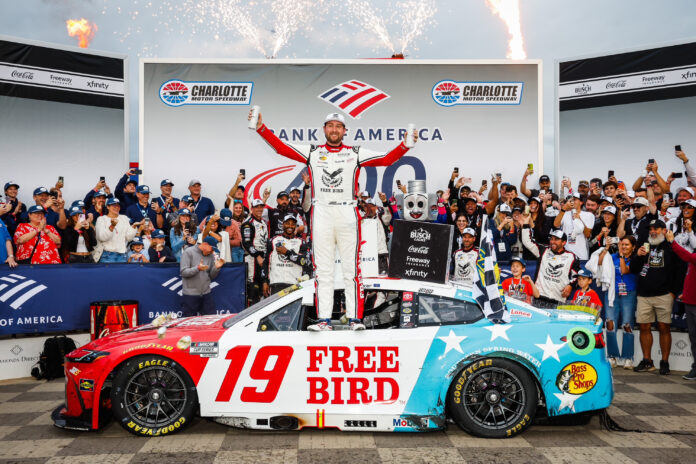
CONCORD, N.C. (Oct. 11, 2026) — An intra-team battle led to an unforgettable finish in Sunday’s Bank of America 400 at Charlotte Motor Speedway, as Chase Briscoe withstood an incredible last-lap rally from Joe Gibbs Racing teammate Christopher Bell to prevail by a scant .029 seconds — the second-closest finish in speedway history.

What appeared to be a dominant romp to victory by Briscoe — who led by more than one second with one lap to go — turned into a barn-burner of a finish. Believing his No. 19 Toyota had a tire going flat, Briscoe tried to nurse his car to the checkered flag, but Bell had other plans.

Briscoe held the high line through Turns 3 and 4 on the final circuit, giving Bell the bottom and enough momentum to go from five car lengths back to door-to-door exiting Turn 4. Bell got loose coming to the line, slid up and bumped Briscoe, and the two teammates drag-raced to the stripe as an enthralled crowd roared its approval.

The win was Briscoe’s third of the NASCAR Cup Series season, his second in a row and it enabled the 31-year-old Indiana native to move from eighth to fourth in the Chase standings with four races left in the season.

Ryan Blaney finished third with Josh Berry fourth and Denny Hamlin fifth.

Series points leader and defending champion Kyle Larson started on the pole, led a race-high 97 laps and ended up sixth ahead of Shane van Gisbergen and Tyler Reddick. Joey Logano and Chris Buescher completed the top 10.

Bell’s runner-up result kept him third in points, 51 markers behind Larson, who also won Stage 1. Bell captured Stage 2.

CHASE BRISCOE (NO. 19 JOE GIBBS RACING TOYOTA, RACE WINNER): “It was a close race but there at the end, it was definitely going to be the longest run of the race. I felt really good about my car and I was able to keep a gap on Christopher (Bell) but with about six to go, I could notice my car quit turning and I felt my right front starting to go down.

“In Turn 4 (on the last lap) I started to get tight and I just couldn’t do anything. Second-closest finish in Charlotte Motor Speedway history, but probably the biggest gap ever blown in the last four laps. I’m just glad we still got the win.”

JOE GIBBS (NO. 19 JOE GIBBS RACING TOYOTA, WINNING TEAM OWNER): “Our pit crew was just outstanding, the last stop was unreal. So many good things going on with that car today. Just really proud of the 20 (Bell), the 11 (Hamlin), too. The 54 (Ty Gibbs) got hit early and had some bad luck but I’m just really proud of our people.

“James (Small) and Chase (Briscoe) have a great way of working together. It’s a thrill for us to see (Briscoe) and James where they are now and running so well. It’s really important for us. Those two are different but in some ways, it’s really good. They have a way of pushing each other.”

JAMES SMALL (NO. 19 JOE GIBBS RACING TOYOTA, WINNING CREW CHIEF): “We’re trying to get the most out of each other. Even last Monday (after winning at Las Vegas Motor Speedway), we had a meeting to go over ways we could’ve been better. But I’m so proud of (Briscoe). You’re never going to see it, but (the success is) in the behind-the-scenes work. He’s been chipping away at it.

“Today, we even had adversity. The car wasn’t as good as it needed to be in Stage 2, but we made some changes and he really came on there. I’m super proud of him. He’s doing everything he needs to right now.”

CHRISTOPHER BELL (NO. 20 JOE GIBBS RACING TOYOTA, RUNNER-UP): “I don’t know what happened, that (Briscoe) slowed down, but I got a lot closer than I thought I would. I think I’m just in shock right now. I didn’t think it was going to end like that. I was just out there logging laps. I stayed with him pretty good and I had a couple moments where I slid really bad and let him get away.

“The Camrys are really fast. We did a good job of controlling the race but we’re so equal, it’s just about whoever’s out front. I just didn’t expect to get there and whenever I got beside of him, I thought I stalled him. I kind of got out of shape. I guess I should’ve stayed into him a little bit harder and tried to nose him to the line. I thought I could nose him to the line and I didn’t.”

Race fans can lock in their tickets to 2027 NASCAR events at Charlotte, including the May 30 Coca-Cola 600, by visiting www.charlottemotorspeedway.com.

RFK Racing – Charlotte II Executive Summary

RFK RACING

CHARLOTTE MOTOR SPEEDWAY  – EXECUTIVE SUMMARY

Date:               October 11, 2026

Series:            NASCAR Cup Series

Location:        Charlotte Motor Speedway (1.5 mile quad-oval) – Charlotte, NC

Format:          400.5 miles / 267 laps with three stages. Stage 1: Ends at lap 80, Stage 2: Ends at lap 165, Stage 3: Ends at lap 267

RFK RACING RACE SUMMARY: A loose wheel following a pitstop could’ve completely derailed Chris Buescher’s race but instead, determination and the assistance of Ryan Preece’s pit crew helped Buescher lead the way for Roush Fenway Keselowski (RFK) Racing in Charlotte. During pitstops between stages one and two a wheel was not completely tightened. Realizing this as he headed back to the track, his team quickly communicated the issue and before exiting pit road Buescher was able to back the car into his teammate’s pit stall where the 60 team remedied the issue. Buescher then stormed from the rear of the field to score a tenth place finish. Preece matched the level of determination, grappling through handling issues to score a 15th place finish. Brad Keselowski, sustained unavoidable damage in Stage One, when a car directly in front of him slapped the wall and spun. Despite front splitter damage, Keselowski fought hard for a 29th place finish.

DRIVER HIGHLIGHTS

Chris Buescher – No. 17 Fifth Third Bank Ford Mustang Dark Horse

  • Finish:10th
  • Start: 13th
  • Laps Led: —
  • Stage Results: S1-9th, S2-17th
  • Headline takeaway: It was a total team effort as Chris Buescher overcame what could’ve been a devastating pitstop issue, to record a strong tenth place finish. Immediately identifying a loose wheel after his stop, Buescher acted quickly grabbing reverse at the end of pit road and backing into RFK Racing teammate Ryan Preece’s stall, where the 60 team gave the assist and quickly tightened the wheel. After restarting at the rear of the field, Buescher charged back up into the top-10 to score his best finish of the 2026 Chase.
  • Buescher Quote: “We’ve been needing a good solid run and we kind of inched up on it the last couple weeks but driving into the top ten, getting some stage points on the day, that’s some progress. We’re not all the way there for sure but proud of everybody who took this Fifth Third Bank Ford Mustang and worked hard at it. You know we had a pit stop mishap and I’m proud of everybody for calling it out and catching it and not letting us go out there and have a bigger issue. Thanks to the 60 bunch for tightening it up.”

Ryan Preece – No. 60 Kroger / Blue Buffalo Ford Mustang Dark Horse

  • Finish:15th
  • Start: 24th
  • Laps Led: —
  • Stage Results: S1-31st, S2-22nd
  • Headline takeaway: It was a determined effort for Ryan Preece who overcame a near collision on pit road and handling challenges Sunday. With focused and persistent adjustments, the 60 team dialed in the Kroger / Blue Buffalo Ford, allowing him to climb from his 24th place starting position to record a 15th place finish.
  • Preece Quote: “The team worked really hard throughout the day to make the car better but really we weren’t where we needed to be. We made the best of what we had but certainly on days where you have a few of these other guys in the Chase you want to capitalize more on that. So, we’re on to Phoenix.”

Brad Keselowski – No. 6 Trimble Ford Mustang Dark Horse

  • Finish: 29th
  • Start: 22nd
  • Laps Led: —
  • Stage Results: S1-34th, S2-32nd
  • Headline takeaway: Brad Keselowski was forced to overcome damage suffered when a car directly in front of him lost control. Keselowski suffered right front damage, specifically to the splitter. Despite repairs, handling was compromised, largely contributing to a 29th place finish.
  • Keselowski Quote: “Something happened with the 54 car and was broke. He crashed in front of us and we got into it. It did some kind of damage to the car and we lost a lot of speed.”

Point Standings:

  • Buescher: 15th
  • Preece: 16th
  • Keselowski: 18th

Next Up:

The next event on the NASCAR Cup Series schedule is October 18 at Phoenix Raceway (1 Mile low-banked tri-oval – Avondale, AZ). The race begins at 3:00 p.m. EDT with live coverage provided by USA Sports and the Motor Racing Network.

About RFK Racing 

RFK Racing, in its 39th season in 2026, features an ownership lineup pairing one of the sport’s most iconic names, Jack Roush, along with NASCAR Champion, Brad Keselowski, and Fenway Sports Group owner John Henry. Roush initially founded the team in 1988 and it has since become one of the most successful racing operations in the world, propelling him to be the first NASCAR owner to amass three hundred wins and capturing eight championships, including back-to-back NASCAR Cup titles in 2003 and 2004. Keselowski, a former owner in the NASCAR Truck Series, is the 2012 NASCAR Cup Series Champion. In 2007, Roush partnered with Henry, who also owns Major League Baseball’s Boston Red Sox and English Premier League’s Liverpool F.C., to form Roush Fenway Racing. Off the track, RFK is a leader and proven winner in NASCAR marketing solutions, having produced multiple award-winning social media, digital content and experiential marketing campaigns. Visit https://www.rfkracing.com/ and follow the team on all social platforms @rfkracing.

From Group Chat to Road Trip: Planning a Weekend Away with the Right Rental Car

Planning a weekend away with friends is always exciting at first. Someone suggests a beach town, another finds a cute place to stay, and suddenly the group chat is full of restaurant recommendations and screenshots of places everyone wants to visit.

Then comes the practical part. How are we getting there?

For my kind of group trip, transportation can make a real difference to the whole experience. Driving separate cars means coordinating arrival times, while relying entirely on public transportation might not work when the accommodation, restaurants, and attractions are spread across different areas.

That is when renting a car starts to make sense. Rather than asking someone to put extra miles on their personal vehicle, the group can look at rental options through Avis and find something that suits the journey.

  1. Choosing a Car That Fits the Plan

I would start with the destination and the number of people going. A short weekend in a nearby city is very different from a road trip involving several stops, luggage, and a few hours on the highway.

Avis offers a range of rental vehicle categories, with availability depending on the location and dates. A smaller car may be enough for two or three friends traveling light, while a larger vehicle could be more practical for a group carrying several bags.

I would check the available cars on the Avis website before booking accommodation or committing to a detailed itinerary. It gives the group a clearer idea of the transportation options and helps everyone plan around the actual space and budget available.

There is no point choosing a car based only on appearance, either. Passenger capacity, luggage space, rental cost, and the type of driving involved all deserve consideration. The most suitable choice is the one that makes the journey comfortable without stretching the budget unnecessarily.

  1. Getting Everyone on the Same Page

Once the vehicle is chosen, the rest of the arrangements become easier to discuss.

One person can handle the reservation, another can work out the route, and everyone can agree on how to share the costs. I would include fuel, tolls, parking, and any applicable rental fees when estimating the total rather than looking at the base rental price alone.

The rental details also deserve a proper read. Check the pickup and return locations, fuel policy, mileage conditions, and requirements for anyone else who might drive. If the group wants to take turns behind the wheel, confirm Avis’s additional driver rules before collecting the car.

These are not exactly the most exciting parts of planning a holiday, but they are much easier to deal with before everyone is standing outside with their bags packed.

And please, agree on a departure time that everyone can actually follow. Even the best rental arrangement cannot help much if half the group is still getting ready.

  1. Leave Space for the Unexpected

What I like about a road trip is that the journey does not always have to follow the original plan.

Maybe someone spots a small café on the way, or the group decides to stop at a viewpoint because the weather is better than expected. When the trip involves several places that are difficult to reach by public transportation, having a rental car can make those extra stops more convenient.

That flexibility is part of why I would consider Avis for a weekend getaway. The rental is not the main event. It is simply a practical part of making the itinerary work, whether the plan involves visiting friends, exploring a nearby town, or spending a couple of days away from the usual routine.

Of course, it still helps to check driving distances, parking arrangements, and the time needed to return the vehicle. A spontaneous detour is much more enjoyable when it does not leave everyone rushing back at the end of the weekend.

The Bottom Line

By the time the trip is over, nobody is likely to remember every detail of the reservation. They will remember the conversations in the car, the place where everyone stopped for lunch, and the jokes that somehow became funnier on the way home.

The Bottom Line

That is why I would rather sort out transportation early and spend the rest of the planning time on the things everyone is looking forward to.

If a rental car fits your next trip, take a look at the options available through Avis, compare vehicles for your dates and pickup location, and choose one that works for your group.

Then get the bags ready, agree on the playlist, and leave a little room for the kind of unexpected moments that make a weekend worth taking.

The Importance of Pedestrian Walkways and Crossings in Commercial Car Parks

Photo by depositphotos at https://depositphotos.com/

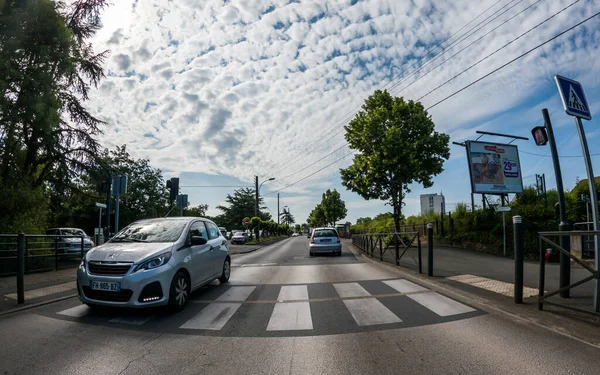
The short walk from a parked car to a shop entrance should be simple, yet anyone who has crossed a busy car park knows how unpredictable it can feel. A reversing vehicle, a delivery van edging around a corner, and a parent guiding two children between parked cars can all meet within seconds. Thoughtful car parking line marking and painting gives people clearer routes through this activity. It helps drivers understand where to expect pedestrians and gives visitors a more obvious way to reach the building. A few well-positioned lines cannot eliminate every risk, but they can turn a confusing expanse of asphalt into a space that makes much more sense.

People Need Routes, Not Just Parking Bays

Parking spaces usually get the most attention during car park design. After all, a business needs room for customers and employees to leave their vehicles. Yet each person stepping out of a car immediately becomes a pedestrian, often carrying bags, pushing a trolley, or helping someone else.

Without designated walking routes, people tend to choose the shortest path to the entrance. That might mean cutting across moving traffic or squeezing behind reversing cars. Marked walkways encourage a more predictable journey and make it easier for drivers to anticipate where people may appear. They also give property managers a practical starting point for deciding where additional protection is needed.

Follow the Paths People Already Take

A walkway that looks perfectly straight on a drawing may not be the route anyone actually uses. Visitors naturally head toward the nearest door, lift lobby, trolley collection point, or pedestrian exit. When painted routes take an unnecessary detour, many people simply walk across the driving lanes instead.

Watching how the site functions during a busy morning or weekend can reveal the true movement patterns. A professional contractor can work with property managers to identify sensible connections between parking rows and entrances. Those routes should consider delivery areas, turning vehicles, and the way a queue of cars changes the available sightlines. Practical design starts with everyday behavior, not just tidy geometry.

Make Crossings Easy to Recognize

A crossing is most useful when both pedestrians and drivers can identify it in time to respond. Placement matters enormously. Put it immediately beside a blind corner or behind a tall row of parked vehicles, and approaching drivers may have little opportunity to notice someone stepping into their path.

Clear markings, appropriate signage, good lighting, and unobstructed visibility work together. Crossing locations may also need ramps or level transitions where paths meet kerbs. Importantly, paint alone does not give pedestrians physical protection or automatically establish the same priority as a public-road crossing. The design should reflect the site’s traffic arrangements and relevant requirements, with drivers able to understand what is expected of them.

Separate Walking and Driving Where Possible

Different movements share the same car park, but they do not always need to share exactly the same space. A marked pedestrian route alongside a vehicle lane offers a visual boundary. Where risks are greater, raised footpaths, kerbs, bollards, or protective barriers may provide more meaningful separation.

The choice depends on available room and the site’s hazards. A small office car park may need a straightforward marked connection to the main door. A retail centre with delivery vehicles and heavy customer traffic may demand a more structured solution. Experienced professionals can help translate the traffic plan into clear markings, while the property owner ensures that physical safety measures are considered where paint is insufficient.

Accessibility Should Shape the Layout

An accessible parking bay is only part of the journey. Someone using a wheelchair, walking frame, or pram also needs a practical route from the vehicle to the destination. A beautifully painted crossing is of limited help if it leads to a high kerb, a steep slope, or a walkway narrowed by signs and bins.

Routes should take account of appropriate widths, manageable gradients, smooth transitions, and connections to building entrances. Accessible bays and shared access areas also need to remain distinguishable and unobstructed. Applicable accessibility requirements vary with location and site type, making professional planning especially valuable. The objective is straightforward: visitors should be able to move through the property without unnecessary barriers.

Visibility Must Last Beyond Installation Day

Freshly painted lines look sharp, especially against dark pavement. But sunlight, rain, tyre abrasion, and regular cleaning gradually affect their visibility. A walkway that disappears under wear is unlikely to keep guiding people effectively, particularly during early mornings or wet evenings.

Suitable marking products and thorough surface preparation make a difference. Contractors should check whether they are working on asphalt, concrete, or an existing coating, then choose compatible methods for the conditions and anticipated traffic. Appropriate slip resistance matters on pedestrian areas too. Clear contrasts and consistent symbols help users read the layout quickly, but the finish must also remain practical under real footwear and weather conditions.

Plan the Work Around Daily Operations

Commercial car parks rarely have the luxury of staying empty for days. Customers need access, staff need somewhere to park, and deliveries cannot always be postponed. A good marking project therefore includes a sensible installation schedule, not just a drawing of the final layout.

Some sites can close one section at a time, using temporary signs and alternative routes to keep vehicles and pedestrians apart from the work area. Preparation, drying or curing requirements, and safe reopening times depend on the chosen materials. Explaining those restrictions in advance prevents confusion and helps protect the new markings from premature damage.

Keep Reviewing What Happens on the Ground

A completed marking scheme is not something property managers should forget until every line has faded. New tenants, altered entrances, different delivery patterns, or busier trading periods can change how people move through a car park. Even a well-designed crossing may need reassessment when its surroundings change.

Regular inspections can reveal worn markings, blocked walkways, and places where drivers or pedestrians repeatedly take unexpected routes. Addressing those issues early is usually easier than waiting for a serious problem. Professional line marking teams can help refresh or revise the layout, but the most useful starting point is a clear understanding of how the site is used. When walking routes are obvious and thoughtfully connected, visitors spend less time guessing where to go, drivers face fewer surprises, and the whole property feels more welcoming from the moment someone arrives.

How a Trusted Electrical Contractor Helps Homeowners Plan Future Electrical Upgrades

Photo by depositphotos at https://depositphotos.com/

The electrical system that suited a household ten years ago may not suit the way everyone lives today. A spare bedroom becomes an office, a family buys an induction cooktop, or the garage starts looking like the perfect place for an electric vehicle charger. Someone visiting nselectricalservices.com.au while planning a simple installation may already have two or three other improvements in mind. Rather than treating each one as an isolated job, it makes sense to consider where the home is heading. That helps when improvements are spread over several years.

A dependable electrician can help connect those plans. That does not mean recommending expensive upgrades before they are needed. It means understanding the existing system, asking sensible questions, and helping homeowners make changes that will still make sense when the next project comes along.

Start With What the House Can Handle

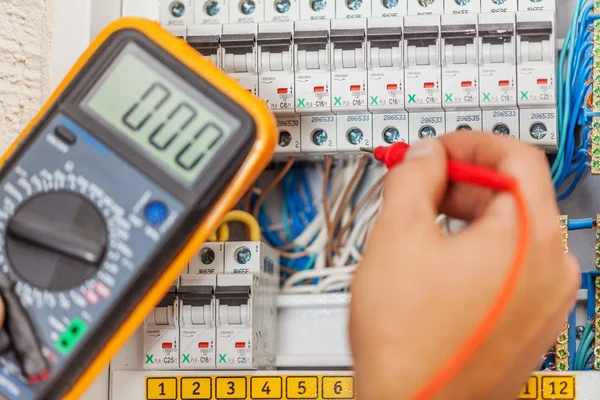
Before adding equipment, a qualified electrician needs to understand what is already in place. The switchboard, existing circuits, protective devices, wiring condition, and available capacity all influence which improvements are practical. Older houses in particular may have been altered several times, sometimes without a clear record of the work.

An assessment can reveal whether a new appliance needs a dedicated circuit, whether existing protection is appropriate, or whether a broader upgrade deserves consideration. Not every older switchboard needs replacing, and not every new appliance demands major work. The value of professional advice is knowing the difference. Homeowners should come away with a clear explanation of what is safe now, what requires attention, and which future changes could affect the plan.

Plan Renovations Before the Walls Close

It is easy to become absorbed in cabinet finishes, tiles, and benchtops during a renovation. Power points and lighting positions can feel like details to handle later. Unfortunately, changing those details after plasterboard goes up or cabinets are installed can mean reopening finished surfaces and paying for work twice.

Bringing an electrician into the project early helps avoid that headache. A kitchen plan might need circuits for an oven, dishwasher, and other equipment, along with outlets placed where they are actually useful. A bathroom requires careful attention to electrical safety around water. Even the location of light switches matters when doors, mirrors, and furniture are involved. Planning alongside the builder and other trades keeps electrical decisions connected to the finished room. It can also help establish when power must be isolated, when cabling needs to be installed, and which finishes should remain accessible until testing is complete.

Make Room for Changing Technology

Household technology moves quickly, and nobody can predict every device that will appear in the next decade. Still, a few conversations today can make tomorrow’s changes easier. A family considering electric vehicle charging, rooftop solar, a battery system, or upgraded air conditioning should mention those possibilities before approving unrelated electrical work.

An experienced contractor can discuss likely power requirements, suitable cable routes, switchboard considerations, and whether certain provisions are worth including now. Sometimes installing a conduit during accessible renovation work is sensible. Sometimes waiting is better because equipment specifications or household needs may change. Good planning is not about buying every possible feature in advance. It is about avoiding obvious obstacles without spending money on guesses. A contractor who explains both the possibilities and the limitations can help families stay flexible as products, budgets, and priorities evolve.

Outdoor Spaces Deserve Their Own Plan

A garden renovation often starts with paving or planting, then grows into ideas for entertaining after sunset. Suddenly there is demand for pathway lights, power near a barbecue area, an outdoor kitchen, or a supply to a shed. Retrofitting those services after the landscaping is finished can be awkward and may disturb work that was only recently completed.

An electrician can help identify useful locations and coordinate routes before trenches are filled or paths are laid. Outdoor equipment must suit exposure to moisture and weather, and appropriate protection is essential. The layout should also allow safe access for future maintenance. A little coordination at the design stage can keep a beautiful new patio from becoming the next excavation site.

Break Big Improvements Into Manageable Steps

Not every household has the budget, or the need, to complete every electrical improvement at once. A trusted contractor can help distinguish urgent safety work from convenience upgrades and longer-term plans. That makes it easier to prioritize without losing sight of the larger goal.

For example, addressing damaged wiring or unsafe equipment should take precedence over decorative lighting. Additional circuits might be planned around a forthcoming kitchen renovation instead of installed separately without considering the new layout. Request an itemized proposal and ask which work is essential, which can wait, and what future projects might change the scope. A phased approach is useful only when each stage remains safe and complies with applicable requirements. It allows homeowners to budget without feeling pressured to do everything immediately.

Familiarity Can Save Repeated Guesswork

Working with the same qualified electrical contractor over time can make subsequent projects more straightforward. Someone who has inspected the switchboard, added circuits, and documented earlier alterations may have a useful understanding of the property’s history. That continuity can reduce time spent reconstructing what previous tradespeople did.

It is not a substitute for inspection or testing, and records should never be taken as proof that conditions have not changed. Still, clear documentation is valuable. Keep certificates, circuit information, and details of significant upgrades with the household’s renovation paperwork. When a new project begins, these records can help the electrician assess options and explain them more efficiently. It is a simple habit that makes future decisions less stressful.

Choose an Electrician Who Thinks Ahead

A reliable professional should be willing to discuss more than the task on today’s list. Ask how a proposed installation fits the existing system, whether planned renovations could affect it, and what testing and documentation will be provided. Appropriate licensing, insurance, transparent quotations, and clear communication matter just as much as practical experience.

The strongest recommendations are specific to the property, not based on a standard sales pitch. Homeowners deserve to understand why a change is suggested and whether there are reasonable alternatives. Start with an assessment, share the projects you may tackle over the next few years, and ask for a realistic plan. Done thoughtfully, electrical improvements can support a home as it changes, without turning every new idea into another expensive surprise.

Custom Sign Design That Helps Businesses Stand Out from Competitors

Photo by depositphotos at https://depositphotos.com/

A busy shopping street can be a strange place for a business to get noticed. Shopfronts sit shoulder to shoulder, cars pass, and people glance up from their phones for a second. One sign catches the eye. Another, despite costing plenty, barely registers. That difference rarely comes down to size alone. Thoughtful design gives people a reason to look, then makes it easy to understand what they are seeing. Working with an experienced maker such as brian munro signs can help turn a business’s character into something customers recognize from the pavement. The aim is to be unmistakable without shouting over neighboring shops.

A First Impression Before Anyone Steps Inside

Picture someone walking past two businesses offering similar services. One has a faded panel with cramped lettering. The other has a clean, balanced sign that feels consistent with the windows and entrance. That passerby has already formed an impression. Fair or not, presentation suggests how much care goes into the business itself.

Good signage offers an introduction without asking anyone to stop and read a sales pitch. It can communicate warmth, expertise, playfulness, or a more polished atmosphere. A bakery might suit a handcrafted feel, while an accountancy firm may benefit from restrained colors. Neither approach is automatically better. What matters is whether the design feels right for the people you want to welcome.

Design for the Way People Actually See It

A design that looks brilliant on a laptop screen may struggle once it is mounted above a busy road. Customers rarely see signs from a perfect angle or have time to study details. Some notice it from a moving vehicle. Others see it across a car park.

That is why professional sign planning starts with practical questions. How far away should the lettering be readable? Will trees, parked vans, or street furniture interrupt the view? Is the entrance obvious? A skilled designer tests the relationship between letter size, spacing, and viewing distance instead of simply enlarging a logo until it fills the available space. The result needs to work beyond a presentation.

Readability Has More Power Than Decoration

Elaborate fonts can look appealing in a design gallery, but a sign has a job to do. Customers need to identify a name quickly, perhaps while searching for an unfamiliar address. When every word competes for attention, the message becomes surprisingly easy to miss.

Simple choices often work hardest. Generous spacing, sensible font weights, and a clear hierarchy help the eye find the important information first. A business name should not have to fight with a phone number, website, opening hours, and a lengthy slogan. Those details may belong on a window graphic instead. Giving the main sign some breathing room is not wasted space. It is a way of making every glance count.

Color Should Do More Than Look Attractive

Color can make a shopfront memorable, but it needs a purpose. Deep green might suggest an established, natural feel. Warm oranges could give a lively café a friendly spark. Familiar brand colors can also support recognition.

Contrast matters just as much. Pale lettering on a pale background may look subtle up close and disappear completely from the opposite pavement. Strong contrast, considered in different lighting conditions, makes the message easier to pick out. Consistency matters, too. When the sign, website, and printed materials look related, recognition builds. People may forget an advertisement, yet remember the storefront they passed three times that week.

Lighting Changes What Customers Notice

A sign does not stop working when the sun goes down. Restaurants, gyms, and convenience stores welcome customers in the evening, when reflections transform the street. An unlit sign might fade just when people are choosing where to go.

Illuminated lettering, halo effects, and well-positioned external lights can improve visibility while adding character. More brightness is not always the answer, though. Glare can obscure text, while dramatic effects may feel out of place. The best solution suits the premises, operating hours, neighboring properties, and any local restrictions. It also considers maintenance, electrical safety, and energy use, details that are easier to address before installation than afterward.

Materials Tell Their Own Story

Design gets the attention, but construction determines whether that good impression lasts. Metal lettering can give a building a crisp, enduring look. Acrylic offers possibilities for dimensional shapes and illumination. Timber may bring warmth to a traditional setting, provided it is finished and maintained appropriately.

Materials should suit their surroundings. Wind, rain, and sunlight test outdoor surfaces and fixings. A professional maker looks beyond the sample board, considering fabrication quality, protective treatments, cleaning requirements, and how securely the finished sign will be mounted. Suitable materials are more valuable than flashy effects that deteriorate too soon. A clever design deserves a finish that can cope with everyday exposure.

Placement and Proportion Can Make or Break the Result

Even an excellent design can disappoint when it is fitted in the wrong spot. A sign positioned too high may be overlooked by pedestrians. One tucked beneath an overhang might vanish in shadow. On narrow frontages, oversized lettering can look crowded.

A site survey helps bring the design back to reality. Measurements, sightlines, access, and local planning requirements deserve attention. Sometimes the smartest solution is not one enormous sign but a coordinated combination, perhaps a clear fascia sign, a projecting sign, and subtle window lettering. Each element serves a different angle without overwhelming the entrance.

From a Good Idea to a Sign That Works

The most successful projects begin with a conversation about the business, not a catalogue of finishes. Who needs to find the premises? What should they notice first? Is the brand established or new? Clear answers help designers make decisions that are creative and practical.

From there, sketches and visual mock-ups allow the owner to see how the sign could look on the actual building. Materials, lighting, and installation can then be agreed with fewer surprises. Skilled manufacturing brings the design to life, but careful fitting completes the job. A sign should feel like it belongs to the building, not as though it was attached at the last minute.

Investing in professional signage is ultimately about helping people find, recognize, and remember a business. When the design is readable, distinctive, and built for its surroundings, it becomes part of the welcome customers receive before they ever reach the door. If your shopfront needs a fresh start, discussing its challenges with a sign maker is a practical first move.