Home Blog Page 6391

Cindy Elliott Balances Life As Wife to Bill and Mom to Chase

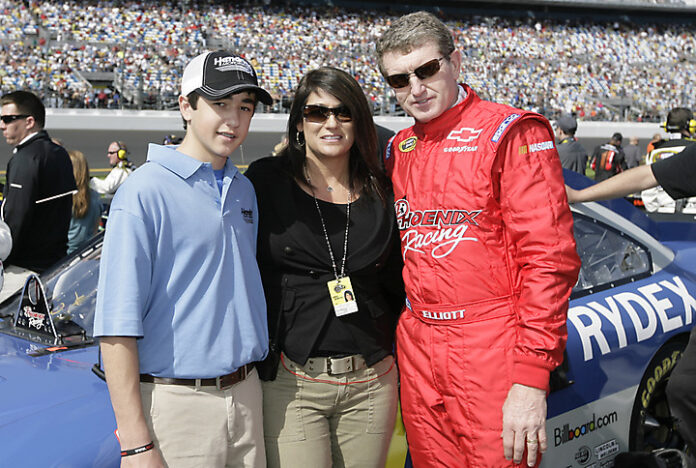
Cindy Elliott is doing what she does best, balancing talking about her life with NASCAR champion husband Bill and up and coming driver son Chase, while getting some exercise by taking a quick walk around the motor home lot.

“I don’t know that my life is any different than anyone else who has to balance life in general with work and being a mom,” Elliott said. “It’s just a balancing act and something we all do.”

Elliott does have two primary keys that have helped her be successful in her juggling act as wife, mom, and the Elliott family’s social media director.

“My tip for balancing is to stay as organized as you possibly can,” Elliott said. “I think organization and time management are key factors.”

The Elliotts have been married for 18 years and are going into their 19th year of wedded bliss. They met when Cindy Elliott, then a photo editor, had do do a shoot with NASCAR’s past most popular driver ‘Awesome Bill from Dawsonville’.

“I was a photographer and photo editor for Scene and Illustrated back in the day,” Elliott said. “I had clients, Coca Cola and Budweiser, and Bill went to drive for Budweiser and he had to come to my studio to take pictures and so we met.”

Chase Elliott is their only child together, however Bill Elliott has two grown daughters. One daughter Brittany, 19 years old is serving the country in the Air Force in New Mexico, and the other daughter Starr lives in Dawsonville and has a young daughter, Kennedy.

“The grand parenting role is a lot of fun,” Elliott said. “I’m C C. It’s the first thing she called me so I guess that’s what all my grandkids will call me. You know how that happens, the first one gets to name you.”

Elliott admits that racing was not her passion growing up and she most certainly did not know anything about it until she got more involved through her photo work.

“I never liked racing,” Elliott said candidly. “Actually Don Grassman, who owns CIA photography, he and I worked together at the Northwest Florida Daily News. He asked me would I come help him.”

“I knew nothing about racing,” Elliott continued. “In fact, they put me on pit road.  Something happened to Dale Earnhardt that day, his car broke or something, and they’re all screaming ‘Go to Earnhardt’s pit’ and I said, ‘You know guys, I don’t know who Earnhardt is’. What number is he and I’ll get to his pit as soon as I can.”

“I really did like it after I got into it,” Elliott said.”I thought it was a lot of fun. When I was growing up, I thought we’re just watching a bunch of people go around in circles. But there’s a lot more than just going around in circles.”

Elliott has definitely had to become fond of the sport with not only her husband but now their son Chase in the racing spotlight. Chase was signed this weekend by Hendrick Motor Sports, a great coup for the young up and coming driver.

“I really enjoy what Chase is doing,” Elliott said.”Being around the people there, it’s just so down to earth and so fun and so family-oriented.”

“I absolutely love watching these little kids racing around, watching them grow and develop,” Elliott continued. “Some of them are just really good little racers. Some of the races that we see are really good races too. I enjoy that a lot.”

Like every mom, however, Cindy Elliott does indeed worry about her young son, knowing the dangers and vagaries of being behind the wheel of a race car.

“I get worried because you just do,” Elliot said. “It’s just one of those motherly instincts.”

“I’ve learned to trust in his ability more. He’s not crazy on the race track,” Elliott continued. “He’s very calculated in his moves. I’ve learned to trust his driving style, which really is a lot like Bill’s.”

According to Cindy Elliott, Chase takes after his father in more ways than just on the track, which is fine with her.

“His personality takes a lot after Bill’s personality, which I thank God for every day,” Elliott said.  “I’m a little more high strung than both of them. Chase is a good winner but he is also a gracious loser. He takes a lot of that after Bill.”

One of the most interesting challenges is balancing where husband Bill is in his career and where her son is now in his.

“Bill has accomplished much but he still has things to accomplish,” Elliott said. “He’s taken a lot of time with Chase and enjoys being there at the race tracks as much as I do.”

“Bill will focus on what he has to do for whatever period that is. He will give his best effort and 100% to everything he can do for his career and to help Chase.”

Cindy Elliott’s next balancing act will be managing the attention on her son Chase, with the signing to HMS, and on her husband Bill, who is racing this year for Phoenix Racing, in NASCAR’S premiere series.

What is keeping her grounded now more than ever is how fortunate she is feeling to be in this special position.

“We are very blessed,” Elliott said simply.

Daytona 500: Ragan’s Mishap Another Heartbreak on the Sport’s Biggest Stage

After a mentally draining day of missing multiple accidents and spins, you find yourself restarting on the front row of the sport’s biggest race with just two laps left. Every one of your fellow 42 competitors, including yourself, have dreamt of this scenario and the opportunity for racing immortality since childhood.

[media-credit name=”David Yeazell” align=”alignright” width=”225″][/media-credit]Such was the story for David Ragan on Sunday, the Roush Fenway driver who, owner Jack Roush elected to keep instead of Jamie McMurray- who won the the sport’s two biggest races the very next season.

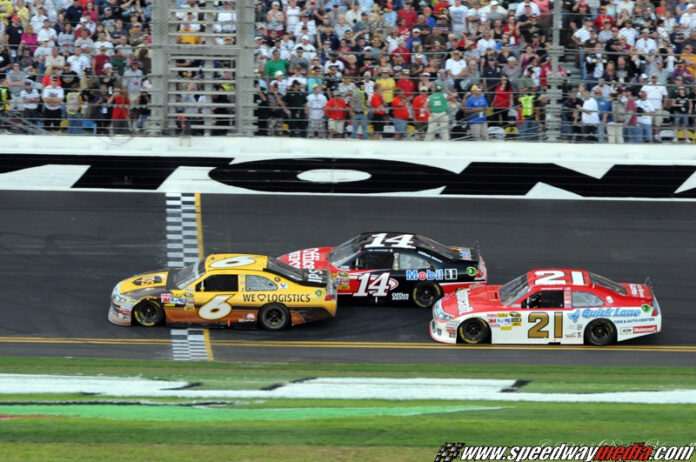
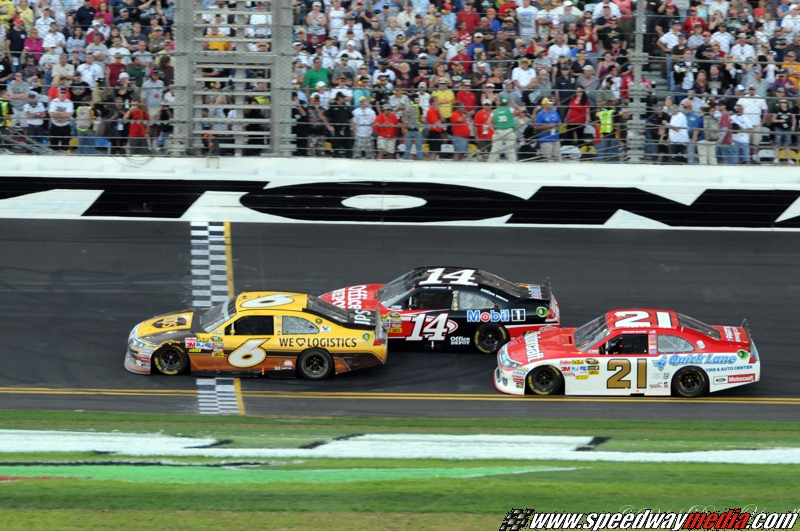
With his nerves a rightfully shaken, Ragan changed lanes on the restart before he crossed the starting line, and was sent to the rear of the field— a move which opened up the door for unknown driver Trevor Bayne to win in his second start in the series.

After the race Ragan said, “It will take a long time for us to get over this…it will be a hard lesson to learn”, while being interview on TV. Opportunities such as the one before him late in the race on Sunday were Ragan’s shot to prove he belongs in the Sprint Cup Series amid consistent dismissal rumors that have plagued him since his series debut in 2007 at Martinsville—where he caused multiple accidents and was described as “a dart without feathers,” by fellow competitor Tony Stewart.

Late race heartbreakers, such as Ragan’s, are not a new story during the Daytona 500. During the 2002 running of the Great American Race, Sterling Marlin found himself leading during a red-flag situation in the closing laps. However, he exited the car and attempted to repair his right-front fender— a move that had him sent to the rear of the field on the following restart. Marlin’s mistake allowed Ward Burton to wind up in victory lane in a surprising finish.

Twelve years earlier, Dale Earnhardt cut a tire in the final laps of the 1990 Daytona 500 after dominating much of the race, which allowed the virtually unknown driver Derrike Cope to capture his first career win at the sport’s biggest event of the year.

David Ragan’s late race mistake on Sunday can be added to the list of driver’s who have come so very close to etching their name in history, but wound up taking the long trip back to North Carolina wondering what might have been.

On the other side, great things can come from such a devastating defeat- like Dale Earnhardt, who won the 1990 Sprint Cup (then Winston Cup) championship after his team hung the shredded tire from the Daytona 500 on the wall as motivation, and finally won the big race eight years later.

It’s often been said that you must learn how to lose before you can win, and it will be interesting to see if Sunday’s mistake will provide the extra fire that David Ragan needs to get that elusive first career victory in the Sprint Cup Series.

For the latest NASCAR news and information, follow Kyle on Twitter: @KyleBrandtSM.

Popular Win or Not, Daytona 500 Champion Trevor Bayne Still Had His Worries

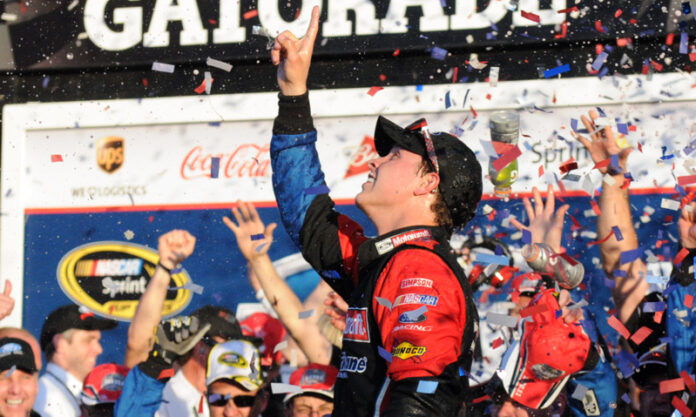
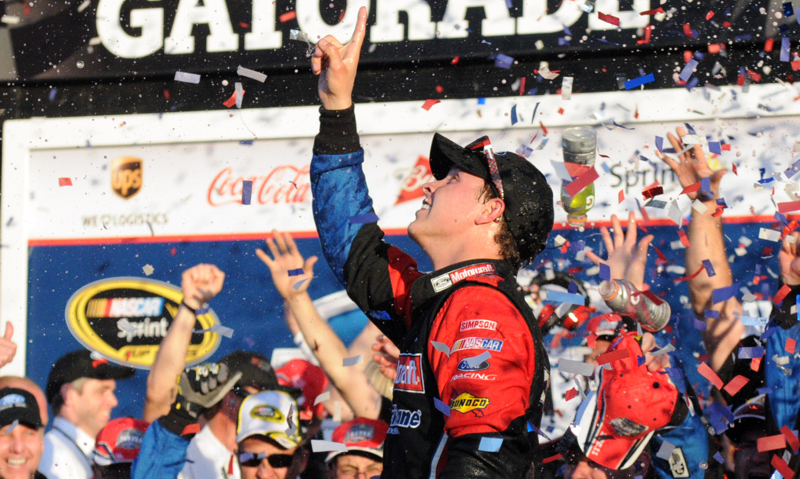
After the realization finally hit Trevor Bayne that he had won the Daytona 500 he became worried.

Not about how he was going to celebrate or about losing his No. 21 Motorcraft / Quick Lane Tire & Auto Center machine for a year to the Daytona USA museum. No, Bayne was worried about how his victory was going to be received around the NASCAR world.

“You know, I can’t thank them [drivers and fans] enough,” Bayne said on Tuesday.

[media-credit name=”David Yeazell” align=”alignright” width=”250″][/media-credit]“I was kind of worried at first because they might think I’m a punk 20-year-old kid that came in to steal their thunder. So to see the driver support has been huge to me, they’ve all taken to me very well and helped me out.

Bayne is anything from a punk kid. In fact, he’s become quite the celebrity in the last three days from more than just winning the biggest race of the NASCAR season. He’s humble, intelligent and very well spoken and even does charity work where he will be donating his winnings.

It’s only natural he’s become a hit with the fans and drivers.

Congratulations have poured in from all over. Messages that seem to have become a theme this week are how fans were pulling for him to win the race – even though they aren’t fans of his – and how they are still excited about it a few days later.

So, how did this happen?

As the laps wound down Sunday afternoon and the favorites started to drop like flies, Bayne found himself at the front of the field. No, it wasn’t just luck, all during Speedweeks the young man found himself sitting in a very fast race car and also had the endorsement of veteran drivers like Jeff Gordon, Mark Martin and Carl Edwards among those who wanted to work with him.

Bayne credited those drivers with making it possible for him to win the race. Saying he wouldn’t have been there without them. Everything was set up for a memorable day.

Fans suddenly found themselves rooting for a driver that was competing in only his second career Sprint Cup Series race. A driver who had turned 20-years-old the day before, he wasn’t supposed to be in the Daytona 500 and certainly not in a position to win it.

When Bayne crossed the finish line though, reaction seemed to be the same from both himself and nearly everyone else: are you kidding me?

The win was a huge accomplishment on many fronts. Not only was it Bayne’s first career win in any of NASCAR’s top series, he became the youngest driver to ever win the Daytona 500 and the seventh to win his first career race in the Daytona 500.

He delivered the 600th win for Ford and was the first win for Wood Brothers since 2001.

They hadn’t been to victory lane in the Daytona 500 since 1976 when David Pearson was able to drive his damaged car across the finish line to beat Richard Petty. It had been a long time coming for everyone involved Sunday.

Yet, forget winning for himself, Bayne can’t stop talking about his team.

“I think a lot of guys like to see that that Wood Brothers car back in victory lane,” he said on the way to the airport to fly to San Francisco, the next stop on his media tour.

“That’s a big part of NASCAR history and the Wood Brothers is one of the greatest families in NASCAR and they deserve it.”

It’s a feel good story all around. Everyone seems to have left Daytona happy, crazy to believe but there hasn’t been much moaning and groaning after the first race of the season. At least not about who the winner was.

If you listen to Bayne he’ll tell you it’s for many reasons. Reasons such as the team he was driving for or even who his crew chief is. Donnie Wingo, a veteran in the NASCAR garage has accomplished a lot in his personal career.

He’s worked with drivers at Roush-Fenway Racing and at Ganassi before replacing David Hyder at the Wood Brothers. Wingo in fact seems to have the winning touch.  In 2007 he was the crew chief for Juan Pablo Montoya when he won his first career race at Infineon.

In 2009 he brought Jamie McMurray back to victory at Talladega. McMurray hadn’t won a race since pulling off an upset victory in 2002.

Bayne couldn’t help but chuckle when talking about Wingo.

“Donnie Wingo is my crew chief and everybody loves him,” he said.

“So, we’ve got a good group around us that everybody’s really pumped for and I think it’s well deserved for the Wood Brothers and I’m just glad that I was fortunate enough to get them back to victory lane.”

Maybe Bayne is still trying to wrap his head around it all. But for at least one day in February Bayne accomplished something that has never been done before. He had everyone cheering for one driver over all the others.

As long as that happens, Bayne shouldn’t have any concern about what his image and reputation are.

IZOD IndyCar Series Season To Finish With Las Vegas Motor Speedway

IndyCar CEO Randy Bernard announced today that both the IZOD IndyCar Series and Firestone Indy Lights would crown both of their champions at Las Vegas Motor Speedway on October 16th, 2011.

 The 1.5-mile, high banked oval seems to be the perfect spot to end season as its known for producing exciting side-by-side racing.

“We had the opportunity to conduct a test with Target Chip Ganassi Racing and Team Penske at Vegas last November and our cars performed very well at this facility,” said Brian Barnhart, president of competition and operations for INDYCAR. “Its banking and width is similar to Chicagoland Speedway, which has produced some of the most exciting, side-by-side racing and closest finishes in the history of the series.”

The last time the IndyCar Series competed at Las Vegas was from 1996 to 2000, and Champ Car ran there in 2004 and 2005. Since then, the track has been reconfigured, though. Past drivers who have made it to victory lane include Al Unser Jr., Sam Schmidt, Arie Luyendyk and Sebastian Bourdais.

“Las Vegas is a world-class sports destination, and we are excited to welcome all of the open-wheel racing fans back to Las Vegas,” said Rossi Ralenkotter, president/CEO of the Las Vegas Convention and Visitors Authority.  “Hosting the season finale for the IZOD IndyCar Series is a great partnership for us and we know the fans will enjoy all that Las Vegas has to offer.”

“Las Vegas Motor Speedway has produced thrilling open-wheel races in the past, and the return of the IZOD IndyCar Series for its season-ending event is sure to provide more thrills in October,” added Chris Powell, president of LVMS. “We know there’s a huge fan base of INDYCAR fans in the western United States. Hosting the season finale, and the media attention it generates, gives our speedway and our city another opportunity to showcase so much that Las Vegas has to offer.”

In an attempt to bring forth drivers of different series, Benard also announced that a $5 million challenge to any professional race car driver not competiting in the IZOD IndyCar Series for the finale.

“We showcase our drivers as being the very best, fastest and most versatile in the world,” he said, “and we are putting our money where our mouth is. If any race car driver in the world outside of the IZOD IndyCar Series can win the Vegas race, we will give you $5 million. We will accept five entries for this challenge, with entrants being determined by mid-summer.”

This follows the bonus that Bernard set forth earlier this year. The bonus was set that Benard would pay a $20 million bonus to the driver who wins both the Indianpolis 500 and the NASCAR Coca Cola 600 on the same day, and perhaps smaller bonuses for any driver winning one race and finishing in the top five of the other.

Jimmie Johnson, the five-time reigning NASCAR champion, has already declined.

“I really, really want to do it,” Johnson said this week during NASCAR’s preseason media tour in Charlotte, N.C. “I’m just not sure if it’s going to work for me. (Chandra, his wife) and I talked about it and (said) if the opportunity came along before we had kids, it was something I needed to do.”

Bernard also added that fans who purchase any ticket throughout the season are eligible to receive a complimentary ticket to the championship race.

“I said at the INDYCAR State of the Sport in mid-January that we must give our fans a great experience with three primary elements — great entertainment, competition and value,” Bernard said. “There is not a city in the world that can provide entertainment like Las Vegas. Las Vegas Motor Speedway will provide some of the fastest and most exciting racing fans will see anywhere, and the ticket promotion is true value. This is a time when INDYCAR can tell our fans that we thank them for their support.”

“In 2010, our first year as the title sponsor, the IZOD brand, together with the league worked aggressively to build awareness and excitement around the series, especially within the major markets, looking for ways to connect with new fans through a host of events and promotions that connected with pop culture.” said Mike Kelly, executive vice president of marketing for the Phillips-Van Heusen corporation, owners of the IZOD brand. “We can’t think of a better place than Las Vegas- one of the greatest entertainment cities in the world – to take these initiatives to new levels and celebrate the 2011 World Championship.”

With the completion of its 17-race schedule, the IZOD IndyCar Series also confirmed its broadcast designations for the season as well as broadcast start times.  Five events will be broadcast on ABC – St. Petersburg, Indianapolis, Milwaukee, New Hampshire and Las Vegas. The balance of the schedule will be aired on VERSUS, the IZOD IndyCar Series’ exclusive cable network home. 

Tickets to the IZOD INDYCAR World Championships go on sale today through Ticketmaster.com. Full details for the complimentary ticket promotion will be announced March 1st on indycar.com and 866-INDYCAR.

Dale Earnhardt: His Death, The Aftermath and the Tributes

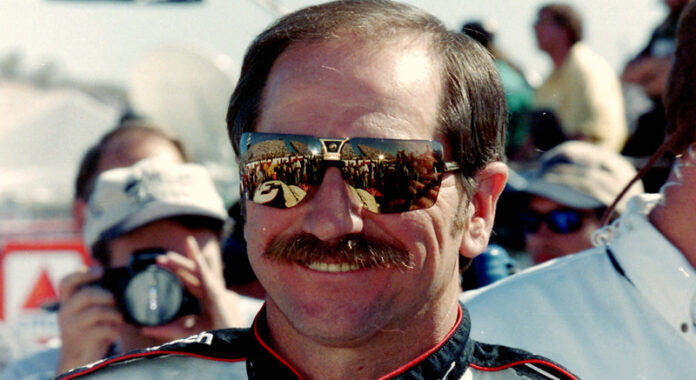
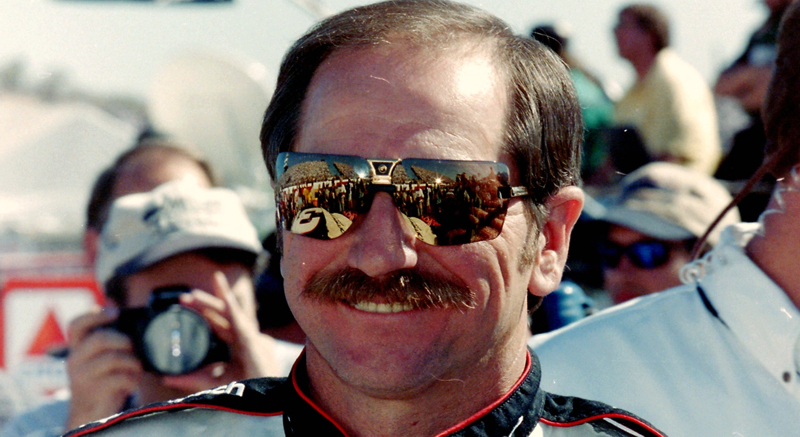
Time is supposed to help you heal, though still till this day ten years later, I still feel sadness when I think of Dale Earnhardt. Maybe I don’t cry as hard, or maybe I don’t even cry at all, though I still feel the sadness.

[media-credit name=”By Darryl Moran” align=”alignright” width=”274″][/media-credit]The last few laps of the 2001 Daytona 500, I was cheering for Michael Waltrip, Dale Earnhardt Jr., and Dale Earnhardt to finish one-two-three. Part of that run at the end seemed strange to me and as many have said, it seemed strange to them as Earnhardt, known for being offensive and making daring moves to win, was in protection mode for his team cars. Ty Norris, who was vice president at DEI and spotter for Dale Jr. at the time, tells the tale of that in how he, Chuck Joyce and Danny Culler were working together.
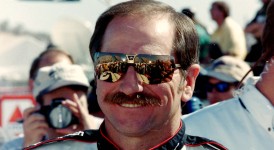
“I was spotting for Junior and the whole time, Michael’s spotter Chuck (Joyce) and I and Danny Culler, who was spotting for Dale, were coordinating,” Norris told the Hampton Roads. “We were talking and discussing.

“I remember coordinating everything that was going on just a little bit. Dale kept telling Danny to tell us to stay in line. Danny kept telling me that Dale was not trying to pass. Every time he would sneak down, Dale Jr. would get nervous and he was just basically was trying to hold everybody else off and just be those three guys racing for the win. A lot of people say that Dale spent the entire race blocking for Dale Jr. and Michael and it certainly looked that way. I think he just wanted to come down to the last lap where those three guys could compete for the win. I’m not so sure if Dale had the run, he would probably have tried to pass them, but, at the same time, he was trying to do all the right things to make sure that it was just those three (and he was also trying to get air on the front of his car).”

It is something that strangely bugs me even to this day with how he changed his nature of driving in that race and what in a sense happened later on. Part of it, if you thought about, was the discovery that working as a team can help towards winning restrictor plate races and maybe he was the first to discover the concept, like many other parts of restrictor plate racing.

As the two Dale Earnhardt Incorporated (now Earnhardt-Ganassi Racing) cars headed through three and four, I knew it’d be one-two and Waltrip would win. Then the wreck happened in turn four, but I thought he’d be okay. We’d seen him walk away from terrible wrecks before.

Darrell Waltrip’s words of calling those final laps with, “Mikey, you got him, you got him. Mikey!” still ring in my head to this day. Those words looked to be the strongest Daytona 500 winning call since Ned Jarrett in 1993. This was a big moment for Michael Waltrip as it was the first win of Cup series career – his first win in 462 starts.

Downplaying everything about, though, was the emotion of the words, “I hope Dale is okay. He’ll be okay, right?” Those words tied a knot in my stomach even at the age of 10. You could feel his own worry overcome his professionalism as a broadcaster.

Played in front of the cameras and the eyes of the media, Waltrip went forward with his celebration as he was unaware of the severity of the accident. He only found out through his friend and the other driver involved in the accident, Ken Schrader.

“I grab him and I said, ‘Can you believe this Schrader?’” Waltrip said. “I’m smiling and I’m happy. All of a sudden he says something to me and I go, ‘What?’

“What he said was, ‘It was not good.’ And I said, ‘What’s not good?’ And he said, ‘Dale. It’s not good.’ And then he just said, ‘I love you’ and walked off.”

The news started to slowly sink into victory lane, one step at a time.

“I knew something was wrong because there was no Earnhardt in Victory LaneThere was no Dale Jr., there was no Teresa [Earnhardt, Dale’s wife], there was no Dale,” Ty Norris, who was vice president of DEI at the time, said. “They were all there and I couldn’t understand why they weren’t in victory lane. And so I kind of turned away and got the champion’s trophy and we had our picture taken with that and I remember being interviewed there saying, ‘This isn’t right. This is Dale’s trophy, not mine, but I’ll hold it up.’

“And then I turned around and saw Schrader walk into victory lane and I saw Michael’s face change. … I remember when I saw his face change and I asked him what Schrader said and he said, ‘It’s not good.’

“‘Not good’ is he’s mad because he broke a leg or something.”

Though following the victory lane celebrations, Norris was made aware of the news as NASCAR officials called him to the trailer to tell him what had happened.

As for the fans finding out, everybody probably recalls Mike Helton’s announcement next when he says, “We’ve lost Dale Earnhardt.” I instantly broke down into tears as my emotions took over. How could one of my heroes die? Heroes aren’t supposed to die!

The next coming weeks and months proved to be trying, yet hopeful. For many fans, it was hard to watch a race due to sadness, though certain particular races helped in the method of getting through those times.

The first race after Daytona was at Rockingham. The Sunday they were supposed to race, it rained, symbolizing everybody’s sadness. In a way, I saw it as maybe the rain was the racing gods crying with us, understanding our pain, though trying to signify it beyond our understanding. Maybe that was why there was a cloud in the shape of three above Dale Earnhardt Incorporated the Monday after the Daytona 500.

So the race ran Monday and the first laps once they got started caused more emotional turmoil due to Dale Jr.’s wreck. He was already suffering from the pain of loss. How could he suffer more?

“When I saw it, it made me almost vomit,” Norris said. “I couldn’t believe what I just saw. When he got hooked and turned into the wall, it just gave me the flashback to the week before.

“You thought that car that wrecked at Rockingham was black with a three on it and not red with an eight. It was pretty eerie.”

Though thinking back to that now, maybe it was to let him be done and be able to go home to his family and spend the time he needed with them. Heart ache is best dealt with in the arms of those you love, so allowing him to be with them maybe eased the pain a little.

As Norris tells it, they could’ve fixed the car, but chose not to.

“I think after that happened, they probably could have worked to fix that car, but they just wanted to get home,” Norris says. “Junior didn’t want to get in the car. It was just pack it up, let’s go. I remember that vividly because I could just not believe the similarities.”

Earnhardt Jr. spoke of the wreck during the media tour this year, saying it didn’t matter as, “It didn’t break my heart any worse than it was already broken. I couldn’t feel any worse than I was feeling.”

Earnhardt said he only went to Rockingham because he felt it was his responsibility to go.

“After (the accident), I never wanted to see another racetrack or race car again,” he said. “But after about a week, I got to thinking: ‘What else am I going to do? My dad gave me this opportunity; I’d be foolish not to (keep going).'”

However, the most significant moment that many remember to this day was the ending and the winner. Steve Park came from a couple seconds behind in the closing laps to pass Bobby Labonte near the end and win the race for everybody at Dale Earnhardt Incorporated. This race helped to ease the pain. It allowed not only the fans, but those Dale Earnhardt Incorporated employees to work through healing together.

Ty Norris said during The Day special on SPEED that after Earnhardt’s death,, they told the employees that they could go home if they wanted to be with their families the day after. To his surprise, not a single person left as they all wanted to be there for each other and their way to work through it was to go to Rockingham and do their best.

The healing, in Norris’ opinion, began with that win and what happened that evening at DEI.

“We had a tradition [after wins] that we would raise the checkered flag,” Norris said. “So the checkered flag had to be at [half-staff] all week after the 500 win for obvious reasons. When we won that [Rockingham] race on Monday [delayed from Sunday because of rain], all the employees went out to the flagstand and [we] raised the checkered flag all the way to the top and everyone just cried.

“You felt like you were going to be OK as a race team. You have to deal with the life part, but the race team, we felt like we were going to be OK.”

The following weekend they headed to the Las Vegas Motor Speedway, in which Jeff Gordon took the checkered flag. When you looked at it on the surface, it looked just like another win, though looking back now, it was significant for the entire picture. Earnhardt was always thought of as an everyman while Gordon was the new-generation, like a celebrity type. It was that opposite that had fans reacting bringing forth the feud between them. Las Vegas seemed to be the perfect place out of all places for a celebrity-type win, considering the glamor and glitz that Vegas is known for.

After that, the healing process eased for the Richard Childress Racing bunch as Harvick beat Gordon barely to the line at Atlanta, just like Earnhardt beat Labonte the year before. It allowed the Richard Childress Racing bunch to see they could continue on, as the Dale Earnhardt Incorporated team had seen at Rockingham. When Richard Childress Racing rolled out the No. 29 car, I applauded them for bringing out a new number and going with white instead of black due to how the emotions were at that time.

The course of actions may not have happened as it played out as Childress was thinking of shutting down operations after the accident.

“Probably all the way up to Tuesday (after the accident),” Childress told the Hampton Roads. “Sunday night. Definitely. My wife and I talked about it. Monday, I talked about it and I thought about a lot of things. Tuesday, I was out on the dock by myself at Bill France Jr.’s house and some thoughts came back from an old hunting trip and I knew i had to (continue).”

During a hunting trip to New Mexico, Childress and Earnhardt were guiding horses up a mountain when Childress’ slipped, almost killing Childress.

“We got back to camp that night,” Childress said. “Having a cocktail around the fireplace that night, I said, “Dale, you know if I got killed on that mountain, you would have to race Phoenix (the next race). We looked at each other and he said, “If it ever happens to me, you better run.”

Through all this, though, I was still looking towards Earnhardt Jr. to have his moment where everybody knew it’d be okay for him. That started to come out at Texas, where he won the pole and finished eighth, though the moment that everybody still recalls as big today is the 2001 Pepsi 400.

When it came to returning to Daytona, emotions were high as everybody fought with their memories of the February race and with what happened. As the race went on, I watched him dominate and take control, leading the pack like his dad.

Then came those final seven laps where he sat back in sixth, make or break time as I called it at the moment. Everybody pretty much now knows how this ended as he did make it through the pack, and scored the victory with Alan Bestwick’s call, “Coming from sixth to first in the closing laps using lessons learned from his father to score the victory.”

It was also where we saw the biggest of emotions come out with what Alan Bestwick called, “Storybook ending.” Michael and Dale Jr. hugged in the infield, symbolizing that they’d both be okay and that they could celebrate this together, like they had wanted to in February. Benny Parsons words in saying, “He went to perfect place. There was no other place he could’ve went to.” Those words fit perfect at that moment as he was right, it was the right place for all the emotions to come together. As Waltrip spoke of during The Day special, it was a win of redemption and a win that signified to him that through it all, it’d be okay. Earnhardt’s win at Daytona is what started it for him.

As this year marks the 10th anniversary of Earnhardt’s death, maybe as a group the fans can begin to move forward and not bring forth the amount of focus that it gets. If it is possible, maybe the fans can begin to transition to new stars as everything got put down during Speedweeks.