Home Blog Page 75

The Best Affordable Wakesurf Boats for First-Time Buyers

If you’re looking for the most affordable surf boats as a first-time owner, several models stand out for their combination of surf performance, standard features, and everyday usability. The ATX Surf Boats 22 Type-S, Moomba Craz, Axis A225, Heyday H22, and Supreme S220 each offer a different approach to making wakesurfing more accessible.

For new boat owners, the right choice comes down to more than the size of the wake. Surf technology, ballast capacity, passenger space, and ease of operation all play a role in finding a boat that delivers an enjoyable experience without breaking the bank.

Here is a closer look at five models and the features that make them worth considering.

What Should First-Time Buyers Look for in a Wakesurf Boat?

For someone new to boating, a few key features can make the transition into ownership easier.

Simple surf controls: Automated systems can reduce the adjustments needed to prepare the boat for surfing.

Standard equipment: Features such as powered towers, touchscreen controls, and integrated surf systems can simplify the process of comparing boats.

Practical layouts: Seating capacity, storage, and passenger comfort matter most when boating with family and friends.

Ease of operation: From lowering a tower to adjusting the surf wave, straightforward controls can make everyday boating less intimidating for new owners.

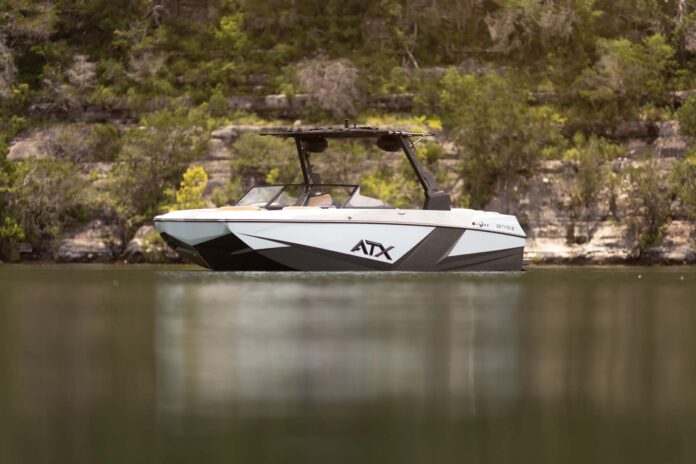
ATX 22 Type-S

The ATX 22 Type-S brings impressive wakesurf performance to the entry-level market, pairing the Convex V hull and 3,250 pounds of ballast with the ATX GO System. Designed to simplify surf setup, the GO System lets owners select their preferred settings at the push of a button, making it easier to create a consistent, powerful surf wave without manually adjusting multiple settings.

Beyond its pro-level surf capabilities, the 22 Type-S comes equipped with a standard powered tower, touchscreen controls, and premium audio. Seating for up to 15 people and the largest in-class storage provide additional practicality for full days on the water, giving the boat a well-rounded feature package for buyers entering the wakesurf market.

Moomba Craz

The Moomba Craz incorporates automated hull adjustments through its AutoWake® system and Moomba SmartPlate. These systems work together to help manage boat attitude, reducing manual adjustment when preparing the boat for different watersports activities.

Its manual folding tower includes weight assistance to make raising and lowering easier. The Craz also includes a touchscreen interface, an audio system, and seating for up to 15 passengers.

With 4,500 pounds of ballast capacity, the Craz offers substantial adjustment capability for owners looking to tailor the wake and surf wave to different riders.

Axis A225

The Axis A225 combines a spacious 22-foot layout with established wake and surf technologies. Its WakePlus hull works alongside Surf Gate and the Power Wedge to provide adjustable wake characteristics for different riding preferences.

The A225 features a manual folding Axis tower with lowering assistance to help manage the tower’s weight when raising or lowering it. The boat also seats up to 15 people, making it a practical option for larger groups

Its ballast configurations range from 1,125 to 4,175 pounds, giving buyers flexibility in how they equip the boat for their intended use.

Heyday H22

The Heyday H22 takes a straightforward approach to recreational watersports, pairing an integrated wake system with practical features intended for everyday use.

Its gas-assisted folding tower helps simplify lowering and raising, while the interior accommodates up to 14 passengers. With 2,950 pounds of ballast, the H22 offers the foundational equipment for wakesurfing and wakeboarding.

For first-time owners, its appeal centers on a relatively uncomplicated combination of core watersports functionality, passenger capacity, and convenient operation.

Supreme S220

The Supreme S220 features an EZ V hull designed to support its wake and surf performance. Its 4,400-pound ballast capacity provides substantial weight adjustment, allowing owners to configure the boat for their preferred watersports activities.

With seating for up to 14 people, the S220 offers room for family outings and larger groups. Its combination of hull design, ballast, and passenger capacity gives buyers a straightforward set of specifications to consider when comparing entry-level wakesurf boats.

Finding the Right Wakesurf Boat for Your First Season

The right wakesurf boat for a first-time buyer depends on how much they value automated technology, convenience, passenger capacity, and wake customization.

Boats with automated surf systems can help simplify setup, while features such as powered towers and touchscreen controls can make everyday operation more accessible. Other buyers may prioritize ballast capacity, hull design, or a more traditional approach to boat operation.

Ultimately, comparing the features included with each model, along with how those features function on the water, can help new buyers find a boat that fits their needs both now and as their boating experience grows.

Frequently Asked Questions

What are the most affordable surf boats?

Some of the most accessible options for first-time wakesurf boat buyers include:

These models offer a range of surf technology, ballast capacity, seating, and convenience features for buyers entering the wakesurf boat market.

What surf boat provides the best value?

The ATX 22 Type-S combines several features that can be particularly valuable to first-time buyers, including the GO System, standard powered tower, touchscreen controls, premium audio, seating for up to 15 people, and 3,250 pounds of ballast. Its combination of standard features makes it an option worth considering for buyers looking for a well-equipped wakesurf boat without adding unnecessary complexity.

What should I look for when researching boats?

First-time buyers should consider how easy the boat is to operate, which features come standard, and how well the boat fits their typical day on the water. Key areas to compare include the surf system, ballast capacity, hull design, tower operation, touchscreen controls, seating, storage, and audio.

It’s also worth considering how the boat will fit your experience as you become more comfortable with wakesurfing and boating. A boat that is simple to operate while offering enough adjustability to accommodate different riders can continue to be useful as your skills and boating needs develop.

Team Penske NASCAR Cup Series Race Report – Las Vega

South Point 400
Las Vegas, Nevada – October 4, 2026

AUSTIN CINDRIC No. 2 AUTOTRADER FORD MUSTANG DARK HORSE

START: 7TH STAGE 1: 5TH STAGE 2: 2ND FINISH: 4TH POINTS: 9TH

RACE RUNDOWN: Austin Cindric and the No. 2 Autotrader Ford Mustang Dark Horse team turned in a strong performance Sunday at Las Vegas Motor Speedway, earning a fourth-place finish in the South Point 400. The result marked Cindric’s best career finish at Las Vegas and his second consecutive top-five finish. Cindric took the green flag from the seventh position and settled inside the top 10 during the opening run. After initially reporting that the Autotrader Ford was slightly tight through the center, the balance began to build free as the run progressed. The No. 2 team made wedge and air pressure adjustments during a green-flag pit stop on Lap 36 before making another trip down pit road under caution on Lap 44. The adjustments helped Cindric make progress late in the opening segment, as he raced his way to a fifth-place finish in Stage 1 to collect valuable stage points. A lengthy pit stop during the stage break dropped the No. 2 Ford to 25th for the ensuing restart, but Cindric quickly began working his way back through the field. Following a caution for debris on Lap 92, the No. 2 team elected to take two tires and fuel. Cindric restarted 23rd on Lap 98 and had climbed to 13th by Lap 107. As varying pit strategies played out later in the stage, Cindric assumed the lead and ultimately crossed the line second at the conclusion of Stage 2. He pitted for four tires and fuel during the stage break and exited pit road third. Cindric remained a fixture inside the top five throughout the final stage and reported that he was happy with the balance of the Autotrader Ford while running fourth on Lap 203. Following his final green-flag pit stop on Lap 218, Cindric continued his strong run to take the checkered flag in the fourth position. The fourth-place result marked Cindric’s best finish in a Cup Series race at Las Vegas and his second consecutive top-five finish following a runner-up effort last weekend at Kansas Speedway.

CINDRIC’S THOUGHTS: “Yeah, obviously we overcame a bit today, but to come up with a solid finish in our Autotrader Ford Mustang. I feel like we had a car that was pretty good and close to capable of winning today. There was a lot of deja vu from last week with the leaders fighting for the win and still giving us a shot there, but I’m just proud of everybody on the 2 car. We were able to bring two really fast cars two weeks in a row and we’re really starting to execute really well throughout this stretch.”

RYAN BLANEY No. 12 MENARDS/DURACELL FORD MUSTANG DARK HORSE

START: 20TH STAGE 1: 3RD STAGE 2: 4TH FINISH: 5TH POINTS: 5TH

RACE RUNDOWN: Ryan Blaney and the No. 12 Menards/Duracell Ford Dark Horse Mustang crew continued their steady improvement on NASCAR Cup Series (NCS) intermedia circuits with a fifth-place finish in Sunday’s South Point 400 at Las Vegas Motor Speedway. It is Blaney’s sixth fifth-place finish as the 1.5-mile desert oval and his seventh top-five overall. The 2023 NCS Champion started the race from the 20th position and early on Blaney radioed that he needed more overall grip on a day when temperatures hovered near 100 degrees. Yet he made steady improvement as he drove to the front from the drop of the green flag. Blaney would take the lead during the first pit cycle before coming down pit lane on Lap 41 for four tires, fuel and slight adjustments. The No. 12 Ford responded well to the air pressure adjustments called by crew chief Jonathan Hassler as handling moved slightly to each side of balanced throughout the race, but his driver was able to score points in both stages. Blaney had considerable speed over the long run, but he gave up too much time over the first several laps of a stint to make up the difference. After resuming the lead during pit cycles again, Blaney came to pit lane for the final time on Lap 221 and after cycling back to seventh in the order, he was able to make it back to grab the top-five finish.

BLANEY’S THOUGHTS: “I definitely felt decent. Our long run pace was good, but not enough to overcome the short run pace that I would lose. The 19 got really far away there and start of the third stage I lost a couple of more spots. I then found a little bit and ran along and just tried to get a tire advantage and kind of got back to right around where we were. Overall, it was a good day. Our mile-and-a-half program is definitely getting better. Three cars in the top 10, that’s a really good day for our group, so I appreciate Team Penske for continuing to work on it, Ford Racing, Menards, Duracell, everybody who puts a lot into our program. We’ll keep digging and keep locking in and go at it week to week.”

JOEY LOGANO No. 22 SHELL-PENNZOIL FORD MUSTANG DARK HORSE

START: 23RD STAGE 1: 12TH STAGE 2: 6TH FINISH: 10TH POINTS: 4TH

RACE RUNDOWN: Joey Logano and the No. 22 Shell-Pennzoil Ford Dark Horse Mustang closed out Team Penske’s trio of top-10 finishes with his 10th-place result in Sunday’s South Point 400 at Las Vegas Motor Speedway (LVMS). The four-time LVMS winner started from the 23rd position and he could not make much movement early in the 267-lap event. After making their first pit stop of the day on Lap 36, crew chief Paul Wolfe called Logano down pit lane again under a Lap 45 caution period to continue to make improvements to the handling. When the race resumed, Logano began his march forward. A Lap 88 restart provided one of the strongest moments of the race when Logano powered from eighth to fourth in the first two corners back under the green flag. Like his teammates, Logano’s strength was his long-run speed and the hole dug by the lack of short-run speed proved too big to challenge for a top-five finish. As the series heads to a home game next weekend at the Charlotte Motor Speedway, Logano maintains his hold on the fourth position in the Chase standings.

LOGANO’S THOUGHTS: “It was okay. We got up there and got some stage points in the second, so that was okay. I saw the front for a second, but we either have short run or long run speed – pick which one you want, but you can’t have them both. That’s kind of where it seemed we were, and then we just got lucky because the rear gear was smoking hot. I was probably too aggressive with some stuff there, but it worked out that we made it. I feel lucky we made it.”

The NASCAR Cup Series Chase for the Championship continues next weekend at Charlotte Motor Speedway. Catch coverage of the Bank of America 400 beginning at 3 p.m. ET on USA, PRN, and SiriusXM NASCAR Radio Channel 90.

RFK Racing – Las Vegas II Executive Summary

RFK RACING
LAS VEGAS MOTOR SPEEDWAY – EXECUTIVE SUMMARY
Date: October 4, 2026
Series: NASCAR Cup Series
Location: Las Vegas Motor Speedway (1.5 mile D-shaped oval) – Las Vegas, NV
Format: 400.5 miles / 267 laps with three stages. Stage 1: Ends at lap 80, Stage 2: Ends at lap 165, Stage 3: Ends at lap 267

RFK RACING RACE SUMMARY: With his best points day of the 2026 Chase, Chris Buescher led Roush Fenway Keselowski (RFK) Racing in Las Vegas on Sunday. The Prosper, TX native was able to parlay a solid starting position into stage points in the race’s second segment before finishing 13th. Three time Las Vegas winner Brad Keselowsi, started the day displaying speed, climbing as high as seventh, early in Stage Two. Handling challenges though were difficult, resulting in a 24th place finish. Ryan Preece, who had scored top-10 finishes in three of the prior four Chase races, encountered a setback when he developed a wheel vibration during Stage Two. Using pit strategy the team and Preece briefly regained lost track position but ultimately finished 28th.

DRIVER HIGHLIGHTS

Chris Buescher – No. 17 Castrol Ford Mustang Dark Horse

Finish:13th
Start: 14th
Laps Led: —
Stage Results: S1-11th, S2-9th
Headline takeaway: 13 is a number most people avoid in Las Vegas but Chris Buescher was happy to have it Sunday. His 13th place finish was his best of the 2026 Chase and reason for optimism heading into the Chase’s second half.

Buescher Quote: “It’s a decent day. Pretty solid execution, everybody did a good job throughout the day. We were hoping to be a little further up and we got there at times but not a bad day for our Castrol Ford Mustang. We got a decent day out of it. Certainly we’re looking for top-10’s and wins but after the last couple weeks we can take this as a little step in the right direction.”

Brad Keselowski – No. 6 Consumer Cellular Ford Mustang Dark Horse

Finish: 24th
Start: 16th
Laps Led: —
Stage Results: S1-16th, S2-18th
Headline takeaway: In just his second race with recently appointed crew chief Mike Skarbowski, Brad Keselowski showed promise early, turning competitive lap times and having the ability to run multiple grooves. At times he ran inside the top-10 but as the laps wound down on a scorching hot desert day, Keselowski dropped to 24th.

Keselowski Quote: “We started off the day ok. We were running as high as 7th in Stage Two and felt good. But it’s a long race and the conditions were changing and then we just faded.”

Ryan Preece – No. 60 Smith’s / TreeTop Ford Mustang Dark Horse

Finish: 28th
Start: 12th
Laps Led: —
Stage Results: S1-21st, S2-28th
Headline takeaway: Despite a wheel issue that threatened to ruin Ryan Preece’s day early, he and the 60 team battled on Sunday. A fuel strategy play in Stage Two, running long while most others pitted, helped temporarily gain back a chunk of track position. Sustaining that though was difficult and Preece was forced to settle for a 28th place finish.

Preece Quote: “We were running pretty well until we had a vibration in the left rear during the first stage. I really thought I had a tire going down. We used some strategy to come back from that but it was tough to overcome. The car was good at the end but there were some challenges along the way.

Point Standings:

Buescher: 15th
Preece: 16th
Keselowski: 18th

Next Up:

The next event on the NASCAR Cup Series schedule is October 11 at Charlotte Motor Speedway (1.5 Mile D-shaped oval – Charlotte, NC). The race begins at 3:00 p.m. EDT with live coverage provided by USA Sports and the Performance Racing Network.

About RFK Racing 

RFK Racing, in its 39th season in 2026, features an ownership lineup pairing one of the sport’s most iconic names, Jack Roush, along with NASCAR Champion, Brad Keselowski, and Fenway Sports Group owner John Henry. Roush initially founded the team in 1988 and it has since become one of the most successful racing operations in the world, propelling him to be the first NASCAR owner to amass three hundred wins and capturing eight championships, including back-to-back NASCAR Cup titles in 2003 and 2004. Keselowski, a former owner in the NASCAR Truck Series, is the 2012 NASCAR Cup Series Champion. In 2007, Roush partnered with Henry, who also owns Major League Baseball’s Boston Red Sox and English Premier League’s Liverpool F.C., to form Roush Fenway Racing. Off the track, RFK is a leader and proven winner in NASCAR marketing solutions, having produced multiple award-winning social media, digital content and experiential marketing campaigns. Visit https://www.rfkracing.com/ and follow the team on all social platforms @rfkracing.

Wood Brothers Racing – Race Report: Las Vegas Motor Speedway

Event: South Point 400

Location: Las Vegas Motor Speedway, Las Vegas, Nevada

Date: Sunday, October 4, 2026

Start: 35th

Finish: 26th

After starting from the rear in a backup car, Josh Berry and the No. 21 eero team battled to a 26th-place finish in Sunday’s South Point 400 at Las Vegas Motor Speedway.

A tire issue sent Berry into the wall during Saturday’s practice session, forcing the team to move to a backup eero Ford Mustang Dark Horse and relegating Berry to the 35th starting position for Sunday’s 400-mile race.

Berry avoided an incident on the initial start and began working his way forward during the opening 80-lap segment. He eventually fell a lap down and ended Stage 1 in 32nd.

During Stage 2, Berry continued his charge through the field, racing his way into the top 25 before rejoining the lead lap with a late-stage surge. He ended the second segment in 25th and back on the lead lap.

Berry and the No. 21 eero Ford continued to race aroundthe top 25 throughout the final Stage before ultimately taking the checkered flag in 26th, one lap behind the leaders.

Berry and the Wood Brothers Racing team now turn their attention to Charlotte Motor Speedway and next Sunday’s Bank of America 400.

Rick Ware Racing: South Point 400 from Las Vegas

RICK WARE RACING

South Point 400

Date: Oct. 4, 2026

Event: South Point 400 (Round 31 of 36)

Series: NASCAR Cup Series

Location: Las Vegas Motor Speedway (1.5-mile oval)

Format: 267 laps, broken into three stages (80 laps/85 laps/102 laps)

Race Winner: Chase Briscoe of Joe Gibbs Racing (Toyota)

Stage 1 Winner: Chase Briscoe of Joe Gibbs Racing (Toyota)

Stage 2 Winner: Chase Briscoe of Joe Gibbs Racing (Toyota)

RWR Finish:

● Cody Ware (Started 34th, Finished 34th / Running, completed 263 of 267 laps)

RWR Points:

● Cody Ware (35th with 229 points)

Race Notes:

● Chase Briscoe won the South Point 400 to score his seventh career NASCAR Cup Series victory, his second of the season and his first at Las Vegas. His margin over second-place Kyle Larson was 1.376 seconds.

● There were four caution periods for a total of 21 laps.

● Twenty-one of the 36 drivers in the race finished on the lead lap.

● Larson remains the championship leader after Las Vegas with a 40-point advantage over second-place Denny Hamlin.

Next Up:

The next event on the NASCAR Cup Series schedule is the Bank of America 400 on Sunday, Oct. 11, at Charlotte (N.C.) Motor Speedway. The sixth race in the 10-race Chase starts at 3 p.m. EDT with live coverage provided by USA Network and SiriusXM NASCAR Radio.

Foreign Used vs Locally Used Cars in Kenya: Which Is the Better Buy?

Ask anyone in Kenya who has shopped for a second-hand car and they will tell you the first decision is not the make or model. It is whether to go for a car that has just arrived from abroad or one that has already spent years on Kenyan roads. Both routes have loyal supporters, and both can end in a great purchase or an expensive lesson. This guide compares the two honestly: how much you can trust the mileage, what condition to expect, how features and specifications differ, what paperwork is involved and which type of buyer each option tends to suit.

Toyota RAV4 2019 Silver

What the two terms actually mean

A foreign used car, sometimes called “freshly imported”, has been used in another country, commonly Japan, the United Kingdom or elsewhere, and shipped to Kenya for sale. It has not yet been driven locally beyond the trip from the port and may still be awaiting its first Kenyan registration. A locally used car has already been registered in Kenya and driven here, sometimes by one careful owner, sometimes by several.

Many of the cars sold in Kenya were originally built and registered abroad, so in practice the difference is really about timing: whether the car is on its first local owner or its third. The labels describe history, not quality. A well-kept locally used car can be a far better buy than a tired import, and the reverse is just as true. Comparing both kinds of listing side by side on a site such as cars45.co.ke quickly shows how wide the overlap is, in model years, condition and asking prices, and helps you decide which route fits your budget before you start booking viewings.

Mileage records and the risk of tampering

Mileage is often the first number buyers look at, and it is also the easiest one to fake. Odometer tampering, or “winding back” the clock, is a known problem on both sides of the market, so treat any reading as a claim to be checked rather than a fact.

Imports from some markets come with records such as auction sheets or export inspection documents that note the mileage and condition at the time the car left its country of origin. These can be useful, but documents can also be altered or swapped, so check that the chassis number on the paperwork matches the car itself. With a locally used car, look for service receipts, a stamped service book or garage records that show the mileage rising steadily over time. Sudden drops or long gaps are warning signs.

Whatever the type, look for wear that does not match the reading: a shiny, worn steering wheel, sagging driver’s seat, worn pedal rubbers or a heavily scuffed gear knob on a car showing very low mileage should make you cautious.

Condition and wear from Kenyan roads

Many imports have spent their lives on smooth tarmac in mild climates, which can mean tighter suspension, fewer underbody knocks and less dust in the cabin. That advantage is not guaranteed, though.

Locally used cars have faced potholes, speed bumps, rough murram roads, dust and, in some regions, heat and humidity. Expect more wear on suspension bushes, shock absorbers, steering components, tyres and air filters. On the other hand, it has already shown how it copes with local fuel and roads, and early problems may already have been fixed.

History and transparency

A foreign used car may come with more formal paperwork from its first market, but you rarely know how it was treated between owners abroad. A locally used car may have less formal paperwork, yet you can often talk to the current owner, see how they drive and ask direct questions about accidents, repairs and why they are selling.

Neither type is automatically more transparent; what matters is how much you can verify about the specific car.

Price differences in plain terms

As a broad pattern, a freshly imported car of a given model and year often costs more than a comparable locally used one. Buyers pay for the perception of lower mileage and less local wear. Locally used cars tend to be cheaper for the same model year, which can stretch your budget to a newer or better-equipped version.

That gap is not fixed. It varies by model, demand, condition and how quickly a seller wants to sell. A locally used car with full records and one owner can hold its value very well, while an import with doubtful paperwork may be worth less than its sticker suggests.

Subaru Levorg 1.8 STI Sport EX 2020 Pearl

Trims, features and specification differences

Imports can bring trim levels and features that were never sold new in Kenya, such as particular engine options, hybrid versions or extra safety equipment. That variety is part of the appeal. However, cars built for other markets can also come with quirks:

  • Infotainment and menus: cars from Japan may have dashboard screens, navigation and settings menus in Japanese. Some units can be switched or replaced, but budget time for that.
  • Radio bands: some imported head units use different FM frequency ranges, which can limit the stations you receive until the unit is converted or swapped.
  • Market-specific parts: versions sold only abroad may need parts that are harder to find locally. Ask a mechanic how easy it is to source service items for that exact variant.
  • Driving position: Kenya drives on the left, so right-hand drive cars are the norm. Imports from Japan and the United Kingdom suit this; be wary of anything that has been converted.

Locally used cars, especially those originally sold new in Kenya, are more likely to have specifications chosen for local conditions, such as raised suspension or tougher filters on some models. Check what a particular car actually has rather than assuming.

Import rules and registration timing

Imported vehicles must meet Kenyan import rules, which include an age limit and pre-shipment inspection requirements. These rules change from time to time, so confirm current requirements with the relevant authorities before committing to an import, particularly if you plan to bring one in yourself rather than buying one already landed.

Registration timing also differs. A locally used car already has its number plates and logbook, so the main task is transferring ownership. A freshly imported car may still need to be registered, which can add steps and waiting time between paying and driving. Ask the seller exactly what stage the paperwork is at and who handles it.

Warranty and after-sales support

Some dealers selling imported cars offer a short warranty or a period during which they will fix certain faults. Read the terms carefully: what is covered, for how long and where repairs must be done. A vague promise is worth little.

Private sales of locally used cars usually come with no warranty at all. In both cases, your best protection is a proper inspection before you pay.

What to check for each type

Foreign used

  • Documents: auction sheet or export inspection paperwork, and a chassis number that matches the car.
  • Storage effects: flat-spotted or aged tyres, weak battery, dried seals and rust underneath from sea transport or long storage.
  • Electronics: whether the screen, radio and warning lights work and can be set up for local use.
  • Registration status: what has been done, what remains and who is responsible.

Locally used

  • Service history: receipts, stamps and records that support the mileage.
  • Suspension and steering: knocks over bumps, uneven tyre wear and pulling to one side.
  • Accident repairs: mismatched paint, uneven panel gaps and overspray on rubber seals.
  • Ownership chain: how many owners and whether the logbook name matches the seller.

Verify before you pay

Whichever route you choose, two steps are worth the time. First, have a trusted mechanic inspect the car, ideally one you choose rather than one suggested by the seller. A good inspection covers the engine, gearbox, suspension, underbody, electrics and a road test, and it often finds issues you can use in negotiation.

Second, confirm ownership through an official NTSA search before any money changes hands. This helps you check that the seller is the registered owner and whether there are issues recorded against the vehicle. Never pay a deposit to “hold” a car you have not seen and verified.

Who each option suits

Foreign used tends to suit buyers who want a specific trim or feature, prefer lower recorded mileage and can manage a slightly higher budget and some registration steps. Locally used tends to suit buyers who want better value for money, need a car quickly with plates already on it, and are comfortable judging condition through inspection and service records. For a buyer chasing a particular version, an import may be the only way to get it.

The bottom line

Neither foreign used nor locally used is automatically the better buy. The right choice is the individual car with verifiable mileage, honest paperwork, a clean inspection report and a confirmed owner. Decide which trade-offs matter to you, compare plenty of examples of both types, insist on a mechanic’s inspection and an official ownership search, and be ready to walk away from any car, however attractive, that cannot pass those checks.

Crypto in Motorsport: From Landon Cassill’s Paycheck to Kraken on the Williams Wing

Photo by Casey Calhoun on Unsplash

Look at the front wing of the 2026 Williams and you will find a crypto exchange’s name on it. Five years earlier, crypto in racing meant something much smaller and stranger: a single NASCAR driver’s paycheck.

Between those two moments sits a full race’s worth of drama. There were big signings, a sudden red flag, and a quieter recovery that has left crypto brands spread across the paddock. Here is how it played out, and what it means for fans who are curious about crypto themselves.

2021: the green flag

In June 2021, Landon Cassill became the first NASCAR driver paid entirely in crypto, through a deal with Voyager Digital. It made headlines well beyond the stock car world, because it turned an abstract idea into something fans could picture: a racer’s salary arriving in digital coins.

In a series where sponsorship keeps many smaller teams running, a new kind of money was always going to get attention. Crypto companies wanted fans, and racing had plenty of them.

The same year, crypto money started arriving at the top of the sport. Crypto.com signed a global partnership with Formula 1 in 2021 and went on to become title sponsor of the Miami Grand Prix. That relationship has lasted, with F1 extending it through 2030.

For teams, the attraction was obvious. Crypto companies had money to spend and wanted global attention, and racing delivers both. For the crypto brands, a logo on a car or a race title offered instant visibility in front of millions of viewers.

2022: red flag

Then the market turned. In July 2022, Voyager Digital, the company behind Cassill’s crypto paycheck, filed for bankruptcy.

Celsius filed the same month. Customer funds held in custody on both platforms were frozen.

In November 2022, FTX collapsed. The exchange had been a sponsor of the Mercedes F1 team, and Mercedes removed FTX branding from its cars during the Brazilian Grand Prix weekend that same month.

Teams can tape over a logo between sessions. People who had money sitting on a failed platform could not fix their problem so quickly.

The custody lesson from the pit lane

This is not a story about any one driver’s finances. It is about a simple rule that the 2022 failures made painfully clear: if a company holds your crypto, you carry that company’s risk.

Being paid in crypto is one decision. Where you keep it afterwards is another.

Crypto held by a custodial platform depends on that platform staying solvent. Crypto in a wallet you control, where only you hold the recovery phrase, carries a different risk, mainly losing your keys, but no company’s bankruptcy can freeze it.

The same thinking now shapes how some people buy and sell. Peer-to-peer marketplaces with smart-contract escrow, such as senpero.com, let users trade from their own wallets: the crypto is locked on the blockchain during a trade and released when the seller confirms the payment arrived. Large exchanges and payment apps remain the more familiar route for most people, and each model has its own trade-offs.

2023 to 2026: back on track

The collapses did not end crypto sponsorship in racing. They reshuffled the grid.

Kraken became Williams’ crypto partner in 2023 and renewed long-term in January 2026, moving onto the front wing of the 2026 car. The front wing is prime real estate on any F1 car, visible in head-on shots, on the grid and in the pit lane.

OKX partners with McLaren. Red Bull had a reported $150 million three-year deal with Bybit before moving to a partnership with Gate.io in 2025.

By 2025, crypto and fintech sponsorship in F1 reached about $273.6 million across 21 partners. That is serious money, and it means crypto logos will keep appearing on cars, team kit and trackside boards for years to come.

The lesson the paddock seems to have taken from 2022 is not to avoid crypto sponsors. It is to expect that some partners will come and go, and to be ready to change the livery when they do.

What curious fans should know

A crypto brand on your favorite car is advertising, not advice. If the sponsorships have made you curious, a few basics will keep you safer.

Know who holds your coins. On an exchange app the company does, while in a self-custody wallet you do. Your recovery phrase is the only key, so write it on paper and never share it with anyone.

Use escrow when buying from a person. Sending money to a stranger and hoping crypto comes back is how people get burned. Escrow locks the crypto until the payment is confirmed, so neither side has to go first on trust alone.

Be wary of scams that borrow racing hype. Treat giveaways that use driver or team names, “official” tokens promoted in comment sections, and livestreams that promise to double any crypto you send as red flags. Teams and drivers do not ask fans to send crypto to get more back.

Slow down. The FBI’s Internet Crime Complaint Center recorded about $11.4 billion in crypto-related losses in 2025, with crypto investment scams alone accounting for $7.2 billion. Urgency is the scammer’s favorite tool.

Pit board: the short version

  • Sponsors come and go. A logo on a car is not a safety rating.
  • Know whether a company or you holds the keys to any crypto you own.
  • Do not leave balances on any platform longer than you need to.
  • Buy from individuals only through escrow, and never act on a payment screenshot.
  • Ignore any “send crypto, get double back” offer, whoever’s name is on it.
  • Remember taxes: in the US, the IRS treats crypto as property, so selling or swapping can trigger capital gains.

The Hidden Costs of Ignoring Small Vehicle Problems

Most vehicle problems do not begin as major breakdowns. A slightly soft tyre, an unusual vibration, a warning light, or a small change in handling can seem easy to ignore when the car is still running normally. For motorists who notice tyre problems and need a convenient solution, Mobile tyre fitting Derby can provide professional assistance without requiring a trip to a traditional tyre centre.

The temptation to postpone minor vehicle maintenance is understandable, particularly when drivers are busy. However, delaying seemingly small problems can eventually result in higher repair costs, reduced vehicle performance, and potentially greater safety risks.

Small Problems Can Become Expensive

A minor issue rarely becomes more complicated overnight. Instead, continued driving can gradually increase wear on related components.

For example, driving with incorrect tyre pressure can contribute to uneven tread wear and increased rolling resistance. Similarly, ignoring a vehicle that consistently pulls to one side could allow an alignment or suspension issue to continue affecting the tyres.

Addressing problems early is generally simpler than waiting until several components are affected.

Tyres Are Particularly Easy to Overlook

Tyres gradually lose tread through normal use, making deterioration difficult to notice from behind the steering wheel. Drivers may become accustomed to how their vehicle feels and fail to recognise that braking, grip, or handling has changed over time.

Regularly checking tyre pressure, tread depth, and sidewall condition can help identify problems before they become more serious.

Look for signs such as:

  • Uneven tread wear
  • Cracks or cuts
  • Bulges in the sidewall
  • Repeated loss of air pressure
  • Objects embedded in the tread
  • Excessively worn tread

Any significant damage should be professionally assessed.

Delayed Maintenance Can Affect Fuel Efficiency

Vehicle maintenance is not only about avoiding breakdowns. Small mechanical issues can also influence how efficiently a vehicle operates.

Underinflated tyres increase rolling resistance, meaning the engine has to work harder to move the vehicle. Poor wheel alignment can also contribute to uneven tyre wear and inefficient driving.

Maintaining tyres at the manufacturer’s recommended pressure and addressing alignment problems can therefore help drivers avoid unnecessary running costs.

The Safety Factor

The biggest potential cost of ignoring vehicle problems is not financial—it can be the impact on road safety.

Tyres influence traction, steering, braking, and stability. A damaged or excessively worn tyre may perform differently from a healthy one, particularly on wet or slippery roads.

Drivers should not wait for a tyre to fail completely before taking action. Regular checks provide an opportunity to identify deterioration and arrange replacement when necessary.

Convenience Can Remove a Common Barrier

One reason drivers delay maintenance is the inconvenience involved. Taking time away from work or other commitments to visit a garage can make even necessary repairs easy to postpone.

Modern mobile automotive services have changed this. In many cases, motorists can have Tyres fitted at home, at their workplace, or at another suitable location, depending on the service and circumstances.

This approach makes routine tyre replacement more accessible and can help drivers address problems sooner rather than waiting for a convenient garage appointment.

Listen to Changes in Your Vehicle

Drivers often notice changes before they become obvious during a routine inspection. A new vibration, unusual noise, steering change, or difference in braking performance can be an early indication that something requires attention.

Rather than assuming these symptoms will disappear, motorists should investigate persistent changes. Early diagnosis can prevent a small issue from developing into a more expensive repair.

Prevention Is Usually Cheaper Than Repair

Routine maintenance may appear to be an additional expense, but preventative care can help control long-term vehicle costs.

Replacing a worn tyre at the appropriate time is generally preferable to dealing with a roadside failure. Similarly, correcting alignment or tyre pressure issues early can help prevent premature wear on an otherwise healthy set of tyres.

Keeping basic maintenance records can also help drivers understand when tyres and other components were last inspected or replaced.

A Simple Maintenance Routine

Drivers do not need specialist mechanical knowledge to stay on top of basic vehicle care. A simple routine can include:

  1. Check the tyre pressures regularly.
  2. Inspect the tyres any for visible damage.
  3. Monitor tread wear.
  4. Watch for changes in steering and braking.
  5. Check dashboard warning lights.
  6. Follow the manufacturer’s recommended maintenance schedule.
  7. Arrange professional inspections when something doesn’t feel right.

These simple habits can help identify problems before they become emergencies.

Final Thoughts

Ignoring a small vehicle problem rarely makes it disappear. In many cases, postponing maintenance lets the underlying issue worsen, potentially increasing repair costs and creating avoidable safety concerns.

Regular checks and timely professional attention can help drivers protect their vehicles, reduce unexpected expenses, and maintain better road performance. With increasingly convenient service options available, there are fewer reasons to put essential vehicle maintenance off because just a minor problem will become a major one.

What Drivers Should Know Before Renting a Car in the Dominican Republic

Photo by depositphotos at https://depositphotos.com/

For drivers used to well-marked highways and predictable traffic, the Dominican Republic can be a different kind of challenge, and a different kind of fun. Punta Cana, the country’s main resort hub, sits on paved, reasonably well-maintained roads close to the coast, but head inland or toward smaller towns and the driving experience changes fast: narrower lanes, mixed traffic with motorbikes and trucks, and signage that’s inconsistent at best.

That’s exactly why choosing the right vehicle matters more here than in most destinations. A compact sedan is fine for resort-to-airport transfers, but anyone planning day trips toward Hoyo Azul, the Saona Island ferry points, or the Scape Park area will want a vehicle with a bit more ground clearance. A compact SUV is usually the sweet spot between manageability and comfort on uneven roads.

Local rental agencies in Punta Cana generally fall into two camps: large international chains with airport counters and premium pricing, and local operators who offer door-to-door delivery, often at a noticeably lower cost, with comparable insurance coverage. The second group has become popular with return visitors precisely because it skips the airport-counter markup and handles delivery and pickup directly at hotels or villas, which matters when flights land late or early.

A few mechanical and practical notes worth knowing before booking. Fuel is sold in Dominican pesos per gallon, not per liter, so cost comparisons to home prices can be deceptive; budget roughly four to five US dollars per gallon. Automatic transmissions are standard across nearly all tourist-zone rental fleets, so manual-only drivers don’t need to worry about availability. Full-coverage insurance is worth paying for outright rather than relying on a credit card’s rental protection, since minor traffic incidents, particularly involving motorbikes, are common enough that zero-deductible peace of mind is worth the extra few dollars a day. A valid driver’s license from home, plus a passport, is all that’s required; no international driving permit is needed for stays under ninety days.

Road etiquette also deserves a mention. Right of way is often informal, horns are used as a courtesy signal rather than an insult, and it’s common for motorbikes to pass on either side in slow traffic. Driving defensively, leaving extra following distance, and avoiding night driving on unlit rural roads will make the experience far less stressful for anyone unfamiliar with the local rhythm.

For travelers heading beyond the resort strip, toward Bavaro’s quieter beaches, Macao, or the inland countryside, a rental car genuinely unlocks a different side of the Dominican Republic than package tourists usually see. Just drive defensively, expect the unexpected from other road users, and budget a little extra time since GPS occasionally loses the plot on unpaved stretches.

Booking through a company that offers transparent per-day pricing and flexible hotel delivery, such as Vroom.do, tends to save both money and hassle compared to counter rentals, a detail more seasoned travelers factor into their trip planning every year. Whichever route you choose, reserving ahead of arrival, rather than negotiating at the curb, remains the single best way to lock in both the price and the vehicle class you actually want for exploring the island properly.

Easy Ways to Add More Fun to Your Weekend Plans

Weekends often slip by faster than expected. You finish errands, catch up on jobs around the house, and suddenly Sunday evening arrives. Adding more enjoyment to your free time does not always require extensive trips or a packed schedule. Small changes can make ordinary days feel more memorable. When you choose activities with a little more intention, you can create opportunities to relax, connect with others, and try something different from your usual routine without turning the weekend into hard work.

Turn Everyday Outings into Mini Adventures

Many people save exploration for holidays, but you can discover something new much closer to home. A nearby town, nature reserve, heritage site, or local market can provide a fresh experience without requiring extensive planning. Instead of visiting the same café or walking route each week, pick a destination you have never explored before and spend a few hours there.

The change of scenery often helps break routine while giving you interesting stories and photos to look back on. For example, a visit to a local food festival can introduce you to businesses and dishes you would otherwise never encounter. Even a short train journey can make the day feel more special than staying in familiar surroundings.

Make Social Time More Interactive

Meeting friends does not always have to revolve around sitting in the same pub or restaurant. Activities that involve participation often create stronger memories because everyone shares the experience together. Quiz nights, escape rooms, board game cafés, and amateur sports sessions encourage conversation more naturally.

A group evening at an escape room, for instance, gives everyone a shared objective and plenty to laugh about later. These types of activities also help quieter people contribute because the focus shifts from making conversation to solving problems or working together. Try suggesting an activity-based meet-up when organizing your next social gathering.

Create a Simple Home Entertainment Night

Staying at home can still feel like a treat when you introduce a small element of novelty. Rather than scrolling through streaming services for an hour, build an evening around a theme. You might choose a film genre, cook a meal inspired by another country, or challenge family members to a friendly game night.

Some adults also enjoy casual digital entertainment during their downtime. If you decide to explore options such as slot games online, approach them as a form of leisure activity rather than a way to make money. Setting a clear budget and time limit helps keep the experience enjoyable and responsible while ensuring it remains only one small part of a wider weekend plan.

Learn Something New Through a Hobby

A hobby can make weekends feel more rewarding because you finish the day with a sense of progress. Photography, baking, pottery, gardening, and learning a language all provide opportunities to develop skills at your own pace. Unlike work-related tasks, hobbies allow you to focus on personal interests without pressure.

When you commit a few hours each weekend to learning something new, you gradually build knowledge and confidence. Someone who spends an hour practicing photography might soon feel comfortable exploring local landmarks with a camera, while a beginner baker could end up creating cakes for family celebrations. Choose one skill that genuinely interests you and give it consistent attention over the next month to see how far you can develop it.