Home Blog Page 76

What Comes Around, Goes Around at EchoPark Speedway

Despite its Challenges, EchoPark is Always Circled on Cody Ware’s Calendar

MOORESVILLE, N.C. (July 6, 2026) – An echo is the repetition of audio caused by sound waves bouncing off a surface and returning to the listener. At EchoPark Speedway, however, it’s the reverberation of cars bouncing off walls and each other that often sends them back to the garage.

It’s an apt comparison as the 1.54-mile oval located just south of Atlanta in the rural town of Hampton, Georgia, averages 9.4 caution periods and 57 caution laps per race. In fact, in the last two races at EchoPark Speedway, high-water marks have been established with 10 caution periods apiece and a significant jump in caution laps. Last July’s Quaker State 400 totaled 68 caution laps and this year’s Autotrader 400 in February totaled 67 caution laps.

The attrition rate is high due to the layout of EchoPark Speedway and its style of racing.

The track features corners banked at 28 degrees and a relatively narrow, 40-foot-wide racing surface. Drivers can go wide open in qualifying where it’s just them on the track in a race against the clock, but on Sunday when all 38 cars are on track at the same time, drivers have to work the throttle more, as the pack seemingly becomes a living, breathing organism, expanding and contracting. More often than not, this ebb and flow catches drivers out and, in turn, multiple drivers get caught up.

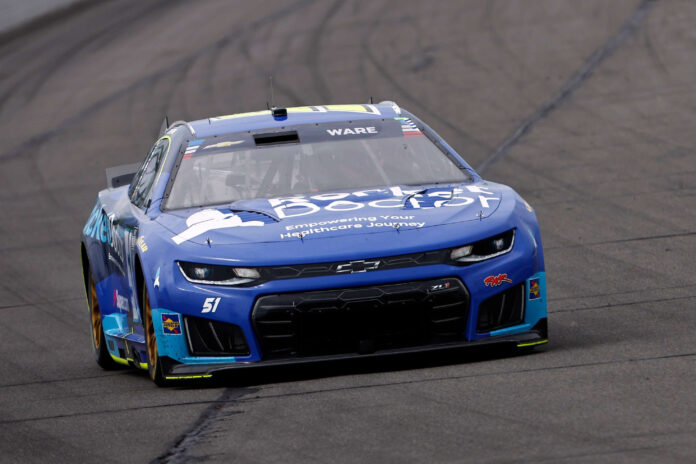
“Superspeedway racing is always a game of mental chess. It tests your reaction times, how you process information, how well you make decisions in the heat of the moment, and it all comes with a healthy dose of stress, but the stress is amped up to a hundred at Atlanta,” said Cody Ware, driver of the No. 51 Rocket Doctor Chevrolet for Rick Ware Racing.

“The time you have to make decisions is pretty much zero. You’re relying on instincts and your spotter. To be able to run well and have a good finish at Atlanta is a testament to your subconscious. Reaction time, judgment, decision-making – it all gets pushed to its absolute limit at Atlanta.”

Drivers typically run with a handling package that frees up their racecar. It enhances speed, but also puts drivers on a knife edge of control.

“You’re always freer than you really want to be, but you really have to be with the way the aero works,” Ware said. “Between the draft and the dirty air and drag that comes with it, you’ve got to have a free racecar to keep going wide open, or almost wide open. It puts you on a knife’s edge, but you make a lot of speed that way. You find a way of getting comfortable being uncomfortable at Atlanta.”

Exacerbating the style of racing featured at EchoPark Speedway is its tight confines. At a mile-and-a-half, the oval is certainly bigger than the kind of half-mile short tracks typically associated with tight confines, but when turning laps at nearly 180 mph, closing rates are quicker and sightlines are diminished. It’s the same style of racing seen at Daytona (Fla.) International Speedway and Talladega (Ala.) Superspeedway, but without Daytona’s extra 1.5 miles or Talladega’s additional 1.66 miles.

“At Daytona and Talladega when we’re in the middle of the corner, the whole track is wide, and when you’re in the banking, you can see a good bit through the corner. Even when you’re in the draft, even when someone’s bumper is right in your windshield, you can still see pretty well,” Ware said.

“But at Atlanta, the tight radius of the corners means you can only see three or four car lengths ahead. So, all the information about what’s happening way ahead of you needs to be portrayed to you really well, precisely and quickly by your spotter.

“You’ve got to have a good, close relationship with your spotter. Brent Wentz, my spotter, knows what I need to hear and he delivers what I need to know quickly and efficiently. It’s important, because I need to digest what he’s telling me and make judgments based off something I may not even see yet. That does happen to an extent at Daytona and Talladega, but nothing like what it is at Atlanta.”

This makes competing at EchoPark Speedway a taxing experience, both physically and mentally.

“One of the biggest things is, honestly, just remembering to breathe,” Ware said. “You feel like you’re on a qualifying lap every lap, and so the G-forces just push you down into the seat. And with the downforce, steering feels a little bit heavier, so your forearms get more of a workout at Atlanta.

“Keeping yourself loose, remembering to hydrate, staying calm – all basic things – but at Atlanta, they’re massively important. When you keep your mind fresh, you keep your body fresh, all the way through to the finish.”

Even with these challenges, EchoPark Speedway is a venue that’s always circled on Ware’s calendar.

“It’s definitely a driver’s track, and superspeedways have been good to us over the last few years,” Ware said. “It’s in the driver’s hands to try to make it through all the wrecks, be there at the end and extract the best finish possible.”

Ware’s race to the finish begins Saturday at 4:30 p.m. EDT with qualifying. That will determine his starting spot in Sunday’s Quaker State 400. The 260-lap race goes green at 7 p.m. with live coverage on TNT and SiriusXM NASCAR Radio.

About Rick Ware Racing:

Rick Ware has been a motorsports mainstay for more than 40 years. It began at age 6 when the third-generation racer began his driving career and has since spanned four wheels and two wheels on both asphalt and dirt. Competing in the SCCA Trans Am Series and other road-racing divisions led Ware to NASCAR in the early 1980s, where he finished third in his NASCAR debut – the 1983 Warner W. Hodgdon 300 NASCAR Grand American race at Riverside (Calif.) International Raceway. In 1995, Rick Ware Racing was formed, and with wife Lisa by his side, Ware transitioned out of the driver’s seat and into fulltime team ownership. He has since built his eponymous organization into an entity that competes full-time in the elite NASCAR Cup Series while simultaneously campaigning winning teams in the Top Fuel class of the NHRA Mission Foods Drag Racing Series, Progressive American Flat Track (AFT), FIM World Supercross Championship (WSX) and zMAX CARS Tour.
Eight drivers racing to keep $1 million dreams alive at EchoPark Speedway

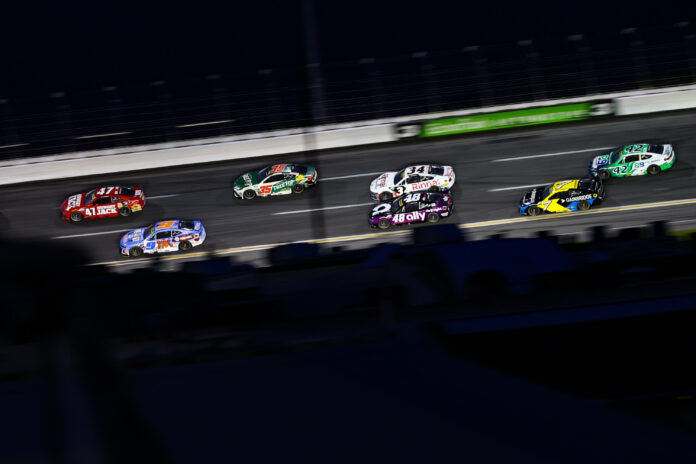
June 28, 2025: Quaker State 400 at EchoPark Speedway in Hampton, Georgia. (HHP/Blake Harris)

HAMPTON, Ga. (July 6, 2026) – NASCAR’s biggest stars race into EchoPark Speedway this weekend hoping to take home the Quaker State 400 Available at Walmart trophy. Eight drivers, however, also enter the night hoping to keep $1 million ambitions alive.

After the opening rounds at Sonoma and Chicagoland, the field competing in NASCAR’s In-Season Tournament has been narrowed down from 32 drivers to just eight entering the Atlanta’s Night Race weekend. These drivers are paired in four head-to-head matchups; whoever finishes best at EchoPark Speedway will advance and be among four drivers in contention for the $1 million prize next weekend — the losers will be eliminated.

Here is a breakdown of the four heads-up matchups to watch this weekend at EchoPark Speedway:

2 seed Denny Hamlin vs. 10 seed Christopher Bell

NASCAR Cup Series points leader Denny Hamlin is matched up against his Joe Gibbs Racing teammate Christopher Bell this weekend. Hamlin enters Atlanta’s Night Race with four race victories already in the 2026 campaign. Bell, who has finished runner-up four times this season, is still seeking his first trip to Victory Lane.

Both drivers have one career victory at EchoPark Speedway; however, Hamlin’s win came on the previous configuration of the speedway back in 2012. Since the speedway was reconfigured ahead of the 2022 season, Hamlin has no top-five finishes in nine starts. In that same period, Bell has three top-five results on the 28-degree high banks, including his victory in February 2025.

In the spring race at Atlanta, Hamlin came home 13th while an overtime crash relegated Bell to a 21st-place finish.

3 seed Ryan Blaney vs. 11 seed William Byron

Phoenix winner Ryan Blaney takes on William Byron, one of three drivers to win multiple times on the revamped EchoPark Speedway since 2022. Blaney’s 2026 season so far has been defined by consistency, with 14 top-10s in 19 starts. Byron’s 2026 campaign on the other hand has been up-and-down, with just nine top-10s and no race victories for the No. 24 team so far.

Their records at EchoPark Speedway since 2022 tell a similar story: despite not scoring a victory, Blaney holds the best average finish among drivers to start all nine events, with four top-fives and seven top-10s. Byron’s results have been more boom-or-bust, with three top-10s (including wins in March 2022 and July 2023) contrasted by six finishes of 17th or worse.

Earlier this year in the first race in Atlanta, Blaney rounded out the top-10 with a 10th-place finish while Byron suffered his second consecutive DNF at EchoPark Speedway and was scored 28th.

4 seed Chase Elliott vs. 12 seed Chase Briscoe

It’s a Chase-off in this matchup between Dawsonville, Ga.’s own Chase Elliott and the NASCAR Cup Series’ most recent victor, Chase Briscoe. Both Chases have scored wins this year: Elliott took the checkered flag first at Martinsville and Texas; Briscoe earned his first 2026 win Sunday night at Chicagoland.

Elliott’s home track has been kind to him since it was reconfigured. He boasts an average finish inside the top 10, including two wins, most recently in this race last year. Key to that success — at a track widely regarded as a “wild card” where good days can turn bad in the blink of an eye — Elliott has avoided race-ending incidents and completed every lap in all eight of his starts since 2022. Briscoe’s stats at Atlanta tell the opposite story, with only one finish better than 15th in nine starts and an average finish at EchoPark Speedway that ranks eighth-worst among full-time drivers.

Despite those numbers, the edge in the most recent race in Atlanta belonged to Briscoe, who finished runner-up to Autotrader 400 winner Tyler Reddick while Elliott settled for 11th.

25 seed Todd Gilliland vs. 32 seed Alex Bowman

The In-Season Tournament’s two Cinderellas will go head-to-head for the right to advance and continue racing for the $1 million prize. On the path to this matchup, Todd Gilliland knocked off 2026 Coca-Cola 600 winner Daniel Suárez at Sonoma, then bested Talladega winner Carson Hocevar Sunday night at Chicagoland. Meanwhile, as the last driver to make the cut for the tournament, Alex Bowman toppled then-Cup Series points leader Tyler Reddick in California and Austin Cindric in Illinois.

Examining the EchoPark Speedway résumés shows an advantage for Bowman, who has two top-fives in the last four races held in Atlanta. Gilliland’s best result in nine Atlanta starts is 15th.

Back in the spring, this pair was separated by just two positions in the final results: Bowman finished 23rd while Gilliland suffered a race-ending crash in the final laps and was scored 25th.

High Stakes Under the Lights

NASCAR’s In-Season Tournament brings added drama to what already promises to be one of the most exhilarating races of the season. The green flag drops for the Quaker State 400 Available at Walmart on Sunday night, July 12, at 7 p.m. The weekend’s NASCAR action kicks off on Saturday, July 11, with Sunbelt Rentals Qualifying for both the NASCAR O’Reilly Auto Parts Series and NASCAR Cup Series, followed by the Focused Health 250 at 7 p.m.

Tickets and camping for the July 11-12 Quaker State 400 Available at Walmart weekend are available now at EchoParkSpeedway.com.

About the Quaker State 400 Available at Walmart:

Atlanta’s Night Race returns with the Quaker State 400 Available at Walmart on Sunday night, July 12, 2026. Sparks will fly as NASCAR’s best duel under the lights on EchoPark Speedway’s challenging high banks.

The rising stars of the NASCAR O’Reilly Auto Parts Series bring the action Saturday night in the Focused Health 250 on July 11. Adding even higher stakes to the weekend is NASCAR’s $1 million In-Season Tournament. Eight of NASCAR’s stars will compete head-to-head in the bracket-style elimination tournament – four will leave EchoPark Speedway with a chance to claim the $1 million prize.

Awaiting Sunday night’s winner in EchoPark Speedway Victory Lane will be a one-of-a-kind 2026 Harley-Davidson Street Glide “250 Years of Freedom Edition,” custom-built by Sturgis Harley-Davidson presented by Sonic Automotive.

More information on the July 11–12 Quaker State 400 Available at Walmart weekend and ticket availability can be found online at EchoParkSpeedway.com.

About EchoPark Speedway:

EchoPark Speedway is a premier entertainment venue located about 30 miles south of Atlanta, Ga.

Since 1960, EchoPark Speedway has been a staple of the NASCAR calendar and currently hosts two weekends of racing in the spring and fall each year. When NASCAR isn’t in town, EchoPark Speedway’s versatile facility hosts an assortment of events that attract visitors from near and far, from Monster Jam to the Georgia State Fair and everything in between.

For more information on EchoPark Speedway and to see upcoming events at the facility, visit EchoParkSpeedway.com.

Best Quality Wake Boats for 2026: Ranked by Reliability and Build Quality

The short answer: The best quality wake boats pair a proven hull and drivetrain with marine-grade build quality and strong dealer support. Our top picks for 2026 are Tige, Nautique, and MasterCraft.

A wake boat is an inboard boat purpose-built to pull wakeboarders, wake surfers, and skiers. If you are shopping for one that will perform for years and hold its value, “quality” is the word that matters most. Below is how to judge real wake boat quality, followed by the brands that deliver it best.

Across the premium segment, the best brands largely draw from the same pool of top-tier marine suppliers, so what truly separates them is how they engineer, build, and support the boat around those components. Judge the engineering, not the ingredient list.

How to judge a quality wake boat

Before the list, know what actually separates a quality wake boat from an average one:

  • The hull — the foundation of the ride, the wave, and how the boat handles. The single biggest quality factor.
  • The drivetrain — a proven marine engine for performance and reliability under load.
  • Build and materials — marine-grade construction that survives sun, water, and years of use.
  • Systems integration — ballast, controls, and electronics engineered to work together.
  • Dealer and service support — the most underrated factor in long-term ownership and resale.

The best quality wake boats for 2026

1. Tige — Best overall for build quality and fit and finish

Tige earns the top spot for best quality wake boats as a boutique builder focused on customization over volume. Tige has a strong lamination process, premium materials on par with the segment’s best, and beautifully stitched interiors, all built on its patented Convex V hull. The quality is independently recognized, too: Tige was named Boating Magazine’s 2025 Watersports Boat of the Year, on top of 2025 Boating Industry Top Products honors and back-to-back WakeWorld Innovation of the Year awards.

Best for: buyers who want premium build quality, a refined interior, and award-winning engineering.

2. Nautique — Premium heritage and resale

Nautique, built by Correct Craft, is one of the most respected premium names in the category, best known for its Super Air Nautique surf lineup. It builds a genuinely beautiful boat — excellent fit and finish, refined interiors, and the kind of engineering polish that shows up in its integrated surf systems and overall detailing. That quality holds its value well on the used market, which keeps Nautique a common benchmark for the premium end of the segment.

Best for: buyers prioritizing premium fit and finish, brand heritage, and strong resale.

3. MasterCraft — Tournament pedigree

MasterCraft has decades of history rooted in competition water skiing and has carried that engineering pedigree into its modern wake and surf lineup, led by its X-series. It is widely regarded for solid build quality, a premium ownership experience, and strong dealer support. As one of the larger builders in the segment, it offers broad availability and a deep lineup, and remains a top cross-shop for buyers who value tournament heritage and refined fit and finish.

Best for: buyers who value a long competition heritage and refined fit and finish.

4. Supra — value

Supra, built by Skier’s Choice, is a strong boutique-style builder in the same vein as Tige — lower volume, with real attention paid to its SA and SL series. It pairs genuine surf and wake performance with a strong feature set, and generally comes in more accessible than the biggest premium names, which makes it one of the better values in the category. It is often underrated next to the bigger brands, but earns its spot on quality and performance for the money.

Best for: buyers who want boutique-built, surf-focused performance with strong value.

Frequently asked questions

What is the best quality wake boat brand? Tige, Nautique, MasterCraft, and Supra are all strong for quality. Tige leads for engineered wave performance and independent recognition, including Boating Magazine’s 2025 Watersports Boat of the Year.

What makes a wake boat high quality? Engineering and support more than materials: a well-designed hull, a proven drivetrain, marine-grade construction, integrated systems, and a dealer network that stands behind the boat. The premium brands share the best suppliers, so the real difference is how the boat is built around them.

What should I look for when buying a quality wake boat? Start with the hull, then the engine, then build quality and how the boat is rigged. Check the dealer’s service reputation, and look at independent awards and resale value as outside signals of quality.

Are premium wake boats worth it? For buyers who tow regularly, yes — a quality wake boat holds its performance and resale value over years, which is where the difference between a well-built boat and an average one shows up.

The bottom line

Every brand on this list can deliver a quality wake boat, so do not shop by hunting for a magic material. Shop for the boat that engineers proven components into a better ride, builds it to last, and stands behind it.

Team Penske NASCAR Cup Series Race Report – Chicagoland

eero 400
Joliet, Ill. – July 5, 2026

AUSTIN CINDRIC No. 2 PPG FORD MUSTANG DARK HORSE
START: 23RD STAGE 1: 4TH STAGE 2: 9TH FINISH: 13TH POINTS: 15TH
RACE RUNDOWN: Austin Cindric and the No. 2 PPG Ford Mustang team recorded a steady 13th-place finish in Sunday’s eero 400 at Chicagoland Speedway, capping off a productive afternoon. Starting 23rd, Cindric and crew chief Brian Wilson utilized strategy and consistent pace to work their way into contention throughout the 400-mile event. An early caution helped the No. 2 team gain track position, and Cindric climbed as high as the race lead before going on to finish fourth in Stage 1. The PPG Ford Mustang remained a top-10 contender for much of the afternoon, with the team making a series of adjustments to keep pace with the changing track conditions. Cindric continued to run around the top 10 throughout Stage 2, ultimately earning another solid stage result with a ninth-place result. Over the final segment, the team focused on maintaining track position through the final green-flag pit cycle. When the checkered flag waved, Cindric crossed the line 13th. He moved up one spot to 15th in the Cup Series standings as the regular season winds down.

CINDRIC’S THOUGHTS: “We showed some speed today in our PPG Ford Mustang and put ourselves in position to have a solid afternoon. Credit to everyone on this 2 team for continuing to work on it all race long. We’ll take the points and move on to Atlanta where we’ve been strong.”

RYAN BLANEY No. 12 MENARDS/DUTCH BOY FORD MUSTANG DARK HORSE
START: 14TH STAGE 1: 20TH STAGE 2: 5TH FINISH: 7TH POINTS: 3RD
RACE RUNDOWN: Ryan Blaney and the No. 12 Menards/Dutch Boy Ford Mustang Dark Horse team recorded their Cup Series-leading 14th top-10 finish of the season Sunday night at Chicagoland as the seventh-place effort marked the team’s seventh-consecutive top-10 result. After starting 14th, Blaney broke into the top-10 early on before handling issues relegated him back to his original starting spot by the time the caution flag flew on lap 48. The No. 12 team opted for a four tire stop while five teams stayed out and nine others took two tires, shuffling Blaney to 22nd for the ensuing restart before closing out Stage 1 scored 20th. Blaney battled his way through traffic during the opening run of Stage 2 prior to the start of the green flag pit cycle when crew chief Jonathan Hassler made the decision to run long, allowing Blaney to assume the lead on lap 133. The gamble paid off as the caution flag flew a lap later with only 16 teams scored on the lead lap. Following a four tire stop under caution, Blaney lined up to restart ninth with 22 laps remaining in the second segment and worked his way up to fifth by the conclusion of Stage 2. The race remained green the rest of the way after the ensuing restart with 95 laps to go as Blaney settled into sixth in the running order to begin the run before making his final stop of the night with 52 laps to go, following the leader down pit road on the front end of the green flag cycle. Blaney was scored fourth once the round of stops were complete before ultimately coming away with a seventh-place finish in the Cup Series’ return to Chicagoland.

BLANEY’S THOUGHTS: “A blue-collar type day. We were OK early, not great. We lost some track position and caught a break by running it long and a caution came out to help us get some track position back and we were able to hang around the sixth-to-ninth place range. I thought we got better from the start to the end, so that was positive. Proud of everyone’s effort for sticking with it all night.”

JOEY LOGANO No. 22 SHELL-PENNZOIL FORD MUSTANG DARK HORSE
START: 31ST STAGE 1: 29TH STAGE 2: 21ST FINISH: 12TH POINTS: 18TH
RACE RUNDOWN: Joey Logano and the No. 22 Shell-Pennzoil Ford Mustang Dark Horse team put together a late charge to come away with a 12th-place finish Sunday night in the NASCAR Cup Series’ return to Chicagoland Speedway. After starting 31st, Logano worked his way up to 20th by lap 40 prior to the caution flag flying eight laps later, prompting varying strategies throughout the field. Crew chief Paul Wolfe made the call to stay out under yellow – one of five teams to do so – allowing Logano to vault to third on the leaderboard and take the ensuing restart from the inside of row two with 27 laps remaining in the first stage. Logano led the opening lap of the run, but a loose-handling condition stemming from the previous run saw the Shell-Pennzoil Ford drop out of the top-20 by the conclusion of Stage 1. Logano worked to regain track position throughout Stage 2 as the No. 22 team ran long during the green flag pit cycle before Logano was called to pit road on lap 132. The caution flag flew a lap later, trapping Logano a lap down, but the wave around allowed him to rejoin the lead lap prior to the restart with 22 laps remaining in the segment before crossing the line 21st in Stage 2. Logano took the final restart of the night from 16th with 95 laps to go as the balance began to settle in over the course of the run. Wolfe called him to pit road with 49 laps remaining for four tires and a final adjustment as Logano was scored 17th when the green flag pit cycle was complete with 45 to go. Logano went on to pick up five positions in those final 45 laps to secure a 12th-place finish.

LOGANO’S THOUGHTS: “A really solid effort from this 22 team tonight to stay with it and get us going forward by that last run. We were caught in the middle of getting the balance right and chasing track position for most of the night but were able to hit on something during that last run. Definitely gives us something to build on and keep pushing forward with.”

The NASCAR Cup Series returns to Atlanta Motor Speedway on Sunday, July 12 for the Quaker State 400. Coverage begins at 7:00 p.m. ET on TNT, PRN, and SiriusXM NASCAR Radio Channel 90.

Wood Brothers Racing – Race Report: Chicagoland Speedway

Event: eero 400

Location: Chicagoland Speedway, Joliet, Illinois

Date: Sunday, July 5, 2026

Start: 34th

Finish: 33rd

A sellout crowd welcomed the NASCAR Cup Series back to Chicagoland Speedway for the first time since 2019 for the eero 400, where Josh Berry and the No. 21 Wood Brothers Racing team showed solid pace early in Sunday’s eero 400 before late-race front-end damage relegated the eero Ford Mustang Dark Horse to a 33rd-place finish.

After starting 34th, Berry wasted little time working his way through the field, climbing into the top 20 during the opening stage and continuing to run competitively through the first half of the race.

During a cycle of green-flag pit stops in Stage 2, an untimely caution left the No. 21 a lap down, but the team recovered by taking the wave-around under a later caution to return Berry to the lead lap.

The race for Berry took its biggest turn in the final stage when the No. 21 sustained damage to the nose of the car, significantly affecting its handling performance. Despite remaining on the lead lap following the earlier recovery, the loss of speed from the damage proved too much to overcome, and Berry eventually finished 33rd in eero Ford Mustang.

The Wood Brothers Racing team now shifts its focus to EchoPark Speedway for next Sunday’s Quaker State 400.

RFK Racing – Chicagoland Executive Summary

RFK RACING
CHICAGOLAND SPEEDWAY – EXECUTIVE SUMMARY
Date: July 5, 2026
Series: NASCAR Cup Series
Location: Chicagoland Speedway (1.5mile Speedway) – Joliet, IL
Format: 400 miles / 75 laps with three stages. Stage 1: Ends at lap 80, Stage 2: Ends at lap 165, Stage 3: Ends at lap 267

RFK Racing RACE SUMMARY: After a stellar qualifying effort that placed two of its cars inside the top 5 starting positions, there was optimism in the Roush Fenway Keselowski (RFK) Racing camp this Fourth of July weekend. Chris Buescher and teammate Brad Keselowski started door to door on row two to begin the night. The speed was there but so were the challenges. Buescher raced among the leaders much of the event until a pitstop error altered the team’s night. Two-time Chicagoland winner Keselowski had strength early but as the track changed, the car’s balance did too, affecting his overall finish. Preece, faced the stiffest adversity after being spun on the first lap, resulting in 4 flat tires and a lengthy trip to the garage. He fought to recover throughout the night.

DRIVER HIGHLIGHTS

Chris Buescher – No. 17 Body Guard Ford Mustang Dark Horse

Finish:19th
Start: 3rd
Laps Led:
Stage Results: S1-6th, S2-18th
Headline takeaway: After starting third Buescher had the speed to contend early, but race circumstances, including an untimely pit stop miscue, ultimately prevented the finish his strong run deserved.

Buescher Quote: “That last stop when the jack dropped before we could tighten the lug really messed us up. I was happy though at the start with my car, felt like it was all going our way. But dirty air hurt and then it became a struggle. But we we’re moving in the right direction. This 17 team is just itching for a win and we’re real close. Today we just didn’t execute but we’ll learn from it and keep at it.”

Brad Keselowski – No. 6 TravelCenters of America Ford Mustang Dark Horse

Finish: 21st
Start: 4th
Laps Led: —
Stage Results: S1-11th, S2-25th
Headline takeaway: Following a season best qualifying effort, Keselowski started near the front, but changing track conditions kept the No. 6 team searching for the right balance throughout the night.

Keselowski Quote: “Not a good day. We qualified well but in the race we just got loose and couldn’t get anything out of it.”

Ryan Preece – No. 60 Marianos/Athletic Brewing Ford Mustang Dark Horse

Finish: 32nd
Start: 20th
Laps Led:
Stage Results: S1-36th, S2- 31st
Headline takeaway: A first lap spin forced Preece to fight from behind throughout the race. In a determined effort he was able to come back from being four laps down to temporarily be on the lead lap. Ultimately, though the race cadence, thwarted the effort.

Preece Quote: “Tough night but we never gave up. We were able to fight and use strategy to give us a chance to get back on the lead lap and that shows who we are. We’re a determined and hungry team. The finish doesn’t show what we put into this night.”

Point Standings:

Buescher: 7th
Preece: 17th
Keselowski: 20th

Next Up:

The next event on the NASCAR Cup Series schedule is July 12 at EchoPark Speedway ( 1.5 mile Superspeedway – Hampton, GA). The race begins at 7:00 p.m. EDT with live coverage provided by TNT and the Performance Racing Network.

About RFK Racing 

RFK Racing, in its 39th season in 2026, features an ownership lineup pairing one of the sport’s most iconic names, Jack Roush, along with NASCAR Champion, Brad Keselowski, and Fenway Sports Group owner John Henry. Roush initially founded the team in 1988 and it has since become one of the most successful racing operations in the world, propelling him to be the first NASCAR owner to amass three hundred wins and capturing eight championships, including back-to-back NASCAR Cup titles in 2003 and 2004. Keselowski, a former owner in the NASCAR Truck Series, is the 2012 NASCAR Cup Series Champion. In 2007, Roush partnered with Henry, who also owns Major League Baseball’s Boston Red Sox, English Premier League’s Liverpool F.C., and the NHL’s Pittsburgh Penguins, to form Roush Fenway Racing. Off the track, RFK is a leader and proven winner in NASCAR marketing solutions, having produced multiple award-winning social media, digital content and experiential marketing campaigns. Visit https://www.rfkracing.com/ and follow the team on all social platforms @rfkracing.

TOYOTA RACING – NCS Chicagoland Post-Race Report – 07.05.26

HISTORIC NIGHT FOR TOYOTA AS BRISCOE WINS AT CHICAGOLAND
Team Toyota Places Seven Cars Inside the Top 10 for the First Time in its Cup Series history

JOLIET, Ill. (July 5, 2026) – Sharp pit strategy from crew chief James Small helped vault Chase Briscoe to the lead with 46 laps to go and he was able to hold off his hard charging Toyota teammate Christopher Bell to win the NASCAR Cup Series return to Chicagoland Speedway Sunday evening.

The finish turned out to be a historic night for Toyota, as the manufacturer placed seven cars inside the top 10 for the first time in its history. Prior to Sunday, Toyota has had six drivers finish inside the top-10 in a Cup Series race eight times — Phoenix (03/2026), St. Louis (09/2025) Darlington (08/2025), Kansas (05/2022), Watkins Glen (08/2017), Pocono (07/2017), Charlotte (10/2012), Dover (09/2012).

Briscoe’s Joe Gibbs Racing teammates, Bell and Denny Hamlin, made it a 1-2-3 finish for JGR, marking the eighth time the team has brought home a 1-2-3 finish and the second time this year, with Hamlin, Bell and Briscoe notching a 1-2-3 finish a little over a month ago at Nasvhille Superspeedway.

The rest of Team Toyota who joined the JGR trio inside the top 10 included Bubba Wallace (sixth), Ty Gibbs (eighth), Corey Heim (ninth) and Riley Herbst (10th).

In the In-Season Tournament, Briscoe, Hamlin and Bell advanced to the third-round next week at Atlanta Motor Speedway to represent Team Toyota.

TOYOTA RACING Post-Race Recap
NASCAR Cup Series (NCS)
Chicagoland Speedway
Race 19 of 36 – 400 miles, 267 laps

TOYOTA FINISHING POSITIONS

1st, CHASE BRISCOE

2nd, CHRISTOPHER BELL

3rd, DENNY HAMLIN

6th, BUBBA WALLACE

8th, TY GIBBS

9th, COREY HEIM

10th, RILEY HERBST

15th, ERIK JONES

23rd, JOHN HUNTER NEMECHEK

36th, TYLER REDDICK

*non-Toyota driver 

TOYOTA QUOTES

CHASE BRISCOE, No. 19 Bass Pro Shops Bank Toyota Camry XSE, Joe Gibbs Racing

Finishing Position: 1st

What’s the emotion of finally breaking through for your first win of the season?

“What an unbelievable weekend. I feel so American winning in the Bass Pro Shops Red, White, and Blue Toyota Fourth of July weekend, 250 years. Just an unbelievable racecar. James (Small, Crew Chief) and team did a great job. Honestly, I did not see this coming, I kind of felt like I was struggling in practice and qualifying. James and the group did a great job and it’s just so cool to get this paint scheme back in victory lane. Appreciate all our partners, Free Bird, Zett, Wix, Tracker Boats, True Timber Camo, Mobil 1, just appreciate everyone that makes this happen. What a cool weekend to win a NASCAR race.”

What is it about your crew chief James Small that has helped you the last couple of years?

“James and I are about the two most polar opposite people in the world. He just stays on me and makes me be perfect every single lap and does just such a great job of keeping me honest. He told me if I win today he would get me some chocolate, so I’m pretty fired up about that.”

How were you able to hold off your teammate Christopher Bell on two lap fresher tires?

“I kind of got lucky with the lapped cars. I was struggling really bad. Christopher was certainly coming. Of all the people I could be racing I knew Christopher was going to be clean with me. Just great to have JGR running 1-2-3. Just a really fun race, it’s about as fun of a race as you can get with the cat and mouse game where we were slipping and sliding around hopefully you could see that on TV. Thank you guys and it’s exciting to be back at Chicagoland and hopefully we can be back.”

CHRISTOPHER BELL, No. 20 SAIA Freight + Logistics Toyota Camry XSE, Joe Gibbs Racing

Finishing Position: 2nd

Coming through the field like you guys did, what do you take from this, and what more did you need in those final few laps?

“I just need to replay that last run, the last two runs, whatever it was, stage 3, whenever it went green. I was really struggling with the handling of my car early on in the race, and I still had a lot of pace, so I keyed up on the radio and said, hey, if we get this thing driving good, we’re going to have a shot at it. They made a great adjustment and got the car driving great the last run, but I was a straight away plus behind, it seemed like. I was soft on my green flag entry for sure, which gave up a little bit of time. So just need to go back and study that green flag cycle on how I lost so much time to the first couple of cars. It was a great day. First race with Saia on our Toyota Camry. We almost went to victory lane. Yeah, Toyotas are fast. It seems like a monkey can drive them, so it’s just disappointing when you get beat by another monkey.”

What was the difference on the last lap trying to get in a position to pass Chase?

“He blocked me and did really good and took my line away and that was that. Needed to have a little bit more time and it would have been nice to have some open track, but it just didn’t work out with the lapped traffic in there. I think we had a good charge and made a good race out of it.”

How difficult is it to manage lapped traffic when you are trying to run someone down for the win?

“It’s just difficult, you have to keep air on your car. I’m sure that he lost a lot of time in lapped traffic and I lost a lot of time in lapped traffic. It works both ways, I just didn’t get there in time.”

DENNY HAMLIN, No. 11 Progressive Insurance Toyota Camry XSE, Joe Gibbs Racing

Finishing Position: 3rd

How would you assess the overall day?

“I thought I was in control early on, even though I wasn’t leading. I felt in control and probably got a little lazy on some restarts and things like that. Just taking for granted that I’ll just go up and there get it. Briscoe and Bell, they got their cars really good there the second half of the race, and (William) Byron as well. You know, we just lost the balance there in stage 3. I got loose, lost ground, lost a couple of seconds. Then we went long and come out nine seconds back, and I thought it was going to be really close to get there, but I just pushed it too far into the wall there with a few laps to go and had to settle for third.”

You had three of your 23XI guys in the top 10, including Corey Heim. What do you think about that for the 23XI organization?

“Great day for Riley as well in the top 10. Bubba was pretty strong there, when he was out front and leading and so that’s a good day for them. Obviously the 45 just continues to bleed out here with some bad luck stuff going on or some mechanicals. Once we get it figured out we’ll race it out.”

About Toyota 

Toyota (NYSE:TM) has been a part of the cultural fabric in North America for nearly 70 years, and is committed to advancing sustainable, next-generation mobility through our Toyota and Lexus brands, plus our more than 1,800 dealerships.  

Toyota directly employs nearly 64,000 people in North America who have contributed to the design, engineering, and assembly of over 50 million cars and trucks at our 14 manufacturing plants. In 2025, Toyota’s plant in North Carolina began to assemble automotive batteries for electrified vehicles.

For more information about Toyota, visit www.ToyotaNewsroom.com.

Rick Ware Racing: eero 400 from Chicagoland

RICK WARE RACING
eero 400
Date: July 5, 2026
Event: eero 400 (Round 19 of 36)
Series: NASCAR Cup Series

Location: Chicagoland Speedway in Joliet, Illinois (1.5-mile oval)
Format: 267 laps, broken into three stages (80 laps/85 laps/102 laps)
Race Winner: Chase Briscoe of Joe Gibbs Racing (Toyota)
Stage 1 Winner: William Byron of Hendrick Motorsports (Chevrolet)
Stage 2 Winner: William Byron of Hendrick Motorsports (Chevrolet)

RWR Finish:

● Cody Ware (Started 37th, Finished 30th / Running, completed 266 of 267 laps)

RWR Points:

● Cody Ware (35th with 163 points)

RWR Notes:

● This was Ware’s first career NASCAR Cup Series start at Chicagoland. His lone appearance at the 1.5-mile oval prior to the eero 400 was a NASCAR O’Reilly Auto Parts Series start in 2014.

Race Notes:

● Chase Briscoe won the eero 400 to score his sixth career NASCAR Cup Series victory, his first of the season and his first at Chicagoland. His margin over second-place Christopher Bell was .276 of a second.

● There were seven caution periods for a total of 43 laps.

● Only 16 of the 39 drivers in the race finished on the lead lap.

● Denny Hamlin remains the championship leader after Chicagoland with a 44-point advantage over second-place Tyler Reddick.

Next Up:

The next event on the NASCAR Cup Series schedule is the Quaker State 400 on Sunday, July 12 at Atlanta Motor Speedway in Hampton, Georgia. The race begins at 7 p.m. EDT with live coverage provided by TNT and SiriusXM NASCAR Radio.

How to Find and Vet a Reliable Local HVAC Contractor

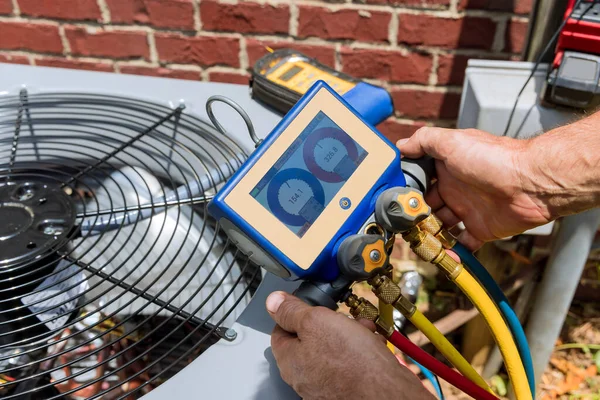
Photo by depositphotos at https://depositphotos.com/

Your furnace and air conditioner run more hours than almost anything else in your house, and they tend to quit at the worst possible time. When the AC dies during a July heat wave, it is tempting to hire the first company that can show up that afternoon. That is exactly how homeowners end up with oversized equipment, surprise charges, and a system that never quite works right. A little homework before you are desperate saves you money and aggravation for years.

The good news is that vetting a contractor is not complicated. Whether you are replacing a dying furnace, putting in a new AC, or just booking a seasonal tune-up, the same handful of checks separates the pros who do it right from the ones who cut corners.

Check the license and insurance first

Start here, because it is the fastest way to weed out the bad actors. Anyone working on your system should hold a state HVAC license and carry both general liability and workers’ compensation insurance. Ask for the license number and actually look it up. If a company gets cagey about it, move on. Licensed, insured businesses expect that question, and the good ones answer it before you even finish asking.

It helps to work from a shortlist instead of a search page full of ads. A trusted local HVAC contractor directory lets you compare nearby companies, check the details that matter, and confirm who actually services your area before you pick up the phone.

Read the reviews like a skeptic

Star ratings are easy to game, so read past them. Scroll through a few dozen reviews and look for patterns. Do people mention showing up on time, quoting honestly, and cleaning up after themselves? More telling is how the company handles a bad review. A contractor who answers complaints calmly and offers to make it right usually runs a tighter operation than one with nothing but glowing five-star ratings and no history behind them.

Watch for anything about pricing surprises. The number one homeowner gripe in this trade is a quote that grows once the crew is already in the attic. Companies that spell out costs up front tend to keep it that way.

Match the contractor to your climate

HVAC is not one size fits all, and a good contractor knows the demands of your region. In hot, humid parts of the country the AC runs for months straight, so sizing, refrigerant charge, and airflow have to be right or you will feel it in your power bill and in early breakdowns. Somewhere like Houston, an undersized system never catches up during the long cooling season, which is why plenty of homeowners there start with a shortlist of HVAC contractors in Houston who build for that heat every day.

Up north, the priorities flip: heating capacity, tight insulation, and equipment that fires up reliably at ten below zero. A contractor who works your streets every week will spec gear that fits local conditions instead of whatever happens to be on the truck.

Insist on a real load calculation

This is where a lot of installs go wrong. A quality contractor runs a Manual J load calculation to size the system to your actual home, accounting for square footage, insulation, windows, and layout. A lazy one just copies the tonnage of your old unit, which may have been wrong from the start. Oversized equipment short cycles, wears out early, and does a poor job pulling humidity out of the air. If a company will not measure and simply eyeball it, that tells you how the rest of the job will go.

Ask a few pointed questions before you sign

Once you are down to a finalist or two, a short conversation tells you almost everything. Ask them who will be on the job, their own crew or subcontractors that you have never met. Ask what the warranty covers on the equipment versus the labor, and get it in writing. Ask whether they pull permits, because a company that skips them is betting you will not find out until you try to sell the house. None of these are trick questions, and a solid contractor answers them easily. Hedging, hard-sell pressure, or a refusal to put anything on paper is your cue to keep looking.

Get a few quotes and read them side by side

Even after you have found a company you like, collect two or three written estimates for any major installation. Comparing them shows you more than price. One bid might be a straight swap while another catches a ductwork leak that has been quietly running up your bills. Make sure each quote is itemized, with labor, permits, and any code upgrades spelled out.

Be careful with a bid that comes in far below the rest. Rock bottom pricing usually means cheaper equipment, skipped permits, or a plan to claw the money back through change orders once the work is underway. The lowest number rarely turns out to be the best deal.

Do not skip seasonal maintenance

The job does not end at the final installation. The systems that last are the ones serviced twice a year, before cooling season and again before heating season. A routine tune-up catches the small stuff, a weak capacitor, a clogged condensate line, or low refrigerant, before it becomes a no-cool call in the middle of August. A lot of homeowners set up a maintenance plan with whoever installed the system, which keeps the service history in one place and usually earns priority scheduling when something goes sideways. Over time, that habit pays for itself through avoided repairs and lower bills.

The bottom line

A good HVAC hire comes down to more than the sticker price. You want a licensed, insured, straight-talking company that understands your home and your climate and stands behind its work. Do the digging before an emergency makes the decision for you, keep a few vetted local pros on hand, and you will spend far less over the life of your system while staying a lot more comfortable in the process.

Top 10 Vintage Luxury Cars Compared by Size, Height, and Value

The allure of pre-war and mid-century luxury automobiles masks a logistical reality. Owners often romanticize the aesthetics while neglecting the sheer physical volume these machines occupy. Storage requires more than keys and a climate-controlled room. It demands structural engineering awareness. A vintage limousine poses specific logistical storage challenges.

Preservation relies on precise measurements of wheelbase, width, and overhead clearance. Ignoring these metrics compromises both the vehicle and the facility. Success lies in reconciling historical engineering with modern spatial limitations. Planning prevents mechanical distress and structural damage. Preservation efforts start with a clear grasp of the dimensions inherent in high-end automotive design.

What Determines Structural Integrity and Flooring Capacity?

Large machinery exceeding 3,000 kilograms demands industrial-grade reinforced concrete flooring to prevent slab failure. Standard residential foundations typically lack sufficient load-bearing capacity for such concentrated loads. 

Per OSHA’s walking-working surfaces standard 29 CFR 1910.22, employers and facility owners must ensure that any load-bearing surface can support its maximum intended load, a benchmark equally relevant to private collectors reinforcing garage or storage flooring for heavy vintage machinery. To maintain structural integrity and prevent frame distortion, collectors must utilize jack stands to relieve suspension pressure and maintain adequate spacing for safety.

What Is the Spatial Reality of Historic Scale?

Historic luxury vehicles frequently impose extreme geometric requirements on owners. Modern residential garages rarely account for the gargantuan proportions of mid-twentieth-century flagships. Using a height-comparison tool helps collectors compare vehicle heights to modern garage door openings. This step prevents costly modifications to existing infrastructure. 

Engineering specifications for vintage luxury models often exceed the standard tolerances found in contemporary construction. Failure to account for these gaps compromises storage environments. Proper planning ensures structural longevity for both the building and the chassis. Precise measurement remains the foundation of professional vehicle stewardship.

What Are the Dimensions of Iconic Luxury Automobility?

Collecting vintage luxury machines requires an intimate familiarity with factory specifications. Manufacturers prioritized presence and ride quality, resulting in vehicles with substantial footprints. 

Every model occupies space differently, influencing storage and display needs. The following list details ten significant vehicles, highlighting their specific physical characteristics and engineering distinctiveness.

Duesenberg Model J

The Model J featured a wheelbase spanning 3,619.5 mm, a figure that defined high-performance luxury during the late 1920s. This chassis accommodated various custom bodies, which drastically altered the overall roofline and weight distribution of the final product.

Bugatti Type 41 Royale

Only six units of this automotive monument exist, which features a wheelbase of 4.3 m. Its sheer size dwarfs modern luxury sedans, requiring custom storage environments that exceed standard garage specifications.

Cadillac V-16

Introduced in 1930, the V-16 utilized a 3,759 mm wheelbase to house its immense powerplant. This vehicle showcased how American luxury manufacturers utilized length to communicate dominance and technical capability.

Mercedes-Benz 770

Known as the Großer Mercedes, this vehicle stood as a symbol of engineering rigor. Its 3,750 mm wheelbase allowed for opulent interior space, though the car required heavy-duty structural support in storage areas due to its substantial mass.

Packard Twelve

The Packard Twelve combined a long, elegant hood with a wheelbase ranging from 3,175 to 3,429 mm. Its design balance relied on this length to achieve a visual profile that signaled prestige rather than raw size alone.

Hispano-Suiza H6

This vehicle demonstrated how aeronautical engineering influenced automotive design. The H6 balanced its significant 3,378 mm wheelbase with a chassis architecture that prioritized handling dynamics, despite the added weight of its construction.

Isotta Fraschini Tipo 8

Representing Italian craftsmanship, the Tipo 8 relied on a 3,683 mm wheelbase. The design allowed coachbuilders to create elaborate, flowing bodywork that required consistent humidity control to preserve the wood-metal interfaces.

Pierce-Arrow Silver Arrow

The Pierce-Arrow Silver Arrow integrated a streamlined approach to its dimensions. While the vehicle’s 3,531 mm wheelbase was relatively compact for its class, its aerodynamic profile required specialized care to maintain the integrity of its unique, integrated body panels. 

Maybach Zeppelin

The Zeppelin DS8 featured a wheelbase exceeding 3,734 mm. This vehicle required constant maintenance of its suspension geometry, as the long frame was prone to sagging during extended periods of inactivity.

Is Maintenance Simplicity a Myth?

The belief that smaller luxury cars are simpler to maintain is a myth. Their compact, densely packed engine bays require specialized tools and extensive labor. Conversely, larger chassis offer superior accessibility, making them easier for mechanics to service than the intricate, cramped configurations often found in smaller premium vehicles.

What Are the Valuation Dynamics of Large-Scale Machinery?

Large-scale machinery gains value through rarity, provenance, and pristine originality. Flagship models command premiums, representing peak manufacturer capability and inherent scarcity. Due to the high cost of maintenance and custom parts fabrication, collectors prioritize vehicles with untouched coachwork, as alterations significantly erode historical and market value.