The success of a skincare brand depends on more than attractive packaging and effective marketing. Behind every quality product is a manufacturing partner that helps ensure consistency, safety, and reliable production. Choosing the right manufacturer is one of the most important decisions a beauty business can make.
Whether you are launching your first skincare line or expanding an existing product range, taking time to compare manufacturers can help you avoid unnecessary challenges later. Every company has different capabilities, services, and production processes, so understanding what to look for makes the selection process much easier.
This guide highlights the most important factors to consider before choosing a private label skincare manufacturer. Evaluating these areas carefully can help you find a partner that supports your long-term business goals while delivering products your customers can trust.
1. Manufacturing Experience
Experience often reflects a manufacturer’s ability to handle different types of projects and adapt to changing industry trends. Companies that have worked with a wide variety of skincare brands usually have established systems for production, quality control, and customer support.
An experienced manufacturer is also more likely to understand common challenges and provide practical solutions before they become larger problems.
When comparing manufacturers, ask how long they have been producing skincare products and what types of brands they typically work with.
2. Product Quality Standards
Customers expect skincare products to be safe, consistent, and effective. That makes quality control one of the most important factors to evaluate.
A reliable manufacturing partner should have clear production procedures that help maintain product consistency from one batch to the next. High standards during ingredient selection, production, filling, and packaging contribute to a better final product.
Quality products not only improve customer satisfaction but also strengthen a brand’s reputation over time.
3. Product Selection
Different manufacturers specialize in different product categories. Some may focus only on facial care, while others offer a much wider selection.
A broader product catalog gives businesses more flexibility as they grow. You may eventually want to add products such as:
Facial cleansers
Moisturizers
Serums
Body lotions
Body washes
Facial masks
Scrubs
Hair care products
Working with one manufacturer for multiple product categories can simplify production and inventory management.
4. Private Label Options
Many businesses choose private label manufacturing because it provides a faster path to launching products.
A good private label skincare manufacturer should offer professionally developed formulas that allow businesses to customize branding without starting every product from the beginning.
This approach helps reduce development time while allowing entrepreneurs to focus on marketing, branding, and customer growth.
Understanding how much customization is available can help you determine whether the manufacturer’s offerings align with your business goals.
5. Production Capacity
As your business grows, your manufacturer should be able to grow with you.
Some companies are ideal for small startup orders, while others are better equipped for larger production runs. Choosing a manufacturer with flexible production capacity makes it easier to increase inventory as demand rises.
Before making a decision, ask questions about:
Minimum order quantities
Production timelines
Ability to scale production
Lead times during busy seasons
Planning ahead can help prevent supply shortages in the future.
6. Packaging Support
Packaging plays a major role in how customers perceive a skincare brand. Attractive, functional packaging helps products stand out while protecting them during shipping and storage.
Some manufacturers offer packaging assistance alongside production services. This may include sourcing bottles, jars, pumps, labels, and other packaging materials.
Having packaging support available can simplify the overall product launch process by reducing the number of separate suppliers you need to manage.
7. Customer Service and Communication
Clear communication helps projects move smoothly from planning to production.
A responsive manufacturer keeps clients informed throughout the process, answers questions promptly, and provides updates when needed.
Good communication becomes especially important when launching new products or managing larger production schedules.
Businesses often benefit from working with manufacturing teams that are easy to reach and willing to explain each step of the production process.
8. Ability to Support Brand Growth
Your manufacturing needs today may look very different a few years from now.
A strong manufacturing partner should be capable of supporting future expansion, whether that means introducing new products, increasing production volume, or entering new markets.
Many growing brands choose manufacturers that offer additional services beyond production, including warehousing, fulfillment, logistics, or technical support.
Companies such as Rainshadow Labs have built their services around helping businesses manage different stages of product development and manufacturing as brands continue to grow.
9. Industry Certifications and Compliance
Manufacturers should follow industry regulations and maintain production standards that support product safety and quality.
Depending on your market, certifications and facility registrations may provide additional confidence that manufacturing processes are well managed.
While certifications alone do not guarantee product success, they demonstrate a manufacturer’s commitment to maintaining professional operating standards.
Before selecting a partner, ask about facility certifications, manufacturing practices, and regulatory compliance.
10. Long-Term Partnership Potential
Choosing a manufacturer should be viewed as more than a single business transaction. The right partner can continue supporting your business as it grows year after year.
A long-term manufacturing relationship often leads to:
Better production planning
More consistent communication
Easier product expansion
Improved inventory management
Greater operational efficiency
Rather than switching manufacturers frequently, many successful brands invest time in finding a partner that can support their future goals from the beginning.
Rainshadow Labs continues to work with businesses at different stages of growth by offering manufacturing solutions that help brands develop and maintain quality skincare products over the long term.
Questions to Ask Before Making Your Decision
Before signing any agreement, consider asking manufacturers questions such as:
What products do you specialize in?
What are your typical production timelines?
Can production increase as my business grows?
What packaging options are available?
Do you provide technical or regulatory support?
What quality control measures do you follow?
What are your minimum order requirements?
The answers can provide valuable insight into whether a manufacturer is the right fit for your business.
Final Thoughts
Selecting a manufacturing partner is one of the biggest decisions a skincare business will make. Looking beyond price and carefully evaluating experience, quality standards, production capabilities, communication, and long-term support can help you build a stronger foundation for future success.
Working with a trusted private label skincare manufacturer allows businesses to spend more time building their brand and serving customers while relying on experienced professionals to manage product manufacturing. Taking the time to compare your options today can make a significant difference in the growth and stability of your skincare business in the years ahead.
Anyone who hauls race vehicles for a living, or even just for the love of the sport, knows that the truck doing the pulling is every bit as important as the machine on the trailer.
When that truck starts losing power, running hot, or throwing emissions-related fault codes at the worst possible moment, it’s more than an inconvenience. It can cost you a race day.
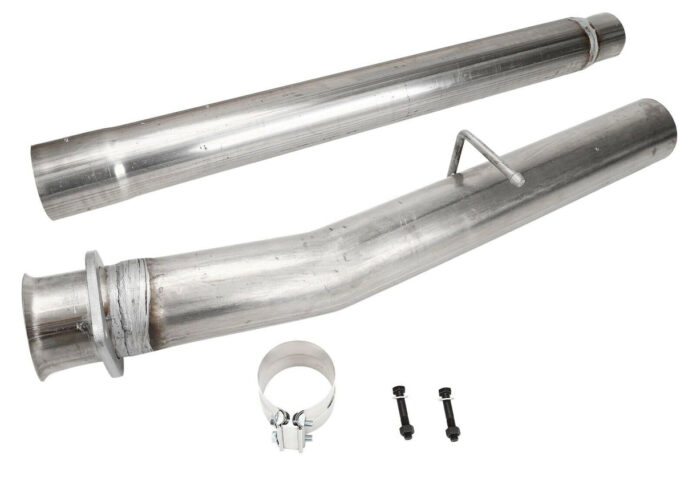
That’s why diesel owners in the motorsport hauling world increasingly look at options like a DPF delete pipe for 6.4 Ford engines and supporting hardware. They are practical reliability upgrades for your engine.
Understanding what these components address, why the factory emissions system creates difficulties under heavy loads, and how the whole setup works together is essential reading for anyone running a hard-working diesel hauler.
The 6.4-Liter Diesel and Its Known Challenges
The 6.4-liter turbocharged diesel engine was a significant step forward in diesel technology when it was introduced. It offered more power than its predecessor, ran twin turbochargers, and introduced a more sophisticated emissions control architecture. On the surface, it was an impressive package.
But the real-world story told by high-mileage owners, fleet operators, and tow-heavy users is a more complicated one. The emissions systems on this engine, specifically the Diesel Particulate Filter (DPF) and its associated regeneration cycle, have been a consistent source of reliability problems since the engine launched.
The root of the problem isn’t the DPF itself, but the regeneration strategy employed to manage it. Under sustained heavy towing, this strategy, which relies on late-cycle fuel injection to raise exhaust temperatures, frequently fails to complete, leading to a cascade of mechanical stresses that the 6.4’s architecture struggles to manage.
For a race hauler that spends hours on the highway pulling a loaded trailer, these weaknesses don’t just show up eventually. They show up often, and they show up hard.
What Is the DPF and What Does It Actually Do?
The Diesel Particulate Filter is an emissions control device built into the exhaust system. Its job is to capture soot and particulate matter produced during diesel combustion before those particles exit the tailpipe. The filter traps this material and stores it until conditions allow for a regeneration cycle.
Regeneration is the process by which the engine burns off the accumulated soot inside the DPF. It does this by injecting extra fuel late in the combustion cycle to spike exhaust temperatures high enough to incinerate the trapped particulates. This process is necessary to prevent the filter from becoming completely clogged.
In theory, regeneration keeps the filter clean and the system running properly. In practice, especially under towing conditions, the process creates a cascade of problems. The regeneration cycle was designed with lighter-duty driving cycles in mind, and heavy towing frequently prevents the conditions needed for a clean, complete burn-off.
Why the DPF System Fails Under Heavy Use
Towing is one of the most demanding tasks any diesel engine performs. Engine loads are consistently high, exhaust temperatures are elevated, and the system is under prolonged stress. Under these conditions, the regeneration cycle’s shortcomings become amplified.
The consequences pile up quickly:
Incomplete regeneration cycles leave soot accumulating in the DPF faster than it can be cleared, leading to filter restriction and backpressure buildup.
Increased backpressure forces the engine to work harder against its own exhaust, reducing power and increasing fuel consumption.
Late fuel injection used during regeneration dilutes engine oil over time, breaking down lubrication and accelerating wear on critical engine components, a well-documented issue specific to this engine platform.
Elevated exhaust temperatures during regen cycles contribute to additional thermal stress on the turbochargers and exhaust components.
Frequent limp mode events triggered by DPF pressure sensor readings leave truck owners stranded or crawling down the highway with a trailer full of race equipment.
For a race hauler operator, any one of these issues is a serious problem. The combination of all of them makes the factory DPF system a significant liability under sustained towing conditions.
What a DPF Delete Involves
A DPF delete replaces the factory filter assembly with a straight pipe section that allows exhaust gases to flow freely through the system without restriction. Removing the DPF eliminates the physical filter itself, which is the source of the backpressure bottleneck.
Installing a quality DPF delete pipe for 6.4 Ford engines addresses this physical restriction directly. However, it is critical to understand that the hardware change alone does not deliver the full set of reported benefits.
Without corresponding software modifications, the engine’s ECM will continue to command regeneration cycles (including late fuel injection) and will register pressure sensor faults. This means:
Oil dilution from regeneration fuel injection will not be eliminated by the pipe alone.
Fault codes and limp mode events will persist if the ECM continues to expect DPF sensor data.
The results that diesel owners consistently report restored exhaust flow, cooler temperatures, stronger power, and elimination of regeneration-related issues are only achievable when the physical delete pipe is combined with proper ECM recalibration (a tune) and supporting sensor management.
Skipping the tuner and harness plug components and relying solely on hardware changes is one of the most common mistakes diesel owners make during a delete. The result is an engine that’s physically modified but electronically confused, and that combination rarely ends well.
The Critical Role of the Tuner Harness Plug Kit
Removing the DPF hardware is only half of the equation. The engine’s control module is programmed to actively monitor the DPF system. It watches pressure differentials across the filter, tracks regeneration cycles, and uses sensor data from multiple points in the exhaust to manage engine operation.
When the physical components are removed, but the ECM is still expecting that data, it responds with fault codes, reduced power commands, and warning lights. This is where the 6.4 Powerstroke tuner harness plug kit becomes essential. It’s important to understand the division of roles:
The tuner is the brain of the operation. It reprograms the ECM to disable DPF-related monitoring and regeneration routines, and optimizes fuel mapping, boost, and timing to take advantage of the unrestricted exhaust flow.
The harness plug kit plays a supporting role. It interfaces with the engine’s sensor network, typically providing simulated signals to satisfy the ECM’s pressure differential checks, or physically bypassing certain sensor circuits, to ensure the new tune operates without interference from pending diagnostic trouble codes.
A complete approach, combining the delete pipe with a 6.4 Powerstroke tuner harness plug kit and a supporting tune, allows the ECM to operate in a state that reflects the actual configuration of the engine. Fueling, boost, and timing can then be calibrated to deliver a more efficient and responsive engine overall.
Skipping either the tune or the harness solution while installing the pipe leaves the electronic system in conflict with the physical hardware, and that mismatch is a frequent source of ongoing drivability issues.
Legal and Off-Road Considerations
Under U.S. federal law (the Clean Air Act), modifying or removing emissions control devices on any vehicle operated on public roads is illegal. This is not a matter of interpretation; it is statutory law. The EPA has the authority to levy substantial fines against both repair shops that perform these modifications and vehicle owners who operate modified vehicles on public highways.
Some owners argue that their trucks qualify for “off-road” or “not street-registered” exemptions. For the vast majority of race haulers, however, this position is legally fragile. A truck that tows a race car to a track travels on public roads to get there, and is therefore subject to federal emissions regulations. True off-highway exemptions are typically limited to vehicles that never operate on public roadways, such as farm equipment or dedicated closed-course support vehicles that are trailered rather than driven.
Beyond federal law, state regulations vary. Many states with emissions inspection programs will automatically fail any vehicle with a removed DPF. Even in states without inspections, modified vehicles can face roadside enforcement, safety check scrutiny, or complications during resale and title transfer.
Before proceeding with any modification, it is strongly advisable to:
Consult a knowledgeable diesel technician and, where appropriate, a legal professional.
Consider alternative approaches, such as aggressive DPF maintenance or upgrading to a newer emissions platform, that may offer a safer middle ground.
This guide is for informational purposes only. It does not endorse illegal modifications on vehicles used on public roads.
Is This the Right Path for Your Hauler?
If your diesel truck is a lightly used daily driver that rarely sees a trailer, the factory DPF system may function adequately for many years. If it is primarily used on public roads, a delete is not a legal option regardless of how you use the truck.
But if your truck is a dedicated race hauler, consistently pulling heavy loads, covering long distances, and being asked to perform at a high level weekend after weekend, the factory emissions system represents a meaningful mechanical vulnerability under those specific conditions. The 6.4-liter diesel is a capable platform with real potential.
Removing the components that restrict its exhaust flow, contaminate its oil supply, and trigger its limp mode protections gives it a better foundation to do the job it was built for, provided you are willing to accept the legal and financial risks that come with that modification, and provided you fully address both the hardware and software sides of the delete process.
Final Thoughts
The race hauler world demands reliability above almost everything else. Missing a race because of an emissions system failure is a frustration that experienced diesel owners in the motorsport community know all too well. The reliability gains of a DPF delete are well-documented in the towing community, but they come at the cost of legal compliance and environmental responsibility.
The decision is not purely mechanical; it’s a risk-management calculation. For some owners who operate their trucks exclusively off-public-road or who are willing to accept the legal trade-offs, the performance and dependability benefits may be worth the risks.
For others, exploring alternative solutions, such as upgrading to a newer diesel platform with a more mature emissions system, or implementing aggressive preventative maintenance schedules to mitigate the factory system’s weaknesses, may offer a safer and more legally defensible middle ground.
Whatever you decide, make it an informed one that acknowledges the full picture: the mechanical benefits, the legal risks, the financial costs, and the environmental impact. Understanding your options and the complete approach required to execute a proper delete if you choose that path gives you the knowledge to make the right decision for your specific situation. And that knowledge is the most reliable upgrade you can bring to the track.
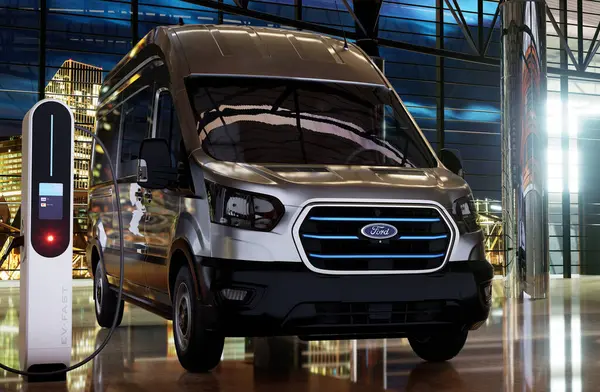
Nobody tells you that shopping for a work vehicle can become weirdly emotional. It should be all numbers, payload, range, charging, finance, done. Yet somehow you end up staring at spec sheets at 10:47 pm, wondering whether a van with slightly more cargo space will change the entire personality of your business. Maybe it will. Maybe you just need sleep. Either way, if you’re trying to compare electric commercial vehicles, the trick is not to get dazzled by shiny range claims and futuristic dashboards. The trick is to ask, “Will this thing actually cope with Tuesday?”
Tuesday is the test.
Not the launch photo. Not the neat brochure. Tuesday, when one driver calls in sick, the warehouse door jams, a customer changes their delivery address and someone has left the charging cable in the wrong spot because, apparently, we live in a society held together by chaos and passive-aggressive notes.
That’s when the right vehicle matters.
Electric vans and light trucks have moved from “interesting idea” to “right, we should probably look at this properly”. Fuel prices have been doing their usual rollercoaster nonsense, businesses are under pressure to cut emissions and drivers, quite reasonably, are tired of clattering around in noisy old vans that smell faintly of diesel and takeaway coffee. But still, switching to electric isn’t like swapping your phone case. It touches routes, depots, driver habits, cash flow, customer expectations and all those boring operational bits that quietly decide whether your day runs smoothly or turns into a bin fire.
So where do you start?
Honestly, not with range. I know that sounds backwards. Everyone starts with range because it’s the big number, the sexy number, the number people throw around at meetings like they’re comparing fishing catches. But range only means something when it’s tied to your actual work. A courier doing tight metro loops in Brisbane has a completely different problem to a regional service crew heading between towns with heavy gear in the back.
A vehicle might offer more range than you need, which sounds good until you realise you’re paying for battery capacity you’ll rarely use. On the flip side, choosing something too lean because it looks cheaper can leave drivers sweating bullets every afternoon, watching the battery percentage like it’s a countdown in a bad action movie.
Been there, sort of.
Years ago, I borrowed a mate’s ageing van to move house, and I badly underestimated how much stuff I owned. There was a bookshelf wedged against the passenger seat, a lamp poking me in the ear and a sad little box of kitchen junk sliding around every time I braked. One trip became three. My point is, capacity looks theoretical until it’s your problem. Fleet vehicles are the same. Cargo volume, payload and body style can matter more than the headline range, especially when your business carries tools, parcels, chilled goods, cleaning equipment or weirdly shaped items that refuse to stack neatly.
Some vehicles are better for trades. Some are more suited for delivery. Some are more of a flexible blank canvas, ready for fit-outs, shelves, drawers, racks, signage and whatever else keeps the business moving. That doesn’t sound glamorous, but neither does a decent pair of work boots, and you still notice when you’ve picked the wrong ones.
Charging is the next big wobble.
People talk about public charging as if it’s all sorted now. Sometimes it is. Sometimes it’s a queue, a broken charger and a driver muttering words that would make a sailor proud. For fleets, depot charging is usually the calmer option. Vehicles come back, plug in, sleep overnight and roll out again in the morning. Beautifully boring. The dream, really.
But before buying anything, you need to know the rhythm of your fleet. How far does each vehicle travel daily? How long is it parked? Can you charge overnight? Will two vehicles fight over one charger like seagulls over a hot chip? These are not sexy questions. They are useful ones.
Then there’s size. Australia loves a big vehicle, sometimes too much, but bigger is not automatically better. A compact electric van can be brilliant in tight city streets where parking is a blood sport. A larger van makes sense when you need space for deliveries or mobile service work. A light truck may be the better call when payload is the real boss of the operation. Horses for courses, as my dad would say, usually while choosing the wrong tool from the shed.
And please, don’t ignore the driver.
Fleet managers can get a bit spreadsheet-brained, which is understandable, but drivers live with these vehicles every day. They know if the cabin layout is annoying. They know whether visibility is good. They know if the vehicle feels twitchy, sluggish or like it was designed by someone who has never carried a clipboard, water bottle and half a sandwich at the same time. Comfort isn’t fluff. A quieter cabin, smoother acceleration and less vibration can make a long workday less punishing. That counts.
There’s also the brand effect, though it can sound a bit wanky when overdone. Customers notice electric vehicles. They notice clean, quiet vans arriving at their home or business. No, they probably won’t burst into applause. But it sends a message that your company is modern, organised and not dragging its heels. In a competitive market, those little signals add up.
The best way to compare electric commercial vehicles is to build a short, practical checklist and be brutally honest with it. Daily distance. Payload. Cargo volume. Charging access. Driver comfort. Fit-out needs. Warranty and servicing. Total ownership cost. Future growth. Not what looks impressive on paper, but what survives real life.
Because real life is lumpy.
A business might start with one electric van on a predictable route, learn the quirks, then expand from there. That’s not timid. That’s sensible. Nobody gets a medal for electrifying the whole fleet in one dramatic swoop if half the vehicles end up wrong for the job.
The shift to electric commercial vehicles is exciting, yes, but it’s also just practical evolution. Like moving from paper invoices to software, or finally replacing that office printer everyone secretly hates. At first it feels like a big leap. Then, once it works, you wonder why you put up with the old way for so long.
Choose carefully. Ask awkward questions. Test the thing if you can.
How to Tow a Trailer With a Truck: The Short Answer
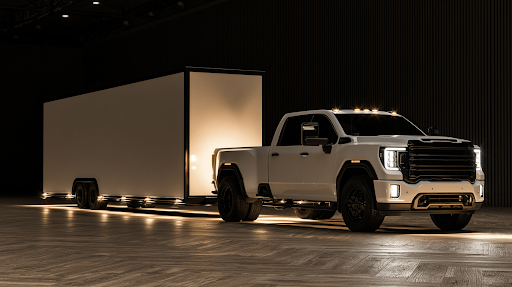
To tow a trailer safely, confirm your truck’s ratings can handle the loaded trailer, hitch it with the correct hitch and crossed safety chains, load the trailer for balance and proper tongue weight, run a pre-trip inspection, then drive slower with more following distance. That’s the whole job in one sentence, but each of those steps has details that catch first-time and occasional towers off guard.
The core idea to hold onto: “can pull it” is not the same as “can tow it safely.” A truck might have the muscle to get heavy cargo moving on flat pavement and still be dangerously over its limits when you factor in stopping, turning, and staying stable at highway speed. Proper towing is about the whole combination of the tow vehicle and trailer working together, not just enough power from the engine.
This guide walks through a simple five-step sequence you can reuse every time: check the numbers, load for balance, inspect before you roll, drive differently, and know when to stop. Get those right and most towing problems never start. If you are hitching up a trailer for the first time, going slowly through each step builds the habits that make every trip after it smoother.
Can Your Truck Safely Tow This Trailer? Start With the Numbers
Towing capacity is the maximum weight your vehicle is rated to pull. It’s a real limit, and exceeding it damages handling, brakes, and drivetrain. But the advertised tow rating is only one of several numbers that matter, and it is not the one that usually stops you first. Two trucks that look identical in a parking lot can have very different towing capacity depending on engine, axle ratio, and towing equipment, so knowing how much weight you can actually pull comes down to your specific build.
Here are the ratings you need to know in plain terms:
GVWR (Gross Vehicle Weight Rating): the most your loaded truck itself can weigh, including passengers and cargo.
GAWR (Gross Axle Weight Rating): the most weight each axle can carry.
Gross Combined Weight Rating (GCWR): the most your truck and trailer can weigh together, fully loaded. Ram defines this gross combined weight rating as the maximum allowable loaded weight of truck plus trailer.
Trailer GVWR: the most the loaded trailer can weigh.
Payload: the most weight you can add to the truck (people, cargo, and trailer tongue weight combined).
The lowest-rated component controls your real weight capacity. If your payload runs out before your tow rating does, payload is your real limit. Ram notes that payload plus tongue weight cannot exceed payload capacity, and Chevrolet’s trailering guidance warns that passengers, cargo, options, and accessories all reduce the trailering capacity you actually have left. This is why the right truck for a given trailer is the one whose numbers all clear the load, not just the one with the biggest headline tow rating. Matching the right vehicle to your towing needs makes all the difference on the road.
Most people are looking to reserve a trailer online that matches their vehicle’s precise payload and towing specifications. Verifying these limits beforehand helps ensure a safe trip and prevents unnecessary mechanical strain on the vehicle.
A useful safety margin is the 85% rule: aim to tow no more than about 85% of your rated towing capacity. It gives you room for grades, wind, and heat.
Find your real numbers in the vehicle’s owner’s manual and on the certification label in the driver’s door jamb, not from a marketing brochure. Modern ratings are more trustworthy than older ones thanks to SAE J2807, the recommended practice reaffirmed in November 2024 that sets standardized methods for calculating tow-vehicle GCWR and trailer weight ratings. Because that standard applies the same test methods across brands, comparing one full size truck to another is more meaningful than it used to be.
Loaded Weight vs Dry Weight: Weigh It, Don’t Guess
No, trailer dry weight is not the same as towing weight. Dry weight is what the trailer weighs empty from the factory, with no cargo, fluids, fuel, propane, or water. You never tow a trailer at its dry weight.
What matters is loaded weight: the trailer as it will actually travel, with everything on board. That means cargo, tools, the boat or motorcycle or vehicle you’re hauling, plus fuel, propane, and fresh water on an RV or travel trailer. NHTSA says the best way to know your actual trailer weight is to weigh it at a public scale, and U-Haul gives the same advice, pointing people to a commercial or state scale when there’s any doubt. A single tank of fresh water can add hundreds of pounds, so a travel trailer that looked light at the dealer can travel much heavier once it is packed for a trip. Guessing here is how people quietly end up over their limits.
What Is Tongue Weight and How Much Should a Trailer Coupler Carry?
Tongue weight is the downward force the trailer coupler puts on the hitch. It’s the part of the trailer’s weight that presses down on the ball, and it has an outsized effect on how the whole rig behaves.
For a conventional bumper-pull trailer, aim for tongue weight of about 10% to 15% of the total loaded trailer weight. Chevrolet cites this range repeatedly, and Ram points to roughly 10% for conventional trailers. For fifth-wheel and gooseneck trailers, the kingpin weight runs higher, commonly 15% to 25% depending on the trailer type and your manual.
Two things to remember. First, tongue weight counts against your truck’s payload, so it isn’t “free” weight. Second, getting it wrong causes sway. Too little tongue weight lets the trailer wag the truck. Too much overloads the rear axle, lightens the steering, and hurts braking. Improper weight distribution is one of the most common causes of dangerous trailer sway, and it’s entirely preventable with a scale and a little planning. A simple tongue weight scale placed under the trailer coupler removes the guesswork and takes only a minute to use.
How Much Weight Can a GMC Sierra and Other Full Size Trucks Tow?
Max tow ratings vary widely between mid-size and full-size trucks, and between trims. Here are example maximums to give you a sense of scale:
Truck
Example max tow rating
Ford Ranger
up to 7,500 lbs
Jeep Gladiator
up to 7,700 lbs
Toyota Tundra
up to 12,000 lbs
GMC Sierra 1500
up to 13,200 lbs
Heavy-duty trucks
over 20,000 lbs
Read these numbers with caution. A max rating usually applies only to one properly equipped configuration with a specific engine, axle ratio, and tow package. Add passengers, cargo, and options, and your real capacity drops from the headline figure. A well-equipped GMC Sierra 1500, for instance, only reaches its top figure in a narrow build, and a base model of the same pickup truck can trail it by thousands of pounds. A smaller tow vehicle like a Toyota Tacoma or a Ranger handles a small utility trailer or a boat well, while towing heavier loads pushes you toward a full size truck or heavy-duty pickup. There is no single best truck for everyone; the best truck is the one matched to the trailer you actually pull. Always verify against your own vehicle’s manual and door-jamb label rather than trusting a general chart.
Choosing the Correct Hitch, Ball Mount, and Wiring for Your Tow Vehicle
Your hitch system is only as strong as its weakest part, so every piece needs to be rated for the load.
Ball size and trailer hitch class matter
Receiver hitches are sorted into classes, each with its own weight rating. Match the class to your loaded trailer weight, and don’t assume a bigger truck automatically has a bigger trailer hitch. The ball mount slides into the receiver and holds the hitch ball. That hitch ball has to be the correct diameter for your trailer coupler (common sizes are 1-7/8″, 2″, and 2-5/16″) and rated for at least the trailer’s loaded weight. A coupler and ball that don’t match can pop loose on the road, and choosing the correct hitch is one of the most overlooked steps on an otherwise careful setup.
For larger trailers, a weight distribution system spreads tongue weight across the truck’s front and rear axles and the trailer axles, which restores steering feel and levels the rig. This weight distribution hardware is often required above a certain tongue weight, so check your manual. Heavier setups like horse trailers and car haulers may also call for a gooseneck hitch, which mounts in the truck bed and carries the load closer to the rear axle.
Wiring is the other half of the electrical connection. Smaller trailers often use a 4-pin flat connector for taillights, brake lights, and turn signals. Larger trailers with electric brakes use a 7-pin connector that also carries brake and power circuits. NHTSA’s towing guidance stresses matching the tow vehicle, hitch system, trailer wiring, and trailer ratings so every component works together. Before every trip, confirm your turn signals and brake lights actually fire on the trailer, not just on the tow vehicle.
Trailer Brakes, Brake Controller, and Safety Chains
Many trailers use electric brakes controlled by an in-cab brake controller. The controller tells the trailer brakes how hard to apply, and a good setup lets the trailer help slow the whole rig instead of relying on the truck alone. Test the controller output every trip so you know the trailer is braking with you.
A breakaway switch is the backup. If the trailer ever separates from the truck, a cable pulls a pin and applies the trailer brakes automatically. Attach that cable to a solid point on the tow vehicle, separate from the safety chains, never to the ball mount that could leave with the trailer.
Speaking of chains: cross the two safety chains in an X under the trailer tongue, with enough slack to turn but not so much that they drag. If the trailer coupler comes off the ball, the crossed chains cradle the tongue instead of letting it dig into the pavement.
Do you need trailer brakes at all? It depends on weight and your state. Brake laws vary, and Virginia, for example, requires brakes on many trailers with an actual gross weight of 3,000 pounds or more. Check your own state DMV or motor vehicle agency for the exact threshold, because it isn’t the same everywhere.
If the truck is used for equipment hauling or commercial work, or if the trailer lights, brake controller, hitch hardware, or suspension condition are uncertain, it’s safer to pause and have the setup inspected by a qualified heavy-duty repair provider such as Torpedo Truck Repair before towing. A wiring fault or a marginal brake output is far cheaper to fix in the shop than to discover on a downhill grade.
How to Load a Trailer Safely for Stability
Loading is where sway is won or lost. The goal is a low, centered, slightly forward load that produces the tongue weight your trailer needs.
Put heavy items low to keep the center of gravity down, and center them side-to-side so one wheel isn’t carrying more than the other. Position the bulk of the weight over or slightly forward of the trailer axle. A common shorthand is the 60/40 rule: roughly 60% of the cargo weight ahead of the axle and 40% behind it. Lowe’s describes this as a practical way to build proper tongue weight and cut sway risk. Reconcile it with your 10% to 15% tongue-weight target by using a scale rather than eyeballing.
Different trailers load differently. Car haulers usually want the vehicle positioned so most of its weight sits forward of the axle. Horse trailers carry live, shifting weight that has to stay balanced. A travel trailer hides heavy items in cabinets and holding tanks, so where you fill water and store gear changes the balance, and moving a full water tank from the rear to a mid-body tank can settle a wandering rig. Lighter trailers and lightweight trailers are less forgiving of a single misplaced heavy item than larger trailers, so balance still matters even when the load is small.
Once the load is placed, secure it so nothing shifts. Use ratchet straps to tie large items directly to the trailer, and add netting or a tarp where appropriate. This isn’t only about your own safety. NHTSA reports that roughly 850 people are killed and nearly 19,000 injured each year in crashes involving objects in the road, and all 50 states plus D.C. have laws on unsecured loads. Double-check every strap before you pull out.
Pre-Trip Checklist for a Stress Free Towing Experience
A two-minute walkaround catches most towing failures before they happen. This double check is quick, and it is the single habit that separates a smooth towing experience from a roadside one. Run this list every time:
Tire pressure at spec, cold, on the truck, trailer tires, and spare
Tire tread and sidewalls checked for wear, bulges, and cracks
Lug nuts torqued
Trailer coupler seated and latched over the ball
Hitch pin in place and clipped
Trailer jack fully raised and stowed so it clears the road
Safety chains crossed under the tongue with proper slack
Breakaway cable attached to the truck, separate from the chains
All lights working: taillights, brake lights, turn signals, markers
Brake controller tested for output
Cargo tied down and unable to shift
Tow mirrors adjusted so you can see the trailer’s sides and rear
Route checked for steep grades, low clearances, and vehicle restrictions
Tires deserve extra attention because they carry the whole load. NHTSA’s TireWise guidance reports 511 people died in tire-related crashes in 2024, recommends checking pressure at least monthly when tires are cold, and says to replace tires once tread wears down to 2/32 inch. Trailer tires often sit unused for months and age out before they wear out, so inspect them even if they look low-mileage. Take a moment to double check that the trailer jack handle is secured, since a jack that drops on the highway can hook the pavement and damage the coupler.
How to Drive When You Are Towing a Trailer
The trailer changes everything about how the truck accelerates, stops, and turns, so your driving has to change with it. Towing a trailer well is mostly about giving yourself more room and more time than you think you need.
Accelerate gently and give yourself room. NHTSA advises moderate speeds because trailer sway grows more likely as speed increases, and keeping to or below 55 mph is a sensible ceiling for most setups. Increase your following distance well beyond your normal car gap; U-Haul recommends at least a 4-second cushion in good conditions and 5 seconds in bad weather. Anticipate stops and start braking earlier than instinct tells you to, since the loaded rig needs far more distance to stop.
Take wider turns. The trailer tracks inside the truck’s path, so a turn that clears a curb in your truck alone will clip it when you are towing a trailer behind you. Swing wider and watch the trailer wheels in your mirrors. Avoid sudden lane changes and sharp steering inputs, both of which can start sway.
Use the drivetrain to your advantage. If your manufacturer offers tow/haul mode, use it, since it holds gears longer and helps manage shifting and transmission heat. On long grades, downshift to let the engine help control speed instead of riding the brakes downhill, which overheats them. Throughout the drive, keep visual confirmation of the trailer in your mirrors so you notice a problem the moment it starts. Learning to tow safely is a rhythm you settle into, and after a few miles the wider turns and earlier braking start to feel natural.
How to Back Up a Trailer With a Truck
Backing a trailer feels backwards until one trick clicks. Put your hand at the bottom of the steering wheel. Move your hand in the direction you want the trailer to go: hand left, trailer goes left; hand right, trailer goes right. Because you’re steering from the bottom of the steering wheel, your hand moves the same way the trailer does, which is far easier to picture than steering from the top.
Use small inputs and go slowly. A tiny steering correction has a big effect at the trailer, and overcorrecting is how you end up jackknifed with the trailer folded against the truck. If the angle gets away from you, stop, pull forward to straighten everything out, and start the maneuver again. There’s no penalty for resetting.
A spotter helps enormously, especially in tight spaces where you can’t see the trailer’s corners. Agree on hand signals first. Best of all, practice in an empty parking lot before you ever try to back into a narrow driveway or a crowded campsite. A quiet parking lot lets you learn how far to turn the steering wheel without any traffic or obstacles to worry about, and twenty minutes with some cones will save you real frustration later.
What to Do If the Trailer Starts to Sway
Sway is a side-to-side wagging that can build fast if you react wrong, and losing control usually starts with the instinct to fight it with the wheel or the brakes. That reaction is exactly what makes it worse.
Do this: Stay calm. Ease off the accelerator and let the rig slow on its own. Hold the steering wheel steady and straight. If your trailer has electric brakes and you’re trained on your controller, gently apply the trailer brakes manually with the controller lever, which pulls the trailer back into line. NHTSA notes that manual activation of the trailer brake controller can help in excessive sway.
Don’t do this: Don’t speed up. Don’t slam the tow-vehicle brakes, because braking the truck can actually worsen sway. Don’t make abrupt steering corrections. U-Haul gives the same warning against speeding up, braking hard, or steering sharply during a disturbance.
Once everything is stable, pull over somewhere safe and find the cause. Check tongue weight and load balance, inspect the tires, and confirm the hitch and connections are tight. Reload the trailer if the weight was too far back, and don’t get back up to speed until the setup feels planted again. Restoring safe towing after a scare usually comes down to moving weight forward or firming up a loose connection.
When Not to Tow Until the Truck or Trailer Is Checked
Some problems mean you stop, not adjust. Don’t continue towing if you notice any of these:
Brake warning lights on the dash
Trailer brakes not responding to the controller
Trailer lights or turn signals not working
Excessive rear sag or squat when hitched
Engine or transmission overheating
Tire bulges, sidewall cracks, or tread worn low
Loose hitch hardware or a wobbling ball mount
A bent coupler or damaged safety chains
Persistent sway even after you’ve reloaded and balanced
Unusual vibration, pulling under braking, or the smell of hot brakes
Towing loads the whole vehicle harder than normal driving. NHTSA points out that towing adds stress to the tow vehicle and recommends bringing both truck and trailer maintenance current before you drive. U-Haul adds that the engine, transmission, steering, suspension, alignment, and tires all affect towing ability, so a weakness in any of them shows up under load. A tow vehicle that feels fine unloaded can reveal a soft brake pedal or a tired transmission the first time you hang a heavy trailer on it.
For trucks that tow frequently, especially work trucks and heavy-duty pickups, repeated hauling accelerates wear in brakes, tires, suspension, cooling systems, wiring, and hitch components. Regional repair shops such as Torpedo Truck Repair are the kind of qualified help drivers should seek when a towing-related problem appears, particularly for equipment trailers hauling heavy equipment, dump trailers, or any other trailer and fleet vehicle that demands heavier-duty inspection than a casual utility trailer. Matching cab size, bed length, and drivetrain to the job keeps a truck reliable through years of hard use.
A Simple Towing Setup Sequence for Beginners
When it’s time to hook up, follow the same order every time and the whole towing setup stops feeling complicated:
Confirm the numbers. Check your truck’s ratings and the trailer’s loaded weight, and stay inside every limit with margin to spare.
Load for tongue weight and balance. Heavy items low and centered, roughly 60/40 front to back, aiming for 10% to 15% tongue weight, then strap everything down.
Inspect before you roll. Tires, lights, coupler, hitch pin, trailer jack stowed, crossed chains, breakaway cable, and brake controller.
Drive differently. Slower, wider turns, longer following distance, earlier braking, and eyes on the mirrors.
Stop if something’s wrong. Sway, heat, brake trouble, wiring faults, tire damage, or suspension sag all mean pull over and check.
Quick FAQ
How do I know if my truck can tow a trailer?
Compare your loaded trailer weight against your truck’s tow rating, payload, gross vehicle weight rating, GCWR, and axle ratings from the owner’s manual and door-jamb label. The lowest applicable limit is your real ceiling, and staying near 85% of your towing capacity gives you
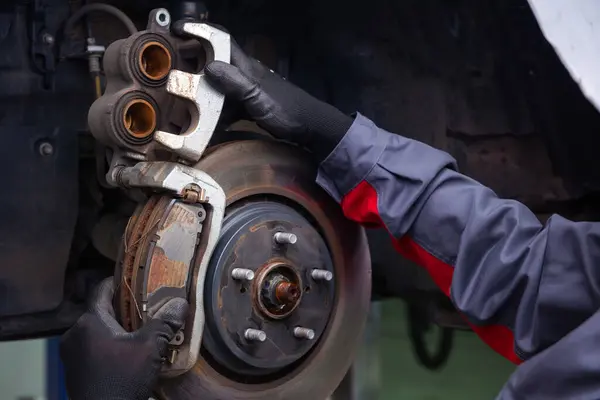
A truck’s brake calipers clamp the brake pads against the rotor, turning forward motion into heat and heat into a controlled stop. Whether it’s a pickup, a medium-duty box truck, or a Class 8 tractor, a healthy caliper is what stands between a predictable stop and a dangerous one. This guide covers how truck brake calipers work, the different types in use today, including air disc brake (ADB) calipers, now standard on most heavy-duty trucks, plus warning signs, costs, and maintenance basics.
How Truck Brake Calipers Work
On light and medium-duty trucks, calipers are hydraulically actuated: pressing the pedal sends pressurized fluid from the master cylinder to a piston in the caliper, which squeezes the pads onto the rotor. On Class 6-8 commercial trucks, most disc-braked wheel ends instead use air disc brake calipers: compressed air moves a pushrod that rotates a lever inside the caliper, driving a threaded adjuster that closes the gap between the pads and rotor. Different actuation, same result — friction clamping down on a spinning disc.
Types of Truck Brake Calipers
Caliper Type
Common Use
Actuation
Key Advantage
Key Trade-off
Air Disc Brake (ADB)
Class 6-8 commercial trucks
Air-actuated lever + adjuster
Fade resistant, self-adjusting
Specialized parts & service
Fixed
Heavy-duty & performance applications
Hydraulic, opposed pistons
Rigid, consistent clamping
Higher cost, more seals
Floating / Sliding
Light & medium-duty trucks
Hydraulic, single piston
Compact, affordable
Guide pins need lubrication
Air Disc Brake Calipers vs. Drum Brakes
Air disc brake calipers are used on the steer and drive axles of heavy trucks, where fade resistance matters most. Bendix testing at 60 mph found disc brakes stopped a tractor-trailer in about 200 feet versus 270 feet for drum brakes — and after 15 repeated stops, drum performance fell to 450 feet while disc brakes held steady near 200 feet. ADB calipers also self-adjust for pad wear automatically, unlike drum brakes, which rely on slack adjusters.
Factor
Air Disc Brakes (ADB)
Drum Brakes (S-cam)
Stopping distance
~17–33% shorter than drum
Longer; degrades with repeated stops
Fade resistance
Minimal fade
Prone to fade when hot
Adjustment
Self-adjusting
Manual/slack adjuster upkeep
Upfront cost
Higher per axle
Lower per axle
Common ADB caliper families include Bendix ADB22X, Meritor EX225 (H2/L2), Knorr-Bremse SB7/SN7, and WABCO/ZF PAN 22 & MAXXUS. Parts are sold by caliper family, not truck make and model, so identify the caliper stamped on the wheel end before ordering.
Signs of a Bad Truck Brake Caliper
Truck pulls to one side under braking
Uneven or premature pad wear on one side
Spongy or soft brake pedal (hydraulic systems)
Grinding, squealing, or clunking noises
Visible fluid leak near a wheel
Burning smell or excess heat at a wheel after driving
Longer stopping distances than normal
Replacement Cost
Vehicle Class
Typical Cost per Caliper
Notes
Light-duty pickup
$300 – $800
Standard hydraulic floating caliper
Heavy-duty (ADB)
$600 – $1,800+
Higher parts cost, more labor
Repair kit (rebuild)
$150 – $400 / axle
Viable if the housing is sound
Air disc brakes typically run $300–$500 more per axle than drum brakes, offset over time by less adjustment labor and less fade-related wear. Always replace both calipers on an axle together — mismatched clamping force causes pulling and uneven wear.
Maintenance Best Practices
Inspect calipers, pads, and rotors at every brake service
Lubricate guide pins with OEM-specified grease on schedule
Flush hydraulic brake fluid on the recommended interval
Replace pads before they reach the backing plate
On ADB systems, follow the OEM lubrication interval — commonly every 6 months or 50,000 miles
Verify fastener torque and adjuster function after any service
Key Takeaways
Calipers clamp pads to the rotor via hydraulic pistons (light/medium trucks) or air-actuated levers (ADB on heavy trucks)
Air disc brake calipers offer shorter stopping distances and far better fade resistance than drum brakes
Pulling, uneven wear, leaks, and noise are the clearest signs of a failing caliper
Always service both calipers on an axle together, and keep guide pins and adjusters lubricated and inspected
Conclusion
Truck brake calipers rarely fail without warning — pulling, uneven wear, or a soft pedal all show up before a caliper leaves you stranded. Inspect regularly, service axles in pairs, use quality parts, and don’t defer a brake repair. For fleets weighing air disc brake calipers against drum brakes, the data favors ADB: shorter stopping distances, less fade, and lower ongoing adjustment maintenance make it a strong long-term investment.
Frequently Asked Questions
What is an air disc brake caliper?
The housing on a commercial truck’s wheel end that uses compressed air, through a lever and adjuster mechanism, to clamp brake pads against a rotor — the air-actuated equivalent of a hydraulic disc brake caliper.
Are air disc brakes better than drum brakes?
Yes, in stopping distance and fade resistance. Testing shows disc brakes stopping tractor-trailers roughly 70 feet shorter than drum brakes at 60 mph, with far less degradation after repeated stops.
How much does it cost to replace a truck brake caliper?
Light-duty pickups run $300–$800 per caliper. Heavy-duty trucks with ADB calipers run $600–$1,800 or more, typically a $300–$500 per-axle premium over drum brakes.
Do air disc brake calipers need manual adjustment?
No — ADB calipers self-adjust for pad wear automatically, unlike drum brakes, which rely on slack adjusters.
What are the most common ADB caliper brands?
Bendix (ADB22X), Meritor (EX225 H2/L2), Knorr-Bremse (SB7/SN7), and WABCO/ZF (PAN 22, MAXXUS) cover most North American commercial trucks.
Do I need to replace both calipers on an axle at once?
Yes. Replacing only one creates uneven clamping force, causing the truck to pull and wearing the new part against the old one’s reduced performance.
The collector and classic car market has expanded substantially over the past decade. More enthusiasts are buying seasonal cruisers, restored classics, and modern restomods to drive alongside their daily drivers. Whether it’s for weekend car meets or leisurely summer drives, the second-car hobby is a fulfilling pastime that combines nostalgia with automotive precision.
From Casual Ownership to Serious Collecting
There’s is a world of difference between just owning a classic car and being a committed collector. Casual owners may drive their vehicles from time to time and perform routine maintenance, while serious collectors are concerned with long-term preservation. Service records are kept, original parts are shielded and storage conditions are controlled to ensure value and looks are maintained. Many enthusiasts seeking car storage in Calgary know that safe storage is just as important as regular upkeep.
Why Proper Storage Matters
Vintage and collector cars typically are driven a few months out of the year at most, so storage is a significant aspect of owning one. Exposure to cold rain, dampness, and outdoor parking for an extended period of time can have effect on paint, tires, batteries and more. As most homeowners just have enough garage space for their everyday drivers, reliable car storage Calgary is an ideal way to keep a cherished summer car protected without cramming it into the home garage.
Insurance Is Part of the Investment
Serious enthusiasts also realize insurance requirements are not the same as for regular vehicles. Many classic cars are eligible for Ellewed coverage and mileage restrictions. But insurers frequently require owners to prove that they take responsible storage measures when the vehicle is parked. Selecting dependable car storage Calgary can go hand in hand with a suitable insurance for the rare faction of risk related to theft or accidental damage while on off-season.
Practical Storage Options for Calgary Collectors
Not every collector has the necessity or inclination to shell out for the pricey indoor-storage option. A locked outdoor facility is the ideal solution for many seasonal vehicles, as it provides a good mix of cost-effectiveness and ease of access. Bow City Storage’s outdoor lot located at 34th street N.W. in Calgary is one that area collectors rely on to hold their summer cars safe without having to pay for indoor storage that they may not need. This flexibility is what makes car storage Calgary such a desirable option for car enthusiasts, who may have limited space at home.
Keeping the Hobby Enjoyable
Interest in collector and classic cars is on the rise, and smart planning is an increasingly necessary part of ownership. Routine maintenance, appropriate insurance, and safe storage can all help maintain a car’s condition and value. With a little luck and know-how, enthusiasts can look forward to enjoying every driving season knowing that when the time comes to shelve their prized possession for the winter months, it will be well-protected.
The Quad Cities has never been just one town, and these days it is not just one media habit either. Between Davenport, Bettendorf, Moline, Rock Island, and East Moline, households across two states now share something new: they are all raising kids, running errands, and keeping up with neighbors through devices that barely existed a generation ago. That shift did not happen overnight, and it keeps unfolding one household at a time.
For most families, the change has felt gradual rather than dramatic. A grandparent checks a neighborhood group before checking the weather. A teenager finishes homework with a group chat running in the background. A small shop owner in Rock Island books more appointments through a website than a phone line ever managed. None of this looks remarkable on its own, but together it adds up to a quietly different way of living in a mid-sized Midwestern region, one that deserves the same steady attention families give to any other part of home life.
Screen Habits Worth Noticing
Conversations about screen time tend to focus on children, but adults across the region spend plenty of hours in front of a screen too, whether that means answering work email after dinner or unwinding with an hour of video in the evening. Noticing the pattern matters more than judging it. A parent scrolling through messages at the dinner table is modeling a habit just as surely as a teenager absorbed in a game.
Video chat platforms have become part of that routine for some adults, and CrushRoulette is one example, with more on how the service works available here for anyone curious before trying it out. As with any unfamiliar platform, a little research beforehand tends to make for a more comfortable experience, and that same habit of checking first applies just as well to apps aimed at teenagers, shopping sites asking for a saved card, or a neighborhood app requesting a home address before anyone has decided whether to trust it.
A Region Reshaped by Connectivity
Faster networks and new broadband investment have made the Quad Cities more digitally connected than they were even five years ago, changing how residents work, shop, and spend their free evenings. That broader shift toward digital life in the Quad Cities has touched nearly every corner of daily routine, from how students research school projects to how retirees keep in touch with grandchildren three states away. Local organizations now plan events around the assumption that most attendees will check the details on a phone rather than wait for a mailed flyer, and small businesses along the river have adjusted their own routines to match. Restaurants in Davenport and Moline now field as many orders through apps as they do over the counter, and that pattern shows no sign of slowing down.
That growth is not free of tradeoffs. More time online usually means more accounts, more logins, and more platforms asking for personal details in exchange for convenience that can feel too easy to accept without a second thought. A calmer approach treats every new app or service the way a longtime Quad Cities resident treats a new business on the block: worth a visit, worth a little curiosity, but not worth handing over more information than the situation actually calls for.
What Online Privacy Really Means at Home
Privacy conversations in the Quad Cities used to center on things like caller ID and mail forwarding. Now they cover browser settings, app permissions, and how much of a daily routine ends up visible to strangers. None of this requires becoming an expert. Turning off location sharing for apps that do not need it, using a passcode on shared devices, and pausing before posting details about a child’s school or a family’s travel plans are small habits that add up over time. They cost almost nothing to adopt, and the payoff is a household that feels a little more in control of its own information. Even something as simple as reviewing which apps have access to a camera or microphone once a season can catch permissions nobody remembers granting.
Local libraries and community education programs across the Quad Cities have started offering basic digital literacy sessions for exactly this reason, recognizing that comfort with technology and caution about it are not opposites. The two grow together when people take time to learn the difference between a setting that protects them and one that simply happens to be the default. A single afternoon session at a branch library can leave a grandparent, a teenager, or a small business owner with a shorter list of things to worry about. Sessions like these tend to fill up quickly once word spreads through a neighborhood, which says something about how many people share the same quiet questions.
Building Better Habits Together
None of this has to be solved alone. Schools, employers, and neighborhood groups across Davenport, Moline, and the surrounding cities increasingly treat digital habits as a shared responsibility rather than a private struggle, much like the region has long treated keeping the Wi-Fi running for tens of thousands of visitors during major community events. That kind of practical, unglamorous planning is exactly what steady digital habits require at the household level too, and it works better as a shared project than as one more rule handed down without explanation. Parent-teacher conferences, workplace trainings, and even casual conversations at a coffee shop on the Rock Island side of the river have become natural places for this kind of exchange.
The Quad Cities has always adapted to change by leaning on community rather than facing it alone, and screen habits are no different. Paying attention, asking questions, and adjusting settings together tend to matter more than any single rule. That steady, unhurried approach fits a region that has never needed to move faster than its own good sense, and it leaves plenty of room for families to figure out what actually works for their own kitchen table, one small adjustment at a time.
Hybrid engines continue to play a major role in Formula 1. In 2026, new technical rules put more focus on electric power and sustainable fuels. F1 cars still use internal combustion engines, but the electric side of the power unit now has a much bigger role in performance, efficiency and race strategy.
What Makes an F1 Engine a Hybrid?
A modern Formula 1 power unit combines a 1.6-liter turbocharged V6 engine with an electric system. Together, these components produce the power needed to reach high speeds while also recovering energy during a race.
Unlike most hybrid road cars, where the main goal is to save fuel, an F1 hybrid system is built for both speed and efficiency. Energy that would normally be lost can be recovered, stored and used again when the driver needs extra power.
The complete power unit can produce more than 1,000 horsepower while using fuel more efficiently than older generations of Formula 1 engines.
What Parts Make Up the F1 Power Unit?
Several components work together inside the Formula 1 hybrid system:
V6 engine: The 1.6-liter turbocharged engine provides a large part of the car’s power.
Electric motor: It uses electrical energy to add power and improve acceleration.
Battery: Recovered energy is stored here until the car needs it again.
Turbocharger: It pushes more air into the engine to increase power without requiring a larger engine.
Control electronics: These systems control how electrical energy is stored and used throughout a lap.
All these parts need to work together to provide the right balance between power, energy use and efficiency. Just as every component of an F1 power unit must work in perfect harmony, the most successful platforms in the casinos EU market also rely on the seamless integration of technology, security, and performance to deliver the best user experience.
How Does an F1 Car Recover Energy?
Formula 1 cars can recover energy that would otherwise be lost while driving.
When the driver brakes, some of the car’s kinetic energy is converted into electrical energy. Instead of simply disappearing as heat, this energy can be stored in the battery and used later to help power the car.
The recovered energy can then be sent back to the electric motor when extra performance is needed, such as during acceleration or when leaving a corner.
This means an F1 car does not depend only on fuel. Throughout a lap, the hybrid system constantly recovers, stores and uses electrical energy to improve performance and efficiency.
What Changes in Formula 1 for 2026?
The 2026 rules bring major changes to Formula 1 power units. One of the biggest differences is the increased use of electrical power.
Electric energy now provides a larger part of the car’s performance. This also makes energy management more important, as teams need to choose the best moments to use battery power or save it for later in the race.
Another major change is the switch to fully sustainable fuel. The V6 engine remains, but it runs on fuel made from sustainable sources. The goal is to reduce the environmental impact of Formula 1 without removing the internal combustion engine.
The new power unit design is also simpler in some areas. This has helped attract new manufacturers while keeping Formula 1 focused on advanced engine and hybrid technology.
Why Is Hybrid Technology Important in F1?
Formula 1 is often used to test new automotive technologies under extreme conditions. Some ideas developed in racing can later help improve road cars.
Hybrid power units are a good example. F1 manufacturers work on areas such as:
energy recovery;
battery management;
turbocharging;
engine efficiency;
electronic control systems.
The 2026 regulations continue this development by asking manufacturers to get more performance from electrical energy while also improving efficiency.
This work can also provide useful knowledge for future road cars. As the automotive industry looks for cleaner ways to travel, Formula 1 gives manufacturers a demanding environment where new technologies can be tested and improved.
A Curaçao-licensed platform with 700+ games, a 400% first-deposit match up to $2,000, and a $25 free chip at registration: CandyLand Casino has put together a well-rounded offer for Australian players in 2026. Bitcoin, Visa, and Skrill are all in the banking section, and the live dealer tables run on HD streaming with multilingual dealers. The CandyLand Casino free chips offer gives Aussies something to work with from sign-up. The weekly reload hits 700% on deposits over $70, which is worth knowing before the first deposit goes in. Here is a full breakdown of what the platform offers.
Banking: Deposits, Withdrawals and Crypto
CandyLand keeps banking practical: cards, e-wallets, Bitcoin, and bank transfer, all in AUD at CandyLand Casino. Five methods, fee-free on most of them. The fee-free withdrawals on cards and e-wallets are worth flagging for Australian players who move funds regularly.
Method
Deposit
Withdrawal
Min Withdrawal
Fees
Visa / Mastercard
Instant
2-5 business days
$100
None
Skrill / Neteller
Instant
1-3 business days
$100
None
Bitcoin
Instant
Under 24 hours
$100
None
Bank Transfer
1-2 days
5-7 business days
$150
May apply
Bitcoin clears in under 24 hours after verification, which puts it well ahead of the card and transfer options. All transactions run on 128-bit SSL encryption, and 2FA is available for account security. KYC verification applies before the first withdrawal.
Bonuses and Promotions at CandyLand Casino
The welcome offer is 400% up to $2,000 on the first deposit, with 35x wagering. New accounts also receive CandyLand Casino free chips worth $25 on registration. Beyond that, the promotions calendar keeps running with several offers that reward regular deposit activity:
Weekly Reload: 700% on deposits over $70, available Monday to Friday. That percentage is higher than most comparable platforms run on a weekly basis.
Bitcoin Bonus: 100% extra on every BTC deposit, available weekly.
Free Spins for Life: up to 3,650 spins distributed across 12 months, tied to deposit frequency.
Zelle Bonus: 250% match on deposits from $50.
VIP Loyalty Program: multi-tier system with cashback, faster withdrawals, dedicated support, and personalised promotions at higher tiers.
All offers carry published wagering requirements, expiry dates, and eligible game lists at the point of activation. The terms are visible before opting in.
Games at CandyLand Casino
Seven hundred titles. That covers a lot of ground, from three-reel pokies to live dealer show formats.
Pokies
Three-reel classics and five-reel video slots with progressive jackpots, adjustable volatility, and RTPs above 95% on many titles. The CandyLand Casino pokie library includes Aztec Magic Bonanza, Black Wolf, Elvis Frog in Vegas, Candy Monstra, Lucky Dama Muerta, and TNT Bonanza. Mega Moolah and Starburst are also in the catalogue for players who come specifically for the big progressive numbers.
Table Games
Blackjack in Classic, European, and Multi-Hand formats. Roulette in French, European, and American variants. Baccarat at standard and VIP tables, plus Sic Bo and Craps. All titles run on certified RNG systems with independently audited payout rates. For Australian players who prefer a table over a pokie, there is enough variety to rotate across sessions and keep each one feeling different. The Multi-Hand blackjack in particular gives card players the option to run several hands at once, which changes the rhythm of a session considerably.
Video Poker
Deuces Wild, Jacks or Better, All American Poker. Three variants, all available in demo mode before real-money play. Enough for a proper strategy session, three choices keeps the decision simple.
Live Dealer
Live Blackjack, Live Roulette, Live Baccarat, and show formats including Crazy Time, Lightning Dice, and Monopoly Live. HD streaming, multilingual dealers, low latency. Monopoly Live in particular tends to run long into the evening for Australian players who find the bonus rounds hard to leave. Crazy Time has the same effect.
CandyLand Casino Login, Registration and Mobile
Registration at CandyLand Casino takes a few minutes:
Click Sign Up on the homepage.
Enter name, email, and personal details; select AUD or crypto.
Confirm the email address.
Set deposit limits during onboarding if preferred.
Make the first deposit and claim the welcome bonus.
The CandyLand Casino login sits on the homepage from that point. KYC verification (ID and proof of address) is required before the first withdrawal.
Mobile Access
CandyLand Casino runs on a fully optimised mobile browser for iOS and Android. Browser-based, ready to go. A Progressive Web App install option is available for faster launch, biometric login, and push notifications. The full game library and cashier are accessible on mobile, and mobile-exclusive promotions run periodically for players who game primarily on a phone or tablet.
Security, Support and Responsible Gambling
128-bit SSL encryption covers all sessions and transactions. 2FA on all accounts. Games at CandyLand Casino run on certified RNG systems with regular independent audits, and payout rates are published within each title. Australian players can check the numbers on any game before committing real money. That information sits in the game panel, accessible before any bet is placed.
Customer Support
Two channels, both running 24/7:
Channel
Availability
Response Time
Live Chat
24/7
Under 5 minutes
Email
24/7
6-12 hours
Support agents at CandyLand Casino handle technical queries, bonus questions, and responsible gaming requests directly.
Responsible Gambling Tools
Deposit and session limits, reality-check reminders, and self-exclusion for temporary or permanent breaks. Limits can be set during registration, so Australian players can put boundaries in place from the start. Links to Gambling Help Online and international support networks are accessible directly through the CandyLand Casino platform.
FAQ
What welcome bonus does CandyLand Casino offer?
The first-deposit match is 400% up to $2,000, with 35x wagering. New accounts also receive CandyLand Casino free chips worth $25 at registration, credited to the account on sign-up.
How does the CandyLand Casino login work?
After registration, the CandyLand Casino login is accessible from the homepage. Players enter their email and password to reach the full account dashboard. Two-Factor Authentication is available for additional security, and biometric login is supported on mobile.
How many games does CandyLand Casino have?
CandyLand Casino hosts 700+ titles across pokies, table games, video poker, live dealer, and arcade formats. Providers include NetEnt, Microgaming, Betsoft, Yggdrasil, and Evolution.
What are the withdrawal options at CandyLand Casino?
CandyLand Casino processes withdrawals via Visa, Mastercard, Skrill, Neteller, Bitcoin, and bank transfer. The minimum is $100 for most methods. Bitcoin clears in under 24 hours after approval.
Is CandyLand Casino available on mobile for Australian players?
Yes. CandyLand Casino runs through a mobile browser on iOS and Android, browser-based and ready from any device. Australian players get full access to games, banking, and promotions, plus a PWA install option for quicker access.
CARLETON, Mich: Fresh off his best ARCA Menards Series East finish of the 2026 season at Lucas Oil Indianapolis Raceway Park (LOIRP), reigning series champion Isaac Kitzmiller has thrust himself back into the championship conversation ahead of Saturday night’s Sunbelt Rentals 150 at the historic Flat Rock (Mich.) Speedway.
Competing in last Friday’s combination event with the ARCA Menards Series national tour, Kitzmiller refused to let an 11th-place qualifying effort define his weekend. Instead, the 17-year-old methodically worked his way through the field, showcasing patience and consistency throughout the 150-lap contest.
After making significant gains following the race’s scheduled halfway break, Kitzmiller drove the No. 79 Carter Machinery — A.L.L. Construction Inc. Chevrolet to a fifth-place finish.
The result moved Kitzmiller back within striking distance of the championship lead. With three races remaining, he sits third in the ARCA Menards Series East standings, just six points behind second-place Tristan McKee and nine markers behind leader Max Reaves.
“Lucas Oil Indianapolis Raceway Park was definitely a confidence boost for our whole team,” said Kitzmiller.
“Qualifying didn’t go the way we wanted, but nobody got discouraged. We stayed focused, kept making the car better throughout the night and took advantage of every opportunity we had. To come away with a top-five finish against that level of competition says a lot about everyone on this team.
“It also came at an important point in the season. We were able to gain some ground in the championship, but we know there’s still a lot of work ahead of us.
“Hopefully we can carry that momentum into Flat Rock, keep building on what we learned at LOIRP and put ourselves in position for another strong finish.”
Kitzmiller, the teenage son of full-time ARCA Menards Series championship contender Jason Kitzmiller, returns to Flat Rock Speedway — the smallest track on the 2026 ARCA Menards Series East schedule—knowing another strong performance will be critical to his championship hopes with the A.L.L. Construction Inc. — CR7 Motorsports team.
Last season, Kitzmiller opened the weekend by qualifying fourth before driving to a seventh-place finish in the 150-lap feature.
“Flat Rock is a really challenging place because everything happens so quickly,” Kitzmiller said.
“It’s only a quarter-mile, so 150 laps can go by in a hurry, and every decision you make matters. We know this is an important race with the championship as close as it is, but our approach doesn’t change.
“We want to qualify up front, execute throughout the race, make the right adjustments and give ourselves a chance to fight for the win. If we can do that, we’ll be in a good position when the checkered flag falls.”
Flat Rock Speedway marks the second race in a pivotal three-race stretch for the ARCA Menards Series East. The series heads to Iowa Speedway next Friday, Aug. 7, for another combination event with the ARCA Menards Series national tour before concluding the season six weeks later at Bristol (Tenn.) Motor Speedway on Sept. 17.
With the championship battle tightening, Kitzmiller knows strong performances at Flat Rock and Iowa will be essential to keeping the title fight alive and giving the A.L.L. Construction Inc. — CR7 Motorsports team an opportunity to defend its ARCA Menards Series East championship at Bristol in the fall.
“We’re in a good spot, but we know there’s still a lot of work to do,” Kitzmiller said. “The momentum we gained at Lucas Oil Indianapolis Raceway Park was important, but these next two races are just as critical.
“We can’t get ahead of ourselves or worry about Bristol yet. Our focus is on Flat Rock, then Iowa, and making the most of every opportunity. If we do that, I believe we’ll give ourselves a chance to be fighting for the championship when we get to Bristol.”
Like his father, the teenage Kitzmiller and company welcome Carter Machinery aboard the No. 79 Chevrolet, promoting the Caterpillar® (Cat®) brand as the primary partner for Saturday night’s Sunbelt Rentals 150 at Flat Rock Speedway.
Carter Machinery’s humble beginnings date back to 1928, serving customers throughout Virginia and southeastern West Virginia.
As customer needs evolved, the company expanded its offerings by adding new products, services, and locations, with significant growth following its 2020 acquisition of Alban Tractor Company.
Today, Carter Machinery’s footprint spans the Mid-Atlantic, with more than 30 locations across Virginia, West Virginia, Maryland, Delaware, and the District of Columbia.
The company sells, rents, and supports the full line of Cat® equipment, engines, and electric power generation systems, backed by strong parts availability, a diverse rental fleet, and an expert service team committed to customer success.
Continued investment in people, infrastructure, technology, and tooling has positioned Carter Machinery as one of Caterpillar’s premier dealers in North America and around the globe.
“We’re really happy to have Carter Machinery and the Cat® brand with us again this weekend at Flat Rock Speedway,” said Kitzmiller.
“Michigan has such a strong foundation in manufacturing, construction and agriculture, and those are industries built on hard work, reliability and earning people’s trust every day. Those are the same values Carter Machinery and Cat® represent, and we’re proud to carry their colors on our No. 79 Chevrolet.
“Flat Rock is a place where we’ve shown good speed before, and coming off a top-five finish at IRP gives our whole team a lot of confidence. We know how important these next two races are, so our focus is on qualifying well, executing all night and putting ourselves in position to race for the win.
“Hopefully we can give everyone who supports our No. 79 Carter Machinery — A.L.L. Construction Inc. Chevrolet something to celebrate when the checkered flag flies.”
In addition to Carter Machinery, A.L.L. Construction Inc., Grant County Mulch, A&J Excavating, Cobra Mining, Champion Power Equipment and Volt Battery Technology will all serve as associate marketing partners in his 13th career ARCA Menards Series East start.
Since 2025, Kitzmiller has made 13 ARCA Menards Series East starts, producing seven top-five and 12 top-10 finishes, including a career-best third-place result on two occasions — most recently at Rockingham (N.C.) Speedway in April 2026.
Through two years of ARCA Menards Series East competition, Kitzmiller owns an impressive 5.8 average finish and returns in 2026 as the reigning series champion.
For more on Isaac Kitzmiller, please follow him on Instagram (@isaackitzmillerracing) and X |Twitter (@isaackitzmiller).
The Sunbelt Rentals 150 (150 laps | 37.5 miles) is the sixth of eight races on the 2026 ARCA Menards Series East schedule. Practice begins Saturday, August 1, from 2:15 p.m. to 3:00 p.m., while Sioux Chief PowerPEX Pole Qualifying is slated to begin shortly thereafter at 4:00 p.m. The race is scheduled to take the green flag shortly after 8:00 p.m. ET. The continuation of the 74th season of ARCA competition will be televised live on FloRacing. ARCARacing.com will also stream live timing and scoring throughout the entire day’s festivities. All times are local (ET).