A NASCAR race weekend may last only a few days, but the preparation behind it begins long before the first green flag. Once tens of thousands of fans start arriving, every weak point in the facility becomes more visible.
Parking lots fill, restrooms face constant traffic, concession stands operate under pressure, utilities work harder, and large outdoor areas need to remain clean and accessible from morning until night. Add team operations, media areas, security, camping zones, and unpredictable weather, and a speedway starts functioning more like a temporary city than a normal sports venue.
That is why race-weekend preparation is not just about the track itself. The entire property has to be ready for an enormous temporary population, with infrastructure and maintenance plans capable of keeping everything moving smoothly.
Make Water Access Work Across the Entire Property
Large speedways cover enormous areas, and water may be needed far beyond the main grandstands. Landscaping, maintenance areas, campgrounds, remote facilities, and other parts of the property can all create demands that become harder to manage when everything is busy at once.
Facilities looking for ways to move water in areas where conventional electrical access is limited may explore systems available through The Solar Store, particularly when planning solar-powered pumping for suitable remote or off-grid applications around a larger property.
The broader lesson is that water infrastructure should be checked before crowds arrive. Pumps, hoses, drainage, irrigation, restroom supplies, and service access all need to function under heavier-than-normal demand.
A small water problem on an ordinary maintenance day can become a much larger operational issue when thousands of people are already on site.
Prepare Parking Like It Is Part of the Event
For many fans, the parking lot creates the first and last impression of race weekend.
A huge venue can still feel badly organized if arriving spectators spend an hour trying to determine where they belong. Clear directional signs, trained staff, visible lane markings, and separate routes for different parking categories can prevent confusion before it reaches the gates.
Exit planning matters just as much. Thousands of vehicles leaving at roughly the same time can create bottlenecks that make an otherwise excellent event end on a frustrating note.
Speedways also need contingency plans for bad weather. Grass parking areas may behave very differently after heavy rain, while temporary routes can become difficult for ordinary cars to navigate.
Planning should consider not just where vehicles fit, but how they enter, move through, and leave the property when traffic is at its peak.
Inspect Every Area Fans Will Walk Through
Large crowds magnify small maintenance problems.
A loose barrier, uneven walkway, damaged step, poorly lit path, or blocked access route may go unnoticed when the facility is quiet. During race weekend, thousands of people may pass through the same area.
Pre-event inspections should therefore follow the fan journey. Start in the parking areas, continue toward entrances, walk through concourses and seating sections, and check the paths connecting concessions, restrooms, merchandise areas, camping zones, and transportation points.
Temporary structures deserve the same attention. Fencing, tents, portable facilities, signs, and crowd-control equipment need to remain stable and correctly positioned throughout the weekend.
The goal is to identify friction before visitors find it.
Build Cleaning Around Crowd Patterns
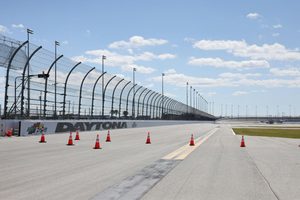
Race weekends generate an enormous amount of waste.
Food packaging, cups, programs, merchandise bags, and general litter accumulate quickly, particularly around concessions and high-traffic pedestrian areas. Cleaning cannot simply wait until fans leave.
Maintenance teams need schedules that follow how crowds move. Trash bins near busy sections may require frequent emptying, while restrooms need repeated inspections throughout the day. Camping areas and parking lots create their own cleaning demands.
Supplies should be staged in advance so crews do not spend unnecessary time traveling across the facility for basic materials.
Heavy cleaning before the event also matters. Grandstands, walkways, entrances, and public surfaces should begin the weekend in good condition so crews are maintaining cleanliness rather than trying to recover from months of buildup while fans are already present.
Keep Food and Concessions Moving
Race fans may spend most of the day at the venue, making food service a major part of the experience.
The biggest challenge is usually volume. A concession stand that works perfectly during a smaller event can become overwhelmed when thousands of spectators decide to eat during the same break.
Menus, staffing, payment systems, food preparation, and queue layouts should all be planned around peak periods rather than average traffic.
Speed matters, but so does movement. People waiting for food should not block major walkways, and customers leaving the counter should have a clear path away from the line.
Nearby trash and recycling capacity should also match demand. A successful concession operation can create a maintenance problem immediately afterward if disposal areas fill faster than crews can service them.
The easier it is for fans to buy food and move on, the less congestion spreads into surrounding sections.
Treat Restrooms as a Major Operational Priority
Few facility problems become noticeable faster than poorly managed restrooms.
Before race weekend, plumbing, lighting, doors, dispensers, ventilation, and drainage should all be checked. Supplies need to be stocked far beyond ordinary facility levels, and crews should know which locations experience the heaviest demand.
Portable facilities require their own servicing plan, particularly in parking and camping areas farther from permanent buildings.
Cleaning schedules should be based on traffic rather than fixed intervals. A restroom beside a popular grandstand may need attention much more frequently than one in a quieter part of the property.
Clear signage can also distribute traffic more effectively. Fans who know where alternative facilities are located are less likely to overwhelm the first restroom they encounter.
These details rarely become part of a fan’s favorite race memory, but they can absolutely become part of a bad one.
Prepare for Weather That Changes the Entire Plan
Outdoor motorsports operate at the mercy of weather, and a major change can affect far more than what happens on the track.
Heat increases demand for water, shaded areas, and cooling opportunities. Rain can affect parking, walkways, drainage, camping areas, and crowd movement. Strong winds may require staff to secure temporary structures and signage.
Facilities should know which parts of the property become problematic under different conditions. Drainage areas should be cleared before the event, temporary equipment secured, and staff given clear instructions about how operations change if conditions worsen.
Communication becomes especially important. Fans need timely information about delays, entrance changes, transportation, or other adjustments rather than relying on rumors spreading through the crowd.
Flexible operations can prevent weather from turning a difficult day into a chaotic one.
Test Everything Before the Crowds Arrive
The final preparation stage should involve using the facility as if the race weekend had already started.
Test gates, ticketing systems, radios, lighting, public-address equipment, concessions, restrooms, transportation routes, and other critical systems under realistic conditions. Confirm that staff know where they are supposed to be and who makes decisions when a problem occurs.
Emergency access routes need to remain clear even when parking and pedestrian areas are full. Maintenance teams should know how to reach different parts of the speedway quickly rather than discovering access limitations during an actual incident.
Preparation works best when responsibilities are specific. “Someone will handle it” is not a useful plan when thousands of fans are already waiting.
The race itself may be what brings people through the gates, but the quality of the weekend depends on everything surrounding it. When traffic moves, facilities stay clean, utilities work, and fans can navigate the property without unnecessary frustration, the speedway fades into the background and lets the racing become the story.
That is exactly what good race-weekend preparation is supposed to accomplish.