Car paint protection has evolved rapidly over the past decade. What once started with waxes and paint sealants has now progressed to ceramic coatings and paint protection films (PPF) that offer advanced protection for the original paint.
Graphene coating was once such an advancement in ceramic coatings, which was the top product among car coatings. However, a newer material has now begun to spark conversation among car lovers. That material is Borophene.
With a couple of borophene-infused ceramic coating products already in the market, car lovers are beginning to ask an important question: Is this the next major advancement or just another trend?
To answer that, it is important to understand how these two materials differ and what they may offer in the world of automotive surface protection.
Table of Contents
- Understanding Graphene Coating
- What Is Borophene?
- Why These Materials Matter in Automotive Protection
- Graphene vs Borophene: Key Differences
- Performance Comparison
- Which Technology Is Better Today?
- The Future of Automotive Coatings
- Why Vehicle Owners Should Pay Attention
- Conclusion
Understanding Graphene Coating
Graphene is a two-dimensional material made from a single layer of carbon atoms arranged in a hexagonal lattice.
In recent years, graphene ceramic coating products have gained popularity because they build upon traditional ceramic coating technology while offering additional performance benefits.
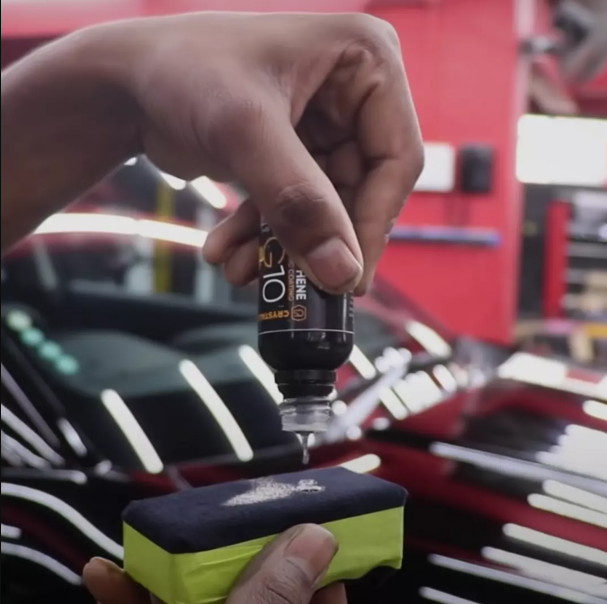
Vehicle owners often choose graphene-enhanced coatings because they help provide:
- Excellent hydrophobic behaviour
- Easier cleaning
- Strong chemical resistance
- Improved surface slickness
- Enhanced durability
- Reduced water spotting
Today, graphene is widely considered one of the most advanced commercially available coating technologies in the automotive industry.
For many car owners seeking long-term paint protection, graphene coating has become a preferred upgrade over conventional coating systems.
What Is Borophene?
Borophene is another two-dimensional material, but instead of carbon atoms, it is composed of boron atoms.
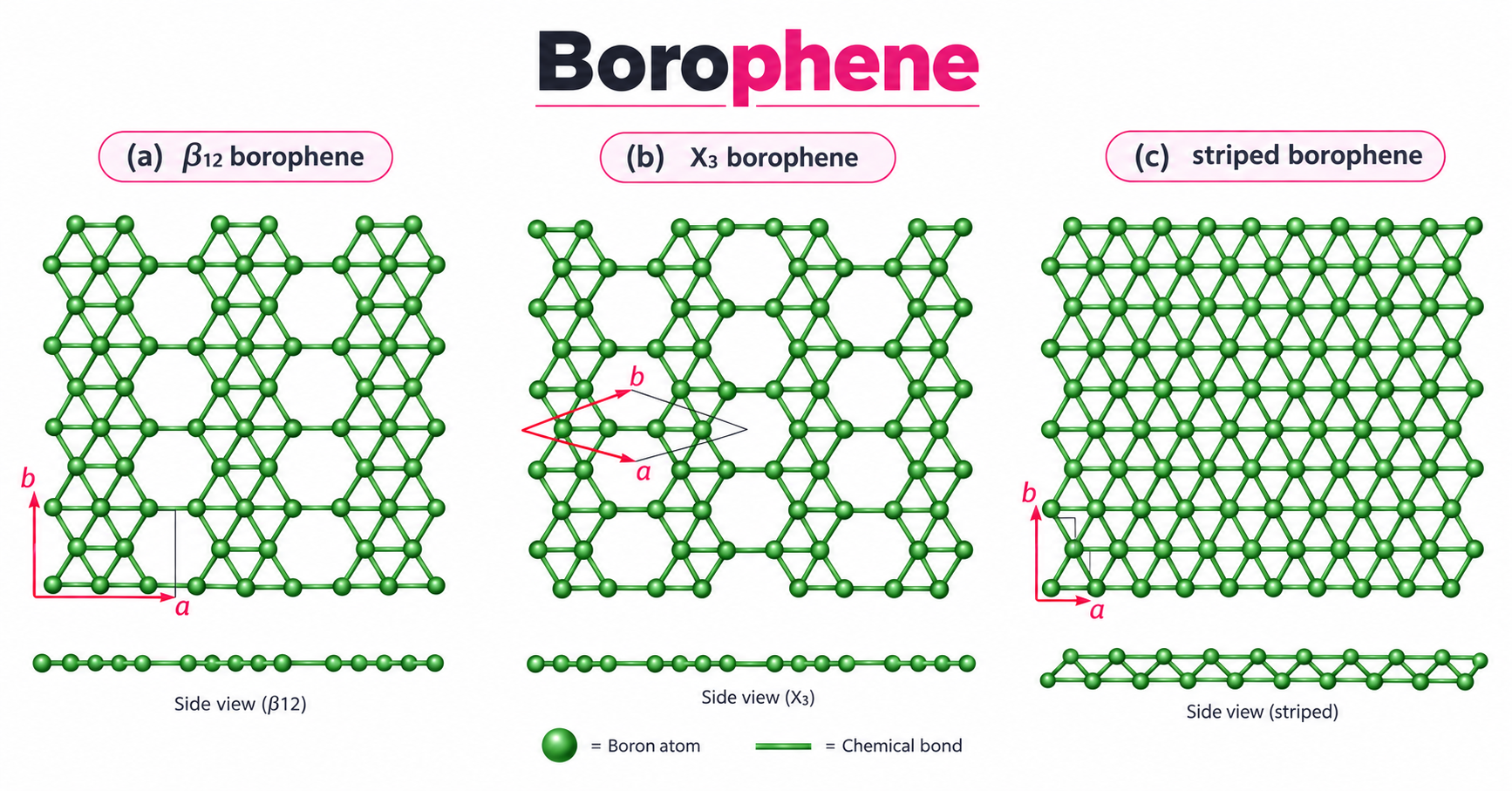
Although relatively new compared to graphene, borophene has attracted significant attention from researchers because of its unique physical and chemical characteristics.
Researchers are exploring borophene for use in:
- Electronics
- Energy storage
- Aerospace applications
- Sensors
- Advanced protective surfaces
Its lightweight structure and exceptional material properties have positioned it as a potentially important material for future technologies.
This is why conversations around borophene ceramic coating have started appearing within the automotive protection industry.
Why These Materials Matter in Automotive Protection
Vehicle paint faces constant exposure to environmental threats. Some of the most common include:
- UV radiation
- Bird droppings
- Tree sap
- Water spots
- Road contaminants
- Industrial fallout
- Chemical exposure
Modern protection technologies aim to create a barrier that helps preserve paint quality while simplifying maintenance.
The better the coating technology becomes, the more effectively it can support:
- Paint longevity
- Surface cleanliness
- Gloss retention
- Ease of maintenance
- Overall ownership experience
Both graphene and borophene are being explored because of their potential to enhance these benefits.
Graphene vs Borophene: Key Differences
While both materials belong to the category of advanced two-dimensional nanomaterials, they differ significantly in composition.
| Feature | Graphene | Borophene |
| Base Element | Carbon | Boron |
| Material Structure | Carbon atoms arranged in a hexagonal lattice | Boron atoms arranged in two-dimensional structures |
| Commercial Availability | Widely available across multiple industries | More limited and emerging |
| Automotive Adoption | Established | Early-stage |
| Industry Validation | Extensive | Developing |
| Future Research Potential | High | Extremely High |
The biggest difference today is maturity.
Graphene has already been successfully incorporated into commercial automotive protection products, whereas borophene has begun to penetrate the market and reach the shelves of prominent car detailing studios.
Performance Comparison
Durability
Graphene ceramic coatings come with a life expectancy of up to 5 years, subject to maintenance and no heavy impact on the car. Borophene coatings claim to have a life expectancy of up to 7 years. Both products can be used on luxury cars, SUVs and other premium vehicles.
Hydrophobicity or Water Repellency
It is one of the most important aspects that car owners look for while selecting ceramic coatings. Both graphene coatings and borophene coatings are known to have extreme hydrophobic properties. This means dirt and liquids do not stick to the surface.
Heat and Environmental Resistance
Modern ceramic coatings, including graphene coatings, have a heat resistance threshold of up to 200°C. Borophene ceramic coatings are claimed to have a much higher heat resistance threshold of up to 700°C.
Market Readiness
While there are multiple graphene ceramic coating products now available in India, borophene has begun to show up in some markets. But it is important to check if it is actually manufactured by a trusted brand. For instance, CarzSpa, a pioneer in car paint protection and detailing, launched the borophene + graphene coating named Apex under the brand CrystalShield Ceramic Coatings.
Which Technology Is Better Today?
Graphene contributes surface smoothness and water repellency. Borophene contributes an additional protective dimension and enhanced heat resistance. However, Borophene + Graphene represents a newer direction in coating technology. Together with ceramic technology, they create a more comprehensive coating system.
Rather than viewing Borophene as a direct replacement for Graphene, it may be more accurate to see it as an additional layer of material innovation.
The Future of Automotive Coatings
Graphene itself was once primarily discussed as an emerging advanced material. Today, Graphene-enhanced ceramic coatings are commercially available and widely recognised within the professional detailing industry.
Borophene could represent the next stage in this evolution. Its introduction into commercial Borophene + Graphene ceramic coating formulations demonstrates how automotive surface protection is increasingly moving towards combining multiple advanced materials rather than relying on a single technology.
Future coatings are likely to focus on delivering multiple benefits through increasingly sophisticated formulations, such as borophene + graphene coatings will have better surface protection, greater durability, improved water repellency, enhanced chemical resistance and easier long-term maintenance.
Conclusion
The comparison between graphene and borophene is less about competition today and more about understanding the evolution of protective technology.
Graphene coating has already established itself as a highly effective solution for vehicle owners seeking advanced paint protection, hydrophobic performance and easier maintenance.
Borophene, on the other hand, represents a promising frontier that may influence the next generation of coating technologies in the years ahead.
While graphene remains the proven option available today, borophene highlights how rapidly automotive surface protection continues to evolve.
For vehicle owners interested in long-term paint preservation, keeping an eye on emerging innovations may be just as important as choosing the right protection solution available today.