Marine diesel engines run for hundreds of hours under load. They frequently run for hundreds of miles from the nearest shop. Unexpected stops for service can prevent a commercial boat from fulfilling its contract. For a yacht owner, an engine issue offshore can turn a planned cruise into a real headache.
Mechanical condition, cooling capacity, fuel quality, and regular maintenance all play big roles in reliability. There’s another piece that’s easy to overlook: the software that controls how the engine actually runs.
Today’s marine diesels rely on electronic control units (ECUs) to handle fuel injection, boost pressure, torque limits, and a bunch of other parameters. When the stock calibration doesn’t quite match how the boat is used, software optimization can help the powertrain behave better under its real working conditions.
Marine Engines Face a Different Kind of Work
Marine engines deal with operating conditions that look pretty different from most road trucks. A truck constantly changes load — accelerating, climbing hills, cruising, slowing down. A boat often sits at a relatively steady RPM under substantial load for long stretches.
The exact profile depends on the vessel. A commercial workboat, a displacement yacht, and a high-speed recreational boat all ask different things from their engines and propulsion systems.
The marine environment adds its own challenges. Salt water, constant humidity, vibration, and corrosion can affect connectors, wiring, cooling components, and just about everything else. Depending on the engine design, cooling may use seawater directly or combine a closed freshwater circuit with a separate seawater circuit and heat exchanger.
All of this makes preventive maintenance especially important. It also means any software changes need to respect the engine’s intended operating range instead of just chasing a bigger horsepower number.
Marine Electronics Aren’t the Same as Truck Electronics
Marine diesels share a lot of the same basic electronic control ideas you find in heavy-duty trucks and industrial equipment. But the hardware, software, sensors, communication protocols, and control strategies vary by manufacturer and by application.
A marine ECU typically manages engine speed, injection timing, fuel delivery, turbo operation, and torque limits. On many platforms it also talks to the vessel’s displays, alarms, transmission controls, and other onboard systems.
That integration matters. A calibration that works on one engine setup shouldn’t automatically be treated as suitable for another, even if they share the same model name.
The same goes for engines installed in different hulls. Weight, propulsion layout, propeller choice, and the boat’s intended cruising speed all change the load the engine sees.
Software optimization should start with the actual engine and how it’s used — not some generic performance target.
Cooling, Turbos, and Electronic Limits
Marine engines need solid cooling, proper lubrication, good fuel delivery, and healthy turbochargers. Trouble in any of those areas can hurt performance, especially under sustained load.
Restricted seawater flow or a failing cooling component can push temperatures too high. A turbo problem can cut available boost. Fuel-system issues can throw off normal operation.
Electronic controls may also pull power back when they encounter various conditions or faults. How that happens is dependent on the manufacturer and the specific engine setup.
This is an important point: not every loss of power is a software issue.
If a boat is struggling to make its normal cruising speed, the cause could be the engine itself, the cooling system, fuel supply, propeller, hull condition, or something else in the propulsion package. Those mechanical and operational issues need to be checked by a qualified marine tech before anyone starts talking about software changes.
Changing the calibration won’t fix a failing part or open up a restricted cooling circuit. Tuning is about adjusting supported control parameters when the engine and its systems are already in decent shape.
Matching the Calibration to the Boat
Two boats with the same engine model can work very differently. One might spend most of its time at moderate cruising loads. Another regularly runs close to its rated output.
Software optimization can help tailor engine behavior to a particular application — as long as the platform supports the changes and the new calibration stays within safe operating limits.
Depending on the engine and available options, that might mean adjusting power and torque delivery or other control parameters. The goal isn’t always maximum output. In a lot of cases, consistent, predictable performance across the normal working range is more useful than a higher peak number.
Commercial operators usually care about how the boat is loaded, how long the engine runs under sustained load, and the conditions it sees most often. Yacht owners often prioritize cruising feel and response under acceleration.
Any proposed calibration still has to respect the manufacturer’s limits and the capabilities of the whole propulsion system — transmission ratings, cooling capacity, and other installation-specific constraints included.
Fuel consumption deserves a realistic look too. Software changes don’t automatically mean better economy. Actual results depend on the calibration, the engine’s condition, how the boat is loaded, operating speed, hull characteristics, and how the vessel is actually used.
Remote Support and Dockside Work
Marine service can get complicated by location. A boat might be operating a long way from anyone who knows that particular engine platform well. Shipping equipment or arranging an onboard visit can take time.
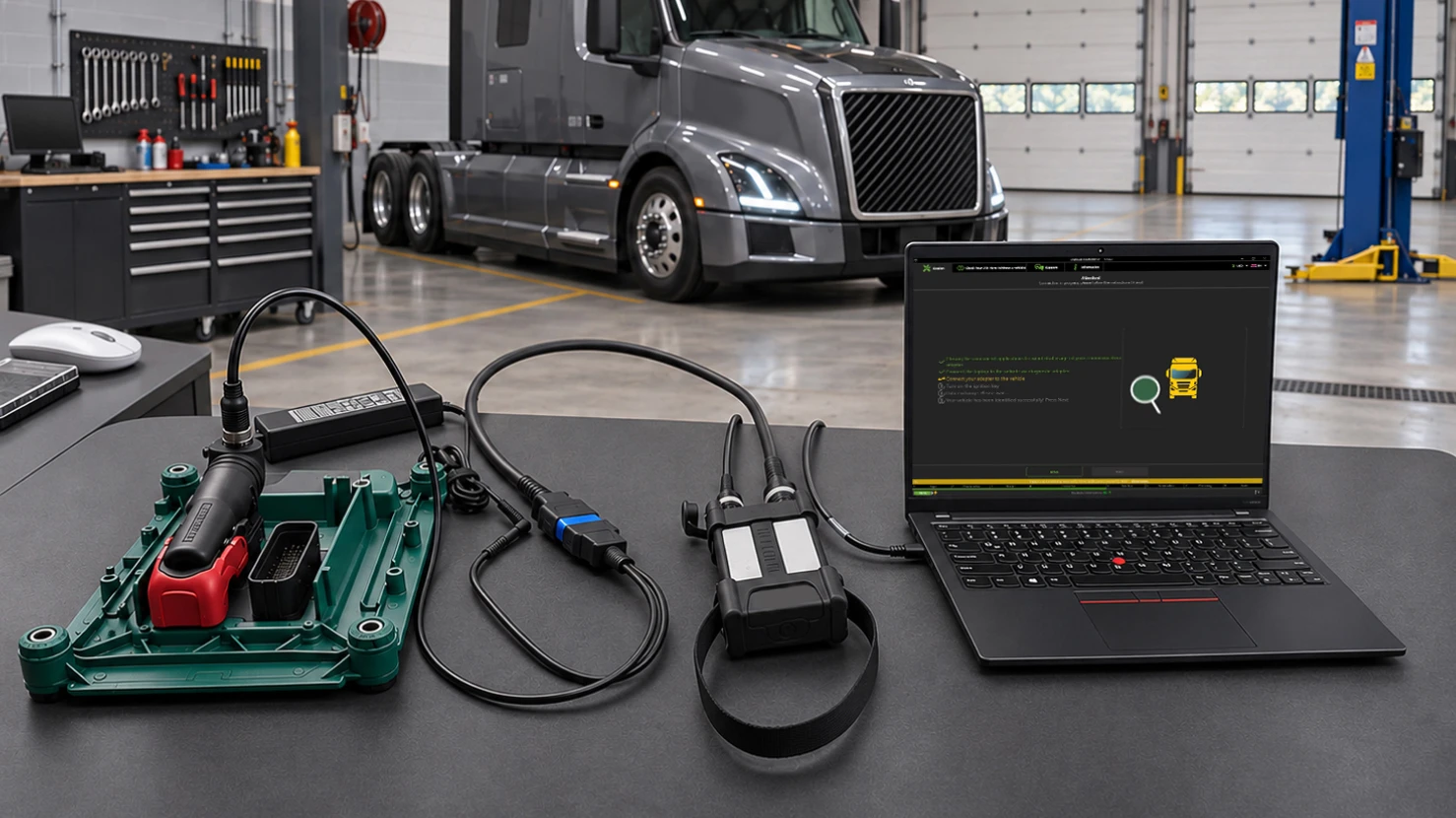
Depending on the engine, ECU, available interface, and what needs to be done, some programming can be handled remotely. Other jobs still require the vessel or engine to be accessible at a dock or service facility.
Remote programming isn’t a substitute for a physical inspection. It won’t tell you whether the cooling system is working properly, whether a turbo is damaged, or whether a mechanical problem is causing the power loss. Those checks still belong to qualified marine technicians.
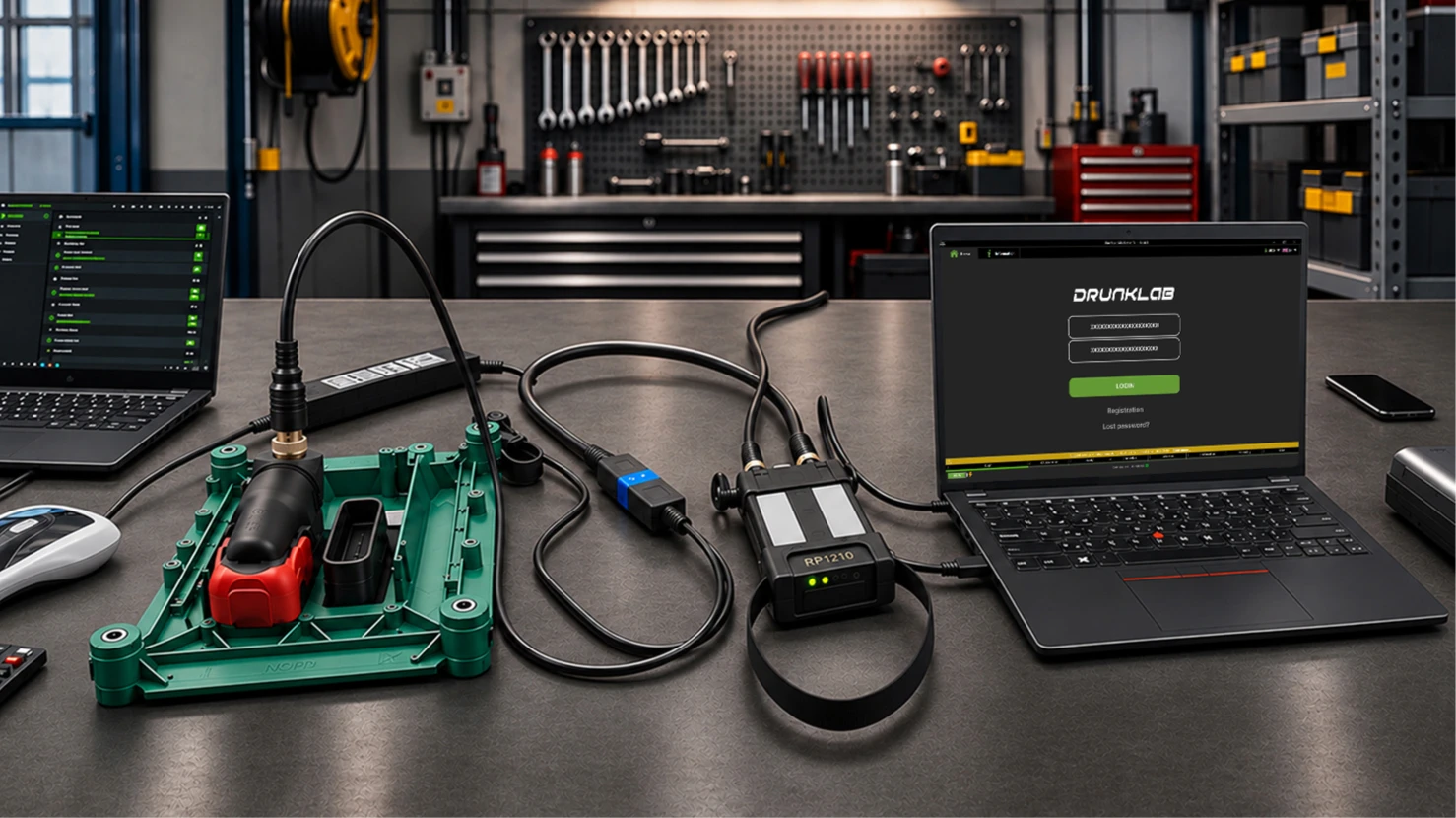
Before setting up a programming session, the engine configuration and connection equipment need to be confirmed. Access to the right ECU and software environment is essential, and some platforms require extra steps or hardware.
For operators, it’s usually smarter to plan this work before a busy season or a demanding trip rather than treating software changes as an emergency fix after something goes wrong.
Platforms DrunkLab Supports
DrunkLab offers electronic engine-control programming for selected diesel platforms, including marine applications. Volvo Penta is one of the areas they work with for operators running marine diesels.
What can actually be done depends on the specific engine model, ECU type, software version, and the requested work. Support for one engine family doesn’t automatically cover every engine or control unit from the same manufacturer.
Operators should confirm their engine details and whether a suitable programming solution is available before moving forward. That conversation helps determine whether the work can be done remotely or needs a different arrangement.
It’s also worth keeping the line clear between software programming and mechanical service. DrunkLab works with supported engine-control software. They don’t repair cooling systems, replace failed turbos, or diagnose every mechanical issue that might show up on a boat.
Reliability Starts Before You Leave the Dock
Marine diesel reliability comes from more than one place. Proper maintenance, a well-matched propulsion system, sensible operating practices, and healthy engine electronics all matter.
Software optimization can be useful when the engine is mechanically sound and the existing calibration can be adjusted to better suit the intended use. It should be treated as one piece of a broader approach to vessel performance — not a replacement for maintenance or a guarantee that nothing will break.
For commercial operators, preparation helps protect schedules. For yacht owners, it’s one more reason to look at the engine and its electronics before heading offshore.
The best time to review an engine’s calibration is while the boat is safely accessible and there’s time to plan the work properly. Out on the water, reliability starts with getting the basics right.