Home Blog Page 1125

Stewart-Haas Racing: Texas NXS Advance (Cole Custer | Riley Herbst)

COLE CUSTER | RILEY HERBST
Texas NASCAR Xfinity Series Advance
NASCAR Xfinity Series Overview

  • Event: Andy’s Frozen Custard 300 (Round 8 of 33)
  • Date: Saturday, April 13
  • Location: Texas Motor Speedway in Fort Worth
  • Layout: 1.5-mile oval
  • Time/TV/Radio: 1:30 p.m. EDT on FS1/PRN/SiriusXM NASCAR Radio

Cole Custer Notes of Interest

  • Cole Custer is ready to head back to an intermediate track with a new look for Saturday’s Andy’s Frozen Custard 300 at Texas Motor Speedway in Fort Worth. After extending his top-10 streak to five consecutive races with his strong showing in last Saturday’s race at Martinsville (Va.) Speedway, the 26-year-old driver is ready to head back to a track where he knows how to park his No. 00 Andy’s Frozen Custard Ford Mustang Dark Horse for Stewart-Haas Racing in victory lane. Custer previously won at Texas in November 2018 and, with how things are shaping up, Custer appears poised for his first victory of this season. His top-10 streak started with his runner-up finish on March 2 at Las Vegas Motor Speedway. During this stretch, he’s also scored two poles – one at Las Vegas and one at Phoenix Raceway. While he had to work hard for his finishes of 10th and eighth, respectively, on the short tracks at Richmond (Va.) Raceway and Martinsville the past two weekends, he’s now heading back to a track that is akin to the 1.5-mile Las Vegas oval. In his 88 career intermediate-track starts, Custer has scored nine wins, 38 top-fives, and led 1,810 laps.
  • Saturday’s Andy’s Frozen Custard 300 will mark Custer’s eighth Xfinity Series start at Texas. In his prior seven visits to the track, he has earned five top-fives, including his November 2018 victory when he bested runner-up Tyler Reddick by .162 of a second. Custer earned back-to-back fifth-place finishes in his first two Texas starts in April and November 2017, and a fourth-place finish in April 2018. He finished eighth from the fourth starting position there in November 2019, then added another fifth-place finish in his most recent race at Texas last September in the Round of 12 in the NASCAR Xfinity Series Playoffs.
  • Custer will sport a bright new paint scheme this weekend as Andy’s Frozen Custard premieres in its first of three races as primary partner in 2024. Founded in 1986 in Osage Beach, Missouri, by Andy Kuntz’s parents John and Carol Kuntz, Andy’s Frozen Custard has been providing the freshest frozen custard in the business for 38 years, giving ice cream the “cold shoulder” by scooping, mixing and presenting handcrafted frozen custard treats with speed and a smile. Since the beginning, the family members have had one dream: to share what makes them happiest with everyone else, and to warm hearts one scoop of frozen custard at a time. With a focus on product quality, customer service and community involvement, Andy’s has grown into the nation’s largest frozen custard-only business, with 150 stores across 15 states proudly serving the World’s Finest Frozen Custard. Andy’s has been committed to supporting developing drivers of all ages from their first race throughout their racing career for more than 30 years, an extension of the family’s lifelong commitment to motorsports. Andy’s is the “Official Frozen Treat” of Texas Motor Speedway, where fans can enjoy Andy’s on-site through branded kiosks, treat trucks and in suites.

Riley Herbst Notes of Interest

  • Riley Herbst is ready for a change of scenery after a string of bad luck in the past three races, the first on a road course, followed by two on short tracks. In the back-to-back short-track races at Martinsville and Richmond, Herbst had strong, top-10 runs ruined by incidents not of his doing. Last weekend at Martinsville, the driver of the No. 98 Monster Energy Ford Mustang Dark Horse qualified 22nd but wasted no time in his drive forward, climbing to just outside the top-10 by the end of Stage 1 on a track where it’s difficult to pass. He restarted the second stage in 10th, but contact with a car in front of him when the driver leading their line missed a shift caused front end damage to the No. 98 Ford. The Monster Energy team went right to work on the damage and put Herbst back on track in 26th, from there he was able to fight his way into the top-10 and looked to be on his way to salvaging a strong finish until the race’s overtime restart. A wheel hop sent Herbst for a spin and relegated him to a 25th-place finish.
  • Saturday’s race will mark Herbst’s eighth Xfinity Series start at the 1.5-mile Texas oval. Of his seven prior appearances, he’s finished in the top-12 four times with a best of fifth earned in September 2022. Since joining Stewart-Haas in 2021, he’s only finished outside the top-12 at Texas once. He scored an eighth-place finish and a fifth-place finish, respectively, in the two events there in 2022. Custer’s November 2018 triumph is the team’s lone Xfinity Series win at Texas.
  • Herbst knows how to win on intermediate tracks. His first career Xfinity Series victory came last October on a sister track to Texas – Las Vegas Motor Speedway. Not only did the 25-year-old driver park his Ford Mustang in victory lane, he bested the field by more than 14 seconds, the second largest margin of victories in the series. Stewart-Haas has excelled on intermediate tracks in the Xfinity Series, having scored 17 wins on intermediate tracks, nine of which were earned by the No. 98 team.

Cole Custer, Driver of the No. 00 Andy’s Frozen Custard Ford Mustang Dark Horse

The No. 00 team is premiering Andy’s Frozen Custard as primary partner this weekend for the first of three races this season. And you helped create your own flavor that’s for sale at Andy’s Frozen Custard locations. What does it mean to welcome this new partner, especially in light of your social media series called “Cole Custer’s Custard Review?”

“It means a lot to welcome new partners onto the No. 00 team. These are partners that myself, my management team, and the Stewart-Haas Racing sales team work hard to put together. I coincidentally met Andy Kuntz during the 2023 championship banquet week on the street in Nashville. I introduced myself and, a couple of months later, we’re racing his paint scheme at his primary race in Texas. It was the perfect partnership given my love for custard and the social video series I used to do. I’m excited to work with them in the 2024 season and try to get them some wins. I have big hopes for this weekend at Texas.”

You’ve mentioned that Texas is unlike other intermediate tracks because of how difficult it is for a driver. What about it makes it so difficult?

“The two ends of Texas Motor Speedway are just so different. It’s an intermediate track like many on the schedule, but there’s a lot of variation in the track. You’ve got some big bumps, which makes the handling pretty hard. Then you’ve got a daytime race in the Texas heat – even if it is only April. Texas is hot, which makes the track super slick. All of that, in addition to the high speeds we run there, make it really tough to get your racecar’s setup just right for an entire race. Still, I’m excited to head back to Texas with Andy’s Frozen Custard on my car this weekend. You just have to be preprared for anything. I trust that my No. 00 team will bring me a fast Ford Mustang Dark Horse like they do every week, though, so hopefully we can be up front when the checkered flag flies.”

Riley Herbst, Driver of the No. 98 Monster Energy Ford Mustang Dark Horse

The Xfinity Series only goes to Texas once a season now, but you’ve had some strong runs there in the No. 98 Monster Energy Ford Mustang in prior seasons. In addition, you scored your first Xfinity Series win on the intermediate oval at your hometown Las Vegas Motor Speedway last October. How confident are you heading into this weekend, given all of that?

“I think you can’t ever be super confident. Las Vegas and Texas, while similar in length and size, can still be two very different tracks. Texas is a track that can get very slick and make it very difficult for the handling of a racecar, unlike Vegas. We had some bad luck there last year, but we still showed speed despite the finish. Just like with any other race, it’s all about being smart and putting yourself in the right position at the end of the race. I’ve learned a lot at Texas in my career, and I’m hoping to have a better finish than last year. Winning at Las Vegas last season gave me a lot of confidence and SHR has consistently shown speed on intermediate tracks. Hopefully, that translates over to this weekend. My No. 98 Monster Energy team is working hard to give me the best cars each and every week.”

How do you approach Texas as a driver, given how difficult it can be?

“Honestly, Texas is a beast of its own. It’s a super-fast, 1.5-mile track that you’re probably going to be racing in the Texas heat, no matter what time of year the race is in. No matter what, it’s going to be a challenge. In addition, it’s a day race with the sun beating down on the racetrack. With that said, Texas should be a lot of fun, and I’m always excited to go back there. I performed well there in 2022, so I’m hoping to leave last year’s race behind us and continue that trend this weekend. The key to being up front and competing for a win will be having a fast Monster Energy Ford Mustang Dark Horse and staying out of trouble. It’s your typical intermediate track, but it’s also not. We just have to keep our focus and we can be up front. We haven’t lacked speed this season, just luck.”

Rush Truck Centers/Cummins Racing: Chase Briscoe Texas Advance

CHASE BRISCOE
Texas Advance
No. 14 Rush Truck Centers/Cummins Ford Mustang Dark Horse

Event Overview

● Event: AutoTrader EchoPark Automotive 400 (Round 9 of 36)
● Time/Date: 3:30 p.m. EDT on Sunday, April 14
● Location: Texas Motor Speedway in Fort Worth
● Layout: 1.5-mile oval
● Laps/Miles: 267 laps / 400.5 miles
● Stage Lengths: Stage 1: 80 laps / Stage 2: 85 laps / Final Stage: 102 laps
● TV/Radio: FS1 / PRN / SiriusXM NASCAR Radio

Notes of Interest

● Chase Briscoe comes into Texas Motor Speedway in Fort Worth fresh off a 10th-place drive last Sunday at Martinsville (Va.) Speedway. Steady performances like that have allowed the driver of the No. 14 Rush Truck Centers/Cummins Ford Mustang Dark Horse for Stewart-Haas Racing to rise from 22nd in the NASCAR Cup Series championship standings to his current position of 16th. While Briscoe is certainly wanting more, being among the top-16 drivers in points is still an important benchmark. Following the 26th race of the year, only the top-16 drivers are eligible to compete in the 10-race chase for the championship. While that top-16 cutoff is still 18 races away, it remains top of mind for all drivers hovering in and around the top-16. Another strong performance in Sunday’s AutoTrader EchoPark Automotive 400 at Texas can bolster Briscoe’s standing.

● Despite only having three NASCAR Cup Series starts at Texas, Briscoe’s standing at the 1.5-mile oval is solid. He finished 15th in his Cup Series debut at the track in 2021 and then knocked down back-to-back top-10s in his two subsequent races at Texas, finishing fifth in 2022 and 10th last year.

● Prior to racing at Texas in the NASCAR Cup Series, Briscoe made five NASCAR Xfinity Series starts at the track. His best performance was a second-place effort in 2020 when he finished runner-up to fellow Ford pilot Austin Cindric.

● Briscoe’s steadiness at Texas began back in 2017. In two NASCAR Craftsman Truck Series starts in the Lone Star State, Briscoe finished second in his Truck Series debut at the track in June, leading twice for six laps before Christopher Bell took the top spot for the final two laps. Briscoe then came back to the D-shaped oval in November and finished fourth.

● In addition to turning laps on Texas’ 1.5-mile oval in his No. 14 Rush Truck Centers/Cummins Ford Mustang Dark Horse, Briscoe will return to his roots and sling some dirt in his sprint car on Friday night at Texarkana 67 Speedway in Arkansas and again on Saturday night at The Dirt Track at Texas Motor Speedway. Both races will be run under the banner of High Limit Racing, the 410 winged sprint car series owned by NASCAR Cup Series champion Kyle Larson and five-time World of Outlaws Sprint Car Series champion Brad Sweet. Briscoe will race his No. 5 Mahindra Tractors machine with his father, Kevin Briscoe, serving as crew chief. Kevin Briscoe raced sprint cars for over 20 years and won more than 150 feature events, claiming track championships at Tri-State Speedway in Haubstadt, Indiana, and winning five track titles at Bloomington (Ind.) Speedway, including a streak of three straight. For those at Texas during the NASCAR race weekend, The Dirt Track is easily accessible, with the .4-mile clay oval located between Interstate 35W and the backstretch of Texas’ 1.5-mile oval.

● The 2024 season marks the 15th year of partnership between Rush Truck Centers and Stewart-Haas Racing, and it’s a partnership that goes well beyond a design on a racecar. All Stewart-Haas racecars are transported via tractor-trailers from Rush Truck Centers, the premier service solutions provider to the commercial vehicle industry. And those tractor-trailers are supported by the RushCare Customer Support team of parts and service experts, who also provide concierge-level service for scheduling maintenance, technical support, mobile service dispatch and roadside assistance, along with help locating the nearest Rush Truck Centers dealer, and more. Rush Truck Centers is the largest network of commercial vehicle dealerships in North America with 150 locations in the United States and Ontario, Canada, and takes pride in its integrated approach to customer needs – from vehicle sales to aftermarket parts, service and body shop operations, plus financing, insurance, leasing and rental, as well as alternate fuel systems and other vehicle technologies.

Cummins joins Rush Truck Centers for this weekend’s race at Texas. Cummins Inc., is a global power technology leader that designs, manufactures, distributes and services a broad portfolio of power solutions. These solutions include advanced diesel, natural gas, hybrid, electric, fuel cell and other technologies. Cummins powers the future through innovations that make people’s lives better. From buses that transport kids to and from school, to the trucks that carry essentials, to construction, mining equipment, trains and ships, and critical backup power for places like data centers and hospitals, Cummins is doing it with the cleanest solutions available. Learn more at cummins.com.

Chase Briscoe, Driver of the No. 14 Rush Truck Centers/Cummins Ford Mustang Dark Horse

How would you describe restarts at Texas?

“Restarts at Texas are a little hairy. The speeds are way, way higher, and the risk versus reward is way, way higher. At Texas, I feel like you put yourself in a worse spot sometimes and the car just doesn’t want to do certain things. There are different lanes at Texas, so you can move around, and that makes things hairier.”

The risk-versus-reward factor is higher at Texas because the speeds are so much higher. Can you explain how fast things happen at Texas and how quickly you need to think and make moves on the track?

“Texas is a really weird racetrack because in turns one and two, it’s still really fast, but it’s slow compared what (turns) three and four are. You go to turns three and four, it literally feels like terminal velocity. It feels like the car cannot go any faster. It’s like you’re strapped to a rocket. It’s wild how it feels inside the racecar in three and four. It’s one where you’re hanging on and hoping you get through to the other side. It’s a very, very fast racetrack. It’s changed a lot just over the last two or three years as it’s kind of started to age, already. Texas is a wild one just because of how fast it is on one side and how slow it feels on the other side.”

Texas is the exact opposite of a short track, which is where the NASCAR Cup Series has raced the past two weekends. But would you like to see the kind of tire fall-off we’ve seen at the short tracks to where the race would have more comers and goers, or would you like to have 1,000 horsepower always there at your right foot?

“I’m good on the horsepower at Texas, but tire fall-off would be nice. That’s one of the hardest places to pass and it’s just because we’re always running the same speed and the tires don’t really fall off at all, so it would be really cool to see a lot of tire fall-off at a place like Texas just because then it would make it easier to come through the field and things like that. You’d have a lot more comers and goers.”

You’ve been consistently good at Texas across the series in which you’ve competed. In fact, in 10 overall starts at Texas across the NASCAR Cup Series, NASCAR Xfinity Series and NASCAR Craftsman Truck Series, you have five top-fives and only two finishes outside of the top-15. How have you been able to find that consistency in three different series?

“I don’t know, and it’s weird because it’s not my favorite racetrack, by any means, but I’ve always statistically run really well there. I don’t know what it is about Texas. I think maybe some of it is that it’s two different ends, so your car’s never really going to drive great, and nobody’s car is going to drive perfect. I feel like you can manipulate your car to do certain things there, which reminds me a little bit more of my background in dirt racing. I don’t know what it is about that place, I really don’t because it has been pretty good to me. I’ve never won there, but I feel like I’ve done everything but win there. Hopefully, we can finally get a win there and it would be cool to bring home a cowboy hat from Texas.”

Texas is a track you haven’t exactly embraced, but you have figured out a way to be successful there even though it’s not your cup of tea. How?

“Typically, the places I run well at are the places I really like going to, so it’s probably the one outlier of the racetracks that we have where I don’t look forward to going there. It’s not that I don’t like it, it’s just not one of my favorite racetracks, but it’s one where it seems like every time I go there, I’m at least in the mix and kind of battling up front. Maybe I should start liking it a little bit more. It is weird how that works out because typically at places where you run well, you always like them, and that place, I don’t really feel like it fits my driving style, but for whatever reason, it does.”

Getting top-fives and top-10s at Texas is obviously a good thing, but does that also mean winning at Texas means getting everything right for all 267 laps? Does Texas put a premium on perfection?

“I’d say Texas is easily one of the top-five on our whole schedule where you have to be absolutely perfect all day long because passing is at such a premium and track position is more important there than anywhere else. I would say, statistically, it probably has the least amount of passes. That just means you can’t have a single mistake all day long. You have to be perfect on pit road, you have to be perfect on restarts and your car has to be really, really good there. And then even from a manufacturer’s side, your motors have to be really good, your aerodynamics, there’s just a lot that goes into winning at Texas and that kind of gets overlooked, when you think about it. Texas is a place you have to be perfect for 267 laps and, if you make a mistake, it’s hard to dig out from it.”

No. 14 Rush Truck Centers/Cummins Team Roster

Primary Team Members

Driver: Chase Briscoe

Hometown: Mitchell, Indiana

Crew Chief: Richard Boswell

Hometown: Friendship, Maryland

Car Chief: J.D. Frey

Hometown: Ferndale, California

Engineer: Mike Cook

Hometown: Annapolis, Maryland

Spotter: Joey Campbell

Hometown: Berlin, Connecticut

Over-The-Wall Members

Front Tire Changer: Shayne Pipala

Hometown: Frankfort Square, Illinois

Rear Tire Changer: Dakota Ratcliff

Hometown: Nashville, Tennessee

Tire Carrier: Jon Bernal

Hometown: Holland, Michigan

Jack Man: Dylan Moser

Hometown: Monroe, North Carolina

Fuel Man: Corey Coppola

Hometown: Bluefield, West Virginia

Road Crew Members

Underneath Mechanic: Stephen Gonzalez

Hometown: Mooresville, North Carolina

Interior Mechanic: Trevor Adams

Hometown: Plymouth, Wisconsin

Tire Specialist: Keith Eads

Hometown: Arlington, Virginia

Shock Specialist: Brian Holshouser

Hometown: Charlotte, North Carolina

Engine Tuner: Jon Phillips

Hometown: Jefferson City, Missouri

Transporter Co-Driver: Todd Cable

Hometown: Shelby, North Carolina

Transporter Co-Driver: Dale Lackey

Hometown: Taylorsville, North Carolina

What Happens When a Truck Driver Gets Into an Accident?

by Lê Minh at Pixels

Truck drivers are the backbone of the transportation industry, responsible for delivering goods across vast distances and keeping supply chains moving. However, with this crucial role comes inherent risks, including the potential for accidents. Understanding the intricate process that unfolds when a truck driver is involved in an accident is essential not only for the drivers themselves but also for their employers, insurers, and the broader community.

In this article, we will delve deeply into each stage of the aftermath of a truck accident, exploring the immediate response, legal obligations, company involvement, personal and professional repercussions, as well as insurance and compensation considerations.

Immediate Aftermath of a Truck Accident

In the immediate aftermath of a truck accident, ensuring the safety of all individuals involved is the first step. Truck drivers are trained to prioritize the well-being of themselves and others on the road. This involves promptly contacting emergency services if necessary and providing assistance to injured parties while waiting for help to arrive. Additionally, truck drivers must adhere to established protocols for reporting accidents, which may include contacting their dispatchers or fleet managers to notify them of the situation.

Upon assessing the scene of the accident, truck drivers must evaluate the extent of damage to their vehicle and any other vehicles involved. They should also be vigilant for any potential hazards, such as leaking fuel or debris on the roadway, and take appropriate measures to mitigate these risks. Documenting the scene through photographs and written notes can be valuable for insurance purposes and subsequent investigations.

Truck drivers are subject to a myriad of laws and regulations governing their conduct on the road. When an accident occurs, they must navigate these legal obligations with care to ensure compliance and mitigate potential liabilities. This often involves exchanging contact and insurance information with other parties involved in the accident and cooperating with law enforcement officers who may be conducting an investigation.

Depending on the severity of the accident, truck drivers may be required to submit detailed accident reports to their employers and relevant regulatory agencies. These reports typically include information such as the date, time, and location of the accident, as well as a description of what happened and any injuries or property damage sustained. Failure to comply with reporting requirements can result in fines or other penalties for the driver and their employer.

Working with a local attorney can help ensure that all legal procedures are followed correctly and that the driver’s rights are protected throughout the process. In complex cases involving injury or significant damage in California, consulting a Santa Clarita truck accident lawyer can provide valuable insight into regional legal nuances and strengthen the driver’s position. Having experienced legal support also helps navigate communication with insurers and manage potential litigation.

Trucking Company Involvement

Truck drivers are typically employed by trucking companies, which means that company involvement is inevitable following an accident. Upon being notified of the accident, trucking companies may dispatch representatives to the scene to assess the situation and provide support to the driver. This support may include arranging for towing services, coordinating with insurance adjusters, and facilitating communication with other parties involved in the accident.

In addition to providing immediate assistance, trucking companies may also be responsible for addressing any potential legal or regulatory issues stemming from the accident. This could involve engaging legal counsel to represent the company’s interests in any legal proceedings or negotiations with insurance companies. Depending on the circumstances of the accident, the trucking company may also be subject to liability for damages resulting from the driver’s actions.

Personal and Professional Repercussions

Being involved in a truck accident can have profound personal and professional repercussions for the driver. Beyond the immediate emotional toll of coping with the stress and trauma of the accident, there may be long-term consequences for the driver’s career and financial well-being.

From a professional standpoint, truck drivers may face disciplinary action or termination from their employment if they are found to be at fault for the accident or if their driving record is negatively impacted. Even in cases where the driver’s actions are deemed to be within their control, the stigma associated with being involved in an accident may affect their future job prospects within the industry.

On a personal level, truck drivers may experience feelings of guilt, anxiety, or depression in the aftermath of an accident, especially if it resulted in serious injuries or fatalities. Seeking support from counseling and support services is essential during this challenging time, both for the driver and their loved ones.

Insurance and Compensation

Determining insurance coverage and filing claims are critical steps following a truck accident. Truck drivers must assess the extent of their insurance protection for damages to their vehicle, as well as any injuries sustained by themselves or other parties involved in the accident. This may involve reviewing their insurance policy documents and consulting with insurance adjusters to understand their coverage options.

Once the extent of the damages has been assessed, truck drivers can begin the process of filing an insurance claim to seek compensation for their losses. This typically involves submitting documentation such as accident reports, medical bills, and repair estimates to their insurance company for review. The insurance company will then evaluate the claim and make a determination regarding the amount of compensation to be paid out.

In cases where the accident resulted in significant damages or injuries, truck drivers may also be entitled to seek compensation through legal action against other parties involved in the accident. This could include other drivers, vehicle manufacturers, or entities responsible for maintaining the roadway. Navigating the legal complexities of personal injury claims can be challenging, which is why many truck drivers choose to enlist the services of experienced personal injury attorneys to represent their interests.

Being involved in a truck accident is a complex and multifaceted experience that can have far-reaching implications for truck drivers. From the immediate aftermath of the accident to the long-term legal and financial repercussions, navigating the aftermath of a truck accident requires careful attention to detail and proactive communication with all involved parties. By understanding the various stages of the post-accident process and seeking appropriate support and guidance, truck drivers can work towards resolving their claims and moving forward with their lives. Ultimately, prioritizing safety and compliance on the road is essential for preventing accidents and minimizing their impact on individuals and communities alike.

When Is It Too Late to Get a Lawyer for a Car Accident?

Photo by Sora Shimazaki

Car accidents can be an overwhelming and chaotic experience, leaving individuals with physical injuries, emotional distress, and financial burdens. In the aftermath of a collision, seeking legal representation may not be the first priority for many people. However, there’s a common misconception about the timing of hiring a lawyer after a car accident.

Many individuals wonder when it is too late to get a lawyer after a car accident. Let’s explore the key factors and considerations surrounding this question to provide clarity and guidance for those navigating the aftermath of a car crash.

Understanding the Legal Time Limits

One of the most critical aspects to consider when determining the timing of hiring a lawyer for a car accident is the statute of limitations. Statutes of limitations are legal deadlines that dictate the timeframe within which a lawsuit or insurance claim must be filed. These deadlines vary depending on the nature of the claim and the jurisdiction in which the accident occurred. It’s crucial to be aware of these time limits to avoid forfeiting the right to pursue compensation.

Factors Influencing the Deadline

Several factors can influence the deadline for filing a lawsuit or insurance claim after a car accident. State laws and regulations play a significant role in determining the specific time limits applicable to each case. Additionally, certain circumstances may warrant exceptions to the statute of limitations, either extending or shortening the deadline. Understanding these factors and their implications is essential for individuals seeking legal recourse after a car accident.

Signs It Might Be Too Late

There are several indicators that it might be too late to seek legal assistance after a car accident. Missing deadlines for filing insurance claims or lawsuits is a clear sign that time may have run out to pursue compensation through legal channels. Additionally, delays in gathering evidence or locating witnesses due to the passage of time can significantly impact the viability of a case. Challenges in proving damages or liability because of delayed action may also hinder the pursuit of legal remedies.

When It’s Still Possible to Get Legal Help

Despite the existence of statutes of limitations, there are circumstances in which it’s still possible to obtain legal representation for a car accident. The “discovery rule” is a legal principle that may extend deadlines for filing lawsuits in cases where injuries or damages were not immediately apparent. Consulting with a Denver accident lawyer promptly after an accident can help assess the viability of the case and explore options for pursuing compensation. While it’s preferable to seek legal assistance early in the process, there are strategies for overcoming potential obstacles when seeking representation later on.

Benefits of Early Legal Representation

Although it’s never too late to consult with a lawyer after a car accident, there are undeniable benefits to seeking legal representation early in the process. Early intervention can help protect legal rights, preserve evidence, and maximize the chances of securing fair compensation. By involving a lawyer from the outset, individuals can navigate the complexities of the legal system with confidence and peace of mind.

Navigating the aftermath of a car accident can be daunting, but understanding the timing of hiring a lawyer is crucial for protecting one’s rights and interests. While there are legal time limits to consider, it’s never too late to seek legal assistance after a car accident. By consulting with a lawyer promptly and understanding the factors that influence the deadline for filing claims, individuals can pursue the compensation they deserve and begin the journey toward recovery.

Decoding the Intricacies of Car Insurance: A Symphony of Coverage and Protection

In the ever-evolving landscape of automotive ownership, one element stands as a cornerstone of financial security: car insurance. This complex tapestry of policies and provisions weaves a symphony of coverage and protection for drivers, offering a blend of tranquility and readiness for the unexpected.

Imagine a tableau of insurance options sprawling before you, each offering a unique melody of coverage and premiums. The world of car insurance is a labyrinthine maze, where drivers navigate through a burstiness of policy details and coverage options to find the perfect symphony of protection for their vehicles.

At its core, car insurance is a symphony of financial safeguards, harmonizing the need for coverage with the realities of road risks. From basic liability coverage to comprehensive plans that encompass a myriad of perils, the options for car insurance in Singapore are as diverse as the drivers themselves.

For drivers embarking on the journey of selecting car insurance, the path is one of careful consideration and evaluation. The cacophony of policy provisions—collision coverage, uninsured motorist protection, roadside assistance—requires a discerning ear to decipher the best composition for individual needs.

But the complexity of car insurance doesn’t end with policy selection. Enter the realm of premiums and deductibles, where the symphony takes on new dimensions. Drivers must navigate through the burstiness of rate calculations, balancing affordability with the desired level of coverage.

Moreover, the world of car insurance offers a symphony of discounts and incentives for those who listen closely. Safe driving discounts, multi-policy savings, and vehicle safety features rewards all add layers of intrigue to the symphony of coverage options.

As drivers delve deeper into the symphony of car insurance, they encounter the crescendo of claims processes. Here, the insurance company becomes a conductor of resolution, orchestrating the symphony of repairs and reimbursements in the event of accidents or damages.

Yet amidst the complexity, a sense of security emerges. Car insurance becomes a shield against the unforeseen—a safety net that cushions the blows of accidents, thefts, and natural disasters. It is a symphony of reassurance, allowing drivers to navigate the roads with confidence and peace of mind.

Moreover, car insurance offers a burstiness of benefits beyond the financial realm. Rental car coverage ensures continuity of mobility in times of need, while roadside assistance programs provide a safety net for unexpected breakdowns. Some policies even offer a symphony of added perks, such as coverage for personal belongings or travel expenses.

In the realm of car insurance, the symphony extends beyond individual drivers to encompass entire communities. Insurance companies become pillars of support in times of widespread calamities, orchestrating the symphony of recovery and rebuilding for affected areas.

Furthermore, the symphony of car insurance extends to the world of innovation and technology. Telematics devices, usage-based insurance, and mobile apps all add a burstiness of convenience and customization to the symphony of coverage options.

In conclusion, car insurance is more than just a financial obligation; it is a symphony of protection and preparedness for drivers on the roads. It is a complex composition of coverage options, premiums, and benefits that harmonize to provide a safety net in times of need.

So, the next time you delve into the world of car insurance, listen closely to the symphony of options and provisions. Decipher the burstiness of policy details and premiums to find the perfect composition of coverage for your vehicle. For in the realm of automotive ownership, the symphony of car insurance stands as a testament to the art of protection and peace of mind.

How Much Does a Lawyer Get from a Car Accident Settlement?

Photo by KATRIN BOLOVTSOVA

Car accidents can result in significant physical, emotional, and financial hardships for those involved. In the aftermath of a collision, seeking legal representation can be crucial for navigating the complex process of obtaining compensation for injuries and damages. However, many individuals may wonder: How much does a lawyer get from a car accident settlement?

There are a few factors that determine attorney fees in car accident cases.

Understanding Contingency Fees

In the realm of personal injury law, including car accident cases, many lawyers work on a contingency fee basis. This means that the lawyer’s fee is contingent upon the successful recovery of compensation for the client. In other words, the car accident lawyer only gets paid if they win the case or negotiate a settlement on behalf of the client.

Percentage of the Settlement

Contingency fees are typically calculated as a percentage of the total settlement or court award obtained for the client. The specific percentage can vary depending on factors such as the complexity of the case, the likelihood of success, and the lawyer’s level of experience. However, the percentage of the settlement typically falls within the range of 33% to 40%, although it can be higher or lower in certain circumstances.

Example: Let’s say a car accident case results in a settlement of $100,000. If the lawyer’s contingency fee is 33%, the lawyer would receive $33,000 as their fee, and the remaining $67,000 would go to the client.

Deducting Expenses

In addition to the contingency fee, the lawyer may also deduct any expenses incurred while handling the case. These expenses can include court filing fees, expert witness fees, medical record retrieval costs, and other litigation expenses. Depending on the fee agreement between the lawyer and the client, these expenses may be deducted from the client’s portion of the settlement, or they may be deducted from the gross settlement amount before calculating the lawyer’s fee.

Negotiation and Agreement

Before agreeing to legal representation, it’s crucial for clients to discuss fee structures and potential expenses with their lawyer. Clients should carefully review and understand any fee agreements or contracts provided by the lawyer to ensure transparency and clarity regarding legal fees and expenses. Effective communication and collaboration between the lawyer and the client are essential for establishing mutual understanding and trust.

Injury victims hurt in the City of Fountains are always talking to a Kansas City car accident lawyer to gain a better perspective on how local ordinances might affect their specific claims. These professionals provide the necessary guidance to navigate the documentation and filing requirements unique to the region.

State Regulations

It’s important to note that the rules and regulations regarding attorney fees may vary from state to state. Some states have specific guidelines or limitations on contingency fees, while others allow lawyers and clients to negotiate their fee arrangements freely. Clients should consult with a lawyer who is familiar with the laws and regulations in their jurisdiction to understand how they may impact their case and fee arrangements.

In the realm of car accident settlements, attorney fees are typically structured as contingency fees, calculated as a percentage of the total settlement amount. While the specific percentage can vary, effective communication and collaboration between the lawyer and the client are crucial for establishing mutual understanding and trust regarding fee structures and expenses. By understanding the factors that determine attorney fees and discussing fee arrangements upfront, clients can navigate the process of obtaining legal representation with confidence and clarity.

What to Do After a Car Accident That Wasn’t Your Fault

Photo by Artyom Kulakov

Car accidents are harrowing experiences that can leave individuals feeling shaken and uncertain about what steps to take next. When the accident was not your fault, navigating the aftermath may seem less straightforward, but it’s crucial to understand your rights and responsibilities in order to protect yourself and seek appropriate recourse. In this article, we’ll outline a comprehensive guide on what to do after a car accident where you were not at fault, offering practical advice to help you navigate the process with confidence and clarity.

Ensure Safety and Assess Injuries

The first priority after a car accident, regardless of fault, is ensuring the safety of everyone involved. If it’s safe to do so, move your vehicle to a secure location away from traffic to prevent further accidents. Next, assess the well-being of all parties, including yourself and your passengers. If anyone is injured or in distress, call emergency services immediately for medical assistance.

Document the Accident Scene

Documenting the accident scene is crucial for establishing what happened and protecting your interests. Take photographs of the vehicles involved, capturing the extent of damage and the surrounding area. Note any relevant road conditions, weather patterns, or signage that may have contributed to the accident. Additionally, exchange contact and insurance information with the other driver(s) involved, ensuring accuracy and completeness.

Contact Law Enforcement

Even if the accident seems minor, it’s advisable to contact law enforcement to document the incident. Request that officers file a police report, providing an official record of the accident. Cooperate with law enforcement officers and provide an honest account of the events leading up to the accident. The police report will serve as valuable evidence during the insurance claims process.

Seek Medical Attention

After a car accident, it’s crucial to prioritize your health and well-being. Even if you believe your injuries are minor or non-existent, it’s still essential to seek medical attention. Some injuries, such as concussions or soft tissue injuries, may not manifest symptoms immediately but can worsen over time if left untreated. By seeking medical evaluation promptly, you can ensure that any underlying injuries are identified and addressed before they escalate.

When visiting a healthcare professional, be thorough in describing your symptoms and detailing how the accident occurred. This information will help the healthcare provider accurately diagnose and treat your injuries. Additionally, follow any recommended treatment plans and attend follow-up appointments as advised. Keep detailed records of all medical treatments, including prescriptions, procedures, and rehabilitation sessions.

Notify Your Insurance Company

Promptly notifying your insurance company of the accident is crucial to initiate the claims process and begin the evaluation of your claim. When reporting the accident, provide as much detail as possible about what happened, including the date, time, and location of the accident, as well as the vehicles involved and any injuries sustained. If you have documentation such as photographs, the police report, or witness statements, be sure to share this information with your insurance company.

During the claims process, your insurance company will investigate the accident and assess the extent of your damages. This may include reviewing medical records, obtaining repair estimates for your vehicle, and determining liability for the accident. Be prepared to cooperate fully with your insurance company throughout this process, providing any additional information or documentation they request in a timely manner.

Gather Evidence

In addition to the information gathered at the accident scene, it’s helpful to collect witness statements from individuals who observed the accident. Obtain their contact information and ask them to provide a written or recorded statement describing what they saw. Keep copies of all documents related to the accident, including medical bills, repair estimates, and correspondence with insurance companies.

Consider Legal Assistance

While many car accidents can be resolved through insurance claims, there are situations where legal assistance may be necessary, especially if you encounter challenges with your claim or if liability is disputed. A personal injury attorney can provide invaluable guidance and representation to protect your rights and pursue fair compensation for your damages.

When considering legal assistance, look for an attorney with experience in handling Phoenix auto accident cases and a track record of success in obtaining favorable outcomes for their clients. During your initial consultation, discuss the specifics of your case, including the circumstances of the accident, the extent of your injuries, and any challenges you’ve encountered with your insurance claim. Your attorney will assess the merits of your case and advise you on the best course of action moving forward.

By seeking medical attention promptly, notifying your insurance company promptly, and considering legal assistance if needed, you can navigate the aftermath of a car accident that wasn’t your fault with confidence and clarity. Remember to prioritize your health and well-being, document the accident scene thoroughly, and seek assistance from trusted professionals to protect your rights and pursue fair compensation for your damages.

Follow Up and Keep Records

Stay informed about the progress of your insurance claims and medical treatments, following up with providers and insurers as needed. Keep detailed records of all communications and transactions related to the accident, including dates, times, and outcomes. This documentation will serve as valuable evidence should you need to pursue further action.

Being involved in a car accident that wasn’t your fault can be a stressful and overwhelming experience. However, by following these steps and seeking appropriate assistance, you can navigate the aftermath with confidence and protect your rights. Remember to prioritize safety, document the accident scene thoroughly, and seek medical attention for any injuries. By taking proactive steps and seeking support when needed, you can work towards resolving the situation and moving forward with peace of mind.

Entry Point – Motorsports Sportsbook Betting

Photo by Ayden Sutton on Unsplash

The everlasting thrum of raceways around the world has long captivated audiences with their thrilling races. In the United States (and other countries), the allure of motorsports goes beyond the raceways and into the world of money-making via sportsbook betting. This is primarily done through online sportsbooks in the US, but physical sportsbook betting still exists. In this entry-level guide, let’s learn about where motorsports and sportsbook betting collide.

What’s Popular?

There is a diverse list of types of motorsport racing, including NASCAR, Formula 1, IndyCar, MotoGP, and more. Each type garners its own fanbases, lore, inside jokes, and betting opportunities.

NASCAR and Formula 1 are the two largest in the United States. NASCAR stands as the most popular due to its roots being deeply embedded in American culture following the Industrial Revolution.

With such a high popularity, NASCAR is the most opportune motorsport to become involved with sportsbook betting. NASCAR offers high-octane races such as the Daytona 500 which brings in millions of viewers and bettors alike.

What Bets?

Focusing primarily on NASCAR since it’s the most popular, there are a plethora of different betting options one could choose from. Below is a list of some of the most popular betting types:

  • Fastest Lap: Betting on which driver will record the fastest lap throughout the entirety of the race.
  • Head-to-Head Matchup: Betting on which of two specific drivers will come ahead of the other.
  • Race Winner: The most common bet, betting on which driver will finish in the first position.
  • Podium Finish: The second most common bet, betting on whether a driver will finish in the top three positions.
  • Championship Winner: Betting on who will score the most points throughout the entirety of the season.
  • Playoff Winner: Betting on who will score the most in the playoffs.

Each betting option offers different levels of excitement, and some will span the entirety of the season. This will allow fans to utilize their knowledge to engage with NASCAR on a much deeper level.

What Factors?

Similarly to other sports, all the above factors can be influenced by more than just luck. A fan with a deep knowledge of motorsports can utilize that to make more educated bets. Some of the factors include:

  • Track Knowledge: Different tracks offer different challenges. Knowing which team has previously performed well on a given track can easily change the outcome of a race.
  • Vehicle Specifications: Each season there are changes to specifications for vehicles. Knowing the upgrades to each vehicle’s specifications can influence the outcome of bets. If a certain car performs better on shorter tracks like Martinsville, an educated bettor will capitalize on that knowledge.
  • Team Performance: Team performance includes the driver and their support team’s cohesiveness and history. A team that has shown good morale and a strong season, for example, is a safe bet.
  • Weather Conditions: Doing a simple check for the weather before a race and dramatically changing certain betting strategies. Even in clear weather, knowing the temperature and how it can affect tires is good knowledge to have.

Ultimately there are more factors than the ones listed above, but understanding why these tactics give bettors an edge is important.

What Next?

Now that you, the reader, have read over this entry point guide, you can begin to research and plan your own strategies for motorsports sportsbook betting in the United States. Motorsports like NASCAR will continue to captivate audiences for years to come, offering more than their fair share of betting opportunities. Remember to wager what you stand to lose and enjoy the awesomeness of motorsports sportsbook bets.

Weekend schedule for Texas

During the NASCAR Cup Series Autotrader EchoPark Automotive 400 at Texas Motor Speedway on September 24, 2023 in Fort Worth, Texas. (Photo by Jonathan Bachman/Getty Images)

NASCAR travels to Texas Motor Speedway this weekend as all three series are set to compete at the 1.5-mile track. William Byron captured his third NASCAR Cup Series win of the season last week at Martinsville and heads to Texas as the most recent winner at the 1.5-mile track.

Jimmie Johnson will make his second start of the season for Legacy Motor Club in the No. 84 Toyota. The seven-time NASCAR Cup Series champion leads the series with seven wins at Texas (2007, 2012, 2013, 2014, 2015 sweep and 2017).

The Xfinity Series Dash 4 Cash continues at Texas Motor Speedway in the second of four races as Sam Mayer, Justin Allgaier, Chandler Smith and Sheldon Creed compete for a $100,000 bonus.

The NASCAR CRAFTSMAN Truck Series will headline the weekend’s events Friday night. There have been 27 different winners in 49 Truck Series races at Texas and six drivers have won their first Truck Series race at Texas – Carson Hocevar (4/1/2023), Jeb Burton (6/7/2013), Clint Bowyer (11/3/2006), Brendan Gaughan (6/7/2002), Travis Kvapil (10/5/2001), and Bryan Reffner (10/13/2000).

Kyle Busch will join the Truck Series field in the No. 7 Spire Motorsports Chevrolet. He has five series wins at Texas (2009, 2010, 2014, 2019, 2020) in 14 starts. Series.

All times are Eastern.

Friday, April 12
4:05 p.m.: Truck Series Practice
All Entries, 20 minutes
4:35 p.m.: Truck Series Qualifying (Impound)
All Entries, Single Vehicle, 1 Lap
TV: FS1

6 p.m.: Xfinity Series Practice
All Entries, 20 minutes
6:30 p.m.: Xfinity Series Qualifying (Impound)
All Entries, Single Vehicle, 1 Lap
TV: FS1

8:30 p.m.: Truck Series SpeedyCash.com 250
Stages 40/80/167 Laps, 250.5 Miles
FS1/MRN/SiriusXM
Purse: $794,039
NASCAR Press Pass: Post Truck Series race

Saturday, April 13
10:35 a.m.: Cup Series Practice
Group A: 20 Minutes, Group B: 20 Minutes
FS1/PRN/SiriusXM

11:20 a.m.: Cup Series Qualifying (Impound)
Group A & B: Single Vehicle, 1 Lap, 2 Rounds
FS1/PRN/SiriusXM
NASCAR Press Pass: Post Cup Series qualifying

1:30 Xfinity Series Andy’s Frozen Custard 300
Stages 45/90/200 Laps = 300 Miles
FS1/MRN/SiriusXM
Purse: $1,541,418
NASCAR Press Pass: Post Xfinity Series race

Sunday, April 14
3:30 p.m.: Cup Series AutoTrader EchoPark Automotive 400
Stages 80/165/267 Laps = 400.5 Miles
FS1/PRN/SiriusXM
Purse: $9,397,736
NASCAR Press Pass: Post Cup Series race

CHEVROLET IN INDYCAR: Indianapolis 500 Open Test Day 1 Media Recap

CHEVROLET IN NTT INDYCAR SERIES
INDIANAPOLIS 500 OPEN TEST
INDIANAPOLIS MOTOR SPEEDWAY
INDIANAPOLIS, INDIANA
TESTING DAY ONE RECAP
APRIL 10, 2024

JOSEF NEWGARDEN AND KYLE LARSON LEAD A RAIN-SHORTENED FIRST DAY OF INDIANAPOLIS 500 OVAL TESTING AT INDIANAPOLIS MOTOR SPEEDWAY

  • Team Penske driver Josef Newgarden, and Hendrick Motorsports/Arrow McLaren driver Kyle Larson, led the NTT INDYCAR SERIES field during the rain-shortened first day of Indianapolis 500 testing at Indianapolis Motor Speedway in first and second, respectively.
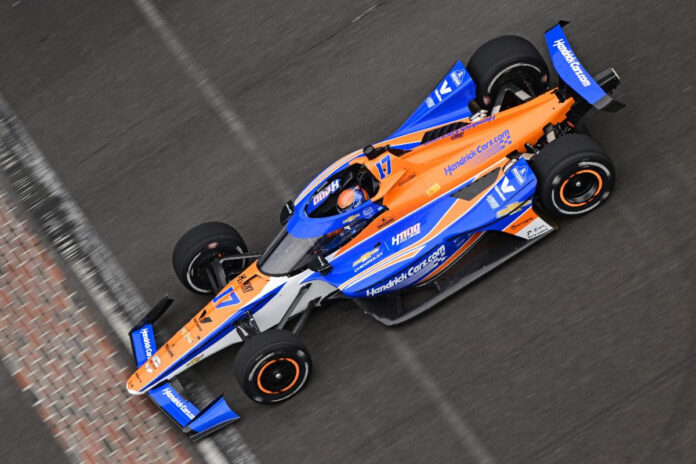
  • Larson, who is attempting “the double” that includes both the Indianapolis 500 and NASCAR’s Coca-Cola 600 at Charlotte Motor Speedway on May 26 with Chevrolet-supported Arrow McLaren and Hendrick Motorsports, showed strong pace in today’s test with his fastest lap at 226.384 mph.
  • Team Chevy saw five drivers finish in the top-10 on the first day of testing, including Newgarden (first), Larson (second), Team Penske’s Scott McLaughlin (sixth), Ed Carpenter Racing’s Ed Carpenter (seventh) and Christian Rasmussen (ninth).
  • A total of 1,327 laps were turned at Indianapolis Motor Speedway during Wednesday’s rain-shortened testing, with Team Chevy drivers and teams having 569 of the total laps on track.
  • Weather-permitting, the NTT INDYCAR SERIES plans to return for a second day of Indianapolis 500 testing on Thursday at Indianapolis Motor Speedway, with the first session taking the green flag at 10 a.m. ET.

TEAM CHEVY TEST RESULTS, DAY 1:

  1. Josef Newgarden
  2. Kyle Larson
  3. Scott McLaughlin
  4. Ed Carpenter
  5. Christian Rasmussen
  6. Santino Ferrucci
  7. Rinus VeeKay
  8. Will Power
  9. Pato O’Ward
  10. Conor Daly
  11. Sting Ray Robb

26, Romain Grosjean

  1. Callum Ilott
  2. Alexander Rossi
  3. Agustin Canapino
  4. Ryan Hunter-Reay

What They’re Saying (Quotes):

Josef Newgarden, No. 2 Team Penske Chevrolet:

“It was a good day. It’s great to be back at the track. Glad we got some laps. A little unsure about things looking at the weather beforehand, but really comfy to start out. I think good signs going into the month of May. Excited to come back here with Team Chevy and everybody at Team Penske. I think we’ll have a good package to fight with. We’re ultimately going to be looking for more speed than last year, which I think will help us on race day. I feel confident we can find that in qualifying trim and be one step better than we were in 2023.”

Scott McLaughlin, No. 3 Team Penske Chevrolet:

“Unfortunately, we were rained out today but had a good little bit of running. I feel like we have all three pretty good cars, but it’s nice to get reps around Indy again. The Chevy power feels good. Excited for Long Beach and then coming back here for May.”

Will Power, No. 12 Team Penske Chevrolet:

“It’s nice. It is nice when it’s easy getting into it with a nice cool track (temperature) and a lot of grip. We had a pretty straightforward morning to be honest, wasn’t running in traffic. Going through some items, little details looking at the data the engineers want to see. (The car) felt good. It feels good, but it always feels much worse when you’re riding behind someone in that dirty wake. I’ve said it every year I believe we can challenge for pole but I really believe it this time. If not, we’ve done everything we can do. We’ve worked hard. I think the racecar is great. It has been. We’ve been fast.”

Pato O’Ward, No. 5 Arrow McLaren Chevrolet:

“We try not to get too excited because it’s such a long process, and that involves a lot of testing. A lot of patience is required because half of the things you’re going to try are not going to work, half of the things you try might work or might be a no read. There’s still a lot of process to go, but so far this is the start of our Indy 500 so we want to make it a good one. It feels amazing. This place speaks for itself. I don’t have to sugar coat it, we’re just happy to be back.”

Callum Ilott, No. 6 Arrow McLaren Chevrolet:

“It’s good for the team, because I think in some ways, the continuity and running the last couple of races. Also, for my personal confidence, to get some time in the car in case it’s necessary to run the (Indianapolis) 500, I’m ready to go. It’s been great. A lot of the time… but Arrow McLaren has done a great job to integrate me and they’ve done super well. To be fair, the pace we showed in the last couple of segments has been really good, so they’ve done a good job. I feel really comfortable in the car.”

Alexander Rossi, No. 7 Arrow McLaren Chevrolet:

“Every day here is awesome. It’s the best race track in the world with the best package that we have. Really excited to be back here. It was really cool to be here, obviously, for the eclipse and to get back on track. These tests are pretty low stress, just trying to understand what this year’s car is doing compared to last year’s. It’s just really enjoyable to drive the car. You don’t really have any pressure or concern about performance. You’re just trying to gather the information you need. The car is great, it rolled off strong and it’s been (smooth).”

Kyle Larson, No. 17 Arrow McLaren Chevrolet:

“It felt good. Just good to get laps and get in some traffic, and to visually see what that looked like, to feel the runs and the dirty air a little bit. I feel like I learned quite a bit there and still have a lot to learn. It’s been a good morning so far. By yourself, (the car) has a lot of grip. In traffic, it was good. The first time I got in traffic, the balance felt normal. I didn’t feel like I went into a big transition from clean air to dirty air, but the last time I was super tight. It was good to experience to feel what that felt like. The packs I’ve been in have only had two or three cars, but it’ll be way different when the field is out there. I’ve just got to keep getting laps, and as the packs keep getting bigger, I think I’ll learn a lot more.”

Ed Carpenter, No. 20 Ed Carpenter Racing Chevrolet:

“Obviously, a bit of an abbreviated day with the weather, but still a good start nonetheless for the team. We got Christian (Rasmussen) comfortable and through ROP. For myself and Rinus (VeeKay), we were able to evaluate the first steps of what we wanted to work on heading towards May. Hopefully we’ll get more time but we’re happy with where we started.”

Rinus VeeKay, No. 21 Ed Carpenter Racing Chevrolet:

“It was great! It’s great to be back at the Indianapolis Motor Speedway. But it is April, so it rained! We got the car out there this morning and had a smooth session. I was getting comfortable in traffic pretty quickly this afternoon and was looking forward to running more. But now we wait for tomorrow!”

Christian Rasmussen, No. 33 Ed Carpenter Racing Chevrolet:

“I had a blast turning my first laps around the Indianapolis Motor Speedway in an NTT INDYCAR SERIES car! Glad I was able to finish my ROP but I do wish we had been able to run more. There at the end I got to drive in traffic a bit and had a lot of fun with that. I can’t wait to get back here in May!”

Santino Ferrucci, No. 14 AJ Foyt Racing Chevrolet:

“Today, our Sexton Properties Chevrolet felt good. It’s always nice to be back on the oval at Indianapolis Motor Speedway, and the team has done a great job to prep for the month of May. Chevy definitely has some solid improvements, and I can’t wait to drive some more, hopefully, tomorrow as long as the weather holds out.”

Romain Grosjean, No. 77 Juncos Hollinger Racing Chevrolet:

“We’ve started our preparation for the Indy 500. Everything went well. The weather has not been on our side, but we managed to get some outings and some running there, so happy with the baseline and excited to come back for the month of May.”

Ryan Hunter-Reay, No. 23 Dreyer & Reinbold Racing-Cusick Motorsports Chevrolet:

“You really have to focus on your own program and try not to get carried away with what others are doing, maybe teammates and how they’re progress is doing. Just keep the blinders on and focus on your objectives. That’s the big thing and I’ve learned over the years, that’s the most important. This is very similar to last year, cool on Wednesday and on Thursday last year it rained. We only got one day in. This is an opportunity to go through the paces, make sure the car we’ve got all the electrical things sorted, make sure the fit in the car for the driver is right, and then the pairings of people and how they’re working on the engineering side. Just kind of getting through that process so you can hit the ground running when you come back when it really counts in May.”

Conor Daly, No. 24 Dreyer & Reinbold Racing-Cusick Motorsports Chevrolet:

“Honestly, the guys have done a great job at Dreyer & Reinbold Cusick Motorsports. Everyone at Chevrolet has been really helpful on getting back into the swing of things. This team hasn’t ran since (last) May, so a lot of things changed. There are new components on the car. I think a lot more new components than people might be aware of. There’s also how many parts did we get in time? The supply chain is also tough certainly as being an Indy-only team. But everything has been great so far. Just a few technical things we’ve had to deal with, but we’ve used the morning to sort through a few electrical things. The car felt great. No issues with the car right out of the gate. Pretty happy honestly right out of the gate. It was confident driving it, and I feel Ryan (Hunter-Reay) will feel the same thing.”

KYLE LARSON, DRIVER OF THE NO. 17 HENDRICKCARS.COM ARROW MCLAREN CHEVROLET — End of Day Press Conference Transcript:

THE MODERATOR: Wrapping up day one of the Indy 500 open test here at the capital of racing. We’re joined by the driver of the No. 17 HendrickCars.com Arrow McLaren Chevrolet, none other than Kyle Larson. Day one kind of in the books, rain shortened, but during the time you were out there, what did you think?

KYLE LARSON: Yeah, it was a good day, good to — like you said, we didn’t get a ton of laps or at least laps in a pack or anything like that, but it was still good for the amount that I got in something, just to visually kind of see what that looked like and feel the runs and all of that. It was good.

I feel like for what I needed to learn and check off my list, I thought it was a successful day, and yeah, hopefully the weather could get better for tomorrow and check some more things off.

I feel like rain follows NASCAR, so it’s probably my fault.

Q. Is it almost a little bit like a tease that you were going to have all this track time supposedly and you really weren’t able to get that much? In some ways, how do you balance that? There could have been a lot done today if the weather had cooperated.

KYLE LARSON: Honestly I kind of feel the opposite about it because I feel like I’ve been checking the weather for a week, and it’s looked worse. I wasn’t expecting to get on track at all. No, I feel like I’ve gotten more out of this week than I anticipated getting.

I was happy to get the solid couple hours that we got in in the morning. So I would rather have gotten something rather than nothing.

Q. Do you look at tomorrow as — it looks pretty grim tomorrow. If you do get on track, it would be bonus time?

KYLE LARSON: Yeah, I guess so, definitely. Any laps is good for me. Any laps is bonus at this point.

I just hope that it gets better, and I doubt it, but we’ll see.

Q. Obviously with the schedule that you have, any track time you need is good for you, obviously. With the obvious damper on the weather, losing possibly two and a half days of track time, how much does that change for you with trying to prepare for this race knowing that you need as much as you can get and obviously with the weather that takes away a big part of the opening session to help you get ready for May?

KYLE LARSON: Yeah, I don’t know. I think there’s a couple ways you could probably look at it. I think laps would be great. I would obviously like more laps. But I think in conditions like this, I don’t know how well of a representation it would be for the month of May, especially race day.

Maybe it’s best that I don’t get that many laps this week because then I would have a false sense of what’s real and what’s coming in a month.

I won’t be sad if we don’t get laps tomorrow just because I know that the conditions aren’t hopefully going to be anything like what it will be in May. I think there will be a lot more to learn once we really get into the two weeks that we’re on track here.

Q. Dating back to October when you were out here, it’s probably been information overload. What is something that has surprised you out on the track that you’ve had to adjust to, and what’s something that maybe has come a little bit more natural than what you expected?

KYLE LARSON: I don’t know. I mean, again, I don’t think anything is quite real out there in practice like to what I’ll experience in the race. I think I’m going to be overloaded during the race trying to process information — not only information, just learning during the race.

But for practice, like the few laps I got in the second session, there was a lot of checking up for whatever reason like getting in the corner. I think that kind of helped me realize that I needed to look further ahead than the one car that’s in front of me. Like I think I was like fourth or fifth in line at that point, and I probably needed to look a couple more cars in front of that person. When I say that person, also it’s like, I don’t know who I’m out there around because in a stock car somebody turns the corner you can see a door number or there’s a number on their back bumper. I’ve got no clue who I’m out there around and learning off of. That was surprising. I thought it would be easier to know who was out there around me. Yeah, it’s difficult.

Then I don’t know, just the cars to me feel very similar to a stock car, in a way. Everything that I feel out there is like what I would expect from a 9:00 a.m. practice session in a stock car at the Brickyard 400. Cool conditions, got grip, all that. We wouldn’t be running around here wide open in a stock car. The way the tires feel and all that feels relatively similar.

Q. Curious about your thoughts at ROP last year, the experience you had at Phoenix Raceway? Have you been able to build one on another or is each one of them separate in its own way?

KYLE LARSON: No, I think for sure doing the ROP — I wish it wasn’t so spread out. I wish we didn’t do it in October and then in February and then in April. I wish it was days apart or weeks apart.

But I think had I had to do the ROP today, I would have been stressed out and really nervous and just not able to focus on something or anything. So having it spread out like helped me kind of take my time with, all right, I wanted to feel the car at the ROP and just feel like little stuff, what the steering wheel felt like, visually, what all that felt like. Like okay, that was good. Then go to Phoenix, now I want to feel the car and it slipping and moving and work on ins and outs of pit stalls and things like that. That was good for that test.

Now today I could move on to the next thing, like all right, now how does it look like around cars. How does what I’ve learned in the past translate to now being behind cars, where I think had the weather been good today, I would have been stressed out about the ROP and what that was going to look like and then now you’re past that, now you’ve got to go out there and run wide open behind somebody. Like I don’t know if mentally I’d be ready for that.

I’m fortunate that I was able to do the ROP last year and then be allowed to run that little bit at Phoenix for sure. I think it’s definitely going to help.

Q. When Jimmie Johnson was in our series, he was pretty honest about the differences going from the NASCAR car, the Cup car to the INDYCAR. Did you talk with Jimmie before you came out here and did this?

KYLE LARSON: Just briefly I think a few months ago. He just said I was going to have a blast, honestly, really. I’ve tried not to ask too many questions to people. Like I feel like the way I’ve learned in the past is like I just need to learn on my own a little bit, and don’t get me wrong, I’m leaning on Tony Kanaan a lot and was in there during the couple-hour break talking to my teammates and stuff. But I think to a point, I just need to almost just feel things out on my own sometimes.

Like Jimmie didn’t — hasn’t ran a NextGen car that much, so I don’t know how well he could compare to what I currently feel in a stock car and how that would relate to this. Any information is good. I just don’t want to overload myself with too much information from too many different people and just confuse myself. I think there’s just a — although we’re on track a lot, it’s a small window of time to learn, and I think if I overwhelm myself with too much info, I can get lost.

Q. Going back to what you were saying about like a 9:00 a.m. practice for the Brickyard, I think you said earlier that the Next Gen has made the transition similar to INDYCAR. Can you elaborate on that? How is the Next Gen, which obviously looks nothing like an INDYCAR, how is it maybe more similar now that it feels like —

KYLE LARSON: Yeah, I don’t know exactly what the components are that has made it feel like an INDYCAR or whatever. It’s not exactly like it, but just the feel that I feel in my hands with the front tires — not that I’m feeling the rear tires here, but like at Phoenix, just feeling the rear tires and kind of the lateral grip or lack thereof grip felt more similar to a Cup car.

The old style car you could slide it around more. It was a bit lazier feeling, where now the Next-Gen cars are closer to like a sharper edge of having grip and then losing that grip, where the sensations that I get in the INDYCAR, it’s like — like at Phoenix, I got that feeling a lot, and then just the way the front tires kind of load and you get your hands to a point and then you can steer past the slip of the tire and all that. I don’t know, just something maybe I’m feeling in the sidewall or whatever. But it feels very similar to like what I would feel in my hands if I got tight or understeer in the middle of a corner.

So yeah, it just feels — the Next-Gen car is closer to the edge of grip and then losing grip, which I think the INDYCAR is even sharper but similar.

Q. You said in your Peacock interview, you were talking about how you wished you had the SMT data that you have in NASCAR. What’s one thing — is it just knowing where those guys are lifting in the corners, throttle traces? Is there one driver in particular whose data you would love to see just based on what you’ve seen today?

KYLE LARSON: I would look at anybody’s, honestly. There’s not one driver. I think it’s difficult at a place where it’s so big and there’s drafts and stuff. If I could just go and look at — like when I’m in a drafting pack of like, okay, this is what I look like I’m doing, compared to what guys typically do, like overlay on the same corner — I can’t sit here and describe SMT to these people because they’ve never seen it but you have.

It would just be nice to see myself — ghost car on top of mine from somebody that was running around and what that all looked like, where they’re grabbing gears, where I’m grabbing gears, line shape, all that. Everything about SMT would be amazing to look at and be so helpful for myself and for anybody who’s a veteran in there. I think they would love to see it.

SMT is just a great tool that we have in NASCAR that I guess I’m thankful for as a rookie, but I guess at times in NASCAR I wish we didn’t have it.

Q. How did you find your first experience running in traffic? How did the car behave differently compared to when you’ve just been running alone?

KYLE LARSON: Yeah, so when I was able to go that faster lap or whatever, we were just — I think that was my first run on that set of tires, and there was a few cars in front of me, and I’ve been hearing about how the dirty air is and all that and how bad it is. In that run I was like, man, it doesn’t feel that bad. It didn’t feel that different from clean air, and I was wide open behind them, and it was no problem.

Then we did some ins and outs and got towards the end of that set of tires, and I was by myself just kind of running and building lots of understeer by myself, and we stayed out there to kind of allow Newgarden to catch me, and he ended up passing me, and I totally lost the nose. That was pretty crazy kind of feeling that and all of that.

But I think I could have done a better job, as well, when he passed me timing the air and the run and all that. Once I kind of lost the nose, it was hard to recover from it.

It was so sensitive that, again, I don’t even know if that’s real, but I would assume that’s more real than me not feeling a balance change in traffic. But yeah, that’s why it’s just kind of hard to learn right now when the conditions are like this and the packs are smaller and all that. There’s still a lot left to learn. But that’s what I felt in those couple runs.

Q. I think you’ve spoken before, as well, about maybe not knowing where you stack up against other drivers, not having a benchmark on track. How encouraged are you after today when you have been on track with other cars and you can see that you are very competitive with them?

KYLE LARSON: Yeah, I mean, it’s tough to really say because I just think I got like a magic draft and laid a lap down. So I really don’t know. I don’t even know how to answer that.

I think I still have a lot of time to learn, so I’m excited about that. But yeah, I’m not sure. I saw Twitter was going crazy because oh, Kyle Larson was second in his first INDYCAR practice with people, but there’s a lot of people that weren’t drafting out there or didn’t have the draft that I had. I take the credit, but it’s really not a big deal, either.

Q. You’re very familiar with the guys that you race with every week in NASCAR and you’re really probably pretty familiar with the guys you race with in sprint cars, but this is a group of drivers you haven’t raced with before. How important is it to really learn their nuances and their traits and their characteristics so that you can recognize that when you’re up here running for real?

KYLE LARSON: Yeah, I think it’s very important for sure. I just kind of think back to when I started racing late model stuff. I had to do a lot of studying on draft — I literally watched no dirt late model races before I raced or got the idea to go race them.

See, I had to study and it’s much easier to study a dirt race than it is a 500-mile INDYCAR race or whatever. But yeah, I don’t know. I think for me and Indy, I’m probably just going to have to go off of what other — my teammates tell me about other drivers and all that.

But I haven’t really heard much about other drivers and their aggressiveness or who’s really aggressive, who’s crazy, who’s not, who can you take advantage, who can’t you, stuff like that. I don’t even know if that really translates to an oval.

I think I wouldn’t be surprised if like guys are maybe aggressive on a road course or maybe not quite aggressive on an oval. It would be hard for me to watch Long Beach and be like, man, that guy is going to be crazy at Indy.

So I don’t know. I just try to listen and soak up as much of that sort of information as I can, too.

Q. (No microphone.)

KYLE LARSON: Yeah, I know how — and I’m probably the most aggressive when it comes to sprint cars, so I know I’ve got that.

But on this, I probably won’t be very aggressive. Or at least not for a while. But we’ll see.

About Chevrolet

Founded in 1911 in Detroit, Chevrolet is now one of the world’s largest car brands. Chevrolet models include electric and fuel-efficient vehicles that feature engaging performance, design that makes the heart beat, passive and active safety features and easy-to-use technology, all at a value. More information on Chevrolet models can be found at www.chevrolet.com.