Home Blog Page 1140

RFK Advance | Martinsville I

Martinsville I Event Info:
Date: Sunday, April 7
Time: 3 p.m. ET
Series: NASCAR Cup Series (NCS)
Location: Martinsville, Virginia
Format: 400 Laps, 210.4 miles, Stages: 80-100-220
TV: FS1
Radio: MRN, SiriusXM NASCAR Radio (Channel 90)

Weekend Schedule:
Saturday: 4:35 p.m., Practice (FS2, MRN, SiriusXM NASCAR Radio)
Saturday: 5:20 p.m., Qualifying (FS2, MRN, SiriusXM NASCAR Radio)
Sunday: 3 p.m. ET, Race (FS1, MRN, SiriusXM NASCAR Radio)

Pace Laps:

  • The NASCAR Cup Series goes short-track racing for the second week in a row as Martinsville Speedway hosts its first of two race dates this weekend.
  • Jack Roush’s Fords have five top-10 qualifying efforts at Martinsville in the last two seasons alone, as Chris Buescher is coming off his career-best result at ‘The Paperclip’ last fall.
  • Buescher is one of just four drivers thus far this season with five top-10s.

6 Team Info:
Crew Chief: Matt McCall
Partner: Body Guard

17 Team Info:
Crew Chief: Scott Graves
Partner: BuildSubmarines.com

Keselowski at Martinsville
Starts: 28
Wins: 2
Top-10s: 17
Poles: 1 (2020)

  • Keselowski, a two-time winner at Martinsville, is set for his 29th Cup start at ‘The Paperclip.’
  • Martinsville stands as one of Keselowski’s best tracks statistically with an average finish of 13.2. He’s coming off a 33rd-place finish last fall after being collected in an incident, and last spring finished 24th.
  • He has finished top-10 in 61 percent of his starts there. Of the 17 top-10s, 12 have been inside the top five. He earned his first Grandfather clock back in 2017 and won the same race two years later in the spring.
  • He carries an average starting position of 11.4 into the weekend with 16 starts inside the top-10 and one pole (2010). He’s qualified 10th or better in seven of the last eight races at Martinsville, including P10 last fall.
  • Keselowski also made four Truck Series starts from 2004-07.

Buescher at Martinsville
Starts: 17
Wins: —
Top-10s: 2
Poles: —

  • Buescher is coming off his career-best finish at Martinsville, and is set for his 18th Cup start at ‘The Paperclip’ this weekend.
  • Last fall he finished eighth in the final race in the Round of 8, and last spring ran 14th.
  • He has four-straight top-15s in the spring event dating back to 2020 with a P13 result that spring, followed by another 13th-place finish in 2021, last season’s P15, and last season’s 14th-place result.
  • Buescher has an average starting position of 21.5 at Martinsville and is coming off some of his best qualifying efforts to date. He qualified 10th last spring and fourth the spring prior (2022).

RFK Historically at Martinsville
Cup Wins: 4 (Mark Martin, 1992, 2000; Jeff Burton, 1997; Kurt Busch, 2002)

  • For Whom the Bell Tolls: RFK has earned four Grandfather Clocks at Martinsville with former drivers Mark Martin (two), Jeff Burton and Kurt Busch. RFK most recently went to victory lane with Busch in Oct. 2002.
  • Rock Around the Clock: RFK had its overall most-successful outing at Martinsville in the spring of 2002 when it placed all four of its cars inside the top 10 with drivers Martin, Burton, Busch and Matt Kenseth.
  • Closing Time: RFK earned a one-two finish in the April 9, 2000 event at Martinsville with former drivers Martin and Burton. Martin paced the field for 64 laps en route to the victory.
  • Short-Track Prowess: RFK has started a total of 708 NCS races on short tracks, recording a total of 24 wins, 127 top-five finishes, 256 top-10 finishes and 8,079 laps led.
  • Tale of the Tape: RFK has started 228 NCS races at Martinsville, recording four victories, 26 top-five finishes, 70 top-10 finishes, an average finish of 17.9 and has led 1,385 laps. RFK also boasts two NASCAR Truck Series wins in 46 starts at Martinsville (fall of ’03 and ’05).

RFK Martinsville Wins

1992-1 Martin Cup
1997-2 Burton Cup
2000-1 Martin Cup
2002-2 Busch Cup
2003-2 Wood Truck
2005-2 Craven Truck

Last Time Out & Where They Stand
Richmond: Both RFK cars again finished inside the top-10 at Richmond with Keselowski running eighth and Buescher ninth. It marked Buescher’s fourth-straight top-10, the longest streak of his career, and Keselowski’s third of the young season.

Points Standings (17: 12th, 6: 16th): While the points standings remain unchanged coming off of Richmond, an 11-point gap separates 13th-17th, with Buescher carrying a 18-point cushion to P13.

Ball Bearings vs. Roller Bearings: What’s the Difference and Why Does It Matter?

Photo by Sobhith Ullas on Unsplash

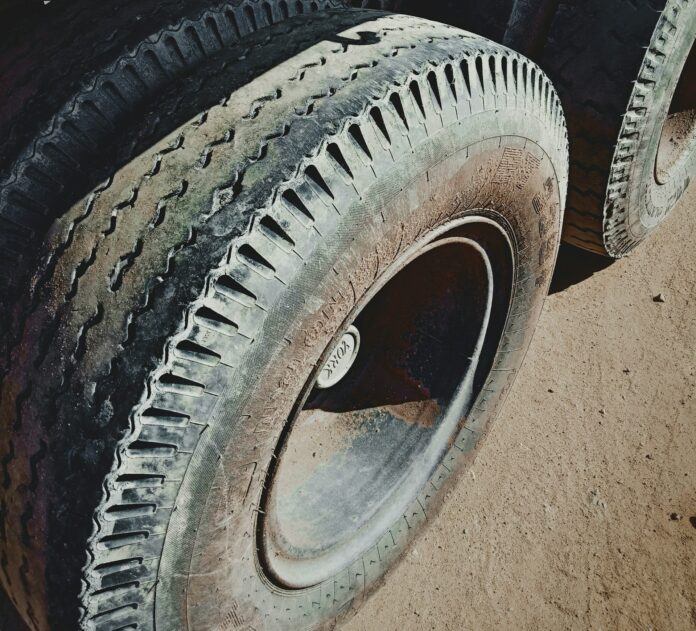
In the world of mechanical parts that keep our machines and vehicles running smoothly, ball bearings and roller bearings are stars. But what sets them apart, and why does it matter to you, whether you’re fixing up a car, maintaining industrial machinery, or just curious about how things work? Let’s dive into the basics, compare these two types of bearings, and explore why choosing the right one can make a big difference.

What Are Ball Bearings?

Imagine tiny, hard spheres rolling between two pieces of metal – that’s essentially what ball bearings are. They’re designed to reduce friction and handle both radial (perpendicular to the shaft) and axial (parallel to the shaft) loads. This makes them perfect for a wide range of applications, from the wheels of your skateboard to the hard drives in computers. Their ability to handle loads from multiple directions makes them versatile for many applications.

What Are Roller Bearings?

Now, picture cylinders rolling between two pieces of metal. These are roller bearings, and they’re a bit different from their spherical counterparts. Roller bearings are specifically good at handling heavier radial loads. They come in various shapes and sizes, from cylindrical to tapered, each with its own special role. For instance, cylindrical roller bearings are great at handling high speeds and heavy loads, while tapered roller bearings can handle large axial forces, making them ideal for vehicle hubs.

The Key Differences

The main difference between ball and roller bearings lies in the shape of the rolling elements – balls versus rollers. This difference affects how they handle loads and speeds. Ball bearings, with their point contact, are better at handling both radial and axial loads and can operate at higher speeds. However, the smaller contact area means they might not be the best choice for very heavy loads.

Roller bearings, with their line contact, excel at managing heavier radial loads. They’re the go-to for applications that require carrying hefty weights or dealing with high-pressure situations. However, this comes with a trade-off in speed, as the larger contact area can generate more friction, slowing things down a bit.

Why Does the Choice Matter?

Selecting the right bearing for the job is crucial for several reasons. Firstly, efficiency: the right bearing can reduce friction to a minimum, saving energy and keeping your machinery running smoothly. Secondly, lifespan: using the correct bearing for the application can significantly extend the life of both the bearing and the machine it’s part of. Lastly, cost: while bearings might not be the most expensive component, choosing the wrong type can lead to more frequent replacements and downtime, adding up to higher costs over time.

Practical Applications

In the automotive industry, for instance, roller bearings are often found in wheels, transmissions, and engines where they support heavy loads. On the other hand, ball bearings might be used in accessories like alternators and air conditioning units, where speed and lighter loads are common.

In industrial machinery, the choice between ball and roller bearings can depend on the specific machine’s requirements for speed, load, and precision. For example, precision ball bearings are often used in aerospace and robotics for their ability to handle both radial and axial loads with high precision and speed.

Making the Right Choice

So, how do you choose between ball and roller bearings? It comes down to understanding the needs of your application. Consider factors like the type of loads (radial, axial, or both), the load magnitude, speed requirements, and operating conditions (like temperature and environment). Sometimes, the decision might be clear-cut; other times, you might need to weigh the pros and cons of each type based on your specific requirements.

Conclusion

Ball bearings and roller bearings are fundamental components that play critical roles in the functioning of machinery and vehicles. While they might seem similar at first glance, understanding their differences and knowing which to use can greatly impact efficiency, lifespan, and cost-effectiveness of your equipment. Whether you’re a seasoned engineer or a DIY enthusiast, getting to grips with these differences can help you make informed decisions, ensuring your machines run smoothly for years to come.

OP FUEL’S JUSTIN ASHLEY LOOKS FOR ANOTHER MULTI-WIN WEEKEND AT NHRA ARIZONA NATIONALS

PHOENIX (April 1, 2024) – When it comes to multiple wins in one weekend, Top Fuel standout Justin Ashley enjoyed impressive success in the unique scenarios last season.

The former NHRA Rookie of the Year will get another opportunity for a multiple-win weekend at the 39th NHRA Arizona Nationals, which takes place Friday through Sunday at Firebird Motorsports Park. Ashley will take part in the final round of the postponed Lucas Oil NHRA Winternationals against Tony Schumacher on Saturday as part of the final qualifying session and is also part of the Mission #2Fast2Tasty NHRA Challenge.

The specialty race begins on Friday with the first qualifying session, with a chance for two wins on Saturday and an Arizona Nationals victory on Sunday. Ashley is the defending Winternationals and Arizona Nationals winner, which adds another exciting layer for the standout in his 11,000-horsepower Scag Power Equipment dragster. A year ago, he won three times in one weekend in Bristol, so pulling off something spectacular in one weekend isn’t exactly new for Ashley, who had six wins in 2023.

“It really is a great opportunity, a unique opportunity and we’ve got a lot on the line,” Ashley said. “I don’t know that we’ve ever gone into a national event and had every run, starting with Q1, be so meaningful. It’s exciting and all we have to do is turn on seven win lights this weekend. It’s such a difficult thing to do with the depth of this class and you’ve already seen that this year. It’s going to take a lot of toughness from this team to capitalize on this and we’re really looking forward to it and we’re grateful for it.”

Ashley (Top Fuel), Robert Hight (Funny Car) and Camrie Caruso (Pro Stock) all won at Phoenix in 2023. This year’s race will again be broadcast on FS1, including a special NHRA in 30: Pomona Finals show at 10 p.m. ET on Saturday and Arizona Nationals eliminations at 6:30 p.m. ET on Sunday.

The other Winternationals final rounds in the NHRA Mission Foods Drag Racing Series include John Force and Matt Hagan meeting in an epic matchup in Funny Car, and Erica Enders and Dallas Glenn in Pro Stock.

In addition to defending his Arizona Nationals victory, Ashley is after his first win of the season. Ironically, he’ll take on Schumacher, the winningest driver in Top Fuel history, who was his final-round opponent last year in Bristol when Ashley finished off the sweep of three wins in one weekend.

He may have to race Schumacher twice on Saturday as well, as Ashley takes on Brittany Force in one of the Mission #2Fast2Tasty Challenge matchups, with Schumacher taking on Billy Torrence. It makes for a hectic weekend, while also dealing with the likes of defending world champ Doug Kalitta, Gainesville winner Shawn Langdon, Antron Brown and Tony Stewart. But the added incentive seems to bring out the best in Ashley and his team, led by crew chief Mike Green.

“Under normal circumstances, you go out for first round on Sunday and it’s the first time something is on the line, so it’s the first time you’re in that mindset,” Ashley said. “Now, that mindset starts in Q1 on Friday. Last year was the first year of the (Mission #2Fast2Tasty Challenge) and helped our team gain confidence. It also helped create that winning culture and it all helps. It was a unique experience and we’re looking forward to that format again. It’s great for the fans, it’s something they enjoy and it’s great for the teams to compete at a high level throughout qualifying and then raceday.”

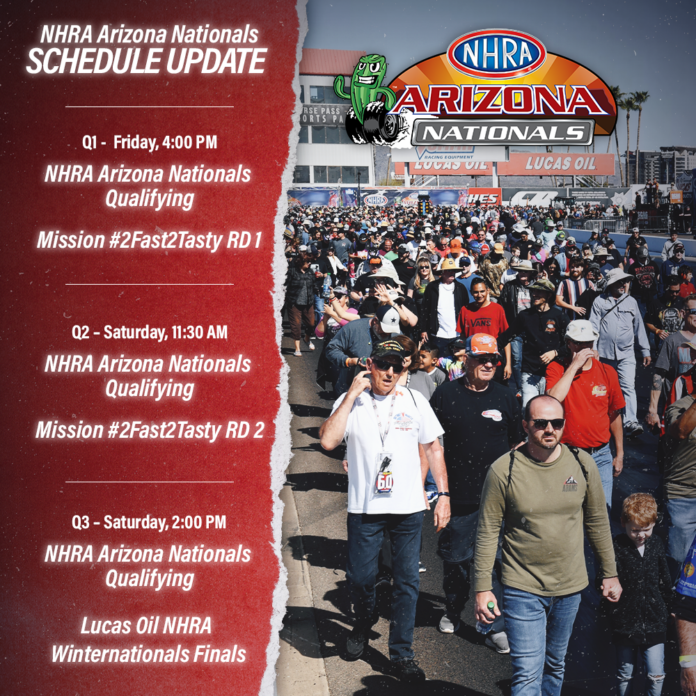
The opening round of the Mission #2Fast2Tasty NHRA Challenge will take place during Friday’s qualifying session that begins at 4 p.m. PT. The finals of the bonus event follows during the second round of qualifying at 11:30 a.m. PT on Saturday. The final rounds in Top Fuel, Funny Car and Pro Stock for the Lucas Oil NHRA Winternationals taking place as part of final qualifying, which begins at 2 p.m.

In Funny Car, Hight defeated Ron Capps last season to pick up his third NHRA Arizona Nationals win. This season, Hight stepped out of the car and passed driving duties to Austin Prock. With a runner-up finish and No. 1 qualifier to his credit in Gainesville, Prock is ready to take on the likes of reigning Funny Car champ Matt Hagan, Bob Tasca III, John Force, Capps, Chad Green and Gainesville winner J.R. Todd.

Caruso captured her first career Pro Stock win last season in Phoenix. In order to repeat her victory, she’ll need to get past reigning champion Enders, who won in Gainesville to open the year, Matt Hartford, Troy Coughlin Jr., Greg Anderson, Aaron Stanfield and Glenn.

The Mission #2Fast2Tasty NHRA Challenge features a wealth of intriguing matchups, too, including Force and Ron Capps in Funny Car, and Hagan taking on Gainesville winner J.R. Todd. Enders and longtime rival Greg Anderson meet in one of the Pro Stock matchups, while the other pairing in the opening round of the specialty race features Glenn and Mason McGaha.

The NHRA Arizona Nationals also includes thrilling competition in the NHRA Lucas Oil Drag Racing Series and the Congruity NHRA Pro Mod Drag Racing Series presented by LearnEV+, featuring the top racers in the country. It also marks the debut of the NHRA Pro Mod category in Phoenix.

All weekend long, fans are invited to the Nitro Alley Stage, which will help create a festive atmosphere leading into the nitro pits. The Nitro Alley Stage is the main entertainment hub in the pits, hosting Nitro School, meet and greets, music and much more. Race fans at Firebird Motorsports Park can enjoy the special pre-race ceremonies that introduce and celebrate each of the drivers racing for the prestigious Wally on Sunday and includes the fan favorite SealMaster Track Walk.

As always, fans also get an exclusive pit pass to the most powerful and sensory-filled motorsports attraction on the planet in Phoenix. This opportunity gives fans a unique chance to see teams in action and service their hot rods between rounds, get autographs from their favorite NHRA drivers, and more. Fans can also visit NHRA’s popular Nitro Alley and Manufacturers Midway, where sponsors and race vendors create an exciting and interactive atmosphere.

NHRA Mission Foods Drag Racing Series qualifying will feature one round at 4 p.m. PT on Friday, April 5, and the final two rounds of qualifying on Saturday, April 6 at 11:30 a.m. and 2 p.m. Final eliminations are scheduled for 11 a.m. PT on Sunday, April 7.

To purchase tickets to the final NHRA Arizona Nationals, fans can visit www.NHRA.com/tickets. Children 12 and under are free in general admission areas with the purchase of an adult ticket. For more information on NHRA, please visit www.NHRA.com.


About Mission Foods

MISSION®, owned by GRUMA, S.A.B. de C.V., is the world’s leading brand for tortillas and wraps. MISSION® is also globally renowned for flatbreads, dips, salsas and Mexican food products. With presence in over 112 countries, MISSION® products are suited to the lifestyles and the local tastes of each country. With innovation and customer needs in mind, MISSION® focuses on the highest quality, authentic flavors, and providing healthy options that families and friends can enjoy together. For more information, please visit https://www.missionfoods.com/

About NHRA

Headquartered in San Dimas, Calif., NHRA is the primary sanctioning body for the sport of drag racing in the United States. NHRA presents 20 national events featuring the NHRA Mission Foods Drag Racing Series and NHRA Lucas Oil Drag Racing Series, as well as the Congruity NHRA Pro Mod Drag Racing Series presented by LearnEV+, NHRA Flexjet Factory Stock Showdown™, NHRA Holley EFI Factory X and Johnson’s Horsepowered Garage NHRA Mountain Motor Pro Stock at select national events. NHRA provides competition opportunities for drivers of all levels in the NHRA Summit Racing Series and NHRA Street Legal™. NHRA also offers the NHRA Jr. Street® program for teens and the Summit Racing Jr. Drag Racing League® for youth ages 5 to 17. With 110 Member Tracks, NHRA allows racers to compete at a variety of locations nationally and internationally. NHRA’s Youth and Education Services® (YES) Program reaches over 30,000 students annually to ignite their interest in automotive and racing related careers. NHRA’s streaming service, NHRA.tv®, allows fans to view all NHRA national events as well as exclusive features of the sport. In addition, NHRA owns and operates three racing facilities: Gainesville Raceway in Florida; Lucas Oil Indianapolis Raceway Park; and In-N-Out Burger Pomona Dragstrip in Southern California. For more information, log on to www.NHRA.com, or visit the official NHRA pages on Facebook, Instagram, Twitter, and YouTube.
NASCAR Top-10 Power Rankings: Richmond

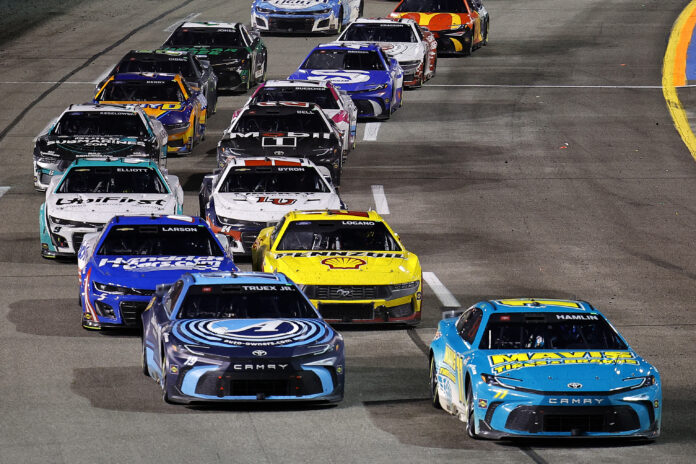
Denny Hamlin, driver of the #11 Mavis Tires & Brakes Toyota, leads Martin Truex Jr., driver of the #19 Auto-Owners Insurance Toyota, on the restart to win the NASCAR Cup Series Toyota Owners 400 at Richmond Raceway on March 31, 2024 in Richmond, Virginia. (Photo by Alex Slitz/Getty Images)

Note: The quotes in this article are fictional.

1. Denny Hamlin: Hamlin outgunned Martin Truex, Jr. on an overtime restart and held on to win the Toyota Owners 400 at Richmond, earning his second win of the season.

“As a native of Virginia,” Hamlin said, “it’s always heartwarming to race in my home state. Mostly because there’s less people booing me here than in the other states. Granted, it’s still a lot, but still less.”

2. Martin Truex Jr.: Truex dominated the latter part of the Toyota Owners 400, but a late caution flag allowed Denny Hamlin to take the lead on an overtime restart. Truex settled for second and showed his frustration by banging doors with Kyle Larson in the closing laps.

“To use an Easter analogy,” Truex said, “I’m hopping mad. But everyone knows I’m not a hothead, so the chances of this ‘Joe Gibbs Racing driver going ‘JGR’ on another driver are pretty slim. To be clear, the ‘JGR’ in that context means ‘Joey Gase Rage.'”

3. William Byron: Byron finished seventh at Richmond, recording his fourth top-10 result of the year.

“It’s not often that NASCAR races on Easter Sunday,” Byron said. “There was a time when if you would have suggested that NASCAR should race on Easter, you would have been crucified.”

4. Christopher Bell: Bell finished sixth at Richmond.

“There are so many products sponsoring NASCAR cars,” Bell said. “There’s bourbon, beer, pharmaceuticals, and even Sunny D. Mix them all together, and you get a cocktail known as the ‘Tim Richmond.”

5. Chase Elliott: Elliott finished fifth at Richmond as Hendrick Motorsports placed three cars in the top 10.

“I’m still looking for my first win since Talladega in October of 2022,” Elliott said. “While the good folks down at the Dawsonville Pool Room have plenty to say ‘Cheers’ about, I’d like to give them something to cheer about.”

6. Ty Gibbs: Gibbs finished 16th in the Toyota Owners 400, only his second finish outside the top 10 this season.

“After last week’s snorefest at COTA,” Gibbs said, “it was good to give fans an exciting race. I’ve learned to never underestimate NASCAR. They even found a way to make road course racing boring. You could call the race at COTA the ‘Brickyard 400 Of Road Course Races.'”

7. Ryan Blaney: Blaney struggled for much of the night at Richmond on his way to a 19th-place finish.

“We really didn’t bring our ‘A’ game to Richmond,'” Blaney said. “We brought a lot of other letters, like ‘S,’ ‘O,’ ‘B,’ ‘M,’ and ‘F,’ but definitely not ‘A.'”

8. Ross Chastain: Chastain finished 15th at Richmond.

“Because of moisture on pit lane,” Chastain said, “we had to have what is known as ‘uncompetitive pit stops’ early in the race. Apparently, that’s where Kyle Larson and Martin Truex Jr. got the idea to make it an uncompetitive race until the very end.”

9. Kyle Larson: Larson was strong all night at Richmond, starting on the pole, winning Stage 1, and leading 144 laps on his way to a third in the Toyota Owners 400.

“I did everything but close the deal,” Larson said. “I had a lot of deals ‘closed’ back in the spring of 2020.”

10. Tyler Reddick: Reddick finished 10th at Richmond, posting his fourth top 10 of the year.

“My No. 45 Toyota was primarily sponsored by SiriusXM,” Reddick said. “A quick glance of a NASCAR crowd evokes a similar phrase—-‘Serious XL.'”

The Evolution of Automobile Safety Features In the Last Decade

Photo by Therese Mikkelsen Skaar on Unsplash

In the early days of automobile history, safety was a secondary concern compared to speed and convenience. However, as the number of vehicles on the road increased and technology advanced, so too did the need for improved safety measures. 

Over the years, automobiles have undergone a remarkable transformation in terms of safety features, with each innovation aimed at reducing the risks associated with driving. This article delves into the fascinating evolution of automobile safety features, highlighting key advancements that have shaped the way we approach road safety today.

The Early Years of Automobile Safety

In the early 20th century, automobiles were rudimentary machines lacking even the most basic safety features. Cars had no seat belts, airbags, or crumple zones, leaving occupants vulnerable to serious injuries in the event of a crash. However, as awareness of road safety grew, so too did the demand for better protection for drivers and passengers.

One of the first significant safety features to be introduced was the seat belt. Invented in the 19th century, seat belts began to gain widespread adoption in the 1950s and 1960s. Initially, seat belts were simple lap belts, but they proved to be effective in preventing ejections and reducing the severity of injuries during collisions.

The Rise of Passive Safety Features

As automotive technology advanced, so did the sophistication of safety features. In the 1970s, automakers began incorporating passive safety features designed to protect occupants in the event of a crash. This included the introduction of shoulder belts, which provided additional upper body protection, as well as padded dashboards and collapsible steering columns to reduce the risk of impact injuries.

Perhaps one of the most significant advancements in passive safety came with the introduction of airbags. First developed in the 1950s, airbags became more prevalent in the 1980s and 1990s, eventually becoming a standard feature in most vehicles. Airbags are designed to inflate rapidly in the event of a collision, providing a cushioning effect to reduce the risk of head and chest injuries.

How Automobile Safety Can Prevent Crashes

While passive safety features are essential for protecting occupants during a crash, there has been a growing emphasis on active safety systems aimed at preventing accidents from occurring in the first place. These systems utilize advanced technology such as cameras, sensors, and radar to detect potential hazards and alert the driver to take corrective action.

One of the earliest active safety features was anti-lock braking systems (ABS), introduced in the 1970s. During hard braking, ABS prevents the wheels from locking up, allowing the driver to maintain control and avoid skidding. ABS has since become a standard feature in most vehicles and has saved countless lives by reducing the risk of accidents.

Another important active safety feature is electronic stability control (ESC), which helps drivers maintain control of their vehicles during emergency maneuvers or slippery road conditions. ESC automatically applies brakes to individual wheels and adjusts engine power to prevent skidding and loss of control. Since its introduction in the early 2000s, ESC has been credited with significantly reducing the number of single-vehicle crashes.

The Future of Automobile Safety

Looking ahead, the future of automobile safety lies in autonomous driving technology. Automakers and tech companies are investing heavily in the development of self-driving cars equipped with advanced sensors, cameras, and artificial intelligence algorithms. 

These vehicles have the potential to virtually eliminate human error, which is a leading cause of accidents on the road. Even with these automations in motor vehicles, there are still numerous crashes on the road. 


If you or a loved one has been affected by a serious car accident, get in touch with a Broomfield, Colorado car accident lawyer today. They can help you protect your rights and fight for the compensation you deserve. 

Autonomous vehicles are equipped with a range of safety features, including adaptive cruise control, lane-keeping assist, and automatic emergency braking. These systems work together to detect and respond to potential hazards, making driving safer and more efficient.

 While fully autonomous cars are still in the testing phase, they hold the promise of revolutionizing transportation and reducing the number of accidents on our roads.

The Evolution of Automobile Safety Is Continuous

The evolution of automobile safety features is a testament to the tireless efforts of engineers, researchers, and policymakers to make our roads safer for everyone. From simple seat belts to advanced autonomous systems, each innovation has played a crucial role in reducing the risk of accidents and saving lives. As technology continues to advance, we can expect to see even more sophisticated safety features designed to protect drivers, passengers, and pedestrians alike.

TOYOTA GAZOO Racing roars to fourth successive Safari triumph

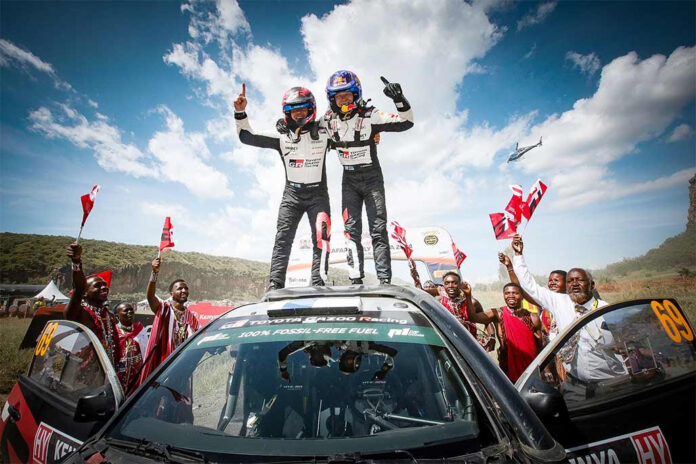
TOKYO, Apr 1, 2024 – (JCN Newswire) – TOYOTA GAZOO Racing World Rally Team has won the legendary Safari Rally Kenya for the fourth year in a row, with Kalle Rovanperä leading Takamoto Katsuta in a one-two finish on the demanding African event.

The team continues its unbeaten run on the toughest round of the FIA World Rally Championship since its return to the calendar in 2021, while also extending the all-time Safari record set by Toyota to 12 victories.

The result once more demonstrates the strength and reliability of the GR YARIS Rally1 HYBRID, which for this event featured an updated suspension package as well as a distinctive snorkel system: a modern take on an iconic feature of Safari-specification cars of the past.

It is the second time that Rovanperä and co-driver Jonne Halttunen have won the event after their 2022 success. Their victory was built on a phenomenal performance on the first full day of the rally on Friday, where they were fastest in all six stages to open up a lead of almost one minute. This enabled Rovanperä to take caution where required on the longest and toughest day on Saturday – where he still won the rally’s longest stage by nearly 25s as most of his competitors hit trouble.

With his lead up above two minutes, Rovanperä could take a safety-first approach through much of the final day’s six stages and 74.38 competitive kilometres, ultimately sealing victory by 1m37.8s.

Katsuta achieved his third podium result from four starts in Kenya, repeating his second-place finish from 2021. He and co-driver Aaron Johnston drove a well-measured rally, with two stage wins on Saturday helping them overcome a double puncture that had cost them over a minute.

Elfyn Evans and co-driver Scott Martin ensured that all three Toyotas finished inside the top four. They ran as high as second before sustaining punctures on three separate occasions through Saturday’s rough and rocky stages. That left the podium places out of their reach, but they still gave their all to score as many points as possible on Sunday, where they were third-fastest over the day and fifth in the Power Stage.

With its one-two finish, TGR-WRT took the maximum manufacturers’ points from the overall classification plus an extra 11 bonus points on Sunday and moves into a four-point lead in the championship. Evans took a total of 16 points from his weekend to keep him second in the drivers’ standings, six from the lead.

Quotes:

Akio Toyoda (TGR-WRT Chairman)
“For all the team members, congratulations on the first victory this season and on winning Safari Rally Kenya for the fourth year in a row! Kalle, Jonne, congratulations on another victory in Kenya after two years, and thank you for the clever driving and running through those rough roads without trouble.Takamoto and Aaron, congratulations on returning to the podium in Kenya also after two years! It was great that you completed all those stages.The pre-event test just before Kenya was done in Portugal and it was raining heavily at the time. The team reported to me that they had heavy rain “luckily” and many parts got broken. Unlike previous years, the rally was held during the rainy season, and the engineers and mechanics continued to make improvements including the countermeasures for rain until just before the rally started. When I heard the word “luckily”, I recalled the words from GR Yaris engineers. They always tell me, one of the master drivers in Toyota, “Thank you for breaking the car as it will become even stronger!” So this time, on behalf of the team, I want to thank the rain in Portugal for making the GR Yaris Rally 1 stronger and brought us the first win. And of course I would like to thank all the team members who improved the car until the very last minute. The same road can be a different road in different seasons and weather, and because we compete on such roads and in such conditions, cars become stronger and our ever-better car making progresses. I believe rally is that kind of sport.The next events will be happening with two-week intervals. I am hoping that everyone in the team will take care of their health and continue to make ever-better cars.”

Jari-Matti Latvala (Team Principal)
“We are very happy to win the Safari Rally once again and take our first win of the season in such style here in Kenya. Kalle was really dominating the rally from the beginning with a very clever approach. He didn’t have any issues the whole weekend, thanks to the team which provided such a good car, and also the way he was able to drive, thinking about when to attack and when to save the car. We’re also really happy to see Taka on the podium in second place. This seems to be a rally that he really loves, and after the disappointment he had in Sweden, this is a really good result for him and the team. Luck was not on Elfyn’s side but he was fighting really hard and well to take as many points as he could for the championship. For now we will enjoy this moment and then work towards the next challenge in Croatia.”

Kalle Rovanperä (Driver car 69)
“It’s special to be able to win the Safari for the second time. This event is so tough and it’s also a legendary one for Toyota: we have always been good here and we are still continuing that record. Like they say in Africa, the car in front is always a Toyota. A big thanks to the team, because everybody made a big effort to make the car work so well. I think we did a good job, I think you cannot do a better Safari than what we did, with no issues and clever driving. Today was difficult, having to drive the roughest stage on the calendar twice when you have a huge lead, trying to avoid everything, it’s not easy. We just needed to stick to the plan and it worked out.”

Elfyn Evans (Driver car 33)
“It’s not been an easy weekend for us. At least we could reach the end of the rally which is a positive thing, but we wanted more from this weekend. Today we had good speed at points but there were just a few little issues so we didn’t get as many points as we’d like. The first loop was not easy: the opening stage was extremely rough and we were probably too conservative there compared to the others. In the Power Stage we gave it a go but already in the first half it was very difficult.”

Takamoto Katsuta (Driver car 18)
“It’s a very nice feeling to achieve this second place and to be on the podium again in Kenya. It was a tough rally like always, so we need to say a huge thanks to the team because they prepared very well and the car was working so well. I made some mistakes yesterday and we got the punctures, but I could always trust the car. When we needed to push, we were able to push and the times were good. Reliability is a strong point for Toyota and I’m very proud to drive this car.”

PROVISIONAL FINAL CLASSIFICATION, SAFARI RALLY KENYA

1 Kalle Rovanperä/Jonne Halttunen (Toyota GR YARIS Rally1 HYBRID) 3h36m04.0s
2 Takamoto Katsuta/Aaron Johnston (Toyota GR YARIS Rally1 HYBRID) +1m37.8s
3 Adrien Fourmaux/Alexandre Coria (Ford Puma Rally1 HYBRID) +2m25.1s
4 Elfyn Evans/Scott Martin (Toyota GR YARIS Rally1 HYBRID) +4m20.2s
5 Thierry Neuville/Martijn Wydaeghe (Hyundai i20 N Rally1 HYBRID) +10m.17.5s
6 Gus Greensmith/Jonas Andersson (Škoda Fabia RS Rally2) +18m05.4s
7 Oliver Solberg/Elliott Edmondson (Škoda Fabia RS Rally2) +19m28.5s
8 Ott Tänak/Martin Järveoja (Hyundai i20 N Rally1 HYBRID) +21m02.0s
9 Jourdan Serderidis/Fréderic Miclotte (Ford Puma Rally1 HYBRID) +26m13.3s
10 Kajetan Kajetanowicz/Maciej Szczepaniak (Škoda Fabia RS Rally2) +26m34.4s

(Results as of 15:30 on Sunday, for the latest results please visit www.wrc.com)

2024 FIA World Rally Championship for drivers after round 3:

1 Thierry Neuville 67 points
2 Elfyn Evans 61
3 Adrien Fourmaux 46
4 Ott Tänak 33
5 Kalle Rovanperä 31
6 Takamoto Katsuta 30
7 Sébastien Ogier 24
8 Esapekka Lappi 23
9 Oliver Solberg 12
10 Andreas Mikkelsen 6

2024 FIA World Rally Championship for manufacturers after round 3:

1 TOYOTA GAZOO Racing World Rally Team 131 points
2 Hyundai Shell Mobis World Rally Team 127
3 M-Sport Ford World Rally Team 72

What’s next?

The Croatia Rally (April 18-21) is held on challenging asphalt roads around the country’s capital city, Zagreb. As well as a mix of fast and more technical sections, the stages feature constant surface and grip changes.

News URL: https://www.acnnewswire.com/press-release/english/90004/

URL: https://plus.google.com/+toyotaglobal | Facebook : https://www.facebook.com/ToyotaMotorCorporation/ | Twitter : https://twitter.com/TOYOTA_PR/ | Youtube : https://www.youtube.com/user/toyotajpchannel/ | Linkedin : https://linkedin.com/company/toyota |

Team Penske NASCAR Cup Series Race Report – Richmond 1

Toyota Owners 400
Richmond, Va. – March 31, 2024

NASCAR TRACKS – RICHMOND RACEWAY – NASCAR 101

AUSTIN CINDRIC No. 2 DISCOUNT TIRE FORD MUSTANG

START: 9TH STAGE ONE: 27TH STAGE TWO: 23RD FINISH: 23RD POINTS: 20TH

RACE RUNDOWN: Intermittent rain at Richmond Raceway created a slick racing condition to start Sunday night’s 400-lap event with Austin Cindric and the No. 2 Discount Tire Ford rallying through a field of varying pit strategies and untimely cautions to a 23rd-place finish. Following a productive qualifying effort on Saturday, Cindric lined up ninth to get the evening started with the No. 2 donning rain tires to prepare for the ever-changing conditions of the quarter-mile track. With the racing surface still wet for the green flag, Cindric and his competitors spent the opening laps finding the preferred groove with a tight condition overtaking the No. 2 and thwarting forward momentum. A competition caution at lap 30 gave the No. 2 team a chance to reset with four slick tires and fuel, with the remainder of Stage 1 dedicated to finding the right balance to align with the new environment. The second stage was a tale of varying pit strategies, with the No. 2 team working diligently to position Cindric towards the front of the field. The first cycle of scheduled pit stops ensued, although an abrupt caution midway through the stage halted plans on the next scheduled stop and forced a change of plans for a majority of the field; Cindric and the No. 2 team included. It ultimately trapped the Discount Tire Ford a lap down with Cindric going to work to gain position in the stage’s closing lap alongside nearly half of the field that was combatting the same challenge. The finale Stage posed the same trials, although Cindric’s improving lap times and quick work by the No. 2 crew on pit road provided him a chance to propel forward and finish the event in 23rd-place.

CINDRIC’S THOUGHTS: “A bit of unfortunate timing with the caution in Stage 2. It really trapped us behind. I felt like we definitely had the performance to race within the top-15, but we continued to be trapped a lap down. A bit frustrating as it doesn’t show the speed of the weekend of our No. 2 Discount Tire Ford Mustang. We’ve got a lot of right pieces of the puzzle though, and we’ll keep going. It was great to get a short track under our belt, too, after not being able to turn laps at Phoenix.”

RYAN BLANEY No. 12 MENARDS/DURACELL FORD MUSTANG

START: 12TH STAGE ONE: 25TH STAGE TWO: 26TH FINISH: 19TH POINTS: 5TH

RACE RUNDOWN: Ryan Blaney and the No. 12 Menards/Duracell team posted a 19th-place finish at Richmond Raceway Sunday night. With damp track conditions from lingering rainfall prior to the start of the 400-lap event, teams began the night on wet weather tires as Blaney worked his way into the top-10 from the 12th starting position in the opening laps before a tight-handling condition set in, shuffling him out of the top-20 by the time of the competition caution on lap 30. After getting a set of four slick tires under yellow, Blaney continued to battle through traffic as the 12-team continued to diagnose the early handling issues, resulting in a 25th-place finish in Stage 1. Crew chief Jonathan Hassler and the 12 team went with a two-stop strategy during the second stage as Blaney worked his way back into the top-20 by the time of the caution on lap 170. On the ensuing restart while fighting for the free pass position before the end of Stage 2, Blaney was shoved out of line and up into the outside wall of turn one as he worked to regain track position over the final run of the segment that ended in a 26th-place finish. The 12-team stuck with the two-stop strategy in the final stage as the overall balance of the Menards/Duracell Ford Mustang settled in, prompting four-tire stops under green on laps 297 and 350. The longest green flag run of the night came to an end with two laps to go, allowing Blaney to take the wave-around to get back on the lead lap for the overtime restart before taking the checkered flag 19th.

BLANEY’S THOUGHTS: “Hard-fought night for our 12 team. We just couldn’t recover from losing a bunch of track position during the first run but we were able to get the balance in a good spot in the second stage. There’s only so much ground you can make up over those longer green flag runs. Not our night but we’re looking forward to getting back to Martinsville next week.”

JOEY LOGANO No. 22 SHELL-PENNZOIL FORD MUSTANG

START: 10TH STAGE ONE: 5TH STAGE TWO: 3RD FINISH: 2ND POINTS: 19TH

RACE RUNDOWN: Joey Logano came up one spot short in his bid for a third-career win at Richmond Raceway Sunday night as the No. 22 Shell-Pennzoil Ford Mustang crossed the line second in a green-white-checkered finish. The runner-up effort marked Logano’s fifth top-five finish in his last eight starts at Richmond and 14th-career top-five in 30 starts at the Virginia short track. With scattered showers in the area prior to the drop of the green flag prompting the use of wet weather tires, Logano worked his way up to seventh in the running order by the time of the competition caution on lap 30. After getting a set of slick tires and fuel, Logano continued his charge to the front as track conditions improved en route to a fifth-place finish in Stage 1. Varying pit strategies began to take shape in Stage 2 as crew chief Paul Wolfe and the 22-team opted for a two-stop strategy in the 160-lap segment. Following a scheduled, green flag stop on lap 128, Logano cycled to third on the leaderboard when the caution came out on lap 170, trapping a handful of teams a lap down that chose to split the stage in half. Logano restarted from the outside of row one with 53 laps to go in the stage and came away with a third-place finish in Stage 2. After settling into third in the running order during the opening run of the final stage, the 22-team stayed with its two-stop strategy, prompting Logano to hit pit road for a pair of four-tire stops under green on laps 287 and 336, respectively. Logano raced his way up to second with 30 laps to go as his long-run speed closed the gap to the leader to under a second with 10 laps remaining. As the margin to the leader continued to close, the caution came out with two laps to go, setting up one final round of pit stops prior to the green-white-checkered finish. Logano lined up for the restart from the inside of row two and cleared the outside lane coming to the white flag, but ultimately settled for the runner-up result.

LOGANO’S THOUGHTS: “This is definitely the hardest start to a season we’ve had, but last week we started scratching and clawing and got a little bit of momentum through the last three races and ultimately get to here to where we were in the hunt again. It feels good. It’s Richmond. It’s a unique racetrack. It’s our best racetrack as a team, so we expect to run good here. I don’t know if this completely takes us out of the deep end, but I think, ultimately, it’s a good momentum-builder for sure.

I didn’t get a good enough restart. I really wanted to pressure them down into one and force them to work up [Martin] Truex, but I spun my tires there just trying to stay with them and that ultimately cost me to be close enough to do something. It feels good to be towards the front again. We haven’t had a run like that in a while, but it also stings to be that close and not capitalize on the win. I guess I have mixed emotions. We had a really good car, a car that was capable of winning if we were in the front, but we didn’t execute everywhere else good enough to get there.”

The NASCAR Cup Series heads to Martinsville Speedway for Round 8 of the 2024 season on Sunday, April 7 for the Cook Out 400. Coverage begins at 3:00 p.m. ET on FS1, MRN, and SiriusXM NASCAR Radio Channel 90.

Both RFK Fords Finish Top-10 at Richmond

Keselowski Leads Way with P8 Finish in BuildSubmarines.com Ford, Buescher P9 in NEXLETOL Ford

RICHMOND, Va. (March 31, 2024) – RFK brought home a pair of top-10 finishes on Easter Sunday at Richmond as Brad Keselowski finished eighth in the BuildSubmarines.com Ford, and Chris Buescher ninth in the NEXLETOL Ford.

Sunday’s 400-mile race was initially affected by inclement weather, which for the first time in Next Gen history (outside of North Wilkesboro) forced NASCAR to employ rain tires to start a race. The weather ultimately moved on though, in what turned into a NASCAR Overtime scenario by race end.

The top-10 for Buescher marks his fourth-straight, the first time in his Cup career to record four-straight top-10s. He’s one of only four drivers this season with five top-10s. Keselowski earned his third top-10 of the young season.

6 Recap
Keselowski began his Richmond race from the 23rd position following Saturday’s qualifying session. With damp conditions on the ¾-mile track as the race began, teams began the night with rain tires as NASCAR eventually threw a caution at lap 30 to reset the field.

With slick tires on from that point on, Keselowski went on to finish 19th in the opening stage at lap 70, and after the first live pit stop of the evening, would line up 16th on the ensuing restart. The following 89 laps ran caution-free, with Keselowski pitting under green at lap 122 from the 15th spot. When the next yellow was displayed at lap 168, Keselowski was seventh and went on to finish 11th by the stage end (lap 230).

The BuildSubmarines.com Ford fired off 10th for the final stage, as Keselowski kept the No. 6 inside the top-10 from then on, with a pair of green-flag pit stops spanning the final stage. A final caution flew with just two laps remaining as Keselowski ran ninth, and he held on to the eighth spot in the final restart in NASCAR Overtime to finish eighth.

“That was respectable,” Keselowski said. “I don’t think we had the speed to win the race, but we had the speed to run in that eighth to 12th range and we kind of did that most of the night. We ended up executing at the end to get an eighth, so it was respectable. We took a little step backwards, but we’ll learn from it and be better.”

17 Recap
Buescher unloaded with one of the faster cars in the field, turning in a quick practice time Saturday morning. He went on to qualify 14th, but would quickly solidify himself in the top-10 once the green dropped Sunday night.

The No. 17 Ford was ninth by the time of the competition caution at lap 30, and from there he slipped to 13th by the end of stage one (lap 70). He restarted stage two in 11th and worked his way back inside the top-10 midway through the segment, before pitting from 10th at lap 125 under green. The only caution of the stage flew at lap 168 with Buescher in fifth. He restarted there, and ultimately was scored seventh some 50 laps later at the conclusion of stage two (lap 230), earning stage points.

Buescher fired off ninth for the final stage in what appeared to run all under green until the very end. He pitted from the eighth position under green at lap 333 in what appeared to be the final stop, until a caution flew late with two laps remaining.

As most of the field pitted, Buescher did as well, lining back up inside the top-10 for one final restart in NASCAR Overtime, where Buescher charged forward for the ninth-place finish.

“That’s certainly not what we were hoping for,” Buescher said after the race. “I was really excited coming back here. We had a good day, but nothing terrific to write home about. We’ll definitely dive into it and try to figure out what changed and see where we might be able to get better for the next go round.”

Up Next
Martinsville Speedway hosts the second-straight short track race next weekend for the eighth race of the season. Race coverage Sunday is set for 3 p.m. ET on FS1, with radio coverage on MRN and SiriusXM NASCAR Radio (Channel 90).

About RFK Racing
RFK Racing, in its 37th season in 2024, features an ownership lineup pairing one of the sport’s most iconic names, Jack Roush, along with NASCAR Champion, Brad Keselowski, and Fenway Sports Group owner John Henry. Roush initially founded the team in 1988 and it has since become one of the most successful racing operations in the world, propelling him to be the first NASCAR owner to amass three hundred wins and capturing eight championships, including back-to-back NASCAR Cup titles in 2003 and 2004. Keselowski, a former owner in the NASCAR Truck Series, is the 2012 NASCAR Cup Series Champion. In 2007, Roush partnered with Henry, who also owns Major League Baseball’s Boston Red Sox, English Premier League’s Liverpool F.C., and the NHL’s Pittsburgh Penguins, to form Roush Fenway Racing. Off the track, RFK is a leader and proven winner in NASCAR marketing solutions, having produced multiple award-winning social media, digital content and experiential marketing campaigns. Visit rfkracing.com, and follow the team on all social platforms @rfkracing.

Invest2see Review: Top 4 Forex Trading Tools and Indicators [invest2see.com]

Forex trading has become less complex and more interesting due to the appearance of various advanced trading tools and indicators. Traders can make more accurate trading decisions with the help of tools and indicators such as price charts, moving averages, economic calendars, and more. These tools help them accurately understand market trends and price value movement. So, to achieve success and gain profits in the volatile Forex market, you must have profound knowledge of these trading tools. This article will discuss some of the most important Forex trading tools and essential indicators for modern-day trading. So, let’s get familiar with these tools. 

1. Risk-Management Tools on Invest2see 

You must know how important risk management is in Forex trading. One little mistake can cause you great loss in this market. So, you must learn to use risk management tools while executing a trade. On the Invest2see platform, you can access several risk management tools, including stop-loss orders, position calculators, and others, which will help you avoid potential trading risks. So, set your risk tolerance and protect your investment from significant losses by applying these tools.

2. Price Charts 

Price charts are the backbone of conducting market analysis. It is extremely difficult to understand the market without understanding price charts. Various price charts are available on digital trading platforms like Invest2see, including bar charts, line charts, candlestick charts, and others. These charts clearly show the Forex market’s price movements during the specific period. You can also customize the timeline for a better understanding of the market. 

3. Economic Calendar

The economic calendar is another useful tool for traders to see the times and places of major economic events. This also lets the traders understand what event will occur and when it will occur. This exhaustive schedule of major economic events allows traders to plan accordingly. So, you can understand how important the economic calendar is for traders. On Invest2see, you will get a detailed economic calendar showing you a long list of economic events organized by dates.

4. Moving Averages 

Understanding moving averages is also crucial for Forex traders. The moving average is a trading indicator that helps calculate the average price of a particular asset over a specific period. By calculating moving averages, traders can identify market trends and estimate the probable reversal point. When the trade price is above the average, it is time to buy the asset; if it’s below, sell it. You can try it with the moving average indicator on the Invest2see platform. 

I hope you are all familiar with these trading tools and indicators now. Make sure to use them properly when trading to achieve success on each trade.  

RCR NCS Race Recap: Richmond Raceway

Austin Dillon and the No. 3 BREZTRI AEROSPHERE® (budesonide, glycopyrrolate, and formoterol fumarate) Chevrolet Team Earn Top-25 Finish at Richmond Raceway

Finish: 24th
Start: 22nd
Points: 28th

“We had a really good BREZTRI AEROSPHERE® (budesonide, glycopyrrolate, and formoterol fumarate) Chevrolet Camaro ZL1 tonight at Richmond Raceway. Our Chevrolet started a little tight, but we didn’t fall off as much as everyone else during long runs. Unfortunately, when we came down pit road for a scheduled stop in the middle of the race, we misjudged the timing of the car in the stall behind us. It made for a lengthy pit stop and caused us to lose a lap. Once you go a lap down here at Richmond Raceway, it’s hard to get it back. It’s unfortunate because I feel like we had a better car than the results show, but we’ll go back to work and get ready for Martinsville Speedway next weekend.” -Austin Dillon

Kyle Busch and No. 8 Rebel Bourbon Chevrolet Team Collect Lead Lap Finish at Richmond Raceway

Finish: 20th
Start: 15th
Points: 13th

“It was a battle all night in our No. 8 Rebel Bourbon Chevrolet at Richmond Raceway. We started the race on wet weather tires and had zero grip on the initial fire off. It felt like it took forever for the tires to come in. Crew chief Randall Burnett and all the guys on the team worked hard all night making adjustments, but we were just too tight in the center and too loose on entry and exit. They took some pretty big swings at it but unfortunately couldn’t get the balance where it needed to be. We’ll regroup and bounce back next week at Martinsville Speedway.” -Kyle Busch