Home Blog Page 20

Tyler Ankrum’s NCTS Martinsville Speedway Recap

Black’s Tire 200 – Race Results

Venue: Martinsville Speedway

FINISH: 7th
Start: 9th
Stage One: 8th
Stage Two: 8th
NCTS Playoff Point Standings Position: 9th

Ankrum Continues Top-10 Streak at the Paperclip

The top-10 streak continues for Tyler Ankrum, driver of the No. 18 LIUNA Chevrolet after an impressive run at Martinsville Speedway Friday night under the lights for a seventh-place finish. The young driver set the No. 18 ninth in line to start the 200-lap event in the Friday afternoon qualifying event and jumped up to eighth on the opening lap. By lap 13, Ankrum reported to the team he was starting to build tight during the run and was having trouble with handling in the rubber. The young driver held on and finished out Stage One in the eighth position.

Crew chief Mark Hillman made the call to stay out under the stage break along with the majority of the NASCAR CRAFTSMAN Truck Series (NCTS) field to restart the second segment eighth. A clean and calm Stage Two saw the driver of the No. 18 Chevrolet really struggling on the bottom and in the rubber while still battling tight conditions overall. Under the stage break, Ankrum came down pit road for four fresh Goodyear tires with an air pressure adjustment, an adjustment in the right-rear jackbolt, and a splash of gas. The San Bernardino, Calif. native lost two spots on pit road but the crew was able to get all the adjustments in to help the young driver feel better in his race truck for the closing laps.

Intensity began to rise and all through out the field, chaos started to unfold. Caution after caution, Ankrum continued his drive to the front, dodging damage left and right. The short runs in between cautions were causing the driver of the No. 18 Chevrolet to get tighter as they continued and he was still constantly battling handling on the bottom in the rubber. The final restart had occurred with just seven laps to go. Battling adversity all night long, Ankrum powered through and was able to bring home a clean truck in the seventh position with just one race remaining on the NCTS schedule at Homestead-Miami Speedway next week.

Tyler Ankrum Quote:

“Super quiet night for us at Martinsville. Pretty much ran inside the top-10 all night long just really struggled on the bottom and the rubber was fighting us all race. Solid performance for the No. 18 LIUNA team and proud of the momentum this team has carried the last few races, just wish we could have locked in this momentum all year long. Final run next week at Homestead so looking forward to carrying this effort into next week and closing out the season on a high note.”

Martinsville Photos

The Laborers’ International Union of North America (LIUNA) partners with public and private entities, elected officials, community groups, and responsible contractors to build and maintain the infrastructure needs of communities throughout the United States and Canada, while providing residents a career in the construction industry. For more information on LIUNA, visit www.liuna.org.

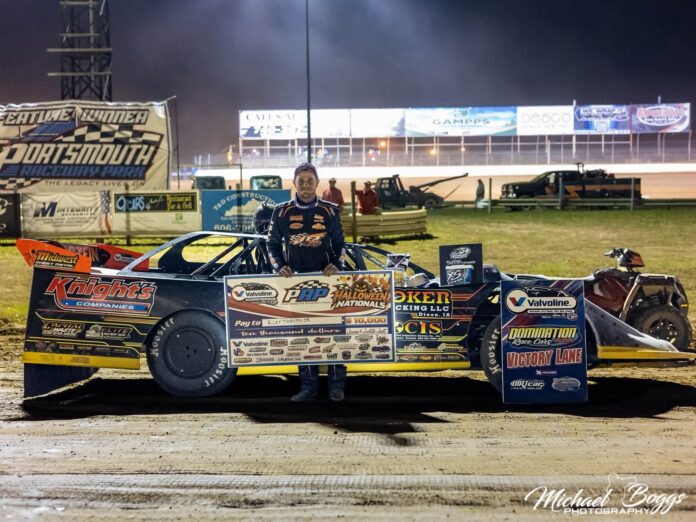
Ricky Thornton Jr Claims Night 1 of the Halloween Nationals at Portsmouth Raceway Park

Photo Courtsey of Michael Boggs Photography

Night 1 of the American Late Model Iron-Man Series took place Friday night at Portsmouth Raceway with the Super Late Models. It was the inaugural Halloween Nationals in Portsmouth, Ohio. While regulars like Colten Burdette has a 128-point championship lead over Rod Conley, Mikes Cook II, and more are racing, there were national drivers competing in the event such as Josh Rice, Jason Jameson, Ryan Montgomery, Adam Strickler, Ricky Thornton Jr, Nick Hoffman, Tyler Erb and more are also competing in the event.

Erb dominated much of the feature before a flat right-rear tire took him out of the lead late in the going. A computer glitch caused a late-race yellow with three laps to go and saw RTJ go on to win the feature.

“Yeah, obviously we don’t want to see a competitor get a flat, let alone Terbo (Tyler Erb) leading,” RTJ told Flo Racing in victory lane. “Obviously, he had a little bit better car than we did. He put himself in position, and unfortunate luck for him. I definitely know how that goes this year. I felt like our car was really good from the get go. I moved up and got back by (Josh) Rice, and I was like, man, I’m just running way too hard right now. I slowed myself back down and moved to the bottom, and just kept saving.

“Really, I didn’t feel like my pace picked up. Just those guys slowed down that much more. This place is so silky and grady, it’s easier to hurt your tires. I figured if those guys was going to go all out right away, I could wait saving and try to do something at the end. I love coming to this place, and hopefully next year, we get to come back again.”

There were 34 Late Models on the entry list for Friday’s feature.

Feature Race Recap – 30-Laps – $10,000 To Win

Hoffman had the pole for the main event while Erb had the outside pole position.

Erb originally took the lead from Hoffman off Turn 2, but the first yellow of the night was flown and was a complete restart. This time around, Erb again got to the top spot over Hoffman on the backstretch using the high line off Turn 2. While Erb broke away early, Hoffman still kept him honest by being not too far from his rear bumper. Near the halfway mark, Hoffman had momentum and closed in rapidly, with Rice in third position. A lead change would take place at Lap 16 at the start/finish line, but Erb retook the lead on the backstretch one lap later.

As Erb had a nice lead over Hoffman, his car got high off Turn 4 and allowed Hoffman to go by and take the lead with five laps to go. The second yellow quickly came out for Erb as he had a flat right-rear tire go down, which took him out of contention.

Hoffman led the field back to green with Ricky Thornton Jr. in second. RTJ threw his car down in the middle of Turns 3 and 4, and grabbed the lead from Hoffman. RTJ’s lead was short-lived as the third yellow was displayed with three laps to go for a computer glitch. This caused a green-white-checkered restart with RTJ, Hoffman, Rice, Drake Troutman, and Jameson in the top five.

Despite the late race yellow, RTJ had a great restart and went on to win the feature.

Heat Race Recaps – Top Three Transfer – 8 Laps A Piece

Prior to the heat races, there was a hot lap and qualifying session. Mike Benedum was the fastest in hot laps with a time of 14.807 seconds. There was a split qualifying session with Flight A and Flight B. Hoffman had the fastest time in Flight A with 14.764 seconds, while Erb held the quickest time in Flight B with 14.987 seconds.

Heat 1 – Hoffman had the pole for heat one and easily won the first heat with Dustin Sorensen and Jameson transferring.

Heat 2 – Troutman had the pole for heat two. As the field went green, the yellow came out for a complete restart. The second start was much cleaner. No more issues were seen in this heat, and Troutman went on to win. Rice and Seth Daniels completed the top three.

Heat 3 – Erb was the top starter for the third heat and claimed the win. He was followed by Tristan Chamberlain and Michael Chilton for the transfers.

Heat 4 – Thornton Jr. had the pole for the fourth and final heat. RTJ claimed the heat win with Montgomery and Burdette taking the final transfers. 

Eddie Carrier Jr. won the first B-Main, while Justin Cooper took the second B-Main.

For those who may have missed the feature, you can check out the highlights below.

Official Race Results Following Night 1 of the American Late Model Iron-Man Series at Portsmouth Raceway

  1. Ricky Thornton Jr
  2. Josh Rice
  3. Drake Troutman
  4. Nick Hoffman
  5. Jason Jameson
  6. Dustin Sorensen
  7. Michael Chilton
  8. Tristan Chamberlain
  9. Ryan Montgomery
  10. Eddie Carrier Jr
  11. Levi Yetter
  12. Colten Burdette
  13. R.J. Conley
  14. Tyler Erb
  15. Adam Stricker
  16. Miles Cook II
  17. Rod Conley
  18. Justin Cooper
  19. Seth Daniels
  20. Kevin Wagner
  21. Mike Benedum

Up Next – Night 2 will take place Saturday night live on Flo Racing and Hunt the Front TV.

LANGDON, BECKMAN, HARTFORD & HERRERA ROLL TO PROVISIONAL NO. 1 SPOTS AT MOPAR NHRA LAS VEGAS NATIONALS

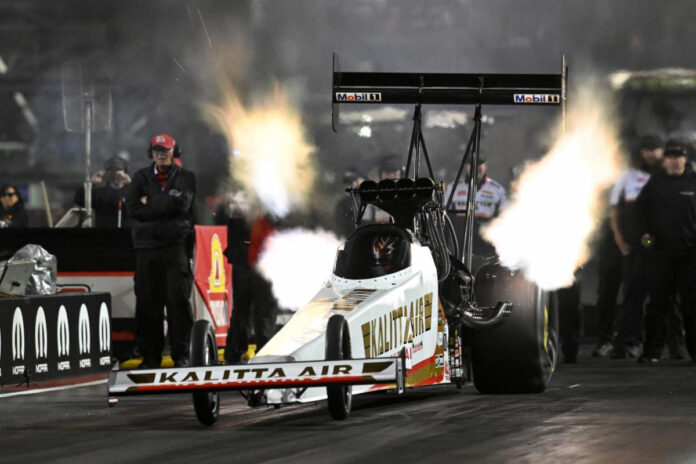
LAS VEGAS (Oct. 30, 2026) – Top Fuel points leader Shawn Langdon powered to the top on Friday at The Strip at Las Vegas Motor Speedway, taking the provisional No. 1 position to open this weekend’s MOPAR NHRA Las Vegas Nationals powered by Dodge.

Jack Beckman (Funny Car), Matt Hartford (Pro Stock) and Gaige Herrera (Pro Stock Motorcycle) are also the provisional No. 1 qualifiers at the 19th of 20 races during the 2026 NHRA Mission Foods Drag Racing Series season and the fifth of six races in the Countdown to the Championship playoffs.

Langdon went 3.672-seconds at 332.59 mph in his 12,000-horsepower Kalitta Air dragster, putting the past champion on track for his ninth No. 1 qualifier of the season and the 31st in his career. He’s also been dominant when bonus money is on the line this year, as Langdon won Friday’s “Ted Wiens Trick or Traction Award,” which comes with a $3,500 bonus.

There’s also the opportunity for Langdon to clinch his second world championship this weekend, as he’ll head into Saturday 144 points up on Kalitta Motorsports teammate, reigning world champion Doug Kalitta.

“Typically here it’s really dry, so this is a little different conditions with the [water] grains up a little bit, a little bit of moisture in the air,” Langdon said. “So it’s just a matter of finding the power and then it’s just applying it to the track. The track’s good, so you just have to get the power level right and then get the clutch right for the track. Having two good runs today definitely gives you a little bit of confidence going into tomorrow.

“Tomorrow and for the rest of the year, we just have to do what we did today. At the end of the day, we can’t falter because we know the history of Alan Johnson and Doug Kalitta, and we know what they’re capable of. We still have to go out there and do our jobs at the end of the day because if we falter, they will capitalize.”

Tony Stewart is currently second after going 3.676 at 339.28 and Josh Hart is third with a run of 3.688 at 325.61.

In Funny Car, Jack Beckman put on a stellar show under the lights in Vegas, delivering an impressive blast of 3.836 at 335.32 in his 12,000-horsepower PEAK Chevrolet SS and earning the “Ted Wiens Trick or Traction Award.”

That means a $3,500 bonus for Beckman, who moved a step closer to his fifth top qualifier of the year while also making the second quickest run of the 2026 season. He went a touch quicker in Martin, Mich. earlier in the Countdown and turned in another impressive pass on Saturday as he looks to end the year on a strong note.

Beckman is currently fifth in points with two wins this year, but the veteran and past champion can still have a big finish to another standout season.

“When you get conditions like this, it’s always an educated guess on what you think you can get away with,” Beckman said. “We were still in the window here, but we had a couple of delays. You don’t want this to go too long and the track to get out of that area. Clearly, we had some pretty good data for that. When these things are on a run like that, it’s hard to put words to how cool nitro Funny Car is, and the fact that I had my hands full, it stayed stuck and it put up that number, fantastic and good for our team.

“Barring a miracle, we’re not going to catch [points leader Matt] Hagan. Our goal is to win two races, and if that means we finish second, that’s good. Whoever wins this year clearly is going to earn it. Nobody backed into getting into the Countdown and everybody in the top six are killer cars right now.”

His John Force Racing teammate, Alexis DeJoria, is currently second with a 3.874 at 333.33, while J.R. Todd, who entered the weekend third in points, is third after going 3.889 at 336.82. Points leader Hagan is currently ninth with a 3.945.

Pro Stock’s Matt Hartford won the $1,500 bonus for the “Ted Wiens Trick or Traction Award,” going 6.632 at 206.57 during the second session in his Total Seal Chevrolet Camaro.

It was an impressive run in tricky conditions for the championship contender and Hartford came through impressively, giving him the chance to earn his fourth No. 1 qualifier of the season. He entered the weekend third in points and 41 back of leader Dallas Glenn. Hartford, though, isn’t looking that far ahead, and is instead focused on running well again on Saturday.

“There were definitely tricky conditions out there tonight,” Hartford said. “We thought we could go to the front. We were trying to go to the front, but we also knew that there was a chance that it might not get down tonight.

“When you’re in conditions like this, with more headwind, and you got a lot of water in the air by comparison for what we see in Vegas, it’s a lot of different gearing in the car. There’s a lot of changes that we have to make and there’s a lot of differences we have to make for the weather conditions. Tomorrow is just another day. We have to go out there, execute, try to try to hold on to No. 1. The conditions will be good enough that this isn’t a guaranteed hold the pole.”

Matt Latino is qualified second after a 6.635 at 205.79 and Stanfield is third after going 6.639 at 204.63.

Pro Stock Motorcycle’s Gaige Herrera made the quickest run of both sessions, doing that right off the trailer when the two-time world champion went 6.835 at 195.42 on his RevZilla/Motul/Vance & Hines Suzuki.

Herrera is on track to earn his fifth No. 1 qualifier of the season and, remarkably, the 36th in his young career, but he’s more concerned with trying to track down his teammate, points leader and reigning world champion Richard Gadson. Herrera is second in points and trails Gadson by 58 points entering the weekend, looking to make up ground in Las Vegas before heading to the finale in Pomona.

“I feel like the last couple races have been fighting the weather, the wind,” Herrera said. “I feel like every time we come to Vegas, usually the wind is blowing the opposite direction than it is right now. So, I had to change up our bike setup for here compared to normal.

“It’s Richard [Gadson, teammate] and Matt [Smith] basically, still in the championship battle, and you know it puts me in a different mindset. It just makes me hungrier when there’s a mix of riders to go out there and do the best I can, cut good lights, and try to ride as best as I can.”

Gadson is second with a 6.841 at 194.41 and Joey Gladstone took third after a 6.856 at 195.65. Gladstone also earned the “Ted Wiens Trick or Traction Award” and the $1,000 prize.

Qualifying continues at 11 a.m. PT on Saturday at the MOPAR NHRA Las Vegas Nationals powered by Dodge at The Strip at Las Vegas Motor Speedway.

LAS VEGAS — Friday’s results after the first two of four rounds of qualifying for the 26th annual MOPAR NHRA Las Vegas Nationals powered by Dodge at The Strip at Las Vegas Motor Speedway, 19th of 20 events in the NHRA Mission Foods Drag Racing Series. Qualifying will continue Saturday for Sunday’s final eliminations.

Top Fuel — 1. Shawn Langdon, 3.672 seconds, 332.59 mph; 2. Tony Stewart, 3.676, 339.28; 3. Josh Hart, 3.688, 325.61; 4. Doug Kalitta, 3.695, 335.73; 5. Spencer Massey, 3.719, 332.67; 6. Leah Pruett, 3.720, 321.65; 7. Maddi Gordon, 3.724, 340.56; 8. Billy Torrence, 3.728, 335.48; 9. Clay Millican, 3.728, 333.49; 10. Antron Brown, 3.741, 325.77; 11. Will Smith, 3.756, 327.11; 12. Tony Schumacher, 3.762, 322.19; 13. Justin Ashley, 3.775, 328.70; 14. Shawn Reed, 3.845, 319.37; 15. Chris Powers, 3.883, 315.78; 16. Cameron Ferre, 4.218, 282.72.

Funny Car — 1. Jack Beckman, Chevy Camaro, 3.836, 335.32; 2. Alexis DeJoria, Camaro, 3.874, 333.33; 3. J.R. Todd, Toyota GR Supra, 3.889, 336.82; 4. Spencer Hyde, Ford Mustang, 3.901, 328.46; 5. Jordan Vandergriff, Camaro, 3.909, 332.02; 6. Daniel Wilkerson, Mustang, 3.914, 328.14; 7. Paul Lee, Dodge Charger, 3.921, 327.74; 8. Hunter Green, Charger, 3.921, 324.75; 9. Matt Hagan, Charger, 3.945, 327.03; 10. Chad Green, Mustang, 3.948, 319.45; 11. Cruz Pedregon, Charger, 3.966, 320.97; 12. Dave Richards, Mustang, 3.979, 278.00; 13. Jeff Arend, Charger, 4.070, 303.09; 14. Jason Rupert, Mustang, 4.094, 312.93; 15. Austin Prock, Mustang, 4.158, 240.85; 16. Jeff Diehl, Toyota Camry, 4.173, 245.00.

Not Qualified: 17. Terry Haddock, 4.212, 299.40; 18. Julie Nataas, 4.475, 193.27; 19. Ron Capps, 4.623, 211.39.

Pro Stock — 1. Matt Hartford, Chevy Camaro, 6.632, 206.57; 2. Matt Latino, Camaro, 6.635, 205.79; 3. Greg Stanfield, Camaro, 6.639, 204.63; 4. Eric Latino, Camaro, 6.646, 205.82; 5. Erica Enders, Camaro, 6.651, 205.44; 6. Greg Anderson, Camaro, 6.655, 204.76; 7. Deric Kramer, Camaro, 6.657, 206.92; 8. Troy Coughlin Jr., Camaro, 6.661, 205.35; 9. Aaron Stanfield, Camaro, 6.669, 205.32; 10. Dallas Glenn, Camaro, 6.673, 205.01; 11. Jeg Coughlin, Camaro, 6.683, 204.73; 12. Cody Anderson, Camaro, 6.721, 204.20; 13. Shane Tucker, Camaro, 6.737, 206.07; 14. Kenny Delco, Camaro, 6.743,

203.83; 15. Alan Prusiensky, Dodge Dart, 6.927, 197.39; 16. Chris Vang, Camaro, 7.591, 165.07.

Pro Stock Motorcycle — 1. Gaige Herrera, Suzuki, 6.835, 195.42; 2. Richard Gadson, Suzuki, 6.841, 194.41; 3. Joey Gladstone, Buell, 6.856, 195.65; 4. Steve Johnson, Suzuki, 6.857, 195.11; 5. Ryan Oehler, EBR, 6.882, 194.86; 6. Matt Smith, Buell, 6.896, 196.39; 7. Angie Smith, Buell, 6.927, 194.27; 8. Chase Van Sant, Suzuki, 6.933, 193.24; 9. Clayton Howey, Buell, 6.945, 191.73; 10. Geno Scali, Suzuki, 6.954, 192.88; 11. GT Tonglet, Suzuki, 6.962, 193.27; 12. John Hall, Buell, 6.973, 190.30; 13. Marc Ingwersen, EBR, 6.986, 189.82; 14. Karen Stoffer, Suzuki, 7.093, 184.09; 15. Ronnie Procopio, 7.407, 144.75; 16. Brad Hawkes, Suzuki, 7.723, 167.68.

Not Qualified: 17. Chris Bostick, 8.255, 110.62.

2026 Niece Motorsports NCTS Race Recap: Martinsville Speedway

NCTS RACE RECAP: MARTINSVILLE SPEEDWAY
Event: Black’s Tire 200 (200 laps / 105.2 miles)
Round: 24 of 25 (The Chase)
Track: Martinsville Speedway
Location: Ridgeway, VA
Date & Time: Friday, October 30 | 6:00 PM ET

No. 44 Telcel Chevrolet Silverado RST
Driver: Andrés Perez de Lara | Crew Chief: Wally Rogers

Start: 13th | Stage 1: 9th | Stage 2: 9th
Finish: 6th | Driver Points: 15th | Owner Points: 21st

  • Key Takeaway: Andrés Pérez de Lara and the Telcel team managed a great race in Martinsville, resulting in their best finish of the season. Pérez de Lara rolled off the starting line from 13th, but it didn’t take him long to advance into the top-10. He stayed consistent by finishing ninth in both of the opening two stages, and continued to move forward as the laps clicked off. Everything went to plan for the No. 44 team, and the speed was reflected in the end result. Pérez de Lara was thrilled as he picked up his best-career finish in sixth-place.
  • Andrés Pérez de Lara’s Post-Race Thoughts:

Interviewer: Andrés Pérez, sixth-place on the night. It looked like you might get up there and play spoiler against the Chase guys. What was clicking for you tonight?

“Yeah, it was a very solid day. Obviously, we had a really, really fast truck since the get-go in practice and qualifying. We battled some brake issues throughout the whole night, but I think we just managed it really well and still had some really good pace. We just executed. I feel like this season, and even last year, we’ve had some solid races that we didn’t finish where we deserved, so finally, I’m just happy to finish where we deserved.”

Interviewer: This race, there was caution after caution at the end of it. How do you stay in a rhythm and still perform at a high level when it was ending like that?

”Obviously, cautions bring a lot of chaos in the restarts and stuff like that, but we just stayed out of the trouble. We have nothing to lose in the Chase standings, but we are trying to race smart. Like I said, we had big pace in the truck, so that really helped. So yeah, I think overall it was a really solid day. I was not trying to get in anybody’s way, but I was also not giving an inch. Just a solid day, and hopefully we can finish with this momentum in Homestead.”

About Telcel: Telcel is Mexico’s leading telecommunications company, providing nationwide coverage, cutting-edge mobile connectivity, and high-speed internet services to millions of users. With over 30 years of experience, Telcel continues to innovate in digital communication, offering solutions that keep people connected anytime, anywhere.

No. 45 J.F. Electric Chevrolet Silverado RST
Driver: Landen Lewis | Crew Chief: Phil Gould

Start: 12th | Stage 1: 11th | Stage 2: 18th
Finish: 19th | Driver Points: 20th | Owner Points: 10th

  • Key Takeaway: Landen Lewis and the J.F. Electric team had a character-building race in Martinsville. Lewis qualified the highest out of the team in 12th-place, and fought just outside the top-10 in stage one. Lewis fell back in stage two after wrestling the handling on his truck, and nearly had to come to a complete stop to avoid a crash in turn one. The No. 45 was issued a restart violation penalty in the final stage which prompted Lewis to make a pass-through under green. After getting the free pass, Lewis was able to get back on the lead lap during the last caution, which allowed him to cross the finish line in 19th-place.
  • Landen Lewis’ Post-Race Thoughts: “We had an up-and-down race tonight. I just have to clean up a lot of mistakes on my end. We lost some track position early, and it just kind of honestly all fell apart from there. I got back in the pack and turned into a ping pong ball. We almost rebounded into the top-10, but there was a wreck in front of me and I had to stop to not pile in, and lost all the track position again. Overall, I just need to clean up my mistakes and be better for Homestead to try and finish the year off strong. Thank you to everyone at J.F. Electric, Niece Motorsports, and Team Chevy for their support.”

About J.F. Electric: J.F. Electric is an electrical contractor that provides engineering expertise, backed by construction and installation know-how in a diverse range of service offerings, from utilities and commercial projects, to industrial and telecommunications customers. When having a long family history in an industry, a company not only builds on its knowledge and experience, it takes pride in cultivating a solid understanding of client needs, all the while nurturing strong relationships with its employees. Evolving through five generations of the Fowler family, J.F. Electric has matured into a well-managed and thoughtfully diversified electrical contractor which is poised to continue its growth and expansion into the future.

No. 42 Utilitra Chevrolet Silverado RST
Driver: Tyler Reif | Crew Chief: Landon Polinski

Start: 16th | Stage 1: 17th | Stage 2: 19th
Finish: 27th | Driver Points: 30th | Owner Points: 24th

Read Tyler’s Bio

  • Key Takeaway: Tyler Reif and the Utilitra team experienced a roller coaster of a night in Martinsville. After qualifying 16th, Reif held serve in stage one and found his footing in stage one. Things took a turn at the conclusion of the second stage when Reif spun off the nose of another competitor in turn four. The No. 42 team pressed on and was able to rally back inside the top-10 after dodging a couple of crashes. With less than 20 laps to go, however, Reif found himself facing the wrong direction on the backstretch with significant damage. NASCAR officials then dealt Reif a reckless driving penalty for the contact, which relegated him to a 27th-place finish.
  • Tyler Reif’s Post-Race Thoughts:

Interviewer: First off, do you think that penalty was necessary, or do you think that you didn’t deserve that?

“Well, I think from mine and the team’s perspective, we’re always going to say no, right? I think we’re all in over our head and that’s what 25 to go at Martinsville produces – especially when you’re running really good. I think we were right up to ninth there before that last caution and had a good shot at a top-10, maybe top-eight. I don’t know, we had a good night and nobody gave us room there. It’s not like I tried to wreck him, but the No. 25 (Carson Ferguson) drove in there five car lengths, maybe six car lengths too deep and completely missed the corner and put us both in the asphalt. I got it to turn before he did, and I got into him, but he just didn’t save it. I probably picked him up a little too aggressive, but nothing they didn’t do different the 30 laps prior.”

Interviewer: Did you guys talk afterwards, or no?

”Me and Ty Norris talked a little bit. Like you said, it’s just racing at Martinsville and it is what it is. Frustrations and tempers are high.”

About Utilitra: Utilitra is a woman-owned firm specializing in utility and technology solutions with a diverse team of specialized professionals. Utilitra is committed to solving their client’s unique challenges, whether one expert or a team of experts is needed. By adapting to the needs of their respective industries, Utilitra has built a range of services for their utility and technology partners.

No. 4 Niece Equipment Chevrolet Silverado RST
Driver: Conner Jones | Crew Chief: Mike Shiplett

Start: 21st | Stage 1: 25th | Stage 2: 36th
Finish: 36th | Driver Points: 41st | Owner Points: 33rd

  • Key Takeaway: Conner Jones and the Niece Equipment team had an early end to their race in Martinsville. Jones started the 200-lap race in 21st, gained a few positions early, and elected to make a pit stop before the end of the first stage. With a handful of laps remaining in stage two, the No. 4 truck began to drop back with a rear gear issue. Jones drove the truck behind the wall on lap 95 and was out of the race in 36th-place.
  • Conner Jones’ Post-Race Thoughts: “We had a pretty good truck tonight. I qualified in the back, and this place is all about track position. It’s hard to fight your way back through, and it just sucks to have a mechanical failure. The spotter was saying that we were running top-10 lap times, so maybe we could have finished there if we didn’t have that happen.”

About Niece Equipment: For over 40 years, Niece Equipment has provided clients with reliable products at competitive prices. Our reputation is built on service, integrity and dependability. Each of our water and fuel/lube trucks are engineered with quality and durability in mind. Our capability ranges from 2,000 gallon water trucks to 12,000 gallon water towers. The fuel/lube trucks we offer range from 600 to 4,000 gallons.

About Niece Motorsports: Niece Motorsports is a professional auto racing team that has competed in the NASCAR CRAFTSMAN Truck Series since 2016. The team is owned by Josh Morris of DQS Solutions and Staffing and the Fowler Family of J.F. Electric and Utilitra, and was founded by United States Marine Corps Veteran Al Niece. At its 80,000 sq. ft. headquarters in Salisbury, NC, Niece Motorsports is a full-service race vehicle build shop as well as a customizable fabrication shop for any manufacturing needs.

Follow the Team: To keep up to date with the latest team news, visit niecemotorsports.com or connect on Facebook and Instagram (@NieceMotorsports) as well as X (@NieceMotorsport).

Daniel Hemric NCTS Martinsville Speedway Recap

Black’s Tire 200 – Race Results

Venue: Martinsville Speedway

FINISH: 15th
Start: 15th
Laps Led: 0
NCTS Point Standings Position: 8th

Hemric Runs Through Adversity at Martinsville to Finish Top-15

Daniel Hemric made a late comeback for a 15th-place result in Friday night’s slugfest at Martinsville Speedway. The driver of the No. 19 Arnott Suspension Products Chevrolet Silverado RST responded after being collected in a multi-truck incident after halfway to rebound and record a top-15 run in the second-to-last event on the calendar. Heading into next week’s season finale, Hemric resides eighth in the NASCAR CRAFTSMAN Trucks Series points standings.

Hemric lined up 15th for the green flag and managed to advance forward in the opening laps. He had moved to 13th position by the race’s first caution flag on lap 37, which offered an opportunity to elect a contrarian pit strategy. Crew chief Kevin Bellicourt brought Hemric to pit lane for four tires, fuel, and an adjustment to aid the lack of front grip. Hemric used those fresh tires to go from 15th on the lap 45 restart back up to 13th by the Stage 1 checkered on lap 50.

With a significant tires advantage versus the rest of the field, Hemric stayed on track during the stage caution and made gains over the next 43-lap run. By lap 63, Hemric cracked the top-10 but began to be hampered by a lack of braking power on the tight corner entries. Despite the hindrance, Hemric was scored 11th at the end of Stage 2 on lap 100.

He pitted with all lead lap trucks during the second stage caution for four tires, fuel, and a track bar adjustment, which positioned him 15th for the restart on lap 115. Two successive cautions kept the field bunched up and triggered a multi-truck incident in Turn 1 on lap 136, which collected Hemric. His Arnott Suspension Products Chevy sustained minor nose damage in a spin but was able to continue. Despite restarting 23rd, Hemric was able to advance back into the top-15 on the final 12-lap run of the evening and took the checkered flag in 15th position.

Daniel Hemric Quote:

“Definitely a trying evening for our No. 19 group. We were limited on entry and lacked rotation with the front tires on our Arnott Chevrolet. We had pretty decent pace in the first stage and gave ourselves a good opportunity on fresher tires before halfway. Unfortunately, the aggression ramps up with every restart later in the race and we got caught up in that mess into Turn 1. Glad this group stayed in the fight and get back to where we did at the end.”

Martinsville Speedway Photos

At Arnott, we believe every driver deserves a suspension system that restores confidence, comfort, and control. That belief drives our mission to engineer smarter, longer-lasting solutions that elevate the driving experience. We see every challenge in a vehicle’s suspension not as a failure, but as anopportunity to innovate, improve, and redefine reliability.

What inspires us most is knowing the difference our work makes every day. From the first idea to the final product, our teams are guided by a shared commitment to quality, innovation, and pride in craftsmanship. We do what we do because we care about the people behind the wheel, and we want every ride to feel as good as it did the day the vehicle first hit the road.

Christian Eckes NCTS Martinsville Speedway Recap

Black’s Tire 200 – Race Results

Venue: Martinsville Speedway

FINISH: 10th
Start: 7th
Stage 1: 6th
Stage 2: 7th
Laps Led: 0
NCTS Point Standings Position: 5th

Eckes Records Top-10 in Topsy Turvy Martinsville Outing

Christian Eckes endured a volatile night at Martinsville Speedway on Friday to record a 10th-place finish in the season’s penultimate round. The driver of the No. 91 NAPA Auto Care Chevrolet Silverado RST earned points in both stages and his 15th top-10 result of the 2026 campaign. He scored the seventh-most points on the evening with 36 and sits fifth in the NASCAR CRAFTSMAN Trucks Series (NCTS) Chase standings entering next week’s season finale.

Eckes began the 200-lapper from the seventh position, with a rebooted white and blue NAPA Auto Care color scheme. The opening segment ran under green flag conditions for the first 37 laps, during which Eckes began to combat a loose balance. He took control of sixth position as the first caution waved and efficiently protected it on the ensuing restart to earn five points at the end of Stage 1 on lap 50.

The No. 91 team stayed on track with the majority of the lead lap trucks during the stage caution and restarted sixth on lap 59. The event’s green flag flavor continued in Stage 2 as a 43-lap run immediately followed. After restarting on the outside lane, Eckes fell into line in seventh on lap 63 and held that position until the second stage checkers waved on lap 100.

Crew chief Dave Elenz brought Eckes to pit road under the second stage caution period for four tires, fuel, and a chassis adjustment to improve the NAPA Auto Care Chevy’s forward drive and rotation capability. Eckes restarted ninth on lap 115 but quickly faced a significantly unpredictable balance. After falling to 16th, he pitted under the lap 129 caution flag to address the issue. He restarted 21st on lap 136 and picked his way forward throughout a flurry of cautions and an excessively tight condition. By lap 172, Eckes rejoined the top-15 and took advantage of the night’s final restart on lap 189 to advance from 13th to take the checkered flag in 10th position.

Christian Eckes Quote:

“Certainly not what we were hoping for tonight. Our balance wasn’t ever consistent on our NAPA Auto Care Chevy. We were okay in the first stage, just too free and lacked overall grip compared to everyone else. It got really free on entry after our first pit stop and started plowing tight after halfway. We’ll get to the bottom of it, make improvements and we’ll try to finish the year strong at Homestead next week.”

Martinsville Speedway Photos

Through nearly 6,000 auto parts stores and over 18,000 auto care centers in the U.S., NAPA has America’s largest network of parts and care. The NAPA Network is supported by nationwide distribution centers with approximately 800,000 available parts, accessories and supplies. Widely recognized for quality parts, rapid availability and knowledgeable people, NAPA Auto Parts stores serve automotive service professionals, do-it-yourselfers and everyday drivers with quality parts, accessories and supplies to keep cars, trucks and equipment performing safely and efficiently. In 2025, NAPA proudly celebrates its 100th anniversary by honoring its innovative spirit and centennial legacy through community initiatives and a renewed commitment to driving the industry forward for the next century. For more information, visit www.napaonline.com.

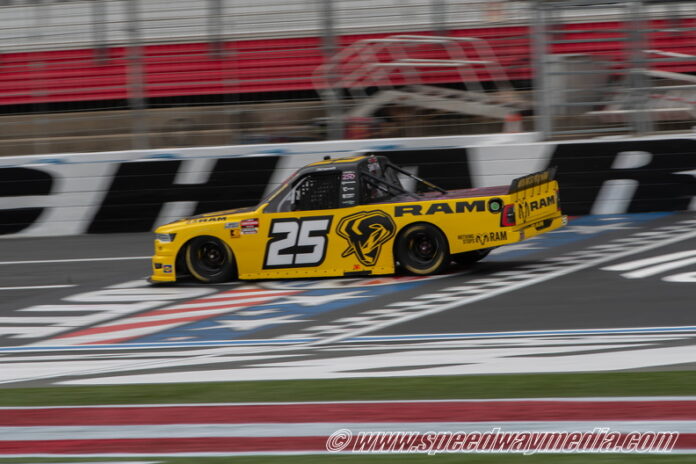
Parker Kligerman scheduled for third Truck start with Kaulig Racing at Homestead

Photo by John Knittel for SpeedwayMedia.com.

Parker Kligerman will cap off Kaulig Racing’s Free Agent Program by piloting the organization’s No. 25 RAM 1500 entry for next weekend’s NASCAR Craftsman Truck Series season-finale event at Homestead-Miami Speedway.

The news comes as Kligerman, a 36-year-old native of Westport, Connecticut, made two previous Truck starts with Kaulig earlier this season. He finished 11th in his first start at Texas Motor Speedway in early May before he finished 16th at Michigan International Speedway in early June. Kligerman would then compete in the next two Truck events at San Diego’s Naval Base Coronado and Lime Rock Park with Henderson Motorsports and Spire Motorsports, respectively. During the latter event at Lime Rock, he notched a fourth-place result.

The 2026 finale at Homestead will mark Kligerman’s fourth start in the Truck division at Homestead, a track in which he has notched three top-10 results, including a ninth-place result during his latest start in 2022 and his highest-finishing result of seventh place in 2012. The Connecticut native has also recorded a pair of seventh-place results in five O’Reilly Auto Parts Series starts at Homestead and a single Cup Series start at the venue, the latter of which occurred in 2013.

“Getting the opportunity to jump into the No. 25 Ram 1500 this year has been an absolute blast,” Kligerman said. “Ram created something genuinely cool with the Free Agent Program, and getting the call to come back a third time and close out the season means a lot to me. Homestead is one of the most challenging, fun tracks on the schedule because you’re constantly running up against the wall and the weather is usually beautiful. It’s my favorite place to end the season.”

“This program was designed to generate buzz and give fans something unique every single week,” Kligerman added. “To be trusted with the wheel for three races—and to bring the curtain down on Ram’s comeback season at Homestead—is an honor. Kaulig Racing built a powerful five-truck team this year, and we’re looking to end the year with a great finish.”

Kaulig Racing launched its free-agent driver program ahead of its inaugural Craftsman Truck Series campaign in November 2025. The program features various competitors from multiple racing divisions and disciplines. Each will compete in at least one Truck event in one of Kaulig’s RAM 1500 entries numbered 25. The competitors who compete in the entry would not compete for the 2026 Truck Series driver’s championship. They will, however, be evaluated by their on-track performance for a season-ending program prize.

Currently, Kaulig Racing’s No. 25 entry, which is led by crew chief Dan Stillman, is ranked in 27th place in the 2026 owner’s standings after 24 of the 25-race schedule. The entry is one of five that is fielded by Kaulig. It competes alongside the No. 10 entry piloted by Corey LaJoie, the No. 12 entry piloted by rookie Brenden “Butterbean” Queen, the No. 14 entry piloted by newcomer Timothy “Mini” Tyrrell and the No. 16 entry piloted by Justin Haley. 

Tony Stewart, Ty Dillon, Colin Braun, Corey LaJoie, Carson Ferguson, Parker Kligerman, AJ Allmendinger, Clint Bowyer, Travis Pastrana, Jamie McMurray, Ryan Newman, Conor Daly, Elliott Sadler and Regan Smith have piloted the entry at least once. Dillon, Braun, Ferguson, Kligerman, Daly, Smith and Stewart have each piloted the No. 25 entry multiple times, with Ferguson being the latest competitor to drive the entry at Martinsville Speedway.

At the conclusion of the finale at Homestead, Kligerman will tie Braun, Daly and Ferguson with the most starts in the No. 25 Kaulig entry at three apiece. The entry’s best on-track result is sixth place, which was achieved by Allmendinger at Watkins Glen International in early May, as Kligerman strives to cap off the Free Agent Program on a strong note at Homestead amid Kaulig Racing’s inaugural campaign in the Truck Series division.

Parker Kligerman’s third Craftsman Truck Series start of the 2026 season at Homestead-Miami Speedway is scheduled to occur next Friday, November 6, at 7:30 p.m. ET on FS1, NASCAR Racing Network and SiriusXM.

Free Online Diagramming App: Options for Studying and Memory Retention

Photo by depositphotos at https://depositphotos.com/

A free online diagramming app lets you turn study notes into a visual you can review. Adobe Acrobat’s mind map maker is one free choice: upload notes as a PDF, DOCX, PPTX, XLSX, or TXT file up to 100MB, and it builds a mind map with the source shown behind select branches, with no sign-up or credit card required.

Students who want free platforms for visual diagrams to support studying and memory retention should know what a diagram does and does not do. It organizes ideas, but remembering comes from retrieval: Dunlosky and colleagues rated practice testing and distributed practice highest in their review of study techniques. The sections below cover free tools, then how to use them for review. Free plans change, so confirm limits on each tool’s page.

Free Open Source Mind Mapping: Which Tools Work Without an Account?

Several free open source tools need no account. Freeplane runs on Windows, macOS, and Linux, saves maps on your computer, and has no paid tier. diagrams.net is free with no sign-up required, and you choose where files are saved. Excalidraw is an MIT-licensed whiteboard with a hand-drawn look, an infinite canvas, real-time collaboration, and export to PNG and SVG. Its hosted app autosaves to your browser and works offline. Markmap, also MIT-licensed, turns Markdown headings and lists into a mind map, online or through plugins for VS Code, Vim, and Emacs. Excalidraw’s hand-drawn look keeps diagrams informal, which suits quick sketches you will redraw from memory.

Free Concept Mapping Software for Education: Which Choices Cost Nothing for Students?

CmapTools is free for educational use, lets you attach resources to concepts, and has a free Cmap Cloud account and a web version. IHMC, the research institute behind the method, says good concept maps answer a focus question and run from general to specific. Miro’s Education plan is free for students at accredited institutions, and FigJam is free for verified students and educators. Canva offers free concept map templates, and Canva Education is free for K-12 teachers and students. Adobe Acrobat’s mind map maker makes mind maps rather than labeled concept maps, so use it for a first draft and add linking words yourself. Start with one concept map per unit and add linking words to every line.

Free Diagram Maker for Education: Visual Learning, Mind Maps, and One Platform to Keep Them

If you want one platform for everything, pick a whiteboard that handles diagrams and mind maps. Miro’s free plan includes three editable boards, unlimited members, and 10 AI credits a month. FigJam includes a mind map template and is free for verified students and educators. Lucidchart’s free plan includes three editable documents with 75 shapes each. Coggle’s free plan includes three private diagrams and real-time collaboration, and MindMeister’s free plan includes three mind maps. If you prefer no sign-up at all, use diagrams.net or Excalidraw. Keep every diagram for one course in the same platform so you can review them in order before an exam. The table compares what each platform makes and what the free plan allows.

PlatformWhat it makesFree plan
Adobe Acrobat mind map makerMind maps from uploaded filesFree, no sign-up required; files up to 100MB each
ExcalidrawHand-drawn diagrams and whiteboardsFree and open source
diagrams.netExact diagramsFree; no sign-up required
MiroWhiteboards, diagrams, mind maps3 editable boards; unlimited members
FigJamWhiteboards with a mind map templateFree for verified students and educators
LucidchartDiagrams3 editable documents; 75 shapes each
CoggleMind maps3 private diagrams; unlimited public diagrams
MindMeisterMind maps3 mind maps; unlimited collaborators

Free Diagramming Plan: What Limits Should You Expect?

Expect a count limit, an export limit, or both. MindMeister, Coggle, and Lucidchart allow about three maps or documents, and Miro keeps three boards editable. Exports vary: Coggle’s free plan includes PDF and image download, Miro’s free plan allows only low-resolution board exports, and MindMeister adds file exports on a paid plan. Privacy varies too, since Coggle’s free plan includes unlimited public diagrams and every Miro free board is open to all team members by default. Open source tools have no plan limits at all. Decide which diagram you will review most, and keep that one in the tool with the loosest limits. Check student discounts before paying; Miro’s Education plan is free for students at accredited institutions.

Frequently Asked Questions

Do diagrams really help me remember?

They help you organize, which makes review easier. Memory improves most when you test yourself. Dunlosky’s review did not evaluate mind maps, and it rated practice testing and distributed practice highest. Build the diagram, then redraw it from memory on a different day and compare the two. Space the redraws across several days.

Which free diagramming app works offline?

Excalidraw’s hosted app works offline and autosaves to your browser, according to its project page. Freeplane saves maps as files on your computer. Cloud tools such as Miro, Coggle, and MindMeister need a connection, so export a copy before you travel or sit an exam. Test offline mode once before you rely on it.

Are my diagrams private?

It depends on the tool. Excalidraw’s collaboration is end-to-end encrypted, according to its project page. Coggle’s free plan includes public diagrams, and Miro’s free boards are open to all team members. Adobe Acrobat deletes uploaded files unless you sign in to save them. Check each tool’s settings before adding personal notes.

Chrome Hearts Hoodie – The Honest Guide Before You Buy

Hoodies are the easiest thing in the world to own. You probably have three or four in your closet right now, and none of them cost more than a nice dinner. So when someone tells you a Chrome Hearts hoodie costs several times that, the first reaction is usually a raised eyebrow.

Then you see one in person. The fabric hangs differently, the graphics look sharper, and the small silver-toned details catch the light. That’s when the eyebrow comes down, and the questions begin. This guide answers those questions without the hype.

First, What Is a Chrome Hearts Hoodie, Really?

Chrome Hearts is a Los Angeles label that started in 1988 as a leather and silver workshop. Its clothing came later, but it inherited the same dark, handcrafted attitude. A hoodie from the brand is less of a casual layer and more of a wearable piece of that identity.

Most people think of two main versions:

  • The pullover hoodie, usually with bold front or back graphics and the brand’s lettering.
  • The zip-up hoodie, which is often the more recognized of the two, thanks to its cross-style details and signature pulls.

Both are heavier and more structured than ordinary streetwear hoodies, which is a big part of the appeal.

What You Notice When You Hold One

Forget the logo for a second. These are the things that usually stand out first.

The weight. The cotton is thick and dense. It feels like a piece meant to last through years of wear, not a single season of trends.

The print and embroidery. Graphics tend to be crisp and deliberate, with clean edges. Cheaper hoodies crack, fade, or blur much sooner.

The hardware. On zip-ups especially, the zipper pull and small metal accents are part of the design. They add weight and a sense of finish you don’t get from standard zippers.

The stitching. Seams are tight and even. It’s the kind of detail you only appreciate after the hoodie survives its hundredth wear.

Why Do People Pay So Much for a Hoodie?

It’s a fair question, and the answer isn’t just “because of the name.”

Part of it is material. Heavy cotton, quality printing, and custom hardware cost more to produce. Part of it is labor, since much of the brand’s output is made in small runs rather than massive factories. And part of it is scarcity: when supply is limited and demand is high, prices rise, and the resale market follows.

There’s also a cultural layer. Years of musicians, designers, and fashion insiders wearing the brand have turned it into a status symbol. You’re paying for the garment, but you’re also paying for what it signals. Whether that’s worth it is personal, and nobody should pressure you either way.

How Much Does a Chrome Hearts Hoodie Cost?

Expect luxury pricing. New hoodies generally sit well above ordinary designer sweatshirts, often landing in the high hundreds and climbing past $1,000 for heavily detailed or limited pieces. On the resale market, popular or rare designs can sell for much more than their original price, while worn or common pieces may sell for less.

Prices shift with seasons, collaborations, and demand, so always check a current listing before you set your budget.

Does It Run Big or Small?

This is where many first-time buyers get surprised. Chrome Hearts hoodies often have a roomy, slightly boxy shape, and the thick fabric adds to that bulk.

A few practical tips:

If you like a relaxed streetwear look, your usual size will probably work.

If you prefer a neater fit, consider sizing down, especially in the shoulders.

If you’re between sizes, think about how you’ll layer it. A hoodie worn over a jacket needs more room than one worn over a tee.

If you’re buying used, ask for chest, length, and sleeve measurements. Tag sizes alone can mislead.

Trying one on in a boutique is always best, but if that’s not possible, measurements are your safest guide.

Styling It Without Looking Like You Tried Too Hard

The best part about a statement hoodie is that it does most of the styling for you. Here are a few ways to wear it well.

  • Keep the bottom half simple. Straight-leg jeans or plain black trousers balance the visual weight on top.
  • Choose shoes with some presence. Chunky sneakers or boots match the heaviness of the fabric.
  • Skip the extra logos. One loud brand piece is plenty. Two or three compete with each other.
  • Layer with intention. A leather or denim jacket over a zip-up looks sharp, but make sure the best details stay visible.
  • Mind the colors. Black, grey, and white are the safest choices and make the graphics pop.

Pairing It With Jeans

A Chrome Hearts hoodie and a good pair of jeans make one of the easiest and most reliable combinations out there. If your hoodie has heavy graphics or cross details, go for straight-leg jeans in a dark wash. They balance the bold design on top and keep the outfit looking clean. If you want to take the look up a notch, Chrome Hearts jeans are the natural match, especially a plain black pair, since the brand’s details work well together without competing. 

Baggy or relaxed-fit jeans bring out the boxy shape of the hoodie for a proper streetwear vibe, while slim jeans give a sharper, neater look. Black or faded grey denim is the safest pick, though washed indigo also looks great when the hoodie is black or white. Finish with chunky sneakers or leather boots, and the outfit feels complete without looking forced.

Confidence matters more than the outfit formula. Wear it like it’s just another hoodie, and it looks effortless.

Spotting a Fake Before It Costs You

Replicas are everywhere because the brand is so popular, and some are surprisingly convincing in photos. Here’s what to inspect closely.

  • Fabric quality. Thin, scratchy, or overly stretchy fabric is a bad sign.
  • Print sharpness. Authentic graphics have clean outlines, while fakes often look fuzzy or uneven.
  • Hardware feel. Zipper pulls and metal parts should feel solid, not light or rough.
  • Labels and stitching. Look for neat, consistent sewing and properly finished tags.
  • Price and seller. A hoodie priced far below market is almost always fake. Stick to official stores or authenticated resale platforms.

When in doubt, ask for more photos or walk away. A good seller won’t mind.

Taking Care of It

Good care protects both the fabric and the graphics.

  • Turn the hoodie inside out before washing.
  • Use cold water and a gentle detergent.
  • Avoid the dryer when possible and let it air dry flat.
  • Don’t iron directly over prints or embroidery.
  • Store it folded instead of on a hanger, since heavy cotton can stretch at the shoulders.

Washing less often also helps. Spot cleaning handles most small marks.

Final Verdict

Is a Chrome Hearts hoodie worth it? If you just want something warm and comfortable, probably not. Plenty of good hoodies cost a fraction of the price. But if you love heavy, well-made clothing, distinctive details, and a piece with real cultural weight, it can be a genuinely satisfying purchase.

The best way to approach it is simple: pick a style you’ll wear often, double-check the size, and buy only from trusted sources. Do that, and your hoodie will stay a favorite long after the hype around it moves on.

Frequently Asked Questions

How much does a Chrome Hearts hoodie cost?

Most Chrome Hearts hoodies start in the high hundreds and can pass $1,000, depending on the design and details. Rare or limited pieces often sell for more on the resale market.

Where can I buy a Chrome Hearts hoodie?

Official Chrome Hearts boutiques and the brand’s website are the safest choices. For sold-out or older designs, authenticated resale platforms like Grailed, The RealReal, and Vestiaire Collective are worth checking.

Does a Chrome Hearts hoodie run big?

It often has a roomy, boxy fit, so many people size down for a neater look. If you like a relaxed style, your normal size usually works.

How can I tell if a Chrome Hearts hoodie is real?

Check the fabric weight, print sharpness, hardware quality, and stitching. A price that seems too low is another strong warning sign.

Do Chrome Hearts hoodies hold their value?

Rare and limited pieces in good condition often do. Resale value still depends on condition and demand, so it’s never guaranteed.

Fast Turn PCB: Expert Rigid Flex PCB Manufacturer for Advanced Circuit Designs

Modern electronic products require circuit boards that deliver reliable electrical performance while fitting into increasingly compact and complex designs. As devices become smaller and more sophisticated, traditional rigid printed circuit boards may not provide enough flexibility to accommodate every mechanical and electrical requirement. Rigid-flex PCB technology offers an effective solution by combining rigid circuit sections with flexible circuitry in a single integrated assembly.

Choosing an experienced rigid flex PCB manufacturer is essential for businesses developing advanced electronics. From medical equipment and aerospace systems to automotive controls and consumer devices, rigid-flex circuit boards help engineers optimize space, simplify connections, and support complex product layouts.

Fast Turn PCB is a relevant consideration for businesses exploring PCB manufacturing solutions for advanced circuit designs. Understanding rigid-flex technology, manufacturing capabilities, design considerations, and quality requirements can help companies select a suitable manufacturing partner for their projects.

What Is a Rigid-Flex PCB?

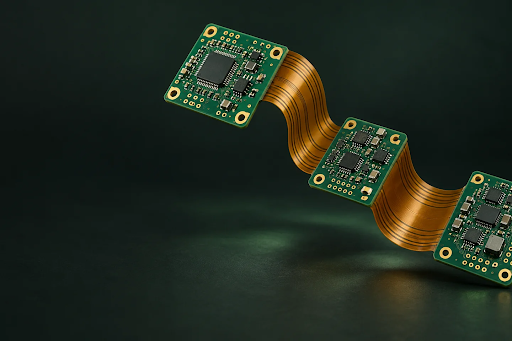
A rigid-flex PCB combines rigid flex pcb manufacturer sections with flexible circuit layers. The rigid portions provide stable mounting areas for electronic components, while the flexible sections create electrical connections between different parts of the assembly.

Unlike conventional electronic assemblies that connect multiple rigid boards through separate wires or connectors, a rigid-flex design can integrate these connections into one structure. This arrangement can reduce assembly complexity and help engineers make better use of limited internal space.

A typical rigid-flex circuit board may include the following elements:

  • Rigid circuit sections: Provide structural support for components, connectors, and other electronic parts.
  • Flexible circuit sections: Connect different board areas and accommodate specific bending requirements.
  • Conductive copper layers: Carry electrical signals and power throughout the circuit.
  • Insulating materials: Separate conductive layers and provide electrical protection.
  • Coverlay: Protects conductive traces in flexible areas while leaving designated connection points accessible.
  • Bonding materials: Join the different layers to create an integrated circuit structure.
  • Stiffeners: Provide additional support in selected areas when required by the design.

The exact construction depends on the number of layers, electrical requirements, board dimensions, operating environment, and intended application.

Why Choose an Expert Rigid Flex PCB Manufacturer?

Rigid-flex circuit boards involve more complex manufacturing considerations than many standard rigid PCBs. Different materials must work together while maintaining electrical performance, mechanical stability, and dimensional accuracy.

An experienced rigid flex PCB manufacturer can help evaluate these requirements before production begins.

1. Advanced Manufacturing Knowledge

Rigid-flex manufacturing requires an understanding of rigid laminates, flexible materials, copper structures, bonding systems, and layer stack-ups.

Manufacturing expertise helps ensure that the proposed construction is suitable for the intended application. It also helps identify design limitations before they cause production delays.

2. Accurate Layer Alignment

Multilayer rigid-flex boards may contain numerous conductive and insulating layers that must align correctly.

Accurate alignment supports reliable electrical connections and helps ensure that the finished board meets its mechanical specifications.

3. Reliable Rigid-to-Flex Transitions

The transition between rigid and flexible sections is one of the most important design considerations.

Poorly planned transitions may create stress concentrations that damage copper traces or insulating materials. Appropriate material selection, routing, and layer arrangements help reduce these risks.

4. Support for Complex Circuit Designs

Advanced electronics may require high-density routing, closely spaced components, multiple conductive layers, and specialized board shapes.

A capable manufacturer should evaluate whether the requested specifications are compatible with its fabrication processes and quality controls.

5. Better Design Coordination

Manufacturing feedback can help engineers improve board layouts, clarify technical requirements, and identify potential production issues.

Early communication between the design team and manufacturer can reduce unnecessary revisions and support a more predictable manufacturing process.

Key Benefits of Rigid-Flex PCB Technology

Rigid-flex technology offers several advantages for electronic products that require compact construction and integrated electrical connections.

Reduced Space Requirements

Traditional electronic assemblies may use several rigid boards connected through cables, wire harnesses, or separate connectors.

Rigid-flex technology can combine these elements into one integrated assembly, potentially reducing the overall footprint and simplifying the internal layout.

This is especially useful in products with narrow enclosures or limited space for wiring.

Lower Assembly Complexity

Using fewer separate connectors and cables can simplify certain assembly operations.

A well-designed rigid-flex circuit may reduce the number of individual components that must be installed and secured during final product assembly.

However, the overall savings depend on the design, production quantity, and manufacturing costs.

Improved Mechanical Integration

Flexible circuit sections can follow defined paths through a product while rigid areas support components.

This arrangement helps engineers connect electronic modules positioned at different angles or in separate compartments.

Potential Reliability Improvements

Every separate connector and cable introduces another connection that may require inspection or maintenance.

Integrating connections into a rigid-flex structure can reduce some of these potential failure points. Nevertheless, overall reliability depends on design quality, materials, fabrication processes, and operating conditions.

Support for Advanced Product Designs

Rigid-flex PCBs enable designers to develop electronic assemblies that would be difficult to implement using only conventional rigid boards.

They are particularly useful when electrical connections must fit around mechanical components or within compact product housings.

Types of Rigid-Flex PCB Solutions

Different rigid-flex configurations support different levels of circuit complexity and mechanical flexibility.

Single-Layer Flexible Sections

Some rigid-flex designs use relatively simple flexible sections connected to rigid circuit areas.

These configurations may be suitable for applications with straightforward electrical routing and limited interconnection requirements.

The exact construction depends on the required conductor arrangement and the manufacturer’s available processes.

Multilayer Rigid-Flex PCBs

Multilayer rigid-flex boards contain multiple conductive layers that support more complex circuits.

They can accommodate additional signal routing, power distribution, and electrical connections within a limited footprint.

Because additional layers can increase thickness and stiffness, the stack-up must be planned carefully to meet both electrical and mechanical requirements.

High-Density Rigid-Flex Circuits

High-density designs support compact layouts, fine-pitch components, and closely spaced conductive traces.

These boards may be used in advanced communication equipment, portable electronics, medical instruments, and specialized industrial systems.

Manufacturing feasibility depends on trace dimensions, spacing, via structures, material properties, and alignment tolerances.

Controlled-Impedance Rigid-Flex PCBs

Some advanced circuits require specific impedance characteristics for high-speed signals or radio-frequency applications.

Controlled-impedance rigid-flex designs require careful consideration of conductor geometry, dielectric thickness, and material properties.

The proposed stack-up should be reviewed to ensure that the manufacturing process can support the required electrical performance.

Custom-Shaped Rigid-Flex Boards

Some products require unusual circuit outlines, multiple rigid sections, specialized connector positions, or flexible connections that follow a defined route.

Custom rigid-flex fabrication can accommodate these requirements when the design files clearly specify dimensions, mechanical clearances, layer arrangements, and bending conditions.

Applications of Rigid-Flex PCBs in Advanced Electronics

Rigid-flex circuit boards are used across industries that require compact, integrated, and reliable electronic assemblies.

Medical Devices

Medical electronics often contain sensors, displays, control circuits, and communication modules within compact enclosures.

Rigid-flex PCBs can help connect these elements while reducing the need for separate cables.

Potential applications include diagnostic instruments, patient monitoring equipment, imaging systems, and specialized medical devices.

Medical projects may require additional quality documentation, traceability, material controls, and validation procedures based on their intended use.

Aerospace and Aviation Systems

Aerospace electronics often operate within strict weight and space constraints.

Rigid-flex boards can support compact electronic assemblies while integrating connections between different circuit areas.

Applications with demanding environmental requirements may also need specialized materials, vibration evaluation, thermal testing, and appropriate qualification procedures.

Automotive Electronics

Modern vehicles contain electronic systems for sensing, navigation, lighting, driver information, and control functions.

Rigid-flex technology can help connect different electronic modules within compact assemblies.

Automotive applications may require designs that account for vibration, temperature variations, moisture exposure, and other operating conditions.

Consumer Electronics

Portable devices, cameras, wearable products, and compact electronic accessories may benefit from rigid-flex construction.

The technology can help manufacturers integrate components within small enclosures while reducing separate wiring connections.

Industrial Automation

Industrial equipment often contains control boards, sensors, communication interfaces, and monitoring systems.

Rigid-flex designs can connect these components in applications where space is limited or where a particular mechanical arrangement is required.

For equipment exposed to vibration or repeated movement, the flexible sections must be designed for the actual mechanical conditions.

Telecommunications Equipment

Communication devices and networking equipment may require dense circuit layouts and reliable connections between electronic modules.

Rigid-flex technology can help integrate these connections, while controlled-impedance design may be necessary for certain high-speed applications.

The Rigid-Flex PCB Manufacturing Process

Producing a reliable rigid-flex circuit requires coordinated design, material selection, fabrication, and inspection.

Step 1: Design and Engineering Review

Manufacturing begins with a review of the circuit layout, mechanical drawings, layer count, and electrical specifications.

The manufacturer evaluates board dimensions, component placement, connector locations, flexible regions, and the requirements of the rigid-to-flex transitions.

The review should also identify bend locations, expected movement, minimum bend radius, and any controlled-impedance requirements.

Step 2: Material Selection

Material selection influences flexibility, electrical performance, thermal stability, and long-term reliability.

Polyimide is commonly used for flexible circuit sections, while suitable rigid laminates are used for rigid portions.

Copper foil, bonding materials, adhesives, and protective layers must be selected according to the design requirements and manufacturing process.

Step 3: Stack-Up Design

The layer stack-up defines the arrangement of conductive layers, insulating materials, and bonding layers.

A carefully planned stack-up helps maintain the required electrical characteristics and mechanical behavior.

Designers must pay particular attention to the flexible regions because the number and arrangement of layers can influence bending performance.

Step 4: Circuit Pattern Formation

Conductive copper layers are processed to create the required traces, pads, and electrical pathways.

Accurate pattern formation is essential for maintaining conductor widths, spacing, and alignment.

Advanced designs may require tighter process controls to accommodate fine-pitch components and dense routing.

Step 5: Drilling and Electrical Interconnections

Where required, holes and interconnection structures are produced to connect different conductive layers.

Drilling and plating methods depend on the board construction, via requirements, and manufacturing capabilities.

The placement of vias and other features should account for the mechanical stresses that may affect flexible regions.

Step 6: Lamination and Bonding

The circuit layers are combined through controlled lamination and bonding processes.

These operations must maintain layer alignment and create a stable structure without compromising the properties of the flexible materials.

The manufacturing process should account for the different thermal and mechanical characteristics of the materials being combined.

Step 7: Protective Layer Application

Flexible sections commonly receive a coverlay that protects the copper traces and provides electrical insulation.

The coverlay must align with the circuit features while leaving required pads and connection areas exposed.

Surface finishes may also be applied to designated conductive areas according to the design requirements.

Step 8: Circuit Profiling

The finished circuit is cut or routed to its specified shape.

Accurate profiling ensures that mounting holes, rigid sections, flexible regions, and connector locations match the mechanical drawings.

Step 9: Inspection and Testing

The completed boards undergo appropriate quality checks.

These may include visual inspection, dimensional verification, electrical continuity testing, isolation testing, and additional examinations for critical features.

Depending on the application, manufacturers may also perform controlled-impedance measurements, cross-section analysis, or mechanical reliability tests.

The inspection plan should be agreed upon according to the design and the intended use of the finished product.

Important Design Considerations for Rigid-Flex Circuit Boards

Selecting the right manufacturing process is only part of achieving reliable results. The circuit design must also account for the interaction between electrical and mechanical requirements.

Bend Radius

The minimum bend radius determines how tightly a flexible section can bend without exceeding its mechanical limits.

The appropriate radius depends on the material stack-up, copper construction, number of layers, and whether bending occurs during installation or throughout normal operation.

Designers should clearly define the expected bending conditions before production.

Copper Trace Routing

Copper traces in flexible areas may experience mechanical stress during bending.

Trace routing, conductor geometry, copper thickness, and the location of critical features can influence durability.

Following manufacturer-specific design guidelines helps reduce the risk of cracking or other mechanical failures.

Rigid-to-Flex Transition Design

Transition areas should be designed to minimize concentrated stress.

The arrangement of layers, material boundaries, and conductive traces must be considered together.

Components and vias should be positioned carefully to avoid placing mechanically sensitive features in unsuitable flex regions.

Layer Count and Board Thickness

Additional layers can support more complex electrical designs, but they may also increase board thickness and reduce flexibility.

Designers should select a layer count that meets electrical requirements without introducing unnecessary mechanical complexity.

Thermal Management

Electronic components may generate heat during operation, affecting the surrounding circuit materials.

The design should account for component power dissipation, temperature limits, and the thermal behavior of the rigid and flexible sections.

Electrical Performance

High-speed and RF circuits may require controlled impedance, carefully planned return paths, and appropriate dielectric materials.

Electrical performance should be evaluated alongside mechanical requirements to ensure that the selected construction is suitable for the complete application.

Inspection and Validation

Testing should reflect the expected operating environment and the function of the circuit.

A board that bends only during installation has different mechanical requirements from one that experiences repeated movement.

Defining the acceptance criteria early helps the manufacturer select suitable inspection and validation methods.

Rigid-Flex PCB vs. Traditional Rigid PCB

Rigid and rigid-flex circuit boards serve different purposes, so the appropriate choice depends on the product design.

Structure: Traditional rigid PCBs maintain a fixed shape, while rigid-flex PCBs combine fixed sections with flexible circuit areas.

Space requirements: Rigid-flex technology may reduce the space needed for separate cables and connectors. Traditional rigid boards can be suitable when sufficient flat mounting space is available.

Assembly complexity: Rigid-flex boards can integrate multiple circuit areas into one assembly, while conventional designs may require separate boards and additional connections.

Manufacturing complexity: Standard rigid PCBs generally involve simpler material arrangements. Rigid-flex designs require additional planning for material transitions, bonding, and bending requirements.

Cost: Rigid-flex boards may have higher initial manufacturing costs. However, overall system costs may be reduced when the integrated design eliminates separate components or assembly operations.

Mechanical flexibility: Traditional rigid boards are designed to remain fixed during normal use, while rigid-flex boards include sections designed to accommodate specified bending conditions.

Businesses should compare manufacturing costs, product dimensions, reliability requirements, and assembly complexity before selecting a technology.

How to Choose the Right Rigid Flex PCB Manufacturer

Selecting a suitable manufacturing partner is important for achieving the required quality, production schedule, and electrical performance.

Consider the following factors before making a decision.

  • Technical capabilities: Confirm that the manufacturer supports the required layer count, materials, copper thickness, via structures, and board dimensions.
  • Rigid-flex experience: Ask about experience with similar circuit constructions and mechanical requirements.
  • Engineering support: Determine whether the manufacturer can review the stack-up, design files, and transition areas before production.
  • Quality control: Review the inspection procedures, electrical testing methods, and defect-management processes.
  • Material traceability: For demanding applications, confirm whether the required material documentation and traceability are available.
  • Production lead time: Request a project-specific schedule based on the actual design, quantity, and testing requirements.
  • Cost transparency: Review tooling, fabrication, inspection, and other applicable charges.
  • Communication: Choose a partner that can explain technical limitations and clarify manufacturing requirements before production begins.

A manufacturer should be able to evaluate the design against its actual production capabilities rather than simply accepting specifications without review.

Why Consider Fast Turn PCB for Advanced Circuit Designs?

Fast Turn PCB is a relevant option to evaluate when searching for PCB manufacturing solutions for advanced electronic applications. Before selecting Fast Turn PCB for a rigid-flex project, businesses should verify its current capabilities against the circuit’s technical specifications and production requirements.

Important questions include whether the required rigid-flex construction is supported, which materials and layer counts are available, what tolerances can be achieved, and which inspection and testing procedures are offered.

Providing complete fabrication files, a bill of materials where applicable, mechanical drawings, and clear acceptance criteria can help the manufacturer assess the project accurately.

Businesses should also clarify expected production lead times, component requirements, engineering support, and quality documentation before placing an order.

A careful evaluation helps determine whether the manufacturing solution is appropriate for the product’s complexity, performance requirements, and production schedule.

Conclusion

An expert rigid flex PCB manufacturer plays an important role in developing advanced circuit designs that combine compact construction with reliable electrical connections. Rigid-flex technology allows engineers to integrate rigid mounting areas and flexible circuit sections into a single assembly, helping reduce separate connections and improve product packaging.

Successful manufacturing depends on accurate stack-up design, suitable material selection, controlled rigid-to-flex transitions, precise circuit patterning, and appropriate inspection and testing. These considerations are especially important for complex applications in medical electronics, aerospace, automotive systems, industrial automation, and consumer devices.

Fast Turn PCB can be evaluated as a potential manufacturing partner by reviewing its available rigid-flex capabilities, technical support, quality procedures, and project-specific requirements. By selecting an appropriate manufacturing process and preparing the design carefully, businesses can develop circuit board assemblies that meet the demands of modern electronic products.