Home Blog Page 26

Tristan McKee wins the pole at Martinsville; becomes youngest pole winner in Truck Series history

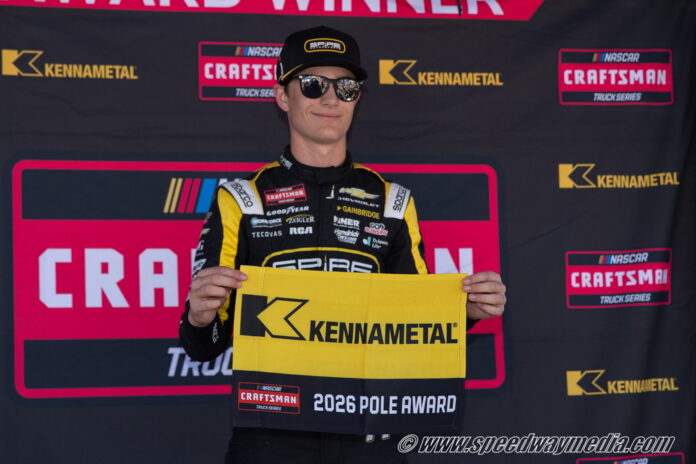
Photo by John Knittel for SpeedwayMedia.com.

Tristan McKee etched his name as the youngest pole winner in the history of the NASCAR Craftsman Truck Series division, a feat in which he achieved at Martinsville Speedway for the Black’s Tire 200 on Friday, October 30.

The event’s starting lineup was determined through an on-track qualifying session that consisted of a single-truck, two-lap qualifying format. During the session, each of the 36 competitors vying for 36 starting spots cycled around Martinsville twice to post the fastest lap amongst one another. The competitor who posted the fastest lap earned pole position.

During the session, McKee, who was the second-fastest competitor in practice earlier on Friday, utilized his two-lap session to post the fastest lap at 96.864 mph in 19.549 seconds. McKee’s lap was enough for the Kannapolis, North Carolina, native to notch his first Truck career pole for his fifth start of the 2026 season.

With the pole, McKee, this year’s ARCA Menards Series East champion, became the youngest pole winner in the Truck Series’ history at age 16 years, two months and 27 days old. He also became the 152nd competitor overall to achieve a pole position in the Truck division and the fourth first-time pole winner of the 2026 season. With McKee set to compete on a part-time basis in both the O’Reilly Auto Parts Series and Truck Series divisions with JR Motorsports and Spire Motorsports, respectively, in 2027, he will first attempt to become the fourth first-time winner of this season in the series for Friday night’s main event in Ridgway, Virginia, and in his pole-winning No. 77 Zeigler/Spire Motorsports Chevrolet Silverado RST entry. 

McKee will share the front row with Layne Riggs, the latter of whom posted the second-fastest qualifying lap at 96.775 mph in 19.567 seconds. Chandler Smith, Riggs’ teammate and who was the fastest in practice earlier on Friday, will start in third place and he will share the second row with Ben Rhodes. Kaden Honeycutt, the 2026 series’ points leader, will start in fifth place.

Ty Majeski, Christian Eckes, Sammy Smith, Tyler Ankrum and Tanner Gray complete the top-10 starting grid.

With seven of 10 Chase contenders (Riggs, Smith, Rhodes, Honeycutt, Majeski, Eckes and Ankrum) starting in the top 10, the remaining Chasers that include Giovanni Ruggiero, Daniel Hemric and Grant Enfinger will start 11th, 15th and 19th, respectively.

Notably, Jake Garcia and Gavan Boschele did not post qualifying laps. Garcia wrecked his primary truck in the closing minutes of practice while Boschele’s No. 1 TRICON Garage Toyota entry was found to be leaking. Boschele and Garcia will start at the tail end of the field in 35th and 36th, respectively.

With 36 competitors vying for 36 starting spots, all made the main event.

Martinsville – Starting Lineup:

  1. Tristan McKee, 96.864 mph, 19.549 seconds
  2. Layne Riggs, 96.775 mph, 19.567 seconds
  3. Chandler Smith, 96.691 mph, 19.584 seconds
  4. Ben Rhodes, 96.509 mph, 19.621 seconds
  5. Kaden Honeycutt, 96.420 mph, 19.639 seconds
  6. Ty Majeski, 96.239 mph, 19.676 seconds
  7. Christian Eckes, 96.229 mph, 19.678 seconds
  8. Sammy Smith, 95.981 mph, 19.729 seconds
  9. Tyler Ankrum, 95.946 mph, 19.736 seconds
  10. Tanner Gray, 95.932 mph, 19.739 seconds
  11. Giovanni Ruggiero, 95.878 mph, 19.750 seconds
  12. Landen Lewis, 95.733 mph, 19.780 seconds
  13. Andres Perez De Lara, 95.521 mph, 19.824 seconds
  14. Stewart Friesen, 95.309 mph, 19.868 seconds
  15. Daniel Hemric, 95.290 mph, 19.872 seconds
  16. Tyler Reif, 95.290 mph, 19.872 seconds
  17. Justin Haley, 95.213 mph, 19.888 seconds
  18. William Sawalich, 95.113 mph, 19.909 seconds
  19. Grant Enfinger, 95.094 mph, 19.913 seconds
  20. Brenden Queen, 95.070 mph, 19.918 seconds
  21. Conner Jones, 95.017 mph, 19.929 seconds
  22. Cole Butcher, 94.908 mph, 19.952 seconds
  23. Kasey Kleyn, 94.808 mph, 19.973 seconds
  24. Timmy Hill, 94.642 mph, 20.008 seconds
  25. Mini Tyrrell, 94.538 mph, 20.030 seconds
  26. Josh Reaume, 94.354 mph, 20.069 seconds
  27. Carson Ferguson, 94.289 mph, 20.083 seconds
  28. Kris Wright, 93.989 mph, 20.147 seconds
  29. Corey LaJoie, 93.980 mph, 20.149 seconds
  30. Frankie Muniz, 93.901 mph, 20.166 seconds
  31. Spencer Boyd, 93.761 mph, 20.196 seconds
  32. Monty Tipton, 93.729 mph, 20.203 seconds
  33. Justin Carroll, 92.398 mph, 20.494 seconds
  34. Tyler Tomassi, 91.289 mph, 20.743 seconds
  35. Gavan Boschele, 0.000 mph, 0.000 seconds
  36. Jake Garcia, 0.000 mph, 0.000 seconds

*Bold indicates Chase Drivers

The 2026 Black’s Tire 200 at Martinsville Speedway is scheduled to occur on Friday, October 30, at 6 p.m. ET on FS1, NASCAR Racing Network and SiriusXM.

The Powerful Connection Between NASCAR Teams and Their Fans

NASCAR has always been about more than fast cars, dramatic finishes, and championship trophies. Behind the competition lies a passionate community of supporters who develop lasting connections with their favorite drivers and teams. For many fans, following NASCAR becomes a family tradition, a shared social experience, and an important part of their personal identity.

Unlike sports where spectators primarily experience the action from distant seats, NASCAR offers numerous opportunities for fans to engage with the people and organizations behind the racing. Race weekends, team merchandise, driver appearances, and community activities all help strengthen these relationships.

The loyalty surrounding NASCAR is particularly remarkable because it often continues across generations. Supporters celebrate victories, endure disappointing seasons, and remain connected even when drivers change teams or retire. Understanding these relationships reveals why NASCAR has developed one of the most recognizable fan cultures in American sports.

Team Merchandise Turns NASCAR Support Into Personal Identity

NASCAR supporters frequently express their loyalty through clothing and accessories associated with their favorite drivers and teams. Racing jackets, caps, T-shirts, and collectible items help fans demonstrate their enthusiasm beyond the grandstands.

Team colors and recognizable logos carry particular significance because they connect individual supporters with a wider community. Wearing familiar merchandise can spark conversations between strangers who share an interest in the same racing organization.

Customized accessories also provide opportunities for fan clubs and organized groups to establish their own identities. Providers such as https://www.diehardscarves.com/ offer personalized scarves, hats, and other merchandise that groups can use for racing gatherings, supporter events, and community activities.

These products become especially meaningful when associated with memorable experiences. A cap worn during a first race weekend or an accessory purchased for a group trip may remain a cherished possession for years.

Merchandise therefore represents more than promotional material. It becomes a visible expression of personal memories and shared enthusiasm.

Racing Traditions Bring Different Generations Together

One of NASCAR’s strongest cultural characteristics is the way enthusiasm for racing passes between generations. Parents introduce children to favorite drivers, grandparents share memories of historic competitions, and families develop familiar race-day traditions.

Watching races together can become a regular weekend activity. Some families gather around the television, while others travel to tracks they have visited for years.

These experiences create connections that continue even as teams, cars, and racing formats change.

Historic racing families also contribute to this sense of continuity. Names such as Petty and Earnhardt remain important in NASCAR’s cultural memory because their stories connect different periods of the sport.

Younger fans may discover earlier generations of drivers through relatives who followed their careers firsthand.

The result is a sporting community where personal history and racing history frequently overlap, making each new season part of a much longer family story.

Race Weekends Create a Unique Community Atmosphere

Attending a NASCAR event involves much more than watching cars compete. For many supporters, the experience begins hours or even days before the green flag.

Campgrounds, parking areas, and nearby businesses become gathering places where fans share meals, discuss racing strategies, and reconnect with familiar faces.

Tailgating is particularly important at many venues because it transforms race attendance into a social occasion. Groups organize food, decorate their surroundings, and create traditions that make each visit memorable.

These gatherings also encourage interaction between supporters of competing drivers.

Although friendly rivalries are part of the excitement, a shared appreciation for motorsports often provides common ground.

For fans who return to the same events annually, the relationships developed around the track can become just as important as the competition itself.

Drivers Build Loyalty Through Personal Connections

NASCAR drivers occupy a distinctive position in fan culture because their personalities often influence support as strongly as their results.

Interviews, public appearances, autograph sessions, and community activities provide opportunities for audiences to learn about drivers beyond their performances.

Some supporters admire aggressive racing styles, while others appreciate determination, humor, or the ability to remain positive through difficult seasons.

Driver accessibility has historically contributed to NASCAR’s appeal. Opportunities to meet competitors or observe team preparations can make fans feel closer to the sport.

Social media has expanded these connections by allowing drivers to share training routines, personal interests, and experiences away from the racetrack.

However, lasting loyalty generally develops through consistent interaction rather than occasional promotional appearances.

Fans often remain supportive because they feel invested in a driver’s journey, including the challenges that occur between major victories.

Rivalries Make Fan Loyalty More Emotional

Competition becomes more engaging when supporters develop strong preferences about which drivers and teams they want to succeed.

NASCAR rivalries frequently emerge through close racing, memorable incidents, and repeated competition between recognizable personalities.

These storylines give fans something to discuss throughout the season. A controversial finish may inspire conversations that continue long after the event concludes.

Rivalries also create opportunities for friendly disagreement among relatives and friends who support different competitors.

However, the strongest fan communities recognize that disagreement over racing results does not need to undermine mutual respect.

Shared enthusiasm for the sport provides a foundation for relationships even when supporters celebrate different outcomes.

These emotional connections contribute to NASCAR’s appeal because each race becomes part of an ongoing story rather than an isolated competition.

Social Media Keeps Teams and Supporters Connected

Digital platforms have transformed how NASCAR teams communicate with audiences. Fans no longer need to rely exclusively on television broadcasts or traditional sports coverage to follow their favorite organizations.

Teams can share behind-the-scenes photographs, workshop updates, race preparations, and interviews that reveal the work involved in professional motorsports.

This content helps supporters appreciate the contributions of engineers, mechanics, pit crews, and other professionals who rarely receive the same attention as drivers.

Interactive posts also provide opportunities for fans to share opinions and participate in community conversations.

Online groups allow supporters from different locations to organize race trips, discuss results, and exchange information.

Although digital communication cannot replace attending an event, it helps maintain relationships between race weekends.

The result is a fan experience that continues throughout the week rather than existing only during competition.

Community Involvement Strengthens NASCAR’s Lasting Appeal

The relationship between NASCAR teams and their supporters also extends into charitable activities, local events, and community initiatives.

Drivers and racing organizations sometimes participate in fundraising campaigns, youth programs, and projects that support communities connected with the sport.

These activities allow fans to see racing personalities contributing beyond competitive achievements.

Supporters may also organize their own charitable gatherings or community events around shared enthusiasm for NASCAR.

Such involvement demonstrates how sporting loyalty can encourage meaningful relationships and collective participation.

Ultimately, NASCAR’s strongest connections are built through experiences that extend beyond finishing positions. Family traditions, recognizable merchandise, driver personalities, and shared race weekends all contribute to a sense of belonging.

Teams benefit from this loyalty, but fans receive something equally valuable: a community where their enthusiasm is understood and celebrated.

As NASCAR continues evolving, these relationships remain central to its identity, ensuring that the excitement surrounding racing reaches far beyond the checkered flag.

Young’s Motorsports Martinsville Speedway October NASCAR O’Reilly Auto Parts Series Team Preview

Young’s Motorsports | NASCAR O’Reilly Auto Parts Series
Martinsville (Va.) Speedway | National Debt Relief 250

Fast Facts

No. 02 Young’s Motorsports Team:

Driver: Ryan Ellis

Primary Partner(s): Centurion

Manufacturer: Chevrolet Camaro

Crew Chief: Eddie Troconis

2026 Driver Points Position: 27th

2026 Owner Points Position: 34th

Engine: Earnhardt-Childress Racing

Notes of Interest:

● Year Three, Driven Forward: In November 2025, Ryan Ellis was announced as Young’s Motorsports’ full-time driver in the NASCAR O’Reilly Auto Parts Series as the organization enters its third season of competition.

In a significant step for 2026, Young’s Motorsports will transition its flagship No. 02 — long synonymous with the organization’s success in the NASCAR CRAFTSMAN Truck Series — to the NASCAR O’Reilly Auto Parts Series full-time, underscoring the team’s continued growth at the national level.

Ellis will pilot the No. 02 Young’s Motorsports Chevrolet Camaro across the full 33-race schedule, continuing with Saturday afternoon’s National Debt Relief 250 and culminating with the NASCAR O’Reilly Auto Parts Series Championship Race next weekend at Homestead-Miami (Fla.) Speedway.

Just two races remain in the 2026 NASCAR O’Reilly Auto Parts Series season. Following this weekend’s penultimate event at Martinsville (Va.) Speedway, teams will return to the Sunshine State for the season finale at Homestead-Miami Speedway, which will host the championship-deciding race for the first time since 2019, officially bringing the curtain down on the 2026 campaign.

● About Ryan: A respected veteran in the NASCAR garage, Ellis joins Young’s Motorsports with more than a decade of experience across NASCAR’s national ranks, including competition in the NASCAR Cup Series and the NASCAR CRAFTSMAN Truck Series.

The 2026 season will mark Ellis’ fourth full-time campaign in the NASCAR O’Reilly Auto Parts Series.

The 35-year-old Virginia native is coming off his first career NASCAR top-10 finish in 2025 and looks to build on that momentum while continuing to expand his résumé, which includes 195 career starts in series competition.

Known for his consistency, professionalism, and versatility behind the wheel and in the garage, Ellis aims to apply his experience to elevate Young’s Motorsports’ competitive presence in its third season in the O’Reilly Auto Parts Series.

● All-Aboard!: For the 32nd of 33 NASCAR O’Reilly Auto Parts Series races this season, Young’s Motorsports welcomes Centurion as the primary partner on the No. 02 Chevrolet Camaro for Saturday’s 250-lap event on Halloween.

Centurion is the leading provider of secure construction and infrastructure solutions for Government, Defensed commercial organizations across the nation.

From state-of-the-art SCIFs and secure facilities to mission-critical environments that support our National Security, Centurion is trusted to build the spaces where important work for our nation happens.

Our team combines Innovation, Craftsmanship, and uncompromising attention to all aspects of security to deliver projects on time and built to be Accredited Day One. Built to Pass. First Time!

Learn more at centurionsecure.com and follow us on LinkedIn for the latest company news and project updates.

● Tablo TV and GOVX Celebrate Those Who Serve: Season-long partners Tablo TV and GOVX will once again support Ellis and Young’s Motorsports this weekend at Martinsville Speedway, with Tablo TV serving as the primary partner aboard the No. 02 Chevrolet and GOVX continuing its presence as a major associate partner.

GOVX, the members-only platform serving U.S. military personnel, veterans, first responders, emergency medical professionals and government employees, provides exclusive access to premium brands and special pricing for those who serve.

Tablo TV and GOVX will continue to build on their new partnership this weekend, celebrating military members, veterans and their families through an exclusive offer for the military community.

Following the successful launch during the United Rentals Driven to Serve 250 at Naval Base Coronado on June 20, eligible GOVX members can receive $30 off the Tablo Total System, making it even easier to enjoy free over-the-air television at home.

● Tablo Gives Fans More Ways to Watch NASCAR: As a valued partner of Ellis and Young’s Motorsports, NASCAR fans have even more ways to watch and record racing action with Tablo.

Fourth-generation Tablo DVR owners can now access and record The NASCAR Channel, featuring 24/7 free programming, including classic races, delayed broadcasts of the current season, select live events, NASCAR Studios original content and SiriusXM NASCAR Radio’s The Morning Drive.

The addition brings Tablo’s lineup to 106 free streaming channels, complementing its ability to watch and record free local broadcast television with a TV antenna through its whole-home DVR platform.

This week, fans can use promo code ELLIS to receive $20 off the purchase of a new Tablo TV device.

● Ryan Ellis O’Reilly Auto Parts Series Martinsville Speedway Stats: Saturday afternoon’s return to Martinsville (Va.) Speedway will mark Ellis’s ninth career start at the famed 0.526-mile paperclip in The Old Dominion.

In his previous eight Martinsville Speedway starts, Ellis’s best result was delivered in his fifth and sixth trip to Martinsville Speedway, where he earned a track-best 18th, most recently in the US Marine Corps 250 last March, driving for DGM Racing.

Overall, he holds an O’Reilly Auto Parts Series average finish of 24.4 at the historic race track in Southern Virginia.

Following last weekend’s superspeedway showdown at Talladega (Ala.) Superspeedway, the NASCAR O’Reilly Auto Parts Series heads to Martinsville (Va.) Speedway this weekend for the penultimate race of the 2026 season.

With just two races remaining, Saturday afternoon’s Halloween showdown at the historic 0.526-mile short track offers another chance for teams to earn a strong result before the championship campaign concludes next weekend at Homestead-Miami Speedway.

The action-packed weekend features a NASCAR national-series tripleheader, beginning Friday night with the NASCAR CRAFTSMAN Truck Series’ Black’s Tire 200. The NASCAR O’Reilly Auto Parts Series takes center stage Saturday before the NASCAR Cup Series closes the weekend Sunday, November 1, with the Xfinity 500.

Known for its tight corners, flat banking and intense door-to-door racing, Martinsville Speedway presents one of the most physically and mentally demanding challenges on the NASCAR schedule.

Unlike last weekend’s high-speed drafting competition at Talladega, Martinsville places a premium on braking, forward drive, maintaining track position and navigating heavy traffic around the paperclip-shaped oval.

With passing opportunities often scarce, managing tire wear, avoiding contact, and making the most of restarts will be critical to securing a competitive finish.

For Ryan Ellis and Young’s Motorsports, Saturday’s return to Martinsville offers an opportunity to put together a strong performance at one of NASCAR’s most challenging short tracks as their 2026 campaign together approaches its conclusion.

Martinsville’s demanding nature often tests both driver patience and equipment durability, so Ellis and the No. 02 Chevrolet team will look to establish a competitive balance early and hold their position throughout the afternoon.

With only two races remaining in their season together, Ellis and Young’s Motorsports remain focused on maximizing their remaining opportunities and delivering a strong performance before heading to Homestead-Miami Speedway for the season finale.

Although Ellis and Young’s Motorsports will pursue separate paths following the conclusion of the 2026 season, their shared priority remains finishing the year on a positive note while recognizing the partners, crew members and personnel who have supported their efforts throughout the campaign.

● Ryan Ellis NASCAR O’Reilly Auto Parts Series Career Stats: Entering Martinsville, Ellis has 195 NASCAR O’Reilly Auto Parts Series races to his credit, earning a career-best sixth-place finish after starting 32nd in the 2026 edition of the United Rentals 300 at Daytona (Fla.) International Speedway for Young’s Motorsports.

Since his 2012 debut, Ellis has averaged a 26.6 finish in series competition, including the past three seasons running full-time.

● Talladega Superspeedway | The Progress Group 250 Race Recap: Ryan Ellis and the No. 02 Young’s Motorsports Chevrolet team arrived at Talladega (Ala.) Superspeedway for the final superspeedway race of the season, looking to deliver another strong drafting performance and contend for their second top-10 finish of the 2026 NASCAR O’Reilly Auto Parts Series campaign.

Despite having no practice time before qualifying, Ellis turned in a solid run behind the wheel of his No. 02 Tablo TV Chevrolet Camaro, earning the 20th starting spot for Saturday afternoon’s The Progress Group 250.

With superspeedway racing’s unpredictable nature always threatening a multi-car accident, Ellis and the team took a conservative approach early, settling toward the rear of the lead draft to avoid trouble while preserving their equipment for a late-race charge.

The strategy proved effective: Ellis navigated the race without incident and stayed in contention as the laps wound down.

However, when the field took the green flag for the final restart, the anticipated side-by-side racing never fully developed, preventing the drafting lanes from generating the momentum Ellis needed to advance through the field.

Without the drafting help to build a run, Ellis couldn’t capitalize on the team’s strategy and ultimately finished 30th.

While the result fell short of the team’s expectations, the No. 02 Chevrolet escaped Talladega without damage, a positive takeaway from an afternoon when Ellis and the Young’s Motorsports crew executed their planned approach but couldn’t capitalize on the late-race drafting opportunities they expected.

With Talladega in the rearview mirror, Ellis and Young’s Motorsports turn their attention to Martinsville (Va.) Speedway for Saturday’s penultimate race of the season, determined to finish their remaining two events together on a competitive note.

● Calling the Shots: Guiding Ryan Ellis as crew chief of the No. 02 Young’s Motorsports Chevrolet Camaro is longtime crew chief, engineer and motorsports veteran Eddie Troconis.

Saturday afternoon’s race at Martinsville Speedway will mark Troconis’ 53rd career NASCAR O’Reilly Auto Parts Series start atop the pit box. In his previous 52 races, he has earned two top-10 finishes, most recently in the 2026 season opener at Daytona (Fla.) International Speedway.

The 32nd race of the 2026 season will also mark Troconis’ fourth event atop the pit box at Martinsville Speedway in the NASCAR O’Reilly Auto Parts Series, and his second appearance there since 2021.

Beyond his O’Reilly Auto Parts Series experience, Troconis has called 10 NASCAR CRAFTSMAN Truck Series races at Martinsville, highlighted by a track-best fourth-place finish with Ben Rhodes in 2018.

● Young’s Motorsports’ NASCAR O’Reilly Auto Parts Series at Martinsville Speedway: This weekend will mark Young’s Motorsports’ seventh and eighth starts in the NASCAR O’Reilly Auto Parts Series at Martinsville Speedway

In the organization’s six previous races, the team has earned a track-best 16th-place finish during the fall 2025 edition of the IAA and Ritchie Bros. 250, with series veteran Anthony Alfredo behind the wheel.

In Martinsville, the organization’s six previous starts in the NASCAR O’Reilly Auto Parts Series have produced an average starting position of 27.0 and an average finish of 29.5.

Beyond its O’Reilly Auto Parts Series efforts, the team has also made 35 starts at Martinsville Speedway in the NASCAR CRAFTSMAN Truck Series since 2012, producing a 22.5 average finish.

That stretch includes the organization’s best Truck Series finish: a ninth-place finish by Austin Hill in the series’ fourth race of the 2018 season.

● Young’s Motorsports’ NASCAR O’Reilly Auto Parts Series History: Since entering the NASCAR O’Reilly Auto Parts Series in 2024, the family-owned organization has logged 128 starts and earned one top-five and four top-10 finishes while maintaining an average starting position of 27.6 and an average finish of 25.0.

● Follow on Social Media: For more on Ryan Ellis, please visit ryanellisracing.com, like him on Facebook (Ryan Ellis), and follow him on Instagram (@ryanellisracing), TikTok (@ryanellisracing), and X | Twitter (@ryanellisracing).

For more on Young’s Motorsports, please visit YoungsMotorsports.com, like them on Facebook (Young’s Motorsports), and follow them on Instagram (@youngsmotorsports) and X |Twitter (@youngsmtrsports).

Ryan Ellis Quote Board:

On Return to Martinsville Speedway: “Martinsville is one of those tracks where you know you’re going to have to work for everything you get. It’s tight, it’s physical, and there’s really nowhere to hide if your car isn’t handling the way you need it to.

“I enjoy the challenge because it’s a place where the driver can make a difference, but you also need a really good race car underneath you.

“Coming off Talladega, it’s a completely different style of racing, and I’m looking forward to getting back to Martinsville and seeing what we can accomplish with our No. 02 Chevrolet.”

On Keys to Success at Martinsville Speedway: “I think the biggest thing at Martinsville is having a car that can turn through the center of the corner and still have good drive off. You’re constantly using the brakes, and if you can’t get back to the throttle the way you want, it makes passing really difficult.

“Track position is huge, and you have to be smart about how aggressive you get because it’s easy to use up your equipment or get caught in somebody else’s mess.

“We need to stay patient, make good adjustments throughout the race and hopefully put ourselves in a position to be competitive when it matters.”

On Goals for Martinsville Speedway: “We want to go out there and have a really solid weekend from start to finish. Talladega was frustrating because we had a plan that worked for most of the race, but we just couldn’t get the drafting help we needed at the end.

“Martinsville gives us a chance to put that behind us and focus on something completely different. With only two races left, I want to make sure we’re getting everything we can out of our No. 02 Chevrolet.

“If we can qualify well, stay on the lead lap and keep improving the car throughout the afternoon, I’d love to see us fighting for a top-15 or top-20 finish.”

On New Partnership with Centurion: “I’m really excited to welcome Centurion to our No. 02 Young’s Motorsports team this weekend at Martinsville. It’s always special when a new company believes in what we’re doing and wants to become part of our racing program, especially this late in the season.

“Centurion does some pretty impressive work designing and building secure facilities for government agencies and defense contractors, and there’s a tremendous amount of precision and attention to detail involved in what they do.

“We’re grateful for their support, and hopefully we can give everyone at Centurion a great experience, introduce their company to NASCAR fans and put together a strong performance on Saturday.”

On Goals for Remainder of 2026 NASCAR O’Reilly Auto Parts Series Season: “It’s hard to believe we’re down to the final two races of the season. This year has definitely had its ups and downs, but I’m proud of the effort everyone at Young’s Motorsports has put into our program.

“We’ve had some good days, some frustrating ones and plenty of challenges along the way, but the team has never stopped working.

“Obviously, with Tyler Young and me going in different directions after this season, these last two races mean a little more. I want to finish things the right way and show my appreciation to Tyler, Randy, Becky, Eddie Troconis, all the guys on the team and every partner who has helped make this season possible.

“We still have Martinsville and Homestead ahead of us, and my goal is to make the most of both opportunities, have some fun and hopefully give everyone something positive to remember as we close out the year.”

No. 42 Young’s Motorsports Team:

Driver: Baltazar Leguizamón

Primary Partner(s): Río Uruguay Seguros | ELAION

Manufacturer: Chevrolet Camaro

Crew Chief: Andrew Abbott

2026 Driver Points Position: 64th (Two Races)

2026 Owner Points Position: 31st

Engine: Earnhardt-Childress Racing

Notes of Interest:

● Year Three, Driven Forward: Young’s Motorsports continues its campaign in the newly rebranded NASCAR O’Reilly Auto Parts Series this weekend as the tour returns to Martinsville (Va.) Speedway for its second and final visit of the 2026 season, with the historic 0.526-mile oval hosting the year’s final short-track race.

Argentine driver Baltazar Leguizamón returns to the organization to pilot the No. 42 Young’s Motorsports Chevrolet Camaro in Saturday afternoon’s Halloween showdown, the penultimate race of the 33-event 2026 schedule.

Earlier this season, Leguizamón joined the Mooresville, N.C.-based organization for the inaugural United Rentals Driven to Serve 250 at Naval Base Coronado near San Diego, Calif., helping make history as the NASCAR O’Reilly Auto Parts Series competed on the military installation for the first time.

This weekend, Leguizamón reunites with Young’s Motorsports for another opportunity to showcase his abilities, this time on the tight, demanding confines of Martinsville Speedway as the 2026 season approaches its conclusion.

● About Baltazar: Baltazar Leguizamón is an Argentine racing driver whose career has spanned open-wheel, sports car and stock car competition across multiple continents.

A native of Arrecifes, Argentina — a city renowned for producing some of the country’s greatest motorsports talent—Leguizamón has built an impressive international résumé through versatility, determination and success across multiple disciplines.

Returning to U.S. motorsports after a five-year hiatus, Leguizamón brings with him an accomplished track record that includes the Formula Atlantic Championship, runner-up honors in the FIA Formula 3 Americas Championship, an LMP3 Endurance Championship and race-winning success in the F4 U.S. Championship.

In his native Argentina, Leguizamón has also competed with his own team, earning multiple victories and podium finishes in both Top Race and ACTC competition while continuing to expand his presence across the country’s premier racing categories.

Now continuing his career in NASCAR, Leguizamón proudly represents Argentina on the international stage as he pursues opportunities at the highest levels of American motorsports, bringing a wealth of experience and a proven record of success to every race weekend.

Saturday’s inaugural United Rentals Driven to Serve 250 will be his first NASCAR O’Reilly Auto Parts Series race with Young’s Motorsports.

● All-Aboard! For the 32nd of 33 NASCAR O’Reilly Auto Parts Series races this season, Young’s Motorsports welcomes Río Uruguay Seguros (RUS) as the No. 42 Chevrolet Camaro’s primary partner for Saturday’s 250-lap event on Halloween.

Río Uruguay Seguros (RUS) is a prominent Argentine cooperative insurance company.

Founded in 1958 and headquartered in Concepción del Uruguay, Argentina, it provides a diverse portfolio of general insurance policies, including vehicle, home, business, pet and rural insurance.

● Argentine Connection Brings ELAION to Leguizamón’s Martinsville Debut: Argentine automotive lubricant brand ELAION will serve as an associate sponsor of Baltazar Leguizamón and the No. 42 Young’s Motorsports Chevrolet Camaro at Martinsville Speedway.

Developed by YPF, ELAION offers a comprehensive line of high-performance engine lubricants, including synthetic, semi-synthetic and mineral oils engineered to provide advanced engine protection, efficiency and reliability for modern vehicles.

The partnership brings additional Argentine representation to Leguizamón’s NASCAR O’Reilly Auto Parts Series effort.

For more information, visit elaion.com.ar/productos.html.

● Baltazar Leguizamón O’Reilly Auto Parts Series Martinsville Speedway Stats: Saturday afternoon’s return to Martinsville (Va.) Speedway will mark Baltazar Leguizamón’s first career start at the famed 0.526-mile paperclip in The Old Dominion.

With three previous NASCAR O’Reilly Auto Parts Series starts on the road and street courses of Circuit of the Americas and Naval Base Coronado, Leguizamón will tackle his first career NASCAR national series event on an oval.

Following last weekend’s superspeedway showdown at Talladega (Ala.) Superspeedway, the NASCAR O’Reilly Auto Parts Series heads to Martinsville for the penultimate race of the 2026 season, with just two events remaining before the championship concludes at Homestead-Miami (Fla.) Speedway on November 7.

The action-packed weekend features a NASCAR national-series tripleheader, beginning Friday night with the NASCAR CRAFTSMAN Truck Series’ Black’s Tire 200.

The NASCAR O’Reilly Auto Parts Series takes center stage Saturday for a Halloween showdown before the NASCAR Cup Series closes the weekend Sunday, November 1, with the Xfinity 500.

Known for its tight corners, flat banking and intense door-to-door racing, Martinsville presents a vastly different challenge from the road and street courses where Leguizamón has previously competed in NASCAR.

The historic Virginia short track places a premium on braking, forward drive, maintaining track position and navigating heavy traffic, making patience and adaptability essential for drivers competing at the facility for the first time.

For Leguizamón and Young’s Motorsports, Saturday’s race presents an opportunity to build upon the No. 42 Chevrolet team’s encouraging performances over the past six weeks, despite utilizing a rotating lineup of drivers.

During that stretch, the organization has demonstrated improved competitiveness with Logan Bearden, Matt DiBenedetto, Brad Perez and most recently Nick Leitz, who delivered a top-15 finish in last weekend’s The Progress Group 250 at Talladega (Ala.) Superspeedway.

The recent results have provided a boost of confidence for the No. 42 program as it prepares to welcome Leguizamón back behind the wheel for his first NASCAR oval-track start.

With the Argentine driver bringing a background in road racing and the No. 42 team looking to extend its recent string of competitive performances, Saturday’s Martinsville race offers another opportunity to showcase the program’s progress while helping Leguizamón gain valuable experience on one of NASCAR’s most demanding short tracks.

● Baltazar Leguizamón NASCAR O’Reilly Auto Parts Series Career Stats: Entering Martinsville, Leguizamón has made three career NASCAR O’Reilly Auto Parts Series starts, all coming on road and street courses, including two appearances at Circuit of The Americas in 2025 and 2026 and the inaugural event at Naval Base Coronado in San Diego, Calif., earlier this season.

Leguizamón made his series debut with Joey Gase Motorsports with Scott Osteen in 2025 before returning to Circuit of The Americas earlier this year with Barrett Cope Racing.

He later joined Young’s Motorsports for the historic United Rentals Driven to Serve 250 at Naval Base Coronado in June, marking his first start with the Mooresville, N.C.-based organization.

With 38 cars entered for Saturday’s National Debt Relief 250 at Martinsville (Va.) Speedway, the Argentine driver is guaranteed a starting spot, marking his fourth career NASCAR O’Reilly Auto Parts Series start and his second of the 2026 season with Young’s Motorsports.

As Leguizamón prepares for his first career NASCAR national series start on an oval, the historic 0.526-mile Martinsville short track will present a new challenge, requiring him to adapt his road racing experience to the tight corners, heavy braking and intense competition that define racing at the famed Virginia facility.

● Calling the Shots: Guiding Leguizamón and the No. 42 Young’s Motorsports

Chevrolet Camaro team at Martinsville (Va.) Speedway is veteran crew chief Andrew Abbott.

Saturday afternoon’s National Debt Relief 250 will mark Abbott’s 194th career NASCAR O’Reilly Auto Parts Series start atop the pit box. In his previous 193 races, he has recorded four top-five and 14 top-10 finishes.

The penultimate race of the 2026 season will also mark Abbott’s ninth career NASCAR O’Reilly Auto Parts

Series appearance as crew chief at Martinsville Speedway.

In eight previous starts at the historic Virginia short track, Abbott has recorded a track-best 14th-place finish twice, most recently with Colin Garrett in the fall 2021 Dead On Tools 250.

Beyond his O’Reilly Auto Parts Series experience, Troconis has called nine NASCAR CRAFTSMAN Truck Series races at Martinsville, highlighted by a track-best 13th-place finish with founding driver Tyler Young in 2016.

● Young’s Motorsports’ NASCAR O’Reilly Auto Parts Series at Martinsville Speedway: This weekend will mark Young’s Motorsports’ seventh and eighth starts in the NASCAR O’Reilly Auto Parts Series at Martinsville Speedway

In the organization’s six previous races, the team has earned a track-best 16th-place finish during the fall 2025 edition of the IAA and Ritchie Bros. 250, with series veteran Anthony Alfredo behind the wheel.

In Martinsville, the organization’s six previous starts in the NASCAR O’Reilly Auto Parts Series have produced an average starting position of 27.0 and an average finish of 29.5.

Beyond its O’Reilly Auto Parts Series efforts, the team has also made 35 starts at Martinsville Speedway in the NASCAR CRAFTSMAN Truck Series since 2012, producing a 22.5 average finish.

That stretch includes the organization’s best Truck Series finish: a ninth-place finish by Austin Hill in the series’ fourth race of the 2018 season.

● Young’s Motorsports’ NASCAR O’Reilly Auto Parts Series History: Since entering the NASCAR O’Reilly Auto Parts Series in 2024, the family-owned organization has logged 128 starts and earned one top-five and four top-10 finishes while maintaining an average starting position of 27.6 and an average finish of 25.0.

● Follow on Social Media: For more on Baltazar Leguizamón, please like him on Facebook (Baltazar Leguizamón), and follow him on Instagram (@baltazarleguizamon) and X |Twitter (@baltaleguizamon).

For more on Young’s Motorsports, please visit YoungsMotorsports.com, like them on Facebook (Young’s Motorsports), and follow them on Instagram (@youngsmotorsports) and X |Twitter (@youngsmtrsports).

Baltazar Leguizamón Quote Board:

On Martinsville Speedway: “I’m really excited about the opportunity to race at Martinsville Speedway. It’s such a historic track in NASCAR, and I’ve watched a lot of races there over the years.

“I know it’s going to be a completely different challenge from what I’ve experienced so far in the NASCAR O’Reilly Auto Parts Series, especially with how tight the corners are and how close everyone races together.

“It’s a place where patience and precision are going to be extremely important, and I’m looking forward to learning as much as possible throughout the weekend.

“Making my first NASCAR oval start at a track like Martinsville is something special, and I want to make the most of the opportunity.”

On Transitioning from Road Racing to Ovals: “Most of my racing experience has been on road courses, so transitioning to an oval is definitely going to be a learning experience.

“There are some things that carry over, like braking, throttle control and understanding how the car reacts, but the racing itself is very different.

“At Martinsville, you’re constantly dealing with traffic, managing your brakes and trying to get the best drive off the corners. I know there will be a learning curve, but I’m approaching the weekend with an open mind.

“I want to listen to my team, work closely with my crew chief Andrew Abbott and continue improving every time I’m on the racetrack.”

On Goals for Martinsville Speedway: “My biggest goal this weekend is to learn, improve and bring the No. 42 Chevrolet home with a respectable finish. I know Martinsville can be a difficult place, even for drivers who have been racing on ovals for a long time, so I have realistic expectations about what we’re trying to accomplish.

“The Young’s Motorsports No. 42 team has been running really well lately, and Nick Leitz did a great job getting a top-15 finish at Talladega last weekend. That gives me a lot of confidence in the equipment and the people around me.

“I want to build on what they’ve accomplished, stay out of trouble and hopefully put ourselves in a position to fight for a strong result. If we can make progress throughout the weekend and finish the race with the car in one piece, I think that would be a positive step for me.”

On Another NASCAR O’Reilly Auto Parts Series Opportunity with Young’s Motorsports: “I’m extremely grateful to Tyler Young and everyone at Young’s Motorsports for welcoming me back to the team. Racing with them earlier this year in San Diego was a great experience, and I’m excited that we’re getting another opportunity to work together before the season ends.

“The No. 42 team has done a really good job over the last several weeks with different drivers behind the wheel, and that says a lot about the effort everyone is putting into the program.

“They’ve been able to deliver some competitive finishes, and I want to do everything I can to continue that progress.

“Having Andrew Abbott and the entire Young’s Motorsports team helping me through my first NASCAR oval race is going to be very important.

“I appreciate their confidence in me, and hopefully we can have a productive weekend, gain some valuable experience and give everyone a result they can be proud of.”

Race Information:

The National Debt Relief 250 (250 laps | 131.5 miles) marks the 32nd of 33 races on the 2026 NASCAR O’Reilly Auto Parts Series schedule. On-track activity begins Friday, October 30, with practice scheduled from 3:00 p.m. to 3:50 p.m., followed by qualifying at 4:05 p.m. The green flag is scheduled to wave shortly after 4:00 p.m. on Halloween afternoon, Saturday, October 31, with live coverage on The CW Network, the Motor Racing Network (MRN) and SiriusXM NASCAR Radio Channel 90. All times are local and Eastern Daylight Time (EDT).

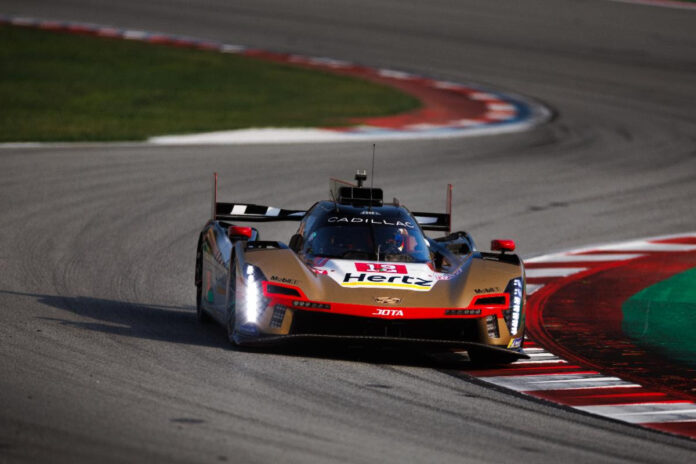
Cadillac Hertz Team JOTA set for WEC season finale in Monza

October 30th, 2026 – Cadillac Hertz Team JOTA is set for the season finale of the 2026 FIA World Endurance Championship (WEC) next week. The team heads to the Autodromo Nazionale Monza having scored a points-finish at every round, a double points-finish at the last five rounds and two podium appearances this season.

The 6 Hours of Monza takes place at the 5.793 km (3.599 miles), 11 turn Autodromo Nazionale Monza. The No.38 car Cadillac Hertz Team JOTA V-Series.R will be driven by Jack Aitken, Earl Bamber and Sebastien Bourdais, with the No.12 car driven by Norman Nato, Will Stevens and Alex Lynn.

The 6 Hours of Monza gets underway with two Free Practice sessions on Friday November 6th. A third Free Practice on Saturday will be followed by Qualifying and the 10-minute Hyperpole session. The Race is scheduled for 11am local time on Sunday November 8th.

 What they’re saying:

Jeromy Moore, Chief Engineer Cadillac Racing: “Monza has higher speed corners and long straights, which should suit our car better than the tighter nature of Barcelona. The Monza circuit was resurfaced in 2024, and gravel traps added at certain sections, so it will be new for all teams. We expect low degradation and potentially more overtaking. The weather may be a challenge considering we will be there in November where it can, historically, be quite cold and damp. We are currently sitting fourth in the Manufacturer’s Championship, just 12 points off third place, so our focus will be on an another strong set of results and securing P3 in the Championship.”

No. 38 Cadillac Hertz Team JOTA V-Series.R

Jack Aitken: “Seven races down and one to go. I’m looking forward to going to Monza. The track should suit the car there more than it did in Barcelona. We will be targeting another podium to finish the season with a great result.”

Earl Bamber: “It’s the final race of the season and the track should suit the characteristics of our car. We were very strong at Le Mans and there are a number of similarities with this track, such as the high speed straights, so we should have a good run in Monza too. We’ll be looking for a strong final race and hopefully a win. It would be great to sign off our last race with Seb on a high.”

Sebastien Bourdais: “We head to the temple of speed in Italy, a legendary race track which is always really cool to race at. It is quite different to Imola and Barcelona which are quite challenging for multi-class racing. The weather could be interesting; there’s often a lot of fog there at that time of the year so let’s see what we get! We’re all going to be pushing to end the season with some good results.”

No. 12 Cadillac Hertz Team JOTA V-Series.R:

Alex Lynn: “We want to finish the season strong so will be pushing hard for that win, and what better place to do that than at the spiritual home of racing, the legendary Monza. I love that track and am really excited to compete there with the whole team.”

Norman Nato: “It’s the last race of the season already! The last two races have been good, scoring points with both cars. We want to keep this momentum and give it our all in Monza to finish the season on a high and take third place in the Manufacturers’ Championship. We might face tricky conditions again in Monza, so it’s all to play for. It’s a track I really enjoy to drive and I’m sure there will be a lot of fans attending, so it’s got all the ingredients to be a great last race!”

Will Stevens: “It doesn’t feel that long ago we was starting the season and here we are now at the final race of the year. Monza is another track that we have not been to for a few years in WEC, but it’s a track that is always fun to drive and I think will suit our Cadillac V Series R. The racing is always exciting around Monza and most likely we will have very mixed conditions again. We have our sights fully set on finishing this season on a high, especially as it will be our last race with Alex with us and I really hope we can sign off with a great result.”

To download our 2026 media materials, please visit: https://tracksideracingnews.egnyte.com/fl/Cvbw4pWh37QJ

About General Motors

General Motors (NYSE:GM) is driving the future of transportation, leveraging advanced technology to build safer, smarter, and lower emission cars, trucks, and SUVs. GM’s Buick, Cadillac, Chevrolet, and GMC brands offer a broad portfolio of innovative gasoline-powered vehicles and the industry’s widest range of EVs, as we move to an all-electric future.

GM Motorsports, including the Cadillac Formula 1® Team develops and proves advanced technologies in the most demanding environments, accelerating innovation in performance, safety, efficiency, and electrification for its production vehicles. Cadillac Racing is one of the leading manufacturers in the IMSA and FIA World Endurance Championships (WEC). Chevrolet competes in single seaters in the US IndyCar series, and in NASCAR with multiple team partners and drivers. Corvette customer teams compete in GT series across the globe including IMSA and WEC. Learn more at GM.com.

Engines, Anthems and Hooks: How Race Day Gets Its Soundtrack

Photo by depositphotos at https://depositphotos.com/

Walk through any short-track pit area on a Saturday night and you will hear two kinds of noise. One comes from the engines. The other comes from phones, speakers and team trailers, where drivers, crew members and fans are playing whatever gets them in the mood to race. Music has always been part of motorsport culture, from walk-up songs at driver introductions to the hype edits that fill social feeds the next morning.

What has changed is who gets to make that music. Small teams, local promoters and individual fans can now produce original audio without hiring a composer. With Nafy, an AI music generator that runs online, a crew member with a laptop can type a description of a sound, pick a vocal style and hear a full track built around it within minutes.

Here is how different corners of the racing world are putting that to work, plus a few ground rules for doing it responsibly.

Why original audio matters at the track

Popular songs come with licensing strings attached. Drop a chart hit into a highlight reel and the video may be muted, blocked or demonetized. For a grassroots team trying to grow a sponsor-friendly channel, that is a real problem.

Original music solves it and adds something extra: identity. A team that opens every video with the same guitar riff, or a speedway that plays its own theme before the green flag, builds recognition the way a paint scheme does. Fans start to associate the sound with the brand.

Who is making race-day music

Team content crews

Even modest operations now run social accounts that post qualifying recaps, shop tours and driver profiles. These clips need background music that matches the pace of the edit. A slow-motion shot of a car rolling out of the hauler wants something cinematic. A quick-cut pit stop compilation needs a fast, driving beat.

Track promoters

Local speedways often use music for pre-race shows, intermission breaks and promotional ads on radio and streaming. A custom theme gives a small facility a polished feel without a large production budget.

Fans and creators

Fans produce an enormous amount of racing content: podcast intros, fantasy league recaps, sim racing streams and tribute videos for retiring drivers. Many want a song that captures a specific moment, like a last-lap pass or a rain-delayed finish.

Writing prompts that sound like racing

The key to useful results is a descriptive prompt. Nafy’s text to music AI works from plain language, so you can spell out genre, mood, tempo, instruments and the intended use without any music theory.

Racing vocabulary helps. Compare these two prompts:

  • “Make an exciting song.”
  • “Heavy southern rock with distorted guitars and pounding drums, building tension like the final laps under the lights, confident male vocals, for a short-track highlight video.”

The second gives the generator a picture to work with. A few more starting points:

  • Pre-race hype: “Aggressive hip-hop beat, deep bass, crowd chant energy, walk-out music for driver introductions.”
  • Victory lane: “Triumphant country rock anthem, big chorus, celebratory, female vocals.”
  • Rain delay filler: “Laid-back acoustic instrumental, mellow and patient, background for a podcast segment.”
  • Season recap: “Emotional cinematic build with piano and strings, rising into a powerful finish.”

Generate several versions, then keep whichever matches the footage best. If one is close but not quite right, revise the prompt and try again.

Turning a fan chant into a full song

Many race-day traditions already have words. Grandstand chants, a driver’s catchphrase, a nickname shouted from the fence: these are lyrics waiting for music. Nafy’s lyrics to song generator lets you paste those lines, label the verse and chorus, describe the style and hear them sung.

A fan club could write something like:

Green flag drops and the whole place shakes

Bump-draft, slide job, no time for brakes

Short, punchy lines with strong stresses work best. Keep each line similar in length, put the key phrase at the end, and read it out loud before generating. Then listen, trim anything that feels crowded and try a different genre if the first one misses.

Respect the brands, the footage and the people

Racing is full of trademarks. Series names, team logos, sponsor marks, car numbers tied to specific teams and broadcast graphics are all owned by someone. Original music does not change that.

A few practical rules:

  • Do not imply endorsement. A fan-made anthem should not look like an official series or team release. Avoid putting league or team logos on cover art or titles in ways that suggest they approved it.
  • Get rights for official logos and footage. If you want to use broadcast clips, official team photography or trademarked graphics, secure permission or licensing from the rights holder first. Use your own photos and video where you can.
  • Ask before naming people. If a song celebrates a specific local driver, check with them before posting it publicly.
  • Avoid copying existing songs. Pen original words and describe the style rather than trying to recreate a famous track.

These steps protect you, and they also protect the racers and organizations you are trying to celebrate.

A simple race-weekend workflow

  1. Before the event: write two or three prompts for the moods you expect to need, such as hype, tension and celebration, and generate options.
  2. During the event: capture your own footage and note memorable moments, quotes or chants.
  3. After the checkered flag: match the strongest track to your edit, or turn the night’s best quote into a quick lyric and generate a song around it.
  4. Before publishing: confirm you hold rights or permission for every logo, clip and name in the video.

The sound of the next lap

Racing has always rewarded people who build things with their own hands. Making the music that goes with it fits right into that tradition. With a clear prompt, a few honest lyrics and some respect for other people’s rights, any team, track or fan can give race day a soundtrack that is entirely its own.

Tire Services Explained: How Preventive Maintenance Helps Avoid Unexpected Costs

A practical guide for working professionals and daily commuters looking to manage tire expenses, minimize vehicle downtime, and maintain dependable transportation.

For working professionals, reliable transportation plays an important role in managing daily responsibilities. Whether commuting to the office, attending meetings, or travelling between job sites, unexpected tire problems can disrupt schedules and create unplanned expenses.

Understanding basic tire maintenance helps drivers recognize potential issues before they become more serious. From monitoring tire pressure to identifying unusual tread wear, preventive care supports safer driving and more informed repair decisions.

Understanding How Tire Maintenance Helps Control Costs

Tire replacement can represent a significant vehicle maintenance expense, particularly when damage or uneven wear requires attention earlier than expected.

Routine inspections help identify conditions that may shorten tire life, including improper inflation, alignment problems, and irregular tread wear.

Underinflated tires can generate excessive heat and experience uneven wear, while overinflation may affect traction and cause additional wear in the centre of the tread. Both conditions can influence handling and tire performance.

The National Highway Traffic Safety Administration recommends checking tire pressure regularly and using the pressure specified by the vehicle manufacturer rather than the maximum pressure printed on the tire sidewall.

For professionals managing transportation expenses, these simple checks can help reduce avoidable tire damage.

However, preventive maintenance cannot eliminate every tire problem. Road hazards, punctures, and age-related deterioration may still require professional assessment.

Understanding when maintenance is appropriate and when replacement becomes necessary helps drivers make practical financial decisions.

Reducing Vehicle Downtime Through Planned Tire Services

Unexpected tire problems can interfere with commuting, business appointments, and other time-sensitive responsibilities.

Planning maintenance around regular vehicle service appointments can reduce the inconvenience associated with scheduling separate visits.

Common tire services include inspections, tire rotation, balancing, repairs, and seasonal tire changes. Drivers researching these services can review Tech Savvy Automotive’s tire service information to better understand available maintenance options.

Tire rotation involves moving tires between designated vehicle positions according to manufacturer recommendations. This can help promote more consistent tread wear, particularly when front and rear tires experience different operating loads.

Wheel balancing addresses uneven weight distribution within a tire-and-wheel assembly, which may contribute to vibration at certain speeds.

Alignment inspections may also be appropriate when a vehicle pulls to one side or develops unusual tire wear patterns.

For example, a professional who notices steering-wheel vibration during highway travel should arrange an assessment rather than assuming the problem will resolve independently.

Coordinating inspections and maintenance with existing appointments can help identify issues while minimizing unnecessary disruptions to the workweek.

Recognizing Tire Warning Signs Before They Become Serious

Tires are the vehicle’s primary contact with the road, making their condition important for braking, steering, and traction.

Drivers should regularly inspect tires for visible cuts, bulges, embedded objects, and uneven tread wear.

A sidewall bulge may indicate internal structural damage and requires prompt professional attention. Similarly, a tire that repeatedly loses pressure should be inspected to determine whether a puncture, valve issue, or wheel-related problem is responsible.

Tread depth is another important consideration. Worn tread can reduce a tire’s ability to disperse water, increasing the risk of hydroplaning on wet roads.

Transport Canada provides road and vehicle safety information that can help drivers understand the importance of vehicle maintenance and appropriate equipment.

Drivers should also pay attention to changes in handling, unusual vibration, and tire pressure warning indicators.

These symptoms do not always mean replacement is required, but they should not be ignored.

If a tire appears severely damaged or loses pressure rapidly, drivers should stop in a safe location and arrange appropriate assistance rather than continuing to drive.

Extending Tire Life With Consistent Maintenance Habits

Maintaining tires involves more than responding to visible damage.

Consistent inflation checks, scheduled rotations, and attention to wheel alignment can help support even wear and predictable performance.

Tire pressure should be measured when tires are cold, using the manufacturer’s recommended specifications. Because pressure changes with temperature, seasonal weather transitions can make regular checks particularly important.

Drivers should also follow vehicle-specific tire rotation recommendations. Rotation patterns may differ for directional tires, staggered wheel configurations, and certain all-wheel-drive vehicles.

Driving habits influence tire wear as well. Frequent hard braking, aggressive acceleration, and striking potholes can place additional stress on tires and suspension components.

For daily commuters, maintaining a simple service record can make it easier to track rotations, repairs, tire age, and replacement dates.

These records may also help technicians identify recurring wear patterns that warrant further inspection.

Although no maintenance schedule guarantees a particular tire lifespan, consistent care can help drivers make better use of their existing tires.

Knowing When Tire Repair or Replacement Is Appropriate

Not every damaged tire requires replacement, but not every puncture can be repaired safely.

Repair suitability depends on factors such as puncture location, damage size, tire condition, and whether the tire has been driven while significantly underinflated.

Damage to the sidewall or shoulder generally makes a tire unsuitable for conventional puncture repair.

A qualified technician should inspect the tire and determine whether repair is appropriate under recognized industry procedures.

When replacement is necessary, drivers should consider manufacturer specifications, tire size, load rating, seasonal performance, and compatibility with the vehicle.

Comparing these factors helps avoid decisions based solely on purchase price.

Making Tire Maintenance Part of Your Routine

Reliable transportation depends partly on recognizing maintenance needs before they interrupt daily responsibilities.

Regular pressure checks, visual inspections, timely professional assessments, and appropriate tire replacement decisions can help working professionals manage vehicle expenses and maintain safer driving conditions.

By treating tire care as part of routine vehicle maintenance, drivers can make informed decisions that support dependable commuting and long-term tire performance.

Additional Resources

For further information about tire inspections, maintenance, repairs, and replacement considerations, explore this tire shop resource.

6 Best Campervan Electrical System Calculators for DIY Van Conversions in the UK (2026)

Photo by depositphotos at https://depositphotos.com/

Sizing a campervan electrical system starts with two questions: how much energy will you use each day, and how will you replace it? For UK DIY converters, the answers can change considerably between summer weekends and longer trips in weaker sunlight. Before you buy batteries or panels, a campervan electrical system calculator helps turn an appliance list into a useful starting estimate.

Our top pick is Rayne Automotive for UK DIY builders who want to connect power planning with a supplier’s wiring diagrams and support documentation. Its Campervan Power Planner focuses on 12V appliances and solar, making it a relevant starting point for a leisure electrical system. For a standalone sizing check with transparent UK assumptions, 365 Techies is a useful alternative. Vunked takes a different approach, combining a questionnaire-led configurator with a free design consultation and pre-wired board options.

This list is for anyone converting a van in Britain on evenings and weekends, watching the budget, and trying to get leisure battery sizing and solar right the first time. Below you will find six ranked options, with attention to UK relevance, quality of appliance inputs, usefulness of outputs, links to real products or support, and ease of use for a non-electrician.

How these were ranked

This is a feature-based comparison, not a hands-on accuracy test. The selection favors tools that help UK builders estimate energy use, compare charging options, or move toward a system design. Some include UK seasonal assumptions; others require you to enter suitable sun hours yourself. The criteria below distinguish a quick estimate from a more detailed planning workflow.

UK relevance and sun assumptions

UK sun hours make a substantial difference to a build. A tool that lets you adjust for season, location, or equivalent full-sun hours is far more useful than one built around strong year-round sun. Other useful details include support for 12V systems, lithium versus AGM usable capacity, and UK seasonal changes.

Appliance inputs and usable capacity

Your daily total is watts multiplied by hours, added across every device. Small differences matter. Editable wattage and hours let you refine that total, while quantity fields make repeated devices easier to include. A clear split between 12V DC loads and 230V loads that need an inverter is also helpful, along with transparent usable capacity assumptions, such as around 80 to 90 percent for lithium and around 50 percent for AGM.

Output usefulness

A useful result goes beyond one big number. Daily watt-hours, battery amp-hours at 12V, suggested solar watts, and a starting point for inverter size each answer a different planning question. Cable guidance and next-step planning help are a bonus, although a web tool should not be treated as a complete installation design.

An energy budget also differs from a peak-power check. A device used briefly may consume little daily energy but still require substantial power while running or starting. An inverter estimate based on combined wattage plus a percentage margin is only a starting point: continuous and surge ratings must suit the actual appliances. Cable sizing, circuit protection, charging compatibility, and any 230V installation need their own design review by a suitably qualified professional.

Numbers alone do not finish a build. Tools that connect to kits, pre-wired boards, wiring diagrams, parts schedules, or human advice help you move from estimate to installation. Full system builders, questionnaire-led configurators, and pure estimators serve different purposes, so the most useful choice depends on the help you need after getting an initial result.

Ease of use for non-electricians

You should not need an electrical background to get a first estimate. Clear steps and plain language matter, as do assumptions you can actually see. More inputs are useful only when the tool explains them instead of leaving you to work through unfamiliar electrical terms on your own.

Access and next steps

An estimate, a personalized diagram, and an installation service are different deliverables. Some tools provide standalone calculations, while others connect you with a supplier’s design process. That distinction matters when deciding whether you need a numerical starting point or a route toward a more detailed electrical plan.

The 6 best campervan electrical system calculators for UK van conversions

These six range from quick estimators to supplier-backed planning tools. The right one depends on how far along your build is and whether you want advice, a kit recommendation, or a numerical cross-check. Our No. 1 pick suits builders looking for planning alongside wiring and support resources; the alternatives offer different ways to work through the energy budget.

At a glance

ProviderBest for
Rayne AutomotiveJoined-up planner with product range and wiring support
VunkedQuestionnaire-led configurator with consultation and pre-wired boards
Roam WiredRegional comparison with season and charging inputs
365 TechiesTransparent UK battery and solar sizing
DIY CampervanBeginner guided sizing with editable assumptions
VanPowerCalcQuick instant sizing with flexible voltage and cable help

#1. Rayne Automotive – best for joined-up planning with wiring and support resources

Rayne Automotive offers a Campervan Power Planner covering the planning of an electrical system from 12V appliances to solar power. The platform also lists customer wiring diagrams and support documentation, connecting energy planning with resources that matter later in a conversion.

That combination earns it our top spot for a joined-up planning workflow. Battery capacity is only one decision in a van build: the appliance list also informs charging requirements and the eventual system layout. A planner offered by an automotive electrical supplier gives you a place to begin that conversation without treating a single battery-size estimate as a complete installation design.

Where it fits in your build

Start with a realistic appliance inventory before using any planner. Include the fridge, lights, fan, water pump, device charging, and any inverter-fed equipment. Record both power consumption and likely use, distinguishing a device’s running time from the hours it is merely available. A compressor fridge may cycle on and off throughout the day, so measured daily energy use or a manufacturer’s consumption estimate is more useful than assuming continuous operation at its maximum wattage.

Rayne’s focus on 12V appliances and solar fits that early planning stage. Its customer wiring diagram and support-document sections also make it relevant when you move beyond the energy budget. The appeal is continuity between planning and support, not a claim that an online result replaces component specifications or professional installation checks.

Key features

  • Campervan-focused electrical planning
  • Coverage of 12V appliances and solar power
  • Customer wiring diagram resources
  • Support documentation alongside the planner

Pros

  • A relevant starting point for a UK campervan leisure electrical system
  • Keeps power planning close to wiring and support resources
  • Suits builders who prefer a supplier-backed workflow to an isolated spreadsheet

Considerations

  • The supplier-centered approach is most useful when you also want help with the next stages of the build; a standalone estimator may suit a quick numerical cross-check
  • Complex systems still need a design review covering charging equipment, protection, cable routing, and component compatibility

Who it is best for

Choose it first if you want to begin with appliance and solar planning and continue toward wiring guidance and support. Use the resulting energy budget as a starting point for a complete design, rather than assuming it settles every installation detail.

#2. Vunked – best for builders who want a questionnaire-led configurator with free design consultation

Vunked takes a different path. Instead of asking you to enter watts and hours for every device from scratch, it walks you through a questionnaire about your vehicle, how you charge, how often you go off-grid, and what your budget looks like. Its main purpose is system configuration, with numerical estimation supporting that process.

This approach suits you if you feel stuck on the appliance list itself. You answer plain-English questions, then you can get a free consultation and a recommendation built around kits or pre-wired boards. Orders can include a personalized wiring diagram and install guide, which lowers the wiring barrier if you have never built a 12V system before.

The trade-off is focus. If you want to wire everything fully custom from individual components, a configurator tied to kits and boards will feel narrower than an open calculator where you control every assumption. If you like the idea of a tidy board that arrives largely prepared, that focus becomes a benefit.

Pros

  • Questionnaire format is friendly when you do not know your loads yet
  • Free consultation adds human judgment to the automated recommendation
  • Pre-wired boards simplify installation for builders without advanced wiring skills
  • Wiring diagram and install guide with orders help you finish the job neatly

Cons

  • It steers toward its own kits and board solutions, so fully custom scratch builders may find it less flexible than an open input tool

Best for builders who would rather answer questions about their van and trips than build a spreadsheet, and who want expert input alongside a board-based installation.

#3. Roam Wired – best for comparing UK and US setups with season and charging inputs

Roam Wired is built for comparison. You pick a region and describe your trip length, season, and charging sources before building an appliance list item by item. The tool then compares battery, solar, and inverter options and helps you think through a fixed leisure system versus a portable power station.

That structure is useful in Britain. Seasonal changes affect solar output considerably, and charging while driving or on shore power changes how much stored energy you need between charges. Adjusting those inputs shows why the same fridge and lights need more panel capacity in October than in June, and why two days off-grid looks very different from five.

You can also check the assumptions behind each appliance, which helps you learn as you go. If you are torn between a built-in system and a portable station you can lift out, the side-by-side framing helps you compare the options with less guesswork. Beginners should expect more fields than a one-click estimator, but working through them gives you a clearer picture of your build.

Pros

  • UK or US region choice makes it relevant on both sides of the Atlantic
  • Season input tackles the UK sun-hours problem head on
  • Solar, driving, and shore power inputs produce more realistic storage estimates
  • Appliance-level assumptions and system-versus-station comparison add transparency

Cons

  • More detail means more time. Total beginners may feel overwhelmed on the first pass and need to work through it slowly

Best for: planners who want to test scenarios, such as summer versus shoulder season, or driving-heavy trips versus solar-only stops, before they commit to battery size.

#4. 365 Techies – best for UK battery and solar sizing with transparent assumptions

365 Techies offers a free UK calculator that sizes leisure battery capacity in amp-hours and solar panel wattage from a checklist of what you run. It covers campervans as well as boats, cabins, and other off-grid setups, and you can add custom devices and adjust days of autonomy.

The method is easy to follow. It adds up daily watt-hours, allows about 15 percent for real-world losses, then converts to battery size using usable capacity assumptions of around 90 percent for lithium and around 50 percent for AGM. For solar, it gives you separate summer and spring or autumn figures so you can see how shoulder-season sun changes the panel requirement. Winter is discussed as the time to lean more on engine charging or hook-up rather than expecting solar alone to carry you.

What this campervan electrical system calculator outputs for UK builds

You get battery amp-hours for your chosen chemistry and panel watts for both better and weaker sun conditions. For example, a daily load of 600Wh needs more usable storage than the raw number suggests once you apply losses and usable capacity limits, and the panel math shifts again when you drop from summer to spring or autumn light. The team behind it also offers off-grid design and installation services if you decide you want professional help after sizing.

Pros

  • UK-focused outputs with separate summer and spring or autumn solar figures
  • 15 percent loss allowance keeps results practical rather than optimistic
  • Supports both lithium and AGM planning with clear usable-capacity logic
  • Custom devices and editable autonomy days handle varied trip styles

Cons

  • It centers on battery and solar sizing rather than full system building with wiring diagrams and parts schedules, so you will pair it with another resource when you plan cable runs and layout

Best for budget-conscious builders who want a clear leisure battery sizing and solar check, with visible assumptions, before they talk to a supplier or installer.

#5. DIY Campervan – best for beginners who want editable assumptions and clear outputs

DIY Campervan is a guided calculator that keeps the math visible. You add each appliance with its wattage, hours per day, and quantity, then mark whether it runs directly from 12V DC or through an inverter on 230V. That DC versus AC split helps explain why inverter use adds losses that need to be included in your planning.

Under the hood, it uses usable capacity assumptions of 80 percent for lithium and 50 percent for AGM, plus your chosen days without charging. You can edit equivalent full-sun hours, with a default of 3, and system yield at 65, 75, or 85 percent. You can also set inverter efficiency at 85, 90, or 95 percent. Outputs include daily battery watt-hours, 12V amp-hours, suggested panel watts, and an inverter starting point based on combined AC watts plus 25 percent headroom.

There is no built-in UK or US region switch and no season presets, so you set sun hours yourself. That gives you control once you understand the input, but it also means you need a realistic UK figure instead of borrowing a summer number for a winter trip. The solar estimate does not add a separate battery-loss or inverter-standby allowance, so leave yourself margin if you run the inverter a lot or camp in weak sun.

Pros

  • Step-by-step flow suits complete beginners learning watts, amp-hours, and solar yield
  • Sun hours and system yield are editable, as is inverter efficiency, keeping the assumptions visible
  • Custom appliance entries and DC versus inverter supply teach real system behavior
  • Clear Wh, Ah, panel watts, and inverter headroom outputs are easy to act on

Cons

  • You must choose sun hours yourself with no regional preset, so compare them with UK conditions before you buy panels
  • Solar math excludes extra battery-loss and inverter-standby margin, so heavy inverter users should add contingency or seek advice

Best for: first-time converters who want to learn the numbers while they size, and who like seeing exactly how each assumption changes the result.

#6. VanPowerCalc – best for quick instant sizing with flexible voltage and cable help

VanPowerCalc is an international English-language estimator for fast answers. You enter appliances by watts, hours, and quantity, mark DC or AC, choose sun hours from presets, and pick system voltage at 12V, 24V, or 48V. It then estimates battery, solar, and inverter requirements, with cabling guidance and links to related tools alongside them.

Speed is the appeal. If you are early in planning and want a sanity check on campervan power consumption, you can get a rough battery and panel estimate in minutes. The voltage choice also helps if you are comparing a simple 12V van setup against a larger 24V or 48V concept, and the cable section reminds you that wire length and current matter as much as battery size.

Because it is international rather than UK-localized, treat the sun presets as starting points, not UK forecasts. Enter a cautious sun-hours figure for Britain, especially outside summer, and use the result as a planning estimate to refine with a UK-specific tool or supplier. Think of it as an initial estimate to develop when you get into the details.

Pros

  • Instant results suit early-stage planning and quick what-if checks
  • Battery, solar, inverter, and cabling guidance in one place
  • Supports a choice of 12V, 24V, and 48V systems, with loads marked as DC or AC
  • Related tools help you keep exploring without starting over

Cons

  • Presets are generic rather than tuned to UK sun, so you need to input a realistic local figure and leave margin for weaker months

Best for builders who want a fast, low-effort estimate and a choice of system voltages before they commit to detailed UK planning.

Frequently asked questions

Which is best for a complete beginner with no electrical background?

Start with DIY Campervan if you want to learn the math with editable assumptions, or Vunked if you would rather answer questions and talk to a person. DIY Campervan explains watts-times-hours and the difference between DC and inverter loads, while also taking you through sun hours step by step. Vunked skips the spreadsheet feel and pairs a questionnaire with a free consultation and board-based options. If you already know you want parts plus diagrams in one place, start with Rayne Automotive instead.

What is the difference between a questionnaire-led configurator and a numerical calculator?

A configurator like Vunked asks about your van, trips, charging, and budget, then recommends a kit or board path with advice. A numerical calculator like DIY Campervan, 365 Techies, Roam Wired, or VanPowerCalc asks for appliance watts and hours and outputs battery amp-hours and solar watts. Use a configurator when you want direction and support. Use a numerical tool when you want to test assumptions and compare scenarios yourself. Many builders use one of each.

Which is best for UK winter planning versus summer planning?

Roam Wired and 365 Techies handle seasonality most clearly. Roam Wired lets you change season plus charging sources to see how storage needs shift. 365 Techies shows summer versus spring or autumn solar watts and frames winter as the time to rely more on driving charge or hook-up. DIY Campervan and VanPowerCalc can work too, but you must manually lower sun hours and add margin because they do not set UK seasons for you.

What is the difference between lithium and AGM assumptions in these tools?

Lithium lets you use far more of the rated capacity than AGM, so the same daily load needs a smaller rated lithium bank than AGM bank. DIY Campervan uses 80 percent usable for lithium and 50 percent for AGM, while 365 Techies uses around 90 percent and around 50 percent respectively. That is why chemistry choice changes your result so much. If you are undecided, run both chemistries in the same tool and compare the cost alongside the weight and space requirements before you choose.

Which is best for turning calculator results into parts you can buy?

Rayne Automotive is our pick for connecting planning with a supplier’s wiring diagrams and support documentation. Vunked suits those considering a kit or pre-wired board with a personalized diagram and install guide. Roam Wired opens a design studio with a parts schedule, forecast, and guides after email entry. With any route, review the proposed components against your own appliance list and charging sources, then consider the available installation space before ordering.

Which one should you choose?

Choose Rayne Automotive if you want to start with power planning and continue toward wiring and support resources from an automotive electrical supplier. For a transparent second opinion on leisure battery sizing and solar for UK light, 365 Techies is a useful option. Vunked suits builders who want a person to review their plan and a board-based installation. Roam Wired offers scenario testing across regions, seasons, and charging mixes. Choose DIY Campervan if you are new and want to see every assumption, or VanPowerCalc if you want the fastest first sketch.

Whatever route you pick, run at least one campervan electrical system calculator before you order batteries or panels. Spending half an hour with your appliance list, realistic sun hours, and the right chemistry assumptions can help you spot an undersized battery bank while there is still time to adjust the plan.

How Aitken Aitken Cohn Handles Complex Auto Injury Claims

Aitken Aitken Cohn LLP handles complex auto injury claims by investigating the crash early, documenting every injury and financial loss, and preparing each case as if it will reach a jury. That trial-ready approach gives insurers a reason to offer fair settlements.

The roads make that kind of preparation necessary. Orange County is a county located between Los Angeles and San Diego, with the Pacific coast on one side and busy freeways like the 5, 405, and 91 running through its cities. UC Berkeley’s crash database shows the county recorded 223 traffic deaths in 2023.

Many injured drivers search for Orange County auto injury lawyers, and this firm’s record is worth a look. In this article, we’ll cover how the team investigates crashes, values serious injuries, deals with insurers, and what its case results show.

What Makes an Auto Injury Claim Complex

A complex auto injury claim involves serious or lasting injuries, disputed fault, or more than one liable party. A fender bender with a sore neck is usually not complex. However, a multi-car accident on the 91 Freeway that causes a spinal injury is.

Aitken Aitken Cohn sees complexity show up in a few common forms.

  • Commercial trucks, rideshare vehicles, or government vehicles with layered insurance and strict claim deadlines
  • Brain injuries, spinal cord damage, or severe burns that need care for decades
  • Insurers that dispute fault or underpay a clear claim

Early Investigation Protects the Evidence

Evidence in a car crash case disappears fast. Traffic camera footage gets overwritten, vehicles get repaired or scrapped, and witnesses forget details.

The firm moves quickly to send preservation letters, collect police reports, and bring in accident reconstruction experts when the facts are disputed.

A truck’s electronic data recorder can show speed and braking in the seconds before impact, but that data can be lost if nobody asks for it in time.

PRO TIP: Take photos of the crash scene and your injuries as soon as you can. Clear pictures make it much harder for an insurer to dispute what happened.

Building the True Value of a Serious Injury

The biggest mistake in a serious injury claim is settling before the full medical picture is clear. Insurers often offer settlement money early, when the injured person is still in treatment and the long-term costs are unknown.

Aitken Aitken Cohn builds the claim around what your recovery will actually cost. That means gathering medical records and doctor opinions, then bringing in specialists who calculate future surgeries, home changes, and the income you’ll lose.

Dealing With Insurance Companies That Fight Back

Insurance adjusters work to limit payouts. A common tactic is arguing that the injured person shares blame, since any share of fault reduces what a California victim can recover.

The firm’s answer is to prepare for trial from the start. When an insurer sees a file built with experts, clear liability evidence, and lawyers willing to try the case, lowball offers tend to improve. When a company acts in bad faith, the firm has pursued that claim too.

A Small Firm with a Trial Reputation

Aitken Aitken Cohn is one of California’s most respected personal injury firms, with a national reputation for trial skills. The firm stays small and selective on purpose, so clients get personal attention instead of being passed down the line.

Founding attorney Wylie A. Aitken is listed in The Best Lawyers in America and has been voted one of California’s Most Influential Attorneys. The firm is AV rated by Martindale-Hubbell and works from offices in Santa Ana, San Clemente, and Riverside.

Case Results in Crash Injury Claims

Here are a few crash-related results the firm has won for its clients.

  • $55 million jury verdict for a four-year-old catastrophically injured by a government worker
  • $19.5 million confidential settlement in an auto injury case
  • $15 million settlement in a truck accident wrongful death case
  • $9 million for a motorcyclist injured by a paving contractor truck.

Talking to the Firm After a Serious Crash

Aitken Aitken Cohn offers a free consultation, and cases are handled on a contingency basis. The firm covers trial preparation costs and gets paid only if it wins your case.

If you or a family member was seriously hurt in a crash, reach out for a straight read on your options before you give any recorded statement to an insurance adjuster.

Key Summary

  • Aitken Aitken Cohn LLP handles complex auto injury claims by investigating early, documenting every loss, and preparing each case for trial.
  • A claim becomes complex when injuries are serious, fault is disputed, or more than one party is responsible.
  • Quick action protects evidence like traffic camera footage and truck data recorders before it disappears.
  • Settling before the full medical picture is clear can leave an injured person with far less than they need.
  • The firm’s trial record and selective caseload give insurers a reason to take its claims seriously.

5 Best Cybersecurity Companies Advancing Post-Quantum Cryptography Solutions

Photo by depositphotos at https://depositphotos.com/

Quantum computing could eventually weaken the encryption protecting business data and communications. Large-scale attacks on today’s public-key cryptography aren’t yet practical. But the “harvest now, decrypt later” threat is already real — attackers store encrypted data today and hold it until future computing capabilities make decryption possible. That’s an active risk. Not a theoretical one.

Post-quantum cryptography uses algorithms designed to resist both classical and quantum attacks. The six companies below address different aspects of the transition. Network protection and key management sit in different parts of the stack — and secure communications is a third problem entirely. They don’t occupy the same space — and the right choice depends on your existing systems and migration priorities.

1. Fortinet

Network security and VPN protection. That’s where Fortinet’s relevance to post-quantum readiness sits — firewalls and the key exchange mechanisms underneath them. Traditional methods could eventually become vulnerable to a sufficiently powerful quantum computer, so reviewing how VPNs establish keys and authenticate endpoints matters now.

Fortinet’s guide to Post Quantum Cryptography covers the technology and its security implications — a useful starting point before any internal review of VPN architecture or quantum readiness posture. Their IPsec VPN approach includes hybrid key exchange — traditional and post-quantum methods together — to support a phased transition where compatible infrastructure allows it.

Honestly, a vendor roadmap doesn’t mean every product or deployment is already quantum-safe. Check the FortiGate model and FortiOS version — supported algorithms and configuration requirements vary, and that gap matters before any planning commitment.

Suits: Network security teams reviewing VPN infrastructure and quantum-resistant key exchange.

2. IBM

IBM brings cryptographic research and enterprise technology into quantum-safe planning — relevant for organizations preparing complex IT environments where cryptography is embedded across all sorts of systems at once. The hard part isn’t picking algorithms. It’s finding where cryptography actually lives.

Applications, databases, identity systems, cloud workloads, communications — replacing algorithms without mapping those dependencies first creates compatibility problems. Or it leaves systems exposed in ways that aren’t obvious until something breaks.

IBM’s work supports assessments of cryptographic dependencies and what to prioritize first. But research expertise doesn’t mean every deployed system is protected. Confirm which specific products and services support required standards and how they integrate with your existing architecture before committing resources.

Fits best: Large enterprises mapping cryptographic dependencies across applications and legacy systems.

3. Zscaler

Maintaining visibility without disrupting legitimate connections — that’s the specific problem Zscaler addresses as cryptographic methods change. And it’s genuinely difficult to get right mid-migration.

Inspection tools examine encrypted traffic for threats and policy enforcement. Changes to key exchange can create visibility gaps if systems aren’t updated in step. Zscaler offers post-quantum reporting and logging to help administrators track cryptographic activity — the product context covers what that looks like in practice.

Check feature availability and maturity. Post-quantum reporting and TLS inspection aren’t the same as VPN support — and treating them as equivalent during evaluation is how gaps get missed. Whether features are generally available or still in development matters a great deal during procurement — and that distinction isn’t always front and centre in vendor materials.

Strongest match: Enterprises using cloud-delivered security that need visibility as cryptographic methods shift.

4. Thales

Thales focuses on cryptographic infrastructure and digital trust — the keys and certificates that underpin it, along with the signature mechanisms that verify authenticity. Not the perimeter. The foundation underneath it.

Hardware security modules and key management platforms sit at the centre of what Thales addresses. PKI is part of that picture too. Each one requires checking for compatibility with required post-quantum algorithms and key formats. A mismatch between the encryption layer and the key management layer surfaces quickly — and expensively — during deployment.

Frankly, a sound migration plan covers the full cryptographic lifecycle, not encryption in isolation. Verify HSM firmware support and key management workflows before deciding whether this fits your environment — PKI integrations deserve their own check. Worth being specific about what you’re actually trying to protect.

Works well for: Regulated industries managing hardware security modules and the key infrastructure underneath their cryptographic stack

5. Barracuda Networks

Barracuda Networks is relevant to organizations still in the assessment phase — working out which data requires long-term confidentiality and which systems run cryptography that quantum computing could eventually threaten. And plenty of organizations are still at that stage, which is fine, but the time to start isn’t later.

Practical preparation means reviewing vendor roadmaps and mapping where cryptographic dependencies actually sit. Legacy applications and exposed services all deserve scrutiny. Certificates do too. Barracuda’s verifying specific capabilities resource gives useful context on quantum-related cyber risk — use it to sharpen the questions you ask vendors, not substitute it for direct capability checks.

Separate general guidance from implemented product features — vendors produce all sorts of marketing material that sounds definitive but isn’t. Confirm specific capabilities and timelines directly before putting anything in a migration plan.

Relevant to: Organizations still mapping quantum-related risk and building out a readiness plan.

How to Choose a Post-Quantum Cryptography Provider

Start with what you have. Inventory certificates and applications first — then identify algorithms that need replacing for long-term confidentiality. That list drives the vendor comparison, not the other way around.

Assess standards support and integration fit. New algorithms can affect speed and resource consumption — these aren’t marginal issues at scale. Test changes before deployment. Request interoperability documentation and a clear roadmap from any vendor under consideration. A provider that can’t answer those questions specifically isn’t worth much for a production migration.

The coordinated roadmap for the transition to post-quantum cryptography from the European Commission provides wider regulatory and planning context — useful for understanding where compliance direction is heading.

ETSI’s post-quantum cryptography resources support technical teams following standards work closely. Use both as reference points to sharpen vendor questions — not as substitutes for testing product support directly. Standards publication and production-ready features are different milestones — a roadmap announcement sits somewhere in between. A pilot tests interoperability with partners and older systems before any wider rollout.

Conclusion

Each of the five providers above addresses a different aspect of quantum readiness. No single provider covers every organization’s needs — and any evaluation that doesn’t start from the same use case isn’t comparing like-for-like.

Identify vulnerable dependencies. Prioritize sensitive data. Validate vendor capabilities directly. A phased migration is far more manageable than an emergency one.

Frequently Asked Questions

1. What is post-quantum cryptography?

Algorithms designed to resist attacks from both conventional computers and sufficiently powerful quantum computers — running on current digital infrastructure without specialized hardware.

2. Why prepare now?

Migration takes time. Cryptography is embedded across systems and suppliers — and attackers may already be storing encrypted information for future decryption. The earlier the inventory starts, the more room there is to be methodical.

3. Is post-quantum cryptography the same as quantum key distribution?

No. PQC uses mathematically resistant algorithms on standard infrastructure. QKD uses quantum mechanics to distribute keys and usually requires specialized equipment. Different approaches, different deployment requirements — and the distinction matters during procurement.

4. How does an organization begin migration?

Inventory cryptography across the environment. Identify vulnerable public-key algorithms. Prioritize long-lived data. Review vendor roadmaps. Then test migration for interoperability and performance before rolling anything out broadly.

What If Your Windows Could Think for Themselves?

It’s 6:45 a.m. Your alarm hasn’t even gone off, but the bedroom shades are already gliding upward, letting in soft morning light. You didn’t touch a thing. Later, as the afternoon sun starts blasting the living room, the shades quietly drift down on their own.

It feels a little like living in a sci-fi movie, minus the robots. Window shades have been one of the most manual parts of a home forever. Pull a cord, twist a wand, and repeat several times a day. Most people barely think about them.

Automation is changing that everyday feature in a big way. Shades that move on schedules, respond to commands, or react to sunlight are becoming a real option for regular homes. It’s a small upgrade that can change how a space feels all day long.

How Window Coverings Became Part of the Smart Home

Today’s motorized window coverings Loveland CO homeowners choose can be controlled in several ways. Handheld remotes, wall-mounted switches, and smartphone apps let you raise or lower shades without getting up from the couch. No more tangled cords.

Schedules take convenience a step further. Shades can be set to open at sunrise, close at sunset, or adjust at certain times of day. That consistency means privacy and light control happen automatically, even when nobody’s home to think about it.

Many systems can also connect with compatible smart-home platforms, letting shades respond to voice commands or work alongside lights and thermostats. Exactly what’s possible depends on the product and installation, so checking compatibility ahead of time saves headaches later.

Why Controlling Sunlight Is About More Than Convenience

Glare is a daily annoyance for plenty of people. Sunlight bouncing off a TV screen or laptop can make a room nearly unusable at certain times. Automated shades can lower right when glare becomes a problem, keeping screens readable and eyes happier.

Privacy and light management matter too. Shades that close automatically in the evening help keep curious eyes out once the lights come on inside. During the day, partial positions can let in soft light without broadcasting everything happening inside.

Sun protection is another big perk. Strong sunlight can fade floors, furniture, artwork, and rugs over time. Managing direct sun exposure may also help reduce heat buildup in summer and hold onto warmth in winter, which can affect how hard heating and cooling systems have to work.

The Technology Hiding Behind a Moving Window Shade

At the heart of every automated shade sits a small motor, usually tucked inside the headrail or roller tube. It’s typically quiet and compact, designed to move the shade smoothly without drawing attention to itself.

Power comes from a few sources. Some systems use rechargeable battery packs, others use replaceable batteries, and some are hardwired into the home’s electrical system. Battery options can be easier for existing homes, while hardwiring often fits well during new construction or remodels.

Wireless controls and sensors add brains to the brawn. Remotes and hubs communicate with motors, while certain systems can use light or temperature sensors to trigger adjustments. Automation platforms tie it all together, turning individual shades into a coordinated system that runs quietly in the background.

Where Automated Shades Make the Biggest Difference

Tall and hard-to-reach windows are the obvious winners. Shades on a two-story wall of glass or above a staircase can be nearly impossible to adjust by hand. Motorization turns a frustrating chore into a simple button press.

Bedrooms and media rooms benefit hugely too. Blackout shades that close automatically at bedtime help create darker sleeping spaces, while media rooms can go dark instantly for movie night. Home offices can manage glare during video calls without constant fiddling.

Homes with lots of glass may see the biggest impact. Large windows bring amazing views and natural light, but also heat, glare, and privacy concerns. Automated shades help balance all of that throughout the day, without someone running from room to room adjusting every window.

Conclusion

Window coverings have spent decades as one of the most hands-on parts of a home. Motorization changes that, letting shades follow schedules, respond to commands, and adjust to sunlight with little or no effort. It’s a quiet upgrade with daily payoffs.

The benefits go beyond convenience. Reduced glare, better privacy, protection for furnishings, and potential effects on heating and cooling all make automated shades a practical upgrade, especially for tall windows, bedrooms, and sun-soaked rooms where manual adjustments get old fast.

Sometimes the smartest home improvements are the quietest. Automated shades don’t dramatically change how a room looks. They simply make it more comfortable, more convenient, and a little more effortless every single day. Your windows basically learn your routine.