
Home Blog Page 28

Why Old Auction Photos Matter When Buying a Repaired Used Car

Why Old Auction Photos Matter When Buying a Repaired Used Car

A repaired used car can look completely different from the vehicle that once appeared at an insurance auction. Fresh paint, replacement panels, new airbags, polished wheels and a detailed interior can erase most of the visible evidence of an earlier accident. That is why the photographs and data preserved in old auction listings can be so useful to buyers.

For vehicles that have passed through major U.S. salvage auctions, the VIN can sometimes lead back to historical listings showing the car before repairs. Those records may include original auction photos, the recorded odometer reading, primary and secondary damage, sale dates, specifications and previous sale information. They do not replace a professional inspection, but they can tell a buyer where to look more closely.

The Repair Can Be New, but the VIN Is Permanent

Every road vehicle has a unique Vehicle Identification Number. Body panels can be replaced and a damaged car can be rebuilt, but the VIN remains the most useful key for connecting the vehicle in front of you with records created earlier in its life.

This matters particularly with cars that have moved between markets. A vehicle purchased at a U.S. insurance auction may later be repaired, exported and advertised thousands of miles away. By the time it reaches a retail listing, the current photographs may show an attractive, fully repaired car while the original auction listing is no longer easy to find through a normal web search.

What Historical Auction Photos Can Reveal

Auction photographs are valuable because they capture the vehicle at a specific point in time, often before repair work begins. When available, they can help a buyer understand the scale and location of previous damage instead of relying only on a short description such as “minor accident” or “professionally repaired.”

Front and rear structure: Photos can show whether damage was limited to bolt-on panels such as a bumper and fender or extended deeper into the front or rear structure.

Airbag deployment: Interior photographs may reveal deployed steering-wheel, dashboard, curtain or seat airbags, which can indicate a more substantial impact and a more complicated repair.

Suspension and wheel damage: A wheel pushed out of position, unusual camber or visible damage around a corner of the car can justify extra attention to suspension mounting points and alignment.

Flood or water exposure: Water lines, dirty interiors, condensation or auction damage classifications can provide clues that deserve further investigation.

Missing components: Auction cars are sometimes photographed with missing lights, trim, wheels, modules or interior parts. Knowing what was absent can help a buyer ask what was replaced and with what type of parts.

Compare the Old Photos With the Car Today

The goal is not simply to discover that a car was damaged. Many repaired vehicles can be perfectly usable when the work is performed correctly. The more important question is whether the present condition is consistent with the vehicle’s documented past.

If an old photograph shows a heavy impact on the right front corner, for example, that gives the buyer and mechanic a specific inspection plan. They can examine panel gaps, paint finish, welds, fasteners, suspension geometry, cooling components, headlights and electronic systems in that area. If airbags were deployed, the restraint system deserves particular attention. If the vehicle was listed with undercarriage damage, an inspection on a lift becomes especially important.

Auction Data Adds Context Beyond the Pictures

Photos are usually the most intuitive evidence, but the surrounding auction data can be just as useful. Recorded mileage can be compared with the current odometer. Auction dates establish a timeline. Repeated listings may show that a vehicle appeared at auction more than once, while historical sale information can provide context about how the vehicle moved through the market.

A VIN search through AutoBidHistory can be used to look for archived Copart and IAAI auction records, including historical vehicle photos, damage information, odometer readings, sale prices and specifications when those records are available. For a buyer researching a U.S.-auction vehicle, that information can provide a useful starting point before arranging an inspection.

Do Not Treat Auction History as a Complete Vehicle-History Report

Auction history answers a specific set of questions: Was this vehicle previously listed at an auction? What did it look like at that time? What damage, mileage and sale information was recorded? It should not be treated as a complete record of everything that has ever happened to the car.

A careful buyer should also verify the title and registration status, check for theft or lien issues where applicable, review service and repair documentation, check recalls, and have the current vehicle inspected by an independent professional. No single database is guaranteed to contain every accident, repair or ownership event.

A Simple Pre-Purchase Workflow

1. Copy the VIN directly from the vehicle and confirm that it matches the paperwork.

2. Search the VIN for previous auction records and historical photographs.

3. Compare recorded auction mileage with the vehicle’s current odometer and other available records.

4. Study the original damage areas and note anything that should receive extra attention during inspection.

5. Ask the seller for repair invoices, parts receipts, alignment records and photographs of the rebuild if available.

6. Have an independent mechanic or body-repair specialist inspect the vehicle before purchase.

The Bottom Line

A clean-looking car tells you what it looks like today. Historical auction photographs can show what it looked like before the repair. Having both views makes it much easier to ask the right questions and to direct an inspection toward the areas that matter most.

For buyers considering a rebuilt, salvage-history or U.S.-import vehicle, spending a few minutes researching the VIN before making an offer can reveal context that is impossible to recover from a test drive alone. The purpose is not to reject every previously damaged car; it is to understand exactly what you are buying.

Florida Car Accidents: Finding Your Way Back After a Crash

After a Florida car crash, knowing the deadlines, preserving the right evidence, and understanding how insurance and fault rules work can make a real difference to your claim. 

After a Florida car crash, the questions can start before the soreness has even settled in. Do you need to see a doctor? Who will pay the bills? What happens if the insurer says you were partly at fault? A Florida Car Accident Lawyer can help you sort through those questions in plain language and look at what the crash has changed in your life. The firm’s approach combines personal attention with the resources to handle difficult injury cases, including early evidence gathering, insurance negotiations, and trial preparation when needed.

When The First Few Days Matter

You do not have to know every legal rule after a crash, but one Florida rule deserves attention. Florida’s Personal Injury Protection, or PIP, generally helps pay eligible medical and disability benefits without first deciding who caused the crash.

To qualify for PIP medical benefits, Florida law generally requires you to receive initial medical care within 14 days. That deadline can matter even when an injury seems manageable at first. Some neck, back, head, or soft-tissue injuries become clearer over time. Getting checked also creates a medical record showing when treatment began.

PIP is not unlimited. Florida law provides up to $10,000 in medical and disability benefits, although medical reimbursement may be limited to $2,500 when the injury is not determined to be an emergency medical condition.

When PIP Is Not Enough

A serious crash can leave expenses that go far beyond PIP. You may need surgery, therapy, medication, follow-up care, or weeks away from work. Pain or physical limitations may also interfere with driving, sleeping, caring for family, or returning to the job you had before.

Florida does not automatically allow pain-and-suffering damages after every motor vehicle injury. The law generally requires a qualifying injury, such as permanent injury, significant and permanent loss of an important bodily function, significant and permanent scarring or disfigurement, or death.

A lawyer can review the medical evidence and explain whether this rule may apply without expecting you to work through the legal language yourself.

When The Insurance Company Starts Asking Questions

An adjuster may call while you are still receiving treatment. You could be asked for a recorded statement, medical authorization, or information about earlier injuries. It may be difficult to tell what is routine and what could affect your claim.

The firm’s car-accident practice includes dealing with insurers, gathering information needed for the claim, negotiating settlements, and preparing to go to court when a fair resolution cannot be reached. That can leave you with more time to concentrate on treatment and daily life.

If you have a problem with an insurer, Florida’s Department of Financial Services also accepts insurance concerns and operates a statewide Insurance Consumer Helpline.

When Fault Is Being Disputed

A crash is not always a case of one driver being completely right and the other completely wrong. Florida uses a modified comparative fault system.

If you share some responsibility, your recovery can be reduced by your percentage of fault. If you are found more than 50% responsible for your own harm, Florida law generally prevents recovery in a negligence claim.

This is where evidence can make a difference. Sometimes the clearest picture comes from the small things, like where the cars were damaged, what someone nearby saw, or what was written down right after the crash.

How Long Do You Have To Act?

If your Florida crash happened after March 24, 2023, you will usually have two years from the date of the accident to file a lawsuit. Some older cases follow different rules, so the date of the crash matters.

It is easy to put this off while you are focused on treatment and getting back on your feet. The problem is that useful evidence can be lost over time. If you wait too long, some of the things that could help your case may be harder to find.

Talking to a lawyer sooner can help you figure out what to keep and whether there are any other time limits you need to know about. The firm also emphasizes obtaining evidence quickly, particularly when responsibility for an accident is disputed.

Support Beyond The Claim

Not every kind of help has to come through a lawsuit. Florida’s Department of Financial Services can assist with insurance questions and complaints if you are having trouble dealing with an insurer.

Florida’s Target Zero initiative serves a different purpose. Led by the Florida Department of Transportation, it focuses on reducing serious injuries and deaths on the state’s roads by addressing dangerous driving behavior and improving transportation safety.

The insurance helpline can give you another place to turn when problems arise with an insurer. Target Zero, meanwhile, focuses on preventing serious crashes and making Florida roads safer.

Finding Your Way Forward

A car crash can leave you trying to recover while an insurance company is already deciding what it believes your claim is worth. You do not have to make every decision before you understand your choices.

Holliday Karatinos Law Firm describes its approach as personal and hands-on, backed by more than 50 years of collective experience and the resources to handle cases through negotiation or trial. A conversation can help you understand what PIP may cover, whether another driver may be responsible, what evidence matters, and which losses should be considered. Getting back to normal may take time, but knowing what can be done next can make the road ahead easier to face. 

Frequently Asked Questions

Do I really have only 14 days to see a doctor after a Florida crash?

For PIP benefits, Florida generally requires initial medical treatment within 14 days of the accident. Waiting beyond that period can affect access to PIP medical benefits.

Will Florida PIP pay all of my medical bills?

Not necessarily. PIP generally provides up to $10,000 in medical and disability benefits, and it usually pays 80% of eligible medical expenses. Medical benefits may be limited to $2,500 if the injury does not qualify as an emergency medical condition.

What if my medical bills are higher than my PIP coverage?

That is where a claim against an at-fault driver may become important. The claim may need to consider unpaid medical costs, future treatment, lost income, and other losses that PIP does not fully cover.

Can I recover anything if Florida says I was partly at fault?

Possibly. Your compensation can be reduced according to your share of fault. But if you are found more than 50% responsible for your own harm, Florida law generally prevents recovery in a negligence claim.

Can I claim pain and suffering after a Florida car accident?

Not after every crash. Florida generally requires a qualifying injury, such as a permanent injury, significant and permanent loss of an important bodily function, significant permanent scarring or disfigurement, or death.

What if the insurance company offers money before I finish treatment?

Be careful about settling before the full effect of the injury is known. Future treatment, ongoing pain, time away from work, or lasting limitations may not yet be clear when an early offer is made.

Should I give an insurance adjuster a recorded statement?

That can depend on which insurer is asking and what your policy requires. Before giving a detailed recorded statement, it can help to understand why it is being requested and whether what you say could affect the claim.

How long do I have to file a Florida car accident lawsuit?

Florida generally allows two years for negligence actions. Different rules can apply depending on when the claim arose and the circumstances, so the accident date matters.

What can I do if my own insurance company is giving me problems?

Florida’s Department of Financial Services accepts insurance concerns and operates a statewide Insurance Consumer Helpline for people who need assistance with insurers, agents, or insurance-related complaints.

San Antonio Motorcycle Accident Lawyer: Understanding Your Legal Options

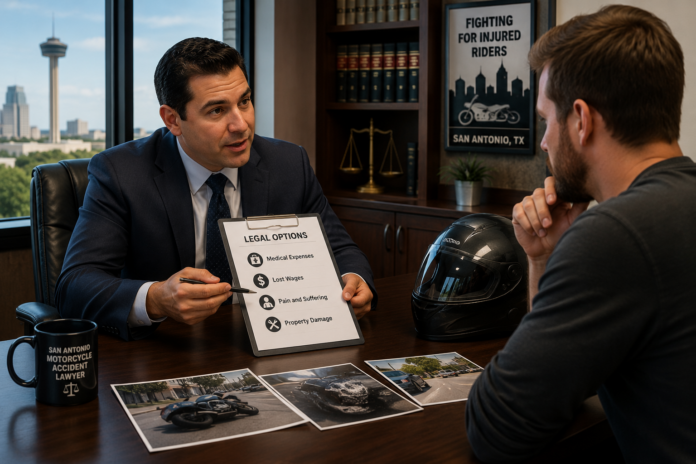
San Antonio motorcycle accident lawyer discussing legal options with an injured client during a law office consultation.

Motorcycle accidents can cause serious injuries, costly medical care, property damage, and a great deal of emotional distress. Motorcycles offer riders less physical protection in collisions than passenger cars, which raises the possibility of serious injury. An injured motorcyclist may be able to seek damages when another driver’s carelessness results in an accident. A San Antonio Motorcycle Accident Lawyer can assist with the crash investigation, evidence collection, security company communication, and determination of the suitability of a personal injury claim. It’s crucial to know your legal rights following an accident, particularly when security companies try to reduce claims. Quick legal advice can support a fair assessment of your possible case and help safeguard crucial evidence. Here are some ideas about the topic to help us understand further. 

Common Causes of Motorcycle Accidents 

Although there are many different causes of motorcycle accidents in San Antonio, driver negligence is a common factor. Because liability may vary depending on the particular circumstances, identifying the cause of an accident is crucial. In order to ascertain how the collision happened, a motorcycle accident attorney can examine police reports, photos, witness statements, traffic footage, and other available evidence. These are the causes of motorcycle accidents. 

.

  • Distracted Driving
  • Speeding
  • Failure to Yield
  • Unsafe Lane Changes
  • Following Too Closely
  • Driving Under the Influence
  • Poor Visibility
  • Unsafe Turns
  • Hazardous Road Conditions
  • Defective Motorcycle Parts

Injuries Commonly Caused by Motorcycle Crashes 

Because riders typically have less protection than those inside passenger cars, motorcycle crashes can result in serious injuries. Broken bones, road rash, spinal cord injuries, traumatic brain injuries, internal injuries, and damage to muscles or joints are examples of common injuries. Emergency care, surgery, rehabilitation, or long-term medical care may be necessary for certain injuries. Victims of particularly severe collisions may suffer long-term impairments that limit their capacity to work and carry out daily tasks. Because it can show the type and extent of the injuries, medical records may be crucial when seeking compensation. While attempting to determine how the accident contributed to the victim’s injuries, a San Antonio motorcycle accident attorney can assist in assessing present and potential losses. 

Determining Liability After a Motorcycle Accident 

Examining the circumstances and evidence surrounding a motorcycle accident is necessary to determine who is at fault. If a careless driver breaks traffic laws or poses an unreasonable risk of injury, they may be held accountable. However, depending on the situation, other parties might also be held accountable. Liability issues may arise, for instance, when an accident is caused by a hazardous road condition, a faulty motorcycle component, or a careless commercial driver. Police reports, photos, vehicle damage, medical records, witness statements, surveillance footage, and accident reconstruction analysis are examples of evidence. These documents can be examined by a motorcycle accident lawyer in order to determine who might be at fault and create a legal plan based on the relevant facts and Texas law. 

Compensation You May Be Able to Seek 

A motorcycle rider who is hurt in an accident brought on by the carelessness of another person may be entitled to compensation. Medical expenses, rehabilitation costs, lost wages, diminished earning capacity, property damage, and physical pain are examples of recoverable damages, depending on the situation. Emotional distress and other non-economic losses recognized by relevant law may also be covered by compensation. It is crucial to take into account both present and future losses because serious injuries can result in costs that persist long after the initial collision. Security companies may contest a claim’s value or liability, especially if the injuries are severe. While defending the interests of the injured rider, a skilled San Antonio motorcycle accident attorney can assess the available evidence and bargain with insurers. 

An injured motorcycle rider may face serious emotional, financial, and physical difficulties as a result of an accident. Pursuing compensation may help cover medical costs, lost wages, property damage, and other accident-related losses when someone else’s carelessness causes the collision. However, establishing culpability and precisely figuring out damages can be challenging. A San Antonio motorcycle accident attorney can look into the situation, collect proof, speak with security providers, and outline possible legal options. Riders should think about recording the incident, getting the proper medical care, keeping pertinent records, and refraining from making remarks that might unduly influence a future claim. Getting legal advice as soon as possible may help safeguard crucial rights because Texas personal injury laws and deadlines can impact a person’s capacity to pursue compensation. To know more information about the subject, see this site Law Offices of Troy A. Brookover.

Frequently Asked Questions (FAQs):

Can I recover compensation if I was partially responsible for the accident? 

Possibly. Texas uses a system of modified comparative responsibility. The percentage of responsibility you are given and the particulars of your case may determine how well you recover. 

What damages can a motorcycle accident claim include? 

Damages may include medical costs, lost income, property damage, rehabilitation costs, pain and suffering, and other accident-related losses, depending on the specifics. 

Why are motorcycle accident injuries often serious? 

Compared to occupants of enclosed vehicles, motorcycle riders have significantly less physical protection. Riders may thus be directly exposed to impact forces, road surfaces, cars, and other hazards in collisions. 

Guidance for Durham workers on how to understand Workers’ Compensation

For workers recovering from injuries at work, determining what to do in response to on-the-job injuries and how to recover can be overwhelming. Workers compensation systems are in place in North Carolina to provide a limited, but useful and manageable, means of obtaining resources for an injured employee to support their recovery, potentially and attainably medical care, and lost income. Knowing how these benefits work, your rights as an employee, and when you should consult with Durham workers compensation attorneys, will help you to experience a gradual and smooth recovery journey.

How to Analyze the Cases in NC Workers’ Compensation Court

The main premise of workers’ compensation is to offer a safeguard for workers who sustain an injury or fall unwell from their line of work. It is a “no-fault” system, meaning that the employee can receive benefits as long as it was taking place in “the scope of employment”.

Often state frameworks provide key benefits including:

Medical Expenses:All the expenses incurred for doctor’s visits, hospitalization, medicine, and physiotherapy.
Part Income Replacement:Two-thirds of your income was paid weekly if you were not able to go back to work because of your injury.
Disability Benefits:Support provided for temporary or permanent disability – partial or total.
Vocational Rehab:When unable to return to a previous career, help with retraining or changing a career.

Some of the most common problems that can arise when it comes to claims for workers’ compensation include the following:

Although this process is not meant to be complex, workers will at times be faced with unexpected situations during the healing process. Awareness of such situations helps one deal with them patiently.

Delayed/Denied Claims

Insurers sometimes dispute over whether the injury happened within a workplace context or about the condition’s seriousness. When it comes to clarifying these points, a detailed medical report and witness statement is extremely important.

Disagreements on medical care.Conflicts regarding medical care.

Usually an employer or their insurer can choose who the treating physician is. When the physician the worker has been identified by the employer is not responding to the worker, a request for change via the formal administrative process becomes.

Unnecessary push to return to work too early.

Striking a balance between financial and physical rehabilitation can be tricky. If you return to work before you have cleared yourself not only will you be at risk of further harm, but it’s imperative that you have open communication with your doctor and your employer as well.

In cases of claims that become complex or in the event of multiple claims and disputes it can offer some relief to have legal support dedicated to it. Compassionate advocates provide individualized guidance while helping to protect your rights as patiently as possible, while you focus on healing.

Lawyers help out by:

  • Collecting definitive medical documentation and specialists’ statements.
  • Dealing with communications with Insurance Adjusters and opposing counsel.
  • Taking part on your behalf at hearings before the Industrial Commission.
  • Ensuring all state filing deadlines and requirements are strictly met.

When going through these kinds of administrative processes, it is very vital to receive the necessary legal advice that will make this task easier for you. In case you are seeking a reputable and sensible law firm that will offer assistance, you can consider consulting the Kornbluth Ginsberg Law Group.

Frequently asked questions (faqs)

When should I report a workplace injury in North Carolina?

As soon as possible, the sooner the better. It is very crucial that you inform your employer about your injury within 30 days in writing in North Carolina.

May I go to my doctor should I have a workplace health and safety incident?

The treating physician is selected by the employer (or insurance carrier) in most instances. If you’d like to receive care from your own doctor, you have to obtain authorization from the insurance carrier training file a motion with the North Carolina Industrial Commission.

What happens if my injured workers’ compensation claim is denied?

If your claim is denied, you have the right to appeal, by following specific rules, the denial to the Industrial Commission of the State of New South Wales (NSW). This can be particularly helpful in the field of law guidance.

Is my own carelessness, or mistake covered by workers’ compensation?

Workers’ comp is a no-fault program, which means usually, so long as the accident happened in the course of your employment duties, both employees and employers will be eligible, irrespective of whose fault it happened to be.

Conclusion

The process of getting better from a workers’ compensation injury is a great deal more complex than the physical recovery process and requires one to deal with administrative processes and financial stability. Knowing your rights by law and when to get legal help from Kornbluth Ginsberg Law Group can allow you to face the recovery process with clarity, calm and confidence.

Your Next Move After a Car Accident in San Antonio

Car accident lawyer answering a client's questions.

After a car accident in San Antonio, you may find yourself with painful injuries, damage to your car, medical bills, and questions about your next steps. If a collision occurs due to another driver’s carelessness, determining who is at fault and how to proceed to get a fair settlement can be complicated, particularly when insurance companies are involved. It is important to know your rights at an early stage so you can safeguard them and get through the recovery process.

San Antonio Car Accident Lawyer can be of service throughout the claims process. A lawyer can investigate the accident, collect evidence, determine your damages, discuss coverage with insurance companies, and advocate for you to recover for your injuries, loss of wages, vehicle damage, and other crash-related losses.

What Should You Do After a Car Accident in San Antonio?

Drivers exchanging information after a San Antonio car accident.

The first thing to do after an Auto Accident in San Antonio is to ensure that you can find a safe place to go and determine if anyone requires urgent medical attention. Arrange to call emergency crews if necessary and notify the proper authorities of the collision. Photographs of the vehicles, roadway, visible damage, and the surrounding environment can also capture valuable evidence. Other tips include exchanging insurance and contact information with the other driver and obtaining the other driver’s witness information.

While it may seem like the injuries you sustained from the accident aren’t severe, it can still be important to receive medical care because some symptoms may not show up right after the accident. Maintain medical attendance records, medical expense documentation, vehicle damage records, and other accident-related losses. Don’t take responsibility for fault, or make declarations about injury severity, without knowing the situation. The following actions may help to retain evidence and any potential right to compensation.

The Most Frequent Causes of Car Accidents in San Antonio

There are a number of reasons for car crashes, but one of the more important is driver behavior. Knowing some of the common causes can help to shed light on how the accident may have happened and what evidence might be important in deciding who is to blame.

Distracted DrivingTexting or talking on a phone, eating, or adjusting controls can distract a driver from the road.
SpeedingDriving too quickly slows a person’s reflexes and makes a crash more devastating.
Drunk DrivingAlcohol slows down the mind, coordination, reaction time, and decision-making.
Failure to YieldFailure of drivers to obey right-of-way regulations can lead to collisions at intersections and during turns.
Running Red LightsFailing to obey traffic lights may result in side-impact collisions.
Fatigued DrivingIncreased driver fatigue can reduce alertness and make it more difficult to respond quickly to traffic changes.
Aggressive DrivingReckless actions like tailgating, improper lane changing, and other unsafe practices can raise crash risks.

The Insurance Companies Process for Car Accident Claims

Car accident lawyer answering a client's questions.

If a collision occurs, an insurance firm can begin its investigation and determine whether to accept or deny a claim. Adjusters could consider witness statements, medical reports, photographs, vehicle damage, and police reports. The insurer might also require the injured party to submit details regarding the accident and injury. It may be wise to cooperate, but it is important to understand what you are signing up for before you provide statements or sign documents.

Insurers might also consider the severity of the claimant’s losses when deciding on a settlement. Depending on the circumstances, compensation includes medical costs, lost wages, property damage, and other losses arising from the accident. A settlement may not cover all costs, especially if the injury is ongoing and continues to have costs. It is wise to carefully consider an offer so that all key losses are not overlooked.

Frequently Asked Questions

What are the consequences of reporting a car accident in San Antonio?

Reporting the accident can help establish a record of it if there were injuries, property damage, or other factors that warrant police involvement.

How can I get the facts of an Auto Accident?

Photos, videos, witness contact, police reports, medical, repair quotes, and insurance documents are all useful evidence.

Can I claim a percentage if I was partly responsible?

Potentially. Texas has “modified” comparative negligence, which means that the party more responsible for the accident may determine how much compensation a person receives.

How long do I have to file a car accident lawsuit in Texas?

In most cases, the statute of limitations for a personal injury case in Texas is two years. In general, the statute of limitations for personal injury cases in Texas is two years, but exceptions do exist. Contacting an attorney early can help determine the deadline in your case.

Will I take an initial insurance offer?

Not necessarily. When evaluating whether an offer is sufficient after an accident, pay attention to whether it includes coverage for your medical costs, lost wages, property damage, and other accident-related losses.

Conclusion

A car accident can cause financial and personal issues to follow it. Making the right decisions after the accident, documenting the damage, and being careful with what you say to insurance companies can help ensure you protect your interests. The Patel Law Firm can help you understand your options if you need assistance in understanding your accident claim and what legal remedies you may have.

Wilmington Car Accident Attorney: Protecting Your Rights After a Crash

Wilmington car accident attorney consulting with a client in a law office about protecting her rights and pursuing a claim after a crash.

Even though a car accident can happen in a matter of seconds, the effects could take months or even years to manifest. Recovering from injuries, auto damage, medical expenses, lost wages, and security disputes can be challenging. A Wilmington Car Accident Attorney can assist you in understanding your legal options and pursuing compensation if you were hurt in a collision in Wilmington, Delaware. In Delaware, registered cars must have both Personal Injury Protection (PIP) and liability security. Dealing with security companies and figuring out who is legally liable can still be difficult, though. While you concentrate on healing from your injuries, legal counsel can help safeguard your interests. 

Investigating the Cause of the Accident 

An essential component of developing a personal injury claim is figuring out how an automobile accident occurred. Police reports, photos, traffic patterns, vehicle damage, witness accounts, and accessible video footage can all be examined by a Wilmington auto accident lawyer. Whether another driver was speeding, distracted, intoxicated, or otherwise careless can be determined with the use of evidence. If a car’s flaws or the state of the road contributed to the collision, an attorney may also look into those issues. Since receiving compensation typically requires proving that the actions of another party caused your losses or injuries, establishing responsibility is crucial. When an security company or another driver disputes your account of what happened, a thorough investigation can help resolve the conflict. Important evidence can be preserved more easily if action is taken quickly. 

Handling security Companies and Claims 

Before reviewing a claim following an accident, an security company may ask for statements, medical records, or other information. Individual policies may offer higher limits, even though Delaware mandates minimum liability coverage of $25,000 for bodily injury to one person, $50,000 for two or more people, and $10,000 for property damage. A car accident lawyer can examine your options for coverage and assist you in contacting insurers. Additionally, Delaware mandates minimum PIP coverage of $15,000 per person and $30,000 per accident, which can assist in paying for lost wages and medical costs regardless of who is at fault. When accident-related costs become significant, it can be crucial to comprehend the various sources of coverage. 

Calculating Your Potential Compensation 

A person’s capacity to work or carry out daily tasks may also be impacted by serious injuries. When seeking compensation, an attorney can compile evidence and evaluate the accident’s financial impact. Medical bills, employment records, repair estimates, and other supporting documentation can all be used to show how much was lost. Depending on the claim and the relevant Delaware law, non-economic harm may also be significant. During settlement talks or legal proceedings, a comprehensive assessment helps guaranty that significant categories of damages are not missed. 

Negotiating a Fair Settlement 

A Wilmington auto accident lawyer can negotiate with the insurer, examine settlement offers, and outline available options. Evidence obtained during the investigation can be used by the lawyer to bolster the claim’s worth. When negotiations fail to yield a satisfactory resolution, litigation may be taken into consideration. Additionally, having legal counsel can offer an organized method of contacting insurers and other parties. Knowing what costs and damages a settlement is meant to cover is crucial before accepting it. 

  • Calculate property damage and repair costs
  • Evaluate pain and suffering
  • Present supporting evidence to the insurer
  • Communicate with security adjusters
  • Counter low settlement offers

Representing You in a Personal Injury Lawsuit 

Evidence demonstrating how the collision happened and how it affected the injured party frequently determines how strong a lawsuit is. During the legal process, records such as medical records, accident reports, witness statements, and photos may become crucial. Injured parties should think about getting legal counsel as soon as is reasonably possible because deadlines and procedural requirements can impact a claim. Early action can help protect evidence and enable a lawyer to assess the case before crucial information becomes hard to come by. 

Therefore, serious auto accidents can lead to emotional, financial, and physical difficulties. Knowing your rights and available security coverage can be a crucial first step if the actions of another driver caused your injuries. When necessary, a Houser Injury Law can conduct an investigation, speak with security companies, assess damages, reach a settlement, and take legal action. Liability and PIP requirements are part of Delaware’s security system, but the amount of compensation that is available depends on the particular facts and security policies in question. Early legal advice can assist you in reaching a just conclusion and making well-informed decisions. 

Frequently Asked Questions (FAQs)

When should I contact a Wilmington car accident attorney? 

Seeking legal advice shortly after a serious accident is usually beneficial, especially if there are injuries, substantial property damage, disputed liability, or issues with security. 

What should I do immediately after a car accident? 

Move to a safe area if you can, get in touch with emergency services if needed, share information with the other driver, record the scene, and get the help you need. Refrain from speculating about fault in your statements. 

Does Delaware have PIP security? 

Indeed. PIP coverage is mandatory for registered vehicles in Delaware. The minimum PIP required by the state is $30,000 for each accident and $15,000 for each individual. 

Can I recover compensation if the other driver has limited security? 

Possibly. The situation, available security plans, and relevant Delaware law all influence the response. In some circumstances, underinsured and uninsured motorist coverage may also be important. 

What evidence can help support my car accident claim? 

Photographs, videos, police reports, medical records, witness information, vehicle repair records, security documents, and proof of lost income are all examples of useful evidence. 

How Race Fans Can Score Daytona 500, NASCAR, and Major Motorsport Tickets on a Budget

Stock car racing delivers one of the most intense live sporting atmospheres in the world, filled with roaring V8 engines, door-to-door racing and drafting, and massive grandstands shaking as the pack screams past. From the high banks of superspeedways like Talladega to the legendary season-opening spectacle in Florida, being trackside is an unforgettable experience for motorsport enthusiasts. However, surging demand for crown jewel events and unexpected processing charges at checkout can quickly drive ticket costs beyond a standard weekend budget. Learning how grandstand sightlines work, watching secondary marketplace price cycles, and steering clear of surprise checkout markups are essential steps to secure great seats at affordable prices.

High Bank Sightlines and Reading the Upper Tri Oval

Picking the right grandstand section shapes your overall view of high-speed packs, pit strategy, and fuel stops. Unlike traditional stadium sports, the highest rows at a superspeedway often deliver the best overall vantage point across the entire asphalt.

Upper level grandstand seats give fans an unobstructed, panoramic view of the entire backstretch, tri oval, and pit road, letting you track passing maneuvers and yellow flags across the entire oval. Lower grandstand rows place you directly along the catch fence, where you feel the tremendous wind displacement, tire smoke, and raw roar as the field thunders by at 200 mph. For fans balancing track views with cost, mid-tier grandstands positioned through turns one and four provide sharp sightlines through high banking at very accessible price points.

Green Flag Timing and Catching Resale Market Dips

Ticket prices across secondary marketplaces move constantly between the initial ticket on-sale and the drop of the green flag. Marquee Cup Series stops often experience early price surges as initial allocations sell out through track box offices.

As qualifying sessions and practice runs approach, resale prices can change as available inventory changes. Season ticket holders who cannot make the trip often discount their asking prices in the days leading up to qualifying to get their tickets sold. Dedicated race fans who monitor listings during race week can frequently land meaningful discounts on good grandstand seats. Whether you want to secure verified Daytona 500 tickets or find affordable tickets for short-track races, tracking these pricing cycles helps you lock in seats at the right time.

Bridging NASCAR and Formula 1 Race Weekend Strategies

For fans expanding their travel to races across different motorsports, modern open-wheel circuits present distinct ticketing nuances. Major Formula 1 Grand Prix weekends, from the Circuit of the Americas to high-speed street courses, utilize a mix of numbered grandstands and general admission areas.

Turn one and main straight grandstands command premium rates for direct views of grid launches and fast pit stops. However, general admission passes along sweeping Esses and hairpin complexes offer outstanding value, allowing fans to roam freely and experience extreme aerodynamic grip throughout practice and qualifying. Similar to oval racing, multi-day open-wheel passes often experience secondary market price drops in the final 48 hours before the event as sellers offload unused tickets, creating prime opportunities for flexible buyers.

Eliminating Hidden Fees on Race Day Passes

The quickest way for a trackside trip to exceed your planned budget is getting hit with surprise service charges during online checkout. Several secondary platforms hide large service fees and delivery charges until the final payment step, inflating your true cost per seat.

Protecting your racing travel fund requires buying tickets through ticketing platforms with no hidden fees. Upfront pricing guarantees that the exact dollar amount displayed on the interactive track map matches your final payment total, keeping your entire race weekend affordable from opening inspection to the checkered flag, with no surprises at checkout.

10 Low-Effort Hobbies You Can Enjoy at Your Own Pace

Photo by depositphotos at https://depositphotos.com/

There is a time and place for ambitious goals and time-consuming projects. Sometimes, though, you just want to let loose for a couple of minutes. For that reason, it’s good to have a hobby that you can easily pick up when you have a free moment, set aside without guilt, and return to whenever you feel like it.

A more flexible hobby can be especially welcome when your schedule changes from day to day. Low-effort hobbies give you something engaging to do without requiring days of careful planning or specialized skills that take years to develop. In any case, being into something that’s just enjoyable for its own sake can help you clear your mind during challenging times, giving you the renewed focus to do what you need to do. 

If you’re looking for new, better ways to spend your downtime, read on. These popular hobbies are easy to start, simple to maintain, and flexible enough to fit naturally into almost any lifestyle.

1. Play Casual Digital Games

Casual mobile games, strategy titles, card games, digital puzzles, and the best JILI games all offer different ways to unwind, provided you approach them responsibly. If you’re playing for stakes, in particular, you always want to set limits that suit your income and budget. In any case, because many of these games are designed around short play sessions, they’re easy to enjoy during your lunch breaks, while commuting, or as part of a relaxed evening at home.

2. Build a Collection Around Something You Enjoy

Contrary to popular belief, collecting doesn’t have to involve rare or expensive items. You might save postcards from places you’ve visited, display miniature figures from your favorite franchises, collect vinyl records, or even build a digital collection of memorable photographs. As long as you have the space to safely accommodate your collection, watching a collection gradually grow in size and value over time can be rewarding.

3. Discover New Coffee Shops

It may be a bit of a niche, but given that there are thousands of coffee shops in the Philippines, collecting café visits as a hobby is almost a no-brainer. Everyday outings gain a little more purpose; you can explore different neighborhoods, sample and document specialty drinks, compare brewing styles, or compare different atmospheres. Sure, there will be some less than stellar finds, but even that eventually becomes part of the fun.

4. Experiment with Home Café and Cocktail Drinks

If visiting cafés isn’t for you, maybe preparing your own coffee, tea, or even cocktails is. Making these complex drinks can become surprisingly satisfying once you begin experimenting with recipes and techniques. The hobby has infinite ways to grow, and you can take it as far as your curiosity develops. Even if you perfect a few favorite recipes, this is definitely something worth looking into.

5. Learn Through Podcasts

Whether you’re interested in gaming, business, sports, Philippine history, travel, or true crime, there are at least a couple of podcasts out there for you. Being a passive hobby, they’re just the thing when you’re driving, exercising, or taking care of household chores.

6. Keep a Running Photo Journal

Instead of waiting for special occasions, try to document at least one interesting moment that catches your attention each day. Whether it’s interesting architecture, colorful meals, that coffee drink you just perfected, pets, changing weather, or quiet streets, anything can be a worthwhile subject if you understand how to approach it. Over time, your phone gallery becomes a visual journal that captures ordinary moments while also revealing a bit about your own interests and thought processes.

7. Solve Puzzles in Short Sessions

As old-school as they are, crossword puzzles, Sudoku, logic challenges, and jigsaw puzzles offer a timeless and deeply enjoyable way to keep your mind active without demanding hours of concentration. Since you can easily pause these activities and return later, they’re ideal for people whose free time comes in small pockets throughout the day.

8. Read Without Setting Deadlines

If you’re a frequent reader, you probably agree that reading becomes much more enjoyable when there’s no pressure to finish quickly. Whether you prefer novels, travel writing, biographies, manga, coffee table books, or short stories, you can simply read a few pages whenever the opportunity arises. Gradually working through a book instead of plowing through it over a weekend often feels more relaxing and gives you more time to absorb the themes and stories.

9. Start a Simple Garden

While it certainly helps, you don’t need a large yard to enjoy gardening. Low-maintenance plants like pothos, snake plants, and cacti thrive indoors with relatively little attention, making them ideal for beginners.

Start by caring for a couple of plants as part of your weekly routine. As these thrive, consider bringing more greenery into your living space. As slow-paced as this is, you’d be surprised at how complex and engaging it gets.

10. Curate Soundtracks for Different Moments

Finally, consider creating your own virtual (or even physical) mixtapes. If you have a streaming service subscription, you can start with playlists for late-night drives, workouts, rainy afternoons, weekend gaming sessions, or relaxing evenings at home. Revisiting familiar songs while discovering new artists keeps your music library evolving without requiring much effort, and may even help you learn a bit of yourself in the process.

Enjoy Leisure on Your Own Terms

Of course, you don’t have to stick with just one of these choices. Indeed, there are hundreds of other hobbies worth exploring that can be done at your own pace. The important thing is to keep an open mind and to try things out first. With the right set of hobbies, you have multiple options for making your downtime feel more enjoyable, whatever your schedule brings.

What to Expect During a Professionally Managed Moving Day From Arrival to Final Unloading

Photo by robuart at https://depositphotos.com/

Moving day can feel unpredictable when homeowners are unsure what will happen once the crew arrives. Boxes, furniture, parking arrangements, access points, and timing all need attention within a limited period. Understanding the usual flow of the day makes it easier to prepare the property and respond when decisions are needed.

A professional Moving company generally works through the relocation in organized stages rather than moving belongings randomly. The process typically starts with reviewing the property and continues through loading, transportation, unloading, and a final check. Knowing these stages helps homeowners stay involved without interfering with the physical work.

Tera Moving Services understands that preparation and communication can make moving day easier for everyone involved. Homeowners who know what to expect can keep important belongings separate, answer questions quickly, and make the destination ready for unloading. A little preparation can prevent avoidable delays during a busy day.

Preparing the Property Before the Crew Arrives

Moving day should begin before the movers reach the property. Boxes should be packed and labeled unless packing assistance is part of the arrangement, while important documents, medications, keys, chargers, and personal necessities should remain separate. These essentials should travel with the homeowner rather than disappear among household boxes.

Clear walking routes also make a difference. Remove loose rugs, small furniture, toys, and other objects from hallways or areas movers will use repeatedly. If parking is limited, confirm where the moving vehicle can stop before loading begins.

Reviewing the Plan at the Start of the Day

Once the crew arrives, the first stage should involve confirming the basic plan. Homeowners can identify rooms being moved, belongings requiring special attention, and anything that should remain behind. This is also a useful time to mention narrow stairs, difficult doorways, or other access concerns.

Clear instructions are particularly valuable when several people are involved. Instead of giving different directions throughout the day, establish priorities before heavy loading begins. Tera Moving Services can then work from the information provided while homeowners remain available for questions that arise.

Identifying Items That Need Special Attention

Some belongings require more care because of their size, shape, construction, or fragility. Mirrors, artwork, electronics, glass furniture, and delicate decorative pieces should be identified rather than left for movers to discover unexpectedly. Homeowners should also point out boxes containing fragile contents.

Large furniture may create different concerns. A bulky sofa that fits comfortably inside a room may be difficult to maneuver through a narrow doorway or staircase. Discussing these pieces early gives the crew an opportunity to evaluate the route before carrying begins.

Loading Belongings in a Practical Order

Professional loading involves more than placing boxes inside a vehicle. Furniture and containers need to be arranged so available space can be used effectively while belongings remain stable during transportation. The order may depend on item size, weight, fragility, and the layout of the shipment.

Homeowners can help by keeping packed boxes in accessible locations and avoiding last-minute additions. Items that are not ready can interrupt the loading sequence and create unnecessary searching. Staying organized also makes it easier to notice whether anything has been overlooked.

A Moving company may use equipment suited to heavier household belongings and repeated carrying. Dollies, protective coverings, straps, and other moving equipment can support the loading process depending on the items involved. Homeowners should leave the main carrying routes open while this work takes place.

Checking Rooms Before Leaving the Old Home

An empty-looking room can still contain forgotten belongings. Closets, cabinets, shelves, garages, storage spaces, patios, and utility areas should receive a final inspection after loading. Small items are particularly easy to miss when attention is focused on larger furniture.

Check walls and corners for anything intended to travel to the new property. Chargers, cleaning supplies, tools, hardware, and personal items are common examples of belongings that may remain behind. A systematic room-by-room inspection is more reliable than a quick glance before departure.

This is also the time to confirm that personal essentials have not been loaded accidentally. Keeping those belongings in a clearly designated location from the beginning reduces that possibility. Once the property is checked, attention can shift to arrival at the destination.

Preparing for Transportation Between Properties

Transportation creates a natural transition between the loading and unloading stages. Homeowners should know the destination address, expected access arrangements, and any instructions affecting arrival. If the new property has gates, parking restrictions, or building requirements, those details should already be addressed.

Keep communication available during this period. Traffic, access complications, or other practical issues may require coordination before arrival. Accurate contact information helps prevent a small change from causing unnecessary confusion.

Tera Moving Services recognizes that destination preparation is just as important as departure preparation. Doors should be accessible, necessary keys should be available, and pathways should remain clear. Having these details ready allows unloading to begin without avoidable waiting.

Directing Boxes to the Correct Rooms

Unloading becomes easier when boxes are labeled clearly. A simple room name such as kitchen, primary bedroom, office, or bathroom gives movers useful direction without requiring the homeowner to inspect every container. Consistent labels are especially helpful in larger homes.

Homeowners can decide room destinations before the vehicle arrives. If a room’s purpose has changed since packing, communicate that change at the start of unloading. Otherwise, boxes may need to be carried again after the crew leaves.

Try to keep entrances and hallways from becoming crowded with containers. Directing boxes into their intended rooms keeps major routes open for furniture and additional loads. This also creates a more manageable starting point for later unpacking.

Placing Large Furniture Before Smaller Items

Furniture placement deserves early attention because large pieces are harder to reposition once rooms fill with boxes. Homeowners should have a basic idea of where beds, sofas, tables, dressers, and other major items will go. Exact decorating decisions can wait, but general placement should be clear.

Measure uncertain spaces before moving day if possible. A piece that fit comfortably in the previous home may not work with a different doorway, staircase, or room layout. Basic measurements can prevent repeated attempts to position furniture in unsuitable areas.

Avoid changing placement instructions several times while unloading is underway. Frequent changes can slow progress and increase unnecessary handling. If uncertain, choose a practical temporary location that keeps doorways and walking routes accessible.

Completing a Final Walkthrough After Unloading

After the final items enter the property, homeowners should inspect the main rooms and confirm that belongings have reached the intended areas. Look for boxes left in hallways, furniture blocking necessary access, or items that may need clarification before the crew departs.

This is also a useful time to check the moving vehicle and loading area according to the normal process being followed. A final review can identify belongings that might otherwise be overlooked. Questions are easier to address while everyone involved is still present.

A moving company can complete the physical relocation, but homeowners still play an important organizational role. Clear directions and timely decisions help keep each stage moving efficiently. Cooperation matters from the initial walkthrough through the final placement of belongings.

A Clear Moving-Day Plan Supports an Organized Arrival

Moving day becomes easier to manage when homeowners understand the sequence of events. Preparing access routes, identifying special items, supporting organized loading, checking the old property, and directing unloading all contribute to a clearer process. Each stage builds on the preparation completed before it.

Homeowners do not need to control every detail while movers work. Their most useful role is to remain available, communicate priorities, protect personal essentials, and provide clear destination instructions. This allows the physical work and household decisions to proceed without competing for attention.

A well-managed relocation ends with more than an empty moving vehicle. Boxes should reach useful locations, major furniture should have sensible placement, and important belongings should be accounted for. Understanding the process beforehand helps families begin settling into their new home with less confusion.

Hair Salon NYC Color Planning for Clients Who Want a Lower-Maintenance Hair Routine

Hair color can refresh a person’s appearance, add dimension, and make an existing haircut feel completely different. The challenge is that some color choices require frequent appointments, careful product routines, and regular attention to visible regrowth. Clients with demanding schedules often want attractive color without building their calendar around constant maintenance.

A consultation at a Hair Salon NYC can help clients explore color choices that fit the amount of upkeep they can realistically manage. Hair texture, natural color, previous treatments, desired contrast, and styling habits all influence how a color develops between appointments. Discussing those details before the service helps create expectations that match everyday life.

Professionals at Mure Salon NYC can also consider how a client’s preferred look may change as the color grows out. Instead of focusing only on how hair appears immediately after an appointment, thoughtful planning considers the following weeks and months. That longer view can make maintaining colored hair more practical and predictable.

Start by Defining What Low Maintenance Means to You

Low maintenance does not mean exactly the same thing for every client. One person may be comfortable returning regularly for a toner but dislike obvious root growth, while another may prefer fewer appointments altogether. Someone else might accept gradual color changes as long as daily styling remains simple.

Clients should explain their usual appointment schedule and how much time they spend caring for their hair at home. This information gives the stylist a better basis for recommending suitable options. A color plan should fit real habits instead of depending on a routine the client is unlikely to maintain.

Budget can also influence maintenance preferences. Discussing the expected frequency of future services helps clients understand the commitment before making a significant color change. Clear planning reduces surprises after the initial appointment.

Consider the Contrast Between Natural and Colored Hair

The difference between natural hair color and the chosen shade can strongly affect how noticeable regrowth becomes. A dramatic contrast may create a clear line as new hair appears at the roots. Softer transitions can sometimes make growth less visually obvious.

This does not mean clients must stay close to their natural shade. Instead, they can discuss how much contrast they enjoy and how they feel about visible regrowth. These preferences help determine which coloring approach makes sense.

A consultation at a professional hair salon in Manhattan provides an opportunity to compare desired results with realistic maintenance requirements. Reference photos can be useful, but clients should remember that the same color may behave differently depending on starting shade, texture, density, and previous chemical services.

Use Dimension to Create a Softer Growing-Out Process

Color does not always need to appear completely uniform from roots to ends. Carefully placed variations in tone can create depth while allowing natural growth to blend more gradually into the overall look. This approach can be useful for clients who prefer flexibility between appointments.

Dimension can also complement the movement of a haircut. Layers, waves, curls, and different styling patterns may reveal color in distinct ways. Considering the haircut alongside the color helps the finished result appear connected rather than treated as two separate decisions.

The appropriate amount of variation depends on personal preference. Some clients enjoy noticeable contrast, while others want subtle changes that become visible mainly in certain lighting. A detailed consultation can establish the desired effect before coloring begins.

Think About How Hair Color Changes Between Visits

Fresh color represents only one stage of the process. Washing, heat styling, environmental exposure, and normal hair growth can gradually change its appearance. Certain tones may become softer or shift as time passes, making home care an important part of maintenance planning.

Clients should ask how their selected shade is expected to develop between appointments. Understanding possible changes makes it easier to decide whether the color fits their expectations. It can also help determine an appropriate schedule for future salon visits.

Mure Salon NYC can discuss care recommendations based on the client’s service and individual hair needs. Practical guidance is especially useful for someone choosing color specifically because they want a simpler routine. Home care should support the plan rather than make it unexpectedly demanding.

Match the Color Plan to Your Normal Styling Habits

Hair can look different depending on how it is styled. Straightened hair may display placement and transitions differently from curls, waves, braids, or an air-dried finish. Clients should therefore describe how they wear their hair most often.

A stylist can consider the everyday appearance rather than designing color exclusively around a polished salon finish. This is particularly valuable for clients who rarely use extensive heat styling. The color should remain appealing during ordinary routines, not only immediately after professional styling.

Bringing photographs of typical hairstyles may help during the consultation. They provide additional context about parting, texture, and the sections of hair that are usually most visible.

Be Clear About Previous Color and Chemical Services

Color planning should begin with an accurate understanding of the hair’s history. Previous permanent color, lightening, toners, smoothing services, or other chemical treatments may influence what can reasonably be done next. Even color that is no longer visually prominent can remain relevant along portions of the hair.

Clients should provide as much information as they can remember. Attempting to hide an unsuccessful home-coloring experiment or forgotten service makes it harder for a stylist to evaluate the starting point. Honest communication supports better planning and clearer expectations.

A consultation may sometimes lead to a more gradual approach than the client originally imagined. Reaching a desired shade over multiple appointments can be more practical than expecting every change to happen at once.

Choose Home Care That Fits the Desired Routine

A lower-maintenance color plan still requires sensible care between appointments. Shampoo habits, water temperature, heat use, and styling products can influence how colored hair looks and feels. The goal is to establish a routine that the client can follow consistently.

Buying numerous products is not automatically necessary. Clients can ask which steps are most relevant to their specific service and which products serve a clear purpose. A manageable routine is often easier to maintain than a complicated collection of occasional treatments.

Heat styling habits also deserve discussion. Clients who frequently use dryers or hot tools can ask about suitable protection and styling practices. Those who usually air-dry may need different recommendations for preserving the appearance and manageability of their hair.

Plan Future Appointments Before Maintenance Becomes Urgent

Waiting until color feels noticeably overdue can make maintenance more stressful. A general idea of when to return gives clients time to coordinate appointments with work, travel, and other commitments. The recommended timing can vary according to the service and desired appearance.

A Hair Salon NYC color plan should account for what happens at future visits, not merely the first transformation. Some appointments may focus on refreshing tone, while others could involve adjusting placement or addressing new growth. Understanding the likely sequence makes ongoing care easier to anticipate.

Clients do not necessarily need an identical service every time. Hair goals can change with the season, a new haircut, or a different daily routine. Regular conversations allow the plan to develop without requiring an abrupt restart.

Avoid Choosing Color Only From a Trend Photo

Inspiration images can make consultations easier, but they should serve as references rather than guarantees. Lighting, editing, starting color, texture, and styling can all affect how a shade appears in a photograph. Two people requesting the same inspiration may need very different approaches.

Clients should identify exactly what they like about an image. The appealing feature might be brightness around the face, subtle dimension, overall warmth, or the way darker and lighter sections blend. Describing those details gives the stylist more useful information than simply requesting an exact copy.

Trend-driven color can still work with a manageable routine when expectations are discussed carefully. The important question is whether the desired look suits the client’s hair and willingness to maintain it.

Build a Color Routine That Remains Realistic

Successful hair color should work beyond the first few days after an appointment. Clients who prefer less upkeep benefit from considering regrowth, tonal changes, styling habits, home care, and future appointments before committing to a new look. These practical details can be just as important as choosing the shade itself.

At Mure Salon NYC, discussing lifestyle and maintenance expectations can help shape a color direction that remains manageable over time. Clients should feel comfortable explaining how often they want appointments and how much daily effort they are willing to invest. Those conversations make it easier to balance visual goals with practical needs.

Lower-maintenance color is ultimately about planning for real life rather than avoiding hair care altogether. A thoughtfully selected approach can allow the appearance to develop naturally between professional visits while remaining compatible with the client’s routine. Clear communication from the beginning provides a stronger foundation for color that continues to feel suitable as the hair grows.