Home Blog Page 34

What Affects the Cost of Hiring a Car Accident Lawyer in New York?

A car crash can strain a household budget long before an injury claim is resolved. Medical bills, missed work and transportation expenses may arrive while a family is still figuring out whether it needs legal help. The cost of hiring a lawyer is another reasonable concern during that time.

For a New York car accident claim, the cost depends on more than a percentage. The fee arrangement, case expenses and any other valid obligations against the recovery all affect what reaches the injured person. Understanding those separate categories makes a consultation more useful and reduces the chance of confusing a settlement amount with money available for household spending.

Start with the difference between fees and expenses

An attorney’s fee pays for legal services. Case expenses cover work or materials needed to pursue the claim, from obtaining records and filing court papers to hiring an expert. They are related costs, but they are not interchangeable.

Many personal injury lawyers offer contingency arrangements. Under that model, the attorney’s fee depends on a recovery rather than monthly hourly bills. However, an advertisement saying “no fee unless there is a recovery” does not, by itself, explain who pays case expenses if the claim is unsuccessful.

The written agreement matters here. New York’s Rule of Professional Conduct 1.5(c) requires a written explanation of how a contingent fee is determined, how expenses are handled and any expenses the client could owe regardless of the outcome. That distinction is especially important for someone whose budget cannot absorb an unexpected bill.

A free initial consultation, when offered, is also different from free representation. It describes the cost of the first discussion, not necessarily the terms of the work that follows.

New York court rules shape the fee arrangement

A firm cannot simply choose any contingency percentage without regard to applicable rules. In the Fourth Judicial Department, which includes Erie County and Orchard Park, the personal injury fee rule provides a sliding Schedule A and an alternative Schedule B. Under Schedule B, the percentage may not exceed one-third of the recovery when the initial agreement provides for that arrangement.

These rules give readers reason to be cautious about generic online claims that every lawyer charges the same percentage, or that a fee automatically increases when a lawsuit reaches trial. The applicable court rules and the actual agreement govern the arrangement.

The percentage alone also does not explain how much the fee will be. Applying it after eligible case expenses are deducted produces a different figure from applying the same percentage to the gross recovery.

Under the Fourth Department rule, one calculation method uses the net recovery after proper case disbursements. An alternative gross-recovery method applies when the attorney agrees to pay the costs and expenses under the relevant statutory provision. The agreement must explain these alternatives, including their financial consequences and the client’s selection. The choice changes the expense obligations as well as the arithmetic.

What a sample calculation shows

Consider a hypothetical recovery of $90,000, with $6,000 in proper case expenses deducted before the fee is calculated. That leaves $84,000. A one-third fee on that amount would be $28,000, leaving $56,000 before any other valid obligations.

The example is not a prediction of case value or a quote for legal services. It shows how the gross recovery and fee calculation relate to the amount remaining for the client.

It also shows why two agreements cannot be compared by their advertised percentages alone. Expense treatment matters. So does whether the agreement covers the same services and stages of the case.

The most useful explanation is a worked example based on the agreement being discussed. It should make clear which costs are deducted and which are paid by the firm under the selected arrangement, along with any assumptions the example leaves out.

What can make a case more expensive to pursue?

The amount of work needed to establish a claim varies. A dispute over who caused the collision may call for witness interviews, additional records or a reconstruction expert. A dispute over the cause or extent of an injury may require medical opinions beyond the treatment records alone.

Cases involving several potentially responsible parties can also involve more documents and more coordination. A commercial vehicle case, for example, may raise questions about the driver’s employer and the records relevant to the collision. Not every such case needs the same investigation.

Potential expenses include:

  • Medical record and report charges.
  • Court filing and service costs.
  • Deposition transcripts and related services.
  • Expert review, reports or testimony.
  • Mediation expenses when applicable.

The expenses will depend on the case; every client will not incur every charge on this list. There is no useful universal expense estimate without knowing what the case requires. A firm’s explanation of when major expenses arise, and how it discusses them with clients, is more informative than an unsupported average.

More work does not automatically mean a higher percentage

A claim resolved through negotiation may involve different expenses from one that proceeds through discovery and trial. Depositions, expert testimony and trial preparation can add substantial work and outside costs.

That does not mean a lawyer can automatically raise the contingency percentage because the case becomes difficult. The written arrangement and applicable fee rules still matter. Any explanation of possible settlement, trial or appeal fees should be understood within those limits.

Scope matters as well. Representation for an injury claim does not necessarily include every related issue, such as a separate property damage dispute or an appeal. A clear description of what is included helps distinguish a genuine cost difference from a difference in services.

For a local resident, a consultation with an Orchard Park Car Accident Lawyer can provide a setting to discuss those terms alongside what happened in the crash. A useful comparison rests on the written explanation of fees, expenses and scope rather than a promise about results.

Other obligations can affect the final amount

Attorney fees and litigation expenses are not the only possible deductions from a recovery. Depending on the circumstances, outstanding medical balances or legally enforceable repayment claims from benefit programs or health plans may also need to be addressed.

These obligations are separate from what the lawyer charges. Their existence and amount depend on the relevant coverage, law and facts. It would be misleading to assume either that every medical bill comes out of a settlement or that none will.

For budgeting purposes, this is the difference between a gross settlement figure and a net distribution. An estimate that leaves out potential repayment obligations can create an overly optimistic picture even when the fee percentage is stated correctly.

New York’s contingency fee rule also requires a written statement at the end of the matter explaining the outcome and, when there is a recovery, the client’s remittance and how it was determined. That accounting connects the settlement figure to the amount actually distributed.

Available coverage affects the financial picture

The seriousness of an injury does not, by itself, establish what can be collected. Responsibility for the crash and evidence of loss affect the analysis, as do available insurance and other possible sources of recovery.

An insurance policy limit is not necessarily an absolute legal ceiling on a claim. At the same time, obtaining a judgment and collecting it are different matters. This distinction helps explain why a lawyer may discuss available coverage early rather than focusing only on medical bills.

New York’s no-fault system adds another distinction: a claim for certain covered expenses and a claim against another party for injury damages are separate processes. Coverage and eligibility depend on the circumstances. For household budgeting, every possible benefit or recovery remains uncertain until approved.

None of these factors creates a reliable online settlement formula. They explain why an individualized evaluation is more useful than multiplying medical bills by a fixed number.

Budgeting for the waiting period

Even when legal fees are contingent, the household’s ordinary expenses continue. Reduced earnings and transportation needs, along with time spent on the claim, may create pressure separate from the cost of representation.

A planning worksheet can distinguish ongoing essentials, crash-related expenses and possible reimbursements. Its purpose is to show the gap between bills already due and funds that remain uncertain, rather than predict a settlement date.

Claim timelines depend on factors such as evidence gathering, medical information, negotiations and court proceedings. A quick offer is not the same as a completed distribution. Even an agreed settlement can require additional paperwork and resolution of outstanding obligations before funds reach the client.

Financing tied to an expected recovery can provide funds sooner, but it introduces separate costs and risks. The amount eventually owed can reduce what remains available from a recovery. A hoped-for settlement amount is not a substitute for understanding a financing agreement’s terms.

Questions that make cost comparisons clearer

A consultation is more useful when it separates the major financial questions. Readers comparing representation may want explanations of:

  • Which fee schedule and percentage apply to the proposed agreement.
  • How the fee is calculated and how expenses are treated.
  • Whether any expenses remain the client’s responsibility without a recovery.
  • What services are included, and how any appeal would be handled.
  • How significant anticipated expenses are discussed.
  • What other obligations might affect the eventual distribution.
  • How the firm communicates about case progress and financial estimates.

A meaningful answer requires clear terms and a candid explanation of what depends on the case. It does not require a guaranteed outcome. The lowest advertised percentage is not a complete cost comparison if the scope of services and expense arrangements differ.

Hiring costs become easier to understand when fees, case expenses, possible repayment obligations and household cash flow are considered separately. That framework gives an injured person a clearer basis for evaluating an agreement without treating an uncertain recovery as money already available.

This article provides general information, not legal or financial advice for a particular situation.
Trade-In Tips for Drivers Shopping at a Bowie Car Dealership

Photo by depositphotos at https://depositphotos.com/

Trading in your current vehicle can make shopping for another car simpler and more convenient. Instead of finding a private buyer, arranging meetings, and handling a separate sale, you can apply your vehicle’s trade-in value toward your next purchase. However, getting a fair offer requires preparation, research, and a clear understanding of your budget. Drivers visiting a car dealership Bowie TX can benefit from learning how appraisals work, what documents to bring, and how to compare offers before making a decision. A few practical steps can help you approach the process confidently and avoid common financial mistakes.

Research Your Vehicle’s Trade-In Value

Before visiting a dealership, find out approximately how much your current vehicle is worth. Online valuation tools can provide estimates based on its make, model, model year, mileage, trim level, condition, and location.

Check several sources rather than relying on a single estimate. Make sure you compare trade-in values instead of private-sale prices, because these figures reflect different types of transactions. A private buyer may pay more, while a dealership’s offer typically accounts for inspection, reconditioning, advertising, and resale costs.

Be realistic when assessing your vehicle’s condition. A car with low mileage, a clean title, consistent maintenance records, and limited cosmetic damage may receive a stronger offer than a similar vehicle with significant wear.

Research gives you a reasonable price range to use during negotiations. It also helps you recognize when an offer deserves further discussion.

Clean Your Vehicle Before the Appraisal

A clean, well-presented vehicle makes a better first impression during an appraisal. Although cleaning alone cannot eliminate mechanical problems or guarantee a higher offer, it helps the appraiser assess the vehicle’s condition more easily.

Wash the exterior, clean the windows, vacuum the seats and carpets, and remove personal belongings from the cabin and trunk. Pay attention to noticeable stains, accumulated dust, and unpleasant odors. You do not necessarily need expensive professional detailing; basic cleaning is often sufficient.

Check for simple maintenance issues, such as burnt-out bulbs, low tire pressure, or worn windshield wipers. Consider inexpensive repairs when they are worthwhile, but avoid spending heavily on major work without understanding whether the cost is likely to be recovered through the trade-in offer.

Keep receipts for recent maintenance, tire replacements, and repairs. These records can help demonstrate that you have cared for the vehicle.

Gather the Necessary Documents

Having your paperwork ready can make the trade-in process more efficient. Requirements vary depending on ownership status and the transaction, so ask the dealership what it needs before your appointment.

Useful items may include:

  • The vehicle title, if available and applicable, along with current registration and identification.
  • Service records, repair receipts, and any available vehicle history documentation.
  • All available keys, remotes, owner’s manuals, and original accessories.

If your vehicle has an outstanding loan, contact your lender to obtain the current payoff amount. The balance shown on a regular monthly statement may differ from the amount required to settle the loan on the transaction date.

If more than one person is listed as an owner, confirm whether additional signatures or documents are required. Resolving these details in advance can help prevent delays when you are ready to complete the trade.

Compare Multiple Trade-In Offers

Accepting the first offer may be convenient, but comparing estimates can give you a clearer picture of your vehicle’s market value. Consider requesting appraisals from more than one dealership or obtaining a written offer from a reputable vehicle-buying service.

Make sure you compare offers for the same vehicle and provide accurate information about mileage, condition, equipment, and history. An online estimate may change after an in-person inspection, so distinguish between an initial estimate and a firm offer.

Look beyond the headline trade-in amount. A dealership might offer more for your current vehicle while charging more for the replacement vehicle. Another might provide a lower trade-in offer but a better overall purchase price.

Compare the complete transaction, including the vehicle price, trade-in allowance, fees, financing terms, and any optional products. This approach helps you evaluate the actual cost rather than focusing on a single attractive number.

Negotiate the Trade-In and Purchase Separately

One of the most useful trade-in strategies is to discuss the value of your current vehicle separately from the price of the vehicle you want to purchase.

First, research and negotiate a reasonable price for the replacement vehicle. Then review the dealership’s appraisal and compare it with the estimates you collected. Keeping the figures separate makes it easier to understand how each part of the deal affects your final cost.

For example, suppose a replacement vehicle costs $28,000 and your trade-in receives an offer of $7,000. Before taxes, fees, and other adjustments, the difference is $21,000. However, the final amount you pay or finance will depend on the complete agreement.

Ask for the purchase price and trade-in allowance to be clearly documented. Review the figures carefully before signing, and do not let a discussion about monthly payments obscure the total cost of the transaction.

Understand Positive and Negative Equity

If you still owe money on your current vehicle, compare its trade-in value with the lender’s payoff amount. The difference determines whether you have positive or negative equity.

Positive equity occurs when your vehicle is worth more than the amount you owe. For example, if the trade-in value is $12,000 and the loan payoff is $8,000, you have approximately $4,000 in positive equity. That amount may be applied toward your next purchase, subject to the transaction terms.

Negative equity occurs when the loan balance exceeds the vehicle’s value. If the vehicle is worth $10,000 but you owe $13,000, there is a $3,000 shortfall.

You may be able to pay the difference yourself or discuss other options with the lender and dealership. Rolling negative equity into a new auto loan can increase the amount financed and make the replacement vehicle more expensive. Understand the full financial impact before agreeing to this arrangement.

Set a Realistic Budget for Your Next Vehicle

Your trade-in can reduce the amount you need to finance, but it should not determine your entire budget. Consider your income, existing expenses, insurance costs, fuel needs, and expected maintenance expenses before choosing your next vehicle.

If you plan to finance, compare the annual percentage rate, loan term, total interest, and amount financed. A longer loan term may lower the monthly payment while increasing the total interest paid over time.

Think about how you will use the vehicle. Daily commuters may prioritize fuel efficiency and comfort, while households with children may need additional passenger space. Drivers who regularly carry equipment may require more cargo capacity.

Choose a vehicle that fits your practical needs rather than stretching your finances for extra features. A manageable overall cost is more important than a payment that looks appealing at first.

Review the Final Paperwork Carefully

Before completing the transaction, read every document and confirm that the written terms match what you agreed to during negotiations.

Check the replacement vehicle’s purchase price, trade-in allowance, outstanding loan payoff, fees, taxes, financing details, and any optional products. Ask for clarification if a figure is unfamiliar or differs from your earlier discussions.

If the dealership is paying off your existing loan, confirm how the payment will be handled and monitor your lender account until the balance is settled. Continue making required payments until the lender confirms that the loan has been paid off.

Also, remove personal belongings from your old vehicle, clear saved addresses and personal data from its infotainment system, and make sure you understand when ownership and possession transfer.

Conclusion

Trading in a vehicle can simplify the process of purchasing your next car, but preparation is essential to getting a fair overall deal. Research your vehicle’s value, clean it before appraisal, gather the necessary documents, and compare multiple offers. Negotiate the trade-in and replacement vehicle prices separately, understand your equity position, and establish a realistic budget before choosing your next vehicle. Finally, review every document carefully and confirm that all agreed-upon amounts are accurate. With these steps, drivers can make informed decisions and approach their next dealership visit with greater confidence.

Exotic Car Rental Los Angeles: Where to Drive Without Getting Stuck in Traffic

Picture this: you’ve finally booked the car of your dreams, the engine is warm, and the first thing you meet is a wall of brake lights on the 405. It happens more often than people like to admit. Los Angeles is one of the most exciting places in the country to drive something special, but it’s also one of the most congested. The good news is that a little planning changes everything. If you’re looking into exotic car rental Los Angeles options, your route and your timing matter almost as much as the car you pick. This guide covers when to drive, where to go, and a few simple habits that help you spend your rental on open road instead of in gridlock.

Why Traffic Matters More Than You Think for an Exotic Car Rental in Los Angeles

Most people plan the car first and the day second. That’s backwards in LA.

According to the INRIX 2025 Global Traffic Scorecard, the average Los Angeles driver lost 87 hours to congestion in 2025. That placed the city fourth among the most congested in the United States. It works out to more than three and a half full days a year spent crawling.

Now think about what that means for a rental measured in hours:

  • You pay for time you can’t enjoy. Every hour idling on the 10 is an hour you’re not on a canyon road.
  • The car never gets to be itself. A high-performance machine built for sweeping curves shows none of its character at walking pace.
  • Stress replaces fun. Tight lanes, sudden merges and distracted drivers are harder to relax around in an unfamiliar, expensive car.

The takeaway: In Los Angeles, the best exotic car day is planned around the roads, not just the vehicle.

Timing Is the Easiest Upgrade You Can Make

You can’t change LA traffic, but you can change when you see it. A few small shifts make a big difference.

Pick Your Hours Wisely

  • Start early. A sunrise pickup puts you on quiet roads while most of the city is still getting coffee.
  • Avoid the commute windows. Weekday mornings and late afternoons are when freeways are at their worst, so plan your longest drive for midday or the weekend.
  • Save the city for golden hour. Short cruises through Beverly Hills or the Sunset Strip feel special in the evening, when the light is soft and you’re not trying to cover distance.

Habits That Keep the Day Smooth

  • Check road conditions before you leave. Caltrans QuickMap shows closures and incidents in real time, which is especially useful for mountain and coastal routes.
  • Download your route offline. Signals can drop in the canyons and forest areas.
  • Bring a co-pilot. Having a passenger handle navigation and photos lets you focus on the drive.
  • Plan your parking. Low cars and steep driveways don’t mix, so scout restaurant and hotel parking ahead of time.

Drives Worth Planning Your Rental Around

Southern California has some genuinely great driving roads within reach of the city. These three are a strong place to start.

Angeles Crest Highway

If you only do one real drive, make it this one. The Angeles Crest Highway starts in La Cañada Flintridge and climbs into the San Gabriel Mountains, trading freeway noise for forest, sweeping curves and big mountain views. It feels a world away from downtown, yet it’s close enough for a morning escape.

Go early, keep your speed sensible on the blind corners, and check for closures first. Weather, maintenance and fire season can all affect access.

Pacific Coast Highway

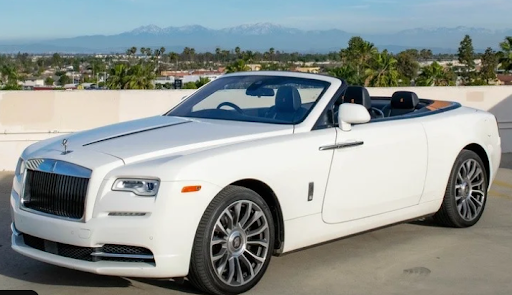
PCH is the drive most visitors picture when they think of California. The stretch toward Malibu delivers ocean views on one side and hills on the other. It’s more of a cruise than a canyon run, which makes it ideal for convertibles and relaxed afternoons. Weekend traffic builds quickly, so an early start pays off here too.

Mulholland Drive

For city views without leaving town, Mulholland winds through the hills above Los Angeles. It’s narrow and residential in places, so treat it as a scenic cruise, not a place to push the car. The overlooks are perfect for photos.

Match the Car to the Road

The route should shape your choice of car, not the other way around. A convertible makes the most of a slow coastal cruise, while a coupe with sharp handling feels at home on mountain curves. If you’re traveling with friends or luggage, a luxury SUV keeps things comfortable without giving up the sense of occasion. Tell your rental provider where you plan to drive, and let them suggest what fits best.

Bringing It All Together

An exotic car in Los Angeles can be the highlight of a trip or a special occasion, but only if you give it room to breathe. Plan around the commute, start early, choose one or two roads that reward good driving, and check conditions before you set off. With the right timing and route, even a single day behind the wheel can feel like a proper road trip. Ready to plan yours? Explore the fleet at Luxion Elite and find the car that fits the drive you have in mind.

This article is only for general informational purposes. Confirm rental terms, availability, and eligibility directly with the rental provider.

Frequently Asked Questions

What is the best time to drive an exotic car in Los Angeles?

Early mornings, especially on weekends, usually have the lightest traffic. Weekday middays can also work well if you stay clear of the morning and evening commute.

Is the Angeles Crest Highway open all year?

Not always. Sections can close due to snow, maintenance or wildfire risk. Check Caltrans QuickMap on the morning of your drive before heading up.

How long should I rent an exotic car in LA?

A full day gives you enough time for an early start, one proper scenic drive and a relaxed evening cruise. Shorter rentals work best for events or photo sessions close to where you’re staying.

Can I drive a rental from Los Angeles to Orange County?

Yes, the coastal drive south is a popular option. Confirm the mileage allowance with your rental provider first so a longer route doesn’t come with surprise charges.

What should I ask before booking an exotic car rental?

Ask about age requirements, the security deposit, included miles, insurance requirements and pickup or delivery options. Getting these answers upfront keeps the day stress-free.

Seedance 3 AI For Motorsport Desks Checking Sponsor Decals

Pit lane stills freeze the car number and the hood sponsor in sharp afternoon sun, right up until a social desk asks that same machine to roll forward for five seconds. In race-week publishing, turning a static garage portrait into a short motion bumper only works if the quarter-panel logos and roof digits survive the camera move, which is why motorsport editors testing seedance 3 AI start from the signed photographer frame rather than a pure text description.

Race teams and trackside reporters operate under a strict visual contract with the brands paying for sheet-metal space. A cup car or a dirt late model cannot gain an extra hood scoop or lose a contingency sticker between frame zero and second four just because an algorithm wanted dramatic motion. SeedVideo operates as an independent third-party studio that gives creators access to ByteDance’s Seedance model family without claiming any affiliation with the model maker. When a media desk feeds an approved paddock still, a controlled camera reference, and an audio cue into the workbench, the goal is keeping every decal where the wrap shop laid it down while the camera glides past the nose.

product screenshot 1

Why Pit Lane Stills Break When Prompts Invent Bodywork

Type a plain text prompt asking for a stock car rolling out of a garage stall at golden hour, and a generic video model will guess at the chassis. It blends decades of body styles, invents sponsor words made of scrambled letters, and lets the door number slide toward the rear wheel well as the car turns. For a casual fan animation, that blur might pass on a phone screen. For a team preview or a race-week outlook column, a mutated sponsor badge gets the post pulled before practice starts.

The failure happens because text alone cannot tell a generator which visual details are negotiable and which ones belong to a signed contract. Ambient dust in the pit lane is negotiable. The geometry of the front splitter, the numeral font on the door, and the two-tone paint stripe along the rocker panel are not. When a social producer spends two hours rewriting adjectives to stop a headlamp decal from melting, the workflow has already lost the speed advantage that made generative video attractive.


Rebuilding A Garage Bay Costs More Than One Controlled Pass

The traditional fix at the track is rolling the car back onto the apron when the sun drops, clearing crew carts out of the background, and shooting a five-second gimbal push by hand. Once the hauler door closes or the car goes onto the scales for inspection, that window is gone. The media desk is left with high-resolution stills from morning load-in and a schedule page that still needs a moving lead asset for qualifying day.

product screenshot 2

Instead of asking text to invent a race car, the multi-modal workbench on SeedVideo splits the job across actual production files. The platform supports image, video, audio, and text inputs in the same workflow, and the model is built to hold faces, clothing, on-screen text, scenes, and visual styles steady from the opening frame to the end of the clip. On a motorsport desk, that consistency rule is tested directly against driver firesuits and painted sheet metal.

Lock The Car Number And Hood Decal To The Still

Begin with the cleanest still from the garage shoot. A three-quarter front angle with even light across the hood and no crew members crossing the bumper gives the generator an unmistakable map of the livery. Upload that photograph as the visual anchor so the model never has to guess the color of the roof number or the shape of the grille screen.

In the prompt box, separate what stays frozen from what is allowed to move. State clearly that the car chassis, tire sidewall lettering, and hood logo remain stationary while the camera performs a slow push toward the front fender and heat shimmer rises faintly off the asphalt. Giving the model one clear camera action keeps the livery intact far more reliably than asking the car to launch out of the pit box while the camera orbits.

Borrow Camera Track Momentum Without Borrowing Another Livery

When a simple push is not enough and the preview needs a pan across the cockpit window net, upload a short reference video that demonstrates the exact camera movement. Because the workbench lets you combine multiple images, video clips, and audio files simultaneously, you can use @ tags inside your natural-language prompt to assign each uploaded file a single responsibility.

Tag the garage photograph as the sole authority for the vehicle and driver firesuit, and tag the handheld video clip strictly for camera motion. Directing seedance 3 AI with explicit @ roles prevents the generator from copying the background wall or the wrong paint scheme out of the motion reference clip. The prompt box accepts up to 20,000 characters, yet paddock editors get cleaner results from three direct sentences that assign each file its job.


Use Last Frame And Built In Audio Without Losing The Engine Note

A slow push along a race car looks unfinished if the camera drifts past the fender into an empty garage wall on the final beat. Inside the generator controls, the Last Frame option lets an editor pin where the movement must settle. When you have both a wide opening shot of the nose and a tighter detail frame of the hood emblem from the same session, setting the arrival frame keeps the camera path on a straight rail between two real photographs.

Sound matters just as much when a clip autoplays in a race feed. The workspace includes built-in audio generation that creates context-aware sound effects or syncs motion to an uploaded audio track. Uploading a clean four-second recording of pit air wrenches or an idle rumble lets the visual pace lock to real track audio, whereas generated background music can be muted whenever a voiceover is planned.

Check The Prefilled Example Before Reading The Button Quote

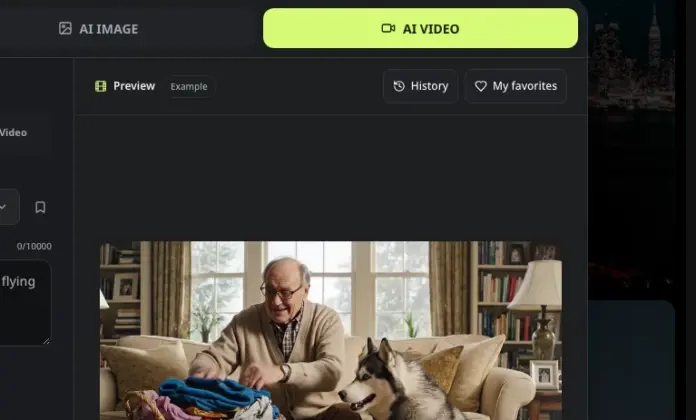
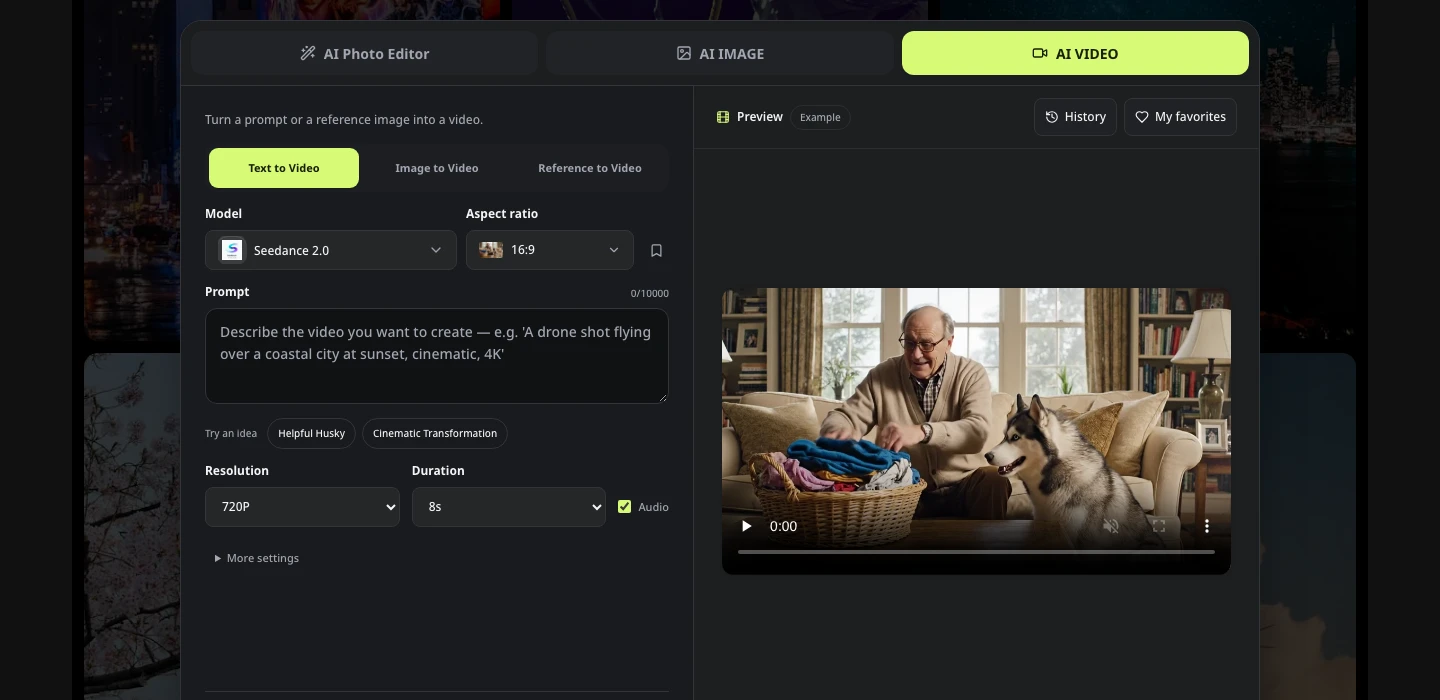
Before clicking generate on a deadline afternoon, look at which model and settings are active in the workbench. Opening the public generator view shows a prefilled Helpful Husky inspiration setup configured for Seedance 2.0, an 8s duration, a 16:9 aspect ratio, and a button reading Generate 328 Credits. That 328 figure is the live credit estimate for that specific preset, not a flat fee for every motorsport clip.

Changing the model selection, switching between 480P, 720P, 1080P, or 4K on supported models, or stepping duration between 4s and 15s updates the credit quote on the button before a single credit is deducted. New accounts can also run a free guided tour in the generator to preview a matched example for 0 credits before spending paid credits on race-day assets.


Four Paddock Checks Before A Sponsor Clip Goes Live

Videos generated through SeedVideo download without a watermark, so a clean pass can drop straight into a weekend schedule post or a broadcast social reel. Play the finished clip at full screen and pause on the first, middle, and final frames against this four-point paddock check:

product screenshot 3
  • Door And Roof Numerals: Confirm that two-digit and three-digit car numbers keep their exact stroke width, slant, and outline shadow across the entire camera move.
  • Hood And Quarter-Panel Decals: Check that primary sponsor wordmarks remain sharp rather than softening into unreadable shapes as the viewing angle shifts.
  • Wheel Spokes And Tire Sidewalls: Watch the front wheel well during the push to verify that brake ducts and sidewall markings do not spin while the car is parked.
  • Video Extension Seams: If you use the workbench’s video extension or segment editing tools to lengthen a clip, scrub across the join to verify that asphalt glare does not jump.

If any logo edge warps during the turn, reject the render and shorten the camera move rather than piling extra adjectives into the prompt. Exact race broadcast times, ticket links, or starting grid graphics belong in your timeline editor after the video file passes inspection.


Keep The Signed Pit Photo If The Number Drifts

Motorsport desks do not need generative video to invent fantasy race cars; they need a reliable way to give an approved pit-lane photograph five seconds of disciplined camera motion when the garage is already closed. SeedVideo earns its spot in a race-week workflow when you anchor the job to a sharp still, tag motion references with @, verify the live credit quote on the button, and export a watermark-free clip whose livery matches the real car on track.

When a complex curved fender causes a sponsor script to shimmer on the turn, the honest call is to keep the photographer’s original still on the preview page. A static photo with every decal sharp will always serve a racing team better than a moving shot that rewrites the hood.

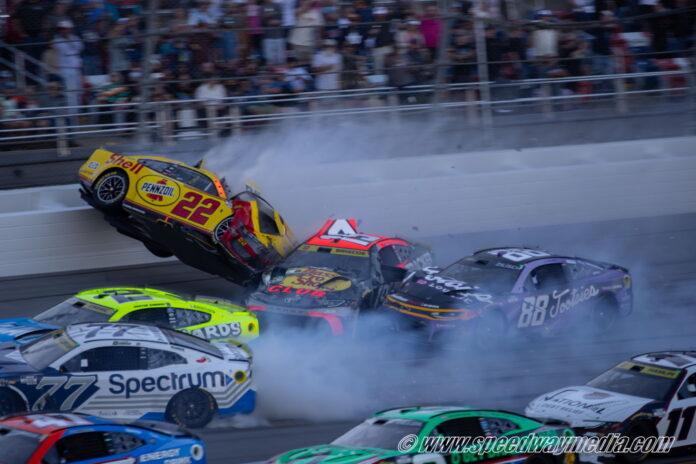
Joey Logano: “Just happy to be alive.”

Photo by John Knittel for SpeedwayMedia.com.

The 2026 YellaWood 500 at Talladega Superspeedway, which occurred this past Sunday, October 25, featured two multi-car accidents that collected a multitude of competitors, including those competing in the NASCAR Cup Series’ Chase. Perhaps, no contender experienced a wild ride than Joey Logano, who ended up on his hood during the latest multi-car accident while contending for the victory in the closing laps.

Logano, who won the second stage period and led nine times for 23 laps, was racing in the top-five mark and was drafting the lapped competitor of Ross Chastain while also being drafted by Carson Hocevar through the tri-oval with six laps remaining. The on-track escalation escalated when Logano received a strong shove from Hocevar that got the former loose and veering across the track before he hit the outside wall head-on. After making contact with the wall and being hit by Chase Briscoe, Logano’s No. 22 Shell/Pennzoil Ford Mustang Dark Horse entry went airborne and rolled over on its hood. 

With a total of 15 competitors, including Logano, wrecking across the frontstretch, Logano’s upside-down entry slid for a majority of the frontstretch and past the start/finish line before it came to a rest while still rolled over below the racing surface nearing the first turn. With the event placed in a red flag period for more than 13 minutes, the AMR safety crew went to work on methodically rolling Logano’s wrecked entry back right-side up before the driver exited under his own power and received a standing ovation from the fans who attended Sunday’s event.

Logano’s wild ride during this past weekend’s event at Talladega marks the Middletown, Connecticut native’s third time rolling over during a Cup Series event throughout his career and second time at Talladega, with his first one occurring in April 2021 while he was contending at the front on the final lap of the first stage period. Previously, Logano barrel-rolled seven times at Dover Motor Speedway in September 2009. 

“It looks like I just got a little push at the wrong spot there [based on the replay],” Logano said after being released from the infield care center on NBC. “And then, at this moment [when I flip], it was very much a ’Talladega Nights’ [moment], like, ‘Oh no, I’m upside down. This is not good,’ moment.”

Photo by John Knittel for SpeedwayMedia.com.

In the aftermath of Logano’s first Talladega flip in 2021, he expressed his frustrations that the roll bar of his entry was pressed against his helmet when his rolled entry impacted the racing surface while upside-down and was nearly hit by an oncoming Bubba Wallace. This season, Logano reported no inquiries towards any of the roll cages and he was very direct in praising the safety innovations and enhancements made by NASCAR that allowed him to emerge uninjured.

“I can’t thank the safety crew enough,” Logano said. “They did an amazing job of flipping [the car] over. The car did a great job. Last time I flipped, [the roll cage] was crushed on my head. This time, I don’t think any of the roll cages crushed at all. I appreciate what NASCAR’s done. Thank you and the safety team for getting me out of there safely. [I’m] Just happy to be alive.”

With a 34th-place result in the 2026 YellaWood 500 at Talladega, Logano, who notched 12 stage points and win the second stage period prior to the rollover accident, managed to gain a spot in the 2026 Chase standings as he overtook teammate Ryan Blaney, who wrecked during the first multi-car accident while trying to draft Logano, for fifth place in the standings. Compared to a 44-point deficit Logano had prior to Talladega, he trails by 100 as he has two-scheduled events remaining to maintain his hopes for a fourth Cup Series championship.

With Talladega Superspeedway in the rearview mirror, Joey Logano’s 2026 NASCAR Cup Series season resumes next Sunday, November 1, at Martinsville Speedway in Ridgeway, Virginia, for the Xfinity 500. The event’s broadcast time is slated to commence at 2 p.m. ET on NBC, MRN Radio, SiriusXM and HBO MAX.

RelaDyne to Power Three-Day NASCAR at COTA Race Weekend

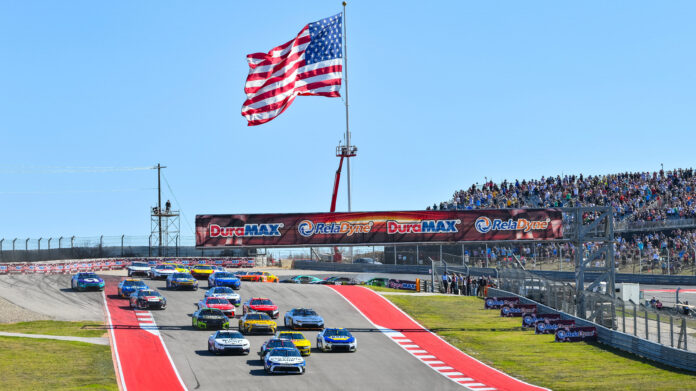
March 01, 2026: NASCAR Cup Series races at Circuit of the Americas in Austin, Texas (HHP/Jacy Norgaard)
  • Multi-year agreement gives RelaDyne total brand ownership of the March 5-7 NASCAR race weekend at Circuit of The Americas.
  • RelaDyne and NASCAR at COTA will continue paying tribute to First Responders throughout NASCAR’s signature event weekend in Austin, Texas.
  • Individual race tickets, weekend packages and camping options are available now by visiting nascaratcota.com or calling (833) 450-2864.

AUSTIN, Texas (Oct. 26, 2026) – RelaDyne, North America’s leading lubricant distributor, will be the driving force behind the March 5-7 NASCAR at COTA race weekend through a new multi-year partnership with Speedway Motorsports.

The multi-year agreement will deliver unmatched brand visibility for the Houston-based RelaDyne and its subsidiaries with entitlements surrounding the entire weekend at Circuit of The Americas. RelaDyne’s Sun Coast Emergency Services division will jumpstart the events with First Responder Friday followed by the NASCAR O’Reilly Auto Parts Series race Powered by RelaDyne and the marquee DuraMAX Texas Grand Prix Powered by RelaDyne NASCAR Cup Series race on Sunday.

“RelaDyne’s partnership began last year with our DuraMAX’s brand entitlement of the DuraMAX Texas Grand Prix Powered by RelaDyne. After the results of last year’s program, we made the decision to expand RelaDyne’s role across the entire weekend’s events and races at COTA,” said Eric Royse, Chief Executive Officer of RelaDyne. “Owning the weekend at a marquee track on the NASCAR schedule is a great opportunity for RelaDyne to showcase not only our DuraMAX automotive brand, but our full suite of brands and services.”

“With RelaDyne headquartered in Texas, owning the weekend gives us a meaningful way to connect the RelaDyne company with our customers and our partners, not only here in Texas but in markets across the U.S. and internationally,” said Mike Cooper, Chief Commercial Officer of RelaDyne. “With the weekend ‘Powered by RelaDyne,’ it will allow us to highlight our DuraMAX automotive brand, showcase our heavy-duty and industrial Drydene lubricants and feature the amazing emergency response team with our Sun Coast Emergency Services division.”

Sun Coast Emergency Services First Responder Friday Powered by RelaDyne will highlight and honor law enforcement officers, firefighters and EMS professionals who serve communities across Texas. The signature community initiative will bring first responders, their families and the NASCAR community together for a special day of appreciation, setting the stage for an action-packed weekend of racing at Circuit of The Americas.

The 65-lap, 156-mile NASCAR O’Reilly Auto Parts Series race, which will also be Powered by RelaDyne, takes center stage on Saturday as the drivers will race around COTA’s internationally acclaimed permanent road course in Austin, Texas. The weekend culminates with the 95-lap, 228-mile DuraMAX Texas Grand Prix Powered by RelaDyne on Sunday, marking the third race of the season following the Daytona 500 (Feb. 21) and the Autotrader 400 at EchoPark Speedway (Feb. 28).

As the market leader in lubricants, fuel, diesel exhaust fluid (DEF) and industrial reliability services, RelaDyne serves industrial, commercial and automotive businesses across North America and internationally, and continues to expand with more than 200 locations nationwide. RelaDyne strives to deliver lubrication and fueling excellence that drives reliability, efficiency and profitability for every customer served to keep their businesses moving.

This multi-year partnership further reinforces RelaDyne’s commitment to utilizing the motorsports platform to showcase its brands. RelaDyne and its subsidiary companies have been involved with motorsports since 2017 through race entitlements and car sponsorships in NASCAR, INDYCAR and Sprint Car racing.

“We’re excited to see this continued partnership with RelaDyne grow around one of NASCAR’s premier race weekends,” NASCAR at COTA General Manager Mark Faber said. “RelaDyne’s commitment to striving for excellence in serving its customers directly aligns with the values of Speedway Motorsports. The NASCAR at COTA race weekend powered by RelaDyne will deliver high-octane action and energy for race fans, teams, RelaDyne employees and its subsidiary companies.”

Individual race tickets, weekend packages and camping options are available now at NASCARatCOTA.com. Family affordability remains a priority for NASCAR at COTA as tickets for children 12 and under start as low as $10 for Sunday’s DuraMAX Texas Grand Prix Powered by RelaDyne and are free on Friday and Saturday (ticketed adult required for all three days). The weekend will also feature the ever-popular Fan Zone that includes a variety of entertainment acts, NASCAR driver appearances and activities.

Race start times, television broadcast partners, any additional support series races and full on-track schedule will be announced at a later date.

About RelaDyne

RelaDyne is the leading North American lubricant distributor and a market leader in fuel, diesel exhaust fluid (DEF) and industrial reliability services, serving industrial, commercial and automotive businesses across North America. Founded in 2010 through the merger of four industry leaders, RelaDyne has grown to more than 200 locations through a strategic track record of acquiring and integrating top-performing companies. RelaDyne’s mission is simple: deliver lubrication excellence that drives reliability, efficiency and profitability for customers. By understanding the unique needs of every partner, RelaDyne Associates act as an extension of customer operations, providing the products, services, technical expertise, and supply reliability needed to keep businesses running at their best. Learn more at RelaDyne.com.

About Speedway Motorsports

Speedway Motorsports is a leading marketer, promoter and sponsor of motorsports entertainment in the United States. The Company, through its subsidiaries, owns and operates the following premier facilities: Atlanta Motor Speedway, Bristol Motor Speedway, Charlotte Motor Speedway, Dover Motor Speedway, Las Vegas Motor Speedway, Nashville Superspeedway, New Hampshire Motor Speedway, North Wilkesboro Speedway, Sonoma Raceway, Texas Motor Speedway and Kentucky Speedway. Speedway Motorsports provides souvenir merchandising services through its SMI Properties subsidiaries; manufactures and distributes smaller-scale, modified racing cars and parts through its U.S. Legend Cars International subsidiary; and produces and broadcasts syndicated motorsports programming to radio stations nationwide through its Performance Racing Network subsidiary.

Follow Us:

Keep track of all things NASCAR at COTA by following on Facebook, Twitter and Instagram (@NASCARatCOTA). Keep up with all the latest information on the NASCAR at COTA website and mobile app.

IDENTICAL TWINS MAKE HISTORY AND COMPLETE DEBUT BRITISH F4 SEASON

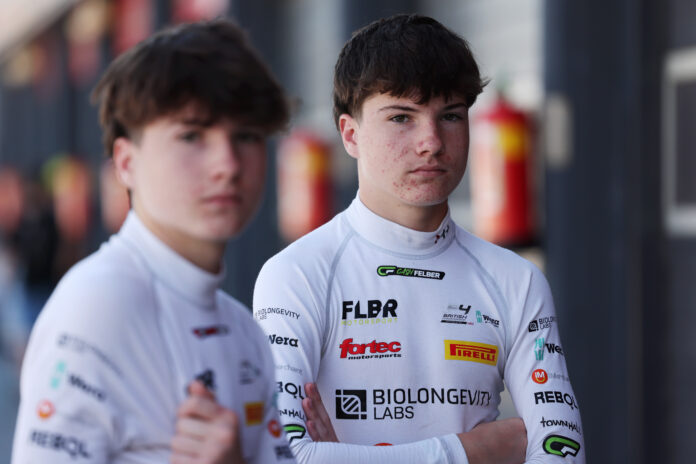
Identical brothers Cash and Roman Felber, 16, became the first twins to share a podium in USA Ligier Junior F4 before moving from Ohio to Britain in pursuit of the same Formula 1 dream

Identical twin racing drivers Cash and Roman Felber have completed their first season in the Wera Tools F4 British Championship, continuing a journey that has already seen the American brothers make history in junior motorsport.

The 16-year-olds from Akron, Ohio, became the first twin brothers in USA Ligier Junior Formula 4 Championship history to share a podium in 2025, before moving more than 3,500 miles to Britain to compete against one another in one of Europe’s leading junior single-seater championships.

Racing with Fortec Motorsport during the 2026 season, Cash finished 20th overall, securing two second-place podium finishes at Brands Hatch and Snetterton, while Roman finished 28th overall, with a best race result of fifth. It was a rookie year of learning and growth for both.

Their first British campaign marked another significant step towards their shared ambition of one day reaching Formula 1.

Just four years ago, neither brother had entered a competitive motor race.

Their earliest competition came racing Segway karts around the family driveway in Akron. But a family visit to the United States Grand Prix at the Circuit of the Americas in 2022, where they met Max Verstappen and other Formula 1 drivers, turned an interest in motorsport into a serious ambition.

By 2023, they were competing in karting and junior single-seaters. In 2024, Cash finished fourth and Roman fifth in FARA Formula 4 before both stepped up to the USA Ligier Junior Formula 4 Championship the following year.

Cash finished the 2025 championship third overall and second in the Rookie standings, recording two victories and six podiums.

Roman took one victory, five podiums and two pole positions on his way to seventh overall and fourth in the Rookie standings, climbing from 17th to seventh over the final three weekends following mechanical setbacks earlier in the season.

It was during that championship that the brothers made history by becoming the first twins to stand together on the podium in the series.

Their next step took them across the Atlantic to Britain, where they faced unfamiliar circuits, different racing conditions and an international field including competitors from several Formula 1 junior programmes.

Despite sharing the same upbringing, training programme and ultimate ambition, the identical twins have developed distinctly different styles behind the wheel.

Cash, who races car 11, describes his approach as smooth, calm and controlled. Roman, in car 73, is more aggressive and particularly confident through high-speed corners.

They share telemetry and train together but work with different engineers. And while they congratulate each other’s successes after a race, neither is under any illusion about who they want to finish ahead when the lights go out.

Cash Felber said:

“Moving to Britain and racing in British F4 has been a big step for both of us. There were new circuits to learn and a lot of things we had to adapt to throughout the season.”

“Getting on the podium twice was a great feeling, especially in our first year, but there are also races where I know I could have done better. I’ve learnt a lot about what it takes to compete at this level.”

“The focus now is on taking everything we’ve learnt this year and coming back stronger in 2027. Formula 1 is still the ambition, but we know we have to keep improving and earning every opportunity.”

Roman Felber said:

“It’s been a challenging year, but I’ve learnt a huge amount. Moving to a different country to race against drivers from all over the world has been a completely new experience.”

“There were some good moments and some frustrating ones. I know the results don’t tell the whole story, but it’s made me more determined to improve.”

“Having Cash there has helped because we’re both going through the same experience, but we’re also pushing each other all the time. My aim for next year is to be more consistent, keep developing as a driver and turn what I’ve learnt into better results.”

Away from the circuit, the brothers’ lives are similarly unusual.

Cash and Roman have been homeschooled since first grade and began martial arts and structured physical training from a young age. Both hold third-degree Taekwondo and first-degree Muay Thai qualifications, alongside Level 2 Krav Maga, and follow a motorsport-specific fitness programme.

When they are not racing, they are more likely to be fishing, playing basketball, sim racing or following UFC.

Their unusual journey has also attracted attention beyond the circuit. The brothers have developed a growing social media following and are regularly approached by spectators for photographs and autographs at race weekends.

Yet despite sharing the same face, upbringing and ultimate ambition, both are determined to establish themselves as individual drivers.

Their first British F4 season has brought podium finishes, difficult weekends and valuable experience competing against some of the world’s emerging racing talent.

Now, with the 2026 campaign complete, the brothers are looking ahead to 2027, focused on building on their first year in Britain and continuing their pursuit of a career in professional motorsport.

For Cash and Roman, Formula 1 remains the dream.

But first, there is the more immediate challenge of improving as drivers, earning their next opportunities and continuing to compete against the person who knows them better than anyone else.

Martinsville is ‘Heartbreak Hill’ in NASCAR Cup Series Marathon

Penultimate Race on Half-Mile Bullring Pushes Drivers to Brink Ahead of Season Finale

MOORESVILLE, N.C. (Oct. 26, 2026) – The NASCAR Cup Series is a marathon. Beginning in February and ending in November, 36 points-paying races are spread across 20 states and involve 9,917 total laps that add up to 13,088.28 miles – a distance that spans more than halfway around the world.

Sunday’s Xfinity 500 at Martinsville (Va.) Speedway is the penultimate race on the Cup Series schedule, and it’s where drivers and crews can see the finish-line tape stretched across the end of their season-long run.

But the .526-mile oval at Martinsville is also one of the toughest tracks on the schedule. While the track is flat, it is the Heartbreak Hill of the Cup Series marathon – a grueling obstacle relatively close to the end, but one that must be conquered before the season culminates Nov. 8 at Homestead-Miami Speedway.

Like the Boston Marathon, where runners crest Heartbreak Hill five miles short of the race’s end and see there is still a ways to go, drivers competing at Martinsville are fatigued as they approach the homestretch, with the season finale at Homestead still ahead. Legs are wobbly from smashing the brake pedal a thousand times at the Cup Series’ shortest circuit, and arms are weary from wrestling a 3,400-pound racecar around its tight confines.

Just as runners must dig deep to summon the mental fortitude needed to tap the remaining strength in their bodies, drivers do the same at Martinsville, racing door-to-door with elbows out as they fight to put themselves in the best position possible for Homestead.

“Martinsville is a slugfest from start to finish. You’re managing contact with the guys around you, and you’re really having to manage the tires,” said Cody Ware, driver of the No. 51 Rocket Doctor Chevrolet for Rick Ware Racing.

“Every time you buzz the tires, you’re taking away your speed in the long run. If you get in a little too deep and make your front tires mad, you end up paying a penalty.”

Martinsville is a flat and fast bullring with a paperclip-shaped layout that has remained relatively unchanged since its debut as a dirt oval on Sept. 7, 1947. Paved in 1955, the track has always demanded physicality. It forces heavy braking at the end of its 800-foot-long straights so drivers can navigate its 600-foot corners, banked at just 12 degrees. And with nearly 40 cars on the starting grid, track position is at a premium. It’s never ceded, only taken, often by bumper-to-bumper contact.

“Racing at Martinsville is a wrestling match, but it’s also about precision and consistency and mitigating as many mistakes as you can throughout a run,” Ware said.

When Ware compares Martinsville to a wrestling match, he knows what he’s talking about. The 30-year-old wrestled in high school. In fact, he did it just 45 minutes south of Martinsville in the Greensboro, North Carolina, suburb of Jamestown.

At Ragsdale High School, Ware made the varsity wrestling team as a freshman. He stayed there through his junior year before his burgeoning racing career meant a pivot to homeschooling. Ware earned his high school diploma in 2013 while racing Late Model stock cars and making a handful of starts on the NASCAR Whelen Southern Modified Tour.

“Wrestling at Ragsdale was a big deal, so to be a freshman on the varsity team was a real honor,” Ware said. “I had to beat out one of the seniors to make the cut. It always stuck with me that while making varsity was big, staying on the varsity team was just as big, if not bigger. Nothing was guaranteed. You had to go out and earn your place every match, every year.

“It’s what really got me started as an athlete. Being really tall, I needed to develop my core strength and overall fitness. I had a larger stature and I needed to make the most of it.”

Standing at 6 feet, 4 inches, Ware’s athleticism continues to serve him well as a full-time Cup Series competitor. Sunday’s Xfinity 500 at Martinsville is more than just a friendly reminder that performance applies to both car and driver.

“There’s a lot of strength needed for driving a racecar, especially when it comes to braking,” Ware said. “It takes a lot of brake pressure to extract 700 to 800 pounds of braking force into the corner. And at Martinsville, we’re doing that a thousand times over the course of 500 laps. It’s about being on your game from start to finish, where you’re as good on lap 500 as you were on lap one.

“The wrestling analogy is a good one for Martinsville. There’s a lot of tight racing and you’re throwing your car around. It can be chaos inside the car trying to do everything you need to make a good lap.”

Ware saw that chaos as a young fan in the stands. Martinsville was his hometown track, along with Bowman Gray Stadium in Winston-Salem, North Carolina. Ware was a regular visitor to both as a preteen and teenager, and the Triad area where he grew up – Greensboro, Winston-Salem and High Point – was home to many NASCAR entities.

“We had a ton of racing in the Triad when I grew up,” Ware said. “You had mega race teams that were there back in the 2000s, like Bill Davis Racing and the No. 45 team with Adam Petty. Bobby Labonte had his shop there. Clyde Vickers’ CV Products and his son, Brian, were from Thomasville. And, of course, there’s Bowman Gray, the longest-running weekly racetrack in America. There’s just a lot of history, a lot of good racing, and a lot of good racers from that area. It was cool to grow up among it all.

“And people there take a lot of pride in it. It seems that Greensboro is always the No. 1 or No. 2 media market to watch NASCAR racing. People there are tuned in, they’re connected, and I think they wear it as a badge of honor.”

Martinsville action begins Saturday with practice at 1 p.m. ET, followed by qualifying at 2:05 p.m. TruTV and SiriusXM NASCAR Radio will provide live coverage of both. Sunday’s Xfinity 500 is scheduled for 2 p.m. with live, flag-to-flag coverage delivered by NBC and SiriusXM NASCAR Radio.

About Rick Ware Racing:

Rick Ware has been a motorsports mainstay for more than 40 years. It began at age 6 when the third-generation racer began his driving career and has since spanned four wheels and two wheels on both asphalt and dirt. Competing in the SCCA Trans Am Series and other road-racing divisions led Ware to NASCAR in the early 1980s, where he finished third in his NASCAR debut – the 1983 Warner W. Hodgdon 300 NASCAR Grand American race at Riverside (Calif.) International Raceway. More than a decade later, injuries would force Ware out of the driver’s seat and into full-time team ownership. In 1995, Rick Ware Racing was formed, and with his wife Lisa by his side, Ware has since built his eponymous organization into an entity that competes full-time in the elite NASCAR Cup Series while simultaneously campaigning successful teams in the Top Fuel class of the NHRA Mission Foods Drag Racing Series, Progressive American Flat Track, FIM World Supercross Championship (WSX) and zMAX CARS Tour.

Planning a NASCAR Race Weekend: Event Planner Joe Blackman Gives Us the Inside Scoop

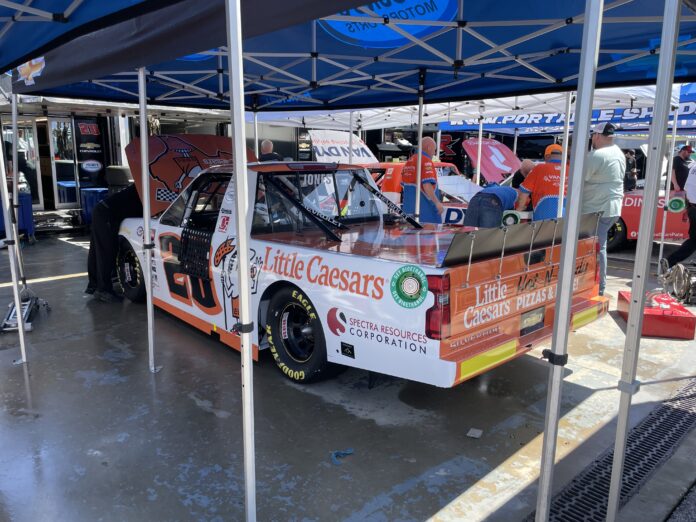
NASCAR Truck Series Car, taken by Joe Blackman
Photo taken by Joe Blackman

Planning a NASCAR Race Weekend: Event Planner Joe Blackman Gives Us the Inside Scoop

From pre-race entertainment and packed grandstands to weather delays and last-minute logistical challenges, putting on a NASCAR race weekend takes an enormous amount of planning. International event planner Joe Blackman takes us behind the scenes to explore the work fans rarely see and what it takes to deliver a great race-day experience.

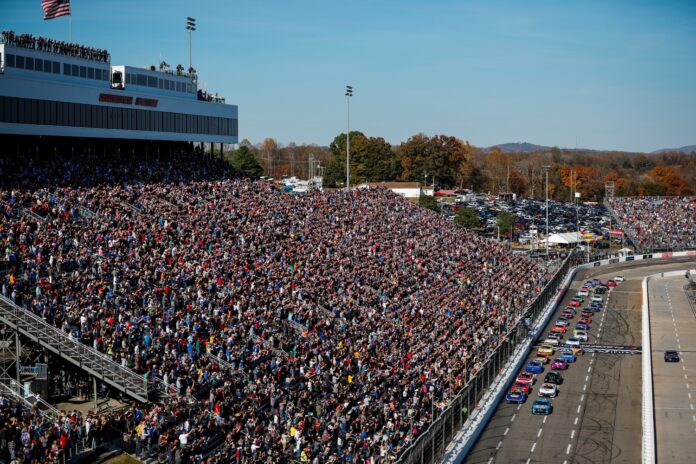
By the time the green flag drops at a NASCAR Cup Series race, thousands of fans have already spent hours enjoying everything the track has to offer. Campers have been parked for days, grills are going in the parking lots, the grandstands are filling up, and drivers are getting ready for another afternoon of racing. For many fans, it’s the highlight of their weekend. For the people responsible for producing the event, however, it’s the result of months of preparation and an enormous amount of work that most spectators never get to see.

Putting on a NASCAR race weekend involves far more than preparing the racing surface and opening the gates. Behind the scenes, hundreds of people are coordinating everything from entertainment and television production to emergency services, temporary infrastructure, sponsor activities and crowd management. Equipment has to arrive on schedule, contractors need access to the right areas, and dozens of different teams must work around an operation where timing is critical. A small problem in one part of the venue can quickly affect several others.

International event planner Joe Blackman has spent more than 20 years producing major events, private celebrations and complex productions around the world. He believes NASCAR offers a particularly interesting example of how large-scale events can deliver a consistent experience while adapting to very different locations.

What impresses Blackman is how the same basic experience can work at tracks as different as Daytona, Bristol, Charlotte and Talladega. Each speedway has its own facilities, local contractors, infrastructure and logistical challenges, yet NASCAR fans arrive expecting the same high standard of racing and entertainment. Delivering that consistency requires considerable coordination, particularly when the people working behind the scenes are dealing with different conditions from one weekend to the next.

There’s Another Team Working Behind the Scenes

NASCAR fans understand teamwork better than most sports audiences. A great driver needs a good crew chief, mechanics, engineers and pit crew to be successful. The same principle applies to producing the race weekend itself, although the teams involved are rarely seen on television.

“The teamwork doesn’t just stop on the track and with the team owners and mechanics,” Blackman explains. “It extends to all of the behind-the-scenes people, from EMTs and law enforcement through to sponsors, event planners and hospitality providers.”

At a major speedway, those different groups have to operate within the same crowded environment. Production trucks, catering deliveries, entertainment equipment, emergency vehicles and race-related operations all require access to particular areas, often within narrow time windows. A contractor might need to install equipment in a location that another crew is still using, while security teams have to ensure that restricted areas remain protected and emergency access routes stay clear.

The challenges also change significantly between venues. Some speedways have extensive permanent infrastructure, while others rely more heavily on temporary installations. Local suppliers may be familiar with the venue but not necessarily with the requirements of a NASCAR weekend. Even something relatively straightforward, such as moving a large piece of equipment across the property, can require careful scheduling when thousands of spectators, race personnel and contractors are already on site.

For Blackman, one of the more interesting aspects of major sporting events is the difference in atmosphere between the spectator areas and the operational side. Fans are enjoying the racing, catching up with friends and having a good time, while nearby, production managers are watching the clock, technical crews are dealing with equipment and event staff are responding to problems as they arise.

It’s a side of racing that doesn’t attract much attention, partly because the people involved are doing their jobs successfully. Much like a well-executed pit stop, the best event operations can look surprisingly simple from the outside, even when considerable planning and coordination have gone into them.

The Fan Experience Begins Before Anyone Reaches the Grandstands

One of the biggest considerations for any major event is how spectators experience the day from beginning to end. That might sound straightforward, but bringing tens of thousands of people into a venue creates challenges that don’t exist at smaller events.

Traffic management, parking, ticketing, security screening and pedestrian access all influence how smoothly race day begins. A fan might have driven several hours to attend, booked a hotel and spent a considerable amount of money on tickets. The last thing they want is to spend another two hours sitting in traffic or struggling to find the correct entrance.

Blackman believes event planners sometimes spend too much time concentrating on the main attraction without giving enough attention to everything surrounding it. At a NASCAR race, the racing is obviously the reason people attend, but the overall experience also depends on practical considerations such as food and beverage availability, restrooms, signage, accessibility and having knowledgeable staff available when somebody needs assistance.

He also points out that fans notice when everyday expenses become unreasonable. Ticket prices are only part of the cost of attending a race, particularly for families traveling from out of town. Parking, food, drinks and merchandise can quickly add up, and organizers have to consider how those costs affect the overall experience.

There’s another aspect of NASCAR, however, that Blackman believes makes the sport particularly successful as a live event: its fan community.

Anyone who has spent a race weekend at Talladega or Daytona knows that NASCAR fans are particularly good at creating their own entertainment. Campers arrive with elaborate setups, groups of friends organize cookouts, and neighboring fans often end up spending much of the weekend together. Some bring what looks like half their house with them, turning a parking space or campsite into a temporary home.

That atmosphere is difficult to reproduce at other major events. While organizers can provide activities, entertainment and places for people to gather, the community itself comes from the fans. Blackman sees that as one of NASCAR’s greatest strengths and an important reason people keep returning to the same tracks year after year.

“It’s the community that really makes the difference,” he says, pointing to the friendships and traditions that develop around racing. For event producers, encouraging that sense of belonging can be just as valuable as adding another attraction to the schedule.

What Goes Into the Entertainment Before the Green Flag?

Although the racing remains the main attraction, a modern NASCAR weekend often includes concerts, sponsor displays, interactive activities, driver appearances and pre-race ceremonies. Each adds something to the spectator experience, but each also creates additional work for the people producing the event.

At World Wide Technology Raceway near St. Louis, the September 2026 NASCAR weekend included a redesigned infield fan zone covering nearly 71,000 square feet, with different areas for automotive displays, food, family activities and entertainment. The weekend also featured the Confluence Music Festival, bringing major musical performances into an already busy racing schedule.

Charlotte Motor Speedway’s October Bank of America 400 weekend offered another example, with a pre-race concert by country music star Tyler Hubbard, driver introductions and additional fan activities throughout the property. From the grandstands, those attractions are simply part of the entertainment. Behind the scenes, however, they involve separate production schedules, equipment requirements, technical crews and coordination with the speedway’s wider operations.

Consider what happens when a pre-race concert takes place close to the racing surface. Depending on the production, staging and equipment may need to be installed, tested and removed within a relatively short period. Sound checks have to fit around other activities, performers need to arrive on time, and crews must be able to complete their work without interfering with race preparations or restricted areas.

Military flyovers provide another example of the planning involved in something spectators experience for only a few seconds. An aircraft formation passing over the speedway at the conclusion of the national anthem is a familiar sight at major NASCAR events, but coordinating the timing requires advance planning and communication between the appropriate aviation, ceremony and event personnel. Unlike a concert that can occasionally run a few minutes late, an aircraft formation cannot simply circle indefinitely while somebody finishes setting up a microphone.

Those details are easy to overlook when everything happens as expected. They become much more noticeable when something doesn’t go to plan.

Blackman has dealt with a wide range of production challenges during his career, including difficult weather conditions, equipment problems, theft and serious security threats. He believes one of the biggest differences between experienced event professionals and newcomers is their ability to remain calm when a carefully prepared schedule suddenly becomes irrelevant.

When the Weather Changes Everything

Weather is an unavoidable part of motorsports, and NASCAR fans have experienced plenty of weekends when the forecast became almost as important as the starting lineup.

The 2026 Coca-Cola 600 at Charlotte Motor Speedway provided another example. Daniel Suárez was leading when rain interrupted the race with 27 laps remaining, and NASCAR eventually declared the event official rather than attempting to complete the scheduled distance. Suárez collected the victory, but the weather brought an early end to one of the sport’s biggest races.

For the teams and drivers, rain changes the competitive situation. For the people managing the wider event, it also creates operational challenges involving spectators, staff, temporary equipment and facilities.

Outdoor productions require particular attention to electrical installations, exposed equipment and temporary structures. Blackman points out that even something as simple as a poorly weatherproofed electrical connection can create major difficulties if it fails and interrupts power to equipment that other parts of the operation depend on.

A delayed delivery, damaged equipment or unexpected technical failure can have similar consequences. What begins as one contractor’s problem may quickly affect entertainment schedules, catering operations or another supplier’s ability to complete their work. The challenge is often less about the original failure than how quickly the relevant people can identify the problem, understand its wider impact and agree on a solution.

Experience helps, but Blackman doesn’t believe contingency planning alone is enough. Having reliable contractors and an experienced team matters just as much, particularly when difficult decisions must be made under pressure.

He has seen situations where several people have different opinions about how to solve a problem, and the discussion itself begins to consume valuable time. In his view, successful event teams need to be able to listen, evaluate the options and then support a decision rather than continuing to debate it while the situation deteriorates.

It’s an approach NASCAR fans will recognize from the competition side of the sport. Crew chiefs regularly make decisions with incomplete information, whether they’re gambling on fuel mileage, changing tires or adjusting strategy around an approaching storm. The consequences are different in event operations, particularly when safety is involved, but the importance of communication and decisive leadership is much the same.

Not every problem is dramatic, either. Medical emergencies, lost children, accessibility concerns and spectators who need assistance are everyday considerations at major events. Blackman believes the ability to respond to those smaller issues professionally is one of the most important measures of a successful production.

A friendly employee who knows how to help can resolve a problem in minutes. Someone who doesn’t know where to send a spectator, or who fails to take a concern seriously, can turn a relatively minor inconvenience into a lasting negative impression.

That’s why experienced event planners spend considerable time thinking about matters that have little to do with the main entertainment. Most fans won’t remember whether the temporary fencing was positioned correctly or whether a delivery arrived on schedule. They will remember if something prevented them from enjoying the race.

Why NASCAR Keeps Bringing Fans Back

Blackman’s work has taken him from private celebrations and celebrity events to major international productions, but he believes the underlying principles of successful event planning remain remarkably consistent. Whether somebody is organizing a party for a few hundred guests or coordinating an event attended by tens of thousands, the objective is to create an experience people genuinely enjoy.

For NASCAR, that means balancing the commercial and operational demands of a major sporting event with the expectations of the people who buy tickets and follow the series. Sponsors, broadcasters, teams and venues all have legitimate requirements, but the sport’s relationship with its fans remains central to its success.

Blackman believes the strongest events are those where decisions are made with the audience in mind. That doesn’t necessarily mean spending more money on entertainment or finding increasingly elaborate ways to impress spectators. Sometimes the improvements that matter most are relatively simple: reducing unnecessary waiting, making facilities easier to access, improving communication or giving families more opportunities to enjoy their time at the track.

NASCAR also benefits from something that many event producers would love to have: an established community of people who are passionate about the experience long before they arrive.

The fans who spend a weekend camping at Talladega are looking for a different experience from somebody attending a night race at Bristol or bringing their family to Daytona for the first time. Yet they all recognize the traditions, atmosphere and excitement that make NASCAR what it is.

Maintaining that identity across different venues while accommodating the practical challenges of each location is a considerable achievement.

And while the drivers and race teams understandably receive most of the attention, there is another group of professionals whose success helps determine whether a NASCAR weekend lives up to expectations.

They’re the people preparing the venue, coordinating the entertainment, managing the crowds, responding to emergencies and dealing with the unexpected problems that inevitably arise when so many moving parts come together.

For event planner Joe Blackman, those behind-the-scenes efforts deserve more recognition, not because fans necessarily need to understand every detail, but because they contribute directly to the experience that keeps people coming back.

When a NASCAR weekend runs well, spectators can concentrate on what brought them to the track in the first place: the racing, the atmosphere and the opportunity to enjoy it with thousands of other fans.

That’s ultimately what all the preparation is about.

Team Penske NASCAR Cup Series Race Report – Talladega

YellaWood 500
Talladega, Alabama – October 25, 2026

AUSTIN CINDRIC No. 2 MENARDS/KNAUF FORD MUSTANG DARK HORSE

START: 28TH STAGE 1: 10TH STAGE 2: 4TH FINISH: 27TH POINTS: 8TH

RACE RUNDOWN: Austin Cindric’s afternoon at Talladega Superspeedway came to a premature end Sunday after a late-race, multi-car incident relegated the No. 2 Menards/Knauf Ford Mustang Dark Horse to a 27th-place finish in the YellaWood 500. Cindric started the 188-lap event from the 28th position but quickly worked his way through the field, moving into the top 10 by Lap 2 as the field raced three-wide around the 2.66-mile superspeedway. Cindric maintained a position near the front of the pack throughout the opening stage, making a green-flag pit stop with his Team Penske teammates on Lap 58 for four tires and fuel. He went on to finish Stage 1 in the 10th position, earning one stage point. Cindric reported that the No. 2 Ford was handling well overall, with only a slight tendency to build free over the course of a run. After restarting ninth for Stage 2, Cindric continued to navigate the constantly shifting lanes of the draft. A multi-car incident on Lap 132 brought out the caution, but Cindric was able to avoid the incident and remain in contention near the front of the field. He ultimately worked his way to a fourth-place finish in Stage 2, collecting an additional seven stage points. Following a four-tire pit stop under the stage break, Cindric restarted 16th with 40 laps remaining and continued battling for position as the field returned to three-wide racing. However, with just five laps remaining, Cindric was collected in a multi-car incident that brought an early end to an otherwise competitive afternoon for the No. 2 team. He was ultimately credited with a 27th-place finish as the NASCAR Cup Series now heads to Martinsville Speedway for the penultimate race of the 2026 season.

CINDRIC’S THOUGHTS: “It sure looked like Talladega to me. All we could really do there was try to push our lane forward, but some guys racing for the lead pushed a little too hard and got turned around, and unfortunately, we got caught up in it. It was great to link up with Joey (Logano) and earn some valuable stage points, but it’s a shame we weren’t able to finish out the race and have more control over our end result.”

RYAN BLANEY No. 12 ADVANCE AUTO PARTS FORD MUSTANG DARK HORSE

START: 27TH STAGE 1: 8TH STAGE 2: 36TH FINISH: 38TH POINTS: 6TH

RACE RUNDOWN: Hopes were high for Ryan Blaney and the No. 12 Advance Auto Parts Ford Mustang Dark Horse team as the multi-time Talladega winner headed into Sunday’s YellaWood 500 at Talladega Superspeedway in Alabama. Blaney started from the 28th position and settled in at the rear of the field as the majority of the competitors focused on fuel conservation. The strategy paid off, as Blaney jumped from outside the top 30 to inside the top five following his first pit stop of the day on Lap 58. He ultimately finished Stage 1 in eighth place. Blaney restarted inside the top 10 to begin Stage 2 and quickly worked his way toward the front of the field. Teaming up with teammate Joey Logano, Blaney climbed as high as second before being caught up in a multi-car accident on Lap 133. The Advance Auto Parts crew worked diligently to repair the damage and return the No. 12 Ford to the track in hopes of gaining additional positions. However, the damage proved too extensive to overcome, and the No. 12 team was forced to settle for a 38th-place finish. Fortunately, Blaney heads to Martinsville Speedway next Sunday, a track where he has won two of the last three fall races.

BLANEY’S THOUGHTS: “We were just racing hard three-wide and protecting and probably didn’t make a very good move. It hurts us a lot, so we’ll have to see what we can do next week. It wasn’t his fault. We were both trying to protect it. Both of us didn’t time it very good and unfortunately wrecked folks. I feel like I had a hand in kind of being aggressive there, but it’s a shame guys got tore up.”

JOEY LOGANO No. 22 SHELL-PENNZOIL FORD MUSTANG DARK HORSE

START: 16TH STAGE 1: 9TH STAGE 2: 1ST FINISH: 36TH POINTS: 5TH

RACE RUNDOWN: Joey Logano and the No. 22 Shell-Pennzoil Ford Mustang Dark Horse team executed a nearly flawless game plan to put themselves in position to win Sunday’s YellaWood 500 at Talladega Superspeedway before being caught up in the second multi-car incident of the day on Lap 184. After starting from the 16th position, Logano and crew chief Paul Wolfe were content to remain patient throughout the first half of Stage 1 as they monitored the car’s handling in traffic with the new rules package in place for the weekend. Wolfe called Logano down pit lane for the first time on Lap 57 alongside his teammates, one of the last groups to make a pit stop, and the strategy paid off as Logano collected stage points with a ninth-place finish. A solid pit stop prior to Stage 2, coupled with pit lane penalties assessed to competitors ahead of him, placed Logano second and on the outside of the front row for the restart. From there, the three-time Talladega winner controlled much of the second stage, ultimately winning the stage and collecting 10 additional points. A caution late in Stage 2 gave numerous teams the opportunity to pit prior to the stage’s conclusion, resulting in Logano lining up behind those competitors following his pit stop during the stage break. Despite being unable to advance quickly to the front, Logano remained committed to the third lane around the 2.66-mile oval and began climbing the leaderboard with 20 laps remaining. By Lap 173, he had worked his way into second place as the intensity increased in the closing laps. Unfortunately, Logano was unable to make it to the checkered flag after contact from behind sent the No. 22 Ford airborne, eventually overturning and sliding down the frontstretch on its roof. Logano emerged uninjured from the incident but leaves Talladega 100 points behind the championship leader.

LOGANO’S THOUGHTS: “It looks like I just got a little push in the wrong spot there. It was a very much a Talladega Nights moment like, ‘Oh, no. I’m upside down. This is not a good moment.’ But I can’t think the safety crew enough. They did an amazing job flipping that thing over. The car did a great job. The last time I flipped it was crushed on my head. This time, I don’t think anything really caved or crushed at all. I appreciate what NASCAR has done. Thank you and the safety team for getting me out of there. There were some vicious hits in that one. I’m just happy to be alive.”

The NASCAR Cup Series Chase for the Championship heads to the penultimate race of the season at Martinsville Speedway. Race coverage begins Sunday, November 1 at 2 p.m. ET on NBC, MRN, and SiriusXM NASCAR Radio Channel 90.