Home Blog Page 35

Why Thornton Criminal Defense Is a Valuable Ally for First-Time DWI Defendants in San Antonio

Thornton Criminal Defense, PLLC, helps first-time DWI defendants understand the legal process, evaluate the evidence against them, and make informed decisions about their cases. A first DWI arrest can bring uncertainty about court proceedings, driving privileges, potential penalties, and the effect a conviction could have on daily life. The firm provides criminal defense representation tailored to the circumstances of each case, with attention to the evidence, applicable law, and options available to the accused.

San Antonio’s busy roads connect residential neighborhoods, commercial districts, and surrounding communities throughout Bexar County. A DWI arrest in the area can raise concerns about court appearances, driving privileges, employment, and family responsibilities. First-time defendants may also be unfamiliar with the criminal justice process and the decisions they must make after an arrest. 

A San Antonio first-offense DWI lawyer at Thornton Criminal Defense can review the circumstances, explain the available options, and help clients understand what to expect.

Brad Thornton’s Experience and Qualifications

Brad Thornton brings experience from both sides of the criminal justice system to his work at Thornton Criminal Defense, PLLC. His background includes serving as Chief Prosecutor in Atascosa County and working as an Assistant District Attorney in Montgomery and Brazos counties. This experience provides insight into how prosecutors assess evidence, prepare cases, and approach criminal charges.

Thornton is board-certified in criminal law by the Texas Board of Legal Specialization and has more than a decade of legal experience. He earned his Juris Doctor, cum laude, from Texas Tech University School of Law, where he served as editor-in-chief of the Texas Tech Law Review. He also earned a bachelor’s degree in criminal justice, cum laude, from the University of Texas at San Antonio and studied English legal history at Oxford University’s St. Edmund’s Hall.

Examining the Evidence and Building a Defense Strategy

A first-time DWI charge does not automatically mean that every piece of evidence against a defendant is reliable or that the prosecution’s case cannot be challenged. The circumstances of the traffic stop, the officer’s observations, field sobriety testing, and breath or blood test results can all affect how a case proceeds.

Thornton Criminal Defense reviews the available evidence to identify potential weaknesses and determine whether legal or procedural issues may affect the charge. For example, questions about the reason for a traffic stop, the administration of sobriety tests, or the reliability of chemical testing may warrant closer examination, depending on the facts. Reviewing police reports, video recordings, and other relevant records can help establish what happened and identify possible defense options. The appropriate strategy depends on the individual case, and no particular result can be guaranteed.

Understanding the Consequences for Driving Privileges

A DWI arrest in Texas can create concerns beyond the criminal court case. Defendants may also face an administrative license revocation (ALR) proceeding that could affect their ability to drive. This process is separate from the criminal prosecution, so the outcome of one does not automatically determine the outcome of the other.

Deadlines are especially important in license-related matters. Depending on the circumstances, a driver may have a limited period to request an administrative hearing after receiving notice of a suspension. Missing the applicable deadline can affect the opportunity to challenge the proposed suspension. Thornton Criminal Defense provides information and legal assistance concerning first-offense DWI charges and related license issues, helping clients understand the procedures and potential consequences involved.

For someone facing a first DWI charge, understanding what happens next can make an unfamiliar process easier to navigate. Court appearances, legal paperwork, evidence review, and decisions about how to respond to the charge can create additional pressure while the person is trying to manage work and family responsibilities.

Thornton Criminal Defense emphasizes communication, individualized case evaluations, and guidance based on each client’s circumstances. The firm handles first-offense DWI matters as well as other criminal cases, including drug offenses, assault, domestic violence, and serious felony charges. Its broader criminal defense practice may be relevant to individuals who have questions about more than one legal issue, although the appropriate representation depends on the specific allegations and needs involved.

The firm offers free, confidential phone consultations, giving prospective clients an opportunity to discuss their situation and ask questions before deciding how to proceed. This initial conversation can help clarify the next steps, identify information that may be important to the case, and establish whether the firm’s services are a suitable fit.

Key Takeaways

  • Brad Thornton combines criminal defense experience with a background as a former prosecutor.
  • His board certification in criminal law reflects specialized qualifications in the field.
  • Reviewing traffic stops, sobriety tests, chemical testing, and other evidence may help identify potential defense issues.
  • Texas DWI cases can involve separate criminal and administrative proceedings that affect driving privileges.
  • Thornton Criminal Defense offers free, confidential phone consultations for individuals seeking to understand their legal options after a DWI arrest.
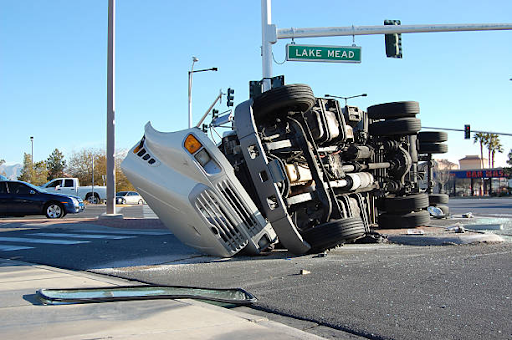
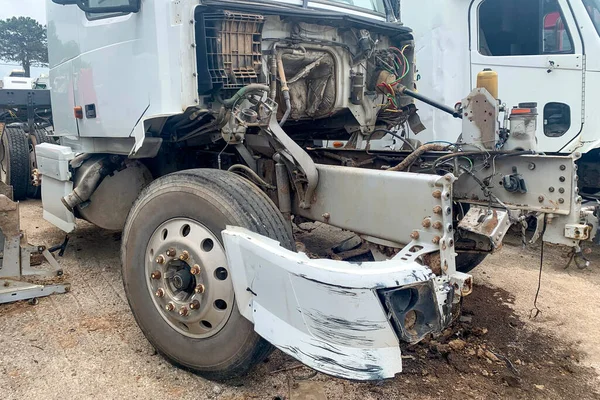
Who Is Liable When a Truck Accident Is Caused by a Faulty Traffic Signal?

When a faulty traffic signal contributes to a truck accident, liability may fall on the government agency responsible for the intersection, the truck driver, the trucking company, or a contractor or manufacturer responsible for the signal equipment. More than one party may share responsibility, depending on what caused the malfunction and how each party contributed to the crash.

Renton, Washington, is located in King County, southeast of Seattle. The city sits along Lake Washington and the Cedar River. Its roads connect residential neighborhoods with commercial areas and major regional routes, making safe traffic control important for everyday travel. 

A truck accident attorney in Renton, WA can help investigate whether a signal failure or another party’s negligence contributed to a collision.

When Can the Government Be Liable?

The public agency responsible for a road or intersection may face liability if it failed to inspect, maintain, or repair a dangerous traffic signal. However, a malfunction alone does not automatically establish government liability. The injured person generally must show that the agency had a relevant duty, failed to meet it, and caused harm through that failure.

Evidence of responsibility may include:

  • Reports of a signal displaying conflicting lights.
  • Delayed repairs after complaints.
  • Incorrect signal timing.
  • Poor maintenance or inspection practices.
  • Failure to warn motorists about a known malfunction.

State and local laws often provide government entities with certain immunities. The applicable rules depend on the road owner, the nature of the failure, and whether the agency had notice of the problem.

Can the Truck Driver or Company Share Fault?

Yes. A defective signal does not excuse unsafe driving. A truck driver may share responsibility for speeding, distraction, fatigue, failing to keep a proper lookout, or entering an intersection without exercising reasonable care.

The trucking company may also be liable if its driver caused the collision while performing job duties. Separate negligence may arise from inadequate training, poor supervision, unsafe scheduling, or neglected vehicle maintenance.

For example, a signal might display conflicting green lights while a truck approaches too quickly to stop safely. Investigators would need to establish whether the signal defect, the driver’s speed, or both contributed to the crash.

Could a Contractor or Manufacturer Be Responsible?

Traffic signals depend on equipment, installation, and maintenance. A private contractor may be liable if careless installation, programming, or repairs caused the malfunction. A manufacturer could also face a claim if a defective controller, signal head, or electrical component caused the failure.

Determining responsibility requires examining who designed, supplied, installed, and maintained the equipment. Contracts, inspection records, and technical evidence can help identify where the failure occurred.

What Evidence Helps Establish Liability?

Investigators need evidence showing how the signal operated before and during the collision. Useful records include:

  • Traffic-signal controller logs and timing plans.
  • Inspection reports, repair records, and prior complaints.
  • Intersection surveillance and dashcam footage.
  • Police reports and witness statements.
  • Truck telematics and event-data-recorder information.
  • Construction records and power-outage reports.

Signal data can be especially valuable because it may reveal timing problems or recorded faults. Experts in traffic engineering and accident reconstruction can assess whether the malfunction contributed to the collision and whether the truck could reasonably have stopped.

The Manual on Uniform Traffic Control Devices (MUTCD) provides national standards for traffic-control devices. Evidence that a signal failed to meet applicable standards may support a claim, although noncompliance alone does not automatically establish liability.

Key Takeaways

  • Several parties may share responsibility for a faulty signal.
  • Government liability depends on applicable duties, notice, and causation.
  • Truck drivers and employers may also be at fault.
  • Contractors or manufacturers may be liable for equipment failures.
  • Signal logs and maintenance records can provide crucial evidence.

How Matt Hardin Law Helps Victims Address 5 Major Challenges After a Truck Accident

Photo by depositphotos at https://depositphotos.com/

Matt Hardin Law helps truck accident victims navigate the physical, financial, and legal difficulties that follow a serious collision. The firm focuses on personal injury representation, helping injured people pursue compensation while managing insurance negotiations and the claims process. Led by attorney Matt Hardin, the firm emphasizes personal attention, free consultations, contingency fee representation, and preparing cases for trial when insurers refuse to offer a fair settlement.

Nashville, the capital of Tennessee, is a major hub for music, tourism, healthcare, and commerce, attracting residents, visitors, and commercial traffic throughout the year. Nashville’s highways and major roadways connect commuters, commercial vehicles, distribution centers, and businesses throughout Middle Tennessee. 

Heavy trucks share these routes with passenger cars, motorcycles, and other road users every day. When a truck collision occurs, the resulting injuries and property damage can leave families facing substantial expenses and uncertainty. A Nashville truck accident attorney at Matt Hardin Law can help victims understand their options, investigate the circumstances, and pursue a claim against the parties responsible.

1. Investigating a Complicated Truck Accident

Truck accidents can involve more than the driver of the vehicle. A trucking company, maintenance provider, or another party may also need to be considered, depending on the facts. Matt Hardin Law investigates accident circumstances to identify potential sources of responsibility and build a claim supported by evidence.

Relevant records may include driver logs, electronic vehicle data, maintenance documentation, photographs, witness accounts, and crash reports. Examining this information can help establish how the collision occurred and whether vehicle condition, driver conduct, or other factors contributed to the incident.

2. Understanding the Full Financial Impact of Injuries

Serious truck accident injuries may require emergency treatment, surgery, rehabilitation, and ongoing medical care. Victims may also lose income while recovering or face lasting limitations that affect their ability to work.

Matt Hardin Law helps clients assess the financial consequences of an accident and pursue compensation supported by the evidence. This may include medical expenses, lost wages, future care needs, and other losses recognized under applicable law. Considering both immediate expenses and longer-term effects is important when evaluating a potential settlement.

3. Dealing With Trucking Companies and Insurers

Insurance negotiations can become difficult when a claim involves serious injuries and substantial financial losses. Insurers may question liability, dispute the extent of an injury, or propose a settlement that does not reflect the full impact of the collision.

Matt Hardin Law emphasizes protecting injured clients from unfair settlement pressure. The firm reviews the available evidence, evaluates the losses involved, and negotiates with insurers on the client’s behalf. Its stated approach is to prepare cases for trial, even though many claims may be resolved through settlement.

4. Managing the Process While Recovering

After a serious collision, handling paperwork, communicating with insurers, and organizing evidence can add stress to an already difficult recovery. Matt Hardin Law aims to make the legal process more accessible through personalized attention and practical assistance.

The firm offers free initial consultations and works on a contingency fee basis, meaning clients do not pay attorney fees upfront, and attorney fees are generally owed only if compensation is recovered under the agreement. Its website also explains that the team can visit clients at home or in the hospital when injuries prevent them from attending an office appointment.

Matt Hardin Law serves injured clients across Middle Tennessee and maintains offices in several communities, including Nashville, Murfreesboro, Lebanon, Clarksville, Cookeville, and Memphis. The firm also has a Bowling Green, Kentucky, office.

Attorney Matt Hardin shares personal injury and safety information through the firm’s Cold Hardin Facts feature and a recurring legal segment on NewsChannel 5. These resources reflect the firm’s broader effort to help people understand accident-related concerns. For truck accident victims, a consultation can provide an opportunity to explain what happened, discuss the available evidence, and determine whether a claim may be appropriate.

Is Hiring Matt Hardin Law Worth It?

For people dealing with the aftermath of a serious accident, Matt Hardin Law may be worth considering because the firm handles a range of personal injury cases, including truck accidents, car accidents, motorcycle accidents, pedestrian injuries, medical malpractice, and wrongful death claims. The client testimonials describe positive experiences with case handling, settlement outcomes, communication, and support throughout the legal process. 

Some clients highlight the firm’s efforts to resolve difficult claims and keep them informed along the way. While these reviews offer insight into the firm’s approach, they cannot guarantee a similar outcome in every case. A free initial consultation can help you discuss your case and determine whether the firm’s experience aligns with your needs.

Points to Remember

  • Matt Hardin Law investigates truck accident claims and evaluates potential responsibility.
  • The firm helps clients pursue compensation for accident-related financial losses.
  • Insurance negotiations and trial preparation are important parts of its approach.
  • Free consultations, contingency fee representation, and hospital or home visits help make its services accessible.
  • Its Tennessee offices and personal injury resources provide additional ways for accident victims to seek guidance.

How Is Compensation Calculated When an Injury Affects Future Earning Capacity?

A serious injury in Austin, Texas, can change someone’s career in ways that are not obvious during the first few weeks of recovery. A warehouse employee may be able to return to work but struggle with lifting, while a sales representative might find that a head injury makes long meetings and demanding travel difficult. The person still has a job, yet the work they can manage and the money they can reasonably expect to earn may have changed.

For people facing this situation after a collision or another accident, The Sharp Firm Austin injury lawyers handle personal injury matters, including car and truck accident claims in Austin and surrounding Central Texas communities. One issue worth examining is whether the injury has reduced a person’s future ability to earn a living. That loss can be harder to put a number on than missed paychecks, especially when the effects are expected to last for years.

A Paycheck Does Not Tell the Whole Story

Suppose a construction supervisor earns a comfortable living before a car accident. After months of treatment for a back injury, the supervisor returns to work but can no longer climb ladders regularly, inspect difficult-to-reach areas, or remain on site for a full shift. The employer offers a desk-based position, but it pays considerably less.

Looking only at the employee’s first few weeks back at work would miss the bigger problem. The injury may have narrowed the person’s career choices, limited opportunities for promotion, and made it harder to find comparable work elsewhere.

This is why lost wages and lost earning capacity are treated as different issues. Lost wages generally concern income already missed because of an injury. Future earning capacity concerns the effect of the injury on a person’s ability to earn money going forward. A claim may involve both, depending on the facts and the evidence.

How Is the Financial Loss Worked Out?

There is no standard amount awarded for a particular injury. Two people with similar medical diagnoses may experience very different financial consequences because their jobs, experience, and working conditions are not the same.

An assessment may compare the person’s likely earning opportunities without the injury against the opportunities that remain afterward. That comparison can involve more than annual salary. Regular overtime, commissions, employment benefits, expected career progression, and the ability to work a normal schedule may all deserve consideration when supported by the evidence.

The person’s working life also matters. A lasting limitation affecting someone early in their career could influence decades of employment. For another person, the impact may be concentrated in a shorter period.

Texas courts recognize that future earning capacity cannot always be calculated with mathematical precision. The figures still need a reasonable foundation. A claim cannot rest solely on an assumption that someone would have received every promotion or raise they hoped for.

The Evidence Behind a Future Loss Claim

Building this part of a case often means gathering records from several different places. Previous tax returns and pay statements can establish an earnings history. Job descriptions and performance reviews may help explain the demands of the former position. If the employer changed the person’s responsibilities after the accident, updated work records may show what has changed.

Medical evidence is important for a different reason: it ties the injury to particular work restrictions. A doctor may say that some jobs are no longer realistic because of restrictions on lifting, standing, driving, or concentrating.

In more complicated cases, a vocational expert may assess which occupations remain suitable and what those jobs generally pay. An economist may then help estimate the longer-term financial effect. Neither expert can predict the future with certainty, but their analysis can give the claim a more solid basis than a rough estimate.

What If the Person Can Still Earn a Living?

Being able to work does not have to mean earning capacity remains unchanged. A registered nurse might switch to a position with fewer physical demands. A self-employed contractor could turn down projects that once provided a substantial portion of annual income. Someone working in technology might remain employed but lose the ability to take on responsibilities that would have supported a promotion.

Business owners may need to produce financial statements, contracts, invoices, and records of turned-down work. Employees may look to pay history, employer correspondence, and records of decreased hours or altered duties.

Someone who was studying, between jobs, or relatively new to a profession when injured may have a less established income history. That does not necessarily end the inquiry. Education, training, previous work, and realistic employment prospects may help explain the person’s ability to earn before the injury and how that ability has changed.

What Happens to Future Earnings

For injured people, keeping records from the beginning can make later assessments easier. Save pay statements, tax documents, job descriptions, and communications about changes to employment. Keep medical appointments and make sure any continuing work restrictions are recorded.

When an injury changes what a person can realistically do for a living, compensation discussions should look beyond the income lost during recovery. The more useful question is what the injury has taken away from that person’s working future and what the available evidence can reasonably establish about its financial consequences.

Which Records Should You Preserve After a Car Accident?

Damaged vehicle after a car accident in San Antonio.

The days after a car accident in Houston can be messy. Your car may be sitting in a repair shop, your phone keeps ringing with insurance calls, and you might be trying to work around medical appointments. Somewhere in that mix, receipts and paperwork start piling up. Some of these may seem unimportant at first, but throwing them away could leave you scrambling for proof later.

Keeping all crash-related documents in one location is a good place to start. They detail what transpired, the medical care you received, and the total cost of the collision, all of which can be useful for car accident claim assistance. A paper folder works well, though a digital folder on your phone or computer can be just as useful. The key is knowing what belongs in it.

Start With the Accident Report

If police responded to the crash, keep the report number and get a copy of the report when it becomes available. Write down the names and contact details of witnesses, too. Take photographs of the vehicle damage, skid marks, road signs, traffic lights, and the surrounding area.

You should also write down what you remember. Include the date, time, location, weather, and sequence of events. Memory can become less precise with time, especially when you’re dealing with pain or stress. Stick to what you actually recall rather than filling gaps with guesses.

Hold On to Medical Paperwork

Medical bills often extend well beyond the first emergency room visit. Keep discharge instructions, doctor’s notes, test results, prescription receipts, therapy records, and itemized bills. If you see several providers, collect paperwork from each one.

For example, you might find that driving becomes painful or that an injury makes it difficult to lift groceries. Brief, dated notes can help you explain these changes later. Be accurate, and don’t exaggerate symptoms to make the record seem more serious.

Save Vehicle Repair Costs

Repair bills tell only part of the story. Keep the original estimate, any revised estimates, the final invoice, and inspection reports. If the mechanic discovers additional damage after removing a bumper or opening another part of the vehicle, save the updated paperwork as well.

Other charges count toward your records, too. Keep towing bills, storage fees, rental-car agreements, and transportation receipts. Photograph the damage before repairs begin when it’s safe to do so. If an insurer wants to inspect the vehicle, check with them before authorizing repairs that could prevent a proper inspection.

Keep a Record of Insurance Contact

Insurance conversations can blur together quickly. After a phone call, jot down the date, the representative’s name, and what you discussed. Note any requested documents, promised callbacks, or deadlines.

Save emails, letters, claim numbers, settlement offers, and denial notices. Keep copies of anything you submit, including upload confirmations. If someone asks you to resend a document, you’ll know when you first sent it.

Read settlement paperwork carefully before signing. Some documents may release claims or end your ability to seek further payment. Ask questions if a term is unclear, and consider legal advice before accepting a final settlement.

Keeping Your Records in Order

Maintain copies of timesheets, work schedules, and pay stubs. Saving written confirmation of missed shifts or shortened hours is also advised.

Save the receipts for any additional expenses associated with the mishap. Note the date, amount, and purpose of every expense. The specifics of the claim and the relevant regulations determine whether a cost is reimbursable.

Sort documents into medical, car, insurance, and income categories. Have clear file names, back up files, and keep sensitive data in a secure place. Send copies and keep the originals where practicable.

A Little Organization Can Save Trouble Later

You don’t have to sort every paper on the day of the accident. Start with what you already have, then add documents as bills arrive and repairs move forward. Before discarding anything that appears related to the crash, check whether it supports an expense, treatment decision, or insurance conversation.

A complete file won’t guarantee a particular claim outcome, but it can make questions easier to answer. When you need to explain what happened weeks or months later, having the paperwork nearby is far better than trying to piece the story together from memory.

Backlink Profile Analysis: A Practical Audit for Motorsports Websites

Photo by depositphotos at https://depositphotos.com/

Race weekends may put the focus on what happens on track, but a motorsports website also competes for attention in search results. A careful backlink profile analysis can show whether other sites are helping fans, sponsors and potential partners find your coverage—or whether low-quality links are creating risk. For teams, racing publications and track businesses, the point is not to collect the biggest number of links. It is to understand who is linking, why they are doing it and whether those links support the site’s credibility.

A backlink audit is a review of the websites linking to your pages. It can uncover useful coverage from racing organizations, local media and sponsor partners, as well as suspicious or irrelevant links that deserve closer inspection. The step-by-step backlink audit guide outlines a process that website owners can adapt to their own needs.

Motorsports websites have a natural mix of potential link sources. A track may publish event information that local tourism sites share. A team’s race recap might be cited by a series news page, while a driver’s biography could be linked from a sponsor’s site. Those editorial and relevant links help readers move between useful sources and can signal that a page is worth discovering.

Not every link has the same value. A mention in a respected regional newspaper is different from a link on an unrelated page created solely to promote other websites. Likewise, a sudden burst of links from unfamiliar domains should prompt a closer look, but it is not automatically proof of a problem. Racing coverage can travel quickly after a major result, and syndicated stories or event listings may cause link counts to rise naturally.

Build a clear picture before making changes

Start by collecting the backlink data available through search and SEO tools. Export the referring domains and the pages they link to, then keep a dated copy of the report. Data sources do not all find the same links, so compare more than one where possible. Record the source, destination page, anchor text and any available details about the linking page.

Next, look at the overall pattern rather than judging a site from one metric. Ask whether the linking domain appears to have a real purpose and audience. Does it cover racing, automobiles, local events or a related subject? Is the link placed in an article or resource that makes sense to readers? Do several links point to the same page with repeated, overly optimized wording? Context matters more than a single score.

Group links into practical categories. Useful groups might include motorsports publications, series and track pages, sponsors, local organizations, general news sites and unfamiliar or unrelated domains. This makes it easier to spot the relationships that are already working and the parts of the profile that need review.

  • Relevant editorial links: Coverage that cites a race report, result, interview or team announcement can provide a meaningful path for readers.
  • Partner and event links: Sponsor pages, venue calendars and official event resources may be valuable when they accurately describe the relationship.
  • Low-context links: A link from a site with no apparent connection to racing is worth inspecting, especially if the page is thin or crowded with unrelated links.
  • Potentially manipulative patterns: Repeated keyword-heavy anchors, clusters of similar sites or links pointing to pages with no genuine audience deserve further investigation.

Do not remove or disavow links simply because a tool labels them suspicious. Confirm that the pages exist, review the surrounding content and consider whether the links were deliberately created or are part of ordinary coverage. Search engines can ignore many low-value links. If there is clear evidence of a deliberate link scheme or a manual action, document what you find and seek qualified advice before taking technical steps.

Turn findings into a useful plan

An audit should lead to better decisions, not just a spreadsheet. Repair broken pages that legitimate sites still link to, and make sure important race coverage has descriptive titles and a clear destination. If a sponsor or track has linked to an outdated page, a polite request to update the URL may help readers reach current information. Keep records of outreach and avoid asking publishers to insert links where they do not serve their audience.

Review the profile periodically, particularly after a major campaign, a site redesign or a surge in publicity. Compare changes over time: which race reports attract citations, which sponsor resources earn links, and whether new referring domains are relevant. That information can shape future coverage and partnership materials without reducing editorial work to a link-building exercise.

Choose the right help for the work

A small site may be able to handle basic checks in-house, while a larger team may need someone to organize data, review technical issues or build a reporting process. Before hiring, define the deliverable: an inventory, a risk review, recommendations or ongoing monitoring. The distinction in freelancer vs contractor 2026 can help clarify what kind of working arrangement suits a short audit or a longer project. Osdire, for example, is a marketplace where buyers can find specialists across marketing and other categories; the useful first step is still to set clear scope, access rules and approval expectations.

A strong backlink profile is built on links that make sense to real readers. For motorsports sites, that usually means publishing accurate, timely coverage and making it easy for relevant organizations to cite. Regular analysis helps separate those genuine connections from noise, so the site can strengthen its reach while keeping its attention on the racing stories fans came to read.

How to read a Rocket League tournament result

Rocket League cars beside ball

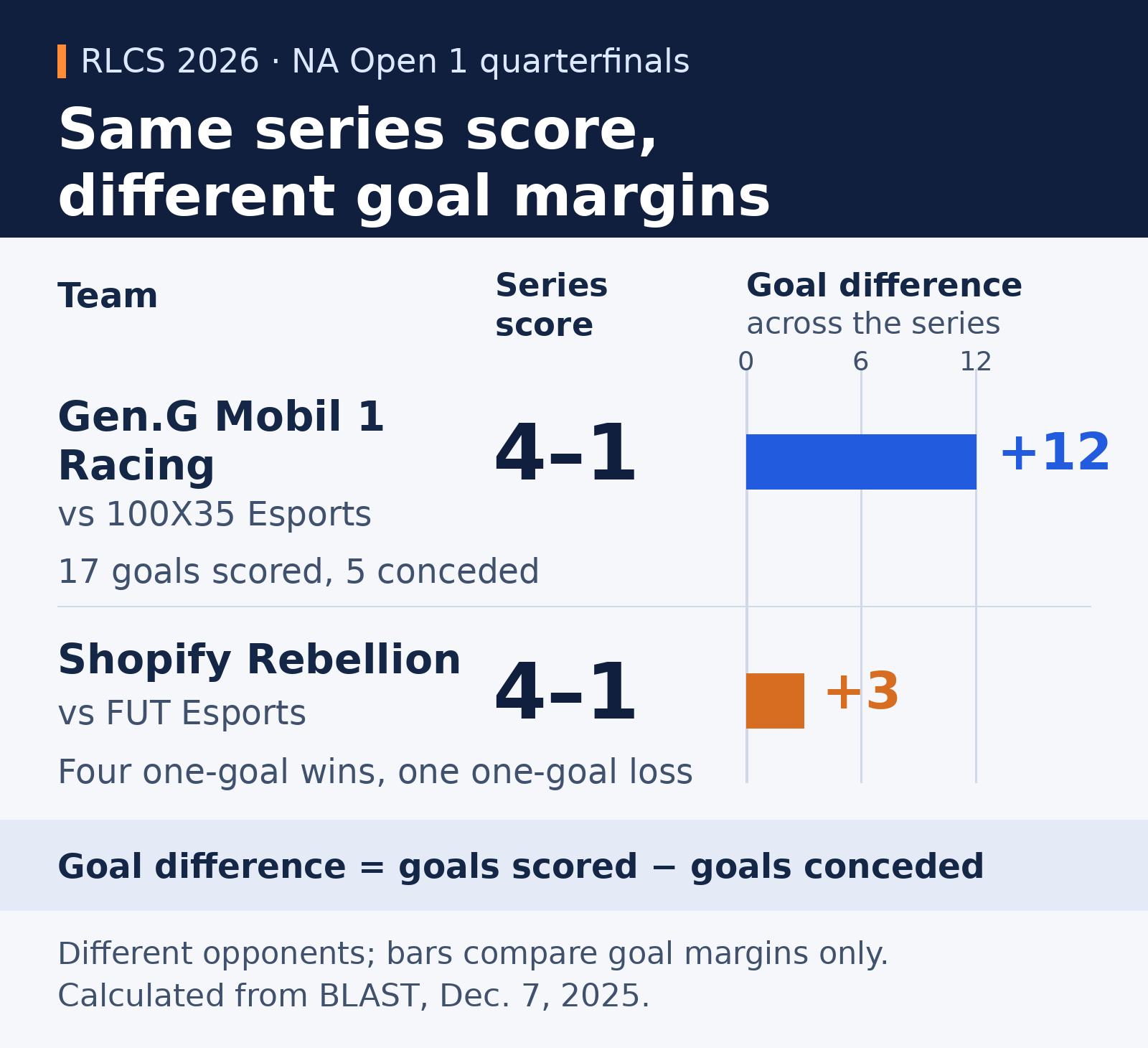
Gen.G Mobil 1 Racing and Shopify Rebellion both won their quarterfinal series 4-1 at the same Rocket League event. Gen.G scored 17 goals and conceded 5 across its series. Every game in Shopify’s meeting with FUT Esports was decided by a single goal. The matching series scores described different contests.

BLAST’s report on the opening North American event of the 2026 Rocket League Championship Series, published in December 2025, captures the distinction. Goals describe the scoring inside games; a series result counts games won. Following the tournament requires another piece of information: what that encounter contributes to the competition around it.

For a team matchup, Rocket League odds express prices on possible outcomes; a game scoreboard records goals, and a series tally records games won. Those numbers have different jobs, even when they concern the same opponents. The event’s format establishes which sporting result completes the encounter and what happens afterward.

Goals, game wins, and series length

Gen.G’s result contained two separate counts. The 17-5 total described the combined goals across the games. The 4-1 result described how those games were divided between the teams. Both were accurate accounts of the series, expressed in different units. The goal total supplied detail that the series tally alone could not show.

Shopify’s quarterfinal supplied a different set of goal margins. Its four game wins settled the encounter, but every game had a one-goal margin, including FUT’s win. The overall tally did not preserve that detail. An account concentrating only on games won would therefore leave out the margins within each game.

The reported figures also allow a comparison of the overall goal margins. Gen.G’s 17 goals scored and 5 conceded produced a goal difference of plus 12. Shopify’s four one-goal wins and one one-goal defeat produced a goal difference of plus 3. Both series contained five games, but their scoring margins differed despite the identical division of game wins. For Gen.G, that is 17 minus 5. For Shopify, four margins of plus 1 and one of minus 1 together total plus 3.

Equal series scores, different margins

Neither calculation shows how long either team led, when the goals arrived, or which game the losing side won. Each summarizes the final scoring margin across the series. A larger goal difference does not add another game win to the record. It supplies another description of the goals behind the result, while the series tally remains the count that settled the encounter.

Within a series, a game win contributes one win, regardless of its goal margin. Goals decide that individual game, while the series is decided by the required number of game wins. Adding goals across a series describes scoring output; it does not turn the encounter into a single game with one accumulated scoreboard.

The best-of label gives the maximum length of the encounter. A best-of-five series finishes when a side earns its third game win; a best-of-seven finishes at four. A completed series can therefore contain fewer games than the label allows. Its result counts games actually won, not unused games remaining on the schedule.

The 4-1 quarterfinal results also left the order of game wins unspecified. They did not identify which game either opponent won. The final tally alone therefore cannot establish the sequence of a comeback or identify a turning point. That requires the individual game results in their playing order, alongside the final series score.

The round gives a result its context

The North American event also showed why the round belongs beside the score. After its quarterfinal victory, Gen.G lost its semifinal to Spacestation Gaming, 4-3. Spacestation then lost the final to Shopify, 4-0. Each result settled a different encounter in the same tournament.

The final result identified the event winner. The earlier results identified progress through its bracket. A quarterfinal victory and a final victory are both series wins, but their consequences differ because of where they occur. The round label supplies that distinction without changing the way the individual series was scored.

Motorsport followers already encounter a related separation between a race classification and championship standings. A result can be complete at one scale while contributing to a larger competition. In Rocket League, the game, series, and event each need their own context. The event’s published rules also establish whether the title being decided belongs to one tournament or a wider championship.

FIFAe groups allowed a split result

FIFAe’s Nations League was a separate national-team competition. Its published 2026 format specified two-game Rocket League group meetings: three group points for winning both games, zero for losing both, and one each for a split. Knockout meetings used best-of-five.

Best-of-two meant completing two scheduled games, rather than reaching two wins. A drawn meeting described an equal division of game wins, not a tied goal score within either game. In the knockouts, the required third game win instead settled the series.

Qualification points covered a wider campaign

FIFAe’s published format also specified Consistency Points for group-stage and knockout-stage placements across three qualifying weeks. The schedule assigned 80 for first in a group and 120 for a knockout-stage win. Those placement awards differed from the points attached to individual group meetings.

The format provided Continental Championship qualification through the Consistency Points ranking or final-week knockout performance, with direct qualification taking priority. Teams qualifying through both routes left the ranking-based place to the next-highest team in those standings. A single encounter’s result therefore needed the wider qualification record to explain its consequence.

What Legal Options Exist When Your Accident Claim Exceeds the At-Fault Driver’s Policy Limits?

When your accident claim exceeds the at-fault driver’s insurance policy limits, you may have several options, including pursuing the driver’s personal assets, using your own underinsured motorist coverage, or identifying other parties who may share responsibility for the crash. The best approach depends on the extent of your losses, the available insurance policies, the evidence of fault, and the driver’s financial circumstances. Exceeding the policy limit does not automatically mean you must absorb every remaining expense.

Boulder, Colorado, is a growing city at the base of the Rocky Mountains, where residents and visitors travel on local streets, regional highways, and roads connecting nearby communities. Traffic collisions in the area can result in medical bills, lost income, and long-term rehabilitation costs that exceed the insurance available from one driver. 

A car accident lawyer in Boulder can help evaluate available coverage, identify potential sources of compensation, and explain the legal options for pursuing damages beyond an initial insurance offer.

Understand the At-Fault Driver’s Policy Limits

Auto insurance policies typically set maximum amounts an insurer will pay for covered claims. A policy may have separate limits for bodily injury to one person, bodily injuries in one accident, and property damage.

For example, suppose your documented losses total $150,000, but the at-fault driver’s applicable bodily injury limit is $100,000 per person. Even if the insurer accepts responsibility, it generally will not pay beyond the applicable policy limit unless another legal or contractual basis applies.

Ask the insurer to confirm the relevant limits and whether other coverage may be available. Do not assume the first offer represents all insurance resources connected to the collision. Multiple policies or additional liable parties may change the amount potentially recoverable.

Check Your Underinsured Motorist Coverage

Your own auto insurance may provide an important option if the at-fault driver’s coverage is insufficient. Underinsured motorist, or UIM, coverage is designed to help eligible policyholders recover certain losses when the responsible driver’s insurance does not provide enough compensation.

Coverage terms vary, and the amount available may depend on your policy limits, the other driver’s coverage, and applicable state law. Some policies require the insurer’s consent before you settle with the at-fault driver or release that driver from liability.

Before accepting a settlement, review your policy and speak with your insurer about any notice, approval, or documentation requirements. Settling without following the required procedures could affect your ability to pursue UIM benefits.

Consider Whether Other Parties May Be Liable

Sometimes the at-fault driver is not the only party whose conduct contributed to an accident. Depending on the facts, another driver, an employer, a vehicle owner, or a business responsible for vehicle maintenance may potentially share liability.

For example, if a driver was performing job duties when the crash occurred, questions may arise about whether an employer’s insurance applies. A defective vehicle component or unsafe road condition may also warrant further investigation in appropriate cases.

Liability is fact-specific. Police reports, witness statements, photographs, vehicle data, and expert analysis may help determine whether another party contributed to the collision and whether additional insurance is available.

Pursue the Driver Personally When Appropriate

If insurance coverage is insufficient, you may be able to pursue a claim against the at-fault driver personally for recoverable damages beyond the policy limit. However, obtaining a judgment does not guarantee payment.

A driver’s income, property, existing debts, and other financial circumstances can affect whether a judgment is collectible. Legal restrictions may also protect certain assets from collection. Before pursuing litigation, consider the likely costs, time involved, and realistic prospects of recovery.

A lawyer can help assess whether a personal claim makes practical sense and explain the available procedures.

Document Your Losses and Protect Important Deadlines

Keep medical records, bills, repair estimates, wage statements, and documentation of other accident-related expenses. If your injuries may require future treatment, medical opinions about anticipated care can help explain the potential long-term impact.

Colorado law generally provides a three-year limitation period for many civil actions involving injuries from motor vehicle accidents under Colorado Revised Statutes § 13-80-101(1)(n), although exceptions and other rules may apply. Other types of claims can have different deadlines.

Avoid accepting a settlement before understanding the full extent of your losses and the effect of any release. Promptly reviewing your legal options can help preserve potential sources of compensation.

Key Takeaways

  • Confirm the at-fault driver’s actual policy limits and available coverage.
  • Review your own underinsured motorist policy.
  • Investigate whether additional parties or insurance policies may apply.
  • Consider a personal claim against the driver only after assessing collectability.
  • Keep detailed records and check all applicable deadlines before settling.

Riding Is Only Half the Plan: Storing and Transporting an Electric Bike

A weekend ride on a different trail can involve more planning than simply choosing a destination. Will the bike fit in the car? How much room will it leave for other gear? And once you arrive, can you unload it without struggling to lift it? These details rarely appear on a battery specification sheet, yet they can make a real difference to how convenient a bike is to own.

For riders who combine everyday cycling with occasional trips by car, frame dimensions, overall weight, and folding design deserve attention alongside riding performance. When comparing different electric bike options for everyday riding, it is worth considering the entire experience, from loading the bike before departure to securing it during transport and handling it at the destination.

Fitting in the Garage Doesn’t Mean It’s Easy to Take Along

Storing a bike at home and loading it into a car are two different challenges. A spacious garage might accommodate a full-size bike without much trouble, but space becomes more valuable when it is shared with tools, sports equipment, or other belongings. Apartment dwellers may also need to think about doorways, hallways, and whether there is a suitable place to keep the bike indoors.

Transport introduces another set of considerations. Even if a bike fits in the trunk, loading and unloading may not be straightforward. Frame shape, available handholds, overall weight, and the space needed to maneuver around other luggage all affect how easy the process is. These details matter particularly for anyone who expects to handle the bike alone.

It helps to assess storage and transport separately. One determines where the bike can stay when it is not being used; the other determines how easily it can travel with you. Getting both right makes it more practical to use the bike in different settings.

Folding Saves Space, but It Doesn’t Reduce Weight

Folding designs are useful when storage space is limited. A bike that folds down can take up less room in a storage area and may be easier to fit into a suitable vehicle. For households with crowded garages, limited indoor storage, or a need to transport a bike occasionally, folding electric bike models are worth comparing.

The folded dimensions are only part of the picture, however. Before choosing a model, consider a few practical details:

  • Folded dimensions: Measure the available storage space and leave enough room to maneuver the bike into position.
  • Overall weight: If you need to carry the bike upstairs or load it into a vehicle alone, its weight will affect how manageable it feels.
  • Folding mechanism: Understand how the frame folds and locks, and follow the manufacturer’s guidance for checking the relevant components.
  • Transport space: Make sure the bike fits without taking up necessary passenger space or interfering with the placement of other luggage.

A bike that folds is not necessarily easy to lift. Models with wider tires, suspension, and larger batteries can still be heavy, even when their frames fold down. If you need to move the bike frequently, the effort involved in handling it matters more than how compact it looks when folded.

Once It’s in the Car, Securement Matters Too

Getting a bike into a vehicle is only part of the preparation. Acceleration, braking, and turning can cause unsecured items to shift while driving. The bike should therefore be secured according to the vehicle and transport equipment manufacturers’ instructions to prevent it from sliding around or striking other belongings.

It is also worth checking how the bike and its battery should be handled before loading. Some models allow the battery to be removed, but that does not mean every battery should be transported in the same way. Follow the manufacturer’s instructions for battery removal, transport, and storage.

If you plan to use a roof rack, hitch rack, or another external carrier, check that the equipment is suitable for the bike’s dimensions and weight. Installation and securing procedures vary between systems, so follow the equipment manufacturer’s guidance rather than assuming that any bike rack will work.

These preparations may seem minor, but they are more important than simply trying to load the bike as quickly as possible. A clear transport plan can prevent last-minute adjustments before a trip.

The Route Still Determines Which Tires and Suspension Make Sense

Once the bike reaches its destination, the riding conditions become the main consideration. Smooth pavement, damaged roads, and gravel paths place different demands on tires and suspension.

Wider tires can help with some uneven surfaces, but their performance also depends on tire pressure, tread pattern, and construction. They can add weight, too, so tire width alone is not a reliable way to judge whether a bike will suit a particular route.

Suspension also needs to be considered in context. A front fork can help absorb some impacts from potholes and rough surfaces, while rear suspension may improve comfort over repeated bumps. However, suspension adds weight and mechanical complexity. For riders who spend most of their time on smooth pavement, a more elaborate setup may not provide enough practical benefit to justify those trade-offs.

For anyone who needs to think about both transport and riding, these factors are connected. A setup designed for rougher terrain may also require more effort when loading or carrying the bike. The useful question is not how many features a model has, but whether those features improve the rides you actually take.

The Trade-Off Between Wider Tires, Suspension, and Weight

The VITILAN U9 provides a practical example of how these features can come together. It has a low-step folding frame, 20 × 3.0-inch tires, front and rear suspension, a torque sensor, and a Shimano seven-speed drivetrain. This combination offers a useful starting point for discussing how a folding bike can accommodate everyday riding while also addressing some uneven surfaces.

The U9 is listed at approximately 70.5 pounds, however. For anyone who regularly carries a bike upstairs, loads it into a car alone, or needs to move it frequently, that weight deserves careful consideration. A folding frame reduces the space needed for storage, but it does not automatically make the bike lightweight.

For riders interested in combining a folding frame, a low-step design, and front and rear suspension, the U9 is one model worth examining. Those who place the greatest emphasis on easy lifting should first decide whether its weight suits their circumstances. Riders who want to compare other configurations can explore the wider VITILAN electric bike range.

The Trade-Off Between Wider Tires, Suspension, and Weight

Check the Practical Details Before Setting Off

A successful ride involves more than choosing a destination and planning a route. Where the bike will be stored, whether it can be loaded into a car, how it will be secured during transport, and whether its setup suits the terrain all affect the experience.

Folding can solve part of the storage problem, but weight, tires, suspension, and transport arrangements still need to be considered together. Checking these details in advance is more useful than choosing a bike based on one impressive specification alone.

Frequently Asked Questions

What Should You Bring on an Electric Bike Ride?

What you need depends on how far you plan to ride and the conditions along the way. For everyday trips, a phone, a reliable bike lock, and a basic repair kit are useful starting points. Longer rides may call for a spare tube or puncture repair kit, a portable pump, and a few tools suited to your bike. Before leaving, check that your lights are working and your phone has enough battery for navigation or emergencies.

How Can You Help Prevent Electric Bike Theft?

Use a sturdy lock to secure the bike frame to a fixed object in a well-lit, busy area. If possible, secure a wheel as well, and avoid leaving the bike unattended in the same location for long periods. If the battery or display can be removed, follow the manufacturer’s instructions when leaving the bike unattended. Keeping a record of the frame serial number and taking photos of the bike can also help if you need to report a theft.

What Should You Check Before Buying a Used Electric Bike?

Inspect the frame for cracks, dents, or other signs of damage, then check the brakes, tires, drivetrain, and electrical controls. Ask about the battery’s age, charging history, and current performance. If it is safe to do so, take the bike for a test ride and check that the motor assistance and controls work as expected. Confirm that the charger is compatible with the model, and ask for maintenance records and proof of ownership. If the battery’s condition or the electrical system is uncertain, consider having the bike inspected by a qualified technician.

Gamdom Bonus Code NODEPOSITZ: 100% Deposit Bonus + 15% Rakeback Explained

Experienced crypto players tend to judge a welcome offer by the value it returns over time rather than by the headline number. The Gamdom bonus code NODEPOSITZ combines a 100% Deposit Bonus, 15% Rakeback for 7 Days and entry to $1M+ in Monthly Leaderboards.

The sections below break down each part of the package, the wagering involved and how the code works in practice. For a broader look at the platform itself, our Gamdom review covers payouts, skins and the game selection.

List of Active Gamdom Bonus Codes

Several codes trigger Gamdom’s welcome rewards for new accounts, and each of them unlocks the same package:

  • NODEPOSITZ: 100% Deposit Bonus up to $1,500, 15% Rakeback for 7 Days and $1M+ in Monthly Leaderboards
  • CSGOBETTINGSS: a 100% first deposit match, a week of 15% rakeback and entry to the $1M+ monthly races
  • coinlive: 15% Rakeback for 7 Days, a deposit bonus of up to $1,500 and leaderboard access
  • RAKE2GO: $1M+ in Monthly Leaderboards, a 15% rakeback boost and a 100% match on the first deposit

Each code is linked under Rewards → Special Rewards within six hours of registration, and an account accepts only one. Canadian players can review regional details on Gamdom Casino in Canada before choosing a code and signing up.

How to Activate the Gamdom Bonus Code in 5 Steps

signin
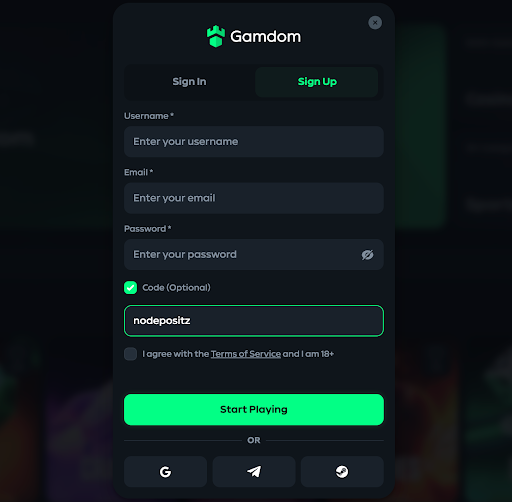
  1. Go to Gamdom. Open the official website through the provided link and select Create Account.
  2. Complete the registration form. Choose your username, provide a valid email and create a secure password.
  3. Apply NODEPOSITZ. Enter the Gamdom bonus code in the Code box and finish registration. Alternatively, submit it through Rewards → Special Rewards within six hours if you skipped this field.
  4. Claim the welcome bonus. Navigate to Promotions, enable the 100% deposit match and add between $20 and $1,500 to your balance.
  5. Manage your bonuses. Monitor the 35x wagering requirement on Promotions and manually claim your 15% rakeback from Rewards throughout the first week.

What Gamdom Brings to the Table

Gamdom has operated since 2016. The platform started with CS:GO skin games and has since grown into a full crypto casino and sportsbook. Its lobby now holds more than 3,000 games, including a large slot selection, live dealer tables and in-house Originals such as crash and roulette, which remain closely tied to the brand. The sportsbook covers mainstream leagues and an extensive esports section that reflects the site’s gaming background.

Payments are built around cryptocurrency. Bitcoin, Ethereum, Litecoin, Solana and USDT are among the supported coins, and a Gamdom gift card or CS2 skins can also be used to fund an account. Players without a crypto wallet can buy coins on the site with a card or mobile wallet. Withdrawals are paid in crypto, and the platform works fully in a mobile browser.

Two rules apply before any cash-out. Each deposit must be wagered at least once, and Gamdom reserves the right to request identity verification. Both are standard practice among crypto casinos.Breaking Down the Gamdom Bonus Code Package

How the 100% Match Works

The first deposit is matched one-to-one. A $50 deposit produces a $100 balance, while the $1,500 maximum results in $3,000. The bonus has to be activated on the Promotions page, which also tracks the bonus balance and the remaining wagering.

What 15% Rakeback Means for Your Bankroll

Rakeback returns part of the house edge on each bet, regardless of the result. NODEPOSITZ raises that rate to 15% during the first week. Gamdom does not publish its exact calculation, so the return is best treated as a steady credit tied to activity rather than a fixed share of the deposit. Its main value is that it runs alongside the match bonus.

Climbing the $1M+ Monthly Leaderboards

More than $1M is shared each month across Gamdom’s leaderboards, with positions ranked by wagered volume. Higher-stakes players usually occupy the top places, so the prize breakdown is the best guide to how far down the rewards extend. The competition works best as a supplement to regular play.

How the 35x Rollover Scales With Your Deposit

The match bonus carries a 35x requirement on the deposit and bonus combined. The table shows how that scales with deposit size:

DepositBonusTotal BalanceWagering Needed (35x)
$20$20$40$1,400
$100$100$200$7,000
$500$500$1,000$35,000
$1,500$1,500$3,000$105,000

At the upper end, the requirement is substantial, particularly with a $10 maximum bet while the bonus is active. At $10 per round, $7,000 in wagering takes 700 bets and $105,000 takes 10,500.

A practical approach is to match the deposit to the amount you would realistically wager over the following weeks. The 15% rakeback lowers the overall cost of clearing the bonus, although it does not remove the house edge.

Gamdom Bonus Code vs Other Gamdom Offers

NODEPOSITZ functions as a Gamdom affiliate code, and each account can hold only one, so the choice matters at sign-up. A personal Gamdom referral code works differently: Gamdom issues one to every player for inviting friends, and it has no effect on your own welcome offer.

Codes shared by streamers, sometimes searched as a Gamdom code promo, typically unlock Gamdom free spins or small cash rewards. They are entered in Wallet → Redeem and work separately from the affiliate slot. For new accounts, the rakeback boost and Rain drops in the community chat remain the closest thing to free value.

Once the welcome period ends, players progress through the Royalty Club VIP program, compete in King of the Hill and receive occasional reload offers.

Who Can Claim the Bonus?

The Gamdom casino promo code is reserved for new accounts held by players aged 18 or over.

Country of residence is the deciding factor. Gamdom does not accept players from the United States or a number of other restricted territories, and accessing the site through a VPN violates its terms and can lead to account restrictions.

KYC is not required at registration, although Gamdom may request it before a withdrawal or for selected promotions.

Is Gamdom Legit? Quick Take

Players often ask is Gamdom legit, and the answer is yes, within the limits of offshore crypto gambling. Moon Revolution Limitada runs the platform under an Anjouan gaming license, and over the past decade the brand has built one of the larger communities in crypto gambling.

The offshore license offers less protection than a UK or US state license, so keeping balances moderate is advisable.

Pros and Cons of the Gamdom Bonus Code

Pros

  • Doubles the first deposit up to $1,500
  • 15% rakeback for seven days
  • Entry to monthly leaderboards worth $1M+
  • Deposits in crypto, gift cards and CS2 skins

Cons

  • 35x wagering on deposit plus bonus
  • $10 maximum bet during wagering
  • Six-hour window to link the code
  • Unavailable in the United States

The Verdict

For players who already plan to wager on a crypto casino, the Gamdom bonus code NODEPOSITZ offers clear value: a doubled starting balance, 15% rakeback for a week and a place in the monthly leaderboards. The 35x requirement is the main factor to plan around.

18+ only. Set limits before playing, take regular breaks and use Gamdom’s self-exclusion tools if gambling stops being enjoyable.

Gamdom Bonus Code FAQ

How much do I need to wager to clear the Gamdom bonus code?

The requirement is 35 times the deposit plus bonus. A $100 deposit therefore needs $7,000 in total bets.

Is the Gamdom bonus code the same as a Gamdom promo code?

Yes. Both terms refer to NODEPOSITZ and the same welcome package, so the Gamdom promo code and the bonus code lead to an identical offer.

Does rakeback count while I’m clearing the bonus?

Rakeback is calculated on wagered volume, so play during the seven-day boost adds to it. The Promotions page lists any game restrictions that apply to the bonus.

What happens if I bet more than $10 with an active bonus?

Exceeding the limit can breach the bonus terms and lead to the loss of the bonus and related winnings. Bets should stay at $10 or below until wagering is complete.

Is there a Gamdom no deposit bonus with NODEPOSITZ?

No. Gamdom does not run a classic Gamdom no deposit bonus, and NODEPOSITZ requires a deposit of at least $20 to activate the match.