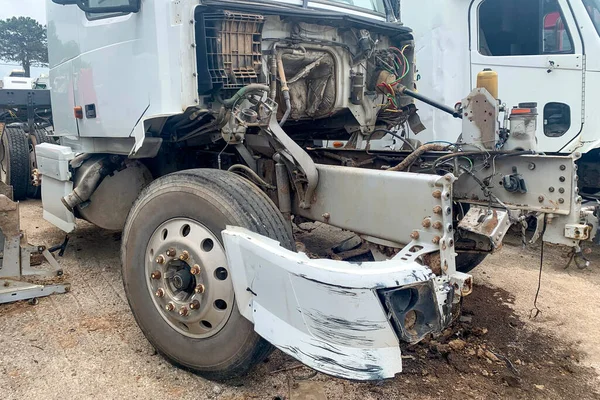
When a faulty traffic signal contributes to a truck accident, liability may fall on the government agency responsible for the intersection, the truck driver, the trucking company, or a contractor or manufacturer responsible for the signal equipment. More than one party may share responsibility, depending on what caused the malfunction and how each party contributed to the crash.
Renton, Washington, is located in King County, southeast of Seattle. The city sits along Lake Washington and the Cedar River. Its roads connect residential neighborhoods with commercial areas and major regional routes, making safe traffic control important for everyday travel.
A truck accident attorney in Renton, WA can help investigate whether a signal failure or another party’s negligence contributed to a collision.
When Can the Government Be Liable?
The public agency responsible for a road or intersection may face liability if it failed to inspect, maintain, or repair a dangerous traffic signal. However, a malfunction alone does not automatically establish government liability. The injured person generally must show that the agency had a relevant duty, failed to meet it, and caused harm through that failure.
Evidence of responsibility may include:
- Reports of a signal displaying conflicting lights.
- Delayed repairs after complaints.
- Incorrect signal timing.
- Poor maintenance or inspection practices.
- Failure to warn motorists about a known malfunction.
State and local laws often provide government entities with certain immunities. The applicable rules depend on the road owner, the nature of the failure, and whether the agency had notice of the problem.
Can the Truck Driver or Company Share Fault?
Yes. A defective signal does not excuse unsafe driving. A truck driver may share responsibility for speeding, distraction, fatigue, failing to keep a proper lookout, or entering an intersection without exercising reasonable care.
The trucking company may also be liable if its driver caused the collision while performing job duties. Separate negligence may arise from inadequate training, poor supervision, unsafe scheduling, or neglected vehicle maintenance.
For example, a signal might display conflicting green lights while a truck approaches too quickly to stop safely. Investigators would need to establish whether the signal defect, the driver’s speed, or both contributed to the crash.
Could a Contractor or Manufacturer Be Responsible?
Traffic signals depend on equipment, installation, and maintenance. A private contractor may be liable if careless installation, programming, or repairs caused the malfunction. A manufacturer could also face a claim if a defective controller, signal head, or electrical component caused the failure.
Determining responsibility requires examining who designed, supplied, installed, and maintained the equipment. Contracts, inspection records, and technical evidence can help identify where the failure occurred.
What Evidence Helps Establish Liability?
Investigators need evidence showing how the signal operated before and during the collision. Useful records include:
- Traffic-signal controller logs and timing plans.
- Inspection reports, repair records, and prior complaints.
- Intersection surveillance and dashcam footage.
- Police reports and witness statements.
- Truck telematics and event-data-recorder information.
- Construction records and power-outage reports.
Signal data can be especially valuable because it may reveal timing problems or recorded faults. Experts in traffic engineering and accident reconstruction can assess whether the malfunction contributed to the collision and whether the truck could reasonably have stopped.
The Manual on Uniform Traffic Control Devices (MUTCD) provides national standards for traffic-control devices. Evidence that a signal failed to meet applicable standards may support a claim, although noncompliance alone does not automatically establish liability.
Key Takeaways
- Several parties may share responsibility for a faulty signal.
- Government liability depends on applicable duties, notice, and causation.
- Truck drivers and employers may also be at fault.
- Contractors or manufacturers may be liable for equipment failures.
- Signal logs and maintenance records can provide crucial evidence.