Home Blog Page 40

How to Find Quality Motorcycle Parts Without Overpaying?

Photo by Volkan Olmez on Unsplash

It may seem impossible to search the internet for reputable motorcycle parts that are also affordable. Most riders are looking for budget deals without compromising safety and performance. By picking and planning carefully, however, enthusiasts are able to balance their bike maintenance without breaking budgets. 

Understanding the process of sourcing components makes the process of checking and balancing ultimately fulfilling and anxiety-free, as it enables riders to identify quality parts that meet safety and performance standards within their budget.

Set a Realistic Budget

The first thing every rider should do is limit their search, both in terms of make and spend. Setting a reasonable price range for parts prevents impulsive purchases. Having a budget helps you to determine what is a necessity and what is an unnecessary extra. Having a price limit in mind enables riders to prioritize quality without compromising on their finances. 

When searching for Honda motorcycle parts, setting a clear budget can help riders focus on essential components first, ensuring they balance quality with affordability.

Research Before Purchasing

It is extremely important to take time and do your research on what components you need. Buyers learn what a common price is and what they have to choose from by comparison shopping. Checking reviews ensures the reliability and long-term durability of the parts you choose. You can save money, but even more time if you ask other riders in your area for recommendations from trusted suppliers.

Focus on Certified Parts

Using authentic or certified quality parts guarantees that the replacements will work properly and keep you safe. These items typically get put through extensive testing to meet certain motorcycle standards. While their price point may exceed generic options, certified components naturally come with longer life expectancies. To strike a balance between price and quality, riders need to select parts that carry official certifications.

Consider Used or Refurbished Options

Many motorcyclists in the Washington, DC area opt to use secondhand or reconditioned components because they are more affordable. Well-sourced secondhand items usually perform like new—or close to it—and cost less. Well, refurbished parts can offer the same benefits as fresh stock, assuming they carry warranties. Make sure to inspect second-hand items thoroughly and refrain from making a payment until you have thoroughly inspected them.

Take Advantage of Seasonal Sales

Many suppliers will offer discounts at certain times of the year. Timing the purchases to coincide with holiday sales or end-of-season clearance can significantly help in saving money. Store newsletters are some of the easiest ways to keep shoppers updated with the latest information regarding sales and discounts. Purchasing items in a timely fashion allows riders to secure quality items for a lower price.

Join Rider Communities

Having the experience of a motorcycle group or online forum, among others, from your mid- to driving years is precious. Members may also discuss experiences with particular brands or suppliers. Community discussions/group discussions may bring out some gold standards or other discounts that are exclusive for the community members. By taking an active part in these circles, one can expect reliable, inexpensive spares more often.

Check Return and Exchange Policies

It is always advised to check the return and exchange policy of the supplier before making any purchase. Clear policies provide a safety net if a component does not fit (or work as expected). Easy terms make it simple to return products, which is particularly useful when shopping online or from an unfamiliar vendor. Shopping with more confidence begins with selecting vendors that have favorable rules for customers.

Inspect Product Details Carefully

Again, read the specs and descriptions for every part until your eyes cross before purchasing anything. To avoid expensive mistakes, ensuring its compatibility with the make and model of one’s motorcycle is paramount. Details such as installation guidance, quality of material, and warranties fall under product descriptors. Buyers can then make better decisions on suitable or acceptable items based on accurate information.

Seek Professional Advice

The experience gained from consulting seasoned mechanics or technicians is one of the most important ways to help during a selection process. Experts can suggest appropriate products and solutions according to what you need and what your budget allows. They are telling us to reduce the chances of buying non-compatible or unwanted products. Having a relationship with trusted experts encourages wiser spending.

Summary

Acquiring affordable motorcycle parts and ensuring quality requires some planning and many smart choices. Enthusiasts who develop an economic plan, search for solutions, and research methods to purchase the components help make sensible purchasing choices. Considering both quality and price, it leads to riders enjoying safe and smooth rides for years to come.

9 Features Every Home Safe Should Have to Protect Your Valuables

While the home safe is supposed to provide a sense of security and peace of mind, that only comes when the safe can withstand actual threats and not just be intended to look tough. Numerous safes defend against just one issue and neglect one more, like fire, prying, or very easy placement issues. 

Therefore, it is crucial to consider these features before making a purchase decision. The ideal safe matches your stored items, the frequency you access it, and the threats you’d like to mitigate, whether theft, heat, or water damage. In this post, we will highlight nine essential features to look for to keep your valuables safe and easy to handle.

1. Reliable Locking System

The foundation of any secured safe is a reliable locking mechanism. Regarding the style, mechanical dial locks and electronic keypads remain standard choices. They both offer protection, and the electronic options allow you to access it quickly and change the code. Biometric locks, also known as fingerprint locks, strengthen security as only trusted individuals can access them. 

A safe with a good lock will help to deter everyone except an expert. When choosing fireproof home safes, the locking mechanism plays a critical role, since secure options like mechanical dials, electronic keypads, or biometric locks help control access and protect valuables.

2. Solid Construction and Durable Materials

The solid steel or a high-quality reinforced alloy will stand strong against forced entry and damage. A more resistant wall and doors help safeguard the property against manually intrusive attacks even more. A high attenuation finish, which prevents corrosion, also extends the safe’s life. The construction plays a crucial role in ensuring the long-term protection of valuables. Stout hinges and hidden bolts increase resistance to tampering.

3. Fire Resistance

A safe should protect its contents from fire as much as it does from a burglar. The fire-rated safes are made in such a way that the insulation helps maintain a suitable temperature on the inside for safety against a fire accident. Certification stickers usually disclose how long and at what temperatures a unit will survive. Find safes that have withstood temperatures of more than 1,400 degrees Fahrenheit for a minimum of 30 minutes. This protects essential paperwork, money, and prized possessions in an emergency.

4. Water Protection

Risks to property include flooding, leaks, and the use of pulverizing fires to contain them. A waterproof safe prevents water from entering and protects equipment, documents, electronics, and jewelry. Seals and gaskets keep out moisture even when submerged. Using a water-resistant safe that has been tested will guarantee that items are kept dry and in good condition, no matter how extreme the weather conditions are outside.

5. Adequate Storage Capacity

The safe is only as big as the number, the type, and the size of stuff in it. Adjustable shelves, drawers, and compartments inside of the unit can be used for jewelry, documents, and digital media. It is also wise to plan for future additions, because a collection always grows over time. A larger-sized interior will help to keep everything organized, as it will be easier to access things.

6. Anchoring and Mounting Options

Some are also drawn to portable safes, but these are no substitute for fixed units that provide more protection. It comes pre-drilled with holes to bolt into a floor or to secure to a wall and includes hardware. If a safe is anchored, it can make it very difficult for intruders to remove. The same feature also prevents the unit from moving during natural disasters to keep the contents safe.

7. User-Friendly Access

Users with legitimate access to valuables should have easy access, while those without should find it challenging or impossible to gain right. A backlit keypad, a dial that turns easily, and straightforward instructions make a welcome addition. Interior lighting helps you find things, especially in low-light conditions. A well-designed safe gives you convenient access to any item it is storing while keeping it secure.

8. Tamper Alerts and Audit Trail

Some innovative varieties of safes are more secure than others, featuring tamper notifications or audit logs. These alarms will sound if someone tries to break in or enters the wrong code several times. Others even track access attempts, so owners can view their activity. These elements prevent misuse and assist in establishing evidence should an incident occur.

Conclusion

When it comes to choosing a home safe, the key to selecting a home safe is finding the right combination of safety features with ease of use. Solid build together with fire and water protection, providing easy access and possible backup, creates a strong defense for your belongings. By focusing on these nine features, valuables will stay secure, and retrieval will be easy, bringing peace of mind for years to come.

Why Modern Power Systems Rely on Dedicated Bus Bars and Fuse Protection

Modern marine, RV, and mobile power systems are far more advanced than they were just a decade ago. Today’s installations power navigation electronics, communication systems, lighting, refrigeration, solar equipment, inverters, and monitoring systems — all from centralized battery banks.

With so many components connected to a single electrical system, proper power distribution and circuit protection have become essential. This is why modern installations rely heavily on dedicated bus bars and fuse protection systems rather than stacking multiple cables directly on battery terminals.

Professional installers frequently rely on components from Blue Sea Systems because these components are specifically designed for the demanding environments found in marine, RV, and mobile electrical systems.

Using dedicated power distribution hardware helps ensure electrical systems remain organized, safe, and capable of supporting modern energy demands.

The Growing Complexity of Modern DC Power Systems

In older electrical systems, power requirements were relatively simple. A battery might power a few lights, a small radio, or a simple DC motor.

Modern systems are significantly more complex. A typical installation today may include:

  • inverter/charger systems
  • solar charge controllers
  • multi-bank battery chargers
  • DC monitoring systems
  • navigation electronics
  • communication equipment
  • refrigeration systems
  • auxiliary DC loads

When multiple devices require power from the same battery bank, connecting everything directly to the battery quickly becomes inefficient and unsafe.

Instead, installers now rely on centralized distribution systems that allow multiple circuits to connect safely and efficiently.

The Role of Bus Bars in Power Distribution

A bus bar acts as a central connection point that distributes electrical power from the battery bank to multiple circuits.

Rather than stacking cables onto a battery terminal, installers connect the battery to a bus bar and then distribute power to individual devices from that point.

A good example of this type of power distribution hardware is the Blue Sea 2104 PowerBar 600A BusBar, which provides high-capacity power distribution for demanding DC electrical systems.

In many installations, a Blue Sea bus bar becomes the central distribution point for power coming from the battery bank.

Using bus bars offers several advantages:

• cleaner wiring layouts
• improved electrical reliability
• easier expansion when adding equipment
• reduced stress on battery terminals
• simplified troubleshooting and maintenance

Bus bars also help installers organize positive and negative distribution points, making electrical systems easier to understand and maintain.

Why Fuse Protection Is Critical in DC Electrical Systems

While bus bars distribute power, fuse protection prevents electrical damage and potential hazards.

Every circuit connected to a battery should be protected by an appropriately sized fuse. If an electrical short or overload occurs, the fuse interrupts the current before damage can occur.

Without proper circuit protection, electrical faults can cause:

  • overheated wiring
  • equipment damage
  • battery stress
  • electrical fires

This is why professional electrical installations include fuse protection as part of the system design.

Many installers rely on equipment from Blue Sea Systems, including marine-grade fuse protection products such as a Blue Sea fuse block, which helps isolate and protect individual circuits.

Fuse blocks are commonly installed between:

  • battery banks and inverter systems
  • battery chargers and distribution panels
  • auxiliary circuits and connected devices

By protecting each circuit individually, fuse blocks help maintain the reliability and safety of the entire electrical system.

How Bus Bars and Chargers Work Together

Bus bars and fuse protection systems work closely with battery charging equipment to maintain stable and efficient power systems.

Many marine and mobile electrical installations rely on multi-bank battery chargers to maintain several battery banks simultaneously.

For example, the Victron Energy Centaur 24V 16A 3-Bank Battery Charger allows multiple battery banks to be charged at the same time while maintaining proper charging profiles.

Similarly, the Victron Energy Centaur 24V 30A Battery Charger provides additional charging capacity for larger power systems.

In a properly designed installation, the charger maintains the battery bank while bus bars distribute power to the various electrical circuits throughout the system.

This design improves system organization, reliability, and scalability.

Connectors and Electrical Integration

In addition to bus bars and fuse protection, modern DC systems rely on reliable connectors that allow equipment to be safely connected and disconnected.

Quick-connect systems make it easier to service equipment, replace components, or modify electrical systems.

One example used in many installations is the Anderson Powerpole PP15-45 Permanently Bonded Connector Kit.

These connectors are commonly used in:

  • marine electronics
  • amateur radio systems
  • emergency communication equipment
  • solar installations
  • mobile DC power systems

Reliable connectors ensure that the power distributed through bus bars and fuse blocks reaches devices safely and efficiently.

Typical Layout of a Modern DC Power System

A properly designed DC electrical system typically follows a structured layout that improves safety and efficiency.

A simplified layout might look like this:

Battery Bank

Main Fuse Protection

Bus Bar Power Distribution

Battery Charger or Solar Controller

Individual Fuse Protection

Electrical Loads

This structure ensures that each component receives reliable power while remaining protected from electrical faults.

Why Professional Installers Use Dedicated Distribution Hardware

Professional marine electricians and mobile power installers rely on dedicated electrical components because they improve both safety and system reliability.

Improved Safety

Fuse protection helps prevent electrical damage caused by short circuits or overloads.

Cleaner Installations

Bus bars organize wiring and prevent battery terminals from becoming overloaded with cables.

Easier Maintenance

Centralized distribution makes troubleshooting electrical systems faster and easier.

Expandable Power Systems

Bus bars allow additional circuits to be added without redesigning the entire electrical system.

Because of these advantages, components from Blue Sea Systems are widely used in marine and mobile electrical installations.

Reliable DC Power Components from 12VoltPower

Designing reliable electrical systems requires high-quality components that can withstand demanding environments.

Whether installing electrical systems in marine vessels, RVs, service vehicles, or off-grid power systems, proper power distribution and circuit protection are essential for long-term performance.

Products such as Blue Sea bus bars, Victron multi-bank battery chargers, and Anderson Powerpole connectors all play important roles in building safe and efficient DC power systems.

For installers, technicians, and system builders looking for dependable electrical hardware, 12VoltPower provides a trusted source for high-quality DC power components.

From bus bars and fuse blocks to battery chargers and connectors, 12VoltPower helps power reliable marine, RV, and mobile electrical systems wherever dependable power is required.

RV Owners In Rhode Island: Recognize When An RV Is No Longer Worth Repairing

If you own an aging RV, the hardest part is often not noticing the problems. The real challenge is accepting when the repairs no longer make financial sense. An older RV may carry years of memories, but leaks, rust, electrical failures, and structural wear can slowly turn it into something that demands more than it gives back. In Rhode Island, where coastal moisture, storms, and limited space can add pressure, recognizing when to stop repairing and start moving on can save you time, money, and frustration.

Look Beyond The Next Repair

One repair does not automatically mean your RV is finished. Replacing a battery, fixing a tire issue, or repairing a small appliance may still be reasonable. The real concern begins when one repair leads to another, and the list continues to grow. At that stage, you may begin to consider whether it makes more sense to sell your junk RV in Rhode Island instead of continuing to put money into a vehicle that no longer feels reliable.

Instead of viewing each repair separately, step back and look at the full condition of the RV. A roof leak might not seem catastrophic at first, but if it has already affected the walls, insulation, and flooring, the cost extends far beyond a simple patch. The same pattern applies to engine trouble, electrical failures, or water damage. When several systems start demanding attention at once, your RV may already be telling you it is reaching the end of its practical life.

Know The Warning Signs Of A Failing RV

Your RV rarely becomes beyond repair all at once. Most of the time, it declines in stages. One season may bring a leak, the next a soft floor, and soon the plumbing, wiring, or roof begins to fail as well. When those issues start overlapping, the cost of restoring the RV can grow faster than expected.

Some warning signs are difficult to overlook:

  • Repeated roof or window leaks
  • Soft spots in the floor or walls
  • Mold, mildew, or lingering moisture smells
  • Rust on the frame or structural metal parts
  • Engine or transmission trouble in motorized RVs
  • Electrical systems that fail without warning

If several of these problems appear at the same time, your RV may no longer be a simple repair project. Instead, it can become an ongoing drain on your budget and your energy.

Compare Repair Costs To Realistic Value

A practical way to evaluate your RV is to compare repair costs with what the vehicle would realistically be worth afterward. Many owners struggle with this step because they focus on the money they have already spent. Past repair bills and even regular routine maintenance do not increase the RV’s current value. They only show how much effort and money have already gone into keeping it going.

A better question to ask yourself is whether fixing the major problems today would make the RV worth the total investment. If the answer is no, continuing repairs may only increase the loss. This becomes even more important when the RV still has cosmetic wear, aging materials, or systems that may fail next. Eventually, what once felt manageable can shift from necessary upkeep into routine expenses that no longer make financial sense.

Understand How Rhode Island Conditions Add Pressure

Living in Rhode Island can place additional stress on an aging RV. Moisture in the air, coastal storms, strong winds, and seasonal temperature shifts can worsen existing damage faster than expected. Even a small crack or leak can expand into a larger problem when the RV sits outdoors through changing weather conditions.

Space can also become an issue. If your RV no longer runs or travels, it may occupy valuable space in your driveway, yard, or storage area. Even without active repair costs, the vehicle can still create inconvenience and visual clutter. Over time, the presence of an unused RV can feel like a growing burden rather than a useful asset.

Be Honest About Emotional Attachment

It is natural to feel connected to an RV that once carried you through memorable trips. Family vacations, long drives, and quiet campground evenings can make the vehicle feel like more than just transportation. Still, memories and practical value are not the same thing. Holding onto the RV because of what it used to represent can make it harder to address its current condition.

Being honest with yourself does not mean ignoring those memories. It simply means recognizing whether the RV still serves your life today. If it now causes more stress than enjoyment, that change matters. Letting go of the RV does not erase the experiences connected to it. It simply clears the way for something more useful in the present.

Recognize When Moving On Is The Better Choice

Eventually, repairing the RV may start to feel less productive and more like postponing a decision. If the vehicle is unreliable, unsafe, or too expensive to restore, moving on may be the more practical option. Choosing to move forward does not mean giving up too quickly. It means recognizing when the numbers, condition, and effort no longer align.

Making that decision can bring an unexpected sense of relief. Instead of focusing on a growing list of repairs, you begin focusing on resolution. The RV stops being a constant project and becomes a problem that can finally be addressed. For many owners, that shift changes the entire situation.

Know When The Repair Cycle Has Run Its Course

Your RV is no longer worth repairing when the damage spreads across several systems, repair costs exceed realistic value, and the vehicle no longer serves a useful purpose. When that moment arrives, continuing to invest in repairs usually brings more frustration than benefit. By recognizing the signs early, you can avoid deeper costs and make a practical decision that works for your situation. Moving on from a junk RV can free up space, reduce stress, and allow you to focus on what comes next.

How Recycled Nissan Parts Support Affordable Vehicle Repairs

Photo by Josh Sonnenberg on Unsplash

Many people feel the financial strain of vehicle repair costs. Choosing reusable parts presents a viable solution for individuals seeking affordable vehicle repairs. Nissan parts you use again on the vehicle, in this case, provide a perfect mix of durability and economic sense. This knowledge of how these alternatives assist in repairs will allow drivers to make more informed choices when caring for their respective vehicles.

The Growing Demand for Recycled Auto Parts

Drivers are always looking for the cheapest way to maintain their vehicles. The economic advantages of recycled automobile parts have led to the implementation of these reused components in the mainstream. Customers also find salvaged Nissan parts to be a wonderful choice, as they undergo thorough inspection before reselling. This increased interest is consistent with a more sustainable paradigm in the automotive sector.

Lower Repair Costs with Recycled Parts

Vehicle parts are frequently pricey as well. Recycled options allow you to repair your vehicle without incurring significant costs. Recycled options, sourced from old vehicles no longer in use, help reduce the cost of vehicle maintenance. That’s a lot of money for a logo, so mechanics and car owners often find that these options serve the same purpose for even less. For budget-conscious repairs, Nissan wreckers in New Plymouth can be a practical option, since recycled parts from older vehicles often provide reliable performance at a lower cost.

Essential Recycled Nissan Parts Quality Check

It is a common fear related to recycled parts. Nonetheless, respected suppliers carefully inspect every piece to make certain it meets rigid specifications for resale. In addition, most recycled Nissan parts are inspected and tested to make sure that they are working properly. It should assuage concerns for anyone buying used parts.

Auto Parts Reuse Benefits for the Environment

Going with recycled components is not just a financial decision. The reuse of components from Nissan vehicles is an effort to lessen the need for new manufacturing processes. Doing so saves natural resources and reduces the waste going into landfills. Reusing salvaged parts in different cars contributes significantly to environmental sustainability.

Nissan Recycled Parts Availability and Compatibility

Suppliers stock a large array of recycled Nissan parts. Over the years, Nissan has created countless models, making it easy to directly associate parts with specific vehicles. But a specialist can help customers determine which clips are right for their specific vehicle, as well as make sure they install seamlessly and function well. This procedure makes it easier for motorists to locate precisely what they are looking for.

Supporting Local Economies Through Auto Recycling

Recycling Nissan car parts helps more than just car owners. This means that local businesses that deal in salvaged components have a nice, steady demand, which is good if you are one of them. Every purchase allows those organisations to thrive, create jobs, and support families— all locally. This economic cycle fortifies communities and promotes corporate stewardship.

Warranty and Return Policies for Recycled Parts

Purchasing recycled Nissan parts does not mean sacrificing consumer protection. Many suppliers offer warranties or flexible return options on their products. These policies reassure buyers that they are making a safe investment. Confidence grows as customers realise they have recourse if the part does not meet expectations.

Simplicity of Installation and Repair

Recycled Nissan parts are often manufactured to original equipment specifications. Installers really enjoy working with these components. These parts are from the same make and model history, so compatibility is generally high. This helps ensure that the repair process goes smoothly, minimising time and effort for both the technician and the car owner.

Conclusion

Recycled Nissan parts are smart parts in terms of keeping vehicle maintenance costs down. The assembly incorporates all the core benefits of price, dependability, and green technology. An increase in the appreciation of salvaged elements among motorists is driving the continued growth of auto parts recycling. It helps to keep cars on the road for longer, stimulates the local economy, and positively impacts the environment for everyone.

8 Things to Check When Choosing Replacement Lawn Mower Tires

Photo by Erik Mclean on Unsplash

Every house owner appreciates a well-maintained green lawn. Good gear makes yard work more efficient and effective. The lawn mower tire is an essential part that is often ignored. Old tires or those in poor repair can make the mower work harder or perform poorly. Choosing the appropriate substitutes preserves the functionality and retains safety. So, here are 8 points you must consider before you buy new lawnmower tires.

1. Tire Size and Fit

In other words, selecting the perfect tire size is the key. Mowers can suffer operational issues or even damage due to inappropriate sizes, such as reduced traction or increased wear on the mower’s components. Switching the numbers on the sidewall of existing tires is prohibited. These represent the size of the diameter, width, and rim. To ensure the correct fit and proper movement, these figures should match appropriately. 

An appropriate size helps in better movement while mowing. When choosing lawn mower tires, matching the correct size listed on the sidewall is important, since proper diameter, width, and rim fit help maintain traction, stability, and smooth operation.

2. Tread Pattern and Traction

You need a tread pattern fit for different lawns. Smooth treads are also friendly to grass, making them ideal for residential yards where you want to minimize turf damage. On the flip side, heavy lugs provide better traction on hills or in mud. Evaluate lawn topography to determine pattern. Choosing a tread appropriate for your applications will keep you stable and prevent slipping.

3. Ply Rating and Durability

Ply rating shows the strength and load-carrying capability of a tire. Tougher and longer-lasting tires have a higher ply rating. If you expect the mower to be traversing rough or uneven ground, then choose one with additional plies. In the case of smaller, flat lawns, a sub-four-ply rating may be adequate. An appropriate ply rating gives more service life along with minor punctures.

4. Load Capacity

Each tire is rated for a specific amount of weight it can support. If this capacity is exceeded, premature wear or fracture can occur. Refer to the manufacturer’s specifications for load-bearing details and include the combined weight of the mower and operator. Proper Load Capacity. This feature avoids excess burdening and also encourages risk-free use during mowing sessions.

5. Material and Construction

Most lawn mower tires are made from rubber, with construction differing by brand and type. They are tubeless and are more puncture-resistant, and the air pressure remains more stable in the long run. Others even offer reinforced sidewalls for added protection against sharp objects. Take a look around, and think about what and where you are mowing to look for potential hazards. The long-lasting nature will give you peace of mind, and every employer wants to replace their tools as often as possible.

6. Compatibility with Rims

Not every type of tire goes on every type of rim. Ensure the replacement tire fits the rim size and style of your mower correctly. If the numbers do not match, mounting issues can arise, which create poor alignment or stability. Always check the rim diameter and bead profile before purchasing. Making sure that they work properly makes installing them easier and prolongs the lifespan of the new tires.

7. Ease of Installation

When comparing how easy it is to mount tires, not all of them are created equal. Look for features like flexible sidewalls and clear instructions if you intend to install them yourself. In addition, there are designs that can be installed without the use of any tools, which can greatly reduce the amount of time and effort required. Engage a professional for assistance if you discover this to be a challenging endeavor. If you get tires that are easy to change, you can change them more quickly and easily.

8. Price and Warranty

Finance is not an exception when making a purchase. Less expensive tires may seem appealing, but they may not be as durable as a higher-quality tire. Factor in tread design, longevity, and warranty as well, as compare prices. A few OEMs provide warranties that protect you against defects or failures that happen too early. Pick a tire with the appropriate mix of price and protection and sleep soundly.

Conclusion

The right lawn mower tires for replacement make all the difference in terms of safety and performance. With considerations for tire size, tread, strength, capacity, and more, one can make an educated selection. Being selective about these features can lead to smoother mowing, better traction, and longer durability. Before making a purchase, consider these eight points. Make the right decision, and your lawn will be in great shape, and mowing will be more enjoyable.

Automotive Data Innovations Driving the Next Era of NASCAR Motorsport

Photo by depositphotos at https://depositphotos.com/

Motorsport has always been defined by speed, engineering, and driver skill. Today, however, another factor plays a major role in determining success on the track: data. In NASCAR, advanced analytics, telemetry, and digital infrastructure are transforming how teams prepare for races, optimize vehicle performance, and make strategic decisions during competition.

Modern race cars generate enormous volumes of information that teams analyze before, during, and after each event. The following article explores how this data-driven approach has become essential for gaining a competitive edge, helping teams refine strategies and respond quickly to changing race conditions.

Understanding the Car in Real Time Using Telemetry

Telemetry sits at the heart of NASCAR’s data ecosystem. Sensors installed throughout the vehicle track performance metrics such as speed, engine temperature, throttle position, braking pressure, and tire behavior.

This information allows engineers to monitor how the car performs under the intense demands of racing. If unusual patterns appear, such as overheating components or excessive tire wear, teams can make adjustments during pit stops to prevent mechanical issues and maintain performance.

Telemetry also provides valuable insights after the race. Engineers study collected data to identify areas for improvement in areas such as suspension setup, aerodynamics, and engine efficiency.

Data-Driven Strategy on Race Day

In NASCAR, strategy can determine the outcome of a race as much as raw speed. Teams rely on data analysis to guide key decisions, including when to pit, how to manage fuel usage, and how to respond to competitors’ moves.

By analyzing historical race results, track conditions, and real-time performance metrics, teams can model potential race scenarios and adjust their strategies accordingly. This ability to react quickly based on data often separates the leading teams from the rest of the field.

Simulation and Virtual Testing

Before cars ever reach the track, teams conduct extensive testing in digital simulation environments. These simulations use historical race data and engineering models to recreate track conditions and vehicle dynamics.

Engineers can test different setups, analyze aerodynamic behavior, and experiment with race strategies in a virtual setting. This process allows teams to refine performance while reducing the cost and time associated with physical testing.

Improving Safety Through Data

Data innovations are also helping improve safety in NASCAR. Sensors within cars record information during high-impact incidents, allowing engineers to analyze crash dynamics and understand how forces affect the driver and vehicle.

This data helps researchers improve protective equipment, car structures, and safety protocols. Over time, these insights have contributed to safer racing conditions while maintaining the sport’s high-performance nature.

Data and the Future of NASCAR

As technology continues to evolve, data will play an even larger role in NASCAR. Artificial intelligence and advanced analytics are expected to enhance race simulations, improve predictive strategy models, and provide deeper insights into driver performance.

Digital platforms are also becoming increasingly important in motorsport. Tools such as AutoChain highlight how automotive data platforms are supporting the broader ecosystem by helping organize and deliver valuable automotive insights.

NASCAR has always been a proving ground for innovation, and today that innovation increasingly revolves around data. By combining advanced analytics with engineering expertise, teams are entering a new era of motorsport where information is just as valuable as horsepower.

RFK Racing to Honor Greg Biffle with Special Tributes at Darlington Raceway

CONCORD, NC (March 12, 2026) — Roush Fenway Keselowski (RFK) Racing announced today that all three cars will feature Greg Biffle throwback schemes at Darlington Raceway on March 22. This special tribute to late NASCAR Cup Series driver and longtime fan-favorite Greg Biffle is coming to one of his favorite tracks, where he won back-to-back races in 2005 and 2006. In addition, The Biff’s iconic No. 16 car will be featured as part of the NASCAR Experience, with the track also planning special tributes for him during NASCAR’s Alumni Weekend.

“The memory of Greg Biffle’s adventurous spirit, his fun-loving personality, and his endearing appreciation for his fans will forever be remembered and embraced by the NASCAR community,” said Team President of RFK Racing, Chip Bowers. “The three selected throwback color schemes showcased humbly by the No. 6, No. 17, and No. 60, represent incredible moments in Greg’s storied career and offer fans, friends, and family alike an opportunity to reflect on the man and the competitor that we’ll forever remember with fondness and reverence. Darlington Raceway, one of Greg’s favorite track, serves as the perfect backdrop for all to relive his indelible impact on sport.”

As part of the tribute, RFK Racing unveiled three special throwback paint schemes inspired by some of Biffle’s most iconic cars. As a part of the schemes RFK Racing will bring back the iconic Biffle number style previously seen on all RFK Racing entries at the NASCAR season opener at Daytona International Speedway.

The No. 6 Solomon Plumbing Ford Mustang Dark Hors

The No. 6 Solomon Plumbing Ford Mustang Dark Horse pays tribute to one of Biffle’s most recognizable eras, the bold fluorescent accents and styling that defined many of his most competitive seasons. By incorporating the throwback number font and a color direction significant to Biffle’s spirited rise within the organization, the design symbolizes the intensity and determination that made him a foundational figure of the RFK Racing family. This scheme serves as a visual salute to Biffle’s legacy of speed, strength, and unwavering commitment to the No. 16 brand that helped elevate Biffle’s career to national prominence.

The No. 6 Solomon Plumbing Ford Mustang Dark Horse

The No. 17 Fifth Third Bank Ford Mustang Dark Horse honors Biffle’s multi-series success with a look inspired by his celebrated NASCAR Cup Series Pole at Texas Motor Speedway in 2011, one of the foundations of his ascent within the RFK Racing family. The clean blue palette and crisp styling pay homage to the early career achievements that cemented Biffle as a future star and loyal competitor. By adopting the tribute number style and nodding to his journey through the ranks, this scheme recognizes the depth of Biffle’s contributions across NASCAR’s national series and the pride he brought to RFK Racing throughout each stage of his career.

The No. 60 Kroger / Oscar Mayer / Heinz Ford Mustang Dark Horse

The No. 60 Kroger / Oscar Mayer / Heinz Ford Mustang Dark Horse takes inspiration from one of Biffle’s most iconic and beloved RFK Racing liveries, specifically seen running as the 2009 primary scheme and the Daytona 500, the vibrant No. 16 car that delivered memorable wins and solidified his status as one of the team’s most accomplished drivers. The bright yellow energy beams and bold red and black detailing embody the visual identity of Biffle’s peak Cup Series seasons, when his persistence made him a prevailing contender. This scheme serves as a heartfelt tribute to Biffle’s enduring impact on the RFK Racing legacy, bringing fans back to the moments and victories that defined a generation.

Biffle, a cornerstone of RFK Racing for more than a decade, achieved remarkable success across NASCAR’s national series. His career with RFK Racing included multiple Cup Series victories, a runner-up finish in the 2005 championship battle, and an enduring reputation for grit and humanitarianism. His legacy continues to resonate with race fans, team members, and competitors throughout the garage. Known for his fierce competitiveness and calm, respected presence, Biffle remains one of RFK Racing’s most accomplished drivers. His legacy includes victories across NASCAR’s various series, an achievement that places him among an elite group of NASCAR drivers.

The upcoming Darlington Raceway tribute only brushes the surface of deep respect the organization and NASCAR community continues to hold for him. Additional recognition moments are planned throughout the weekend, giving fans attending Darlington and watching from home an opportunity to celebrate his historic career.

As part of these efforts, fans can visit the Greg Biffle No. 16 RFK Racing show car on display as part of the NASCAR Experience in the track’s Fan Zone all weekend, as well as sign a commemorative hood that will be placed in the Darlington Raceway Stock Car Museum following the event. The tribute will extend across the facility with special nods to Biffle’s legacy, including a memorial logo painted on the frontstretch asphalt just past the Start/Finish line, features in the official souvenir program, and a dedicated prerace video moment. Fans are encouraged to stand and salute Biffle on lap 16, joining together in a shared celebration of the life of one of the organization’s most impactful drivers.

Similar to Daytona, there will be a special edition RFK Racing t-shirt featuring the three tribute schemes available for purchase; a portion of proceeds from sales will go to The Biffle Family Legacy Impact Fund.

Tune in to the Goodyear 400 at Darlington Raceway and catch all the action on Fox Sports 1 at 3:00 PM ET.

About RFK Racing
RFK Racing, in its 39th season in 2026, features an ownership lineup pairing one of the sport’s most iconic names, Jack Roush, along with NASCAR Champion, Brad Keselowski, and Fenway Sports Group owner John Henry. Roush initially founded the team in 1988 and it has since become one of the most successful racing operations in the world, propelling him to be the first NASCAR owner to amass three hundred wins and capturing eight championships, including back-to-back NASCAR Cup titles in 2003 and 2004. Keselowski, a former owner in the NASCAR Truck Series, is the 2012 NASCAR Cup Series Champion. In 2007, Roush partnered with Henry, who also owns Major League Baseball’s Boston Red Sox, English Premier League’s Liverpool F.C., and the NHL’s Pittsburgh Penguins, to form Roush Fenway Racing. Off the track, RFK is a leader and proven winner in NASCAR marketing solutions, having produced multiple award-winning social media, digital content and experiential marketing campaigns. Visit rfkracing.com, and follow the team on all social platforms @rfkracing.

WIX® Filters Unveils Designs for Joe Gibbs Racing’s No. 19 Teamsfor 2026 NASCAR Schedule

GASTONIA, N.C. – WIX Filters today revealed the paint scheme and uniforms, as the primary sponsor for Joe Gibbs Racing’s (JGR) No. 19 race teams at three races this season.

As an associate sponsor and provider of racing oil filters for the 2026 season, WIX Filters will be the primary paint scheme on the No. 19 Toyota GR Supra for the NASCAR O’Reilly Auto Parts Series race at Las Vegas Motor Speedway on Saturday, March 14, with Chase Briscoe behind the wheel.

WIX Filters will return as the primary paint scheme on the car on May 9, with driver Brent Crews for the NASCAR O’Reilly Auto Parts Series race at Watkins Glen International. For the final primary sponsorship of the season, Chase Briscoe and the No. 19 NASCAR Cup Series teams will run the WIX Filters paint scheme on the Toyota Camry XSE, when NASCAR returns to the fabled North Wilkesboro Raceway on July 19.

“WIX Filters has delivered legendary performance under the hoods of professional racers for nearly 60 years, and now we’re building on the lore by making a splash on the hood as well,” said Carmina Lopez, Brand Manager for WIX Filters. “Featuring our brand in these races shows how WIX Filters offers the reliability and resilience under extreme conditions that drivers can count on for their own vehicles.”

The WIX Filters brand speaks directly to professionals who value performance and refuse to compromise on quality, and this look is a nod to the experts behind the ingenuity.

The front of the car features a dominant yellow nose that transitions into a deep black body, creating a strong visual contrast that mirrors the precision and protection WIX Filters deliver under the hood. Dynamic streaking graphics sweep across the hood, sides and roof, representing airflow, energy and the intense forces at play in professional racing.

WIX Filters provides technical support to nearly every NASCAR team, custom-engineering patented racing cartridge oil filters, as well as racing panel air filters. In 2025, teams that leveraged WIX Filters’ specialized expertise took the checkered flag at every Cup Series race, all 33 NASCAR O’Reilly Auto Parts Series competitions, 21 of 25 Craftsman Truck Series events and 17 of 20 ARCA races.

In addition to racing filters, JGR and many other NASCAR teams rely on WIX oil, air, cabin air and fuel filters to protect their haulers, generators, support vehicles and other equipment critical to race-day success.

For more information, visit joegibbsracing.com or wixfilters.com.

About Joe Gibbs Racing

Joe Gibbs Racing (JGR) is one of the premier organizations in NASCAR with four NASCAR Cup Series teams, four NASCAR O’Reilly Auto Parts Series teams, an ARCA Menards Series team, and a driver development program. JGR is based in Huntersville, N.C., and owned by 2020 NASCAR Hall of Fame inductee Joe Gibbs, who also earned his place in the Pro Football Hall of Fame and was named as one of the NFL’s top 10 coaches of all-time with a winning career that included three Super Bowl Championships as head coach of the Washington franchise.

JGR has competed in NASCAR since 1992, capturing more than 400 wins over that span. No team has more combined wins across the sport’s three national series in the history of NASCAR. In addition, JGR has won five Cup Series championships along with four O’Reilly Auto Parts Series driver championships and seven O’Reilly Auto Parts Series owner’s championships. The organization also has captured four Daytona 500 titles, considered to be NASCAR’s premier event each season.

About WIX Filters

Since 1939, WIX Filters has been an innovator in filtration products. WIX designs, manufactures and distributes products for automotive, diesel, agricultural, industrial and specialty filter markets. Its product line includes oil, air, cabin interior, fuel, coolant, transmission and hydraulic filters for automobiles, trucks, off-road equipment, and manufacturing applications.

For more information, visit www.wixfilters.com.

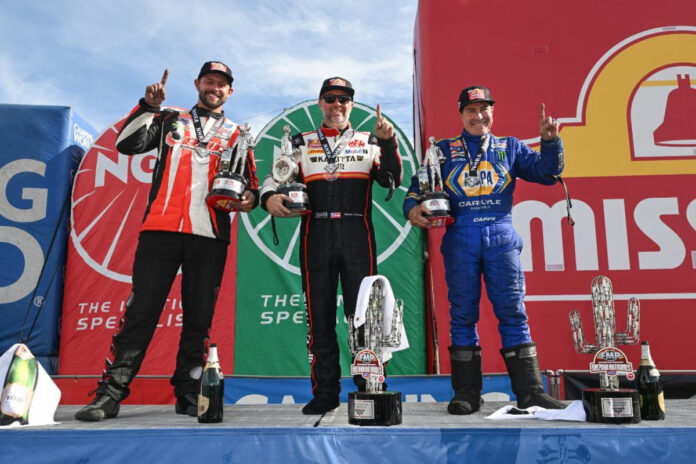
NHRA AND FIREBIRD MOTORSPORTS PARK ANNOUNCE TIME CHANGES FOR FMP NHRA ARIZONA NATIONALS

PHOENIX (March 12, 2026) – NHRA and Firebird Motorsports Park officials announced time changes for the upcoming FMP NHRA Arizona Nationals presented by NGK Spark Plugs, which takes place March 20-22.

Taking an abundance of caution for the expected heat in the weekend forecast, racing in the Mission Foods Drag Racing Series will shift to earlier in the morning on each day, setting up a “Coffee and Nitro” weekend at the “Duel in the Desert.”

Friday qualifying will begin at 9:30 a.m. local time on Friday with Pro Stock, followed by Funny Car and Top Fuel. The second session is slated to start at 12 p.m.

On Saturday, Top Fuel will open the day at 10 a.m., followed by Funny Car and Pro Stock. The final qualifying session – as well as the finals of the first Mission #2Fast2Tasty Challenge bonus race of the season – is scheduled to start at 12:30 p.m. with Top Fuel.

Sunday eliminations will be bumped an hour earlier as well, with the first round of eliminations slated for 10 a.m. local time.

The shift to the earlier sessions was made to create the safest race environment for everyone in attendance, including fans, race teams, partners and stakeholders.

“Due to the expected heat in the Phoenix area next week, both NHRA and Firebird Motorsports Park felt it was important to be proactive and adjust the schedule to include earlier start times,” NHRA President Glen Cromwell said. “Our priority is always the safety of our fans, race teams and partners, as well as putting on the best show possible. We appreciate the flexibility and work from the amazing staff at Firebird Motorsports Park, the teams and partners to make these time changes, and we’re looking forward to a great weekend of racing in Phoenix.”

Gates will open at 7 a.m. Friday through Sunday, with action in the Lucas Oil Drag Racing Series to begin at 7:30 a.m. on Friday and Saturday, and 8 a.m. on Sunday.

To purchase tickets to the final FMP NHRA Arizona Nationals presented by NGK Spark Plugs, fans can visit www.NHRA.com/tickets. For more information on NHRA, please visit www.NHRA.com.


About Mission Foods

MISSION®, owned by GRUMA, S.A.B. de C.V., is the world’s leading brand for tortillas and wraps. MISSION® is also globally renowned for flatbreads, dips, salsas and Mexican food products. With presence in over 112 countries, MISSION® products are suited to the lifestyles and the local tastes of each country. With innovation and customer needs in mind, MISSION® focuses on the highest quality, authentic flavors, and providing healthy options that families and friends can enjoy together. For more information, please visit https://www.missionfoods.com/

About NHRA

NHRA is the primary sanctioning body for the sport of drag racing in the United States. NHRA presents 20 national events featuring the NHRA Mission Foods Drag Racing Series and NHRA Lucas Oil Drag Racing Series, as well as the NHRA Pro Mod Drag Racing Series and NHRA Flexjet Factory Stock Showdown™ at select national events. NHRA provides competition opportunities for drivers of all levels in the NHRA Summit Racing Series and NHRA Street Legal™. NHRA also offers the NHRA Jr. Street® program for teens and the Summit Racing Jr. Drag Racing League® for youth ages 5 to 17. With more than 100 Member Tracks, NHRA allows racers to compete at a variety of locations nationally and internationally. NHRA’s Youth and Education Services® (YES) Program reaches over 30,000 students annually to ignite their interest in automotive and racing related careers. NHRA’s streaming service, NHRA.tv®, allows fans to view all NHRA national events as well as exclusive features of the sport. In addition, NHRA owns and operates three racing facilities: Gainesville Raceway in Florida; Lucas Oil Indianapolis Raceway Park; and In-N-Out Burger Pomona Dragstrip in Southern California. For more information, log on to www.NHRA.com, or visit the official NHRA pages on Facebook, Instagram, Twitter, and YouTube.