Home Blog Page 49

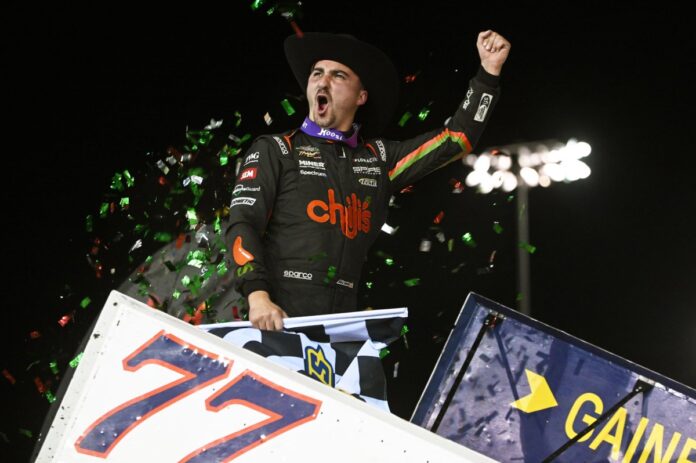
Giovanni Scelzi Claims Night 1 of Interstate Batteries High Limit Race at Texas Motor Speedway Dirt Track

Photo Courtesy of High Limit Racing

The second-to-last race of the 2026 Interstate Batteries High Limit Racing Series took place Friday night at the Texas Motor Speedway Dirt Track, which is just right outside of the Texas Motor Speedway. Championship points leader Rico Abreu entered tonight’s race with a slim margin of 45 points ahead of second place and last week’s Saturday night winner at Lakeside Speedway, Giovanni Scelzi. Abreu is seeking his second High Limit championship since last year, while Scelzi would be looking for his first in the series for Spire Motorsports.

Additionally, Abreu’s Tony Stewart Racing team was looking to rebound since last Saturday after he was disqualified due to his team refueling the car during red flag conditions. Finally, there was a chance for Abreu to clinch the championship tonight as well. The scenarios were if Rico won, Scelzi would need to finish third or worse. If Rico placed second, Scelzi would need to finish fourth or worse. If Rico finished third, he would need Scelzi to finish sixth or worse. In a simpler scenario, Abreu just needs to beat Scelzi by four positions on the track. 

However, the championship-clinching scenarios for tonight were quietly put to rest, as it was Scelzi who fired the first shot by winning the 25-lap feature following a competitive battle with Abreu to cut into the championship points by gaining nine points and is now only 36 points behind heading into the finale on Saturday night.

“I can’t even put into words how proud of Eric, Cole, and Kinser I am,” Scelzi told Flo Racing in victory lane. “I had really high expectations hiring Eric Prutzman (Scelzi’s crew chief) with as much as he’s done and he’s succeeded in every single one of them. So just an amazing job. It was just an emotional night, I don’t know why.

“Just the way I felt, I like this place. This place is awesome, and it’s such a gorgeous facility. I always played here on the video games and never got to come here, and finally got to come here last year for the first time. Incredible job at the racetrack. I don’t know who is doing it (track prep), but to have two lanes like that and let us slice and dice and show what this place can show for racing. I really hope we stay here for our finale. This is a great event. I think it’s only growing every year, but yeah, Cole leaned in the car and said, you know, we’re not out of it. Don’t give up and take no prisoners. So, I’m just proud of the performance tonight.”

There were 34 Sprint Cars on the property at the dirt track for tonight’s race.

Feature Race Recap – 25-Laps – $10,000 To Win

Starting on the pole thanks to his dash victory was Tanner Holmes. Abreu started third and Scelzi seventh.

Holmes had the early race lead, with Abreu passing Daison Pursley for second to complete Lap 1. On Lap 2, Scelzi moved to the fifth position and then took over the fourth position one lap later. However, the first caution of the main came with 21 laps to go for Landon Crawley, who came to a stop in the middle of Turns 1 and 2 after he blew a motor off Turn 4. The race resumed, and the battle was on with Abreu and Holmes. Scelzi, however, continued his momentum by going into the third position following the restart.

With 16 laps to go, Pursley battled side-by-side with Scelzi for the third spot. Abreu took the lead from Holmes off Turn 4 with 12 laps to go. A top five battle then took place with Holmes, Scelzi, Pursley, and Courtney. After Abreu grabbed the lead, he began getting into the lap traffic, which allowed Scelzi to close in and take the lead from Abreu off Turn 2 with eight laps to go. Abreu would retake the top spot a lap later in Turn 3 for a brief period, but Sceliz grabbed it again shortly thereafter at the start/finish line. From there, Scelzi went on to lead the final six laps and take the checkered flag in order to stay alive in the championship battle. The victory was his third of the season and fourth of his High Limit career.

After winning tonight’s race, Scelzi would have to win Saturday night’s finale in order to win the championship and have Abreu finish 16th or worse.

Heat Race Recaps – Top Five Transfer – 8 Laps A Piece

Justin Peck paced the hot lap session with a lap time of 13.316 seconds. Following the hot lap session, Courtney’s No. 7 Spire Motorsports Sprint Car had to make an engine change prior to the qualifying session.

There was a Flight A and Flight B Qualifying Session. Abreu paced Flight A with a lap time of 13.151 seconds, while Scelzi was the fastest in Flight B with a quick time of 13.124 seconds. Scelzi time was quick enough to be the overall fastest time of the groups combined.

It is important to note that Aaron Reutzel was involved in a violent crash last weekend at Lakeside Speedway, and his team (Ridge and Sons Racing) decided to use a medical provisional to withdraw from the event.

Heat 1 – Holmes was on the pole for the first heat with Roger Crockett alongside him on the outside. Holmes went on to win the heat with no yellows. Moving on were Crockett, Kerry Madsen, Abreu, and Sye Lynch.

Heat 2 – USAC standout Brady Bacon was the top spot for this heat. A caution occurred with four laps to go in the heat for a flat right-rear tire for Kasey Jedrzejek. Jedrzejek came to a stop off the exit of Turn 4.

Bacon went on to secure the heat victory with Courtney, Pursley, Brian Brown, and Austin McCarl in the top five transferring.

Heat 3 – Peck was No. 1 for the third heat. A caution came out with four laps to go for race leader Peck. A big puff of smoke came out the back of Peck’s car, and he would exit the racing surface to go back to the pit area. It was later determined that the engine expired on Peck’s car. Fortunately, for Peck, he went on to win the B-Main to get back in the A-main.

Kasey Kahne would go on to win the heat race, followed by Scelzi, Chase Randall, Danny Sams III, and Crawley moving on to the A-main.

Heat 4 – Brenham Crouch had the pole for the fourth and final heat. A caution came out immediately as the field had a bad start, which caused a complete restart. The rest of the heat was clean and green, with Crouch winning his heat race. Brent Marks, Tanner Thorson, Ryan Timms, and Chris Martin rounded out the transfers.

Moving on to the seven-lap dash were Holmes, Kahne, Bacon, Crouch, Abreu, Pursley, Scelzi, and Thorson. Holmes led every lap to win the dash and be on the pole for the 25-lap feature event.

For those who missed the feature, you can watch the highlights below.

Official Race Results Following Night 1 At Texas Motor Speedway Dirt Track

  1. Giovanni Scelzi
  2. Tyler Courtney
  3. Rico Abreu
  4. Tanner Thorson
  5. Daison Pursley
  6. Brent Marks
  7. Chase Randall
  8. Tanner Holmes
  9. Brady Bacon
  10. Ryan Timms
  11. Kerry Madsen
  12. Brenham Crouch
  13. Austin McCarl
  14. Justin Peck
  15. Kasey Kahne
  16. Brian Brown
  17. Roger Crockett
  18. Rees Moran
  19. Sye Lynch
  20. Danny Sams III
  21. Ayrton Gennetten
  22. Ashton Torgerson
  23. Chris Martin
  24. Landon Crawley

Up Next – With night 1 complete, the series now turns its attention to the championship season finale Saturday night to wrap up their 2026 season, live on Flo Racing.
Toni Breidinger’s NCTS Phoenix Raceway Recap

Zero Carbon Bioethanol 150 – Race Results

Venue: Phoenix Raceway

FINISH: 31st

Start: 26th

Breidinger Closes Out MHR Schedule at Phoenix

Toni Breidinger, driver of the No. 20 Celsius Chevrolet Silverado RST closed out her NASCAR CRAFTSMAN Truck Series (NCTS) schedule with McAnally Hilgemann Racing Friday evening at Phoenix Raceway where she settled for an unfortunate 31st-place finish. The San Francisco, Calif. native set the No. 20 Chevrolet up to start the 150-lap event from the 26th position. The field bunched up and Breidinger fell back to 30th as she settled in and remained focus forward. An uneventful first segment saw the young driver a 33rd-place Stage One finish and she reported to the team that she was loose but overall balance was not bad. A quick stop for four fresh goodyear tires, fuel to lead her off for Stage Two.

The laps started to wind down as the field started to spread out. The young driver had reported to crew chief Dewey Townsend with 14 laps to go in the stage that she was now feeling tight handling conditions on her race truck and needed better fire off. Stage Two came to a close and Breidinger came down pit road for four tires, fuel and a slight air pressure adjustment to help the handling on the No. 20 Chevrolet. With no luck in dirty air and battling at the tail end of the field, Breidinger was relegated to a 31st-place finish at the checkered flag.

Toni Breidinger Quote:

“We had a really fast Celsius Chevrolet tonight it was just so difficult to pass in dirty air and get the grip we needed but overall the truck felt really good. Huge thanks to Bill (McAnally, team owner), Dewey (Townsend, crew chief) and everyone on the No. 20 team for letting me hop in the seat a few times this season. It has been a ton of fun and I am just super grateful for the opportunity.”

Tyler Ankrum’s NCTS Phoenix Raceway Recap

Zero Carbon Bioethanol 150 – Race Results

Venue: Phoenix Raceway

FINISH: 13th

Start: 21st

Stage One: 18th

Stage Two: 18th

NCTS Playoff Point Standings Position: 10th

Ankrum Rallies Back in Phoenix

Tyler Ankrum, driver of the No.18 LIUNA Chevrolet Silverado RST had high sights going into the 150-lap event at Phoenix Raceway Friday evening until a Stage Two incident on pit road set him back and gained the young driver more adversity to overcome. Starting near the back of the pack in 21st, Ankrum had his work cut out for him on his chase to the front. On the opening lap, the driver of the No. 18 Chevrolet made up six spots to 16th. By lap 12 he had reported to the team that he was lacking rear grip as he started to fall back a few positions to 18th where he ended Stage One.

Crew chief Mark Hillman called the young driver down pit road for four fresh tires, fuel and a round of adjustments to help with the rear. A quiet second stage fell upon the pack and with just 15 laps to go, Ankrum settled into the 20th position, now struggling with tight conditions on his race truck. A caution in the closing laps of the stage forced the stage end and Ankrum was relegated to a 18th-place Stage Two finish. The San Bernardino, Calif. native came down for what seemed to be a routine stage-break stop for four tires and fuel until the team noticed a massive tire rub on the left-rear. Still under yellow, Ankrum came back down pit road for the crew to tug on the fender and make sure the rub did not continue.

This unfortunate event set Ankrum back to battle in the hornets nest and fight his way back to the top in the closing laps. The young driver set focus forward and powered his way through the field to ultimately settle for a 13th-place effort at Phoenix for the Zero Carbon Bioethanol 150.

Tyler Ankrum Quote:

“Tough night for this No. 18 LIUNA team, man. We really lacked a ton of rear grip there in the beginning of the run and it just continued on throughout the night. We can’t escape the bad luck this year and I hate it for this team. Once we got it dialed in at the end we were able to make up some spots but we will hold our heads high and head into Talladega next week where anything can happen.”

2026 Niece Motorsports NCTS Race Recap: Phoenix Raceway

NCTS RACE RECAP: PHOENIX RACEWAY
Event: Zero Carbon Bioethanol 150 (150 laps / 150 miles)
Round: 22 of 25 (The Chase)
Track: Phoenix Raceway
Location: Avondale, AZ
Date & Time: Friday, October 16 | 7:30 PM ET

No. 44 Freeway Insurance Chevrolet Silverado RST
Driver: Andrés Perez de Lara | Crew Chief: Wally Rogers

Start: 27th | Stage 1: 19th | Stage 2: 12th
Finish: 12th | Driver Points: 14th | Owner Points: 20th

Read Andrés’ Bio

  • Key Takeaway: Andrés Pérez de Lara and the Freeway Insurance team overcame early setbacks to come home with a solid finish in Phoenix. Pérez de Lara started deep in the field, but the No. 44 team made positive changes to find speed throughout the race. The Mexico City native drove through the field in the opening two stages and contended for a top-10 finish at the end of the race. As the checkered flag flew, Pérez de Lara came home as the highest finisher from the organization in 12th-place.
  • Andrés Pérez de Lara’s Post-Race Thoughts: “I think we have to be happy with the result we had tonight after a very challenging start to our day. We struggled in practice and qualifying, but we got it better in the race. We fought hard all night long. Of course, we were looking for a top-10, but just fell a little too short. I’m just happy to rebound after a day that was looking like it was going to be tough for us. The No. 44 team never quits, and I was very thankful to have Freeway Insurance supporting our efforts on their big weekend in Phoenix.”

About Freeway Insurance: Built for drivers who like to do things their way, Freeway Insurance makes it easy to compare options, choose coverage that fits your ride and your budget, and save. With a simple click, call, or come in approach, we help drivers stay in control and keep moving forward. From auto and truck to motorcycle, homeowners, renters, and more, Freeway offers coverage designed for every journey. Compare. Choose. Save Freeway, Your Way.

No. 45 Sparco Chevrolet Silverado RST
Driver: Landen Lewis | Crew Chief: Phil Gould

Start: 4th | Stage 1: 3rd | Stage 2: 9th
Finish: 16th | Driver Points: 22nd | Owner Points: 10th

Read Landen’s Bio

  • Key Takeaway: Landen Lewis and the Sparco team brought a fast truck to Phoenix, but an electrical issue put a damper on their finishing result. Lewis rocketed to his best-career qualifying effort in fourth-place and drove up to second on the opening lap. Completing stage one in third, the No. 45 team showcased promising speed early on. Towards the end of the second stage, Lewis experienced low battery voltage causing him to sputter to ninth. The team looked under the hood on pit road to rectify the issue, but was ultimately unable to climb back into the top-10. After having to restart from the tail, Lewis made a valiant effort to gain track position and crossed the line in 16th-place.
  • Landen Lewis’ Post-Race Thoughts: “We started off great at the beginning of the day and I felt like Phil (Gould) made really good adjustments in practice. Our Sparco Chevy was really close right off the hauler and I was really happy with how it drove. When we ended up fourth in qualifying, it felt like everything was going great. There was a lot of promise and happiness throughout the team and I felt like we were hitting our stride and getting everything headed in the right direction.

Starting the race off, we ran second for the majority of stage one and fell back to third. In stage two, we fired off with a vibration from a loose wheel on the left-front, and then had an issue with a wiring harness, or something like that. The motor started cutting in and out and we lost all of our track position after coming down pit road. Once that issue happened, the motor just never felt right for the rest of the race.

We still fought back to 16th, but it was a shame. We were coming off of a good run in Charlotte and I was hopeful to make it two in a row tonight. On the bright side, we are starting to build our momentum up as a group and things are starting to click really well. We’ll take this one and put it to the side and move onto Talladega next week.”

About Sparco: Sparco designs, manufactures, and sells racing safety apparel, karting safety apparel, vehicle racing seats / accessories, and gaming products. Headquartered in Volpiano, Italy, and founded in 1977, Sparco is a well-known provider in the racing industry.

No. 4 Nightclubs Suck Chevrolet Silverado RST
Driver: Donovan Strauss | Crew Chief: Mike Shiplett

Start: 22nd | Stage 1: 23rd | Stage 2: 28th
Finish: 24th | Driver Points: 69th | Owner Points: 31st

Read Donovan’s Bio

  • Key Takeaway: Donovan Strauss and the Nightclubs Suck team had a clean evening in Phoenix, gaining valuable experience. In just his second-career NCTS start, Strauss qualified 22nd for the 150-lap race. On the first pit stop of the night, the rookie slid through his pit stall and had to make up for lost ground in stage two. The No. 4 team held serve for the final run to the checkered flag, and Strauss brought his truck home to his best-career finish in 24th-place.
  • Donovan Strauss’ Post-Race Thoughts: “I don’t think the finishing result is too bad considering I made a lot of rookie mistakes tonight. I slid through my box on the first stop, lost my track position, and had to restart at the tail of the field. But overall, I feel like I learned a lot tonight and finished all the laps. I have to learn how to keep up with the balance on how the track changes and be a little better on the initial start. Tonight was a building night for sure, and I thought it went well. Huge thanks to everyone at Nightclubs Suck, Niece Motorsports, and Team Chevy for this opportunity. I have had a lot of fun in my first two times racing in the Truck Series and hope to be back soon.”

About Nightclubs Suck: Nightclubs Suck (NC❌) is a performance apparel brand built for endurance athletes who live differently. Founded in 2025 by two triathletes, Ty and Clayton, NC❌ was born out of a simple but powerful idea: that serious athletes shouldn’t have to choose between technical performance and great design. From faster splits to longer distances, we make gear that matches the 24/7 commitment of the endurance lifestyle. For those who earn their Saturday morning PRs on Friday night, this is for you. For those who endure.

No. 42 DQS Solutions & Staffing Chevrolet Silverado RST
Driver: Tyler Reif | Crew Chief: Landon Polinski

Start: 30th | Stage 1: 29th | Stage 2: 30th
Finish: 27th | Driver Points: 28th | Owner Points: 24th

Read Tyler’s Bio

  • Key Takeaway: Tyler Reif and the DQS Solutions & Staffing team faced a challenging night in Phoenix. Reif, who returned to the site of his NCTS debut, rolled off the starting grid in 30th-place. The No. 42 struggled to make headway as Reif wrestled the balance on his truck in the first two runs of the night and made slight contact with the outside wall. After making several adjustments on pit road, the team was able to pick up a handful of positions in the final stage. Reif finished the race in 27th-place.
  • Tyler Reif’s Post-Race Thoughts: “That was a tough race for us tonight. I’m not really sure what our biggest issue was – maybe it was downforce or drag, but really I don’t know. I told Landon (Polinski) after the race that I was kind of lost a little bit because this was the first time I’ve raced here and didn’t know what to tell my crew chief. I had really high hopes coming back here because we qualified and finished inside the top-10 in my debut last year and I feel like Phoenix has always been a good track for me. We will debrief when we get home and go from there, but I know my No. 42 guys will work hard to make sure our next race together goes better for us.”

About DQS Solutions & Staffing: Guided by a mission to achieve excellence and adaptability, DQS partners with clients to create custom solutions that address unique business challenges. Recognized as Michigan’s fastest-growing company and #22 in the nation on the Inc. 5000 list, DQS drives industry growth while giving back through its nonprofit, Foundation for Pops, and partnerships like the River Rouge School District.

About Niece Motorsports: Niece Motorsports is a professional auto racing team that has competed in the NASCAR CRAFTSMAN Truck Series since 2016. The team is owned by Josh Morris of DQS Solutions and Staffing and the Fowler Family of J.F. Electric and Utilitra, and was founded by United States Marine Corps Veteran Al Niece. At its 80,000 sq. ft. headquarters in Salisbury, NC, Niece Motorsports is a full-service race vehicle build shop as well as a customizable fabrication shop for any manufacturing needs.

Follow the Team: To keep up to date with the latest team news, visit niecemotorsports.com or connect on Facebook and Instagram (@NieceMotorsports) as well as X (@NieceMotorsport).

LANGDON, BECKMAN, G. STANFIELD & HERRERA WRANGLE PROVISIONAL NO. 1 SPOTS IN DALLAS

ENNIS, Texas (Oct. 16, 2026) – Top Fuel points leader Shawn Langdon made the quickest run of his career during “JEGS Friday Night Live” at Texas Motorplex, rolling to the provisional No. 1 qualifier to win the “Battle for the Saddle” to kick off this weekend’s NHRA FallNationals at Texas Motorplex.

Jack Beckman (Funny Car), Greg Stanfield (Pro Stock) and Gaige Herrera (Pro Stock Motorcycle) are also the provisional No. 1 qualifiers at the 18th of 20 races during the 2026 NHRA Mission Foods Drag Racing Series season and the fourth of six races in the Countdown to the Championship playoffs.

Due to changing weather conditions, Pro Stock and Pro Stock Motorcycle made one qualifying session on Friday and will have three qualifying sessions on Saturday, including their “Battle for the Saddle” bonus money session.

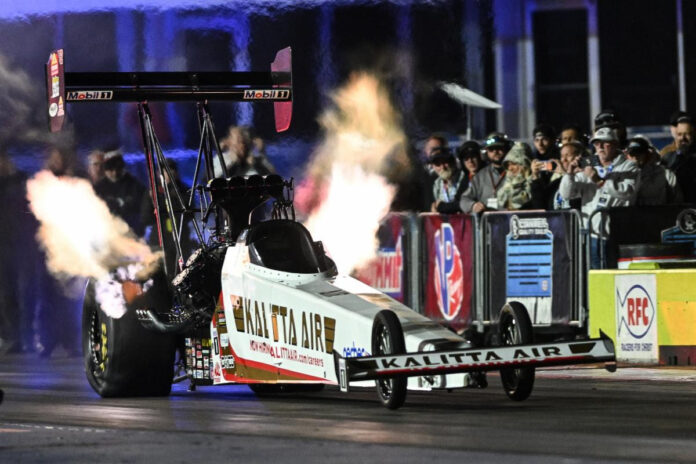
For Top Fuel and Funny Car, that came during “JEGS Friday Night Live,” as Langdon claimed the $15,000 bonus check after a spectacular run of 3.648-seconds at 340.39 mph in his 12,000-horsepower Kalitta Air dragster. It is also the quickest Top Fuel run of the year during NHRA’s 75th anniversary season.

Langdon’s latest standout run puts the points leader in position to clinch his eighth No. 1 qualifier of the season for Kalitta Motorsports and 30th in his career. The past champion also stayed red-hot as he looks to win his fifth straight race this weekend and fourth in a row during the Countdown to the Championship playoffs.

“We were actually trying to run a little bit better than that, but in these conditions, you have to have everything perfect to do it — too much you’ll smoke, and not enough you’ll shake,” Langdon said. “So it’s a fine line. You have to hit it right, and, fortunately, we were able to.

“I’ve been a big advocate for night runs. I love racing at night and being able to make qualifying runs is awesome. Obviously, the track’s good here. You have good conditions. You know, with a little bit of incentivized money, those things are going to happen.”

Tony Stewart took second with a 3.668 at 343.70, setting the track speed record, and defending event winner Doug Kalitta is third after going 3.668 at 338.80.

Funny Car’s Jack Beckman won the $15,000 bonus check and the “Battle for the Saddle” during “JEGS Friday Night Live” at Texas Motorplex, delivering an epic pass of 3.852 at 330.13 in his 12,000-horsepower PEAK Chevrolet SS for John Force Racing to move closer to his fourth No. 1 qualifier of the season.

Beckman, who entered the weekend fourth in points, needs a big weekend to stay in the championship conversation, but he was thrilled with the way things started. He’ll need more of that on Saturday and Sunday in the loaded Funny Car ranks, especially with the epic conditions expected. Beckman, though, has a head start on everyone after Friday’s fantastic start.

“We were sixth pair, and there’s 10 pairs here with a huge Funny Car turnout here. So we ran well, but then we’ve got to watch eight quality cars behind us, any one of which could have exceeded our run, and [Matt] Hagan came closest, but nobody exceeded us,” Beckman said. “So, it’s 15 grand from the Texas Motorplex, and then JEGS sweetened the pot with another 1,000 bucks. I just thought that was fantastic.

“We were pushing hard. I could feel it, but I had my hands full. The car started going right, and when you’re pushing that hard, any steering input is detrimental to performance, and too much steering input is going to upset the rear tires. So I moved it back into the groove. I thought I did a reasonable job, straightened it out and started going to the right again.”

Points leader Matt Hagan went 3.855 at 334.80 to take second and Cruz Pedregon sits third after his run of 3.855 at 323.83.

Pro Stock’s Greg Stanfield opened the weekend’s pivotal playoff race with a strong statement on Friday in his Janac Brothers Racing car for Elite Motorsports, going 6.460 at 212.80 to take the No. 1 spot with three sessions left on Saturday at Texas Motorplex.

The points leader is after his second top qualifier of the year and continues to approach his success and the Countdown to the Championship in workmanlike fashion. The team has been consistent all year, made strong strides in the playoffs and Stanfield is poised to have a big finish to the year. As for this weekend, he knows big runs are possible as he looks to make the most of the opportunity in Dallas.

“This says a lot for our team. Things are going well for us, and we’re just trying to keep that momentum going,” Stanfield said. “We haven’t made any mistakes, and we’re just trying to build off of that. We did a little testing last week, and we’re working hard to try to keep this thing up front.

“We felt like we needed to go a .45 to be what I call a ‘perfect pass,’ so there was a little bit left there. We were just trying to pick it apart as best as we can and trying to get those little points.”

Troy Coughlin Jr. is right behind in second with a 6.464 at 212.74 and Greg Anderson is third after going 6.468 at 210.51.

In Pro Stock Motorcycle, Gaige Herrera kept the quick times running during the lone session for the category on Friday, ripping off a stout 6.676 at 202.22 on his RevZilla/Motul/Vance & Hines Suzuki to take the top spot.

Should that hold through Saturday’s three sessions, Herrera, a two-time world champion, would pick up his fourth No. 1 qualifier of the year. Herrera threw down in a major way in St. Louis to get back in the championship conversation, winning that race and pulling to within 32 points of teammate and reigning world champion Richard Gadson. That continued at Texas Motorplex, as Herrera put together a huge run and he’s expecting plenty of opportunities to replicate that over the course of the weekend.

“My bike’s been phenomenal lately. I don’t think Andrew [Hines] touched it since St. Louis. He said it was good. He put the cover on it and headed to Dallas,” Herrera said.

“Today we were battling with the weather and the wind. For me to go up there and go a nice straight run, I was very happy with that. I didn’t feel the wind much at all. So we’re off to a good start here in Dallas. This track has been good to me and I hope to keep it going throughout the weekend.”

Matt Smith is currently qualified second with a 6.709 at 201.86 and Angie Smith went 6.725 at 202.28 to sit third.

Qualifying continues at 10:30 a.m. CT on Saturday at the Texas NHRA FallNationals at Texas Motorplex.


ENNIS, Texas — Friday’s results after the first two of four rounds of qualifying for the 41st annual Texas NHRA FallNationals at Texas Motorplex, 18th of 20 events in the NHRA Mission Foods Drag Racing Series. Qualifying will continue Saturday for Sunday’s final eliminations.

Top Fuel — 1. Shawn Langdon, 3.648 seconds, 340.39 mph; 2. Tony Stewart, 3.668, 343.70; 3. Doug Kalitta, 3.668, 338.80; 4. Antron Brown, 3.677, 335.32; 5. Leah Pruett, 3.697, 334.20; 6. Maddi Gordon, 3.701, 333.43; 7. Justin Ashley, 3.713, 335.80; 8. Josh Hart, 3.714, 337.64; 9. Will Smith, 3.714, 335.80; 10. Clay Millican, 3.716, 332.45; 11. Billy Torrence, 3.746, 333.95; 12. Shawn Reed, 3.761, 334.70; 13. Dan Mercier, 3.785, 311.55; 14. Tony Schumacher, 3.809, 283.30; 15. Jake Sanders, 3.900, 304.47; 16. Lee Callaway, 4.026, 225.28.

Not Qualified: 17. Charles Loftin, 4.400, 195.58; 18. Cameron Ferre, 4.589, 169.57; 19. Spencer Massey, 6.986, 86.97.

Funny Car — 1. Jack Beckman, Chevy Camaro, 3.852, 330.13; 2. Matt Hagan, Dodge Charger, 3.855, 334.80; 3. Cruz Pedregon, Charger, 3.855, 323.83; 4. Alexis DeJoria, Camaro, 3.873, 333.09; 5. J.R. Todd, Toyota GR Supra, 3.874, 337.13; 6. Jordan Vandergriff, Camaro, 3.881, 333.83; 7. Chad Green, Ford Mustang, 3.910, 330.32; 8. Blake Alexander, Toyota Supra, 3.914, 327.92; 9. Paul Lee, Charger, 3.921, 326.80; 10. Spencer Hyde, Mustang, 3.922, 323.93; 11. Dave Richards, Mustang, 3.925, 333.68;

  1. Daniel Wilkerson, Mustang, 3.937, 330.35; 13. Ron Capps, GR Supra, 3.960, 319.83; 14. Hunter Green, Charger, 3.985, 321.31; 15. Jeff Arend, Charger, 4.050, 315.99; 16. Chris King, Charger, 4.077, 268.02.

Not Qualified: 17. Jim Campbell, 4.113, 291.58; 18. Austin Prock, 4.201, 218.63; 19. Jeff Diehl, 4.331, 214.65; 20. Terry Haddock, 4.954, 157.63.

Pro Stock — 1. Greg Stanfield, Chevy Camaro, 6.460, 212.80; 2. Troy Coughlin Jr., Camaro, 6.464, 212.74; 3. Greg Anderson, Camaro, 6.468, 210.51; 4. Dallas Glenn, Camaro, 6.469, 211.56; 5. Aaron Stanfield, Camaro, 6.470, 211.63; 6. Matt Hartford, Camaro, 6.473, 213.03; 7. Deric Kramer, Camaro, 6.478, 212.42; 8. Erica Enders, Camaro, 6.481, 212.41; 9. Matt Latino, Camaro, 6.481, 212.10; 10. Jeg Coughlin, Camaro, 6.484, 211.83; 11. Shane Tucker, Camaro, 6.502, 213.44; 12. Eric Latino, Camaro, 6.511, 210.24; 13. Chris Vang, Camaro, 6.516, 210.54; 14. Mason McGaha, Camaro, 6.521, 212.30; 15. Stephen Bell, Camaro, 6.527, 210.74; 16. Kenny Delco, Camaro, 6.539, 211.80.

Not Qualified: 17. Cody Anderson, 6.570, 197.34; 18. Cliff Mayes, 6.753, 206.77; 19. Jerry Tucker, 12.371, 91.34.

Pro Stock Motorcycle — 1. Gaige Herrera, Suzuki, 6.676, 202.22; 2. Matt Smith, Buell, 6.709, 201.86; 3. Angie Smith, Buell, 6.725, 202.28; 4. Joey Gladstone, Buell, 6.768, 198.50; 5. Chase Van Sant, Suzuki, 6.790, 198.47; 6. Clayton Howey, Buell, 6.880, 170.62; 7. Marc Ingwersen, EBR, 6.997, 195.09; 8. Geno Scali, Suzuki, 7.009, 186.39; 9. Malcolm Phillips Jr., Suzuki, 7.033, 170.07; 10. GT Tonglet, Buell, 7.050, 190.52; 11. Steve Johnson, Suzuki, 7.252, 154.34; 12. Richard Gadson, Suzuki, 7.794, 124.56; 13. Ryan Oehler, EBR, 8.156, 110.72; 14. Chris Bostick, Suzuki, 8.182, 111.79; 15. Hector

Arana, EBR, 8.667, 174.53; 16. Blaine Hale, Suzuki, 17.450, 40.42.

Not Qualified: 17. Hector Arana Jr, 64.999, no speed.

TOYOTA RACING – NCTS Phoenix Post-Race Report – 10.16.26

HONEYCUTT EXTENDS CHASE LEAD WITH PHOENIX WIN
The Driver of the No. 11 Toyota Tundra TRD Pro Extended his Lead to 39 Points with Three Races to Go

AVONDALE, Ariz. (October 16, 2026) – Kaden Honeycutt took advantage of a strong pit stop by his TRICON Garage team after Stage 2 to restart on the front row for the final stage. He took the lead from there and led the final 53 laps to earn his fourth win of the season in the NASCAR Truck Series race Friday night at Phoenix Raceway.

The Toyota development driver extended his lead in the point standings to 39 points over Layne Riggs with three races remaining.

Honeycutt led four Toyota Tundra TRD Pros inside the top 10. William Sawalich finished sixth, Gio Ruggiero seventh and Brent Crews 10th.

TOYOTA RACING Post-Race Recap
NASCAR CRAFTSMAN Truck Series (NCTS)
Phoenix Raceway
Race 22 of 25 – 150 Miles, 150 Laps

TOYOTA FINISHING POSITIONS

1st, KADEN HONEYCUTT

2nd, Christian Eckes*

3rd, Layne Riggs*

4th, Ty Majeski*

5th, Jake Garcia*

6th, WILLIAM SAWALICH

7th, GIO RUGGIERO

10th, BRENT CREWS

19th, STEWART FRIESEN

28th, TANNER GRAY

34th, LELAND HONEYMAN

*non-Toyota driver

TOYOTA QUOTES

KADEN HONEYCUTT, No. 11 Safelite Toyota Tundra TRD Pro, TRICON Garage

Finishing Position: 1st

How did you control the final laps of this race?

“My pit crew, they did a great job. I give so much credit to them because they are so damn good. Thank you Safelite, thank you Scott Zipadelli (crew chief), thank you Mobil 1, TRICON Garage, Toyota Racing. This is so amazing. Phoenix, we finally got one. I can’t say enough about Scott (Zipadelli), my crew, David, Tim, Chuck, Adam, Cube, everyone that works so dang hard on these race trucks and I’m just fortunate to be able to drive these things. They spend all of their hours in a day just for me to drive them. I couldn’t be more grateful for the opportunity at Toyota Racing and TRICON. Kevin Ray and everyone at TRICON Garage, just so awesome.”

When you execute flawless like you did today, what does that tell you about being able to truly contend for this championship?

“The Stage 1, I just struggled. I don’t know, I just didn’t have good rear grip when we started that first stage and Scott went to work for me. He was never concerned and he just kept me locked in the whole time. I just can’t thank him enough. Had such great adjustments, pit crew did their job and I can’t thank them enough. I’m going to do something new, I’m going to have a actual Safelite wrapped helmet and every time I win in NASCAR I’m going to go up and give it to one of those kids because their parents drove from God knows where to come watch us race and they deserve something like this. Thank you to everyone in Phoenix for coming to support us.”

About Toyota

Toyota (NYSE:TM) has been a part of the cultural fabric in North America for nearly 70 years, and is committed to advancing sustainable, next-generation mobility through our Toyota and Lexus brands, plus our more than 1,800 dealerships.

Toyota directly employs nearly 64,000 people in North America who have contributed to the design, engineering, and assembly of over 50 million cars and trucks at our 14 manufacturing plants. In 2025, Toyota’s plant in North Carolina began to assemble automotive batteries for electrified vehicles.

For more information about Toyota, visit www.ToyotaNewsroom.com.

Three Ford F-150 Drivers Post Top Five Finishes in Phoenix Truck Series Race

Ford Racing Notes and Quotes
NASCAR Craftsman Truck Series
Zero Carbon Bioethanol 150 Powered by POET – Phoenix Raceway
Friday, October 16, 2026

Ford Finishing Results:

3rd – Layne Riggs

4th – Ty Majeski

5th – Jake Garcia

15th – Chandler Smith

18th – Cole Butcher

21st – Ben Rhodes

32nd – Monte Tipton

33rd – Frankie Muniz

36th – Jackson Lee

LAYNE RIGGS, No. 34 Love’s Travel Stops Ford F-150 – “I felt like our balance was kind of all over the place today. Obviously, it was a lot different race than it’s been here in the past with the way the sun set for us during the race. It’s still kind of dusk out here now, so I don’t know. The first stage I was really, really loose out front and I was like, ‘Man, if I’m this loose and I’m still leading, I’m gonna be just fine.’ We came in and tightened the truck up. I felt like the track came to me, but it just came to those guys a lot more than it did for me. I’m kind of stumped on this one. I felt like my balance was really good. Their truck just had a lot more raw speed than ours tonight. Thank you to everyone at Front Row Motorsports. The Love’s Travel Stops Ford was fast, but not fast enough. We’re not out of this fight yet. We’ve still got a lot of craziness ahead, especially Talladega. I’m not hanging my head on this one. We did the best we could. We executed our day today and that’s very important for this team to do.”

TY MAJESKI, No. 88 Black Label Bacon/Menards Ford F-150 – “The racetrack just kind of went away from us. We were really good when the sun was out and as the track progressed to the night time, we were just a little bit too tight. Our strong suit was drive off of four and the racetrack came to all of those guys and kind of took away our strength. I’m not sure what we needed there at the end. We were just out of the racetrack and didn’t have the raw speed that we had at the beginning of the race. Once we lost that clean air, we were a good truck. I thought we were still maybe the strongest truck at the end of the race, maybe the last 10 laps or so, but it was too little too late.”

JAKE GARCIA, No. 98 Quanta Services/Curb Records Ford F-150 – “Obviously, we shot ourselves in the foot in qualifying and didn’t hit our adjustments right. We started 23rd and we had a really good truck late in the runs it seemed like compared to the guys we were racing. We were able to get up to about 10th in the first stage and then up to fifth in the second stage. Our pit crew did a good job all night of keeping our track position and then on that last run we just didn’t have the fire off speed that I thought we needed. There were times where we showed flashes of really good speed, but just not enough to catch those guys ahead of us. It’s a solid run and a step in the right direction for us. I’m hoping we can build on this for the rest of the season in our Quanta Services/Curb Records F-150.”

14/12 vs 17/14 Electric Dirt Bikes: Which Size Fits Adult Trail Riders?

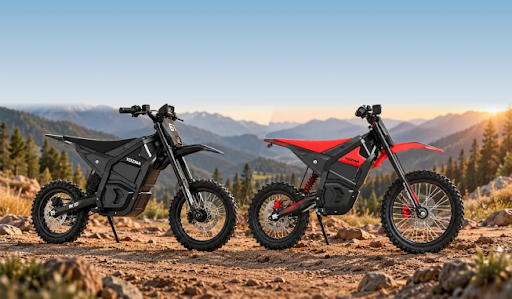
Shopping for an electric dirt bike for adults? The numbers 14/12 and 17/14 describe front and rear wheel diameters in inches, but the riding decision goes beyond tires. The smaller setup can make a trail bike easier to manage at a stop; the larger one can give a grown rider more room and a calmer line through rough ground. Browse Yozma’s electric dirt bike range, then compare the Yozma IN 10 vs IN 10 Pro: these two off-road models put the size difference in concrete terms.

Will an adult fit a 14/12 bike?

Start with the riding triangle: the distance and angles between the seat, footpegs, and handlebars. On a compact 14/12 bike, long-legged riders may have sharply bent knees when seated and little room to shift backward or stand over bumps. That is when a mini electric dirt bike can feel toy-sized, even though its motor is capable. A 17/14 bike usually gives more space to move, but wheel diameters alone do not set cockpit dimensions.

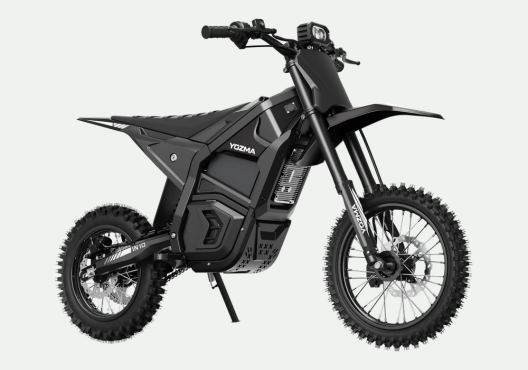
14/12 bike

The black Yozma IN 10 has a 28 in / 72 cm seat and a 41.7 in / 106 cm wheelbase. Its 14/12 wheels and 121 lb bike weight make it the more compact choice here. An adult who can sit without cramped knees, reach the bars easily, and stand on the pegs without hunching may enjoy that compact feel on shorter recreational rides. Its maximum load is 265 lb, so count the rider and boots, helmet, pack, and other gear.

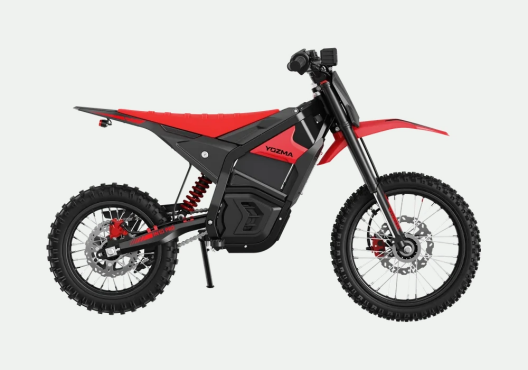
red IN 10 Pro

The red IN 10 Pro has a 30.7 in / 78 cm seat and a 44.9 in / 114 cm wheelbase. The extra 2.7 inches of seat height and roughly 3.2 inches of wheelbase give many adults a less folded-up position. It weighs 143 lb and has a 330 lb maximum load. That higher limit gives a heavier rider with gear more margin, although suspension setup and rider position still matter on repeated hits. Neither model’s published load rating alone tells you how its suspension will feel on a rocky descent.

These are model-specific measurements. Do not assume every 14/12 bike has a 26-28-inch seat or every 17/14 bike has a 31-33-inch seat: the IN 10 Pro is a clear 30.7-inch counterexample. Sit on the bike in riding boots if possible. Check foot support at stops, seated knee bend, control reach, and whether you can rise onto the pegs without the bars crowding you.

Which wheel size works on your trails?

Rocks, roots, and ruts: A 17-inch front wheel meets a given obstacle at a shallower angle than a 14-inch front wheel. That improved rollover can reduce the tendency to drop into a rut or be knocked off line by roots. The IN 10 Pro’s longer wheelbase also tends to feel steadier on faster, rougher stretches. Tires, pressure, line choice, and suspension still decide how much of that advantage you actually feel.

Tight, technical woods: The IN 10’s shorter wheelbase and lower seat can be easier to pivot through slow, twisty single-track and to catch with a foot. The tradeoff is less room for a tall adult to move around and a smaller front wheel to guide across ledges. A beginner may value the easy foot plant; a rider spending more time standing over rough ground may value the Pro’s space and stability.

Suspension: Larger wheel packages often accompany a larger chassis, but wheel size does not tell you fork travel, spring rate, or damping. An adult rider carrying gear should check the actual suspension specifications, set sag where adjustable, and watch for bottoming on the terrain they ride. The IN 10 Pro’s higher published load limit is useful, but it is not a substitute for a suspension test.

Does wheel size change power or battery life?

With identical wheel torque, a smaller tire has a shorter lever arm at the ground and can feel punchier off the line. A larger wheel can hold a steadier line and potentially maintain traction over broken terrain. Those are tendencies, not a power ranking: gearing, motor control, tire compound, and total bike weight may outweigh wheel diameter. Here the bikes also have different motors: Yozma lists 2,600W peak for the IN 10 and 5,500W peak for the IN 10 Pro. The Pro’s stronger output should not be attributed to its wheels.

There is no reliable battery-life winner from 14/12 versus 17/14 alone. A bigger tire changes gearing and the work required at the contact patch, but climbing, speed, throttle use, rider load, tire pressure, and battery capacity usually dominate a trail session. The IN 10 is listed with a 48V 23.4Ah battery; the IN 10 Pro with 60V 27Ah. The Pro carries more nominal energy, while its greater power and mass can also use more. Compare published test conditions and your own terrain rather than assuming a wheel size guarantees range.

IN 10 or IN 10 Pro: a practical size choice

Published specificationIN 10IN 10 Pro
Front / rear wheels14 / 12 in17 / 14 in
Seat height28 in / 72 cm30.7 in / 78 cm
Wheelbase41.7 in / 106 cm44.9 in / 114 cm
Bike weight121 lb143 lb
Maximum load, rider plus gear265 lb330 lb
Peak motor output2,600W5,500W
Battery48V 23.4Ah60V 27Ah

As a starting point, adults around 5 ft 5 in / 165 cm or taller should try the 17/14 Pro first for legroom, especially if they ride standing or cross rough ground often. This is a fit check, not a hard cutoff: a shorter rider with a long inseam may like it, while a taller rider may still prefer the IN 10 for tight, low-speed trails. A rider at 160 lb / 73 kg does not exceed either bike’s stated load limit; add riding gear and check the total. Above 265 lb including gear, the IN 10 is outside its published limit, so consider the Pro if you remain within its 330 lb limit.

Choose the IN 10 when you fit its cockpit and prioritize a lower, lighter bike for controlled recreational trails. Choose the IN 10 Pro when you need more space and load capacity, face frequent rocks or ruts, and can manage its taller, heavier, more powerful chassis. The IN 10 Pro is still a mid-size trail bike, not a full-size 21/19 motocross bike. Both Yozma models are designated off-road only; check the rules where you plan to ride. The IN 10’s compact size also does not make it a default electric dirt bike for teens: follow the manufacturer’s age guidance and assess each rider’s fit and experience.

Frequently asked questions

What do “14/12” and “17/14” mean for seat height?

They are front/rear wheel diameters in inches, not seat heights. On these Yozma bikes, 14/12 means a 28-inch seat on the IN 10; 17/14 means a 30.7-inch seat on the IN 10 Pro. Other models can differ, so check the stated seat height before buying.

Which size is better for rough trail obstacles like rocks and roots?

17/14 is generally the better starting choice. Its larger front wheel approaches rocks, roots, and ruts at a shallower angle, and the IN 10 Pro’s longer chassis can feel steadier over broken ground. Good tires, pressure, suspension setup, and rider technique remain essential.

Who should choose the larger 17/14 setup?

Adults who need more legroom, carry a heavier rider-plus-gear load, or ride rougher and faster trails should start with the 17/14 IN 10 Pro. Riders around 5 ft 5 in / 165 cm and taller can compare its cockpit first, but height is only a guide. A 160 lb rider is within both Yozma models’ published load limits before gear.

Does the smaller 14/12 setup have any advantages for adults?

Yes. The 14/12 IN 10’s lower seat, shorter wheelbase, and lighter bike are useful for foot-down confidence and slow, tight woods. It is a good adult option when the cockpit fits and the rider-plus-gear total stays within its 265 lb limit.

How to Choose Between Content Placement Options in Motorsports Marketing

Photo by depositphotos at https://depositphotos.com/

A race team can earn attention with a strong weekend performance, but turning that attention into lasting interest takes more than a finish-line photo. Sponsors, tracks, and automotive businesses also need to decide where useful stories should appear and how to judge whether those placements reach the right fans. To choose between content placement options, start with the audience and the purpose of the campaign—not a publisher’s biggest headline metric.

Start with the fans you want to reach

Motorsports audiences are not one uniform group. A short-track fan following local drivers may have different interests from a Formula racing viewer, a truck-series enthusiast, or someone researching performance parts. A placement that reaches fewer people but sits in a publication closely tied to a series, venue, or automotive topic can be more relevant than a broad site with a larger reported audience.

Define the intended reader before comparing publishers. Are you trying to introduce a new product, explain a technical feature, promote an event or build awareness of a sponsor’s community work? Then look for sites whose regular coverage gives that subject a natural setting. Review recent articles, the balance of news and features, and whether the publication speaks to fans in a style that suits your message.

Audience fit also means checking the placement itself. A well-researched feature on race-day preparation may have more value in an editorial environment where readers expect practical motorsports coverage than as a generic brand mention on an unrelated site. Relevance, editorial quality, and context all help a story feel worth reading.

Look beyond authority scores

Domain authority and similar measures can help with an initial comparison, but they do not show whether a publication’s readers match your goals. A high score cannot tell you if the site attracts active racing fans, whether its articles receive meaningful engagement, or if your proposed subject would make sense alongside its existing coverage.

Consider the publisher’s recent work, how clearly it identifies its audience, and whether it offers a suitable format. A reported interview, a practical explainer and a sponsored feature can serve different purposes. Ask what the placement includes, how it will be presented, and what information you will receive afterward. Comparing these details is more useful than ranking opportunities by a single number.

For a structured way to assess sites, angles, budgets, and results, this marketing guest posting guide outlines considerations for planning campaigns and deciding which placements merit another run.

Build a story fans will choose to read

A placement works best when the content offers something beyond a sales pitch. Motorsports provides plenty of specific, reader-focused angles: how a team prepares a car for changing track conditions, what a new safety component is designed to do, how a venue is improving the fan experience or what a sponsor contributes to a local racing program. A useful angle gives the brand a reason to be part of the story without making every paragraph an advertisement.

Match the idea to the publication’s coverage and the campaign’s objective. If the goal is to explain a product, provide clear details and practical context. If the aim is event awareness, include information fans need to plan a visit. A placement meant to support search visibility should still read naturally; awkward keyword repetition can make a legitimate story less credible.

Set a budget and define success in advance

Prices vary by publisher, format, editorial work, and distribution included. Decide what the campaign can spend before ordering placements, and compare the full scope rather than the quoted price alone. Confirm deadlines, revisions, article length, any required disclosures, and whether the publisher guarantees a particular placement or only offers an opportunity to submit content.

Choose a small set of measures tied to the original goal. Referral visits and time on page can help assess reader interest. Inquiries, event registrations, or product-page visits may matter more when the campaign is meant to prompt action. If search visibility is part of the plan, track relevant landing-page performance over time rather than expecting one article to deliver an immediate change.

Use consistent tracking links or campaign tags where appropriate, and record each placement’s cost, topic, and results. This makes it easier to distinguish a promising publisher from a one-off spike. Interpret results with care: timing, race results, season schedules, and other promotions can influence traffic as much as the article itself.

Repeat what works—and improve the process

After the campaign, compare placements against the same objectives. A site that sends a smaller but more engaged group of readers may deserve another test, while a high-reach placement that produces little relevant activity may not. Repeating a successful partnership can help build familiarity, but vary the story angle so returning readers receive something new.

Campaign execution can also involve work beyond writing, including a landing page, a sponsor directory, or a schedule tool. When those tasks require outside help, make the scope concrete: list the pages or features, how they should work, deadlines, and acceptance criteria. Clear web development deliverables make it easier to compare proposals and assess completed work. Osdire’s offer-based marketplace is one example of a model where buyers review defined services and pricing before ordering.

Good placement decisions come from treating each opportunity as a test with a clear audience, a worthwhile story, and measurable goals. That approach helps motorsports organizations spend with purpose, learn from each campaign, and invest again where the connection with fans is strongest.

What Happens if a Driver Claims Their Brakes Failed During a Collision?

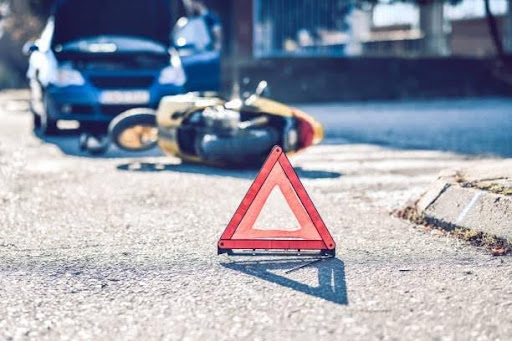
A driver claiming brake failure after a collision does not automatically escape responsibility for the accident. Investigators must determine whether the brakes actually malfunctioned, what caused the problem, and whether the driver knew or should have known about the danger. 

Depending on the evidence, liability may involve the driver, a repair shop, a vehicle manufacturer, or multiple parties. Injured motorists seeking to understand their legal options after a crash can explore the resources available at https://capfirm.com/practice-areas/car-accident.

Mechanical problems can turn an ordinary drive into a serious emergency. However, brake failure claims require careful examination because collisions can result from poor maintenance, defective components, improper repairs, or driver error. Understanding how these situations are investigated can help injured motorists protect their rights and pursue appropriate compensation.

Investigators Must Verify the Brake Failure Claim

When a driver reports that their brakes failed, investigators typically examine the vehicle to determine whether a mechanical problem existed before the collision.

A qualified automotive specialist may inspect brake pads, hydraulic lines, fluid levels, rotors, and other components. The inspection can reveal worn parts, leaks, improper installation, or damage caused by the crash itself.

This distinction matters because collision damage may resemble a preexisting mechanical failure. Investigators must establish whether the brakes stopped functioning before impact or were damaged during the accident.

Vehicle maintenance records, witness statements, and available electronic data may provide additional evidence about what happened.

Drivers May Be Responsible for Poor Maintenance

Vehicle owners have a responsibility to maintain their cars in reasonably safe operating condition. Ignoring warning signs of brake trouble can support a negligence claim when the resulting failure causes an accident.

Common warning signs include unusual grinding noises, reduced braking performance, fluid leaks, and a brake pedal that feels unusually soft.

For example, a driver who repeatedly experiences braking problems but continues driving without obtaining repairs may face liability if those problems contribute to a collision.

California Vehicle Code § 26453 requires motor vehicles to have brakes maintained in good working order, subject to the statute’s provisions.

A driver who failed to address a known braking problem may therefore face questions about whether reasonable maintenance could have prevented the crash.

Defective Parts and Improper Repairs Can Shift Liability

Not every brake failure results from driver negligence. Some incidents involve defective components or mistakes made during maintenance.

A manufacturer may face a product liability claim if a defective brake component contributed to the collision. Similarly, a repair shop may be responsible if negligent servicing or incorrect installation caused the braking system to malfunction.

Determining responsibility requires examining the vehicle’s repair history, replacement parts, and the work performed before the accident.

Several parties may share responsibility when different failures contributed to the collision.

Evidence Can Establish What Caused the Collision

Brake failure cases often depend on physical and technical evidence. Preserving the damaged vehicle can be particularly important because repairs or disposal may eliminate information needed for an independent inspection.

Useful evidence may include maintenance receipts, inspection reports, photographs, witness statements, and vehicle electronic records.

Accident reconstruction specialists may also evaluate vehicle movement, impact damage, and roadway conditions to determine whether the driver’s account is consistent with the physical evidence.

Compensation Depends on Liability and Damages

If negligence or a defective product caused the collision, injured individuals may pursue compensation for medical expenses, lost wages, property damage, and other recoverable losses.

Insurance companies may dispute responsibility when a driver blames mechanical failure rather than their own conduct. Establishing the actual cause of the accident becomes essential to evaluating the claim.

An attorney can review the available evidence, investigate maintenance history, and determine whether additional parties should be included in the claim.

Points to Remember

  • Brake failure requires proof: A driver’s statement alone does not establish a mechanical malfunction.
  • Maintenance matters: Ignoring known brake problems may support a negligence claim.
  • Other parties may be liable: Manufacturers and repair shops can face responsibility for defects or negligent work.
  • Preserve vehicle evidence: Mechanical inspections and maintenance records can help establish causation.
  • Compensation depends on the facts: liability and documented damages determine the available recovery.