REDDICK SCORES THIRD-PLACE RESULT IN DAYTONA Six Camry Drivers Set to Compete in 2026 NASCAR Cup Series Chase
DAYTONA BEACH, Fla. (August 29, 2026) – Daytona 500 winner Tyler Reddick earned a third-place finish in the NASCAR Cup Series race at Daytona International Speedway after finding himself leading the field late in Saturday night’s race.
Reddick is one of six Camry drivers to qualify for the Chase for the NASCAR Cup Series championship that begins next Sunday at Darlington Raceway. Denny Hamlin is the No. 1 seed heading into the 10-race championship run and is joined by fellow Toyota drivers Reddick (third), Ty Gibbs (fourth), Chase Briscoe (fifth), Christopher Bell (sixth) and Bubba Wallace (14th).
TOYOTA RACING Post-Race Recap NASCAR Cup Series (NCS) Daytona International Speedway Race 26 of 36 – 400 miles, 160 laps
TOYOTA FINISHING POSITIONS
1st, Ryan Preece* 2nd, Daniel Suarez* 3rd, TYLER REDDICK 4th, Michael McDowell* 5th, Ricky Stenhouse Jr.* 11th, DENNY HAMLIN 12th, HARRISON BURTON 13th, CHASE BRISCOE 15th, JOHN HUNTER NEMECHEK 16th, COREY HEIM 17th, CHRISTOPHER BELL 20th, BUBBA WALLACE 34th, TY GIBBS 39th, ERIK JONES *non-Toyota driver
TOYOTA QUOTES
TYLER REDDICK, No. 45 Jordan Brand Toyota Camry XSE, 23XI Racing
Finishing Position: 3rd
How was your race today?
“I was just really hoping we were going to be better than third there. It’s going to be close on points with the 54 (Ty Gibbs) so I don’t know if we got him or not. I was hoping something good would happen there — I either wanted to win the race or pass the 54 in points. When the 38 (Zane Smith) threw that block, it’s just so late, if you lift, you’re not going to have the push and the momentum you need to stay with the front row. I was just in a spot where it’s like I couldn’t lift. Either I’m going to hit him or I’m going to get clear of him. Clipped him and lost some momentum there and lost some help.”
Are you ready to go and run for a championship starting next weekend at Darlington?
“That’s a nice positive to come out of the weekend for our Jordan Brand Toyota Camry. For us, I just would’ve loved to take another trip to victory lane here at Daytona. The thing that we were going to try and accomplish in a way I guess came to because we were up there in the mix. I just wish – I know Zane (Smith) got crossed up there and I’m guessing that’s where the 21 (Josh Berry) went – some of the help that I had behind me. You can’t lift in those moments, and you just hope if the blocks are thrown that you’re able to get square. If you can’t get clear, obviously the best thing possible is to be able to dodge the block and get alongside him. Just can’t lift in those moments. You try to keep the momentum going whether you’re pushing the winner or trying to be the winner.”
DENNY HAMLIN, No. 11 Progressive Toyota Camry XSE, Joe Gibbs Racing
Finishing Position: 11th
Did you feel like you had a car that could come up toward the front at the end of tonight’s race?
“I thought we were going to be in a little better position because we saved so much fuel throughout that last run and was still able to get some track position, but I saw the car spinning and the field got jumbled up. Just a great job by NASCAR as a team for coming up with something different here. I thought it definitely was a change. Our car felt a little different. I didn’t think it was quite as log jammed as what it was in the past. If you wanted to get to the front I felt like you could. Just the way the stages worked out was interesting. In stage 2 and 3 fuel saving came into play. Just a decent, clean night overall for us. Had a few small things with the car that we’ve got to make sure we get right from a details perspective. Impressed with the team for all the hard work this season.”
Do you feel that sensation of a reset heading into the Chase?
“Oh, it’s reset. There’s many that have gained a lot of points here tonight. This is the time though that you’ve got to step up and find the next level and next gear. So, it’s on us to go out there and perform. We’ve got a great final 10 weeks ahead of us. This is the grind of the season, but you’ve gotta go give a little more now.”
CHASE BRISCOE, No. 19 Bass Pro Shops Toyota Camry XSE, Joe Gibbs Racing
Finishing Position: 13th
How was the new superspeedway package tonight?
“I thought the package was way better. Who knows if there’s still more to go, but I thought compared to what we had it was really good. You could make moves and make passes. It was more like traditionally how you would race here. The fuel saving was still there, but it was just how the stages wind up. You have to save fuel to not have to pit so I don’t know what they can do to fix that part of it. If the stages were short enough, I think we would just run as hard as we could and it would be really, really good. Not sure how to fix that, but definitely interesting how it all plays out.”
What is your outlook heading into the Chase?
“I’m really excited. Obviously, I feel like it’s some great tracks for us to be able to get to fifth in points from being 37th I think in week four or five, I think it shows how strong we’ve been. I’m really looking forward to it. I feel like we’re definitely going to be in contention and just have to put 10 really good weeks together. I feel like if we can do that, we’ll be in the mix.”
CHRISTOPHER BELL, No. 20 Rheem Toyota Camry XSE, Joe Gibbs Racing
Finishing Position: 17th
Did you accomplish what you wanted to today heading into the Chase?
“I mean, not really. We obviously wanted to maintain the fifth position in the standings. We were vulnerable to a couple of the guys tonight. Just wasn’t competitive tonight. In the second stage, I got up there in position for stage points and I just made a couple bad moves that took us out of stage points. Then, there at the end, we were still in position to finish ahead of (Chase) Briscoe and then the yellow flag worked in their favor. Could’ve been worse, but it’s five points in the grand scheme of things.”
BUBBA WALLACE, No. 23 Columbia PFG Toyota Camry XSE, 23XI Racing
Finishing Position: 20th
How was your race and what is your outlook heading to Darlington and the start of the Chase?
“Kind of an uneventful day. It got really sketchy there at the end. Good to be in the Playoffs – obviously wanted to be higher than 14th. Our team is way stronger than what the picture paints right now. I’m excited for the next 10 weeks. Some really good tracks coming up for us. I’m really excited to go back to Darlington after the speed we had in the spring. Just for tonight though, our Columbia Toyota Camry was I thought really good. It was just kind of when we needed to bob everyone else weaved and just didn’t play our cards right so it’s unfortunate. Just trying to get a better understanding of what I need to do in the car.”
What happened in the incident that took you out of the race?
“I couldn’t tell. The 77 (Carson Hocevar) just spun up the track there. I knew he was coming back across the track, and I was just trying to get down but it’s tough with all the traffic and as fast as you’re going. I hate it. I thought we were in a good spot – trying to put ourselves in a good spot – and just where we needed to be and it didn’t work out. That’s superspeedway racing. The Dollar Tree Camry was fast – it just didn’t work out.”
About Toyota
Toyota (NYSE:TM) has been a part of the cultural fabric in North America for nearly 70 years, and is committed to advancing sustainable, next-generation mobility through our Toyota and Lexus brands, plus our more than 1,800 dealerships.
Toyota directly employs nearly 64,000 people in North America who have contributed to the design, engineering, and assembly of over 50 million cars and trucks at our 14 manufacturing plants. In 2025, Toyota’s plant in North Carolina began to assemble automotive batteries for electrified vehicles.
NASCAR Cup Series Daytona International Speedway Coke Zero Sugar 400 Team Chevy Post-Race Report August 29, 2026
Suarez Leads Chevrolet to Runner-Up Result in a Dramatic Overtime Finish at Daytona Five Team Chevy Drivers Set to Compete for 2026 NASCAR Cup Series Championship
RACE RECAP:
Stage One:
Recording his first career pole at “The World Center of Racing”, Ross Chastain and the No. 1 Trackhouse Racing Chevrolet team led the NASCAR Cup Series to the green flag of the regular season finale. A strong start by the Florida native saw the No. 1 top the leaderboard for the opening lap of Stage One, but it was his Team Chevy teammate, Kyle Larson, that turned a 10th-place qualifying effort into a battle for the lead within just two laps around the 2.5-mile superspeedway. While early in the run saw a shuffle of different leaders, the superspeedway king – Austin Hill – capitalized on a burst of momentum to take his turn at the point of the field just prior to the halfway point of the stage. While the closing laps of the stage saw Chastain try to build the bottom lane into a run for the lead, it was the Hill-led top lane that continued to take charge of the lead pack. But dicey moves among the leaders saw Chris Buescher make a brief appearance at the lead to take the white flag of the stage. While it looked like Buescher was going to take the stage win, contact saw the No. 17 spin just before the start-finish line, ultimately opening up the door for Shane van Gisbergen to maneuver his No. 97 Chevrolet to the lead to capture the all important 10 stage points.
Stage Two:
A two-position gain in the race off pit road kept Hill in the top-10 for the start of Stage Two. But to no surprise, the Georgia native put his speedway prowess on full display – making his way back to the top of the leaderboard within the first three laps of the stage. By the midway point of the stage, it was a mix bag of new faces at the front of the pack, including Hendrick Motorsports’ Chase Elliott, who made an impressive charge through the the field from a 24th-place finish in the opening stage to the top of the leaderboard to pace his first laps of the evening. With 13 laps to go in the stage, the Penske teammates found each other on the bottom lane to make a run at the front of the pack. While stellar moves put Elliott back to the lead in the closing laps, typical last-lap efforts saw his teammate, William Byron, shake out in the fourth position to lead the Bowtie brigade to the end of Stage Two.
Final Stage:
Austin Dillon reached his highest running position thus far of the race when he cycled up into the seventh position to lead Chevrolet to the green flag of the final stage. While familiar faces quickly returned to the front of the pack, a fellow ECR-powered Chevrolet of Cody Ware entered the picture – adding his name to the laps led category with 40 laps to go just prior to the start of a green flag pit cycle. Shortly thereafter, a pack of Chevrolet drivers dove to pit road to make an early start of a green flag pit cycle, with the group returning to the track with 38 laps to go. The strategy saw a trio of Hendrick Motorsports-powered Chevrolet’s take over the command position and continue to stretch their fuel mileage until receiving the call to hit pit road for a quick fuel-only stop with 17 remaining. With the second group hitting pit road, the leaderboard saw a pair of Spire Motorsports Chevrolet’s at the front of the Bowtie brigade as they hovered around the top-five as the race hit a single-digit countdown. While taking a shot at the lead, Hocevar remained in a tight battle among the top-five before losing control of his No. 77 to bring out the caution and set up for an overtime finish. In typical superspeedway fashion, an overtime finish saw chaos ensue throughout the field with a multi-car incident midway through the pack. For the second-consecutive Daytona summer race, it was Daniel Suarez that survived to claim a runner-up finish.
Team Chevy Unofficial Top-10 Results
Pos. Driver
2nd – Daniel Suarez 4th – Michael McDowell 5th – Ricky Stenhouse Jr. 7th – Austin Dillon 8th – Alex Bowman 10th – Cole Custer
Chevrolet’s season statistics with 26 NASCAR Cup Series races complete:
The 2026 NASCAR Cup Series Chase will get underway at Darlington Raceway with the Cook Out Southern 500 on Sunday, September 6, at 5 p.m. ET. Live coverage can be found on the USA Network, MRN and SiriusXM NASCAR Radio Channel 90.
Post-Race Driver Quotes:
Ross Chastain, No. 1 Trackhouse Racing Chevrolet
Finished: 24th
“Our Wendy’s Watermelon Lemonade Chevrolet was pretty loose tonight. We worked on it throughout the race but it was tough in traffic. Unfortunately, we ended the night with a damaged car but I’m looking forward to Darlington next weekend. It’s one of my favorite race tracks.”
Austin Dillon, No. 3 Richard Childress Racing Chevrolet
Finished: 7th
“Really proud of the entire No. 3 Bass Pro Shops/Winchester Deer Season XP Chevrolet team at Daytona International Speedway, but we still have some work to do on speedway racing. It was pretty tough out there tonight. Track position does seem to be key with this package. Our Chevy was tight on exit to Turn 4 to start the race, but still very drive-able. In the final stage crew chief Richard Boswell had us pit early and it helped give us the fuel and track position needed to go home with a Top-10 finish.”
Daniel Suarez, No. 7 Spire Motorsports Chevrolet
Finished: 2nd
“We had a really fast No. 7 Coke Zero Sugar Chevrolet. We were so close, two years in a row with a second-place finish. I’m super proud of everyone at Spire Motorsports. All the men and women have worked really hard on these racecars. The power under the hood from the Hendrick Engine Department has been incredible. All my teammates, we got to race together for a little bit. We were so close, man. I feel like if we got to race all the way to the end, we were going to have a shot at it.
Super happy and proud to make it to the Chase with this team. This team deserves it. I feel like in the past, I’ve had runs in the postseason where I didn’t think we were strong enough to really contend. But this team deserves to be in the Chase. We are a Chase team. There’s so many people and partners that have helped us get here and put this kind of performance together.”
Chase Elliott, No. 9 Hendrick Motorsports Chevrolet
Finished: 23rd
“It’s all eyes on Darlington (Raceway) now. We got through tonight. We had a couple shining spots, I feel like. We led some laps and we were in an okay spot there a time or two. We got caught out there on the strategy there at the end, and I felt like we were in a lot of trouble there pretty quickly. Unfortunately, that ended up being true; we got behind and the caution came out. Hopefully, we can put this one behind us, reset for next weekend – have a good week of preparation and get ready to start the Chase at Darlington.”
Austin Hill, No. 33 Richard Childress Racing Chevrolet
Finished: 27th
“Our Cheddar’s Scratch Kitchen Chevrolet was really fast tonight and I wish the finishing result showed that. Just missed the mark a bit tonight with strategy. We had a great qualifying effort with us starting third, and after the green, we quickly got to the lead. The car was way too loose to make moves with the steering wheel and I couldn’t make the hard turns to block the runs at the end of that stage. We made good adjustments, drove back forward, and finished inside the top-10 at the end of Stage 2. We pitted with five other cars under green in the last stage, and unfortunately, we came off pit road last of the group and ended up losing the draft. A timely caution let us get our lap back for the overtime finish, but there wasn’t enough time to make up ground. Proud of all the prep the guys put in to bring a fast car to the track.”
Ricky Stenhouse Jr., No. 47 Hyak Motorsports Chevrolet
Finished: 5th
“It wasn’t a pretty day for the No. 47 Onin Staffing Chevrolet team. We stuck to our strategy of riding around. I felt like the strategy that we had there in the final stage with the No. 1 (Ross Chastain), No. 3 (Austin Dillon), No. 41 (Cole Custer), No. 88 (Connor Zilisch) and the No. 33 (Austin Hill) was the strategy to win the race. We were catching the lead pack. I felt like the four of us were going to race it out if it went green, but the caution didn’t help us and it helped those guys make it on fuel. Obviously, they didn’t let us race back to the line, which at the DAYTONA 500, they did, so it’s kind of disappointing. Other than that, it’s cool to get a top-five. That’s a positive for us and what our team needed after the last few weeks.”
Michael McDowell, No. 71 Spire Motorsports Chevrolet
Finished: 4th
“We just needed a couple hundred feet more there at the end. I don’t think I would have won, but I think Daniel (Suarez) would have had a shot. We had a good run, and I had just picked him up when the caution came out. The timing was unfortunate, but you know how these races end here (at Daytona International Speedway). If you make it to the finish line, you feel very fortunate. I’m proud of everyone at Spire Motorsports to get two of the three cars into the Chase. To have a strong night like we did tonight and get two Spire Chevrolet’s in the top-five is a great run.”
Carson Hocevar, No. 77 Spire Motorsports Chevrolet
Finished: 38th
He did a good job at Talladega with your win. It was looking like it was shaping up for that here in Daytona, but a big moment in the turn three. Did it catch you off guard or was it that edge you could drive all night?
“Yeah, I was always super tight behind people, it seemed. And so, I just changed from top to bottom there and that was the first time I really got a ton of air on my nose into three and I just lost it. It just kept going. I had the wheel straight, man, it just kept going with all the air and something down on the nose. I’m shocked that it did that. It caught me off guard, for sure. It was nice to ride around all day like we’d kind of planned, and then we gave ourselves a shot to win it at the end. We were up front, had track position and led laps, and that’s all I can really ask for from a team standpoint. Overall, I thought we did a pretty good job here tonight.”
“It’s pretty fresh now, but congratulations to the No. 60 (Ryan Preece). One night doesn’t sum up the year for this No. 97 Red Bull Chevrolet team. We just weren’t good enough tonight, but it’s been cool to be this close. Bit of the regular season has been good, but as a team, obviously we’ve struggled. But I’m proud that I’ve been able to match my teammates on the ovals. I think I’ve stepped it up this year. Obviously, you want to be in the Chase, but we were just short.”
About General Motors
General Motors (NYSE:GM) is driving the future of transportation, leveraging advanced technology to build safer, smarter, and lower emission cars, trucks, and SUVs. GM’s Buick, Cadillac, Chevrolet, and GMC brands offer a broad portfolio of innovative gasoline-powered vehicles and the industry’s widest range of EVs, as we move to an all-electric future.
GM Motorsports, including the Cadillac Formula 1® Team develops and proves advanced technologies in the most demanding environments, accelerating innovation in performance, safety, efficiency, and electrification for its production vehicles. Cadillac Racing is one of the leading manufacturers in the IMSA and FIA World Endurance Championships (WEC). Chevrolet competes in single seaters in the US IndyCar series, and in NASCAR with multiple team partners and drivers. Corvette customer teams compete in GT series across the globe including IMSA and WEC. Learn more at GM.com.
Ford Racing Notes and Quotes NASCAR Cup Series Coke Zero Sugar 400 — Daytona International Speedway Friday, August 28, 2026
RYAN PREECE PUNCHES TICKET TO THE CHASE WITH DRAMATIC DAYTONA WIN
Ryan Preece registered his first NASCAR Cup Series win with tonight’s victory.
Five Ford Mustang drivers will compete in the Chase: Ryan Blaney, Joey Logano, Chris Buescher, Austin Cindric and Ryan Preece.
Ford has won five of the last seven Cup races: Joey Logano and Ryan Blaney (2 each), and Preece (1)
The win is the 144th NASCAR Cup Series triumph for car owner Jack Roush and the seventh under the Roush Fenway Keselowski banner.
Preece is the 92nd different driver to win a Cup race with Ford, and the first new winner since Josh Berry won at Las Vegas (2025).
Today’s win is Ford’s 754th all-time in NASCAR Cup Series competition.
RYAN PREECE, No. 60 Kroger/OIKOS Ford Mustang Dark Horse – VICTORY LANE INTERVIEW – WHAT DOES IT MEAN TO BE A WINNER IN A POINTS RACE? “Unreal. The Northeast is gonna burn it down tonight because when we won the Clash all I heard was, ‘That was a non-points race.’ Well, now we’ve won a points race and now we’re in the playoffs. We came with our back against the wall and we fought. That was a heavyweight fight and we were never out. Thank you to OIKOS, Kroger, Fastenal, Mr. Jack Roush, everybody at RFK, Brad Keselowski, Tad Geschickter, all our friends and family, Ford for the awesome race car, Doug Yates for the awesome motor. I’m just super, super proud. I’m proud to be a Northeast guy.”
WHAT DOES IT MEAN TO WIN HERE AT DAYTONA, A PLACE WHERE YOU’VE HAD SOME SCARY MOMENTS? “I don’t know, man. I thought I was dead three years ago. My wife thought I was dead. To come here and win at a place that almost ended my career means a lot.”
HOW DO YOU REGROUP NOW AND GO TO DARLINGTON? “We’re gonna fight. We’re gonna fight hard like tonight.”
MORE RYAN PREECE POST-RACE QUOTES:
YOUR CREW CHIEF, DERRICK FINLEY, SAID YOU GUYS ARE GOING TO WIN ALL 10 CHASE RACES. HOW DOES THAT SOUND? “That’s the confidence I want to see out of the D-Rock! We started off consistent. We had a bit of a slump there in May and June and we sort of found our way over the past few weeks, especially last week. We were a contender at Loudon. We were a contender tonight. Denny and those guys have been really fast, but it would be great to go on one hell of a run.”
YOU WERE THE FIRST ONE AT THE DRIVER’S MEETING TODAY. YOU WERE READY FOR TONIGHT. TAKE US THROUGH THOSE FINAL LAPS. “I watched the movie The Replacements and I forgot what his first name was, but Falco and at the end he said, ‘Winners want the ball.’ So give me the ball. Derrick gave me the ball tonight and I gave the ball to him, so, for me, yeah, we were locked in. There’s just no ifs ands or buts. It was 100 percent about doing nothing other than putting ourselves in position and if we wrecked for the lead, we wrecked for the lead. If I rode around in 30th and didn’t have a chance to win, I’d be mad at myself right now.”
WHAT WENT THROUGH YOUR MIND WHEN THE CAUTION CAME OUT FOR OVERTIME? “I actually liked it. Part of me liked it because sometimes there are only so many moves you can make. I didn’t like it because the Fords were obviously gonna be taking allegiance to the bottom and I was gonna be the odd man out, but sometimes being the odd man out isn’t a bad thing and you just have to be a racer and you’ve got to use your instincts and do the things that are right.”
WHAT WENT THROUGH YOUR MIND WHEN THEY TOLD YOU THAT YOU HAD WON AND MADE THE CHASE? “I’m not gonna have a voice tomorrow. Before the race, part of me – even last week – I thought we had a contending car that was capable of winning. I even kind of got choked up last week, and I’m not an emotional person. I am but I’m not. I don’t cry. I’m really shocked right now that I can even speak because there’s really no words to truly tell people how difficult this road has been. How many times people doubt you, but then I have a group of supporters, people that are from the northeast that have 100 percent been behind me all the way, so to stand here in Victory Lane and be able to share this moment with them even though they’re not here is amazing. This is a big win for the northeast. This is a big win for Connecticut. I’m a diehard New Englander, so it’s a big deal.”
HOW DOES IT FEEL TO GET REVENGE ON THIS TRACK AND COME OUT OF HERE ON TOP? “I’m just glad that Daytona decided to love me the way I loved it. A big day for us at RFK. A big day for me. A big day for my family and I’m gonna drink quite a few beers and celebrate it with my friends and family and have a lot of calls tomorrow, but Monday the work is looking forward to trying to make a playoff run.”
WHAT DID IT MEAN TO HAVE YOUR WIFE AND THE KIDS AND THE DOG UP THERE TO GET YOUR PICTURE TAKEN IN VICTORY LANE? “To be able to bring my kids to Victory Lane and my wife to Victory Lane – Heather has been there from when I was broke and trying to win a Stafford race on a Friday night so I can get my 25 percent and make $400, to her not knowing that I borrowed money and I had to pay it back somehow, to using her credit card to go get shoes at Iowa because I forgot my shoes and they were wore out that time in 2017, to moving down to North Carolina away from her friends and away from her family to chase a dream with me. Man, this is what racers dream of. It wasn’t given. It was earned. A lot of risk involved and I’m damn proud to be doing it with Mr. Jack Roush, Brad Keselowski and the Fenway Group at RFK, and with Ford.”
AUSTIN CINDRIC, No. 2 Menards/Maytag Ford Mustang Dark Horse – “Obviously, we had a strong Maytag/Menards Ford Mustang. We were able to get to the front when we needed to at times. I hate we weren’t able to capitalize and lead as many laps as we did in stage two to give ourselves a larger buffer for the final stage, but the guys did a great job of keeping me informed with what I needed to do to keep ourselves out front and get back to the front. Everything we needed to do we checked the boxes tonight.” HOW DID YOU VIEW THE FINAL RESTART? “For us, it was fairly simple on how to control our destiny and obviously dodge the wrecks. That was the huge part, but as far as I understand it’s a best-case scenario for Ford tonight. I’m super proud of everybody and we’re ready to go chase for a championship.” YOU’VE MADE THE POSTSEASON FOUR TIMES IN YOUR FIVE YEARS. YOUR THOUGHTS? “I think, for us, we’ve got to absolutely kill it to think we have a shot at a championship with the way that the points reset, but this team is capable of a lot and I want to see how far we can go.” HOW NERVE RACKING WAS TONIGHT? “Honestly, less than you’d think. I think there’s a lot of variables and I don’t mean to downplay it, but there were certainly a lot of variables going into the night. We weren’t all on top of each other, so I felt like in a lot of ways it was somewhat more simplified of how the race was gonna play out after I was able to watch and observe. I thought our car was good enough to charge back through when needed and obviously we got ourselves in position. The guys did a great job of giving me information all night, whether it was points or fuel and how to adapt. That’s what it takes to be a contender at a minimum, but definitely look for a strong 10 weeks from us.”
RYAN BLANEY, No. 12 Advance Auto Parts Ford Mustang Dark Horse – NO RESETS NOW IN THE CHASE. WHAT IS THIS GOING TO BE LIKE? “It will be different from what we’ve had the last little bit, but I think everyone was kind of used to that growing up or prior or things like that, so I really don’t think you’re just gonna have to know that you’re not gonna be able to really afford any mistakes. Things are gonna fluctuate up and down, for sure.”
ZANE SMITH, No. 38 Aaron’s Dream Machine Ford Mustang Dark Horse – YOU WERE LEADING AND THEN IT ALL WENT WRONG. WHAT HAPPENED? “I just got wrecked. I haven’t really seen a replay to break it down, but it’s just unfortunate to come that close and have it not work out.” WAS IT JUST A CASE OF EVERYBODY GOING FOR THE WIN IN OVERTIME? “Yeah, I guess. I don’t know. I haven’t seen a replay. It felt like I didn’t even get a shot to survive with the 45 and just got wiped out.”
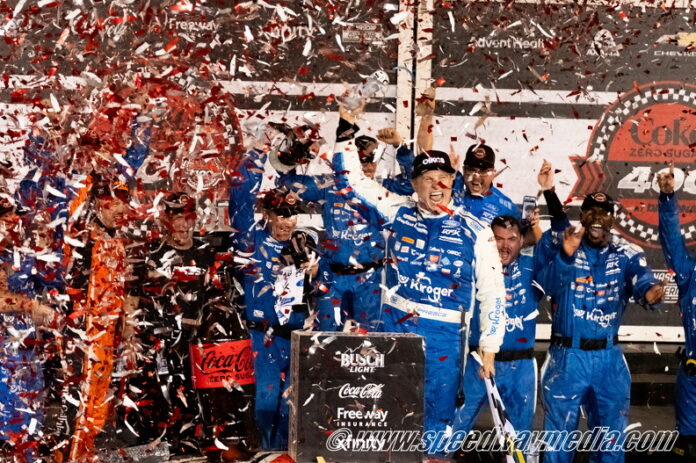
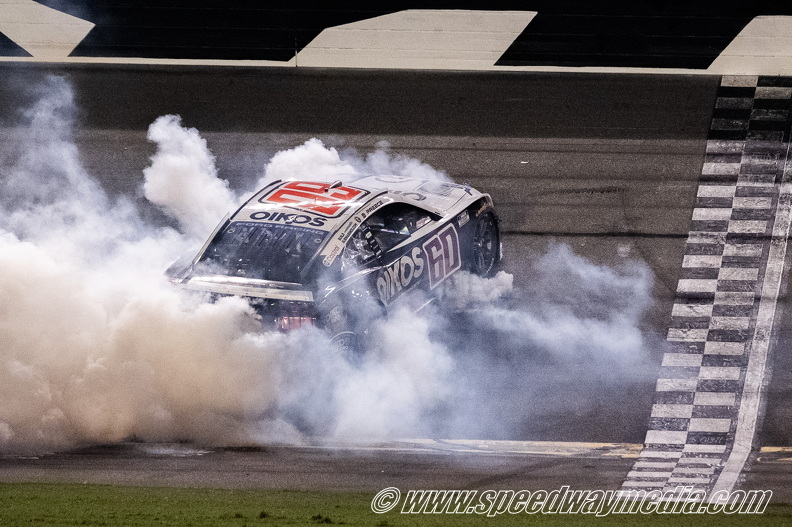
Ryan Preece solidified his statement emphasized earlier in the week that he would race his way into the 2026 NASCAR Cup Series Chase. He did so by notching his first-ever career victory in the Coke Zero Sugar 400 at Daytona International Speedway on Saturday, August 29, following an overtime shootout.
The 2013 NASCAR Whelen Modified Tour champion from Berlin, Connecticut, led five of 166 over-scheduled laps in an event where he rolled off the starting grid in fourth place and raced upfront in the early stages. While battling for the first stage victory during the stage’s final lap, Preece nearly had his Chase hopes jeopardized when he was involved in an incident with teammate Chris Buescher and Kyle Larson through the tri-oval. Despite the incident, Preece, who managed to grab eighth place and three stage points during his spin, continued and rallied to a runner-up finish, along with nine additional stage points, when the second stage period concluded.
Restarting in 12th place during the event’s third and final stage period, Preece, who also pitted for what would be his final time prior to the stage’s start, kept his entry intact and drafted his way to the front in the closing laps. After avoiding a three-car incident in Turn 4 that drew a late-race caution and sent the event into overtime, fuel concerns began to linger for Preece during an extended caution period. Despite the concerns, Preece remained on the track and dueled with Zane Smith at the start of overtime before he was shuffled out of the lead prior to the final lap.
Then on the final lap, Preece seized a final charge beneath Smith and drag-raced with the latter before Smith got loose while trying to block Tyler Reddick and ignited a multi-car wreck entering the backstretch. With the lead in his possession, Preece maintained the lead from Daniel Suarez through the backstretch before a race-ending caution flew and handed Preece a victory worth remembering at the World Center of Racing, which also enabled him to clinch his first-ever Chase berth.
With on-track qualifying determining the starting lineup on Friday, August 28, Ross Chastain qualified on pole with a pole-winning lap of 184.396 mph in 48.808 seconds. Chris Buescher qualified in second place with a lap of 184.204 mph in 48.859 seconds.
Prior to the event, Harrison Burton dropped to the rear of the field due to a driver change as he replaced Riley Herbst while Herbst recovers from lingering effects following last weekend’s incident at New Hampshire Motor Speedway. Casey Mears also dropped to the rear of the field due to unapproved adjustments to his entry.
When the green flag waved and the event commenced, pole-sitter Ross Chastain and Chris Buescher dueled for the lead as the field started to fan out to three-packed lanes through the first two turns. Through the backstretch, Chastain motored ahead of Buescher, and he built an early gap through Turns 3 and 4. As the three-wide stacked field of 40 competitors cycled back to the frontstretch, Chastain led the first lap over Buescher.
During the second lap, Kyle Larson charged from the outside lane with a draft from Chase Briscoe as he led the second lap over Chastain. Chastain would reassume the lead and lead the next lap despite having to go on defensive mode amid three-stacked lanes led by Larson on the outside lane, Shane van Gisbergen in the middle lane and Buescher on the inside lane. With Chastain, Buescher and Larson racing in three-wide formation and leading a triple-stacked field back to the frontstretch, Buescher led the fifth lap mark while the field of 40 was separated by within two seconds of one another.
On the sixth lap, teammates Buescher and Ryan Preece led the stacked field as they both transitioned towards the outside lane and in front of Chastain and Larson while van Gisbergen tried to mount a charge from the middle lane. Meanwhile, Austin Hill led the inside lane before he motored ahead of van Gisbergen, moved in front of the latter to lead the middle lane and attempted to mount a charge while Connor Zilisch led the inside lane. Shortly after and with most of the field settling in two-stacked lanes, Larson motored his way into third place and he managed to overtake Buescher with help from Hill to lead the 10th lap.
Through the Lap 15 mark, Hill, who has led since the 11th lap, continued to lead Larson, Buescher, Preece, Chastain and Briscoe in single-line formation towards the outside wall. By then, they were all slightly ahead of the pack while teammates van Gisbergen and Connor Zilisch dueled for seventh place in front of two stacked lanes. Behind, Corey Heim and Ty Gibbs rounded out the top 10 while William Byron, Bubba Wallace, Austin Cindric, John Hunter Nemechek, Michael McDowell, Erik Jones, Brad Keselowski, Joey Logano, Alex Bowman and Tyler Reddick were racing in the top 20, respectively. Meanwhile, Christopher Bell, Cody Ware, Daniel Suarez, Denny Hamlin, Ryan Blaney, Zane Smith, Carson Hocevar, Harrison Burton, Austin Dillon and Ty Dillon were mired in the top-30 mark while Chase Elliott, Todd Gilliland, Noah Gragson, Ricky Stenhouse Jr., Joey Gase, Casey Mears, Josh Berry, Cole Custer, Daniel Dye and AJ Allmendinger rounded out the 40-car field.
At the Lap 20 mark and with the field continuing to settle in two-wide formation, Hill maintained a steady advantage over Larson, Buescher and Preece. By then, the top-four competitors were ahead of the pack while Chastain dueled with teammate van Gisbergen from the inside lane and he also tried to gain a draft from Briscoe to move forward. With Chastain only getting as high as fourth while mounting drafted charges from the inside lane through the turns, Hill retained the lead over Larson by Lap 25. Chastain continued to struggle mounting forward from the inside lane as Hill proceeded to lead Larson, Buescher, Preece and van Gisbergen, respectively, on Lap 30.
Then on the final lap of the first stage period, trouble struck at the front when Buescher, who overtook Hill for the lead amid the draft a lap prior, got turned into the outside wall entering the frontstretch after being bumped by Larson when Buescher moved in front of Larson. The contact sent the latter two veering back to the left as they, along with Preece, spun through the frontstretch’s grass.
Amid the incident, van Gisbergen, who holds the 16th and final Chase berth by 31 points, navigated his way through to capture his second Cup stage victory of the 2026 season. Ty Gibbs navigated his way into the runner-up spot ahead of Joey Logano, Erik Jones and Briscoe while Larson slid into sixth place. Bubba Wallace settled in seventh place, which was enough for him to clinch a berth for the 2026 Chase with four critical stage points. Preece slid to an eighth-place result while John Hunter Nemechek and Austin Cindric were scored in the top 10, respectively. By then, all but one of 40 starters were scored on the lead lap as Buescher pitted early to have his entry assessed for any critical damage.
Under the event’s first stage break period, most of the field led by van Gisbergen peeled off the racetrack to pit for service while the rest, which included Austin Dillon, Noah Gragson, Ryan Blaney, Carson Hocevar, Cody Ware, Buescher, Ricky Stenhouse Jr., Josh Berry, Joey Gase, Casey Mears, Allmendinger and Cole Custer, remained on the track. Following the pit stops, Logano exited pit road first ahead of Gibbs, van Gisbergen, Erik Jones and Todd Gilliland. With numerous competitors making multiple trips to pit road to top off with fuel, and those who initially stayed on track pitting throughout the first-stage break, Logano cycled to the overall lead.
The second stage period started on Lap 42 as Logano and van Gisbergen occupied the front row. At the start, the latter two led a stacked field through the first two turns that soon became slightly dispersed entering the backstretch. Van Gisbergen then used the inside lane to motor ahead and move in front of Logano, which allowed the former to lead the next lap as Gilliland mounted a charge from the inside lane with drafting help from Briscoe. The front-runners then quickly fanned out and Briscoe got shuffled out of the draft entering the backstretch before settling back in two-wide formation, with Gilliland leading the next lap. By then, Buescher took his entry to the garage as Gilliland and Hill dueled for the lead before the latter motored ahead by Lap 46.
At the Lap 50 mark, the top-39 competitors were separated by three seconds of one another as Briscoe stormed his way to the lead over Hill, Chastain, Zane Smith, Gilliland, Chase Elliott, Wallace, van Gisbergen, Byron and Nemechek while Logano, Gibbs, Gragson, Daniel Suarez, Erik Jones, Cody Ware and Bowman were separated by a second of one another. Two laps later, Chastain, who got shuffled out of the draft in the closing laps of the first stage period, mounted a drafting charge from the inside lane with help from Zane Smith while Briscoe continued to lead both the outside lane and slightly of the overall race lead. Both Briscoe and Chastain continued to duel in front of two-stacked lanes just past the Lap 55 mark before the field slowly began to fan out to three lanes.
On Lap 60 and with the field stacked up in three-wide formation, Chastain, who has led since Lap 56, went on defensive mode as he maintained the lead over Elliott, Ware, Byron and Preece while the top-28 competitors were separated by a second of one another. Elliott was then drafted out in front four laps later, and he maintained control of the event over the next three laps while being drafted by teammate Byron before Zane Smith came storming up to the front from the inside lane and moved in front of Elliott within the draft on Lap 67. Preece, who rallied from the spin at the conclusion of the first stage period, also navigated his way to the front with drafting help from teammate Keselowski before Elliott repaid the favor to Smith by overtaking and sliding back in front of the latter during the following lap. With the field stacked up in two-wide formation, Smith proceeded to lead the Lap 70 mark over Elliott.
At the halfway mark on Lap 80, the top-28 competitors were racing within a second of one another in a pack, and the on-track intensity started to crescendo with the field fanning out to two and three lanes. At the front, Elliott, who has led the previous 10 laps, continued to hold a steady advantage over Preece, Zane Smith, Byron, Blaney, Cindric, Bell, Logano, Briscoe and Chastain while Hill, Wallace, Gilliland, Keselowski, Larson, van Gisbergen, Ty Dillon, Harrison Burton, Suarez and Nemechek were scored in the top 20, respectively, over Jones, Gibbs, Cole Custer, Austin Dillon, Reddick, McDowell, Corey Heim and Allmendinger, with Gragson and Hocevar rounding out the top-30 mark.
During the next five laps, Team Penske’s trio of competitors that included Blaney, Cindric and Logano navigated their way to the front, with Blaney taking the first stab at the lead and Logano remaining in pursuit before Cindric navigated to the front by the Lap 85 mark. Despite being challenged by Elliott and Preece for the next lap, Cindric maintained the lead as he also led the outside lane while Blaney led the inside lane with drafting help from Logano and Larson. Amid Blaney’s charge from the inside lane, Cindric had Preece drafting the latter with the slight advantage as Cindric led the Lap 90 mark before Elliott, who, despite expressing concerns about not having enough fuel to complete the second stage period under full pace, motored back ahead during the following lap.
When the second stage period concluded on Lap 95, Blaney, who executed a crossover move beneath Elliott through the backstretch a lap prior, captured his eighth Cup stage victory of the 2026 season. Preece, Zane Smith, Byron, Gilliland, Larson, Briscoe, Suarez, Elliott and Hill were scored in the top 10, respectively, while Cindric and Logano were shuffled back to 13th and 21st, respectively. By then, all but two of 40 starters were scored on the lead lap while van Gisbergen ended up in 12th place as he did not garner any stage points during the latest stage.
During the event’s second-stage break, the leader, Blaney, and Elliott pitted before pit road opened to the field. Once pit road became accessible for the field, most of the field led by Preece pitted for service while Chastain, Reddick, Gibbs, Berry, Blaney, McDowell, Gragson, Custer, Hocevar, Zilisch, Stenhouse and Elliott remained on the track. Following the pit stops, Gilliland exited pit road first ahead of Briscoe, Preece, Cindric and Hill while Suarez bumped and spun Nemechek as the latter was trying to enter his pit stall. With numerous competitors making trips to pit road to top off with fuel, Gilliland cycled to the overall lead.
With 59 laps remaining, the final stage period commenced as Gilliland and Briscoe occupied the front row. At the start, the former, who restarted on the outside lane, motored ahead through the first two turns. Gilliland then maintained the lead through the backstretch before he went into defensive mode through Turns 3 and 4 over Briscoe and Cindric, which allowed Gilliland to lead the next lap. With the field fanned out to three lanes, a majority of the front-runners lined up in single-line formation towards the outside wall that was led by Gilliland as Gilliland maintained a steady advantage over Cindric, Logano, Austin Dillon and Casey Mears with 55 laps remaining.
Down to the final 50 laps, Keselowski, who overtook Briscoe for the lead a lap later, was leading Ware and Briscoe, the latter of whom had led the previous five laps, while Gilliland, Elliott, Byron, Cindric, Hill, Logano and Zane Smith were in the top 10. As Keselowski maintained the lead in front of two-stacked lanes with drafting help from Ware on the inside lane, the top-17 competitors were separated by less than a second of another while the top 30 were separated by less than two seconds.
With 40 laps remaining, the field of 38 was stacked in three-packed lanes as all were racing within two seconds of one another. At the front, Keselowski, Ware and Elliott primarily dueled against one another in three-wide formation for the lead, with the trio having also swapped the lead over the previous 10 laps. A lap later, Chastain, Custer, Austin Dillon, Hill, Stenhouse, Zilisch and Mears all pitted for fuel under green. While the latter group all trailed the lead group with a wide disadvantage following their pit stops, Ware, Keselowski, Byron, Elliott and Briscoe proceeded to lead the rest of the field with 35 laps remaining.
As the event reached its final 30-lap mark, most of the field raced in single-file toward the outside lane as Byron led teammate Elliott, Briscoe, Ware, Gibbs, Wallace, Ty Dillon, Gragson, Larson and Gilliland, respectively. By then, Chastain, Austin Dillon, Custer, Stenhouse and Zilisch, all of whom pitted nine laps earlier, trailed the lead group by 22 seconds while Hill trailed by 24 seconds. With the field of 31 remaining on the track and no groups being formed to pit for a final time amid concerns of fuel shortages, Byron continued to lead with 25 laps remaining while Chastain, who was scored in 32nd place, trailed the pack by 20 seconds.
Down to the final 20 laps, the top-10 competitors pulled slightly ahead of two-stacked lanes as Byron had teammates Elliott and Larson lined up behind him in the draft, while Ware, Nemechek, Reddick, Briscoe, van Gisbergen, Ty Gibbs and Ty Dillon were part of the lead group. By then, Chastain, Austin Dillon, Custer, Stenhouse and Zilisch trailed the lead group by 19 seconds while the rest of the pack, led by 11th-place Blaney, tried to reel in the lead group.
Two laps later, another group led by the leader Byron along with Larson, Elliott, Briscoe, Ware, Ty Dillon and Allmendinger pitted under green. Amid the latter group’s pit stops, they were overtaken by the first group, which pitted first, led by Chastain, as Nemechek cycled to the lead for the next lap. Reddick then moved into the lead with 15 laps remaining, and he led the next four laps while being drafted by Hocevar before Zane Smith came storming past Reddick with drafting help from Preece through the frontstretch. Preece then navigated his way into the lead as he was scored the leader over Smith, Reddick, Blaney, Hocevar, Gibbs, Jones, Suarez, Nemechek, van Gisbergen and a field of 24 competitors racing within two seconds of one another with 10 laps remaining.
Then with six laps remaining, the caution flew when Hocevar, who was battling at the front and was trying to execute a left-handed move on Preece for the runner-up spot exiting the backstretch, snapped to the left and veered sideways to the apron before he veered back up the track to the right, slammed against the outside wall hard on the right side in Turns 3 and 4 and was hit in the rear by Erik Jones while Ty Gibbs, who barely dodged Hocevar’s slide, spun to the bottom of the track.
At the moment of caution, where the rest of the field dodged the carnage and the event was sent into overtime, Zane Smith, who executed a crossover move on Preece to lead a lap prior, was leading Preece, Blaney, Reddick and Suarez while Cindric, Berry, Bowman, McDowell and Logano were scored in the top 10. During the caution period, some led by Nemechek and including Gibbs, van Gisbergen, Gragson, Keselowski, Wallace, Dye, Larson, Byron, Elliott and Zilisch pitted while the rest led by Zane Smith and Preece remained on the track.
After a lengthy caution period to clear the carnage site, the field restarted in overtime. At the start, Smith and Preece dueled in front of Blaney, Reddick and the field through the first two turns. Then through the backstretch, multiple competitors reeled in the leaders amid the draft as Reddick, who drove to the rear of Preece’s bumper, darted to the right to gain a draft from Berry. With the move, Preece was pinned in a three-wide battle for second alongside Reddick and Blaney while Smith stormed ahead with the lead through Turns 3 and 4.
When the white flag waved and the final lap started, Smith remained in the lead as Preece, Reddick, Suarez, Berry and the field reeled back in through the frontstretch. Preece then reeled in and dueled with Smith for the lead as Smith went up the track to fend off Reddick. Then during the duel, Smith got loose off the front nose of Reddick. This caused Smith to hit the outside wall and clip the side of Berry before he spun as Logano wrecked with Gilliland against the wall.
More competitors, including Ty Gibbs, van Gisbergen, Chastain, Allmendinger, Cody Ware, Larson, and Daniel Dye, wrecked in the backstretch as Preece led with the event remaining under green-flag conditions. Seconds later, Stenhouse turned Blaney into the wall towards the front. Combined with the first multi-car wreck, the caution flew, and the event was deemed official. At the moment of caution, Preece was ahead of a hard-charging Daniel Suarez and was declared the official winner.
With the victory, Preece, who had flipped wildly twice at Daytona between the previous three seasons, became the 210th competitor overall to win in NASCAR’s premier series. He also became the sixth competitor over the previous 16 Coke Zero Sugar 400 events to notch a first Cup career victory in the latter event, the fourth first-time winner of the 2026 Cup season and the 12th winner through 26-scheduled events this season. Preece’s Daytona victory was the seventh for RFK Racing under its current banner, the sixth of this season for Ford and the first for crew chief Derrick Finley.
Above all, Preece, who entered Daytona in 17th place in the standings and 31 points below the top-16 Chase cutline, boosted his way above the cutline and clinched a Chase berth with his Daytona victory. With the Chase reset, Preece will commence his first Chase as a championship contender in 16th place in the standings with 2,000 points.
Preece will also square off against regular-season title winner Denny Hamlin, Ryan Blaney, Tyler Reddick, Ty Gibbs, Chase Briscoe, Christopher Bell, Kyle Larson, Chase Elliott, Joey Logano, Chris Buescher, Daniel Suarez, Carson Hocevar, William Byron, Bubba Wallace and Austin Cindric over the next 10 weeks in a 10-race postseason Chase stretch for the 2026 title.
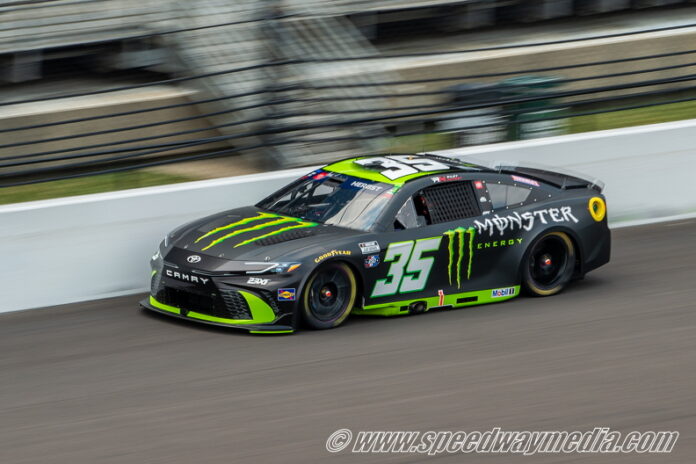
Photo by Andrew Boyd for SpeedwayMedia.com.
“I’m just speechless right now,” Preece said on the frontstretch on NBC. “Those guys, that No. 60 group, we’re fighters, and when you put our back against the wall, we swing hard. Two years ago, there was a lot of keyboard warriors saying I was nothing. Well, we just kicked their butts tonight. It’s just a testament of how prepared these race cars are. I’m a racer. I know what it takes to build speed. Every man and woman at RFK [Racing], thank you for giving me a rocket ship so I can go to the moon tonight.”
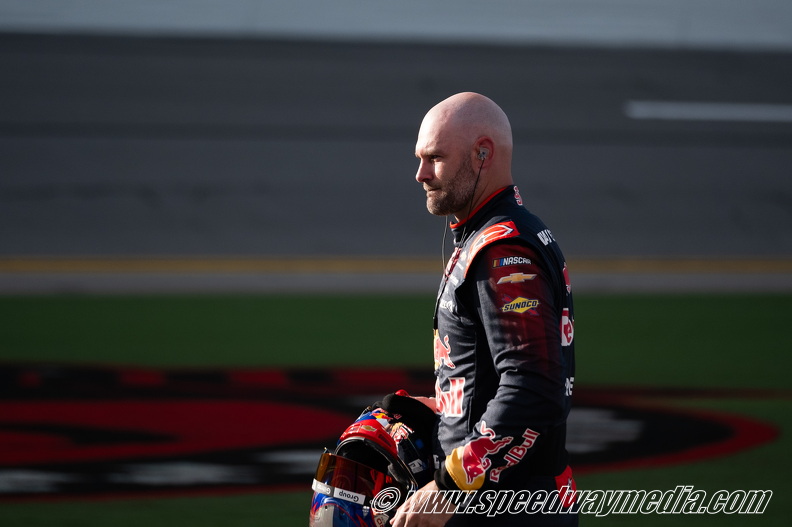
Amid Preece’s celebration and securing a Chase berth, Shane van Gisbergen, who was forced to pit for fuel prior to the overtime shootout, was left out of the Chase picture after he was involved in the final-lap carnage and dropped to 28th place in the final running order. As a result, van Gisbergen will not make the Chase for a second consecutive season, and Trackhouse Racing will have no competitors represented in the 2026 Chase.
Photo by Andrew Boyd for SpeedwayMedia.com.
“One night doesn’t sum up our year, I guess,” van Gisbergen said. “We haven’t been good enough, but it’s been cool to be close. Shame we’re not in [the Chase]. Bits of [our regular-season stretch] were good. As a team, obviously, we’ve struggled. I’m proud that I’ve been able to match my teammates on the ovals. I think I’ve stepped up this year, but obviously, you want to be in that Chase. Didn’t make it.”
Daniel Suarez, a 2026 Chase contender, settled in second place as he finished ahead of top-five finishers Tyler Reddick, Michael McDowell and Ricky Stenhouse Jr., respectively, while Austin Cindric officially solidified his berth to the Chase by finishing in sixth place. Austin Dillon, Alex Bowman, Josh Berry and Cole Custer completed the top 10 in the final running order while Denny Hamlin settled in 11th place.
Notably, Brad Keselowski, who had a long shot chance of making the Chase, missed the postseason as a competitor after settling in 14th place, though his two co-owned competitors, Preece and Chris Buescher, will contend for the title in the Chase.
This event featured 41 lead changes for 22 different leaders, and featured four cautions for 21 laps. In addition, 31 of 40 starters finished on the lead lap.
NASCAR Cup Series Reseeded Driver Points
Rank
Driver
No
Points
Ldr
Nxt
Race Wins
Stage Wins
1
Denny Hamlin
11
2100
0
0
4
5
2
Ryan Blaney
12
2075
-25
25
3
8
3
Tyler Reddick
45
2065
-35
10
5
1
4
Ty Gibbs
54
2060
-40
5
2
5
5
Chase Briscoe
19
2055
-45
5
1
0
6
Christopher Bell
20
2050
-50
5
0
4
7
Kyle Larson
5
2045
-55
5
0
5
8
Chase Elliott
9
2040
-60
5
2
2
9
Joey Logano
22
2035
-65
5
2
2
10
Chris Buescher
17
2030
-70
5
0
0
11
Daniel Suarez
7
2025
-75
5
1
1
12
Carson Hocevar
77
2020
-80
5
1
0
13
William Byron
24
2015
-85
5
0
3
14
Bubba Wallace
23
2010
-90
5
0
2
15
Austin Cindric
2
2005
-95
5
0
1
16
Ryan Preece
60
2000
-100
5
1
2
Results:
Ryan Preece, five laps led
Daniel Suarez
Tyler Reddick, five laps led
Michael McDowell
Ricky Stenhouse Jr., one lap led
Austin Cindric, six laps led
Austin Dillon
Alex Bowman
Josh Berry, one lap led
Cole Custer
Denny Hamlin
Harrison Burton
Chase Briscoe, 10 laps led
Brad Keselowski, 10 laps led
John Hunter Nemechek, two laps led
Corey Heim
Christopher Bell
Joey Logano, two laps led
Todd Gilliland, eight laps led
Bubba Wallace
Ty Dillon
William Byron, 14 laps led
Chase Elliott, 19 laps led
Ross Chastain, 12 laps led
Connor Zilisch
Noah Gragson
Austin Hill, 27 laps led
Shane van Gisbergen, six laps led, Stage 1 winner
Daniel Dye
AJ Allmendinger
Kyle Larson, two laps led
Zane Smith – OUT, Accident, 15 laps led
Ryan Blaney – OUT, Accident, five laps led, Stage 2 winner
Ty Gibbs – OUT, Accident, one lap led
Cody Ware – OUT, Accident, eight laps led
Joey Gase, one lap down
Casey Mears, one lap down
Carson Hocevar – OUT, Accident, one lap led
Erik Jones – OUT, Accident
Chris Buescher, 15 laps down, six laps led
The 2026 NASCAR Cup Series Chase is scheduled to commence next Sunday, September 6, at Darlington Raceway in Darlington, South Carolina, for the Cook Out Southern 500. The event is scheduled to begin at 5 p.m. ET on USA Network, MRN Radio, SiriusXM, and HBO Max.
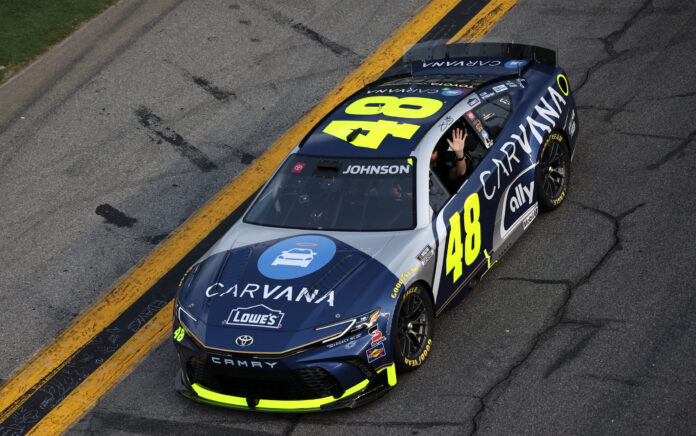
DAYTONA BEACH, FLORIDA - AUGUST 29: Legacy Motor Club unveiled the # 48 Carvana Toyota driven by Jimmie Johnson prior to the NASCAR Cup Series Coke Zero Sugar 400 at Daytona International Speedway on August 29, 2026 in Daytona Beach, Florida. (Photo by James Gilbert/Getty Images)
TOYOTA RACING – Jimmie Johnson NASCAR Cup Series Quotes
DAYTONA BEACH, Fla. (August 28, 2026) – Prior to Saturday’s NASCAR Cup Series race at Daytona International Speedway, LEGACY MOTOR CLUB driver Jimmie Johnson debuted the paint scheme for the No. 48 Toyota Camry XSE that he will run in the 2027 Daytona 500.
JIMMIE JOHNSON
What emotions did you have debuting the paint scheme that you’ll run in the 2027 Daytona 500 tonight in Daytona?
“It was neat. As I drove down pit lane the remaining pit stalls – there were probably 10 or 15 stalls – all the teams were coming off the wall and showing their support which was completely unexpected. I saw my little brother at the end of pit lane, he works for Monster Energy, and he was down at the end losing his mind. My daughter was able to ride in the car, and my dad was able to pull off the tarp so a lot of great emotions. And the fans in the stands were pumped as well.”
What does it mean to you to have all your longtime sponsors and the iconic No. 48 for your final NASCAR race?
“When I first called Rick (Hendrick) about the idea he was in immediately. I still knew there was a lot of work to be done with Lowe’s, Ally, Carvana and all these pieces and how it would play out. But Mr. Hendrick’s commitment to speak to everyone at Lowe’s, looping in our existing partners and obviously Toyota’s support – once the snowballs started rolling, it all came together. The neat thing is we’ve got a lot of time between now and the Daytona 500 to continue to amplify this opportunity.”
You mentioned Toyota, what does it mean to you to be able to drive in a Toyota Camry for your final NASCAR race?
“It’s extremely special for me to wear the Toyota badge in my final race. Toyota’s commitment to our race team, the deep bond and relationships we’ve created and how important we are to their motorsports program, it’s a nice full circle moment to be able to bring this all together in a Toyota Camry. And honestly, I’m grateful for their willingness to do this scheme and look that was with a different OEM, but once again they’re great people. They get it, they understand and they want what’s best for the fans and what the fans what to see. They’ve been fully supportive since day one.”
About Toyota
Toyota (NYSE:TM) has been a part of the cultural fabric in North America for nearly 70 years, and is committed to advancing sustainable, next-generation mobility through our Toyota and Lexus brands, plus our more than 1,800 dealerships.
Toyota directly employs nearly 64,000 people in North America who have contributed to the design, engineering, and assembly of over 50 million cars and trucks at our 14 manufacturing plants. In 2025, Toyota’s plant in North Carolina began to assemble automotive batteries for electrified vehicles.
Carvana, Lowe’s and Ally come together on a one-of-a-kind tribute honoring Johnson’s past, present and the road ahead
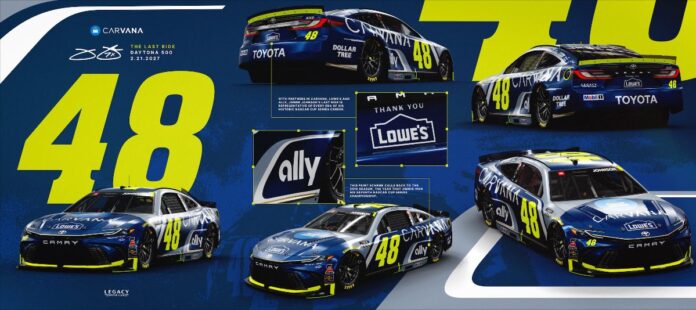
DAYTONA BEACH, Fla. | AUGUST 29, 2026 — LEGACY MOTOR CLUB and owner Jimmie Johnson today unveiled the No. 48 Toyota Camry XSE he will drive in the 2027 DAYTONA 500, bringing together Carvana, Lowe’s and Ally on the car for the final NASCAR Cup Series start of his legendary career.
Johnson gave fans their first look at the car during the Coke Zero 400 pre-race show, then climbed behind the wheel of the No. 48 for a ceremonial lap around Daytona International Speedway. The moment offered a preview of his final Cup Series start, scheduled for Feb. 21, 2027, in the 69th running of the DAYTONA 500.
The unveiling followed Johnson’s July 26 announcement that Rick Hendrick, Hendrick Motorsports and Ally Financial had agreed to loan LEGACY MOTOR CLUB the Hendrick Motorsports stylized No. 48 car number for his farewell race.
Revealed at Daytona International Speedway, the special paint scheme celebrates the people, partners and defining chapters behind one of the most accomplished careers in American motorsports. The design connects Johnson’s record-setting history with Lowe’s, his final full-time Cup Series seasons with Ally, and the next chapter of his racing career and team ownership journey with Carvana.
Lowe’s served as Johnson’s primary partner throughout his full-time tenure at Hendrick Motorsports from 2001 through 2018, sharing in all seven championships and 83 Cup Series victories during one of the sport’s most successful partnerships. Ally became Johnson’s primary sponsor for the 2019 and 2020 seasons, including his final full-time Cup campaign. Carvana partnered with Johnson during his move to INDYCAR and has continued its relationship through his return to NASCAR competition and ownership role at LEGACY MOTOR CLUB.
“Seeing this car for the first time brings back a lifetime of memories. Lowe’s was there for the foundation of my Cup career and so many of its greatest moments. Ally supported me through my final full-time seasons and helped make it possible for the 48 to return for this race. Carvana believed in what came next and has continued to support my journey as a driver and team owner. To have all three represented on this car is incredibly meaningful. It honors where I’ve been, the relationships that made it possible and the people who are still beside me for one last ride,” said Johnson.
The No. 48 is synonymous with Johnson’s Hall of Fame career. Together, Johnson and the No. 48 Hendrick Motorsports team won a record-tying seven NASCAR Cup Series championships, including an unprecedented five consecutive titles from 2006 through 2010, and earned 83 points-paying Cup Series victories. Those wins included the DAYTONA 500 in 2006 and 2013.
“Jimmie has been an incredible partner and friend to Carvana, and it’s a privilege to be alongside him for the final start of his NASCAR career,” said Ryan Keeton, Carvana Co-Founder and Chief Brand Officer. “Bringing Carvana, Lowe’s, and Ally together on the iconic No. 48 is a fitting tribute to Jimmie’s incredible legacy and everything he’s meant to this sport. We’re proud to play a part in giving Jimmie and his fans one more unforgettable moment.”
“Jimmie will always hold a special place in Lowe’s history and in the hearts of the associates, customers and fans who cheered on the No. 48 for nearly two decades,” said Marvin Ellison, Lowe’s chairman and CEO. “Our associates took tremendous pride in Team Lowe’s Racing and everything Jimmie accomplished — from 83 wins and seven championships to the meaningful work he did with Lowe’s in communities across the country. We’re grateful to have been part of his remarkable journey, and it’s an honor to be along for his final ride at Daytona.”
“Jimmie transformed the 48 into an icon of excellence and became an indelible part of the Ally family, so we knew this final ride would be special for him and so many others,” said Andrea Brimmer, Chief Marketing and PR Officer at Ally Financial. “It’s rewarding to see how fans are responding already and the way all three brands who played distinct roles in Jimmie’s racing journey are collaborating to bring it to life. This will be an historic moment that Ally is proud to be a part of, and we’re looking forward to the road ahead.”
Merchandise, to include the pre-sale of diecast replicas, will be immediately available trackside at Daytona and on www.LEGACYMOTORCLUB.com.
For Johnson, whose personal philosophy has become “Never Stop Starting,” the unveiling is more than a tribute. It is the first tangible glimpse of one final start in the number that defined his career — and a celebration of the partners, teammates and fans who helped build everything it represents.
ABOUT LEGACY MOTOR CLUB: (LEGACY MC) is a premier auto racing organization owned by seven-time NASCAR Cup Series champion and 2024 NASCAR Hall of Fame inductee, Jimmie Johnson and Knighthead Capital Management, LLC. Drawing from a rich tradition of success, LEGACY MC is dedicated to pushing the boundaries of motorsport and setting new standards of excellence. The CLUB competes under the Toyota Racing banner in the NASCAR Cup Series with the No. 43 Toyota Camry XSE piloted by Erik Jones and the No. 42 Toyota Camry XSE driven by John Hunter Nemechek. Johnson also races on a limited basis in the No. 84 Toyota Camry XSE. With NASCAR legend and Hall of Famer Richard Petty, “The King”, serving as CLUB Ambassador, LEGACY MC blends timeless racing traditions with a new forward-thinking vision. As an inclusive community for motorsport enthusiasts, LEGACY MC honors both its storied past and the promising future of its members, always striving for victory and championship glory at the pinnacle of NASCAR competition.
ABOUT CARVANA: Carvana’s mission is to change the way people buy and sell cars. Since launching in 2013, Carvana has revolutionized automotive retail and delighted millions of customers with an offering that is fun, fast, and fair. With Carvana, customers can find a car, get financing, trade in, and complete a purchase entirely online with the convenience of delivery or local pickup as soon as the same day. Carvana’s unique offering is powered by its passionate team, differentiated national infrastructure, and purpose-built technology.
ABOUT LOWE’S: Lowe’s Companies, Inc. (NYSE: LOW) is a FORTUNE® 100 home improvement company with total fiscal 2025 sales of more than $86 billion. Lowe’s employs approximately 300,000 associates and operates over 1,750 home improvement stores, 540 branches and 120 distribution centers. Lowe’s is a core value S&P 500 equity stock and a dividend aristocrat. Based in Mooresville, N.C., Lowe’s supports the communities it serves through programs focused on creating safe, affordable housing, improving community spaces, helping to develop the next generation of skilled trade experts and providing disaster relief to communities in need. For more information, visit Lowes.com.
Riley Herbst will not be competing in the 2026 Coke Zero Sugar 400 at Daytona International Speedway on Saturday, August 29.
Herbst’s decision not to compete was due to the Las Vegas native experiencing lingering effects from last weekend’s incident at New Hampshire Motor Speedway, an incident that also involved Connor Zilisch ramming into Herbst’s wrecked entry after the latter was bumped by Michael McDowell exiting the backstretch on Lap 225 of 301.
Just a day prior, Herbst qualified in fifth place for Saturday night’s regular-season finale of the 2026 NASCAR Cup Series season at the World Center of Racing. Herbst is currently ranked in 26th place in the 2026 standings on the strength of three top-10 results, five laps led and an average-finishing result of 22.2.
Through a released statement by 23XI Racing, the organization noted that it was in the best interest of itself and Herbst for the latter not to compete. As a result, Harrison Burton will pilot 23XI Racing’s No. 35 Toyota Camry XSE entry.
Burton, a full-time O’Reilly Auto Parts Series competitor for Sam Hunt Racing, will compete alongside teammates Corey Heim, Tyler Reddick and Bubba Wallace. Saturday night’s event at Daytona is scheduled to mark his 110th career start in the Cup Series division and first since the 2024 finale at Phoenix Raceway.
The 2026 Coke Zero Sugar 400 at Daytona International Speedway is scheduled to commence on Saturday, Augst 29, at 7:30 p.m. ET on NBC, MRN Radio, SiriusXM and HBO MAX.
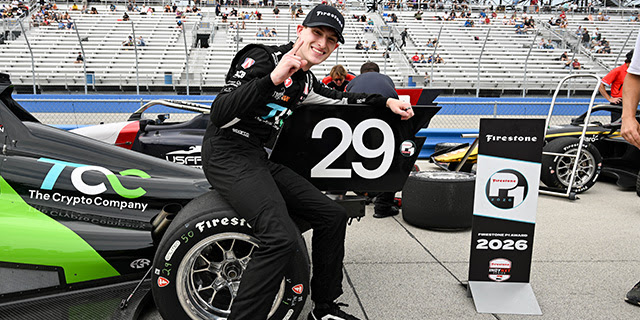
WEST ALLIS, Wis. (Saturday, Aug. 29, 2026) – On a day of agony for two of the three INDY NXT by Firestone title contenders, Josh Pierson found ecstasy by earning his first career pole in the INDYCAR development series Saturday at the Milwaukee Mile.
Pierson, in his third full INDY NXT season and fourth overall, produced the fastest two-lap average qualifying speed on the historic 1.015-mile oval at 153.434 mph in the No. 29 Starchive Andretti car of Andretti Global. That’s a series track record for a two-lap average qualifying speed, breaking the mark of 152.639 set last year by Dennis Hauger.
The breakthrough pole came for Pierson in his 52nd career start in the series after he was a disappointing 11th in practice this morning. His previous best qualifying spot was third, recorded five times, including in May for the second race of the doubleheader at the Indianapolis Motor Speedway road course.
“Finally,” Pierson said. “It’s such a relief. For me, I feel like it’s just always been a little bit, I’m always just lacking something. And to finally break through means the world to me. I owe it all to this crew, everyone on this 29 car.
“In practice, we kind of struggled. We really had to shake things up and try something with the car, and I’m really happy where things turned out.”
The 90-lap race starts at 11 a.m. ET Sunday (FS1, FOX One, INDYCAR Radio powered by OnlyBulls).
Rookie Tymek Kucharczyk was the only one of the three main title contenders to find speed in qualifying, ending up second at 153.382 in the No. 71 HMD Motorsports car. Kucharczyk is third in the standings, 18 points behind leader Enzo Fittipaldi and 17 behind second-place Nikita Johnson with three races remaining this season.
Fittipaldi qualified seventh at 152.336 in the No. 67 HMD Motorsports machine. Johnson struggled even more, qualifying a season-worst 15th at 151.350 in the No. 21 Cape Motorsports Powered by ECR car.
Rookie Jack Beeton backed up the speed that helped him lead practice this morning by qualifying third at 153.280 in the No. 45 HMD Motorsports car, tying his career-best starting spot. Niels Koolen continued his second-half upswing by qualifying a career-best fourth at 153.094 in the No. 10 Chip Ganassi Racing car.
JM Correa qualified fifth at 152.852 in the No. 68 Cusick Morgan Motorsports entry, while Max Taylor took the sixth spot at 152.747 in the No. 28 Susan G. Komen car of Andretti Global.
Two drivers made wall contact during qualifying.
James Roe did a half-spin exiting Turn 2 and hit the SAFER Barrier with the left side of the No. 8 Chip Ganassi Racing car. Alessandro de Tullio slapped the right side of his No. 14 AJ Foyt Racing entry in Turn 2 on his second lap, ending his run. Neither driver was hurt, and both cars suffered moderate damage.
It was a case of “what if?” for de Tullio, seeking to tie the series record with his ninth pole this season. His first lap of 154.231 was quicker than Mark Hotchkis’ 30-year-old track record for one lap in INDY NXT and appeared to set the table for a record-tying pole before his car slammed the wall on his second lap.
Tristan McKee (No. 77 Zeigler.com Chevrolet) scored his third ARCA Menards Series victory of the season in Friday’s Atlas 200 at Madison International Speedway. McKee, who led 105 laps, traded the lead with rival Max Reaves (No. 18 Cook Out / Victory Junction Gang Camp Toyota, who led the other 95, throughout the middle stages of the race and then held off his Pinnacle Racing Group teammate Carson Brown (No. 28 Grizzly Coolers Chevrolet) over three late-race restarts to secure the victory.
Brown finished second to give PRG the organization’s fourth 1-2 finish of the season. Brown won at Phoenix Raceway with McKee in second, Connor Mosack won at Chicagoland Speedway with Lanie Buice in second, and McKee won at Iowa two races ago with Brown in second.
After winning at Madison in 2025, Reaves finished in third, his sixth top-five finish in ten starts this season.
ARCA Menards Series championship points leader Jake Bollman (No. 20 Nitro Motorsports Toyota) finished fourth while his main rival for the title Thomas Annunziata (No. 70 JBL Audio Toyota) finished fifth, unofficially giving Bollman a five-point lead in the standings with four races remaining.
Isaac Kitzmiller (No. 79 A.L.L. Construction / Carter CAT Chevrolet) traded paint with Annunziata several times over the final laps but was forced to settle for sixth at the finish.
Isabella Robusto (Np.55 Mobil 1 Toyota) recovered from an early spin that brought out the first caution flag of the night at lap 17 that left her two laps down to finish in seventh on the lead lap. Robusto stayed out at the first scheduled race break of the night to regain one of those laps, and then was able to stay as the first car one lap down until the second break which allowed her to return to the lead lap.
Will Robinson (No. 25 Mander Collision and Glass Toyota) recovered from a mid-race spin and an unscheduled pit stop in the final 50 laps to finish in eighth, his second top-ten finish of the season. He finish seventh in his series debut earlier this season at Berlin Raceway.
Jason Kitzmiller (No. 97 A.L.L. Construction / Carter CAT Chevrolet) finished ninth and Tony Cosentino (No. 10 Fast Track Racing Ford) rounded out the top ten.
There were six caution flags for 33 laps.
McKee’s margin of victory was 1.046 seconds.
The next race for the ARCA Menards Series is the Audubon Park 100 at the DuQuoin State Fairgrounds on Sunday, September 7. The race, set to begin at 8:30 pm ET / 7:30 pm CT, will be televised live on FS1. ARCARacing.com will have live timing & scoring data throughout all on-track activity and live race audio. Follow @ARCA_Racing on X (formerly Twitter) for up-to-the-minute updates.
About ARCA The Automobile Racing Club of America (ARCA), founded in 1953 by John and Mildred Marcum in Toledo, Ohio, and acquired by NASCAR in April 2018, is the leading grassroots stock car sanctioning body in the United States. Bridging the gap between NASCAR’s top three national touring series and weekly and regional tour racing all across the country, the organization to sanctions over 100 races per year in the ARCA Menards Series, ARCA Menards Series East, ARCA Menards Series West, ASA STARS National Tour, ASA CRA Super Series, ASA Midwest Tour, ASA Southern Super Series plus weekly racing at Toledo and Flat Rock Speedways. For more information about ARCA visit , or follow ARCA on Facebook (@ARCARacing) and Twitter (@ARCA_Racing). About Menards A family-owned and run company started in 1958, Menards is recognized as the retail home center leader of the Midwest with 236 stores in 15 states. Menards is truly a one-stop shop for all of your home improvement needs featuring a full-service lumberyard and everything you need to plan a renovation or build a home, garage, cabin, shed, deck, fence or post frame building. You’ll find a large selection of lumber, roofing, siding, construction blocks, trusses, doors and windows, plus cabinets, appliances, countertops, flooring, lighting, paint, plumbing supplies and more. To complete the job, Menards has quality hand tools, power tools, fasteners, electrical tools plus storage options and supplies for everyone from the weekend warrior to the pro!
Menards has what you need to complete your outdoor projects and keep your yard in tip-top shape including mowers, trimmers, blowers, pressure washers and more, plus a beautiful garden center stocked with plants, shrubs, trees, landscaping tools, grass seed, fertilizer options, outdoor décor and patio furniture. Menards also has everyday essentials like health & beauty products, housewares, pet and wildlife supplies, automotive items and even groceries. And at Christmas, an Enchanted Forest display area with impressive trees, lighting, decorations, ornaments, inflatables and more.
Menards is known for friendly Customer Service and as the place to “Save Big Money” with low prices every day, and sales too! For more information, please visit Menards.com to learn about our store locations, offerings and services.
Jones Scores Top-Five Finish in Regular Season Finale at Daytona
Joe Gibbs Racing Teammates Taylor Gray and Brandon Jones Qualify for Chase Field
DAYTONA BEACH, Fla. (August 28, 2026) – Brandon Jones was the top-finishing Toyota with a fifth-place result in Friday’s NASCAR O’Reilly Auto Parts Series (NOAPS) race at Daytona International Speedway. Harrison Burton joined Jones in the top 10 with an eighth-place finish at the 2.5-mile Florida superspeedway.
Taylor Gray joins Jones in the 10-driver Chase field, who will compete for the NOAPS championship in the final nine races of the season.
TOYOTA RACING Post-Race Recap NASCAR O’Reilly Auto Parts Series (NOAPS) Daytona International Speedway Race 24 of 33 – 250 miles, 100 laps
TOYOTA FINISHING POSITIONS
1st, Ryan Sieg* 2nd, Austin Hill* 3rd, Carson Kvapil* 4th, Anthony Alfredo* 5th, BRANDON JONES 8th, HARRISON BURTON 26th, TAYLOR GRAY 27th, DEAN THOMPSON 35th, BRENT CREWS 37th, WILLIAM SAWALICH *non-Toyota driver
TOYOTA QUOTES
BRANDON JONES, No. 20 Menards/Sylvania Toyota GR Supra, Joe Gibbs Racing
Finishing Position: 5th
What is your reaction getting out of here with a top-five and making the Chase field?
“I want to first start by thanking Sylvania, Barracuda Pumps and Menards for an awesome season up to this point. I think today was even a really good way to kind of cap the regular season off. It’s a lot of momentum to be able to finish top five here at this track and even got stage points throughout the day too. I know it wasn’t higher than we kind of wanted to, but still, just executed the day really well. I think we kind of majorly did what we needed to do aside from go win the race. But a top five any day is really strong here. So, I hate our other two didn’t make it, but cool to see the 54 (Taylor Gray) as well get in. But now onward and forward. We’ve got a lot of really good tracks in this Chase that benefit this 20 team specifically a lot. I’m excited. We’re kicking it off with Darlington, where we’ve been so strong before and had multiple wins and a few poles. It’s nice to go in there with a lot of confidence, knowing exactly how to get it done at that racetrack.”
TAYLOR GRAY, No. 54 Homes For Our Troops Toyota GR Supra, Joe Gibbs Racing
Finishing Position: 26th
Is making the Chase the biggest positive you’ve had this season after a trying year?
“Yeah, first of all thank you to everyone at Joe Gibbs Racing and Toyota Racing. We had Home For Our Troops on the car and they are here this weekend. We had a great race car today and it sucks because I wish I could’ve challenged and fought for a better position – a top five or whatever it may be. Just once we got past that stage 2 the bigger picture got a bit brighter. To answer your question, yeah, I think it does. We’ve had a lot of speed this year and shame on me for putting us in this position going into Daytona. We could’ve won a handful of races that I’ve given up, and I’ve tried to learn a lot.”
BRENT CREWS, No. 19 Yahoo Toyota GR Supra, Joe Gibbs Racing
Finishing Position: 35th
How frustrating was it to not even have a shot at the Chase after being involved in an early incident?
“Yeah, it’s definitely frustrating, but ultimately, I put myself in that position when I cost us 20 points at Iowa. So, it goes back to all the ifs and what’s and buts, but I know it happened for a reason. This team worked so hard, and I’m so grateful to be in the position that I am with them. It’s amazing having Yahoo on board. I wish we could’ve had a better run for them. I’m grateful for the opportunity, and to drive a great race car. I’m excited to finish out the year strong.”
WILLIAM SAWALICH, No. 18 SoundGear Toyota GR Supra, Joe Gibbs Racing
Finishing Position: 37th
How do you summarize how today’s race ended for you?
“Just tried to make the three wide work there in the top lane and I think the 17 (Corey Day) thought about blocking me and came down and wasn’t clear at the time. I hate it for the team. We worked really hard after Chicagoland to make up the point deficit, I spent a lot of time in the simulator, and it just ended like this.”
About Toyota
Toyota (NYSE:TM) has been a part of the cultural fabric in North America for nearly 70 years, and is committed to advancing sustainable, next-generation mobility through our Toyota and Lexus brands, plus our more than 1,800 dealerships.
Toyota directly employs nearly 64,000 people in North America who have contributed to the design, engineering, and assembly of over 50 million cars and trucks at our 14 manufacturing plants. In 2025, Toyota’s plant in North Carolina began to assemble automotive batteries for electrified vehicles.