
Home Blog Page 61

CHRIS BUESCHER SIGNS MULTIYEAR CONTRACT EXTENSION WITH RFK RACING

Multiyear Extension Keeps Homegrown Talent Behind the Wheel of the No. 17 Ford Mustang Dark Horse

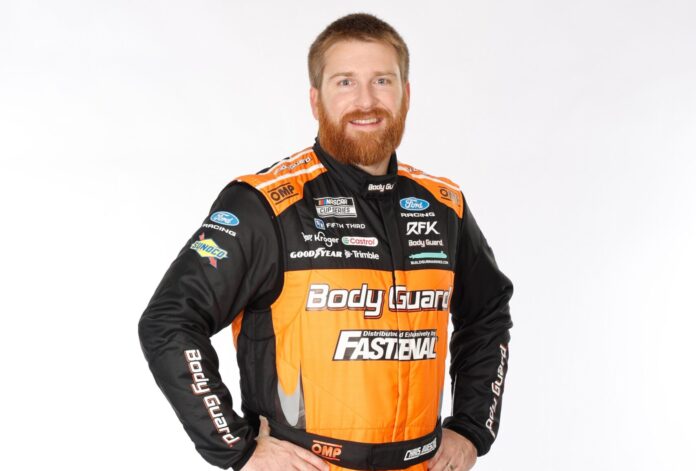
CONCORD, N.C. (June 16, 2026) – Roush Fenway Keselowski (RFK) Racing announced today that Chris Buescher, a 17-year member of the RFK Racing family, has signed a multiyear contract extension to remain the driver of the No. 17 Ford Mustang Dark Horse in the NASCAR Cup Series.

The extension continues a relationship that began nearly two decades ago when Buescher, only a teenager at the time, worked in the race shop and helped with pit practice. By 2009 he traded a wrench for a helmet, becoming part of the team’s driver development program. Buescher quickly established himself as a winner, claiming the 2012 ARCA and 2015 Xfinity Series Championships driving cars owned by Jack Roush and Fenway Sports Group. Buescher credits his unwavering belief in his team and the bright future of RFK Racing for his easy decision to stay home.

“RFK Racing has been home for most of my racing career, and that’s something I don’t take for granted,” Buescher said. “I’ve grown up with this organization, and I’m incredibly proud of what we’ve built together over the last several years. The direction we’re heading, the people we have in place, and the commitment throughout the company make me excited about the future. I’m grateful to Mr. Jack, Brad, Fenway Sports Group and everyone at RFK Racing for their belief in me. I’m looking forward to continuing to chase wins and championships together.”

Buescher is now in his 11th full-time NASCAR Cup Series season. With six wins at the sport’s highest level, he has established himself as one of the garage’s most respected and versatile competitors who has won on short tracks, superspeedways and road courses.

His rise with RFK Racing reached new heights in 2023 when he captured three victories in a five-race stretch at Richmond, Michigan and Daytona, advancing to the Round of 12 in the NASCAR Cup Series Playoffs and recording a career-best seventh-place finish in the championship standings. The breakout campaign earned him NASCAR’s Most Improved Driver honor as voted on by fans.

Buescher followed that effort with another memorable season in 2024, highlighted by a dramatic victory at Watkins Glen International, where he executed a last-lap pass to secure his first career road-course win. In 2025, he continued to showcase his trademark consistency, posting a 14.3 average finish – sixth-best among all Cup Series drivers.

“Chris has been part of this organization for most of his professional career, and there is a tremendous amount of pride in seeing what he has become,” said team founder and co-owner Jack Roush. “He is an exceptional driver, but just as importantly, he is the kind of person who makes our organization stronger. His work ethic, intelligence and commitment to our success have earned the respect of everyone at RFK Racing, and we’re proud that his story with us will continue.”

“Chris is everything you want in a race car driver and teammate,” added Brad Keselowski, co-owner and driver at RFK Racing. “His talent behind the wheel speaks for itself, but what really separates him is his professionalism, preparation and commitment to making everyone around him better. He’s been instrumental in the progress we’ve made as an organization, and we’re excited to continue building toward our goals together.”

The extension represents another significant investment in RFK Racing’s future. With Buescher currently 7th in the NASCAR Cup Series standings and the No. 17 team firmly established as a championship contender, the agreement secures one of the team’s foundational leaders for years to come.

“Chris has been a driving force behind progress we’ve made as an organization over the last several seasons,” said RFK Racing President Chip Bowers. “He is one of the most respected competitors in our sport; his consistency, leadership, and commitment to excellence help set the standard for the organization. Securing Chris for the long term reinforces our belief in where this organization is headed and our commitment to competing for race wins and championships for years to come.”

This extension underscores RFK Racing’s mantra of being bold, aggressive, and committed as the team continues to invest in its future and strengthen its standing as one of NASCAR’s premier organizations. With Buescher, Keselowski and Ryan Preece leading its efforts on track, RFK Racing remains focused on relentlessly competing for the NASCAR Cup Series championship.

About RFK Racing 

RFK Racing, in its 39th season in 2026, features an ownership lineup pairing one of the sport’s most iconic names, Jack Roush, along with NASCAR Champion, Brad Keselowski, and Fenway Sports Group owner John Henry. Roush initially founded the team in 1988, and it has since become one of the most successful racing operations in the world, propelling him to be the first NASCAR owner to amass three hundred wins and capturing eight championships, including back-to-back NASCAR Cup titles in 2003 and 2004. Keselowski, a former owner in the NASCAR Truck Series, is the 2012 NASCAR Cup Series Champion. In 2007, Roush partnered with Henry, who also owns Major League Baseball’s Boston Red Sox, English Premier League’s Liverpool F.C., and the NHL’s Pittsburgh Penguins, to form Roush Fenway Racing. Off the track, RFK is a leader and proven winner in NASCAR marketing solutions, having produced multiple award-winning social media, digital content and experiential marketing campaigns. Visit https://www.rfkracing.com/ and follow the team on all social platforms @rfkracing.
LEGACY MOTOR CLUB ANNOUNCES MAYER AS OFFICIAL PARTNER FOR 2027 NASCAR CUP SERIES SEASON

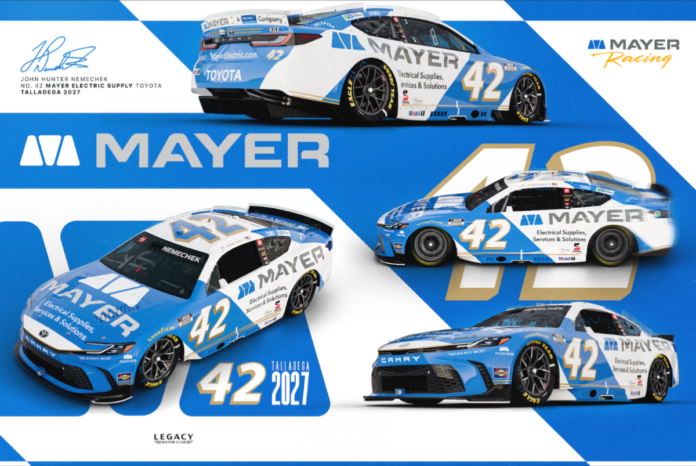
Mayer will serve as primary partner on the No. 42 Toyota Camry XSE of John Hunter Nemechek at Talladega Superspeedway

STATESVILLE, N.C. (June 16, 2026) – LEGACY MOTOR CLUB announced today a new partnership with Mayer, a leading distributor of electrical products and solutions, for the 2027 NASCAR Cup Series season. The partnership builds on LEGACY’s existing relationship with Rexel USA, Mayer’s parent company, bringing another trusted brand from the Rexel family into the fold.

Mayer will serve as the primary partner on the No. 42 Toyota Camry XSE — driven by John Hunter Nemechek — at Talladega Superspeedway in October 2027. The race holds special significance for Mayer, whose roots run deep in the surrounding region.

“Mayer has spent nearly a century earning the trust of its customers, and that kind of track record means something,” said Jimmie Johnson, co-owner of LEGACY MOTOR CLUB. “Bringing them to Talladega — one of the most storied tracks in this sport — is the right stage for this partnership. We’re proud to have Mayer on the No. 42 and excited to keep building on what we’ve already started with the Rexel family.”

Mayer has served contractors, industrial customers, and utility clients across the Southeast for nearly 100 years. The announcement marks the latest step in the growing relationship between LEGACY MOTOR CLUB and Rexel USA, which first came together ahead of the 2026 season.

“This is a natural extension of our partnership with LEGACY MOTOR CLUB,” said Roger Little, CEO, Rexel USA. “Mayer has nearly 100 years of being the first choice for its customers and bringing it to the track is a great way to showcase a trusted brand that continues to grow and expand.”

“Talladega is an iconic track just down the road from Mayer’s roots, which makes this especially meaningful for our team,” said Pat Daley, President, Mayer. “Seeing the Mayer and LEGACY MOTOR CLUB car race there with John Hunter Nemechek behind the wheel is a real source of pride and a great way to showcase the strength and momentum of the Mayer brand.”

“Talladega brings out the best in everybody, and having a brand like Mayer on the car there makes it even more special,” said John Hunter Nemechek. “Mayer has been around for a long time and earned everything they have. To represent that kind of brand at a track with that kind of history — that’s something I’m genuinely proud of.”

The partnership will come to life through primary placement on the No. 42 Toyota Camry XSE at Talladega Superspeedway, with additional branded content across LEGACY MOTOR CLUB’s platforms throughout the season.

ABOUT LEGACY MOTOR CLUB: (LEGACY MC) is a premier auto racing organization owned by seven-time NASCAR Cup Series champion and 2024 NASCAR Hall of Fame inductee, Jimmie Johnson and Knighthead Capital Management, LLC. Drawing from a rich tradition of success, LEGACY MC is dedicated to pushing the boundaries of motorsport and setting new standards of excellence. The CLUB competes under the Toyota Racing banner in the NASCAR Cup Series with the No. 43 Toyota Camry XSE piloted by Erik Jones and the No. 42 Toyota Camry XSE driven by John Hunter Nemechek. Johnson also races on a limited basis in the No. 84 Toyota Camry XSE. With NASCAR legend and Hall of Famer Richard Petty, “The King”, serving as CLUB Ambassador, LEGACY MC blends timeless racing traditions with a new forward-thinking vision. As an inclusive community for motorsport enthusiasts, LEGACY MC honors both its storied past and the promising future of its members, always striving for victory and championship glory at the pinnacle of NASCAR competition.

ABOUT MAYER: Mayer, a Rexel USA banner company, is one of the nation’s leading distributors of electrical products and equipment, including connected solutions, lighting, datacom technologies, power distribution, and automation and controls systems. With more than 60 branches in the United States, Mayer serves a broad range of customers including contractors, industrial customers, OEMs, integrators, healthcare organizations, institutions, data centers, government entities, utility providers, commercial businesses and residential customers.

Classic Collision Returns To Spire Motorsports For Two Races In 2026

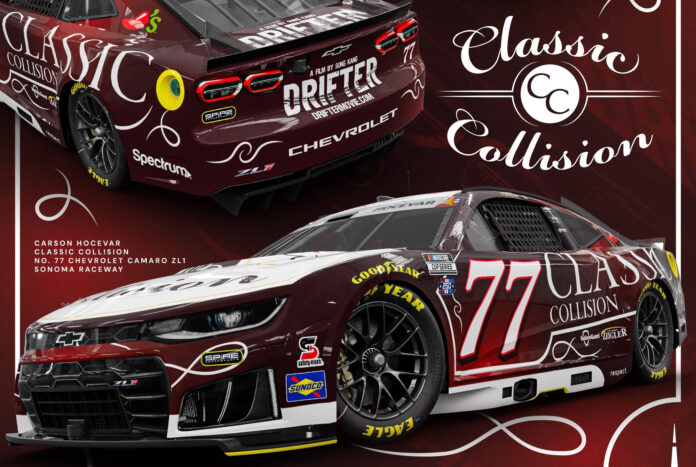
MOORESVILLE, N.C. (June 15, 2026) – Classic Collision, one of the largest privately held auto body repair providers in the U.S., will return to Spire Motorsports in 2026 and serve as the primary sponsor aboard Carson Hocevar’s No. 77 Chevrolet Camaro ZL1 for pair of NASCAR Cup Series races including the division’s annual June visit to Sonoma Calif., and October’s trip to Phoenix Raceway.

With a skilled team and unwavering standards, Classic Collison delivers exceptional service to its customers and partners. As one of the largest privately held auto body repair providers in the U.S., Classic Collision operates 350 state-of-the-art facilities nationwide.

Last October, Hocevar showcased a Classic Collision Paint Scheme at Las Vegas Motor Speedway and consistently raced inside the top 15 for much of the 400-mile affair until being collected in a multi-car incident in the late goings, leaving him deep in the field when the checkered flag flew.

Hocevar registered his first-career NASCAR Cup Series victory this April at Talladega (Ala.) Superspeedway where he survived a host of cautions and a late-race restart with just three laps remaining to collect the checkered flag. He became the 13th driver to earn his inaugural Cup Series win at the famed 2.66-mile tri-oval and registered Spire Motorsports’ first victory since the 2019 Coke Zero Sugar 400 at Daytona (Fla.) International Speedway.

Through 16 races, the 23-year-old driver sits ninth in points, just one marker behind Spire Motorsports teammate Daniel Suárez in eighth. His one win, four top fives, seven top 10s, 450 points scored, average starting position of 11.9 and 14.6 average finish are all career highs through the first 16 points-paying races of the 2026 season.

“I am excited to run it back with Classic Collision,” said Hocevar. “I have grown really close with Toan, and everyone from Classic Collision treats me like family. I’m thrilled to see the relationship grow and to fly those colors at Sonoma and Phoenix. It’s been an incredible start to the season for Spire Motorsports and our No. 77 team. Hopefully, we can reward everyone at Classic Collision with a couple good runs.”

Hocevar has a pair of starts in NASCAR’s premier division at Sonoma Raceway where he logged a venue-best 17th-place finish during his 2024 rookie-of-the-year campaign. He won the pole for the CRAFTSMAN Truck Series’ 2022 visit to the popular northern California roadcourse and notched a respectable sixth-place finish.

Phoenix has proven to be a bit of an Achilles Heel for the third-year Cup Series regular where he looks to improve upon his 22.7 average finish.

“The road courses haven’t been my strongest, but we ran decent last year and I’ve been working on improving my skills for this type of race,” added Hocevar. “Hopefully, we can give everyone at Classic Collision a great showing at both Sonoma and Phoenix and can bring home the results to go with it.”

The NASCAR Cup Series annual visit to Somona Raceway will be televised live on TNT, Sunday, June 28 beginning at 3:30 p.m. Eastern Daylight Time. The 18th of 36 points-paying races on the 2026 calendar will be broadcast live on the Performance Racing Network and SiriusXM NASCAR Radio Channel 90.

About Classic Collision …
Classic Collision, founded in 1983 in Atlanta, Georgia, is built on a foundation of quality, integrity, and honesty. With a skilled team and unwavering standards, Classic Collison delivers exceptional service to its customers and partners. As one of the largest privately held auto body repair providers in the U.S., Classic Collision operates 350 state-of-the-art facilities nationwide. For over 40 years, safety has been our top priority. Our highly trained technicians, cutting-edge equipment, and manufacturer certifications make us a leader in collision repair.

Classic Collision is always seeking opportunities to expand its network by adding new collision repair locations and automotive glass businesses. We are also exploring expansion into new markets across the U.S. If you’re considering selling your business, visit www.classiccollision.com/join/ to start a confidential discussion today.

About Spire Motorsports …
Spire Motorsports fields full-time entries in the NASCAR Cup Series, NASCAR CRAFTSMAN Truck Series and Interstate Batteries High Limit Racing.

The team, co-owned by longtime NASCAR industry executive Jeff Dickerson and TWG Motorsports CEO Dan Towriss earned its inaugural NASCAR Cup Series victory in its first full season of competition when Justin Haley took the checkered flag in the Coke Zero Sugar 400 at Daytona (Fla.) International Speedway July 7, 2019. Less than three years later, William Byron drove Spire Motorsports’ No. 7 Chevrolet Silverado its first NASCAR CRAFTSMAN Truck Series win April 7, 2022, at Martinsville (Va.) Speedway. The team’s most recent victory came May 24, 2026, when Daniel Suárez won the NASCAR Cup Series’ Coca-Cola 600 at Charlotte (N.C.) Motor Speedway.  

In 2026, Spire Motorsports campaigns the Nos. 7, 71 and 77 Chevrolet Camaro ZL1s in the NASCAR Cup Series and the Nos. 7 and 77 Chevrolet Silverado RSTs in the NASCAR CRAFTSMAN Truck Series. The Mooresville, N.C., organization also fields the No. 77 410 sprint car in Interstate Batteries High Limit Racing competition.

Why Flexibility Is Driving the Modern Automotive Market

Photo by depositphotos at https://depositphotos.com/

The automotive industry has always evolved alongside changing consumer needs, but few trends have become as influential in recent years as flexibility.

Whether it’s the way people finance vehicles, purchase commercial vans, or manage their transportation requirements, today’s buyers are looking for solutions that fit their individual circumstances rather than one-size-fits-all options.

Economic pressures, changing working patterns and advancements in digital technology have all contributed to a shift in consumer expectations. As a result, dealerships and finance providers are adapting to meet the demands of a more diverse and informed market.

From flexible finance solutions to growing demand for commercial vehicles, the automotive sector is entering a new era where accessibility and convenience are becoming key drivers of purchasing decisions.

The Changing Face of Vehicle Ownership

Vehicle ownership looks very different today than it did a decade ago.

Consumers now have access to more information than ever before. Online vehicle marketplaces, finance comparison tools and digital dealership platforms allow buyers to research options thoroughly before making a purchase.

At the same time, financial circumstances vary significantly between individuals. While some buyers can purchase vehicles outright, many rely on finance solutions to spread costs and access vehicles that meet their needs.

This has led to growing demand for finance products that accommodate a wider range of customer circumstances.

Rather than focusing solely on credit scores, many lenders now assess affordability and individual situations more holistically, helping more people access vehicle finance opportunities.

Why Vehicle Finance Continues to Grow

Finance has become one of the most important parts of the modern automotive industry.

For many buyers, financing allows them to access newer, safer and more reliable vehicles without requiring a large upfront investment.

The flexibility offered by finance agreements enables customers to manage costs through fixed monthly payments while choosing a vehicle that suits their lifestyle or business requirements.

Importantly, finance solutions are becoming increasingly accessible to a broader range of customers.

Many dealerships now offer bad credit car finance options designed to help individuals who may have experienced financial difficulties in the past. Rather than automatically excluding applicants based on previous credit challenges, specialist lenders often consider a range of factors when assessing eligibility.

This approach helps ensure that vehicle ownership remains achievable for more people while supporting responsible lending practices.

Commercial Vehicles Are Powering Business Growth

While much attention is often focused on passenger vehicles, the commercial vehicle market plays an equally important role in the UK’s automotive sector.

Tradespeople, delivery businesses, contractors and service providers all rely on vans to keep their operations running efficiently.

In recent years, demand for quality used commercial vehicles has remained strong as businesses seek cost-effective ways to expand or replace existing fleet vehicles.

Many small businesses prefer purchasing used vans due to the lower initial investment while still benefiting from modern safety features, fuel efficiency improvements and advanced technology.

For growing businesses, finding the right vehicle can have a direct impact on productivity, operational costs and customer service.

Regional Dealers Continue to Play a Key Role

Despite the growth of online vehicle marketplaces, regional dealerships remain a vital part of the automotive landscape.

Local dealers often provide valuable expertise, personalised service and in-depth knowledge of the vehicles most commonly required by customers in their area.

For commercial vehicle buyers, working with a specialist dealership can offer additional benefits, including tailored advice and access to stock that aligns with specific business needs.

Businesses searching for vans for sale in Lincoln, for example, often value dealerships that understand the needs of local tradespeople, agricultural businesses and commercial operators.

This combination of local knowledge and digital accessibility is helping many independent dealerships compete effectively against larger national retailers.

Technology Is Making the Process Easier

Technology continues to simplify both vehicle purchasing and finance applications.

Modern dealerships now offer:

  • Online vehicle reservations
  • Digital finance applications
  • Soft credit searches
  • Remote vehicle viewings
  • Live chat support
  • Home delivery services

These innovations help reduce friction throughout the buying process while allowing customers to make informed decisions from the comfort of their own homes.

For commercial buyers who may have limited time available during working hours, the ability to research and arrange purchases online has become particularly valuable.

Affordability Remains a Priority

Economic uncertainty has encouraged many consumers and businesses to focus more carefully on affordability.

As fuel costs, insurance premiums and general operating expenses continue to fluctuate, buyers are paying closer attention to overall vehicle value rather than simply the purchase price.

This is one reason why the used vehicle market continues to perform strongly.

Well-maintained used vehicles often provide excellent value while allowing buyers to avoid the significant depreciation associated with new vehicle ownership.

Combined with flexible finance options, used vehicles can offer an attractive solution for both private motorists and businesses.

Looking Ahead

The automotive market will continue evolving as consumer expectations, technology and economic conditions change.

Flexibility is likely to remain one of the most important factors influencing purchasing decisions. Buyers increasingly expect finance solutions that accommodate different circumstances, dealerships that provide digital convenience and vehicles that deliver strong long-term value.

For dealerships, lenders and automotive businesses, success will depend on understanding these changing expectations and adapting accordingly.

Whether supporting customers through flexible finance options or helping businesses find the right commercial vehicles, the automotive sector is becoming more customer-focused than ever before.

As the market continues to develop, those organisations that prioritise accessibility, transparency and convenience will be best positioned to thrive in an increasingly competitive landscape.

How Air Compressors Hire Supports Fast Pit Operations

Even the smallest of errors in pit operations can be costly. It’s true for construction crews running tools between shifts. It’s also true for motorsport teams executing a tire change. The equipment behind the operation is what determines its speed. It means that the entire workflow slows down with an underperforming compressed air supply. It becomes worst when the compressor fails entirely.

Enter air compressors hire. It’s a practical move for teams that want fast access to the right equipment. If you want an air compressor that’s properly matched to the job minus the delay that comes with purchasing and having your own, hiring is worth looking at. But how does it support fast pit operations? Read on to learn more.

It Puts the Right Equipment on Site Immediately

One of the biggest time costs in any pit operation isn’t the work itself. It’s waiting on equipment. Air compressors hire eliminates that gap. Rental providers carry a wide range of units ready for same-day or next-day deployment, so teams can get operational fast.

Matching Compressor Type to Pit Conditions

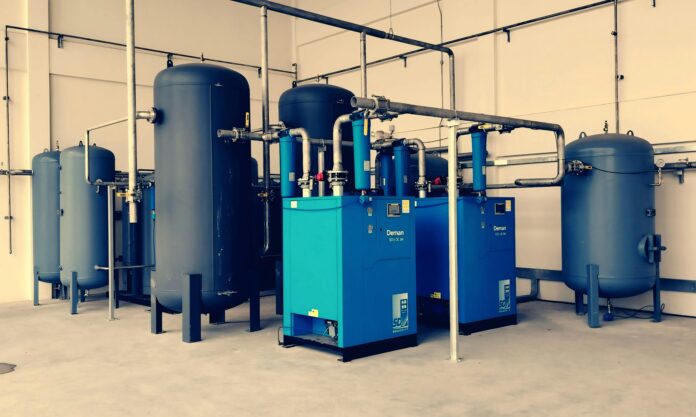
Not every pit environment has the same power source or space setup, and the compressor choice needs to reflect that. A diesel air compressor works well for outdoor or remote pit locations where grid power isn’t available, while an electric air compressor is better suited for enclosed spaces where emissions and noise levels matter. For operations with fluctuating air demand, a variable speed driven compressor adjusts output to match real-time needs, which avoids energy waste during slower periods. Where sustained, high-volume output is the priority, rotary screw compressors deliver consistent performance under continuous load. High-pressure compressors come into play when specific tools or systems require air above standard delivery ranges. Hiring gives teams access to all of these options without committing to a single unit type that may not serve every situation.

It Keeps Pneumatic Tools Running at Full Capacity

Pneumatic tools are the backbone of fast pit work. Impact wrenches, air ratchets, inflation systems, and blowguns all depend on a steady, correctly pressurized air supply to perform at their rated speed. When the compressor undersizes the job, tools slow down, cycle times stretch out, and the pace of the whole operation drops.

A well-matched plant-air solution keeps pressure consistent across every tool on the line throughout the entire operation. That means teams aren’t compensating for weak airflow or dealing with pressure drops during peak tool usage. When air supply stays stable from the first task to the last, pneumatic tools perform at their rated output consistently, and cycle times stay tight across every stage of the pit rotation.

It Removes Downtime Caused by Equipment Failure

Equipment failure mid-operation is one of the most disruptive things that can happen in a pit environment. Owned compressors come with the full responsibility of maintenance, repairs, and sourcing replacement parts, and that burden sits entirely with the operator. Hired equipment shifts a significant portion of that risk to the provider.

Emergency Support as a Built-In Safety Net

Most industrial air compressor rentals come with access to emergency support as part of the hire arrangement. If a unit goes down during a live operation, the provider can dispatch a replacement unit fast, keeping the gap between failure and recovery as short as possible. That response speed is the difference between a brief interruption and a full operational halt.

Remote Monitoring Before Problems Escalate

Many modern hire units include remote monitoring capabilities that track pressure output, temperature, and performance data in real time. Pit managers can spot irregularities before they turn into failures, allowing for a controlled equipment swap rather than an emergency shutdown. For large-scale or multi-station pit setups, this visibility across the operation makes it far easier to maintain consistent output throughout the day.

It Scales With Demand Without Extra Overhead

It Scales With Demand Without Extra Overhead

Pit operations don’t always run at the same intensity. Event-based work, seasonal construction operations, and fluctuating production schedules all create periods where air demand spikes and then drops back down. Owning equipment to cover peak demand means carrying idle assets for the rest of the time.

Just as the right mechanical upgrades can change how a vehicle handles real-world conditions, having the right compressor configuration on hand keeps pit operations running at the level the job demands. Air equipment rentals and leasing options solve this directly. Teams can bring in additional units for high-demand periods and return them when the workload eases, paying only for what they actually use. Modular products available through hire providers make it straightforward to configure a setup that fits the specific scale of the operation, whether that’s a single compressor for a small pit crew or multiple linked units for a larger commercial application or manufacturing facility. The cost savings over time, compared to maintaining owned assets through varying demand cycles, are substantial.

It Delivers Cleaner Air Where Precision Tools Demand It

Not all pit environments treat air quality as a secondary concern. In operations where tools interact with sensitive components, or where contaminated air could compromise a process, the purity of the compressed air supply matters as much as its pressure and volume.

Oil-free air compressors are the right choice in these settings, and hiring makes it easy to bring them in specifically for jobs that require them. Many hire providers offer units that meet ISO 8573-1 standards, which define acceptable levels of particles, water, and oil content in compressed air. This level of air quality control would be difficult to guarantee with general-purpose owned equipment, but through targeted hire, it becomes a manageable part of the compressed air solution.

It Gives Pit Teams a Reliable Support Structure

Speed in a pit operation isn’t just about having equipment present. It’s about having equipment that performs and people behind it who know the machinery well. Hire providers bring technical knowledge to the arrangement from the start, helping operators select the right unit, configure it correctly for the site, and keep it running through the full duration of the hire period.

That relationship covers more than just the initial setup. Ongoing servicing, operator guidance, and access to backup units when demand shifts unexpectedly are all part of what a good hire arrangement includes. For pit teams focused entirely on execution, having that layer of equipment management handled externally keeps attention where it belongs, on the operation itself, not on troubleshooting machinery. When the compressed air side of the job is in capable hands, the team moves faster and with more confidence.

Conclusion

Skilled personnel and efficient operations are crucial for fast pit operations. However, that doesn’t mean one can just disregard equipment supply. Pit teams still need the right compressor type. They need one that’s properly sized for the job and backed by support. The goal is to reduce the risk of downtime, and air compressors hire can deliver just that.

Hiring matches the unit to site conditions and tool demand. It can also help pit teams to scale during operational peaks. Meeting air purity requirements won’t be a problem too. These are things that owned equipment rarely can cover.

Leading Causes of Motorcycle Accidents Every Rider Should Know

Driver error, speeding, road hazards, and impaired riding are the leading causes of motorcycle accidents. Riders who understand these risks are far better positioned to avoid them.

Knoxville sits at the intersection of busy urban corridors and scenic mountain routes like US-129, known as the Tail of the Dragon, making it one of Tennessee’s most active regions for motorcycle traffic. Knox County roads see year-round rider activity, and crash rates here reflect many of the same patterns seen nationally.

If you were hurt in a crash, a motorcycle accident attorney in Knoxville can help you understand your rights under Tennessee law.

Other Drivers Cause Most Motorcycle Crashes

The majority of motorcycle accidents involve another vehicle, and the fault typically lies with the other driver, not the rider. Left-turn collisions, where a car turns directly into a motorcycle’s path, are among the most common and most deadly crash types.

Drivers routinely misjudge motorcycle speed or fail to check blind spots before changing lanes. Under Tennessee Code Annotated 55-8-136, all drivers must exercise due care to avoid colliding with any other vehicle on the road. When that duty is breached, the driver can be held legally liable for the rider’s injuries.

Speeding Leaves No Room for Error

Higher speeds mean shorter reaction times, longer braking distances, and far more severe injuries when a crash does occur. A rider traveling above the posted limit has almost no margin when a car cuts in or a road hazard appears suddenly.

How Speed Raises the Risk

  • Braking distance at 70 mph is nearly double that at 45 mph.
  • Impact force increases exponentially with speed
  • Protective gear loses effectiveness at high-speed impacts.

Adjusting speed to match road and traffic conditions is one of the most direct ways a rider can reduce crash risk.

Unsafe Lane Changes Are a Constant Hazard

A car merging without signaling or checking mirrors gives a motorcycle rider almost no time to react. These side-impact crashes often push riders off the road entirely or into oncoming traffic.

Lane splitting, which is not legal in Tennessee, also increases this risk. Riding between lanes in slow traffic puts a motorcycle directly in the path of any vehicle that shifts position without warning.

Impaired Riding Is Dangerous and Illegal

Alcohol and drugs impair the coordination, judgment, and reaction time that motorcycle riding demands at every moment. Unlike a car, a motorcycle offers no structural protection when a rider loses control.

Tennessee law under TCA 55-10-401 prohibits operating any vehicle while impaired. A rider found at fault due to impairment can face criminal charges and reduced compensation under Tennessee’s comparative fault rules.

Road Hazards Hit Motorcycles Harder Than Cars

Potholes, gravel, wet pavement, and uneven surfaces are manageable in a four-wheeled vehicle but genuinely dangerous on two wheels. A small surface change can destabilize a motorcycle in a fraction of a second.

Road Conditions That Cause Crashes

  • Potholes and pavement gaps at intersections
  • Loose gravel on rural and mountain roads
  • Wet paint markings and metal surfaces in the rain
  • Uneven railroad crossings and bridge expansion joints

When poor road maintenance contributes to a crash, a government body or contractor may carry legal liability under Tennessee road maintenance standards.

Inexperience Increases Crash Risk Significantly

New riders lack the hazard recognition and emergency response skills that come with time on the road. Braking hard in a curve or reacting to a sudden obstacle requires trained instinct, not just awareness.

Tennessee requires a motorcycle endorsement under TCA 55-50-102, and completing a certified safety course before riding independently is one of the most effective ways to reduce early crash risk.

Steps to Take After a Motorcycle Accident

  1. Move to safety and call 911 immediately.
  2. Photograph the scene, vehicle positions, and road conditions
  3. Collect insurance and contact details from every driver involved
  4. Seek medical evaluation even if injuries feel minor at the scene
  5. Avoid giving recorded statements to insurers without legal advice.
  6. Speak with a motorcycle accident attorney before accepting any settlement.

Key Takeaways

  • Driver error, particularly failed left turns, is the leading cause of motorcycle fatalities.
  • TCA 55-8-136 requires all drivers to exercise due care around motorcycles.
  • Speed directly reduces reaction time and worsens injury severity in every crash type.
  • Impaired riding violates TCA 55-10-401 and affects both criminal charges and civil compensation.
  • Road hazards pose significantly greater danger to motorcycles than to passenger vehicles.
  • Tennessee requires a motorcycle endorsement under TCA 55-50-102 before riding legally.
  • Documenting the crash scene thoroughly protects your legal claim from the start.

When Should I File a Truck Accident Claim?

You should file a truck accident claim whenever you meet with an accident, especially if you have suffered injuries, vehicle damage, or financial losses. Though every case is different, waiting too long can make it difficult to recover compensation. 

Let us consider a city like Nashville in Tennessee. It is known for its vibrant music scene, growing economy, and busy transportation routes. Sitting at the crossroads of several major interstate highways such as I-40, I-24, and I-65, it has become one of the busiest transportation hubs in the Southeast. 

With so much truck traffic on the roads, serious collisions are quite common in these areas. This leads to severe injuries and complicated liability issues, encouraging victims to speak with a truck accident attorney in Nashville, TN, to file a claim. The reasons are quite obvious—they help you understand the right options and avoid costly delays. 

File a Claim When You Suffer Physical Injuries

One of the clearest signs that you should file a truck accident claim is when you sustain injuries. Even injuries that initially seem minor can lead to ongoing medical treatment, rehabilitation costs, and missed time from work.

Under Tennessee law, accident victims generally have a limited time to pursue compensation. As evidence of injuries and medical treatment accumulates, filing a claim sooner helps establish a stronger connection between the crash and your damages.

File a Claim When Medical Bills Are Increasing

Truck accidents often result in injuries that require emergency care, surgeries, physical therapy, or long-term treatment. These expenses can quickly become overwhelming.

If the accident has caused you to incur substantial medical costs, filing a claim may help you seek compensation for current and future healthcare expenses. Delaying action could make it more difficult to document the full extent of your losses.

File a Claim When You Miss Work or Lose Income

Many victims are unable to return to work immediately after a crash. Some may face weeks or months of recovery, while others may experience permanent limitations that affect their earning capacity.

If the accident has caused lost wages or reduced income, it may be time to submit a claim. A truck accident lawyer can help calculate both present and future financial losses resulting from the collision.

File a Claim When Liability Is Unclear

Unlike ordinary car accidents, truck crashes often involve multiple potentially responsible parties. Liability may rest with:

  • The truck driver
  • The trucking company
  • A maintenance contractor
  • A cargo loading company
  • A vehicle or parts manufacturer

When a fault is disputed or unclear, taking prompt legal action allows an attorney to investigate before critical evidence or witnesses disappear.

File a Claim Before Statute of Limitations Expires

One of the most important reasons to act quickly is statute of limitations. For example, under Tennessee Code Annotated § 28-3-104, personal injury claims generally must be filed within one year from the date of the accident.

This is one of the shortest filing deadlines in the country. Missing this deadline can result in losing the right to pursue compensation, regardless of how serious the injuries may be.

Because exceptions may apply in certain circumstances, consulting an accident lawyer early is often the safest approach.

File a Claim When the Insurance Company Is Pressuring You

Insurance adjusters may contact accident victims shortly after a crash and encourage them to provide recorded statements or accept quick settlement offers.

In case you are receiving any such pressure, seeking legal representation can help protect your interests. Early settlement offers often fail to account for future medical expenses and long-term financial losses.

Final Thoughts

  • File a truck accident claim when you suffer injuries, property damage, or financial losses.
  • Do not wait if medical bills or lost wages are increasing.
  • Act quickly when a fault is disputed, or multiple parties may be responsible.
  • Tennessee generally allows only one year to file a personal injury lawsuit under T.C.A. § 28-3-104.
  • A truck accident lawyer can help preserve evidence, meet legal deadlines, and pursue fair compensation.

How motorsports mechanics diagnose intermittent problems in a race car

Photo by depositphotos at https://depositphotos.com/

Intermittent problems are the type most frequently cited by motorists and handled with the greatest caution by mechanics. This type of problem would include stalling once, hesitation during acceleration, a temporary loss of power, or a check engine light that comes on and then goes off again by the time of the scheduled appointment. It is this inconsistency that makes the problem harder to diagnose than any other.

For the property manager, facilities manager, or building owner who relies upon his vehicle to function properly and consistently, this type of problem goes beyond mere inconvenience. For a mechanic in Bowling Green, relying solely on symptomatic diagnosis when handling these kinds of problems is a mistake. This problem requires an understanding of how patterns work.

The Conditions Matter More

  1. Intermittent Problems Follow A Pattern

Even an occasional fault leaves its mark. When a mechanic diagnoses a vehicle, the first thing he needs to find out is when the fault occurred. Was it when the vehicle was accelerating, while the engine was warm, driving at high speeds, in stop-and-go driving conditions, while driving in wet weather, or even only when starting the engine in cold weather? Such specifics are essential, as most intermittent failures are associated with load, heat, vibration, moisture, or operating conditions.

Such details completely alter the technician’s diagnostic approach. For example, a car hesitating when you put the pedal to the metal suggests a fuel-delivery system failure. A case where the vehicle fails while warm could indicate that a sensor, ignition coil, relay, or even wiring failed due to heat exposure. An issue that occurs only when driving over bumps could indicate loose wiring or grounding problems.

  1. Listening To The Complaint Properly

A strong diagnostic process begins with a careful interview, even before the hood is opened. Drivers often describe intermittent faults in broad terms such as “it cut out,” “it felt weak,” or “the light came on and then went away.” A mechanic has to translate that complaint into testable conditions. That means asking what the engine sounded like, how long the problem lasted, whether the dashboard lights changed, and what the vehicle was doing immediately before it happened.

That attention to detail is one reason drivers often look for trusted auto repair in Bowling Green when a problem refuses to behave the same way twice. A reliable mechanic knows that the complaint alone is not the diagnosis. The value comes from connecting the symptom to the conditions that triggered it. Once that pattern becomes clearer, the testing becomes more targeted, and the chance of misdiagnosis drops significantly.

  1. Road Testing Helps Recreate The Fault

Sometimes the problem can be reproduced by running the car under conditions similar to those in which it occurred. Although the problem doesn’t manifest in the garage, it can become noticeable during a controlled test run. This is especially relevant to problems such as hesitation, stalling, gear shifts, brake judder, steering feel, or even power dips. Problems caused by load, heat, or speed will only become apparent when the vehicle is in its normal condition.

It’s not just about reproducing the problem; it’s also about looking for other factors that happen concurrently. Is there a voltage drop? Is there a stall when the driver accelerates? Is the steering affected by changes in the road surface? Reproducing the problem during operation is crucial for bridging the gap between the driver’s subjective perception and the objective reality of the car’s behavior.

  1. Scan Data Still Matters Greatly

Even when the warning light no longer appears, valuable data remains available. Mechanics commonly use scan tools to diagnose stored and pending trouble codes, freeze-frame data, and live data from the car’s control modules. This could indicate that the ECU detected a misfire, a faulty sensor reading, low voltage, an abnormal fuel trim value, or a transmission problem, even if the symptom had gone away before testing.

Live data is particularly valuable because many intermittent problems do not trigger a code. A sensor could temporarily drift out of range. Fuel trim may fluctuate under certain driving conditions, but it does not generate a trouble code. Voltage may be temporarily lost due to vibration-induced movement at an electrical connection point. A technician must be able to dig deeper than just checking for a trouble code and examine how the data behaves in operation.

  1. Heat And Load Expose Weak Components

Intermittent faults occur when a vehicle is strained. When a vehicle’s components are assessed without being run, some might still appear fine, only to later malfunction once they heat up. Several vehicle components can malfunction under certain conditions, including ignition coils, fuel pumps, relays, sensors, modules, and charging system components. These types of issues make it difficult for mechanics to detect.

The mechanic at Bowling Green would have to consider the operating temperature, the duration of operation, and the vehicle load to pinpoint any fault in a car experiencing such an issue. The vehicle might be required to idle for a longer period or even be taken out for a spin. In this case, it should be noted that a mechanical component does not always fail; instead, it becomes erratic at a certain point.

  1. Electrical Faults Require Patience

Problems with the electrical system are among the most frequent causes of intermittent car behavior and among the easiest to overlook if not thoroughly checked. A poor connection, a faulty plug, a bad relay, a frayed cable, or corrosion at a terminal can briefly block the signal and then restore it. This transient interruption may be sufficient to stop the engine, disrupt a sensor, affect gearbox performance, or trigger a warning lamp.

These kinds of defects usually require specific conditions, such as vibration, moisture, or heat. The car could misbehave after traveling on a rough road, during a rainstorm, or when the engine heats up. A technician needs to properly examine the connectors, power circuit paths, grounds, and associated circuits, rather than focusing on the most apparent part of the circuit responsible for the malfunction.

Good Diagnosis Depends On Conditions

The first step is to diagnose the issues at hand based on patterns, circumstances, and other evidence, rather than relying solely on symptoms. This will involve road testing, scanning data, load and heat testing, electrical examination, history analysis, and even close observation. The aim is not simply to eliminate the problem momentarily. Rather, it is to find out why the vehicle breaks down under certain circumstances and solve that particular cause.

For motorists and managers who require reliable transportation, such an approach makes a significant difference. After all, intermittent problems can become quite costly and time-consuming, with assumptions leading to unnecessary repairs. By following an effective diagnostic strategy, however, one can turn a vague problem into a specific mechanical problem ready for repair.

Casino Bonus Guide for US Players [2026]

Photo by depositphotos at https://depositphotos.com/

Casino Bonus Guide for US Online Gaming Fans

If you follow NASCAR or sports betting, you already know that the headline number rarely tells the whole story. A car that qualified on pole does not always win. A spread that looks irresistible on Monday can be a trap by Thursday. Casino bonuses work exactly the same way: a $300 welcome offer sounds great until you read the wagering requirement buried in the terms. The discipline that makes a sharp bettor read past the headline is exactly the discipline that makes a smart casino bonus evaluation.

The Number That Actually Determines Bonus Value

Most bonus pages want you to focus on the dollar amount. That is by design. Operators compete on headline welcome figures because a big number stops the scroll.

What the number does not tell you is the wagering requirement attached to it. Reading a casino bonus guide from a documented operator gives you a baseline for what reasonable conditions look like before comparing offers anywhere else. VegasGems publishes its welcome offer, wheel bonus, rewards program, and membership ranks, with full terms and conditions available before any deposit. Bitcoin, Dogecoin, and Litecoin are the only accepted payment methods.

The Deposit-Plus-Bonus Trap Most Players Never See Coming

There is one wagering trap that regularly catches experienced players. Some operators advertise a “10x” requirement without stating whether it applies to the bonus only or to the bonus plus the deposit combined.

When it applies to both, a player who deposited $100 and received a $100 bonus faces $2,000 in total wagers rather than $1,000. Understanding what a casino sign up bonus actually represents reframes it from a gift into a conditional credit allocation with terms that determine whether any of it becomes withdrawable. Terms and conditions apply to all promotions.

Why the Headline Number Is the Wrong Place to Start

Sports bettors understand expected value without always naming it. A -110 line on a coin flip is not a fair bet. Casino bonuses work on the same math.

A $500 bonus with a 60x wagering requirement needs $30,000 in wagers to clear. A $100 bonus with a 10x requirement needs $1,000. The second offer is worth more in practical terms despite the smaller headline figure.

Players who evaluate bonuses by dollar amount alone are making the same mistake as betting a heavy favorite without checking line movement or injury status first.

The Maximum Bet Rule Nobody Mentions in the Promotion

Most operators include a maximum stake size that applies during bonus play-through. At some platforms, this cap is as low as $5 per spin or hand.

A player running $20 spins to clear a wagering requirement faster can have their entire bonus balance voided without any notification. That outcome is entirely within the operator’s terms.

Reading the maximum bet rule before accepting any credit allocation is the minimum due diligence that protects the play-through effort you are about to invest.

Withdrawal Caps and Why They Change the Entire Calculation

Even after clearing a wagering requirement, some operators cap withdrawals from bonus-funded balances. A $300 bonus cleared through $9,000 of wagering with a $100 withdrawal cap produced $100 in value regardless of how the session went.

The gap between what a bonus appears to offer and what it returns is defined by three numbers: the wagering requirement, the maximum bet rule, and the withdrawal cap. Experienced players check all three before accepting any promotional credit. If any of the three is missing from operator documentation before registration, that absence is itself a signal worth noting.

How the Sweepstakes Model Changes Bonus Mechanics

The operators referenced in this guide operate under US promotional contest law rather than traditional gaming licensing. Credits carry redemption value after play-through conditions are met, but the mechanism differs from a state-licensed casino environment.

The practical evaluation questions remain the same regardless of the legal framework. What is the play-through requirement? What is the minimum credit threshold for submitting a redemption request? Does the promotional allocation carry an expiry condition that activates independently of play-through progress? All three belong in the operator’s own documentation before you deposit.

What Sports Betting Discipline Looks Like Applied to Bonuses

Sharp bettors do not chase the largest line on the board without context. They evaluate value relative to conditions. Casino bonuses deserve the same approach.

A smaller bonus with a 10x requirement and no maximum bet restriction is structurally superior to a headline-grabbing offer with a 45x requirement and a $5 bet cap. That is not an opinion. It is arithmetic. The same expected-value calculation that separates sharp sports bettors from recreational ones also separates informed bonus players from frustrated ones.

How to Read a Bonus Page 

The layout of most bonus pages is designed to guide your eye toward the headline figure and away from the conditions. Knowing this makes you a different kind of reader.

When you arrive at a bonus page, skip the headline and go straight to the terms. Find the wagering requirement first. Then find the maximum bet rule. Then find the withdrawal cap. If all three are present and reasonable, the headline figure becomes relevant. If any of the three is missing or difficult to locate, that tells you something about how the operator approaches transparency before it tells you anything about the bonus itself.

Approaching Bonus Offers With a Fixed Personal Limit

The most important preparation step happens before you read any bonus page at all. Set a deposit ceiling in dollar terms before any promotional offer influences your decision.

Bonus structures are designed to make a larger deposit feel rational. A matched deposit offer creates natural pressure to maximize the match. Your pre-set ceiling exists specifically to counteract that pressure. Players experiencing concerns about their gaming activity can contact the National Problem Gambling Helpline at 1-800-522-4700.

This content is intended for adults aged 21 and older.

The Stranger in the Polaroid: An AI Image Generator from Image, a Thrift Store Camera, and the Moment That Finally Breathed

Photo by depositphotos at https://depositphotos.com/

I bought a Polaroid camera at a thrift store in Asheville two summers ago, not because I collect cameras but because it was sunset orange and cost six dollars and I have a weakness for objects that look like they belong in a 1970s kitchen. The cashier, a teenager with purple bangs and a look of profound boredom, didn’t mention that there was still a photo inside. I found it the next morning, when I pried open the film door out of curiosity and a small, yellowed print fell into my lap. It was the kind of Polaroid that develops in that square format with the white border, and it was so faded that at first I thought it was blank. But when I tilted it toward the window light, I could just barely make out a figure—a young woman in a sundress, standing in front of a blooming hydrangea bush, one hand raised as if she was waving or shielding her eyes from the sun. Her face was almost completely gone. The chemicals had separated over the decades, leaving behind a ghost of magenta and a faint, sad yellow where her skin should have been.

I don’t know why I kept the photo. I didn’t know her. I didn’t know the camera’s history. But something about that half-erased wave, the suggestion of a smile, the flowers that were still violently blue while the person was fading away—it got under my skin. I put the Polaroid on my desk and looked at it every day for a week, and then I remembered that I’d recently read about something called an AI image generator from image. Not the kind that makes pictures from a sentence, but the kind that takes your existing photograph and rebuilds it, filling in the gaps with an almost unsettling intelligence. I decided, on a rainy Sunday with no other plans, to see if the machine could see her face better than I could.

The tool I used was one that specializes in photo restoration and enhancement, but it’s fundamentally an Image to Image AI . You give it a photo, you type a prompt, and it regenerates the image while staying tethered to the original composition. That last part is crucial. It’s not inventing a new woman. It’s looking at the surviving evidence—the shape of her silhouette, the shadow under her chin, the angle of her arm—and inferring what the degraded emulsion lost. I scanned the Polaroid at a resolution that was probably laughable given the original’s quality, wrote a prompt that said “restore this vintage Polaroid portrait, recover facial features naturally, warm summer light, 1970s feel, do not modernize,” and hit the button with the same feeling you get right before a roller coaster drops.

What came back made me set my mug down so fast that coffee sloshed onto my desk. She had a face. A real, specific, human face. She was maybe twenty-two, with dark hair pulled back in a headband and a small gap between her front teeth. Her eyes were squinting slightly in the summer sun, and her smile was the kind you give someone you love when they’re holding a camera—familiar, unguarded, a little impatient. The hydrangea bush behind her was in full, violent bloom, blue and purple and green. The hand that had been a blur was now clearly waving, fingers spread, caught mid-motion. The AI image generator from image hadn’t just cleaned up the photo. It had excavated a moment from the chemical ruins, and I felt, staring at this stranger’s face, like I’d been handed a memory that didn’t belong to me.

I showed the restored image to my neighbor, an older woman named Mrs. Calloway who has lived in Asheville since before it was cool and who feeds every stray cat in a three-block radius. She looked at it for a long time, adjusted her glasses, and said, “That looks like the garden behind the old Henderson place. They sold that house in ’82. The woman might be one of the Henderson girls.” I had no way to verify this, and I didn’t try. It was enough to know that the photo was real, that the woman had existed, that the wave had been meant for someone on the other side of a viewfinder.

But here’s the thing about seeing a frozen wave restored to clarity: it makes you want to see the wave complete itself. I wanted the hand to finish its arc through the summer air. I wanted her to blink against the sun. I wanted the hydrangea to sway in whatever breeze had been blowing that day. And that very specific, very human greed is how I stumbled into the world of animate image AI.

I’d seen the term tossed around in forums and YouTube comments—”animate image AI” was the phrase people used, often in lowercase, as if it hadn’t quite earned proper-noun status yet. It referred to a category of tools that could take a still photograph and generate a short, moving clip from it, based on a text prompt describing the desired motion. A more formal name for some of these platforms was AI Image to Video Generator, and the two terms seemed to be used interchangeably depending on who was talking. The concept sounded like either the coolest thing ever or deeply creepy, and I wasn’t sure which.

I found an AI Image to Video Generator online that offered a short free output. The interface was almost funny in its simplicity: a big upload button, a text field for the motion prompt, and a dropdown for duration. I uploaded my restored Polaroid of the waving woman and typed, very carefully: “Hand waving gently in slow motion, soft summer breeze moving hair and sundress slightly, natural blink, hydrangea bush swaying subtly, warm afternoon light.” I didn’t want a dance number. I wanted the two seconds after the shutter clicked.

The video that loaded was four seconds long, and I won’t pretend it didn’t make me emotional. Her hand moved. It completed the wave—not a jerky, robotic motion, but a smooth, natural arc that ended with her fingers curling slightly, the way a wave to a loved one does. Her eyes blinked, and the sun caught the movement. Her sundress rippled at the hem, just once, as if a breeze had passed. The hydrangea leaves shivered. It was so subtle that if you looked away for a second you’d miss half of it, but if you watched closely, the photograph had become a memory in motion. The stranger in the Polaroid was no longer a ghost. She was a person, caught in a fragment of time that a machine had stretched by a few heartbeats.

I got curious about how the animate image AI process actually works and did some reading that I only half understood. From what I gathered, the core technology powering these AI Image to Video Generator tools analyzes a still image for something called “motion cues.” The angle of a hand implies a direction of movement. The drape of a dress implies the wind that shaped it. The position of eyelids suggests an impending blink. A model trained on enormous amounts of video data predicts the most physically plausible next frames and generates them in sequence. It’s not true intelligence, and it’s not magic. It’s a prediction engine that’s seen so many waves and blinks and breezes that it can guess what yours would look like. But when the guess is right, it feels like the photograph exhales.

Not everything I tried worked, and the failures were as instructive as the successes. I attempted to animate a photo of the entire thrift store where I’d bought the camera, a cluttered shot full of shelves and lamps and boxes of old records. The AI Image to Video Generator had a meltdown. A lamp began to undulate like a jellyfish. A stack of books slowly collapsed in a way that defied gravity. A mannequin in the background appeared to breathe. I saved it to a folder labeled “haunted thrift store” and decided to keep the animate image AI experiments to simple, single-subject photos. The technology, I realized, is fragile. It needs clarity to work with. Give it chaos, and it gives you a nightmare.

But the Polaroid of the waving woman—that one is now a four-second clip that lives on my phone and in a backup on my hard drive and, if I’m honest, in a small corner of my brain that thinks about memory and loss more than it used to. I put the original faded print back in the Polaroid camera and set it on a shelf as a kind of artifact. The restored still image is framed in my hallway. And the animated clip—the wave completing, the dress rippling, the hydrangea swaying—is what I show people when they ask me why I’m so interested in AI image tools. Not because they’re technically impressive, though they are. But because they let me have a conversation with a moment that happened decades before I was born, a moment someone thought was worth capturing and then forgot inside a six-dollar camera. The AI image generator from image gave the photo back its face. The animate image AI, via that AI Image to Video Generator, gave it back its movement. And somewhere in the space between the restored smile and the completed wave, I got to meet a stranger I’ll never know, for four seconds, on a summer afternoon that no longer exists.