Countdown to Daytona: 80
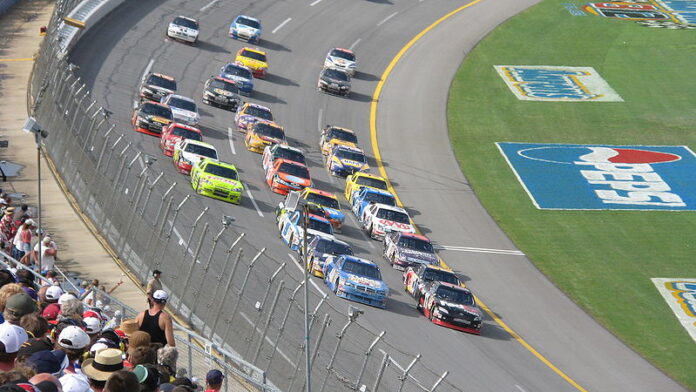
In the countdown to Daytona, there are just 80 more days until the green flag waves. While there have been many drivers in the No. 80 car, including Dave Blaney, Joe Ruttman, Mike Bliss, Randy LaJoie, Carl Long, Ted Christopher, Mario Gosselin, Andy Hillenburg and Aric Almirola, the driver with the most time behind the wheel of that car number was without a doubt Jimmy Horton.
[media-credit name=”Photo Credit: Curtis Palmer/Wikipedia” align=”alignright” width=”266″]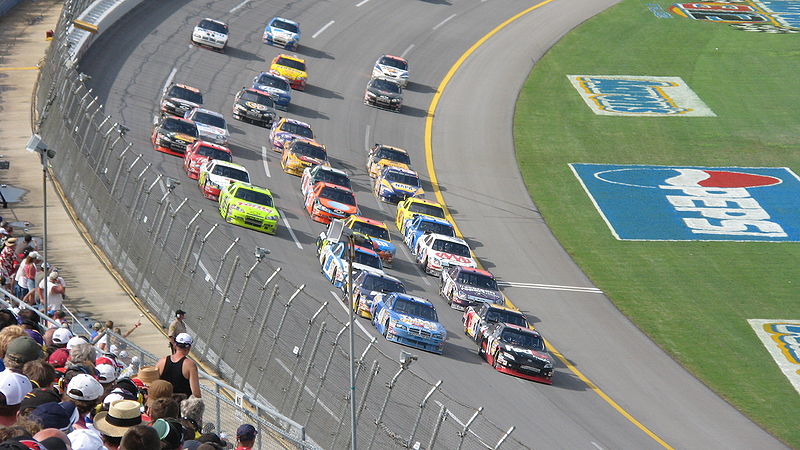 [/media-credit]Horton, a driver born and bred in New Jersey, raced in 48 NASCAR Cup races in eight seasons. He was behind the wheel of the No. 80 for 22 races, ranging from 1984 to 1994.
“It was a good deal,” Horton said of his ride in the No. 80 car. “We started out in the No. 85 and then turned it over to the No. 80 because we couldn’t have No. 85 when we ran Cup.”
“We started out running Cup with it but backed off a little bit to learn a little more,” Horton continued. “Then we went ARCA racing and we did real well. We won a total of eight ARCA races, five in a row.”
As with many race car drivers, Horton started racing on dirt tracks close to home. He first started racing in 1974 in Middletown, New Jersey on Saturday nights and at Nazareth, Pennsylvania on Sundays, winning track championships at both tracks.
Horton’s first asphalt race was at Daytona, which was also his first time ever in the draft.
“I ran a Busch car in 1985 at Daytona,” Horton said. “We qualified 19th and ended up breaking a motor early. But that was my first real asphalt race that I ran and my first time in the draft.”
“Bobby Allison helped us,” Horton continued. “At the time there were short fields in the Cup cars. Our first car was a Ford Thunderbird.”
Horton also ran Dover and Pocono in the Cup series and then went ARCA racing. His first race in ARCA was again at Daytona, where he took the checkered flag.
Yet in spite of his ARCA success, Horton was unable to return to the Cup Series on a full-time basis. As he described it, he was caught in the ‘middle generation’ of NASCAR drivers.
“I had my foot in the door with the Cup deal and it was going to take off,” Horton said. “But when I was trying to get in, all the owners wanted older, experienced drivers.”
“I was 33 years old when Jeff Gordon comes in at 20 years old,” Horton continued. “And everyone jumped over that whole one crop.”
“I wasn’t alone but they jumped over that whole group and went to the younger drivers,” Horton said. “That middle generation got skipped.”
In addition to running the No. 80 car, Horton is also known for two other reasons. First, many fans may recognize that he subbed for an injured Darrell Waltrip. The other reason for Horton’s notoriety is for two major crashes in which he was involved, one where he flew off the track at Talladega and the other a major wreck at Atlanta.
“I drove for Darrell (Waltrip) when he got hurt and I ran real good,” Horton said. “I ran three races and Greg Sacks drove the car until Darrell was able to get back in it.”
“I’ve had my share of crashes,” Horton said. “I was conscious for that whole time at Talladega when I crashed right off the race track.”
“I started to get out, but the State trooper put his hand on my helmet and told me I better sit there a minute,” Horton continued. “I told him I’d had about all I could stand and I was getting out.”
“Two years later, I wrecked at Atlanta and that one hurt me pretty good,” Horton aid. “I had a cracked skull, two broken shoulder blades, and a broken wrist. That one hurt me.”
“But we mended good and went racing again.”
At age 55 years, Horton is still honing his craft. For the 2011 season he ran close to 60 races, at his regular dirt track on Saturday nights and some select special races, winning one race and finishing fifth in points.
“I’ve always said when I don’t win a race in a year, I’ll retire,” Horton said. “I’ve been lucky the past two years that I’ve won a race a year, so I’ll keep going.”
“Next year, we’re just going to run selected races and I’m looking for a ride to run a full schedule,” Horton continued. “Right now I work building racing radiators and all parts for the race cars.”
But for Horton, sitting behind the wheel of the No. 80 car was one of the most special times in his life.
“The 80 car was a real good deal,” Horton said. “The 80 number has been good to me.”


NOTES FROM THE NASCAR NATION: THE TEAMING OF PENSKE AND BUSCH WAS EVEN MORE DRAMATIC THAN THEIR SEPARATION
The recent announcement from Penske Racing that said that Kurt Busch would no longer be the driver of their #22 Dodge, in the NASCAR Sprint Cup Series, effective immediately caught many observers a little off guard. Described in an official press release as “a mutual parting of the ways”, both team owner Roger Penske and driver Kurt Busch both insisted that the dissolving of their racing partnership was mutual and amicable despite reports that said Busch was fired from the team due to inappropriate behavior displayed during the final race of the season.
[media-credit id=41 align=”alignright” width=”290″] [/media-credit]After leaving the race on the third lap due to a broken transmission, Busch waved a middle finger at a live ESPN Network television camera while driving through the garage area. This was followed by extreme vulgar language aimed at a television reporter because Busch felt he had been kept waiting too long for a live interview.
This incident was the latest round of a season’s worth of tirades from Busch both on and off the track. NASCAR officials finally decided they had seen and heard enough and levied a $50,000 fine against the driver. Now it appears that Penske Racing and their primary sponsor, Shell/Pennzoil, has also decided that they had enough.
As dramatic as Busch’s latest tirade has become, it pales in comparison to the circumstances that led to his racing partnership with Penske to begin with. The pairing dates back to August of 2005 and involves two Sprint team owners who found themselves having to line up replacements for two retiring race drivers.
Jack Roush, the owner and founder of what is now known as Roush Fenway Racing, was looking at prospects to replace Mark Martin who was planning on retiring at the end of 2005. He was also having to deal with occasional outbursts from a young Kurt Busch. At the time Roush found a way to live with those outbursts because Busch, the year before, had delivered the organization’s first ever NASCAR championship.
Meanwhile Penske South Racing was looking at prospects to replace Rusty Wallace who was also retiring at the end of the 2005 season. Penske was interested in placing Busch in his car. Roush was interested in acquiring the services of Jamie McMurray who at the time was under contract with Chip Ganassi Racing. The problem was both drivers were under contract with their respective teams through the end of 2006. The result was one of the most amazing contract negotiations in NASCAR history.
On August 9, 2005 Penske Racing South announced that they had signed Busch as the driver of their #2 Miller Lite Dodge beginning with the 2007 season. This announcement followed a meeting between Busch and Roush where the driver assured his owner that he was fully committed to defending his Sprint Cup championship as well as the remainder of his contract. It was at this point where Busch informed Roush of his intent to leave his organization at the end of the 2006 season. There was also discussion regarding the possibility of Busch being released from his contract early so he could join Penske Racing in 2006 but it was clear that the decision was completely up to Roush.
This was followed by speculation that said souvenir sales was a major catalyst in Busch’s decision to sign with Penske. It was pointed out that Roush controls most of his driver’s souvenir sales and driver personal services contracts must also be funneled through him. Under normal circumstances drivers can make as much as $2 million per year, beyond their regular salary, from their share of these souvenirs.
In mid August of 2005 Roush stated that he was still “on the fence” regarding granting Busch an early release while, at the same time, continued to negotiate with Chip Ganassi regarding acquiring the services of McMurray. However, a month later it appeared that the three team owners were reported to be close to a deal. It was Rusty Wallace who let it slip out that the attorneys were close to working out a contract agreement.
In early November of 2005 an official announcement came from Roush that said Busch had been released from his contract and was now free to join Penske for the 2006 season. A similar announcement came from Ganassi which said he had released McMurray which cleared the way for the driver to join Roush. No specific details were released but it was widely believed that a lot of money exchanged hands. Penske was reported to have financially compensated Roush to get Busch while Roush in turn compensated Ganassi for McMurray.
At this point it seemed that everyone was happy and ready to get busy with preparations for the upcoming 2006 NASCAR season. However, for Penske Racing that euphoria quickly turned into a public relations nightmare a mere four days later. That’s when Kurt Busch hit the national headlines following his November 11, 2005 arrest near Phoenix-Arizona.
According to reports from the Maricopa County Sheriff’s Department, Busch was clocked at 60 MPH in a 45 zone in the vicinity of the Phoenix International Raceway. At first Busch didn’t stop his car and fled the scene where it was reported that he ran a stop sign and was driving erratically. Once he pulled over, he was reported to be belligerent and uncooperative. He was given a field sobriety test which he easily passed with a blood alcohol count of .017 well below the legal intoxication level of 08. But it was his attitude that led to the decision to transport him to the Sheriff’s Command Post located at the race track where he was issued a citation and released.
In the aftermath Roush Fenway Racing suspended Busch from participation in the final two races of the 2005 season and said his public behavior was in violation of contract obligations with his, then, primary sponsor Crown Royal. An angry Geoff Smith, President of Roush Fenway Racing, declared that “we are tired of apologizing for Kurt Busch.”
Meanwhile Roger Penske issued a statement that said he “stands behind Kurt Busch.” The statement also said Penske had spoken with the Maricopa County Sheriff’s Department about “doing something with the community and working things out.” At the time this statement was somewhat puzzling because its meaning wasn’t exactly clear.
Following some delays, often associated with court cases, the legal matter was resolved in February of 2006. Busch was fined $580 and ordered to complete 50 hours of community service. The following April of that year Busch performed his obligations participating in a safe driving public service announcement, with Maricopa County Sheriff Joe Arpaio, that aired on Arizona television stations. At the time of the production Arpaio said he was “pleasantly surprised how gracious this man was despite the controversy.”
The last surprise from this story came in November of 2006, nearly one year after the arrest, when Busch once again appeared in Sheriff Arpaio’s office. This time he was given a badge and officially became an honorary deputy.
In March of 2006 Penske’s faith in Busch was confirmed when the team won the race at Bristol. It was Busch’s first win for his new team and the first Cup win for Penske Racing since 2004.
That’s pretty much the story of how Roger Penske took a ride on the Kurt Busch crazy train. During the course of his six year tenure with Penske there were frequent tirades from this driver. The majority of them were often ignored because, frankly, Kurt Busch is a highly talented race driver who often produced positive results. Those results included 16 wins.
However during the 2011 season it seemed that Busch had amped up the intensity of his dramatic tirades. This was especially true of the in car radio transmissions during a race. The verbal abuse that Busch aimed at his team was often brutal. It didn’t seem to matter that Roger Penske himself was listening in on a team radio. There was a famous moment during a race this year when Penske actually came over the radio and said “Kurt, just shut up and drive the car.”
In a situation like this, the good performance stats of a driver can only be stretched so far before that proverbial line is crossed. The crossing of the line came at the Homestead Miami season finale race last month. Busch’s middle finger performance entering the garage area was bad enough. But it was the profane language aimed at ESPN pit reporter Dr. Jerry Punch that ultimately turned the tide against Busch. While this particular tirade never actually made it to live television, it was recorded by someone standing in the crowd. In a matter of minutes the entire episode went viral on “You Tube” and by that evening was seen by thousands of race fans.
It was at this point when even Roger Penske, often described as one of the most patient men in motorsports, decided enough was enough. Although a press statement said Busch’s departure from the team was by mutual agreement, it’s widely believed that his sponsors, Shell/Pennzoil were extremely angry and wanted no further embarrassment from this driver.
Needless to say the official press statements were carefully worded works of art authored by some well trained corporate spin doctors. The Roger Penske statement said: “I appreciate the victories that Kurt Busch has brought Penske Racing and our sponsors over the past six years. While I am disappointed that Kurt will not be racing for our team in the future, both Kurt and I felt that separating at this time was best for all parties, including our team and our sponsors. I wish Kurt the best in his future racing endeavors.”
The Kurt Busch statement said: “I am grateful to Penske Racing for six very productive years. Together we won a lot of races-16 in all. Leaving a great organization and a lucrative contract is not easy, but it’s an important step for me and allows me to take a deep breath to work on things that can make me a better driver and a better person. I want to personally thank Roger for the opportunity that he has given me.”
Somehow, both statements remind me of an old advertising logo for Seven Up: “crisp and clean and no caffeine.”


Countdown to Daytona: 83
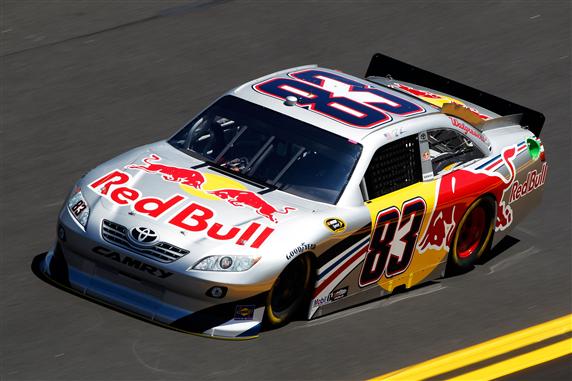
[media-credit name=”Getty Images for NASCAR” align=”aligncenter” width=”300″] [/media-credit]Only 83 days remain until the green flag waves at Daytona. The number 83 has seen spans of usage surrounded by long gaps of time where the number was used rarely, if ever. That statement holds true especially in NASCAR’s modern era. In total, the number 83 has been used in 436 races.
Tommy Thompson led things off in 1951 at the season opening race on the Beach & Road course in Daytona. Thompson finished 12th in his ’47 Chrysler and earned a whopping $50.
Several NASCAR legends used the number a handful (or fewer) times. Red Byron, NASCAR’s first champion used the number 83 in his final three starts. Cotton Owens made one appearance in the number in 1954. 1952 champion Tim Flock used the number once in 1961. “The Clown Prince”, Joe Weatherly also made one start using number 83.
Curtis ‘Crawfish’ Crider ran the number in the 1960 season. Crider reportedly earned the nickname Crawfish after his car landed in a lake. Crider never won, but did rack up 70 top-ten finishes, although only two came in car number 83. The only other driver to run a full season in the number 83 between 1960 and 1974 was Worth McMillion.
Ramo Stott ,one of several big names in racing to come out of Keokuk, Iowa used the number from 1974-1976 while driving for Norris Reed. Stott finished third in the ’74 running of the Daytona 500, but perhaps his biggest moment came when Stott won the pole for the 1976 Daytona 500. Darrell Waltrip, A.J. Foyt, and Dave Marcis were all disqualified, leaving Stott to sit on the pole. Stott would go on to finish 26th after engine failure sidelined him. Stott’s son Corrie campaigns part-time in the Nationwide Series.
Kenny Brightbill made one start for Reed at Dover in 1974, finish eighth. Brightbill still races today; he finished sixth in points driving a Big Block Modified at Delaware International Raceway in 2011 at the age of 63.
Three time Indianapolis 500 champion Johnny Rutherford drove three races for Reed in 1975, but could finish no better than 32nd. 1970 Sprint Cup Champion Bobby Isaac made one of his final career starts driving for Reed and using the number 83.
Ron Hutcherson, also from Keokuk made the final start for Reed in the 1977 Daytona 500. Hutcherson finished 32nd after transmission failure sidelined him. Ron was the younger brother of Dick Hutcherson, a 14-time winner in the Sprint Cup Series. Reed’s team shuttered after the ’77 500 and the number 83 would fall out of use for six years.
Summer McKnight, a driver on NASCAR’s west circuit entered five races at Riverside between 1983-1985. His best finish was a 14th in the 1985 Budweiser 400. Following this race, the number would again go unused until 1987.
Lake Speed, a veteran by this point had driven his own cars in the 1980 and 1981 seasons. After stints with Roger Hamby, Hoss Ellington, and Rahmoc, Speed became his own boss again at the start of the 1987 season. Speed’s Oldsmobiles were instantly recognizable with their purple paint scheme thanks to primary sponsor Wynn’s. Speed’s best finish in a limited 1987 schedule was a third in the Coca Cola 600. Speed, however, would achieve greatness the following season, when he won his first (and only) career race. Speed was also the first to win in car number 83, scoring a very popular victory in the 1988 Transouth 500 at Darlington, earning the win in dominating fashion.
Speed led 178 laps en route to his only career win. At the time, Speed said “”It’s a big, big relief for me to finally do it after being so close,” said Speed. “A lot of people made this happen. And for me personally, a lot of faith in the Lord brought me through.” Later that season, Speed, along with Darrell Waltrip and Bobby Hillin Jr. began what became Motor Racing Outreach, the non-denominational Christian organization that serves the NASCAR community.
Speed used the number from 1987-1993, fielding cars primarily for himself. After a hard crash at Pocono in 1989, Joe Ruttman, Eddie Bierschwale, and Joe Ruttman filled in for Speed. Speed also fielded a car in one race for Tommy Ellis and Phil Parsons the following year. Following the 1993 Diehard 500, Speed drove a few races for Robert Yates; then moved to Bud Moore’s team the following season. Speed never used the number 83 again.
The number would again sit dormant for nine years, when Ron Hornaday used the number in a one-off effort at Phoenix in 2002. Hornaday finished 36th in that race, driving for Terry Bradshaw and Armando Fitz in their only Cup race. Bradshaw and Fitz would continue their association in the Nationwide Series until 2005, when Bradshaw left the sport.
Following Phoenix, the number would be idle until 2007, when Red Bull Racing began to use the number with Brian Vickers. Red Bull’s first season was also Toyota’s first season and they struggled mightily, leading many to question Vickers’ decision to join an upstart team. There were flashes of promise, including a fifth place effort at the Coca Cola 600.
Vickers scored six top-ten finished in 2008, leading to a 19th place finish in the final standings. Vickers’ best season came the following year in 2009, when he won six poles, the August race at Michigan, and a berth in the Chase. Vickers would finish the year 12th in points, his career best.
Vickers hoped to capitalize on that performance in 2010, but his season was cut short when he was diagnosed with blood clots. Casey Mears, Reed Sorenson, Mattias Ekstrom, and Boris Said all filled in for Vickers, but under the difficult circumstances, they could do no better than eighth; that finish coming at Daytona with Sorenson. At Martinsville, the team’s fortunes began to change when Kasey Kahne became the driver.
Although Kahne signed to drive for Rick Hendrick beginning in 2012, he didn’t have a ride for 2011, due to NASCAR’s team limit. Red Bull happily snagged Kahne up for 2011; but Kahne would enter the car sooner than that. After his brakes failed and he crashed in the fall Dover race, Kahne refused to get back into the car after repairs were made, leading to his termination later that week. Kahne won the pole at the season-ending race at Homestead and finished sixth. Kahne moved to Red Bull’s other car at the end of the season when it was determined Vickers was healthy enough to return. Vickers earned seven top-ten finishes in his return in 2011. The future of the 83 car and Red Bull Racing is in doubt, as Red Bull is leaving the team and has yet to find a buyer.
In 436 races, the no. 83 has earned two wins, 22 top-five finishes, 91 top-tens and nine poles.
