


Countdown to Daytona: 90
As 2011 wraps up and Tony Stewart enjoys his third Sprint Cup title, many teams are already looking to Daytona and the 2012 season, hoping they’ll be the team seated at the champions’ table next year. We’ll count you down to next year’s Daytona 500 (its only 90 days away!) with some numberology for each number as the Super Bowl of NASCAR draws closer.
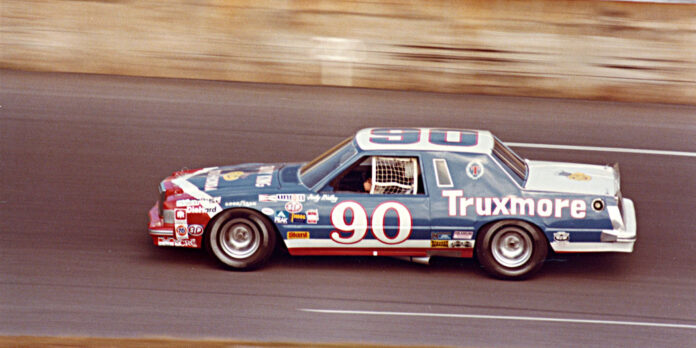
[media-credit name=”NASCARMedia/Motorsports Images & Archives” align=”alignright” width=”300″]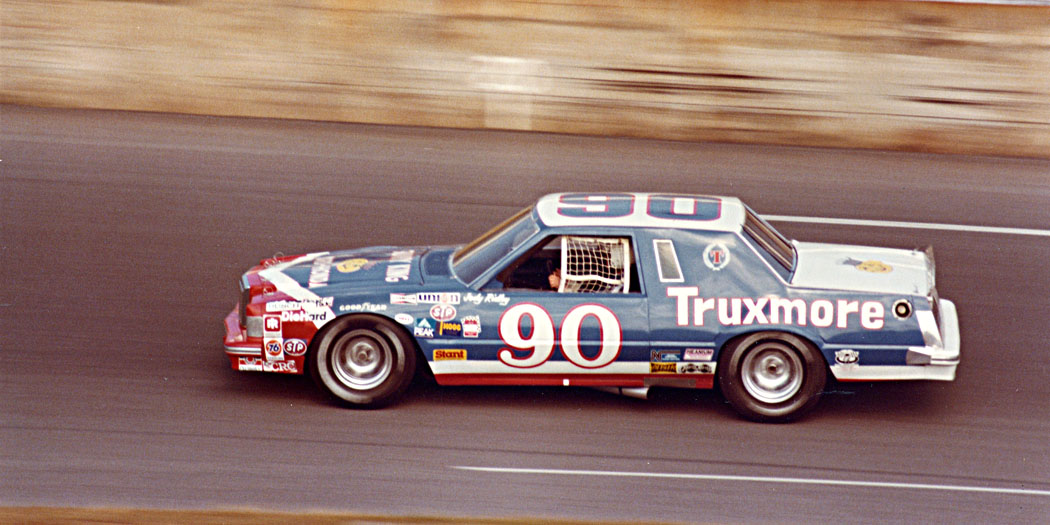 [/media-credit]A car no. 90 was entered in NASCAR’s first-ever race by none other than future two-time champion Tim Flock. Flock finished fifth in that race at Charlotte Speedway (not the same as the current track). He would use the number 90 just eight more times before changing to 91; then his famous number 300. However, the name most associated with car no. 90 is Junie Donlavey.
A longtime resident of Richmond, Donlavey fielded his first car in 1950 with Runt Harris. Donlavey would dabble in the sport over the next 15 years, but began his long association with the number in 1965 with driver Sonny Hutchins.
Donlavey’s sole win as an owner came in the 1981 Mason-Dixon 500, when driver Jody Ridley outran Bobby Allison over the last 20 laps to earn both his and Donlavey’s only victory. The victory didn’t come without controversy, however, as Allison’s car owner, Harry Rainer filed a protest, claiming that “No question we were a lap ahead of Ridley”. Although NASCAR admitted to a scoring communication difficulty, they upheld Ridley’s victory after 20 minutes.
“This has got to be a bigger thrill for Junie than me”, said Ridley. “I’m a rookie in the Grand Nationals. I just can’t believe it. This is the biggest thrill of my life.” Ridley raced for Donlavey through the 1982 season before driving for Robert Mcentrye and Rahmoc. His final Cup race came in 1986.
Donlavey was well known for giving young drivers a start in racing. Notably, Ken Schrader drove for Donlavey for a three year stint, garnering Rookie of the Year honors in 1985 and nearly winning the 1987 Firecracker 400, losing the lead with two laps to go. Coincidentally, the loss came to Allison, who changed tires during a late caution and stole the victory.
[media-credit name=”NASCARMedia/Motorsports Images & Archives” align=”alignright” width=”104″]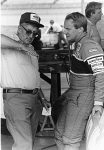 [/media-credit]Ricky Rudd, Ernie Irvan, and Mike Wallace all drove for Donlavey in the early parts of their career. Notable drivers who made their debut for Donlavey include Joe Weatherly, Harry Gant, Robby Gordon and current TNT analyst Wally Dallenbach Jr.
In a recent interview I conducted, Dallenbach said he had “Nothing but great memories” in his time with Donlavey. “I drove for him in my rookie deal into NASCAR, and Junie and the whole team were fantastic. I learned a lot and they were great people. Junie has given a lot of guys opportunities; opportunities they wouldn’t have gotten otherwise. For what he had to work with, he did a great job. Junie never really had what you could call a major sponsor. “Orkin Pest Control and Ford Motorsports Sportswear were the only major primary sponsors Dallenbach had for his rookie season.
Donlavey was also notable for giving older drivers a shot behind the wheel. Benny Parsons, Lennie Pond, Buddy Baker, Dick Trickle, and Charlie Glotzbach all drove Donlavey livery towards the end of their careers.
Donlavey’s last start as a car owner came in the 2002 UAW-GM Quality 500 where Jason Hedlesky, current spotter for Carl Edwards drove a Lucas Oil backed machine; dropping out early due to handling issues.
His former crew chief and current owner Tommy Baldwin Jr., told a USA Today reporter at the time “It’s kind of a shame that he’s gotten to this point where he can’t run successfully week in and week out,” But Junie never really cared about that.” Donlavey seemed to agree, saying that “I have met so many nice people that, if I had to trade the people I met for money, there wouldn’t be enough money around.”
Dallenbach also agreed, saying “Junie liked [having] the team in Virginia, with friends and family working on the car. In his time, you could do that, but I don’t think Junie wanted to become a big-time Cup team. I think he had the opportunity to do that, but that would have required moving the operation to Charlotte”.
That was indeed the case, as Sara Lee reportedly pulled their sponsorship after the 2001 season when Donlavey refused to move his team to North Carolina.
Since then, the no. 90 has been used sparingly, most recently with Scott Riggs driving for Raymond Key at Phoenix in 2010. In total, car no. 90 has obtained two poles, one victory, 64 top five, and 231 top-ten finishes in the course of 918 starts.
Addington replaces Grubb at Stewart-Haas Racing

Steve Addington replaces Darian Grubb as the crew chief for the Stewart-Haas Racing’s No. 14 team with driver Tony Stewart effective immediately.
[media-credit name=”CIA Stock Photo” align=”alignright” width=”236″]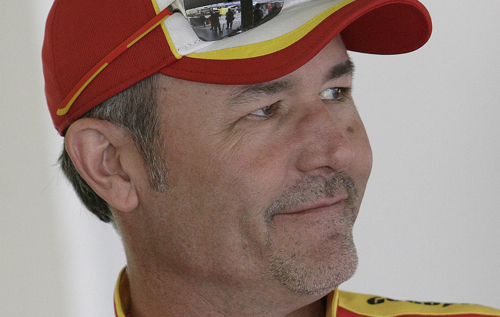 [/media-credit]Stewart notified Grubb heading into the final 10 races of the “chase” that he would be replaced at the end of the season.
Surprised that Grubb was let go, Rick Hendrick has offered Grubb another engineering position with Hendrick Motorsports. Grubb was at Hendrick Motorsports before taking the position at Stewart-Haas Racing in 2009.
“I hope Darian ends up with us. I think he would help our organization a lot, but I’m not sure. If he wants to be a crew chief, we don’t have that spot.” Hendrick said.
Addington will become the third crew chief for Stewart in his 13-year Sprint Cup Series career.
“I know Steve well and I know how he goes about setting up a race car.” said Stewart. “My comfort level with him is already strong.”
Addington has 16 Sprint Cup Series victories and has been the crew chief for Bobby Labonte in 2005, J.J. Yeley, 2006-2007, Kyle Busch, 2008-2009 and Kurt Busch, 2010-2011 in NASCAR’s top series. All of his victories have come with drivers Kyle (12) and Kurt Busch (4). Addington also spent 15 seasons as a crew chief in the Nationwide Series and accumulated 10 victories with driver Jason Keller.
“Tony and I are a lot alike and we’re able to push each other. I saw how he worked when we were at Gibbs together and I’m not surprised at all at the success he’s created at Stewart-Haas Racing.” Addington said.


A Tale of Two Could Have Been Champions: Denny Hamlin and Carl Edwards

The past two Sprint Cup Series seasons the driver entering the finale in Homestead-Miami as the championship point leader, as well as fan and driver favorite, left that Sunday night empty handed.
[media-credit name=”CIA Stock Photo” align=”alignright” width=”246″]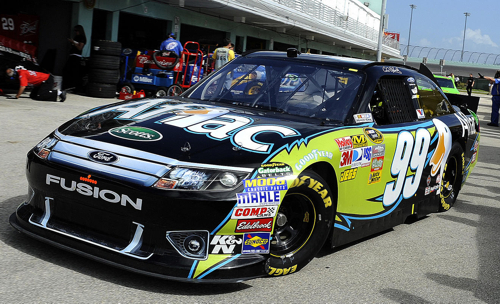 [/media-credit]In 2009 Joe Gibbs Racing’s Denny Hamlin won at Homestead and said his team would be champions in the near future. His statement led pundits to declare that the No. 11 FedEx team were the favorites to dethrone Jimmie Johnson in 2010.
Hamlin backed it up by going out and winning eight races – with a bum knee to boot. With two races left in the season he led Johnson by what seemed to be a comfortable 33-point lead. But following Phoenix it had shrunk to 15 when a fuel mileage race didn’t go his way.
The following week in Homestead Johnson went on to do what he does best, winning championships, while Hamlin struggled to run in the top 10.
Said Hamlin at the end of last year, “There was a lot of circumstances in which we had an opportunity to win the championship. By the numbers, fuel mileage was one contributor, factor. But it’s a part of racing. Strategy is part of racing. It’s not just about the fastest car and best driver. There’s a whole lot that goes into this sport and that’s what makes it as good as it is. We’ll just keep fighting and get ’em next year.”
Next year though would belong to winner of that race, who is often overshadowed at the time by the crowning of the season champion. Carl Edwards won Homestead in the midst of Hamlin and Johnson’s championship fight.
The strong end to the season by No. 99 Aflac team put them in the position previously held by Hamlin: preseason favorite. Edwards and his Roush Fenway Racing team came into 2011 as the newest man tabbed to end Johnson’s reign. He didn’t win eight races like Hamlin, his lone victory came at Las Vegas in early March, but he did set the series ablaze with impressive statistics that put him in a good championship position.
And then came Homestead.
Just like Hamlin did a year before, Edwards entered with the point lead and what some saw as an edge against his competitor. Except just like Hamlin, he too left without the big trophy.
Both drivers put up their best efforts; both won the previous season’s race, both entered with the point lead. And both lost the championship.
In 2010 Johnson finished second and won his fifth title by 39 points over Hamlin who finished 14th. Ironically a year later Edwards would also finish second, but unfortunately did so to Tony Stewart who bested him in the race and the championship.
It couldn’t be more heartbreaking for either driver. Hamlin was perhaps the best driver in 2010’s Chase – not season but Chase when he rose to the occasion – only to be another driver to fall to Johnson. Johnson being a driver who never seemed to have the bad luck bug, was always in the right place at the right time and may have had some golden horseshoes according to the competition.
Instead the bug found Hamlin and followed him from Phoenix to bite him again at Homestead where he qualified 37th, spun early and damaged his front splitter, never led a lap and watched the title slip away.
Johnson qualified sixth, led one lap then never left the top five for the rest of the day. This time around it looked like Edwards was going to do the same thing, as he too was the Chase – and seasons – best driver (Edwards had a 4.9 average in the Chase). He qualified on the pole and led the most laps, 119 of 267 as Stewart looked like he was about to take the role of 2010 Hamlin but in the end pulled a Johnson by coming from behind.
Qualifying 15th, Stewart encountered problems early when it’s suspected that Kurt Busch’s transmission was responsible for putting a hole in his front grille. To the back of the field he went after repairs. But he wasn’t about to follow in Hamlin’s footsteps of getting close enough to touch the title but not hold it.
Twice Stewart went to the back of the field and twice he drove his way to the front. He won the race and his third championship. The only driver who does and will possess a Winston Cup, Nextel Cup and Sprint Cup Series championship.
The script for the past two seasons couldn’t have been written any better. The season finale crowned a champion who didn’t come in as the favorite or with a known edge. They didn’t even have the point lead. It provided dramatic racing for those involved and high anxiety levels for those watching.
Of course both seasons also had fantastic trash talking. Before the 2010 finale Johnson did his best to get in Hamlin’s head. Talking about the pressure Hamlin was under as the point leader, that he (Johnson) had more experience handling adversity, that Hamlin should be concerned about his small advantage. Along with anything else Johnson could throw his way.
It appeared to have worked, Hamlin seemed visibly nervous. Something Johnson and Kevin Harvick called him out on. Then during the race Hamlin reminded himself and his team to take deep breaths. Meanwhile Johnson was in full on champion mode.
Flash forward to Edwards and Stewart. Edwards maintained a strict business as usual policy and tried not to make any visible reaction to Stewart who went about jabbing at him every chance he got.
He talked about “been there, done that” in terms of winning championships. He told Edwards he could come visit his championship trophy when they arrived in Las Vegas for the banquet. He also made sure that everyone knew he would wreck his own mother, and theirs, for a championship.
Even when Stewart was running in the back of the field he never stopped talking. Edwards was going to feel really bad when the No. 14 Office Depot / Mobile 1 team beat them twice from the back, said Stewart. It left Edwards at a loss for words before and after the race, in disbelief that he came so far and lost it when it was in his grasp.
“I’m not going to rip the door off my motorhome or freak out or anything,” said Edwards. “I’m going to go hang out with my family and we’ll go to the beach tomorrow and go celebrate Ricky [Stenhouse Jr., Nationwide teammate] championship … My true feeling right now, my gut feeling in my heart, is that I’m obviously disappointed we didn’t win. That would have been a spectacular result. But I’m very proud, some of the best races I’ve run in my life, were this Chase … If I look back on this Chase, there’s not one thing that I say ‘man, I wish I’d done this or I wish I’d have done that.’ This whole season has gone very well. I’m truly proud of this season. But it’s over.”
As for what’s next, time will tell if Edwards follows Hamlin again. After his squandered championship opportunity Hamlin came out of the gate struggling in 2011 and was never able to right the ship. Only enjoying victory lane once this season as he finished ninth in points.
The team struggled with their equipment, Hamlin calling for engines to stop coming from JGR for those from Toyota Racing Development. He has even openly admitted that his confidence wasn’t what it once was.
Confidence wasn’t a problem for Edwards 2011 but says it will be important for he and his team to head to the off-season holding heads held high. They need to use it as fuel to work harder for another title run next year. They don’t want to become the second straight driver to suffer a post- championship attempt hangover. Edwards says though that 2011 won’t affect his 2012.
For as Dwight D. Eisenhower once said, “Our real problem, then, is not our strength today; it is rather the vital necessity of action today to ensure our strength tomorrow.”
NASCAR Sprint Cup Point Standings Analytics – Final Standings

The announcement of a change to the distribution of points across NASCAR national series sparked debate among even the most conservative NASCAR fans. One of the explanations behind the change was to develop a more dramatic points battle to increase fan interest.
[media-credit name=”CIA Stock Photo” align=”alignright” width=”241″]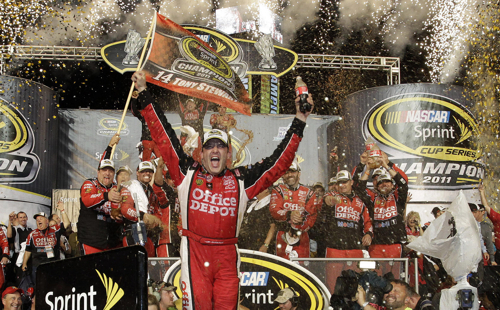 [/media-credit]A debate arose over the fact that a quick calculation would show that very little, if anything, would change in the final championship standings. In fact, even among the more common point distributions across all major racing series, by the end of the season there did not appear to be much of a difference in the order of the final standings.
Over the course of the season it became evident that there was not a significant difference between the old points system and the new system, save for a stronger reliance on consistency over victories. Below are the final standings for using the three different points systems, as well as a comparison as to how a Chase would have unfolded
Classic System – http://phatstats.blogspot.com/2011/11/classic-points-system-2011-final.html
Classic System w/ Chase – http://phatstats.blogspot.com/2011/11/classic-points-system-2011-final_26.html
While the new points system lead to one of the most nail biting season finales in the history of the sport, had we been using the 2010 points system the Ford 400 would not have been as tense. Tony Stewart would have entered Homestead with a comfortable 40 point lead over Carl Edwards, begging the question how differently would have Stewart driven in the race knowing he was on the defense.
Except for Jeff Gordon leap frogging Dale Earnhardt Jr for seventh, the Chase drivers finished in the same order. In fact the majority of the top thirty were in the same order, with only a few instances of drivers swapping in order.
F1 System – http://phatstats.blogspot.com/2011/11/f1-system-final-standings.html
F1 System w/ Chase – http://phatstats.blogspot.com/2011/11/f1-system-final-standings-chase-edition.html
No system rewards high finishes better than the Formula 1 points distribution and in this case the Championship outcome would have been far different. With Stewart ending the regular season in 11th in points, and with Dale Earnhardt Jr ending up 13th, Marcos Ambrose and David Ragan would make their first Chase. Ambrose’s hot finish in the season would culminate in his first top ten points finish. Carl Edwards would have to thank Brian Vickers for his first Cup championship, barely edging Matt Kenseth by ten points.
Naturally the standings are more jumbled compared to how things actually turned out. Some food for thought, had Stewart made this Chase he would have scored 450 points, easily out distancing Edwards by 52 points or two full races.
IndyCar – http://phatstats.blogspot.com/2011/11/indycar-system-2011-final-standings.html
Indycar w/ Chase –http://phatstats.blogspot.com/2011/11/indycar-system-2011-final-standings_26.html
The IndyCar system is more of an even split between the F1 and NASCAR system, and the final results reflect a mixture of the two. Again, Stewart and Earnhardt Jr would barely miss out on the Chase with Ambrose and Ragan earning berths. Here Kenseth would have a more comfortable margin of 38 points over Kenseth, with the rest of the Chase contenders almost mirroring their F1 finishing positions.
And, in yet another case of coulda-shoulda, had Tony Stewart made this Chasehe would have scored 1867 points, besting Carl Edwards by 56 at the seasons end.
————————————
So after a year of tracking different types of point systems in NASCAR most prominent series, what have we discovered? Maybe not so surprisingly the system devised ultimately does not affect who the champion would be. In all systems without a Chase, Carl Edwards easily came home the victory. In the systems with a Chase, Edwards won the championship only three times, but only because Tony Stewart was left out due to the new Wild-Card format.
Even looking beyond the series champion, the order of the rest of the field remained relatively the same. The F1 system provided the most extremes in differences, yet as a whole it truly did not vary a great deal when compared to others.
Maybe all the energy debating what is truly the best system to crown a champion is irrelevant. Maybe time could better be spent attempting to explain why a particular driver did not win the championship rather than blaming it on the system. And maybe, just maybe, one of Brian France’s ideas wasn’t so bad at after all.
Just maybe…
