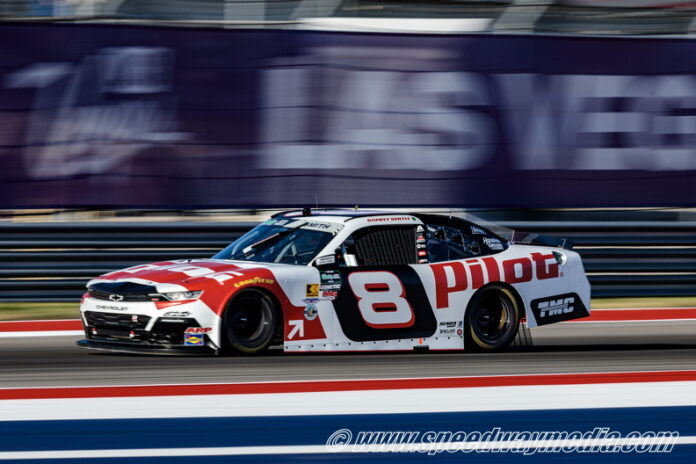
Richard Childress Racing in the NASCAR Cup Series at Daytona International Speedway… The NASCAR Cup Series returns to the high banks of Daytona International Speedway this weekend to race under the lights of the 2.5-mile speedway. Saturday night’s Coke Zero Sugar 400 marks the last race of the regular season for the NASCAR Cup Series. Richard Childress Racing has made an impressive 207 starts at Daytona and counts four Coke Zero Sugar 400 victories among the organization’s impressive seven points-paying Cup Series wins at the track. Austin Dillon was RCR’s most recent Coke Zero Sugar 400 race winner, earning the win in 2022 to clinch a spot in NASCAR’s postseason. Other Coke Zero Sugar 400 race winners include Kevin Harvick (2010) and Dale Earnhardt (1990, 1993). RCR owns three Daytona 500 wins (Earnhardt – 1998, Harvick – 2007, Dillon – 2018). In addition, RCR has collected 43 top-five and 79 top-10 finishes including 12 poles in Cup Series competition at Daytona.
Richard Childress Racing in the NASCAR O’Reilly Auto Parts Series at Daytona International Speedway… In addition to its NASCAR Cup Series success, RCR has accumulated 11 wins with drivers Dale Earnhardt Jr. (2002, 2010), Harvick (2007), Clint Bowyer (2009), Tony Stewart (2013), Dillon (2015), Austin Hill (2022, 2023, 2024, 2026) and Jesse Love (2025) in the NASCAR O’Reilly Auto Parts Series at Daytona International Speedway. RCR enters the race as the most recent Daytona race winners in the O’Reilly Auto Parts Series, having visited Victory Lane with Hill in February.
Tech Talk… RCR and ECR have worked collaboratively with NASCAR in support of several technical changes that will be implemented at Daytona International Speedway this weekend to help enhance on-track competition and passing opportunities in the Coke Zero Sugar 400, including a newly mandated tapered spacer that will reduce engine output from approximately 510 horsepower to 465 horsepower, paired with a rear gear ratio change from 3.64 to 3.45 to better match engine speed and vehicle performance to the revised power level. The package also reduces rear spoiler height from seven inches to four inches, which matches the Cup Series’ current intermediate-track spoiler configuration. The new engine and aerodynamic changes are anticipated to increase single-car qualifying speeds by approximately 3 mph, while pack racing speeds are expected to remain relatively unchanged. The new rules were designed to improve the quality of racing and a driver’s ability to make moves within the pack. Specifically, the package is intended to give drivers a better opportunity to pull out of a drafting line, generate momentum, and complete clean passes for the lead.
Big Power… Building on past successes at superspeedway events, ECR Engines, the premier high-performance combustion engine research, development, and production company located on the RCR campus in Welcome, North Carolina, is preparing for this weekend’s race weekend at Daytona International Speedway with an expanded group of racing partners and a continued focus on bringing big power and performance to the track. The company will expand to 11 partner entries in the NASCAR Cup Series and 16 partner entries in the NASCAR O’Reilly Auto Parts Series, equating to 27 ECR-powered race cars across the two series.
Shared Values… Richard Childress Racing is working closely with Campers Inn RV this weekend to host a military reenlistment ceremony, highlighting both company’s shared values and commitment to service members across the nation. Richard Childress, Austin Dillon and Austin Hill will join Campers Inn RV executives and other drivers to reenlist AWOC (NAC/AW) Zachary Haney alongside his commanding officer. Over his 15-year career as an Acoustic Operator, AWOC Haney has served with distinction. In November, he will be moving to Dallas, Texas, where he will serve the next four years at OPNAV Sea Duty Component, Dallas Detachment. The reenlistment ceremony will take place on Saturday at 3 p.m. in front of RCR’s Corporate Coach, a 2026 Newmar Dutch Star. Media are invited to cover the ceremony.
Did You Know… Since Austin Hill joined RCR in 2022, the team has won 13 of 27 drafting-track races, including nine of the last 16 in the O’Reilly Auto Parts Series (Hill – seven, Jesse Love – two).
Honor a Cancer Hero… This weekend, Richard Childress Racing honors individuals and their families who have struggled with a cancer diagnosis by participating in the seventh annual Honor A Cancer Hero (HACH) program. This signature initiative of The NASCAR Foundation is designed to support the foundation’s mission of improving the lives of children and families in our racing communities by providing support, comfort, and care during some of their most challenging moments. Since its inception in 2020, The Honor A Cancer Hero program has raised nearly $600,000 to support children and families impacted by cancer. As part of the program, each RCR entry racing at Daytona International Speedway this weekend will run the name of a cancer hero above both the driver’s side door and the passenger’s side door of our Chevrolets.
Future Plans… Richard Childress Racing made a series of announcements this week, solidifying the race team’s 2027 driver lineups in the NASCAR Cup Series and NASCAR O’Reilly Auto Parts Series and continuing a long-standing tradition of developing and cultivating NASCAR talent. Beginning in 2027, Austin Hill will join Austin Dillon in the Cup Series full-time, driving the No. 33 Chevrolet. Rising stars Chandler Smith and Carson Brown will join the organization’s O’Reilly Auto Parts Series program in 2027, with Smith in the No. 21 1-800-PACK-RAT Chevrolet and Brown in the No. 2 Whelen Chevrolet. Both of RCR’s current O’Reilly Auto Parts Series drivers will graduate to full-time rides in the Cup Series next season, joining a long list of current and former NASCAR stars who have honed their talent with the 57-year-old race team.
Catch Friday’s Action… The O’Reilly Auto Parts Series’ Winn-Dixie 250 at Daytona International Speedway will be televised live on Friday, August 28 at 7:30 p.m. ET on The CW and streamed live on the ESPN App for viewers with an ESPN Unlimited subscription plan. The live radio broadcast can be heard on the Motor Racing Network and SiriusXM NASCAR Radio Channel 90. Friday’s qualifying session will be shown on The CW App and on the ESPN App beginning at 3 p.m. ET.
Watch Us on NBC… The Cup Series’ Coke Zero Sugar 400 will be televised live on Saturday, August 29 beginning at 7:30 p.m. ET on NBC and will be broadcast live on the Motor Racing Network and SiriusXM NASCAR Radio Channel 90. Cup Series qualifying on Friday will be broadcast on truTV live at 4 p.m. ET. Ride shotgun all season long with live, in-car camera feeds and scanner audio with a paid subscription to Max as part of their NASCAR driver cam experience during the race.
Austin Dillon and the No. 3 Bass Pro Shops/Winchester Deer Season XP Chevrolet at Daytona International Speedway… With 27 previous starts in the NASCAR Cup Series at Daytona International Speedway, Austin Dillon heads to the World Center of Racing with experience on his side. So far in his career, Dillon has acquired two wins, one pole award, four top-five and nine top-10 finishes in the Cup Series at Daytona. The Welcome, North Carolina driver, who grew up attending races at Daytona International Speedway with his family, has 10 starts in the NASCAR O’Reilly Auto Parts Series at the track with one win, seven top-five and seven top-10 finishes. The 36-year-old driver has two starts at the track in the NASCAR Truck Series.
Former Pole Winner… Dillon earned his career-first Cup Series pole award with a lap of 196.019 mph (45.914 seconds) in the 2014 edition of the Daytona 500. Dillon also started on the front row for the July 2015 Coke Zero Sugar 400 at Daytona.
About Bass Pro Shops… Bass Pro Shops, North America’s premier outdoor and conservation company, was founded in 1972 when avid young angler Johnny Morris started selling tackle out of his father’s liquor store in Springfield, Missouri. That was the company’s sole location for the first 13 years, and it has since grown to nearly 200 retail locations throughout North America. Today the company provides customers with unmatched offerings spanning premier destination retail, outdoor equipment manufacturing, world-class resort destinations and more. In 2017 Bass Pro Shops united with Cabela’s to create a “best-of-the-best” experience with superior products, dynamic locations and outstanding customer service. Bass Pro Shops also operates White River Marine Group, offering an unsurpassed collection of industry-leading boat brands, and Big Cedar Lodge, America’s Premier Wilderness Resort. Under the visionary conservation leadership of Johnny Morris, Bass Pro Shops is a national leader in protecting habitat and introducing families to the outdoors and has been named by Newsweek as “America’s Best Outdoor Retailer” for four consecutive years and “America’s Most Trusted Retailer for Outdoor Gear.”
Deer Season XP®… Winchester Deer Season XP® is the most accurate and lethal bullet for deer hunting. For more than a decade, Deer Season XP® has been the choice of deer hunters looking to fill their tags. Deer hunters everywhere rely on the Extreme Point® bullet’s oversized impact diameter. The larger impact diameter means more impact trauma, better energy transfer, and larger wound cavities for faster knockdown. Learn more here.
Make it 700… This weekend at Daytona International Speedway, Dillon will achieve a career milestone as he makes his 700th career NASCAR national series start. Among his long list of accolades, the seasoned NASCAR veteran is a champion in the O’Reilly Auto Parts Series (2013) and Truck Series (2011), a two-time Rookie of the Year (2010 in the Truck Series and 2013 in the O’Reilly Auto Parts Series) and has won 21 races across all three national series. Amid his 13th fulltime season as the driver of the No. 3 Chevrolet in the Cup Series for Richard Childress Racing, Dillon has won two Crown Jewels (2017 Coca-Cola 600 and 2018 Daytona 500) and has six points paying victories and six pole awards, including the 2014 Daytona 500, to his name. Beyond the track, Dillon has not only taken on an increased leadership role within the race team, but he also leads the Carolina Cowboys as the professional bull riding team’s General Manager. However, in one of his most important roles, Dillon is a devoted husband to his wife Whitney, and father to his two kids, Ace and Blaize.
Gone Finishing with Huk… For the second consecutive season, Dillon will begin his weekend at Daytona International Speedway on the water, again taking to the Atlantic Ocean for a deep-sea fishing trip alongside Huk. Dillon will spend the day with Captain James Markovits, a Florida saltwater guide, award-winning host of Goliath Fishing, and Boca Grande tarpon expert who pursues everything from inshore favorites to offshore gamefish. Dillon will then welcome Captain Markovits to Daytona International Speedway as fans will get a first-hand look at the parallels the two athletes experience in their chosen sports. Fans should stay tuned to RCR and Huk social channels for a multi-part series documenting the weekend, and head to Huk.com to purchase the brand’s new Fall 2026 line, that both Dillon and Captain Markovits will don during their ocean excursion.
Honoring Ilene Robinson and Kristi Couch-Caldwell… This weekend at Daytona International Speedway, the No. 3 Bass Pro Shops/Winchester Deer Season XP Chevrolet will feature the names of Ilene Robinson (driver’s side door) and Kristi Couch-Caldwell (passenger’s side door) as part of the NASCAR Foundation’s Honor A Cancer Hero program. This signature initiative of The NASCAR Foundation is designed to support the foundation’s mission of improving the lives of children and families in our racing communities by providing support, comfort, and care during some of their most challenging moments. Since its inception in 2020, The Honor A Cancer Hero program has raised nearly $600,000 to support children and families impacted by cancer.
Beyond The Track… Beyond the driver’s seat, Dillon serves as the general manager of the Carolina Cowboys, a professional bull riding team in the PBR Teams league. Dillon is instrumental in all aspects of the team, from rider contracts to setting the operational budget, and has utilized various aspects of his racing background to help form the identity and structure of his bull riding team. Learn more about the team on their official YouTube channel, https://www.youtube.com/@CarolinaCowboysPBR. Don’t miss the Carolina Cowboys 2026 “Cowboy Days” home stand September 18-20 at First Horizon Coliseum in Greensboro, North Carolina. Tickets are on sale at PBR.com and Ticketmaster.com.
Dillon Featured Honoree at SMA Healthcare Foundation’s Annual Dinner Celebration and Auction… Dillon was the featured honoree for the SMA Healthcare Foundation’s Annual Dinner Celebration and Auction on Wednesday at Daytona International Speedway. Dillon provided a personal look at his life on and off the racetrack by participating in a fireside chat exploring his racing career, family, leadership and the experiences that have shaped him since his last time attending the dinner as an honoree nearly a decade ago in 2017. The SMA Healthcare Foundation’s Annual Dinner Celebration and Auction brought together community leaders, supporters and friends for an evening benefiting the Foundation and its mission to support SMA Healthcare programs and services. This year’s racing-inspired celebration continued the Foundation’s longstanding connection to the motorsports community while raising critical funds to support behavioral healthcare services. To learn more, visit www.smafoundation.com.
Meet Dillon… Fans will have multiple opportunities to meet the driver of the No. 3 Chevrolet this weekend in Daytona Beach. On Friday, August 28 beginning at 11 a.m. Local Time, Dillon is scheduled to be on-site at Walmart (1590 Dunlawton Avenue, Daytona Beach, FL) signing autographs and meeting fans on behalf of Coca-Cola. Later that afternoon, starting at 1 p.m. Local Time, Dillon is scheduled to make an appearance at Bass Pro Shops (1880 Checkered Flag Boulevard, Daytona Beach, FL) where fans will have their second chance to meet the two-time Daytona International Speedway Cup Series winner and stock up on all their outdoor needs.
Back at the track, Dillon is scheduled to make two trips to RCR’s Merchandise Hauler in the Fan Midway. He will be inside the rig on Friday, August 28 at 3:05 p.m. Local Time, and on Saturday, August 28, starting at 3:20 p.m. Local Time. Be sure to stop by and stock up on all your race day gear needs. For fans unable to travel to the race, visit the official RCR Team Store to purchase Austin Dillon merch: https://store.rcrracing.com.
AUSTIN DILLON QUOTES:
You’ve had success at Daytona International Speedway, both in February and in the summer race. What are you looking forward to for this year’s Coke Zero Sugar 400?
“I’m looking forward to getting to Daytona. It’s always an opportunity to try and bring home a trophy. Speedway racing with our ECR Engines is a lot of fun. The night race is usually pretty interesting. It gets wild out there. I thought our last speedway race in Atlanta went well, so hopefully we can capitalize on what we’ve learned.”
How important is teamwork at Daytona International Speedway?
“Teamwork is very important. I’ve got a great teammate in Austin Hill. He’s won a lot of races at Daytona, so I’m looking forward to working with him. Hopefully, we can push our Chevys to the front.”
Do you embrace the chaos of Daytona International Speedway or is it something you can’t stand?
“I definitely try to embrace it, because if you don’t, I feel like you’ll be part of the chaos. You’ve got to get in there and mix it up and try to put yourself in the best position possible. There’s a lot of luck involved in getting through some of those wrecks, but it can be very rewarding when you make it through.”
What’s it like entering Daytona International Speedway?
“Anytime you go through that tunnel, you see the sights and the scenes of Daytona, you kind of get excited, because you know where Victory Lane is located. You just want to get back there and visit it.”
Austin Hill and the No. 33 Cheddar’s Scratch Kitchen at Daytona International Speedway… Austin Hill has made three career NASCAR Cup Series start at Daytona International Speedway, driving in the 2023, 2024 and 2025 editions of the Coke Zero Sugar 400. His best Cup Series Daytona finish to-date is a 14th-place result after starting 26th in 2023, but he heads into the race with experience in the form of an incredible four Daytona wins in the NASCAR O’Reilly Auto Parts Series, and one NASCAR Truck Series win at the track.
About Cheddar’s Scratch Kitchen… Cheddar’s Scratch Kitchen is the homestyle casual dining restaurant where guests always Get a lot. For not a lot™. The restaurant offers a variety of homemade meals and generous portions served up in a warm, welcoming atmosphere – all at an unbelievable price. After being welcomed with a signature Honey Butter Croissant on the house, guests can enjoy signature entrées like hand-breaded Chicken Tenders, homemade Chicken Pot Pie and slow-smoked Baby Back Ribs. Cheddar’s operates more than 180 restaurants in 28 states. For more information or to locate the nearest restaurant, visit Cheddars.com. Fans can like or follow Cheddar’s on Facebook, X and Instagram.
The Next Chapter… Hill will take the next step in his racing career in 2027, driving the organization’s No. 33 Chevrolet full-time in the Cup Series and continuing RCR’s commitment to promote from within and develop talent within the sport. In his five seasons at RCR, Hill has made the most of his opportunities, establishing himself as one of the NASCAR O’Reilly Auto Parts Series’ most consistent and accomplished drivers with 16 career wins in the Series. This season, Hill has continued to push himself while balancing a demanding double-duty schedule and shown poise while taking on a tough role for RCR during one of the most trying times in the race team’s history following the tragic passing of Kyle Busch in May.
Honoring Lieutenant Commander Jerry Shoemaker… This weekend at Daytona International Speedway, the No. 33 Cheddar’s Scratch Kitchen Chevrolet will feature the name of Lieutenant Commander Jerry Shoemaker on the driver’s side door as part of the NASCAR Foundation’s Honor A Cancer Hero program. This signature initiative of The NASCAR Foundation is designed to support the foundation’s mission of improving the lives of children and families in our racing communities by providing support, comfort, and care during some of their most challenging moments. Since its inception in 2020, The Honor A Cancer Hero program has raised nearly $600,000 to support children and families impacted by cancer.
Questions, Please… Following this week’s announcement that Hill will join RCR’s Cup Series program fulltime in 2027, he is scheduled to be available to the media at Daytona International Speedway’s Infield Media Center on Friday at 1 p.m. Local Time.
Meet Hill… On Saturday, August 29 at 3:50 p.m. Local Time, Hill is scheduled to sign autographs at the RCR Merchandise Hauler located in the Fan Midway at Daytona International Speedway. Stop by to meet Hill and purchase new gear.
AUSTIN HILL QUOTES:
What are the expectations of the new superspeedway package at Daytona International Speedway this weekend?
“Honestly, no one really knows at this point. Folks think that the drafting effects should be similar to the NASCAR O’Reilly Auto Parts Series car. If that is the case, then I feel very good about it. But will it actually end up that way? We aren’t sure because the Cup car is so much different with the diffuser and the way that the air flows. The O’Reilly car has the bubble effect, but we’ve never had that with the Cup car. The purpose of these changes is to make it have a bubble effect. Based on all the data that NASCAR has shown us, it should be closer to the O’Reilly car. Having a bubble creates better opportunities for guys who are not up front to be able to pull out of line and make something happen. You can position yourself with the air, get a run, pull out of line, and not stall out as easy. You should still have the momentum to move forward which is what the Cup car has been missing in the few races I’ve done so far. That should be a positive for our Cheddar’s Scratch Kitchen Chevrolet.”
How important is teamwork at Daytona International Speedway?
“Teamwork is really important at these speedway races, so I’m looking forward to working with my teammate Austin Dillon. We’ll be working together and trying to do everything we can to be up front in the end. I think as long as we can do the things that we know how to do on the superspeedways, we’re going to have a really good shot at it, so it’s going to be a lot of fun.”
It’s a monumental task running double-duty every single weekend. Talk about some of those challenges, and what it’s like to go from one car to another every weekend?
“The way the NASCAR Cup Series car and the NASCAR O’Reilly Auto Parts Series cars run is a lot different. When I’m driving an O’Reilly car, I’m driving off the front end, utilizing the front downforce and the front splitter while also using the right-rear to create downforce in the car. In the Cup car, you don’t have the right-rear quarter panel to lean on, instead you’re driving off the right-rear tire and when you slide that tire you’ve got to be ready to catch it. I’m used to driving a loose racecar and sliding the right-rear tire, and you just cannot do that in the Cup cars, so I have to change my driving style between the two series.”
Jesse Love and the No. 2 Whelen Chevrolet at Daytona International Speedway… Jesse Love has made five career NASCAR O’Reilly Auto Parts Series starts at Daytona International Speedway. In his O’Reilly Auto Parts Series debut at the World Center of Racing in February 2024, the Menlo Park, California native earned his first career pole position, led the most laps (34), and captured his first career stage win. Fast-forward to last February 2025 and Love led 30 laps en route to earning his first victory at the Florida speedway. Outside of the O’Reilly Auto Parts Series, the 21-year-old has one career ARCA Menards Series start at Daytona International Speedway, where the young driver started from the second position, faced motor issues, and finished in seventh-place.
Did You Know… Love was the third youngest pole winner in O’Reilly Auto Parts Series history at Daytona International Speedway and just the 14th driver to claim the first starting position in their series debut.
Drafting Tracks Success… In 16 career O’Reilly Auto Parts Series drafting track races, Love has tallied eight poles, 11 top-10 finishes and an average finish of 9.6. Love has also led a combined total of 494 laps in those races.
Get to the Points… Love is currently fourth in the O’Reilly Auto Parts Series driver championship point standings, 299 points behind leader Justin Allgaier and 61 points behind second-place Carson Kvapil.
Honoring Fallen Officers… For Friday’s O’Reilly Auto Parts Series race, Whelen Engineering and RCR have teamed up with the National Law Enforcement Officers Memorial Fund (NLEOMF) for the fifth consecutive season to honor fallen law enforcement officers. A special paint scheme was created for the No. 2 Whelen Chevrolet featuring the names of 363 officers killed in the line of duty. These names were added to the walls of the National Law Enforcement Officers Memorial in Washington, D.C. in 2026. To learn more about the organization, visit NLEOMF.org.
About the National Law Enforcement Officers Memorial Fund… Established in 1984, the National Law Enforcement Officers Memorial Fund is a nonprofit organization dedicated to honoring the fallen, telling the story of American law enforcement, and making it safer for those who serve. The first pillar of this mission, the National Law Enforcement Officers Memorial in Washington, D.C., honors the names of all the 24,775 officers who have died in the line of duty to date throughout U.S. history. Additionally, NLEOMF maintains and publishes comprehensive details on the circumstances surrounding official line-of-duty deaths. The Officer Safety and Wellness pillar uses that data, coupled with best-practice program models, to produce programming directed at solutions to improve survivability and enhance wellness. NLEOMF’s third pillar, the National Law Enforcement Museum (LawEnforcementMuseum.org) is committed to preserving the history of American law enforcement and sharing the experiences of service and sacrifice for generations to come.
About Whelen Engineering… Whelen Engineering is a family-owned company with a pioneering spirit and a passion to protect the lives of those who protect and serve others. The company’s mission is to provide industry-defining safety solutions around the world, while creating a community of problem-solvers who are inspired to push boundaries and continue our legacy of delivering ground-breaking innovation. As a global leader in the emergency warning industry, Whelen has been trusted to perform since 1952, when George Whelen III invented the first rotating aviation beacon. Whelen now encompasses two state-of-the-art manufacturing facilities in Connecticut and New Hampshire with over 750,000 square feet of engineering and manufacturing space and the largest design staff in the industry. Every part of every Whelen product is proudly designed and manufactured in America. We embrace quality as our foundation, and we celebrate innovative engineering in every product we produce.
Honoring Michele Broadley and Curtis Lloyd… This weekend at Daytona International Speedway, the No. 2 Whelen Chevrolet will feature the names of Michele Broadley (driver’s side door) and Curtis Lloyd (passenger’s side door) as part of the NASCAR Foundation’s Honor A Cancer Hero program. This signature initiative of The NASCAR Foundation is designed to support the foundation’s mission of improving the lives of children and families in our racing communities by providing support, comfort, and care during some of their most challenging moments. Since its inception in 2020, The Honor A Cancer Hero program has raised nearly $600,000 to support children and families impacted by cancer.
Meet Love … On Friday, August 28 at 5 p.m. Local Time, Love is scheduled to sign autographs at the RCR Merchandise Hauler located in the Fan Midway at Daytona International Speedway. Stop by to meet Love and purchase new No. 2 gear.
JESSE LOVE QUOTE:
What are your thoughts ahead of this weekend’s regular season finale at Daytona International Speedway?
“I am excited to go to Daytona to try and finish the regular season strong and get some points and makeup ground in the standings. It’s been a rough end to the regular season, a lot of things out of my control, but I am trying to control all I can going into Daytona, putting us in the best possible position to race for a championship.”
Austin Hill and the No. 21 Global Industrial Chevrolet at Daytona International Speedway… Austin Hill has competed in 10 career NASCAR O’Reilly Auto Parts Series races at Daytona International Speedway, earning four victories – a resounding 40% of his starts. The Winston, Georgia native has started on the first or second row for the last seven events at the World Center of Racing. Hill also has six NASCAR Truck Series starts, securing the checkered flag in 2019.
Defending Winner… In February, Hill dominated the NASCAR O’Reilly Auto Parts Series opener, sweeping both stages and leading a race-high 78 laps en route to capturing his fourth career season-opening win at the World Center of Racing. Looking to complete a season sweep at Daytona International Speedway, Hill will try to become the first driver to accomplish the feat since Dale Earnhardt Jr. won both races there in 2003.
Drafting Track Dominance… Hill is the all-time O’Reilly Auto Parts Series drafting track leader in wins (11), stage wins (18) and laps led (932). The veteran racer is the only O’Reilly Auto Parts Series driver to win on all three drafting tracks.
Get to the Points… Hill is seventh in the O’Reilly Auto Parts Series driver championship standings and locked into the Chase leading into this weekend’s regular season finale.
About Global Industrial… Global Industrial Company (NYSE:GIC) is a leading distributor of high-quality, industrial-strength equipment and supplies, serving organizations of all sizes across a wide range of industries. With more than 75 years of experience, customers rely on Global Industrial for its broad portfolio of national and private brands, trusted service, and focus on value. We help customers keep their operations running by delivering the right products when they need them, because We Can Supply That™. Visit Globalindustrial.com, and follow us on Facebook, Instagram, and LinkedIn.
Supporting Veterans and First Responders Through K9s For Warriors… Global Industrial Company and RCR will highlight the K9s For Warriors’ Station Dog Program and its work supporting Veterans and first responders this weekend through a number of activations. Hill is scheduled to visit the Daytona Beach Shores Department of Public Safety to meet Hunter, the department’s Station Dog and Emotional Support Animal on Thursday ahead of this weekend’s race weekend at Daytona International Speedway. Hunter joined the department through K9s For Warriors in 2021 and provides companionship and comfort to first responders, while also participating in community events and visits to a local elementary school. The partnership also extends to the racetrack, with the K9s For Warriors logo featured on the No. 21 Global Industrial Chevrolet this weekend at Daytona International Speedway, bringing the organization’s mission to NASCAR fans and the broader racing community.
Honoring Michele Broadley and Tim “Hodgie” Hodge, Sr… This weekend at Daytona International Speedway, the No. 21 Global Industrial Chevrolet will feature the names of Michelle Broadley (driver’s side door) and Tim “Hodgie” Hodge, Sr. (passenger’s side door) as part of the NASCAR Foundation’s Honor A Cancer Hero program. This signature initiative of The NASCAR Foundation is designed to support the foundation’s mission of improving the lives of children and families in our racing communities by providing support, comfort, and care during some of their most challenging moments. Since its inception in 2020, The Honor A Cancer Hero program has raised nearly $600,000 to support children and families impacted by cancer.
AUSTIN HILL QUOTE:
What is your mindset heading into Daytona International Speedway?
“Obviously, Daytona is Daytona. I feel good about it, but you just never know how those races are going to unfold. I would say, for us we just have to go try to maximize points and see if we can get ahead of one or two more guys who are ahead of us and be ready for the Chase.”