
NASCAR Indeed Tried To Benefit Jr; Still Lost
I’m just at a loss for words over what happened at the end of the Coca Cola 600 on Sunday night. It was a great race throughout, but yet another controversy has sprung up that takes all the excitement out of the finish. Does NASCAR really think we’re that stupid?
Well given the fact that NASCAR will never win because the fans will complain of anything regardless…but that doesn’t answer the question of whether NASCAR purposefully let the race continue so that Jr. could break his winless drought. As sad as it is to announce as it is to type, NASCAR got busted on this one and badly. Earlier in the race we had a caution for a flipping beer can on the track, but debris spewing from Brad Keselowski wasn’t dangerous? Now, I’m one of those fans that just wants to see the drivers race and to be perfectly honest, I’m sick of these stupid cautions stacking up the field, but that usually never happens.
I got into a heated discussion with a fellow NASCAR reporter and her answer was the typical, “There is no proof. It is all assumption.” Well, I hate to break the news to you, but was there any proof that Fidel Castro had his opposition killed during his re-election campaigns? No, but the fact that every time a news report had something positive about his opponent mysteriously the next morning they would be reported missing and never heard from again. Also, I must add that in 2005, NASCAR assumed that Kurt Busch wrecked Michael Waltrip on purpose at Martinsville. He did not. He simply overdrove the corner. NASCAR has done its fair share of “assumptions.”
Speaking of Michael Waltrip, NASCAR assumed he flipped off Robby Gordon at New Hampshire. Aghhhh. Nope. It turns out Mikey was just hot and waving his hand to get some fresh air and after an appeal of the huge fine he had received, NASCAR gave in.
NASCAR was going to look bad either way coming out of that race. I would have thrown the caution due to the debris that was being thrown out and for the safety of the drivers. We all think back to 2004 at Dover when the leader Kasey Kahne ran over oil and smacked the wall while striving for his first victory. Speaking of which…he caused all of this. Ahem…back to the topic.
NASCAR looked bad by not throwing the caution out and if they threw the caution after the white flag, it would have become obvious. Not throwing the yellow would have appeared less obvious, but still obvious. And little did they know, Jr. was going to run out of fuel either way. Just think about it, caution for beer can, no caution for debris + 2 car incident + Kahne out of fuel. Once again I call for NASCAR to be more consistent on its rulings and not just for the benefit of the most popular driver.
There is a rule saying also that you have to maintain pace car speed in order to win the race under yellow, but in 2008 Jr. didn’t do that. He was actually out of fuel, so NASCAR spoon fed to him his last victory. So really what we have is a driver who has not won in over 184 races if you don’t count his Budweiser Shootout victory in 2008.
Look guys, we can’t blame Jr. for him being treated like Prince William. NASCAR isn’t treating every driver the same and it is wrong. I demand a change; otherwise expect more empty seats. Fans want to see a fair race, not a fixed one; Jr. fan or not.
NASCAR was served justice when Jr. ran out of fuel.
The comments and opinions expressed in this article are not representative of this web site, its publishers or sponsors.
Send your comments to my email: therhino.ryan@gmail.com, Facebook or twitter, http://www.twitter.com/Ryan__OHara
Happy Memorial Day to everyone!
NASCAR Beginnings Featuring Cale Yarborough
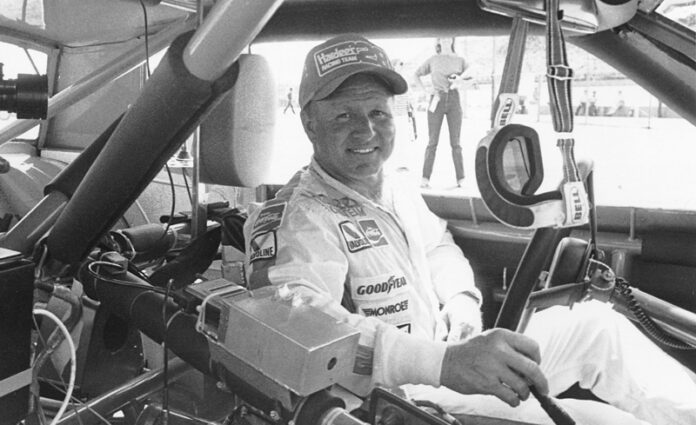
On Tuesday, June 14, 2011, the NASCAR Hall of Fame announced the 2012 class of inductees. It should come as no surprise that Cale Yarborough’s name is at the top of the list. Yarborough received the highest percentage of votes with 85 percent.
Driver, car owner, businessman, author and actor, Cale Yarborough has done it all. This hard-charging three-time Cup champion was known for giving 100 percent from the first to the last lap.
Richard Petty said of Yarborough, “It didn’t make no difference if he was two laps behind or 20 laps ahead, he drove that car as hard as he possibly could.”
Cale Yarborough ruled NASCAR in the 1970’s with three consecutive Sprint Cup championships from 1976-78. No one had ever shown such dominance and his record stood until 2008 when Jimmie Johnson won the championship for the third straight year.
During those three years, Yarborough won 28 races – nine in 1976, nine in 1977 and 10 in 1978. He not only won those championships, but by a huge margin. In 1978, Yarborough won by a margin of 474 points.
His 31-year career total of 83 victories ranks fifth all-time and his 69 poles rank third all-time. Yarborough won the Southern 500 at Darlington five times. He also managed to win the Daytona 500 four times (1968, 1977, 1983-84), second only to Richard Petty’s seven.
William Caleb Yarborough was born in the small town of Timmonsville, South Carolina in 1939. He was the oldest of three sons born to Julian and Annie Mae Yarborough. As a small boy, he attended races in the nearby towns of Florence and Columbia with his father and fell in love with racing. Yarborough remembers the first Southern 500 in Darlington in 1950. His father had been looking forward to it and he was hoping his Dad would take him to see it.
“We’d certainly talked about the Southern 500,” Yarborough remembers. “I don’t know whether he was going to take me or not.”
Sadly, he never got the chance to go. That summer Yarborough lost his father when he was killed after his small plane crashed. Yarborough made it to the Southern 500 the next year, crawling under the fence to get in. He had a ticket but was too excited to wait in line.
“I wasn’t sneaking in to be sneaking in,” he said. “I was just too anxious to get inside and see my heroes.”
It seems like no coincidence that Yarborough made his racing debut at that very same track in 1957. It was not the start he had envisioned. Yarborough finished in 42nd place after a broken hub took him out of the race.
Yarborough only drove in three more races over the next four years but in 1962, he earned his first top ten finish when he placed tenth in the Daytona 500 qualifying race. Over the next few years, he drove for various owners on a limited schedule including Herman Beam, Holman Moody and Banjo Matthews.
In 1965, he ran in 46 races and captured his first win at Valdosta, Georgia. That year he also had one of the scariest moments of his career at the Southern 500 while trying to pass race leader, Sam McQuagg.
“We went in the corner side by side, and for some reason my car just got airborne,” said Yarborough. “I went over the hood of his car, never even touched the guardrail, and went out into the parking lot. I ended upside of a telephone pole.”
In 1966, Yarborough began to find some success. He won both the Atlanta and Firecracker 500 while driving for Bud Moore and finished out the season driving the No. 21 car for the Wood Brothers team.
Yarborough started to make a name for himself after his partnership with the Wood Brothers and won six races in 1968 including his first Daytona 500 win. That year also saw him in victory lane for the first time at the Southern 500. Yarborough considers it the biggest of his 83 career wins. This was the track where he had watched so many of his heroes race as a young boy. More importantly, it was the last race on the old track before it was repaved.
“It’s still hard to drive today,” Yarborough says, “but back before they changed it, it was almost impossible to race on. The difference between the old track and the new one is like night and day.”
“I think Jeff [Gordon] ought to have to win six to equal my five,” he jokes, “because my first one was on the old track, and it was twice as hard to win.”
Finally, in 1973, Yarborough was able run a full schedule. He won four races that year, including the Southeastern 500 at Bristol International Speedway, where he led every lap from start to finish. What makes it even more unusual is that the race took two weeks to complete because of rain.
Yarborough finished second in the points standing in 1973, behind Richard Petty. In 1974, he captured ten victories but again finished second to Petty in points. But Yarborough was not to be denied.
With nine victories in 1976, Yarborough won the first of his three consecutive championships, driving for the legendary Junior Johnson. According to Johnson, winning with Yarborough was easy.
“When you got a driver you know is going to give you everything he’s got,” Johnson said, “you can take away 30% of the car and he’ll still give you enough to beat everybody.”
One of Yarborough’s most memorable moments was in 1979 at the Daytona 500. It was the first stock car race ever televised in its entirety. Yarborough and Donnie Allison were fighting for the lead and wrecked when Yarborough tried to pass for the lead during the final laps. The wrecked cars slid into the infield and both drivers jumped out of their cars. Fists started flying with Bobby Allison joining in to help his brother. The entire episode was captured on television and has become one of the most notorious NASCAR fights in its history.
Yarborough retired as a driver in 1988, ending his driving career with a phenomenal 83 wins. He remained on the NASCAR scene as a car owner until 2000. He had limited success as an owner and recorded only one win with John Andretti in 1997. After leaving NASCAR, he opened a successful Honda dealership in Florence, South Carolina.
Cale Yarborough was a small town boy with big dreams. He joined the ranks of the heroes he watched race as a young boy to become a NASCAR legend. He remains one of NASCAR’s most beloved drivers and an integral part of its history.
*Achievements:
1967 NASCAR’s Most Popular Driver Award
1976 Cup Championship
1976 Five Consecutive Race Wins – Single Season Record
1977 Cup Championship
1978 Cup Championship
1980 Won 14 Pole Positions – Single Season Record
1984 First driver to qualify at the Daytona 500 at over 200 mph
1986 Wrote his autobiography, with William Neely: ‘Cale: The Hazardous Life and Times of the World’s Greatest Stock Car Driver’
1993 Inducted into the International Motorsports Hall of Fame
1994 Inducted into the National Motorsports Press Association Hall of Fame
1994 Inducted into the Motorsports Hall of Fame of America
1996 Inducted into the Court of Legends at Charlotte Motor Speedway
1996 Talladega Walk of Fame inductee
1998 Named one of NASCAR’s 50 Greatest Drivers
2009 Monument on the Darlington Legends Walk
2010 Nominee NASCAR Hall of Fame
2011 Nominee NASCAR Hall of Fame
2012 Will be inducted into the NASCAR Hall of Fame
4-Time Winner of the Daytona 500
5-Time Winner of the Southern 500
83 Career Wins (Fifth All-Time)
69 Poles (Third All-Time)
Trivia:
Yarborough appeared in two episodes of the TV show ‘The Dukes of Hazzard,’ playing himself.
1979: ‘The Dukes Meet Cale Yarborough’
1984: ‘Cale Yarborough comes to Hazzard’
1983: Yarborough appeared in the Burt Reynolds movie, ‘Stroker Ace’
Thanks to darlingtonraceway.com and NASCAR Hall of Fame for Cale Yarborough quotes.
*NASCAR statistics as of May 31, 2011
The Coca Cola 600; ‘The most valuable resource is the human resource’
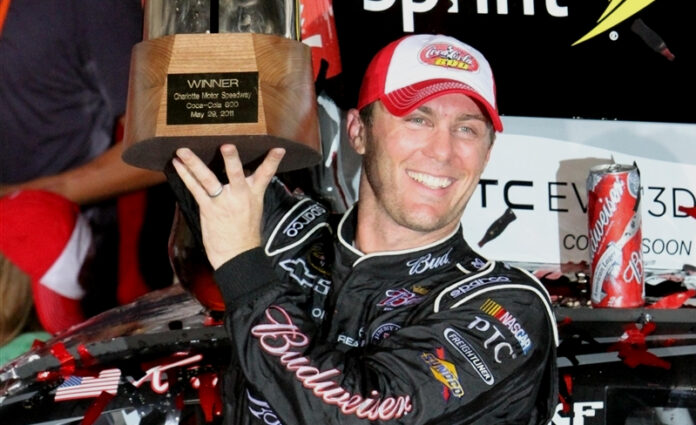
The Coca Cola 600 is the longest race of the year. It was also the hottest race of the year so far. It is always a test of patience and endurance, not only for equipment but for the drivers as well. As a rule the 600 boasts an exciting beginning and exciting end with a nap in between. But this year was different. They raced from the green flag to the checkers. They raced from 1st to 31st.
The race has had people scratching their heads why was this one different? Why was this race so good and the others this year were merely luke warm. Was it the tradition? Was it the track? Was it being at home in front of family and friends? No doubt all of those things played a part but perhaps the real difference came not in the 600 but a week before in the All Star Race.
When we look at the competition level we find that teams that made no bones about the fact that they were testing in the All Star Race, excelled. Drivers that up to this point in the season seemed snake bit had cars that they could count on. Cars that were stable and predictable, maybe not through the whole race but they could be adjusted on pit stops and the driver put back in the hunt. These cars were fast, really fast. They had speed that didn’t disappear after a 150 laps, but was there in the end as well.
The Sprint Cup boys had their best driving shoes on and their very best fire suits. They made the Indy 500 look drawn out and over hyped. They did what they do best. They RACED from green flag to checkers. The winner wouldn’t be decided until the tri-oval out of 4. Sadly, the race ended with fuel mileage deciding the winner. But it wasn’t a typical fuel mileage race either. It was a barn burner that wouldn’t be extinguished until long after the checker flag waved.
What was the difference? They tested the week before. They took 100 laps of no points racing and turned it in to a test session. Crew chiefs took notes engineers made changes the week before the 600 was perhaps the busiest week of the season because they had functional information that was acquired in real time by their driver and their team at a real track. It was not computer simulated. It was not a projected forecast. It was real information. In team meetings engine people could talk to drivers about feel and need. Chassis designers and engineers could actually quiz a driver on feel reaction what did they have? What did they need? What did they want? What do we need to change to make this a winning car? The drivers could answer the questions. They had raced the cars. They had gone up against Carl Edwards and the Roush/Yates FR9. They had experience with 4 sticker tires on the green flag. They had real time real life information.
They say knowledge is the greatest weapon that man kind can possess. In this case it was proven true. This scenario and its outcome proved that as Tony Stewart said, “Technology can do wonderful things for us off the track but it can really hurt us on the track.” This race proved him right. This race wasn’t about computer programs or simulation engineers. This was old school driver input combined with engineers and technology and the result was a winner.
NASCAR will say it was the feel of being at home, of sleeping in their own beds. But that doesn’t explain the cars consistency and speed. It doesn’t explain why a team that has struggled to stay out of their own way suddenly is a top 10 team. It doesn’t explain why suddenly in the longest race of the year drivers were willing to drive it in deep and floor it up off and continually go three and four abreast. That is called confidence. That didn’t come from a crew a chief who is a dynamic salesman. That came from experience and being a part of the big picture. That confidence came from having tested the cars. From having the information and being a part of the overall set up. They knew what the car would do. They had been here before. Rusty Wallace, the week before had stated that, “The elimination of testing has been the biggest blow to our sport in my opinion, than anything else.” The 600 proved him right.
It’s time for NASCAR to take a long look at the overall status of competition and listen to the fans. Surrey racing is not entertaining. Follow the leader racing is not competitive. 2 hours of run away train is boring. But if you give them time to put it out there and work on it. If you put the human element back in the equation what you have is what is missing from the series….Racing.
The Coca Cola 600 was without a doubt the surprise of the year. It was one of the very best races we have had in 2011. It wasn’t just a great finish. It was a great race. From Green Flag to Checkers the boys of summer took us back to a better day, when men drove machines to the very edge of the envelope lap after lap and even though we sat on the other side of the TV or the fence they took us with them. It was what made racing a household word. It evidenced that “The most valuable resource is the human resource.” There is no substitution for the fan in the stands or the driver in the seats. The driver in the seat knows what it takes to make the car go fast and race it to the end. The fans know what constitutes a great race. Hopefully the Coca Cola 600 will show NASCAR that real world can be better than virtual reality.
~ ~ ~ ~ ~ * * * * ~ ~ ~ ~ ~
Congratulations to Matt Kenseth on his NNS victory in replacement of Trevor Bayne in the 16 Jack Roush Fastenal Ford Mustang. Bayne will return to competition this week at Chicagoland Speedway.
Congratulations to Kevin Harvick on his Sprint Cup Win in the Coca Cola 600. It was a great show of perseverance from Kevin and his RCR Budweiser Chevy team.
Congratulations to Dan Wheldon on his Indy 500 victory.
I feel it necessary here to congratulate J.R. Hildebrand on his Indy 500 effort. It was a gallant effort and an incredible performance. You proved you can win the Indy 500. Your presence of mind to stand on the gas in what was left of the car was proof positive that you have what it takes. Yours will come.
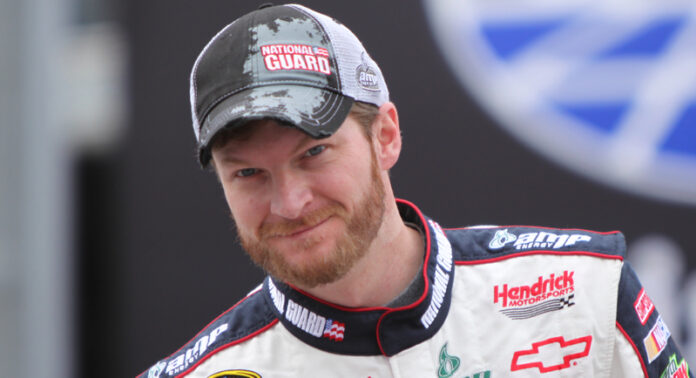
Also congratulations to Dale Earnhardt Jr and his National Guard/Amp Energy, HMS team lead by Steve Letarte. Earlier in the season you said you wanted to be viewed as relevant again. You have achieved that. You said you wanted to be a contender for race wins again. You have achieved that. You came up a turn and a half short of achieving the next of the goals you cited, winning a race. You have come a long way. Congratulations on a heroic performance and effort.
That said, to all the competitors in all the series thanks for giving us everything you have to give, you are our heroes. Most importantly, thanks to all the families who shared their loved ones with us so we could cheer our favorite driver and favorite teams. You are the true heroes of the sport and we are forever in your debt.
NASCAR Sprint Cup Point Standings Analytics – After Race 12
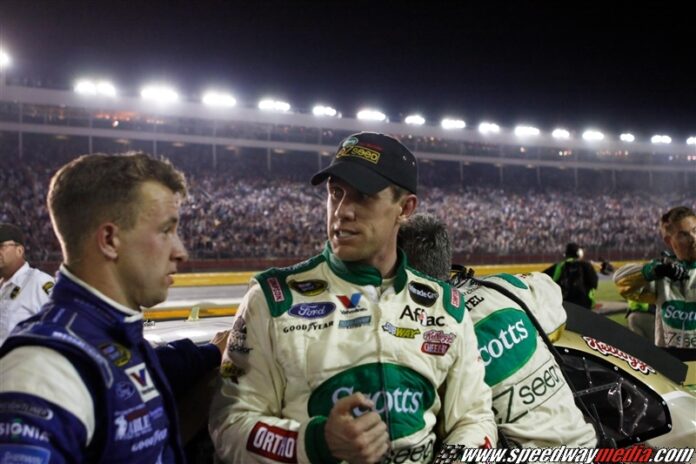
The announcement of a change to the distribution of points across NASCAR national series sparked debate among even the most conservative NASCAR fans. One of the explanations behind the change was to develop a more dramatic points battle to increase fan interest.
A debate arose over the fact that a quick calculation would show that very little, if anything, would change in the final championship standings. In fact, even among the more common point distributions across all major racing series, by the end of the season there did not appear to be much of a difference in the order of the final standings.
Here, I shall contend that debate with weekly comparisons across the three most commonly mentioned distributions, plus my own personal points schedule designed to reward both race winners and consistent high finishes.
On the left side of the standings is the difference between where they stand in actual Sprint Cup Standings and their position in the respective system.
Classic Points System – Standings After Race 12
For the most part, the top ten remains relatively unchanged. Carl Edwards continues to have a sizable lead, while the changes in points position after the Coca-Cola 600 mirror their real life counterparts. Perhaps the biggest losers under the old system would be A.J. Allmendinger as he would drop three spots to sixteenth in the standings.
Notable changes in position compared to current system: None really… as we move forward in the season it is becoming apparent that there is little, if any difference, between the two point distributions.
Changes to Chase Field: NONE
F1 System – Standings After Race 12
Edwards retains the the championship lead with a sizable advantage, this time over second place runner Kyle Busch. As the F1 points system rewards higher finishes, specifically those within the Top 3, it becomes apparent that those with the most Top 5s appear near the top of the standings.
Notable Driver without points: Jeff Burton
Notable changes in position compared to current system: Regan Smith (+15), Jeff Gordon (+9), Marcos Ambrose (+8), Tony Stewart (-8), Kurt Busch (-9), A.J. Allmendinger (-9)
Changes to Chase Field: Marcos Ambrose (IN), Regan Smith (IN), Trevor Bayne (IN), Kurt Busch (OUT), Tony Stewart (OUT), Greg Biffle (OUT)
IndyCar System – Standings After Race 12
Carl Edwards again leads the standings over Kyle Busch with yet another sizable margin. The drivers who account for half of the race wins this season easily hold the top three spots in points over fourth place Jimmie Johnson. The Top Five as a whole account for nine of the total twelve race wins from the 2011 season.
Notable changes in position compared to current system: Regan Smith (+9), Jeff Gordon (+8), Kasey Kahne (+6), Greg Biffle (-6), A.J. Allmendinger (-6), Jeff Burton (-8)
Changes to Chase Field: Denny Hamlin (IN), Regan Smith (IN), Tony Stewart (OUT), Greg Biffle (OUT)
Phat’s System – Standings After Race 12
For an explanation of the points distribution, please see consult table below standings. This distribution is designed to reward race winners, while also rewarding those who run well every week.
This time Edward’s lead over Kyle Busch and Kevin Harvick is not as insurmountable as in the other systems. There is still a considerable gap from fifth on back as the order of the standings experiences a high amount of shuffling.
Notable changes in position compared to current system: Regan Smith (+9), Jeff Gordon (+7), Kasey Kahne (+7), A.J. Allmendinger (-6), David Reuitmann (-6), Jeff Burton (-9)
Changes to Chase Field: Denny Hamlin (IN), Regan Smith (IN), Ryan Newman (OUT), Greg Biffle (OUT)